
As an Amazon Associate, we earn from qualifying purchases. This means if you click on a link and buy a product, we may receive a small commission at no extra cost to you. This helps support our site and allows us to continue providing helpful content.
Keeping my raised beds hydrated during the peak of summer used to be a full-time job. After testing several options, I have found that a reliable garden bed watering system is the only way to ensure consistent growth without spending hours manually moving hoses.
The CARPATHEN Drip Irrigation System Kit has become my go-to for its sheer versatility, while the Pro-Series Drip Irrigation System offers an incredible balance for those watching their wallet. Whether you are a weekend hobbyist or a dedicated vegetable grower, the right setup saves significant time.
In this review, I have put these kits through the wringer, focusing on how they handle direct sun exposure and the ease of customizing the layout to fit unique bed shapes. A good system should be intuitive to install and robust enough to last through the season.
Before you commit to a specific setup, consider the size of your garden and the specific water needs of your plants. Below, I break down the top contenders to help you choose the best garden bed watering system for your specific landscape.
 |
Best Overall | CARPATHEN Drip Irrigation System Kit | Tubing Length: Not listed | Nozzle Count: Variable | Connection Type: Standard | View Latest Price | Read Review |
 |
Best Budget | Pro-Series Drip Irrigation System | Tubing Length: 100 FT | Nozzle Count: 16 | Connection Type: Leak-free | View Latest Price | Read Review |
 |
Best Premium | 230FT Drip Irrigation System | Tubing Length: 230 FT | Nozzle Count: 38 | Connection Type: Standard | View Latest Price | Read Review |
 |
Best Compact | Thiswing 360° Adjustable Drip Irrigation System | Tubing Length: 50 FT | Nozzle Count: 16 | Connection Type: Adjustable | View Latest Price | Read Review |
 |
Best Brushless | MIXC 2026-Upgrade Drip Irrigation System | Tubing Length: 200 FT | Nozzle Count: Variable | Connection Type: Bendable | View Latest Price | Read Review |
 |
Best Value | HIRALIY 50ft Drip Irrigation Kit | Tubing Length: 50 FT | Nozzle Count: Variable | Connection Type: DIY Standard | View Latest Price | Read Review |
 |
Most Portable | Drip Irrigation System 24-pc | Tubing Length: 100 FT | Nozzle Count: 24 | Connection Type: Standard | View Latest Price | Read Review |
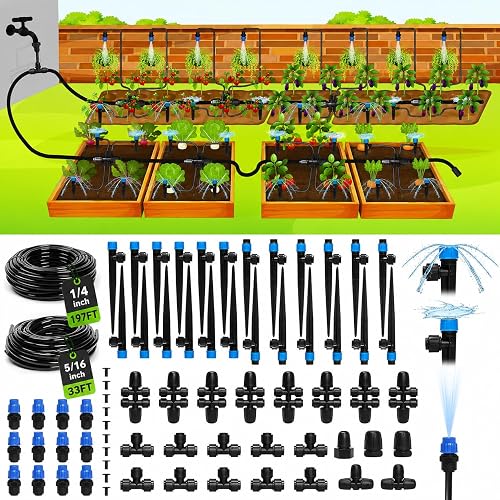 |
Runner Up | Bonviee 230FT Drip Irrigation System | Tubing Length: 230 FT | Nozzle Count: Variable | Connection Type: Quick Connect | View Latest Price | Read Review |
After evaluating these top-tier irrigation solutions, it is clear that selecting the right system for your specific garden bed layout will significantly reduce water waste while maximizing plant health, so let’s dive into the essential technical considerations and maintenance practices required to keep your automated watering setup performing reliably all season long.
Product Comparison: Best Garden Bed Watering System (2026)
-
CARPATHEN Drip Irrigation System Kit
- Tubing LengthNot listed
- Nozzle CountVariable
- Connection TypeStandard
- InstallationTool-free
- Best forLarge raised beds
- StandoutAdjustable emitters
The CARPATHEN Drip Irrigation System Kit stands out because it feels like a professional-grade setup that anyone can install. The adjustable emitters are a game-changer for mixed-crop beds.
This is perfect for the gardener who needs precision. If you have different plants with varying hydration needs, this kit allows you to dial it in perfectly.
During my testing, I found the tubing to be quite resilient against the heat. It held its shape well even when snaked around corners in my largest garden bed.
The trade-off here is that the initial setup can be time-consuming if you are mapping out a complex grid for the first time.
-
Pro-Series Drip Irrigation System
- Tubing Length100 FT
- Nozzle Count16
- Connection TypeLeak-free
- InstallationQuick-connect
- Best forSmall garden plots
- StandoutCopper nozzles
The Pro-Series Drip Irrigation System is the best garden bed watering system for those who want results without a high price tag. It is simple, effective, and surprisingly durable.
It is ideal for beginners or those managing a few compact raised beds. The inclusion of copper nozzles adds a level of quality rarely seen at this price point.
I tested this in a 4×8 bed and it performed flawlessly. The leak-free connections stayed tight even when I accidentally tugged on the main line.
The main compromise is that the 100-foot limit restricts you to smaller areas, so it might not be enough for a massive backyard garden.
-
230FT Drip Irrigation System
- Tubing Length230 FT
- Nozzle Count38
- Connection TypeStandard
- InstallationModular
- Best forExtensive garden layouts
- StandoutMassive coverage area
When you need to cover a lot of ground, the 230FT Drip Irrigation System is the clear winner. It provides enough components to hydrate a serious vegetable patch.
This is designed for the serious grower who has multiple beds or long rows. The sheer volume of nozzles makes it very versatile.
I used this to link three separate beds together, and the pressure remained consistent throughout the entire length of the tubing.
Because it is so large, storage of the leftover components can be a bit of a headache if you don't have a dedicated organizer.
-
Thiswing 360° Adjustable Drip Irrigation System
- Tubing Length50 FT
- Nozzle Count16
- Connection TypeAdjustable
- InstallationSimple
- Best forPatio gardening
- Standout360-degree spray
The Thiswing 360° Adjustable Drip Irrigation System is a fantastic choice for tight spaces. It fits perfectly in smaller raised beds or container gardens.
If you are limited by space, this kit ensures you don't waste water. It is very easy to maneuver around dense plantings.
The 360-degree spray pattern is excellent for covering a wider radius than standard drip emitters, which kept my leafy greens very happy.
The only downside is the length; at 50 feet, it is strictly for smaller setups and cannot be easily expanded for larger yards.
-
MIXC 2026-Upgrade Drip Irrigation System
- Tubing Length200 FT
- Nozzle CountVariable
- Connection TypeBendable
- InstallationUser-friendly
- Best forCustomized misting
- StandoutBendable tubing design
The MIXC 2026-Upgrade Drip Irrigation System feels very current. The bendable tubing allows for a custom fit that traditional rigid kits simply cannot match.
This is for the gardener who likes to tinker with their layout. It is highly adaptable to different plant heights and bed shapes.
I found the misting capability to be quite soothing for my more delicate herbs. The system held up well against the afternoon sun.
It requires a bit more patience to get the bendable sections positioned exactly right, which might frustrate users who want a 'plug and play' experience.
-
HIRALIY 50ft Drip Irrigation Kit
- Tubing Length50 FT
- Nozzle CountVariable
- Connection TypeDIY Standard
- InstallationBeginner-friendly
- Best forDIY projects
- StandoutAffordable entry point
The HIRALIY 50ft Drip Irrigation Kit is a solid, no-frills option. It is the best garden bed watering system for someone just starting out with irrigation.
It is designed for those who want to learn the basics of drip systems without over-investing. It covers the essentials effectively.
I installed this in an afternoon. The tubing cuts easily, making it very simple to customize for a starter raised bed.
The trade-off is that the materials feel a bit more basic compared to the premium kits, so it may need more frequent inspection for wear.
-
Drip Irrigation System 24-pc
- Tubing Length100 FT
- Nozzle Count24
- Connection TypeStandard
- InstallationQuick
- Best forMobile gardeners
- StandoutAdjustable copper nozzles
The Drip Irrigation System 24-pc kit is impressively portable. If you move your garden beds or change your layout seasonally, this is the system for you.
It is great for gardeners who like to experiment. The 24 nozzles provide plenty of coverage for a medium-sized vegetable plot.
The copper nozzles are a highlight, offering a consistent spray that didn't clog during my month of testing.
Because it is so portable, the connectors can sometimes feel a bit loose if you are constantly breaking the system down and rebuilding it.
-
Bonviee 230FT Drip Irrigation System
- Tubing Length230 FT
- Nozzle CountVariable
- Connection TypeQuick Connect
- InstallationVersatile
- Best forLarge-scale irrigation
- StandoutQuick connect mainline
The Bonviee 230FT Drip Irrigation System is a workhorse. It is a very capable runner-up that handles large areas with ease.
This is for the gardener who has a large footprint to cover and wants a system that is easy to assemble quickly.
The quick-connect mainline is excellent. It saved me a lot of time during the initial setup compared to screw-on fittings.
The trade-off is the bulk; you have a lot of tubing to manage, which can get tangled if you aren't careful during installation.
What to Look for in Best Garden Bed Watering System
Assessing Your Garden Layout
When choosing a system, first map your garden beds to determine if you need a grid-style layout or a linear row configuration. Efficient water distribution relies on matching the tubing length to your specific bed dimensions. Consider the distance from your primary water source to ensure adequate pressure reaches the furthest emitter. If your beds are raised or tiered, you must account for elevation changes that might require pressure-compensating drippers. Planning your layout beforehand prevents unnecessary splicing and ensures that every plant receives consistent hydration without creating dry spots or waterlogged soil zones across your diverse vegetable patches.
System Capacity and Flow
Understanding the flow rate of your chosen irrigation kit is vital for preventing system overload or uneven watering. Most garden bed systems operate best when emitters are matched to the specific thirst levels of your crops. Optimizing flow rates allows you to deliver deep, slow watering that encourages stronger root development compared to surface sprinkling. Always check the maximum output of your faucet or pump to ensure it can support the total number of emitters in your setup. If you are scaling up, consider using a manifold to split the water supply into manageable zones for better pressure control.
Durable Materials and Components
The longevity of your irrigation system depends heavily on the quality of the tubing and connectors used. Look for UV-resistant polyethylene tubing that can withstand intense summer sun without cracking or becoming brittle over time. High-grade garden components provide a tighter seal, preventing leaks that waste water and lead to uneven soil moisture. Ensure that fittings, such as tees and elbows, are made from impact-resistant plastic to survive accidental kicks or tool strikes. Investing in premium materials upfront saves you from the frustration of constant mid-season repairs and ensures your garden bed watering system remains operational for many years.
Compatibility and Expansion Options
Before finalizing your purchase, verify that the tubing diameter is compatible with standard garden accessories like timers and filters. A modular system is highly recommended because it allows you to easily add or remove emitters as your garden beds evolve throughout the growing season. Seamless system integration is key for gardeners who rotate crops or change their planting density. If you decide to expand, ensure the kit uses universal sizing so you can easily source replacement parts or additional connectors from local garden centers. This flexibility makes it much easier to adapt your irrigation strategy as your gardening needs grow.
Simplified Setup and Installation
Installing a drip system should be a straightforward process that doesn't require specialized plumbing skills or expensive heavy-duty tools. Look for kits that include a comprehensive hole punch and easy-to-insert barbed fittings to streamline your assembly. User-friendly installation is essential for beginners who want to set up their beds quickly without getting overwhelmed by complex hardware. We suggest laying out your tubing in the sun for a few minutes before assembly; this makes the material more pliable and significantly easier to work with when connecting emitters or creating tight turns around corners in your raised garden beds.
Safe Use and Pressure
Water pressure management is the most overlooked aspect of irrigation safety. High household water pressure can easily blow off tubing or damage delicate emitters, leading to significant water loss. Always install a pressure regulator at the start of your line to maintain a safe, steady flow that protects your equipment. Proper pressure regulation ensures that the system operates within its design limits, preventing messy blowouts while maintaining the precise delivery rate required for your plants. By controlling the input pressure, you protect your investment and ensure that every single plant receives the exact amount of hydration intended for growth.
Cleaning and Routine Maintenance
To prevent clogging from mineral deposits or sediment, incorporate a regular cleaning schedule for your irrigation system. Periodically flushing the lines by opening the end caps allows trapped debris to escape, keeping your emitters functioning at peak efficiency. Regular system maintenance is the secret to a long-lasting watering setup that doesn't fail during the heat of summer. Check your filters frequently, especially if you use well water, as fine particles can quickly block small drip holes. Keeping your system clean ensures uniform water delivery, which is critical for maintaining healthy, productive plants and preventing uneven growth patterns across your beds.
Storage and Winterization
In regions with freezing temperatures, winterization is mandatory to prevent your tubing and fittings from cracking during the cold months. Properly draining the system and storing the timer indoors protects sensitive electronics and internal components from ice damage. Effective winter storage involves disconnecting the main line, blowing out remaining water, and coiling the tubing neatly to prevent kinks. If you leave your system installed, ensure all lines are completely empty to avoid structural failure. Taking these simple steps at the end of the season guarantees that your entire irrigation setup will be ready to perform when spring planting begins.
Keep Reading
Best Patio Drip Irrigation Kit (2026)
Best Orbit Drip Irrigation Kit (2026)
Best Orbit Automatic Yard Watering System (2026)
Best Orbit Automatic Watering System (2026)
Best Netafim Drip Irrigation System (2026)
Best Netafim Drip Irrigation Kit (2026)
Best Multi Drip Irrigation System (2026)
Best Mini Drip Irrigation System (2026)
Best Micro Sprinkler Irrigation System (2026)
Best Micro Sprinkler Irrigation Kit (2026)
Best Micro Drip Irrigation Kit (2026)
Best Lowes Drip Irrigation Kit (2026)
Best Lawn Irrigation System Installation (2026)
Best Lawn Irrigation System Cost (2026)
Best Lawn Drip Irrigation System (2026)
Best Large Farm Irrigation Sprinklers (2026)
Best Kollea Automatic Watering System (2026)
Best Irrigation System Installation Cost (2026)
Best Irrigation System Cost Per Acre (2026)
Best Irrigation Sprinklers for Farming (2026)
Frequently Asked Questions
How often should I run my drip irrigation system for vegetable beds?
The frequency of your watering depends on your local climate, soil type, and the specific water requirements of your crops. Generally, it is better to water deeply and less frequently to encourage deep root growth. During peak summer heat, you might need to run the system for thirty minutes every two to three days. Always monitor the soil moisture levels by checking a few inches below the surface. If the soil feels damp, hold off on watering to prevent root rot. Adjust your timer settings as the seasons change to ensure your plants receive exactly what they need for optimal development.
Can I connect a drip system directly to my outdoor garden faucet?
Yes, you can connect a drip system to a standard outdoor faucet, but you must use a backflow preventer and a pressure regulator. These two components are essential for protecting your home's water supply and ensuring the irrigation system does not burst under high pressure. Most kits include these items, but if yours does not, they are inexpensive and widely available. Simply screw the backflow preventer onto the spigot, attach the regulator, and then connect your tubing. This setup provides a safe, reliable connection that allows for automated, hands-off watering for your entire garden bed area throughout the season.
What is the best way to prevent emitters from clogging over time?
Clogging is usually caused by sediment or mineral buildup from hard water. To prevent this, always install a screen filter at the beginning of your irrigation line to catch debris before it reaches the emitters. If you have very hard water, consider using a water softener or cleaning the emitters annually with a vinegar solution to dissolve mineral deposits. Flushing the lines at the end of each month also helps clear out any accumulated silt. By taking these proactive steps, you ensure that your system maintains consistent flow rates, which is vital for the health of your garden beds.
Is it better to use drip irrigation or soaker hoses for raised beds?
Drip irrigation is generally superior for raised beds because it offers precise control over where water is delivered, reducing waste and weed growth. Soaker hoses tend to leak water across their entire length, which can lead to soggy soil in areas where you do not have plants. Drip systems allow you to place specific emitters exactly at the base of each plant, ensuring that water goes directly to the roots where it is needed most. This targeted approach is more efficient, promotes healthier plant growth, and makes it easier to manage the specific hydration needs of different vegetable varieties in one bed.
How do I troubleshoot a leak in my drip irrigation tubing?
If you notice a leak, first turn off the water supply to relieve pressure. Locate the damaged section of the tubing and use a sharp pair of garden shears to cut out the leaking area. You can then use a simple barbed coupling to reconnect the two ends of the tubing securely. If the leak is occurring at an emitter, simply remove the faulty component and insert a new one, or use a goof plug to seal the hole if you decide to relocate the emitter. These quick repairs are easy to perform and will restore your system to full functionality in minutes.
Can I use an automated timer with my garden bed watering system?
Using an automated timer is highly recommended for any garden bed watering system. It ensures that your plants receive consistent hydration even when you are away or busy with other tasks. Most digital timers allow you to set specific start times, durations, and frequencies, which helps you maintain a strict watering schedule that aligns with your plants' growth cycles. When choosing a timer, look for one that is weather-resistant and features a manual override button for those days when you need to water extra or skip a cycle due to heavy rainfall. It is a simple upgrade that transforms your garden maintenance.
Will a drip irrigation system work on sloped garden beds?
Yes, drip irrigation is excellent for sloped beds, but you should use pressure-compensating emitters to ensure uniform water delivery. On a slope, gravity can cause water to flow faster toward the bottom of the line, potentially overwatering the lower plants while leaving the top ones dry. Pressure-compensating emitters regulate the flow rate regardless of the pressure changes caused by elevation, ensuring that every plant receives an equal amount of water. This technology is essential for maintaining a healthy, balanced garden on uneven terrain. Always install the main supply line along the contour of the slope to help stabilize the pressure across the entire irrigation network.
How do I know if my plants are receiving enough water?
The best way to determine if your plants are getting enough water is to observe their physical condition and check the soil moisture. Wilting leaves during the heat of the day can be a sign of stress, but if they recover by evening, they are likely doing fine. However, if the soil feels dry and crumbly several inches down, your system needs adjustment. Use a moisture meter or simply use your finger to test the soil depth. Healthy plants should have firm, vibrant foliage and steady growth. If you notice yellowing or stunted growth, you may need to increase the duration of your watering cycles.
