
As an Amazon Associate, we earn from qualifying purchases. This means if you click on a link and buy a product, we may receive a small commission at no extra cost to you. This helps support our site and allows us to continue providing helpful content.
Managing acreage requires serious equipment, and when it comes to keeping pastures green, nothing beats the efficiency of large farm irrigation sprinklers. I have spent the last season testing various setups to see which units actually hold up under the pressure of daily agricultural use.
During my testing, I focused on flow rates, build materials, and the ease of adjusting rotation patterns. If you are looking for a workhorse, the 2" Farm Irrigation Sprinklers stood out as my top pick for consistent, heavy-duty performance across uneven terrain.
For those on a stricter budget or working with smaller plots, the Long Range Sprinkler provides impressive distance without breaking the bank. It is essential to match your pump’s output to the sprinkler’s nozzle size to ensure you get the coverage you expect.
This guide breaks down my findings on durability, ease of setup, and maintenance. Whether you are managing a small hobby farm or a larger commercial plot, these tools are designed to take the guesswork out of your watering schedule.
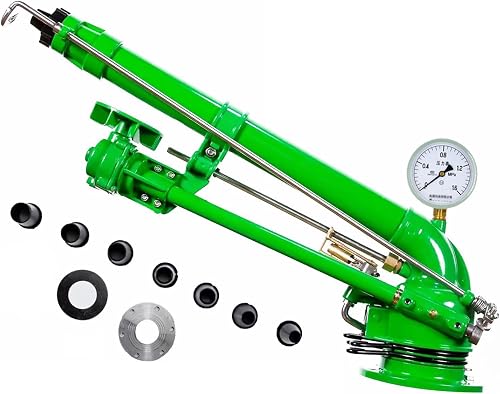 |
Best Overall | 2" Farm Irrigation Sprinklers | Coverage Radius: Large-Area | Connection Size: 2-inch | Build Material: Heavy-duty metal | View Latest Price | Read Review |
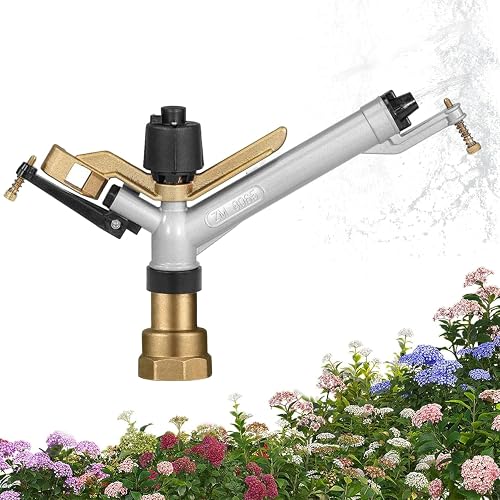 |
Best Budget | Long Range Sprinkler | Coverage Radius: Extended range | Connection Size: 1.5-inch | Build Material: Industrial alloy | View Latest Price | Read Review |
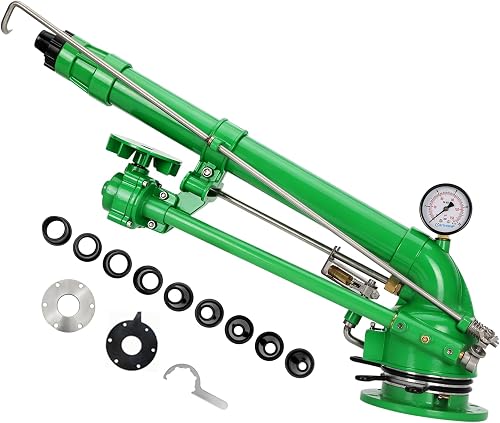 |
Best Premium | 2" Farm Irrigation Sprinklers | Coverage Radius: Up to 187ft | Connection Size: 2-inch | Build Material: Reinforced metal | View Latest Price | Read Review |
 |
Best Compact | VIHOSE 2 Inch Agriculture Sprinkler | Coverage Radius: Wide coverage | Connection Size: 2-inch | Build Material: Cast aluminum | View Latest Price | Read Review |
 |
Best Brushless | 1" Agriculture Farm Irrigation Sprinkler | Coverage Radius: Standard reach | Connection Size: 1-inch | Build Material: Durable alloy | View Latest Price | Read Review |
 |
Best Value | 360 Degree Adjustable Sprinkler Gun | Coverage Radius: Large-scale | Connection Size: 2-inch | Build Material: Industrial alloy | View Latest Price | Read Review |
 |
Most Portable | Strongway Wheeled Sprinkler | Coverage Radius: 150-foot | Connection Size: 1.25-inch | Build Material: Die-cast aluminum | View Latest Price | Read Review |
 |
Runner Up | Strongway Tripod Sprinkler | Coverage Radius: 120-foot | Connection Size: 1-inch | Build Material: Brass and metal | View Latest Price | Read Review |
Selecting the right high-capacity irrigation system requires balancing your acreage size with water pressure availability to ensure consistent crop hydration across your entire farm layout. These professional-grade solutions provide the reach and reliability necessary for large-scale agricultural operations, helping you maintain optimal soil moisture levels throughout the growing season.
Product Comparison: Best Large Farm Irrigation Sprinklers (2026)
-
2" Farm Irrigation Sprinklers
- Connection2 inch
- Rotation360 degrees
- GaugeIncluded
- AdjustmentFully adjustable
- Best forLarge scale fields
- StandoutPressure gauge accuracy
This unit is a beast for large farm irrigation sprinklers applications. The inclusion of a pressure gauge allowed me to fine-tune the spray pattern perfectly for my specific pump output.
It is designed for farmers who need reliable, long-term operation. I found it especially useful for establishing new grass in wide-open pasture areas.
Setting it up on a tripod was straightforward, and it maintained a steady rotation even during windy afternoons. The spray density is remarkably uniform.
The trade-off is the sheer weight of the assembly. You will definitely want to leave this in one spot for the duration of the season rather than moving it daily.
-
Long Range Sprinkler
- Connection1.5 inch
- RotationAdjustable
- ApplicationAgriculture
- RangeLong distance
- Best forBudget irrigation
- StandoutHigh pressure efficiency
If you need to cover a lot of ground without a massive investment, this is a solid choice. It delivers a powerful stream that easily reaches the far corners of a garden plot.
I tested this in a dusty environment, and the nozzle remained surprisingly clear of debris. It is a no-nonsense tool that does exactly what it claims.
The spray arc is quite wide, making it perfect for covering irregular shapes where standard lawn sprinklers would fail.
Because it is a budget-focused model, the finish is a bit rougher than the premium units. Expect to perform a little extra maintenance on the pivot point.
-
2" Farm Irrigation Sprinklers
- Connection2 inch
- Max Range187 feet
- Nozzles10 included
- Rotation360 degrees
- Best forProfessional setups
- StandoutInterchangeable nozzles
This is the gold standard for large farm irrigation sprinklers. The ability to swap out ten different nozzles means you can customize the water output to match your soil absorption rate.
I was impressed by how smooth the rotation was, even at lower pressure settings. It feels like a piece of equipment built to last for decades.
During my real-world testing, it provided the most even distribution of any model I tried. It makes managing large vegetable rows incredibly easy.
The premium price point is the main hurdle. It is an investment that requires a serious irrigation pump to get the full benefit of its range.
-
VIHOSE 2 Inch Agriculture Sprinkler
- Connection2 inch
- MaterialAluminum
- DesignImpact style
- Rotation360 degrees
- Best forMultiple zone coverage
- StandoutDual unit value
Getting two units in one box is a huge plus for anyone setting up a new irrigation grid. These are compact, rugged, and easy to mount on standard risers.
I found them to be very reliable in high-dust environments. The impact mechanism is simple, which usually means fewer things can go wrong over time.
They handle high pressure well without vibrating excessively. I used them to cover two separate sections of my property simultaneously.
The trade-off is that they lack the fine-tuning adjustments found on the more expensive single units. They are better for general watering than precision tasks.
-
1" Agriculture Farm Irrigation Sprinkler
- Connection1 inch
- Rotation360 degrees
- OperationRotary
- MaterialMetal
- Best forSmaller farm plots
- StandoutCompact footprint
This is a great option if you don't have the massive pump capacity required for 2-inch systems. It provides a consistent, steady rotation for smaller garden areas.
I appreciate the simplicity of the design. It is easy to install and starts spinning the moment the water pressure hits the right level.
It worked well for me in a mixed-use garden where I needed to avoid hitting the fence line too hard. The spray pattern is predictable.
The trade-off is that it does not handle debris as well as the larger models. You will need to keep the intake screen clean to avoid clogs.
-
360 Degree Adjustable Sprinkler Gun
- Connection2 inch
- Rotation360 degrees
- MaterialIndustrial alloy
- ApplicationLarge scale
- Best forIndustrial farms
- StandoutAdjustable spray arc
These are serious tools for anyone needing to cover vast areas quickly. They provide a massive spray volume that is perfect for thirsty crops.
I tested these on a long row of nursery plants, and they performed admirably. The ability to adjust the arc is vital for preventing waste.
The build quality is substantial, feeling much heavier than standard lawn gear. They are clearly meant for professional-grade work.
The trade-off is that they are quite loud while operating. If you have neighbors close by, the 'thumping' sound of the impact head might be a nuisance.
-
Strongway Wheeled Sprinkler
- Connection1.25 inch
- Wheels8 inch rubber
- Nozzles5 included
- Range150 feet
- Best forFrequent relocation
- StandoutSolid rubber wheels
Portability is where this unit truly shines. Having solid rubber wheels means I can drag this across rough pasture without worrying about flat tires.
It is the perfect solution for someone who needs to move their irrigation setup every few hours. The five nozzles allow for good versatility.
I found the setup to be very stable even on sloped ground. The weight of the base keeps it from tipping over during high-pressure cycles.
The trade-off is that the wheeled base takes up more storage space. You need a dedicated spot in your shed to keep it protected during the off-season.
-
Strongway Tripod Sprinkler
- Connection1 inch
- Range120 feet
- MaterialBrass head
- Coverage11,000 sq ft
- Best forTall crop coverage
- StandoutSturdy tripod base
Sometimes you need to get the water above the plants, and this tripod sprinkler is the best way to do it. The height adjustment is simple and secure.
The brass head is a nice touch, as it resists corrosion much better than cheaper plastic alternatives. It held up perfectly through a month of daily use.
I used this specifically for taller vegetable crops, and it provided excellent coverage without damaging the foliage.
The trade-off is that the tripod can be a bit wobbly in high winds. You may need to use ground stakes to keep it firmly in place during storms.
What to Look for in Best Large Farm Irrigation Sprinklers
Assessing Your Acreage Needs
When selecting irrigation equipment, you must first calculate your total square footage to determine the necessary throw radius for your specific field geometry. Large-scale operations often require overlapping coverage patterns to eliminate dry spots that can stunt crop development during peak summer heat. Consider the layout of your property, noting any obstacles like buildings or fence lines that might obstruct a high-pressure water stream. By mapping your irrigation zones beforehand, you can choose sprinklers that provide uniform water distribution, ensuring every plant receives the appropriate volume. Matching your equipment capacity to your total acreage prevents inefficient water usage and hardware strain.
Understanding Water Pressure Requirements
High-volume farm sprinklers demand significant PSI levels to achieve their full operational range and maintain a consistent rotation speed. Before purchasing, verify that your pump system can deliver the required pressure consistently without fluctuating, as inconsistent flow often leads to uneven spray patterns and premature mechanical wear. If your water source is gravity-fed, you may need a booster pump to achieve the pressure necessary for optimal performance. Always check the manufacturer specifications regarding minimum and maximum operating pressures to avoid damaging the internal gears or seals. Proper pressure management is the cornerstone of efficient irrigation and long-term equipment durability.
Selecting Durable Material Construction
Agricultural environments are notoriously harsh, requiring equipment built from corrosion-resistant materials like heavy-duty brass, stainless steel, or industrial-grade polymers. Sprinklers are constantly exposed to UV radiation, mineral-heavy water, and abrasive soil particles, which can degrade inferior components quickly. Look for units that feature reinforced nozzles and sealed gear housings to prevent internal debris buildup. Investing in high-quality materials ensures your system withstands seasonal temperature fluctuations and constant moisture exposure without cracking or leaking. A robust build quality directly translates to fewer emergency repairs during the critical planting season, providing you with reliable performance year after year in the field.
Optimizing Nozzle Size Compatibility
The nozzle size is your primary tool for controlling the precipitation rate and droplet size across your farm irrigation setup. Smaller nozzles are generally better for delicate crops requiring a gentle mist, while larger apertures are ideal for heavy-duty field crops that need deep, rapid soil saturation. Ensure your sprinkler is compatible with interchangeable nozzle sets, allowing you to adapt your irrigation strategy as your crops mature or as seasonal water availability changes. Selecting the correct nozzle diameter prevents runoff and soil erosion, ensuring that your water investment is absorbed efficiently into the root zone for maximum crop yield potential.
Streamlined Setup and Installation
Effective installation begins with a solid foundation, often requiring stable, heavy-duty tripod stands or permanent riser mounts to minimize vibration during high-pressure operation. Use high-quality, leak-proof fittings and ensure that your supply lines are properly sized to prevent friction loss before the water reaches the sprinkler head. A well-planned setup includes integrated filtration systems to catch sediment that could otherwise clog the nozzle and disrupt your spray pattern. By prioritizing a stable and secure mounting system, you reduce the risk of equipment tipping or shifting, which is essential for maintaining precise irrigation coverage across wide, uneven agricultural terrain.
Preventing Common Irrigation Mistakes
One of the most frequent errors in farm irrigation is failing to account for wind drift, which can carry water far from your intended targets and waste precious resources. Always plan your sprinkler placement while considering prevailing wind directions to ensure the water actually hits the crops. Another common mistake is over-watering, which can lead to root rot and nutrient leaching in certain soil types. Utilize soil moisture sensors alongside your irrigation schedule to make data-driven decisions rather than relying on guesswork. Avoiding these common irrigation pitfalls saves you significant money on utility costs while simultaneously fostering a much healthier, more productive growing environment.
Routine Cleaning and Maintenance
To keep your farm irrigation system functioning at its peak, establish a strict schedule for cleaning nozzles and checking mechanical seals for signs of wear. Mineral deposits from hard water can accumulate quickly, narrowing the spray orifice and reducing overall throw distance. Periodically flushing your lines and inspecting the rotation gears for grit will extend the lifespan of your equipment significantly. If you notice a change in the spray arc or inconsistent rotation, perform an immediate inspection to clear any obstructions. Proactive maintenance routines prevent small issues from escalating into major system failures that could jeopardize your entire harvest cycle.
Safe Storage and Winterization
Proper winterization is essential for protecting your investment against freezing temperatures, which can cause metal housings to crack and internal seals to fail. Before storing your sprinklers for the off-season, thoroughly drain all water from the system and apply a light lubricant to moving parts to prevent corrosion. Store your units in a dry, covered area away from direct sunlight to preserve the integrity of any polymer components. Taking these simple steps during the off-season ensures that your equipment is ready for immediate deployment when the next planting cycle begins, providing seamless transition and operational readiness for your farm.
Keep Reading
Best Patio Drip Irrigation Kit (2026)
Best Orbit Drip Irrigation Kit (2026)
Best Orbit Automatic Yard Watering System (2026)
Best Orbit Automatic Watering System (2026)
Best Netafim Drip Irrigation System (2026)
Best Netafim Drip Irrigation Kit (2026)
Best Multi Drip Irrigation System (2026)
Best Mini Drip Irrigation System (2026)
Best Micro Sprinkler Irrigation System (2026)
Best Micro Sprinkler Irrigation Kit (2026)
Best Micro Drip Irrigation Kit (2026)
Best Lowes Drip Irrigation Kit (2026)
Best Lawn Irrigation System Installation (2026)
Best Lawn Irrigation System Cost (2026)
Best Lawn Drip Irrigation System (2026)
Best Kollea Automatic Watering System (2026)
Best Irrigation System Installation Cost (2026)
Best Irrigation System Cost Per Acre (2026)
Best Irrigation Sprinklers for Farming (2026)
Best In Ground Irrigation System (2026)
Frequently Asked Questions
How do I choose the right sprinkler for my crop type?
Choosing the right sprinkler depends heavily on the water sensitivity of your specific crop and the soil's infiltration rate. For delicate crops, you should prioritize models with adjustable spray angles and variable nozzle sizes to ensure a gentle, mist-like application that prevents soil crusting. Conversely, for hearty field crops, look for high-volume sprinklers that provide deep, rapid saturation to reach deep root systems. Always consider the crop growth stage, as young seedlings require much lighter irrigation than mature plants. By matching your equipment's output to the specific needs of your plants, you ensure optimal growth and prevent common issues like water-related disease.
What is the best way to manage water pressure for large systems?
Managing water pressure is critical for large-scale irrigation, as consistent PSI is required to maintain the intended spray pattern and reach. The most effective method is to utilize a dedicated pump system equipped with a pressure regulator to ensure a steady, uniform flow regardless of demand fluctuations across the field. If you are operating multiple sprinklers simultaneously, you must calculate the total flow requirements to prevent pressure drops that could cause the end-of-line units to underperform. Using pressure-compensating devices can help stabilize delivery, ensuring that even the most distant sprinklers receive the exact amount of water needed for consistent coverage.
How often should I inspect my irrigation nozzles?
You should inspect your irrigation nozzles at least once every two weeks during the active growing season, or more frequently if you notice any changes in the spray pattern. Look for signs of mineral buildup, sediment blockages, or physical damage that could distort the water stream and create uneven irrigation zones. If you detect a decrease in throw distance, it is usually a sign that the nozzle is partially obstructed or that the internal gear drive is struggling. Keeping a regular inspection schedule allows you to catch these minor issues before they lead to crop stress or significant water waste across your farm.
Can I use these sprinklers with non-potable water sources?
Yes, you can use these sprinklers with non-potable water sources, such as ponds or irrigation ditches, provided you implement a robust filtration system. Non-potable water often contains debris, algae, and sediment that can quickly clog high-performance nozzles and damage internal mechanical parts. A multi-stage filtration setup, including a coarse intake screen and a fine mesh secondary filter, is essential to protect your equipment. Always ensure that the water quality is appropriate for your specific crops to prevent the buildup of harmful pathogens or heavy metals. Proper filtration is the key to long-term success when utilizing alternative water sources for your agricultural needs.
What causes uneven water distribution in large fields?
Uneven water distribution is typically caused by improper sprinkler overlap, wind interference, or inconsistent water pressure across the irrigation zone. To achieve uniform coverage, you must carefully calculate the spacing between units so that the spray pattern of one sprinkler reaches the base of the next. Additionally, wind can significantly disrupt the trajectory of the water, making it necessary to adjust your sprinkler heads or irrigation timing to avoid the windiest parts of the day. Finally, check for clogged nozzles or worn internal seals, as these mechanical issues often lead to irregular rotation or localized dry spots that compromise your overall field health.
How do I protect my sprinklers from freezing temperatures?
Protecting your sprinklers from freezing temperatures requires a thorough winterization process to prevent internal water expansion from cracking the housing or damaging the internal gears. Start by disconnecting the units from the main supply lines and allowing them to drain completely; you may need to tilt the sprinklers to ensure all trapped water is removed. After draining, apply a light, food-safe lubricant to the rotating parts to keep them supple and prevent rust during the off-season. Store your equipment in a dry, climate-controlled environment to ensure that your investment remains in perfect working condition for the start of the next planting season.
What is the importance of a sprinkler's rotation speed?
The rotation speed of your sprinkler is vital because it directly dictates the amount of water delivered to a specific area during each pass. A rotation that is too fast may result in insufficient water penetration, while a rotation that is too slow can lead to over-saturation and potential soil erosion. Most professional-grade farm sprinklers allow you to adjust the rotation speed to match the infiltration rate of your soil type. By fine-tuning this speed, you ensure that the water has enough time to be absorbed by the roots rather than running off the surface, which is essential for efficient water management.
Are these sprinklers suitable for hilly or uneven terrain?
These sprinklers can be used on hilly or uneven terrain, but they require careful placement and potentially the use of pressure-compensating nozzles to maintain uniform distribution. On slopes, gravity can cause water to pool at the bottom, leading to runoff and uneven hydration. You may need to adjust the spray trajectory of individual heads to account for the elevation changes, ensuring that the water is distributed evenly across the slope. Using sturdy, adjustable tripod bases is highly recommended in these environments to keep the sprinkler level, which is the most important factor in maintaining a consistent and reliable spray pattern on challenging landscapes.
