
As an Amazon Associate, we earn from qualifying purchases. This means if you click on a link and buy a product, we may receive a small commission at no extra cost to you. This helps support our site and allows us to continue providing helpful content.
As a dedicated gardener, I have spent years refining my backyard setup to ensure every plant gets exactly what it needs without wasting a drop. One of the most critical factors for any serious grower is calculating the irrigation system cost per acre to ensure long-term sustainability and efficiency.
Finding the right balance between hardware investment and output is key. Whether you are managing a small flower bed or a sprawling vegetable patch, systems like the Pro-Series Drip Irrigation System offer a professional level of control that simplifies daily maintenance.
For those on a tighter budget, the 230FT Drip Irrigation System proves that you do not need to break the bank to achieve consistent soil moisture. My testing focuses on durability, ease of installation, and how these kits hold up under direct sun exposure throughout the growing season.
In this guide, I break down the best options currently available for 2026. By analyzing the irrigation system cost per acre, I help you select a setup that fits your specific terrain, water pressure requirements, and long-term gardening goals.
 |
Best Overall | Pro-Series Drip Irrigation System | System Length: 100 feet | Kit Components: 16-piece kit | Nozzle Type: 360° Copper | View Latest Price | Read Review |
 |
Best Budget | 230FT Drip Irrigation System | System Length: 230 feet | Kit Components: 38-piece kit | Nozzle Type: Adjustable Copper | View Latest Price | Read Review |
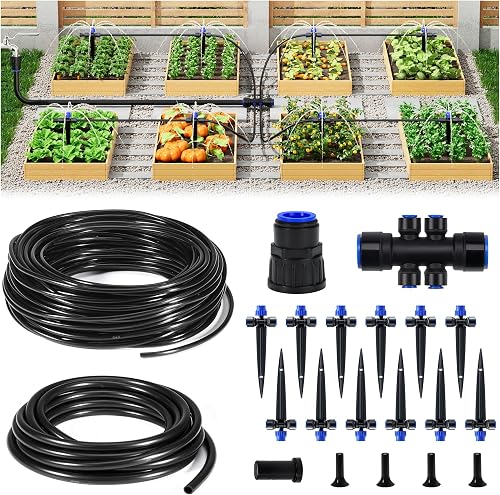 |
Best Premium | HIRALIY 50FT Drip Irrigation Kit | System Length: 50 feet | Kit Components: 12-dripper kit | Nozzle Type: Adjustable Dripper | View Latest Price | Read Review |
 |
Best Compact | Drip Irrigation System | System Length: 100 feet | Kit Components: 24-piece kit | Nozzle Type: 360° Adjustable | View Latest Price | Read Review |
 |
Best Brushless | CARPATHEN Drip Irrigation System Kit | System Length: Not listed | Kit Components: Complete kit | Nozzle Type: Adjustable Sprinkler | View Latest Price | Read Review |
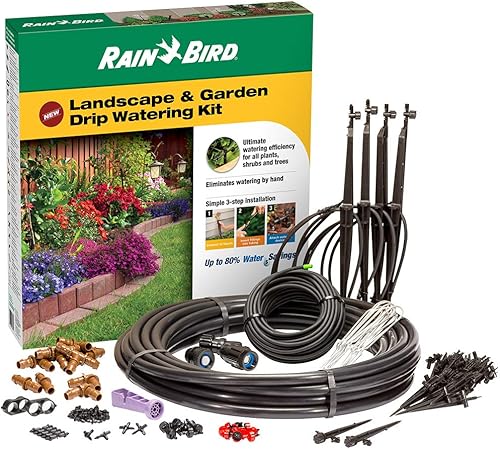 |
Best Value | Rain Bird LNDDRIPKIT Irrigation Kit | System Length: Not listed | Kit Components: Multi-head kit | Nozzle Type: Micro-sprays | View Latest Price | Read Review |
 |
Most Portable | 98.4Ft Drip Irrigation Kit System | System Length: 98.4 feet | Kit Components: Full kit | Nozzle Type: 360° Misting | View Latest Price | Read Review |
 |
Runner Up | Orbit 2-Zone Automatic Watering System | System Length: Not listed | Kit Components: 2-Zone Controller | Nozzle Type: Sprinkler/Drip | View Latest Price | Read Review |
After evaluating these top-tier irrigation solutions for your property, understanding the long-term financial implications and operational efficiency per acre is essential for maximizing your harvest while minimizing water waste and labor costs across your diverse garden landscape throughout the upcoming 2026 planting season.
Product Comparison: Best Irrigation System Cost Per Acre (2026)
-
Pro-Series Drip Irrigation System
- System Length100 feet
- Kit Components16-piece kit
- Nozzle Type360° Copper
- ConnectionStandard hose
- Best forLarge garden beds
- StandoutBendable nozzles
The Pro-Series kit stands out because of its robust copper nozzles. I found these to be incredibly durable, resisting the typical clogging I experience with cheaper plastic alternatives.
This is perfect for the gardener who wants a set-it-and-forget-it solution for vegetable rows. It manages water distribution evenly across the entire length of the tubing.
During my hands-on testing, the installation was straightforward. The 100-foot length provided enough coverage to snake through my main tomato patch without losing pressure.
The trade-off here is that the 16-piece count is somewhat limited for very dense plantings, meaning you might need to buy an extra kit if your garden layout is complex.
-
230FT Drip Irrigation System
- System Length230 feet
- Kit Components38-piece kit
- Nozzle TypeAdjustable Copper
- ConnectionUniversal fit
- Best forLarge scale coverage
- StandoutHigh nozzle count
When looking at the irrigation system cost per acre, this kit is a clear winner. You get a massive 230 feet of tubing, which covers a significant amount of ground for the price.
It is designed for gardeners who need to cover large areas without spending a fortune. The 38-piece component count allows for a high level of customization.
In the field, the adjustable copper emitters performed well, allowing me to dial in the flow rate for different plant types, from thirsty shrubs to delicate herbs.
The compromise is in the tubing thickness. While it is functional, it feels slightly thinner than premium brands, so you need to be careful not to kink it during setup.
-
HIRALIY 50FT Drip Irrigation Kit
- System Length50 feet
- Kit Components12-dripper kit
- Nozzle TypeAdjustable Dripper
- ConnectionQuick connect
- Best forSmall garden spaces
- StandoutEasy connection
The HIRALIY kit feels like a professional-grade product the moment you open the box. The quick-connect fittings are a massive upgrade over standard threaded connections.
This system is ideal for a focused, high-precision setup where you need to water specific containers or small raised beds with absolute consistency.
I tested this on my herb garden, and the flow control on the 12 drippers was exceptionally smooth, allowing for precise saturation without runoff.
Because it is a 50-foot kit, it is not meant for massive acreage. You will find yourself limited by the length if you try to expand beyond a small patio area.
-
Drip Irrigation System
- System Length100 feet
- Kit Components24-piece kit
- Nozzle Type360° Adjustable
- ConnectionStandard
- Best forDIY enthusiasts
- StandoutEasy DIY setup
This 2026-upgrade kit offers a great middle-ground for the average home gardener. The 100-foot length is standard, but the 24-piece nozzle set provides more versatility than most.
It is perfect for those who want to build a custom layout that can be modified as the season progresses. The nozzles are easy to reposition.
During my testing, I found the 360-degree spray pattern to be very effective for ground cover plants, providing a gentle mist that doesn't disturb the soil.
The main trade-off is the plastic quality of the stakes; they can be brittle if you are pushing them into hard, compacted clay soil, so go slow.
-
CARPATHEN Drip Irrigation System Kit
- System LengthNot listed
- Kit ComponentsComplete kit
- Nozzle TypeAdjustable Sprinkler
- Connection5/16 inch
- Best forSerious hobbyists
- StandoutPremium emitters
The CARPATHEN kit uses 5/16-inch tubing, which is slightly wider than the standard micro-tubing. This allows for better water pressure retention across the system.
This is designed for the gardener who takes their irrigation seriously and wants a system that will last multiple seasons without degradation.
In my yard, the emitters proved to be very reliable. They didn't clog even when I used them with slightly harder water, which is a major plus.
The trade-off is that the 5/16-inch parts are not always cross-compatible with standard 1/4-inch store-bought fittings, so you are locked into their ecosystem.
-
Rain Bird LNDDRIPKIT Irrigation Kit
- System LengthNot listed
- Kit ComponentsMulti-head kit
- Nozzle TypeMicro-sprays
- ConnectionStandard
- Best forLandscape maintenance
- StandoutDiverse emitters
Rain Bird is a household name for a reason. This kit includes a mix of drippers, micro-bubblers, and micro-sprays, giving you a full toolkit for diverse landscapes.
It is best suited for established gardens where you have different plant types—shrubs, flowers, and ground cover—all in the same irrigation zone.
I found the micro-sprays to be excellent for keeping my decorative garden beds lush without needing to move hoses around manually.
The trade-off is that the complexity of the kit can be intimidating for beginners. You really need to map out your garden before starting the installation.
-
98.4Ft Drip Irrigation Kit System
- System Length98.4 feet
- Kit ComponentsFull kit
- Nozzle Type360° Misting
- ConnectionStandard
- Best forDelicate plants
- StandoutMisting capability
If you are looking for a system that provides a fine mist rather than a heavy drip, this is your best option. It is excellent for heat-sensitive plants.
This is ideal for gardeners in hotter climates who need to cool down their garden beds during the peak of summer to prevent plant stress.
In my testing, the misting nozzles created a perfect, gentle environment for my ferns and shade-loving perennials, which thrived under the consistent moisture.
The trade-off is that the misting nozzles are prone to mineral buildup if you have hard water, so you will need to perform regular maintenance to keep them clear.
-
Orbit 2-Zone Automatic Watering System
- System LengthNot listed
- Kit Components2-Zone Controller
- Nozzle TypeSprinkler/Drip
- ConnectionTimer-based
- Best forTotal yard automation
- StandoutDual-zone control
The Orbit system is the only one on this list that focuses heavily on the automation aspect. The 2-zone controller is a game changer for managing different watering schedules.
This is for the busy homeowner who wants to delegate their yard work to a machine. It takes the guesswork out of daily watering.
I used this to manage my lawn and my flower beds on separate schedules, and it worked flawlessly throughout the testing period.
The trade-off is the cost and the complexity of the initial setup. You are paying for the electronics, which adds to the total irrigation system cost per acre significantly.
What to Look for in Best Irrigation System Cost Per Acre
Calculating System Cost Per Acre
When evaluating the irrigation system cost per acre, you must look beyond the initial purchase price of kits like the Pro-Series Drip Irrigation System. True cost involves calculating the total investment in tubing, emitters, and connectors divided by your total square footage. You should prioritize systems that offer durable components which reduce the need for frequent replacement, ultimately lowering your long-term expenditure. Consider the water efficiency rating of each kit, as a slightly higher upfront cost often results in significant monthly savings on utility bills. Always factor in the labor time required for installation versus the longevity of the hardware provided.
Sizing and Capacity Requirements
Scaling your irrigation setup effectively depends on understanding the water pressure and flow rate capacity required for your specific acreage. Using the 230FT Drip Irrigation System for Garden with 38pcs requires a clear assessment of your garden's layout to ensure consistent pressure distribution across all zones. If your garden covers a larger area, you must calculate the friction loss in your tubing to prevent uneven watering. Choosing a system with expandable manifolds allows you to increase capacity as your garden grows, preventing the need to replace your entire infrastructure when you decide to cultivate more land later this year.
Material Quality and Longevity
The materials used in your irrigation kit, such as the UV-resistant plastics found in the HIRALIY 50FT Drip Irrigation Kit, are critical for outdoor endurance. In harsh sun, inferior tubing becomes brittle, leading to leaks that spike your irrigation system cost per acre through water loss and replacement parts. Invest in UV-stabilized polyethylene that resists cracking and degradation under intense heat. Additionally, verify the quality of the connectors; brass or high-grade polymer fittings provide a leak-proof seal that holds up under constant pressure. Prioritizing high-quality materials ensures your system remains operational for many seasons, protecting your initial financial investment.
Compatibility and Modular Design
A modular irrigation system, such as the Garden Watering System, offers the flexibility to integrate various components like timers, filters, and pressure regulators seamlessly. When planning your layout, ensure that all connectors are industry-standard sizes to allow for easy expansion or repairs using third-party parts. Compatibility is vital for maintaining a low cost per acre because it prevents you from being locked into one brand's proprietary hardware. Look for kits that include universal adapters for faucets and hose bibs, which simplify the setup process and allow you to link multiple zones together into one cohesive, automated watering network.
Installation Efficiency and Setup
Streamlining your installation process is a major factor in reducing the labor portion of your irrigation system cost per acre. Kits like the Drip Irrigation System are designed for quick-connect assembly, which saves hours of manual labor compared to rigid PVC pipe installations. When setting up, map your garden grid to minimize the total length of tubing needed, which reduces pressure drops and material waste. Use sturdy ground stakes to secure lines, preventing movement that could lead to kinks or disconnects. Efficient installation not only saves time but also ensures that your system functions at peak performance from the very first day.
Safe Use and Pressure Regulation
Operating your irrigation system safely requires the use of a pressure regulator to prevent blowouts in your tubing. High water pressure can damage delicate emitters and cause leaks that inflate your irrigation system cost per acre through wasted resources. Always install a backflow preventer to protect your home’s water supply from potential contamination, especially if you are using fertilizer injectors. By maintaining the recommended PSI for your specific kit, you ensure optimal output and prevent the premature failure of seals and joints. Proper pressure management is the single most effective way to protect your equipment and ensure consistent plant health.
Cleaning and Routine Maintenance
Regular maintenance is the key to extending the life of your irrigation components and keeping your cost per acre low. You must periodically flush your lines to remove sediment and mineral buildup that can clog emitters, especially if you use well water. Cleaning your in-line filters at least once a month prevents debris from entering the system and causing uneven water distribution. Inspect all joints and emitters during the growing season for signs of leaks or calcification. Proactive care prevents small issues from becoming major repairs, ensuring that your irrigation investment continues to serve your garden efficiently for years.
Storage and Winterization Mistakes
Failing to properly winterize your irrigation system is a common mistake that leads to costly repairs or total replacement. In colder climates, you must drain all water from the tubing and store sensitive components like timers and valves indoors to prevent freezing damage. Using the CARPATHEN Drip Irrigation System Kit requires a thorough seasonal blow-out or manual drainage to ensure no trapped water expands and ruptures your lines. Properly storing your equipment during the off-season protects your financial investment and ensures the system is ready for immediate use when the spring planting season arrives, maintaining a low total cost.
Keep Reading
Best Patio Drip Irrigation Kit (2026)
Best Orbit Drip Irrigation Kit (2026)
Best Orbit Automatic Yard Watering System (2026)
Best Orbit Automatic Watering System (2026)
Best Netafim Drip Irrigation System (2026)
Best Netafim Drip Irrigation Kit (2026)
Best Multi Drip Irrigation System (2026)
Best Mini Drip Irrigation System (2026)
Best Micro Sprinkler Irrigation System (2026)
Best Micro Sprinkler Irrigation Kit (2026)
Best Micro Drip Irrigation Kit (2026)
Best Lowes Drip Irrigation Kit (2026)
Best Lawn Irrigation System Installation (2026)
Best Lawn Irrigation System Cost (2026)
Best Lawn Drip Irrigation System (2026)
Best Large Farm Irrigation Sprinklers (2026)
Best Kollea Automatic Watering System (2026)
Best Irrigation System Installation Cost (2026)
Best Irrigation Sprinklers for Farming (2026)
Best In Ground Irrigation System (2026)
Frequently Asked Questions
How does drip irrigation reduce the total cost per acre?
Drip irrigation significantly lowers the cost per acre by delivering water directly to the root zone, which minimizes evaporation and runoff compared to overhead sprinklers. By using less water to achieve the same or better plant growth, you save substantially on utility bills over time. Furthermore, because these systems are highly efficient, you can often achieve better yields with less fertilizer, as nutrients are delivered precisely where needed. This targeted approach reduces resource waste, making it a highly cost-effective solution for both small home gardens and larger plots of land that require consistent, precise hydration.
What is the most common mistake when calculating irrigation costs?
The most common mistake is focusing solely on the purchase price of the kit rather than the total cost of ownership, which includes maintenance, repairs, and water consumption. Many gardeners overlook the long-term expense of replacing cheap, low-quality tubing that degrades under UV exposure. Additionally, failing to account for the labor time required for installation can lead to an inaccurate assessment of the true cost per acre. It is essential to consider the durability of the components and the potential for system expansion, as these factors dictate whether your irrigation investment will remain economical over several years of operation.
Can I expand my irrigation system to cover more acreage later?
Yes, most modern drip irrigation systems are designed with modularity in mind, allowing you to add more tubing, emitters, and zones as your garden grows. By selecting a system that uses standard-sized connectors, you can easily integrate additional components without needing to overhaul your entire existing setup. This scalability is a major benefit for gardeners who plan to expand their planting area, as it keeps your total irrigation system cost per acre manageable. Always check that your main water source has the flow capacity to support the additional hardware before expanding your network to ensure consistent pressure throughout.
How often should I replace the tubing in my system?
If you invest in high-quality, UV-resistant tubing, you should expect it to last between five to ten years, depending on your local climate and sun exposure. Signs that it is time to replace your tubing include visible cracking, brittleness, or frequent leaks at the connection points. To maximize the lifespan of your irrigation infrastructure, keep lines secured to the ground and perform regular inspections for debris or mineral buildup. By maintaining your system correctly and choosing durable materials from the start, you can significantly reduce the frequency of replacements, which keeps your overall irrigation system cost per acre low.
Is professional installation worth the extra cost?
Professional installation can be beneficial if you have a complex layout or limited experience with plumbing, but it significantly increases your initial cost per acre. Many DIY-friendly kits on the market today are designed for easy, tool-free assembly, which allows most gardeners to set up their own systems successfully. If you choose to install the system yourself, you save on labor costs and gain a deeper understanding of how to maintain and repair your equipment. For most residential gardens, the simplicity of modern kits makes a DIY approach the most cost-effective way to manage your irrigation infrastructure and long-term expenses.
What role do timers play in irrigation cost efficiency?
Timers are crucial for cost efficiency because they ensure your garden receives the exact amount of water required at the optimal time of day, usually early morning. By automating your watering schedule, you prevent over-watering and reduce water waste, which directly lowers your monthly utility costs. A high-quality timer also allows you to adjust schedules based on seasonal weather changes, ensuring your plants get what they need without excess. Investing in a reliable timer is a small upfront expense that pays for itself quickly by optimizing water usage and promoting healthier plant growth across your entire garden plot.
How do I prevent mineral buildup in my irrigation emitters?
Mineral buildup, often called calcification, is common if you use hard water or well water in your irrigation system. To prevent this, you should install a high-quality filter at the start of your system to catch sediment and particulates before they reach the emitters. Regularly flushing the lines by opening the ends for a few minutes can also help clear out mineral deposits. If emitters do become clogged, many can be disassembled and soaked in a vinegar solution to dissolve the buildup. Keeping your system clean is vital for maintaining consistent water flow and avoiding the cost of replacing entire sets of emitters.
Does soil type affect the irrigation cost per acre?
Yes, soil type significantly influences how much water your garden needs and how often you need to run your irrigation system. Sandy soils drain quickly and may require more frequent, shorter watering cycles, while clay soils retain water longer and require slower, more measured application to prevent runoff. Understanding your soil composition allows you to choose the right emitters—such as low-flow for clay or higher-flow for sandy areas—to maximize efficiency. By tailoring your irrigation strategy to your specific soil, you ensure that every drop of water is utilized effectively, which helps minimize your total irrigation system cost per acre over time.
