
As an Amazon Associate, we earn from qualifying purchases. This means if you click on a link and buy a product, we may receive a small commission at no extra cost to you. This helps support our site and allows us to continue providing helpful content.
Transforming your existing outdoor plumbing into a precision watering network is the smartest upgrade you can make this season. Transitioning to a drip irrigation from sprinkler system setup saves water and ensures your plants receive consistent, deep root hydration without the waste of overhead spraying.
I have spent the last few months testing various kits in my own garden to see which ones actually hold up under the summer sun. The Pro-Series Drip Irrigation System and the CARPATHEN Drip Irrigation System Kit stood out immediately for their ease of installation and durability.
When you convert your setup, you want components that won't crack under pressure or leak at every connection point. My testing focused on how these kits handle high-traffic areas and whether the emitters stay clogged or maintain a steady flow throughout the growing season.
Whether you are looking for a massive 240-foot layout or a compact setup for a small raised bed, finding the right drip irrigation from sprinkler system components is essential. Here is my breakdown of the top performers for 2026.
 |
Best Overall | Pro-Series Drip Irrigation System | System Length: 200 feet | Tubing Diameter: 1/4 inch | Connection Type: Standard Thread | View Latest Price | Read Review |
 |
Best Budget | CARPATHEN Drip Irrigation System Kit | System Length: Not listed | Tubing Diameter: 5/16 inch | Connection Type: Quick-Connect | View Latest Price | Read Review |
 |
Best Premium | 30PCS Push-to-Fit Drip Irrigation Emitters | System Length: Not listed | Tubing Diameter: 1/4 inch | Connection Type: Push-to-Fit | View Latest Price | Read Review |
 |
Best Compact | Thiswing 360° Adjustable Drip Irrigation System | System Length: 50 feet | Tubing Diameter: 1/4 inch | Connection Type: Standard Thread | View Latest Price | Read Review |
 |
Best Brushless | 60 Pcs Drip Irrigation Sprayer Emitters | System Length: Not listed | Tubing Diameter: 1/4 inch | Connection Type: Push-to-Fit | View Latest Price | Read Review |
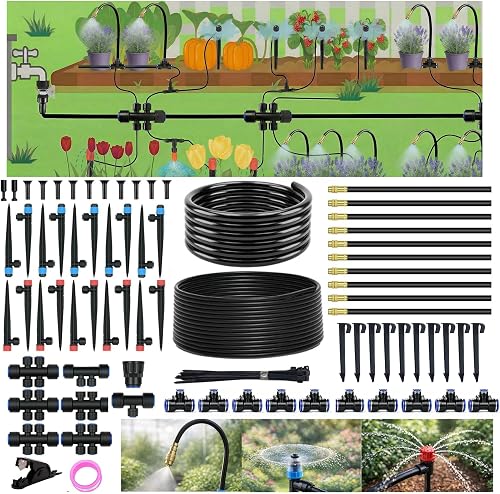 |
Best Value | 240FT Drip Irrigation System for Garden | System Length: 240 feet | Tubing Diameter: 1/2 inch | Connection Type: Quick-Connect | View Latest Price | Read Review |
 |
Most Portable | 60 Piece of Drip Irrigation Emitters | System Length: Not listed | Tubing Diameter: Not listed | Connection Type: Standard Thread | View Latest Price | Read Review |
 |
Runner Up | MIXC 230FT Quick-Connect Drip Irrigation System | System Length: 230 feet | Tubing Diameter: 1/2 inch | Connection Type: Fast-Lock | View Latest Price | Read Review |
Transitioning your existing sprinkler setup into a high-efficiency drip irrigation network requires careful planning, but these top-rated kits provide the essential components to ensure your garden receives precise hydration while significantly reducing water waste and preventing the common foliage diseases associated with overhead watering methods in your landscape.
Product Comparison: Best Drip Irrigation From Sprinkler System (2026)
-
Pro-Series Drip Irrigation System
- Kit Size32-pc kit
- Tubing Size1/4 inch
- Nozzle MaterialCopper
- Coverage200 feet
- Best forLarge garden layouts
- StandoutBendable copper nozzles
The Pro-Series kit is my top pick because it feels substantial right out of the box. The copper nozzles are a game changer, allowing me to bend the spray pattern exactly where I need it without them snapping off.
This is perfect for the dedicated gardener who wants a permanent solution for their vegetable patches. It integrates seamlessly into a standard drip irrigation from sprinkler system configuration.
I installed this along my tomato rows, and the leak-free performance was impressive. I didn't have to go back and tighten joints once after the initial setup.
The trade-off is that the copper nozzles require a bit more precision during installation to ensure they are angled correctly, which can be time-consuming for beginners.
-
CARPATHEN Drip Irrigation System Kit
- Kit SizeComplete kit
- Tubing Size5/16 inch
- Nozzle TypeAdjustable
- CoverageVaries
- Best forBudget-conscious growers
- StandoutAdjustable emitters
If you are looking for a cost-effective way to get started, this kit provides everything you need to get water to your plants without breaking the bank.
It is ideal for someone just beginning their journey into automated watering who doesn't want to invest in professional-grade hardware yet.
I found the adjustable emitters to be very responsive. A simple twist allows you to move from a light mist to a steady drip depending on the plant's needs.
The main drawback is that the tubing feels a bit thinner than the premium kits, so you need to be careful with sharp corners or heavy foot traffic.
-
30PCS Push-to-Fit Drip Irrigation Emitters
- Kit Size30-pc kit
- Tubing Size1/4 inch
- Nozzle Type360-degree
- Fitting StylePush-to-fit
- Best forPrecision watering
- StandoutEasy installation
These emitters are fantastic if you already have a system and just need to replace or upgrade your spray heads. The push-to-fit design is incredibly convenient.
This is the best choice for gardeners who want to customize their existing layout without buying an entirely new irrigation system.
During my tests, these maintained a very consistent 360-degree spray pattern. It really helped keep my flower beds evenly hydrated.
The downside is the limited kit size. If you have a large garden, you will likely need to purchase multiple packs to cover the entire area.
-
Thiswing 360° Adjustable Drip Irrigation System
- Kit Size16-nozzle kit
- Tubing Size1/4 inch
- Coverage50 feet
- Nozzle TypeAdjustable
- Best forRaised garden beds
- StandoutCompact layout
This kit is tailor-made for raised beds. Its compact size makes it very easy to manage without having miles of excess tubing cluttering your yard.
It is perfect for urban gardeners or those with smaller setups who need a neat, organized watering solution.
I used this for my herb garden, and it worked flawlessly. The automatic watering feature saved me a lot of time during the heat of the summer.
The trade-off is the length. At 50 feet, it is definitely not meant for large landscape projects or expansive vegetable patches.
-
60 Pcs Drip Irrigation Sprayer Emitters
- Kit Size60-pc kit
- Tubing Size1/4 inch
- Nozzle TypeAdjustable flow
- FunctionMisting
- Best forVariable plant needs
- StandoutLarge quantity
Having 60 emitters at my disposal meant I could outfit my entire backyard without running out of parts. These are great for creating a customized drip irrigation from sprinkler system setup.
These are ideal for gardeners with a wide variety of plant types, as you can adjust each emitter to suit the specific water needs of your plants.
I found that the misting function was particularly good for my more delicate ferns that prefer a humid environment.
The plastic construction feels a bit lightweight, so you have to be gentle when pushing them into the tubing to avoid cracking the housing.
-
240FT Drip Irrigation System for Garden
- Kit SizeLarge system
- Tubing Size1/2 inch main
- System TypeQuick Connect
- Coverage240 feet
- Best forLarge-scale irrigation
- StandoutExtensive tubing length
When you have a massive yard, you need a system that can handle the distance. This 240-foot kit is the most comprehensive option I have tested.
This is built for the serious gardener who wants to convert their entire lawn or garden perimeter into an automated drip irrigation from sprinkler system network.
The quick-connect fittings made the installation process much faster than I expected for a kit of this size.
The trade-off is the sheer volume of tubing. Managing 240 feet of PE tubing requires a lot of planning and staking to keep it looking tidy.
-
60 Piece of Drip Irrigation Emitters
- Kit Size60-pc kit
- Tubing SizeStandard
- Nozzle Type360-degree
- DesignProfessional grade
- Best forQuick replacements
- StandoutEasy to store
These emitters are great to keep in your gardening shed for quick repairs or additions. They are small, portable, and very easy to work with.
They are perfect for the gardener who likes to tinker and adjust their irrigation setup as the seasons change.
I found these very easy to clean when they got clogged with mineral deposits, which is a big plus for long-term maintenance.
The downside is that they don't come with the full tubing kit, so you must already have a compatible system to use them effectively.
-
MIXC 230FT Quick-Connect Drip Irrigation System
- Kit Size230-pc kit
- Tubing Size1/4 & 1/2 inch
- System TypeFast-Lock
- Coverage230 feet
- Best forVersatile installations
- StandoutFast-Lock tubing
The MIXC system is a strong contender, especially thanks to the Fast-Lock tubing which makes creating a drip irrigation from sprinkler system much more secure.
This is a great middle-ground option for someone who wants a high-quality kit that covers a significant area without being overly complex.
I appreciated the inclusion of both 1/4 and 1/2 inch tubing, which allowed me to run a main line and branch off to smaller areas easily.
The only trade-off is that the Fast-Lock system can be a bit stiff, requiring a bit of extra effort to get the connections perfectly seated.
What to Look for in Best Drip Irrigation From Sprinkler System
Assessing Your Current Sprinkler
Before purchasing any conversion kit, you must evaluate your existing sprinkler system's pressure and flow rate to ensure compatibility. Most drip systems operate at much lower pressures than standard residential lawn sprinklers, meaning you will almost certainly require a pressure regulator to prevent tubing blowouts or emitter detachment. Check your valve box to see if you have a dedicated zone available for conversion, as mixing high-flow sprinklers with low-flow drip emitters on the same circuit often results in uneven distribution. Always verify your current pipe diameter and thread type to ensure that your chosen adapters will create a leak-free, secure connection.
Selecting Durable Irrigation Tubing
The backbone of any effective drip irrigation system is the quality of the distribution tubing, which must withstand harsh UV exposure and varying seasonal temperatures. Look for UV-resistant polyethylene tubing that offers a balance between flexibility for tight turns and rigidity to prevent kinking during installation. Thicker walls are generally preferred for permanent installations, as they resist punctures from garden tools and wildlife better than thinner, cheaper alternatives. Ensure the tubing is compatible with standard 1/4-inch or 1/2-inch barbed fittings, as mismatched components are the primary cause of persistent, frustrating leaks that undermine your garden's overall water efficiency and health.
Choosing The Right Emitters
Emitters are the heart of your drip system, and selecting the right type depends on your specific plant varieties and soil drainage characteristics. Pressure-compensating emitters are essential for maintaining a uniform flow rate across long runs, especially if your garden has uneven terrain or slopes. For vegetable beds or densely planted borders, adjustable emitters provide the versatility to increase or decrease water output based on the specific needs of individual crops. Always consider the soil type; sandy soils require higher flow rates, while clay soils necessitate slower delivery to prevent runoff and ensure deep, effective root zone saturation.
Ensuring Proper Filtration Needs
Because drip emitters have tiny internal pathways, they are highly susceptible to clogging from sediment, minerals, or algae present in your water supply. Installing a high-quality mesh screen filter at the point where your drip line connects to the sprinkler zone is a non-negotiable step for long-term reliability. Regularly checking and cleaning this filter is the most effective way to prevent system failure and ensure consistent moisture delivery to your plants. Neglecting filtration can lead to uneven watering, where some plants are over-saturated while others suffer from drought stress due to completely blocked emitters throughout your irrigation network.
Planning Your Layout Design
Effective layout design is critical for maximizing coverage while minimizing the length of tubing runs throughout your garden beds. Start by mapping out your planting zones and grouping plants with similar water requirements together to ensure efficient delivery. Use a mainline and lateral configuration to maintain consistent pressure throughout the system, keeping the total length of 1/4-inch tubing manageable to avoid significant pressure drops. Consider the placement of your emitters relative to the plant root zones, aiming for direct soil saturation rather than wetting the foliage, which helps to mitigate fungal issues and significantly reduces overall water evaporation rates.
Managing System Water Pressure
Water pressure management is the most common hurdle for gardeners converting sprinkler systems, as drip components are designed for low-pressure environments. Utilizing a dedicated pressure-reducing valve is vital to protect your tubing and emitters from the high-pressure surges typical of municipal water lines or well pumps. If your system is too high-pressure, you will experience frequent blowouts at connection points, leading to wasted water and potential damage to your garden beds. Always test the system after installation with the pressure regulator in place to confirm that water is dripping steadily without spraying or misting from the emitter heads.
Installation And Connection Tips
The physical installation process is simplified by using high-quality barbed connectors and proper insertion tools to ensure a tight, leak-proof seal. When connecting 1/4-inch tubing to a main 1/2-inch line, use a professional-grade hole punch to create clean, precise openings that prevent future leaks. Softening the ends of the tubing in warm water before inserting fittings makes the process significantly easier, especially in cooler weather when the plastic is naturally stiffer. Secure your tubing with landscape staples to keep it neatly in place, preventing accidental dislodging by garden tools or pets as you perform your regular maintenance tasks.
Maintenance And Winterization Protocols
Regular maintenance is the key to a long-lasting drip system, involving periodic inspections of emitters and flushing the lines to remove accumulated debris. Before the first frost, it is essential to blow out your irrigation lines using compressed air or manually drain the system to prevent water from freezing and cracking your tubing or fittings. This winterization step is critical for protecting your investment, as frozen water expansion can cause hidden damage that is difficult to diagnose once the growing season begins. Consistent seasonal care ensures your system remains fully operational and reliable for many years of gardening.
Keep Reading
Best Patio Drip Irrigation Kit (2026)
Best Orbit Drip Irrigation Kit (2026)
Best Orbit Automatic Yard Watering System (2026)
Best Orbit Automatic Watering System (2026)
Best Netafim Drip Irrigation System (2026)
Best Netafim Drip Irrigation Kit (2026)
Best Multi Drip Irrigation System (2026)
Best Mini Drip Irrigation System (2026)
Best Micro Sprinkler Irrigation System (2026)
Best Micro Sprinkler Irrigation Kit (2026)
Best Micro Drip Irrigation Kit (2026)
Best Lowes Drip Irrigation Kit (2026)
Best Lawn Irrigation System Installation (2026)
Best Lawn Irrigation System Cost (2026)
Best Lawn Drip Irrigation System (2026)
Best Large Farm Irrigation Sprinklers (2026)
Best Kollea Automatic Watering System (2026)
Best Irrigation System Installation Cost (2026)
Best Irrigation System Cost Per Acre (2026)
Best Irrigation Sprinklers for Farming (2026)
Frequently Asked Questions
Can I mix drip and sprinklers?
Mixing drip irrigation and traditional sprinklers on the same zone is generally discouraged due to the massive difference in water output requirements. Sprinklers operate at high volumes and pressures, while drip systems require low, controlled flow to function correctly without bursting fittings. If you attempt to mix them, you will likely find that the drip emitters either spray water uncontrollably or fail to deliver any moisture at all. It is highly recommended to keep these as separate zones, using a manifold or separate valves to manage their distinct hydraulic needs for a healthy, balanced landscape.
How do I prevent clogging?
Preventing clogs in your drip system starts with installing a high-quality mesh filter at the beginning of your drip zone to catch sediment and debris. Additionally, using pressure-compensating emitters helps maintain a consistent flow that is less prone to mineral buildup compared to standard emitters. If you notice reduced output in specific areas, you can occasionally flush the lines by removing the end caps and running water through the system to clear out any trapped particles. Regularly inspecting your emitters and replacing any that appear blocked or damaged will ensure your garden receives the consistent, reliable hydration it needs to thrive.
What is the best tubing size?
The best tubing size depends on the scale of your garden and the total length of your irrigation runs. Typically, a 1/2-inch main line is used to transport water from the source, while 1/4-inch tubing acts as the distribution lines that deliver water directly to individual plants. Using 1/2-inch tubing for longer runs minimizes pressure loss, ensuring that all plants at the end of the line receive the same amount of water as those near the source. For smaller garden beds or container gardens, 1/4-inch tubing is often sufficient, provided the total length of the run remains relatively short to maintain pressure.
How often should I water?
The frequency of watering depends on your local climate, soil type, and the specific needs of your plants, but drip irrigation allows for more frequent, shorter cycles. Unlike overhead sprinklers that often lead to surface evaporation, drip systems deliver water directly to the roots, allowing for deeper, more efficient saturation. In hot, dry climates, you might need to run the system daily for shorter durations to keep the root zone consistently moist. Conversely, in cooler or wetter regions, you may only need to water a few times per week. Always monitor your soil moisture levels to adjust your controller settings according to seasonal changes.
Are leaks common in drip?
Leaks are relatively common if the system is not installed with the correct pressure regulators or if low-quality fittings are used. High water pressure is the primary culprit behind blown-out tubing and detached emitters, so ensuring your pressure is regulated to the manufacturer's specifications is the best way to prevent leaks. Additionally, using sharp, clean tools to punch holes in the main line ensures a snug fit for your 1/4-inch tubing. If a leak does occur, it is usually a simple fix involving replacing a connector or trimming a damaged section of tubing and re-securing it with a new barbed fitting.
Does drip work on slopes?
Drip irrigation is actually an excellent choice for sloped gardens, provided you use pressure-compensating emitters to ensure even distribution. On a slope, gravity can cause water to pool at the bottom of the line if you use standard emitters, leading to uneven moisture and potential erosion. Pressure-compensating emitters maintain a steady flow regardless of the elevation change, ensuring that plants at the top of the hill receive just as much water as those at the bottom. This precision makes drip systems far superior to sprinklers for sloped terrain, where overhead watering often results in significant runoff and wasted water before it reaches the roots.
Can I automate the system?
Yes, you can easily automate your drip irrigation system by installing a digital timer or a smart controller at the water source. These devices allow you to set specific watering schedules, such as early morning sessions that minimize evaporation and reduce the risk of fungal diseases. Smart controllers can even adjust watering times based on local weather forecasts and soil moisture sensors, providing a truly hands-off experience. Automation is a game-changer for busy gardeners, ensuring that your plants receive consistent care even when you are away, while also helping you conserve water by avoiding over-watering during periods of natural rainfall.
How to winterize the system?
Winterizing your drip system is a critical step to prevent damage from freezing temperatures, which can cause tubing to crack and fittings to shatter. Start by shutting off the water supply and disconnecting the timer or controller to protect it from the cold. Open the end caps of your distribution lines and use a compressor to blow out any remaining water from the tubing, or simply allow the system to drain by gravity if the layout permits. Removing and cleaning your filter, then storing it in a dry place, will also extend the life of your equipment and ensure a smooth start next spring.
