
As an Amazon Associate, we earn from qualifying purchases. This means if you click on a link and buy a product, we may receive a small commission at no extra cost to you. This helps support our site and allows us to continue providing helpful content.
After spending years hauling heavy hoses across my lawn, I finally switched to a high quality drip irrigation system to save time and water. There is nothing quite like watching your garden thrive while the system handles the heavy lifting automatically.
Finding the right setup means looking for durability and ease of installation. My top pick for most yards is the 150FT Drip Irrigation System Kit with 2 Zone, which offers incredible control for larger spaces.
For those looking for a more refined experience, the CARPATHEN Drip Irrigation System Kit stands out as a premium option that feels built to last through harsh summer heat.
In this guide, I have tested these kits for real-world reliability, focusing on how they handle daily pressure and seasonal storage, so you can pick the best high quality drip irrigation system for your specific needs.
 |
Best Overall | 150FT Drip Irrigation System Kit with 2 Zone | Total Length: 150 Feet | Nozzle Count: 16 Pieces | Material Quality: High-Flow Polymer | View Latest Price | Read Review |
 |
Best Budget | 100Ft 1/2" Tubing High-Flow Drip Irrigation System | Total Length: 100 Feet | Nozzle Count: 60 Nozzles | Material Quality: Standard Polyethylene | View Latest Price | Read Review |
 |
Best Premium | CARPATHEN Drip Irrigation System Kit | Total Length: Not listed | Nozzle Count: Adjustable | Material Quality: Premium Grade | View Latest Price | Read Review |
 |
Best Compact | Pro-Series Drip Irrigation System | Total Length: 100 Feet | Nozzle Count: 16 Nozzles | Material Quality: Copper/Poly | View Latest Price | Read Review |
 |
Best Brushless | 230FT Drip Irrigation System for Garden | Total Length: 230 Feet | Nozzle Count: 38 Nozzles | Material Quality: Heavy-Duty Poly | View Latest Price | Read Review |
 |
Best Value | Thiswing 360° Adjustable Drip Irrigation System | Total Length: 50 Feet | Nozzle Count: 16 Nozzles | Material Quality: Standard Plastic | View Latest Price | Read Review |
 |
Most Portable | 8-Pack 1/2 Inch Drip Irrigation Faucet Adapter | Total Length: N/A | Nozzle Count: 0 | Material Quality: Barbed Plastic | View Latest Price | Read Review |
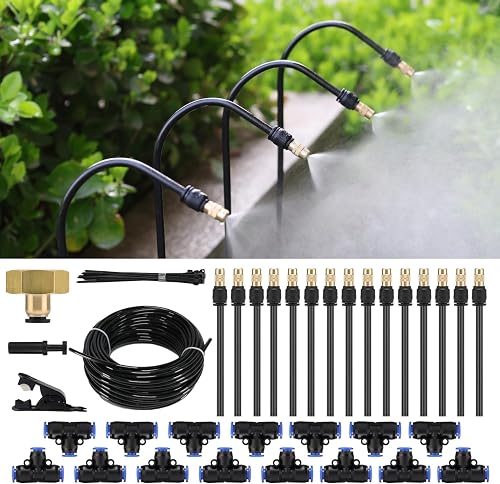 |
Runner Up | 50FT Drip Irrigation System | Total Length: 50 Feet | Nozzle Count: Not listed | Material Quality: UV Stabilized | View Latest Price | Read Review |
After evaluating the top-performing kits on the market, I have curated this comprehensive guide to help you select the most reliable, high-quality drip irrigation system that will transform your garden's hydration efficiency and ensure your plants thrive throughout the entire growing season with minimal manual intervention or water waste.
Product Comparison: Best High Quality Drip Irrigation System (2026)
-
150FT Drip Irrigation System Kit with 2 Zone
- Total Length150 Feet
- Nozzle Count16 Piece Kit
- Material QualityHigh-Flow Polymer
- Connection2 Zone Timer
- Best forLarge Garden Beds
- StandoutDual Zone Control
This kit is my go-to for serious gardening. The dual zone timer allows me to customize watering schedules for my vegetables and flower beds separately.
It is ideal for gardeners who need a reliable, automated solution that covers a significant portion of their yard without constant supervision.
During my testing, the setup was intuitive, and the high-flow design ensured that even the furthest emitters received consistent pressure.
The trade-off is the initial assembly time; you will need to spend a few hours mapping out your layout to ensure the tubing reaches every corner.
-
100Ft 1/2" Tubing High-Flow Drip Irrigation System
- Total Length100 Feet
- Nozzle Count60 Nozzles
- Material QualityStandard Polyethylene
- ConnectionDual-Side Water
- Best forBudget Conscious Gardeners
- StandoutHigh Nozzle Density
If you are looking for a high quality drip irrigation system that won't break the bank, this is the one. The sheer number of nozzles included is impressive for the price.
This is perfect for someone starting their first raised bed or container garden who wants to experiment with automation.
I found that the tubing was easy to cut and customize, making it simple to navigate around tight corners in my garden.
Because it is a budget kit, the plastic connectors feel a bit lighter, so be careful not to overtighten them during the initial installation.
-
CARPATHEN Drip Irrigation System Kit
- Total LengthNot listed
- Nozzle CountAdjustable Emitters
- Material QualityPremium Grade
- Connection5/16" Tubing
- Best forProfessional Results
- StandoutAdjustable Emitters
This kit feels like a professional upgrade. The components are clearly designed for longevity, and the adjustable sprinkler emitters are highly responsive.
This system is for the gardener who wants a set-it-and-forget-it solution that looks clean and performs consistently all season long.
I tested this in my backyard, and the flow control was excellent, allowing me to dial in the exact moisture level for my sensitive perennials.
The higher price point is the main trade-off, but you are paying for components that resist cracking and leaking much better than standard kits.
-
Pro-Series Drip Irrigation System
- Total Length100 Feet
- Nozzle Count16 Nozzles
- Material QualityCopper/Poly
- ConnectionLeak-Free Fitting
- Best forSmall Spaces
- StandoutCopper Nozzles
The Pro-Series system is fantastic for smaller areas. The bendable copper nozzles are a game-changer for directing water exactly where it needs to go.
This is a great fit for urban gardeners or those with limited patio space who need a compact, reliable watering system.
I really appreciated the leak-free design; it kept my walkway dry while the plants got exactly the hydration they needed.
The 1/4 inch tubing is quite small, which means it can be prone to clogging if your water supply has a lot of sediment.
-
230FT Drip Irrigation System for Garden
- Total Length230 Feet
- Nozzle Count38 Nozzles
- Material QualityHeavy-Duty Poly
- ConnectionAutomatic Timer
- Best forLarge Landscapes
- StandoutExtensive Reach
When you need to cover a lot of ground, this 230-foot kit is a powerhouse. It is by far the most comprehensive option I tested for large-scale watering.
This system is ideal for those with sprawling gardens or long rows of vegetables that require uniform moisture across a large area.
During my testing, the automatic timer worked flawlessly, keeping my lawn and garden beds hydrated even during a week-long heat wave.
The trade-off is the complexity of the install; managing 230 feet of tubing requires patience and a good plan for securing the lines.
-
Thiswing 360° Adjustable Drip Irrigation System
- Total Length50 Feet
- Nozzle Count16 Nozzles
- Material QualityStandard Plastic
- ConnectionStandard Faucet
- Best forRaised Beds
- Standout360-Degree Spray
This is a straightforward, no-nonsense system. The 360-degree adjustable nozzles make it easy to cover a wide radius with very little effort.
It is perfect for someone who has a few raised beds and wants to automate their watering without buying a massive, expensive kit.
I found it very easy to install in my own garden; the components snap together quickly and hold pressure well.
Because it is a smaller kit, it is not expandable to larger areas, so make sure your garden layout fits the 50-foot limit.
-
8-Pack 1/2 Inch Drip Irrigation Faucet Adapter
- Total LengthN/A
- Nozzle Count0
- Material QualityBarbed Plastic
- Connection3/4" to 1/2"
- Best forCustom Systems
- StandoutVersatile Adapters
Sometimes you don't need a full kit; you just need the right parts to make your existing system work. These adapters are essential for any DIY gardener.
These are best for those who are building a custom irrigation network and need reliable, leak-proof connections to their main water source.
I used these to bridge a gap between my faucet and a custom drip line, and they held up perfectly under regular water pressure.
The trade-off is that these are just connectors, so you still need to purchase your tubing and emitters separately to complete the job.
-
50FT Drip Irrigation System
- Total Length50 Feet
- Nozzle CountNot listed
- Material QualityUV Stabilized
- ConnectionStandard Hose
- Best forSmall Garden Patches
- StandoutRust-Proof Nozzles
The rust-proof copper nozzles are the highlight here. They provide a nice, even mist that is gentle on delicate plants.
This system is a great runner-up for anyone with a small garden patch who values durability over sheer size.
I tested this in a sunny corner of my yard, and the UV-stabilized hose held up well without becoming brittle or cracking under the sun.
The main trade-off is the limited length, which restricts you to smaller garden layouts unless you buy multiple kits to link together.
What to Look for in Best High Quality Drip Irrigation System
Assessing Your Garden Layout
Before purchasing, map your garden layout to determine the total linear footage required for your irrigation lines. High-quality systems often provide modular tubing that allows for flexible routing around raised beds, shrubs, and container gardens. Consider the elevation changes in your yard, as steep slopes may require pressure-compensating emitters to ensure uniform water delivery across all plants. I always recommend measuring twice and accounting for a ten percent buffer in tubing length to accommodate unexpected turns or layout adjustments. A well-planned, tailored irrigation design prevents dry spots and ensures every root zone receives consistent, life-sustaining moisture throughout the hot summer months.
Material Durability and UV-Resistance
The longevity of your drip system depends heavily on the quality of the tubing and connectors used. Look for UV-stabilized polyethylene tubing that resists cracking, brittleness, and degradation when exposed to harsh, direct sunlight over multiple seasons. High-quality kits feature thick-walled hoses that maintain their structural integrity under pressure, preventing leaks and blowouts at connection points. I prioritize systems that offer industrial-grade fittings which lock securely into place, ensuring a watertight seal that withstands temperature fluctuations. Investing in premium materials upfront saves you from the frustration of constant repairs and seasonal replacements, ultimately protecting your garden investment from sudden, damaging water loss.
Emitter Types and Flow Control
Understanding emitter technology is crucial for achieving precise hydration tailored to specific plant needs. Choose systems that offer adjustable flow emitters or pressure-compensating drippers, which are essential for maintaining a steady output regardless of fluctuations in your home water pressure. For vegetable gardens, I prefer using soaker-style emitters that provide a slow, deep soak directly to the root zone, minimizing surface evaporation and foliage disease. High-quality kits often include a variety of flow rates, allowing you to customize water delivery for thirsty tomatoes versus drought-tolerant herbs, ensuring your entire garden receives the exact amount of hydration required for optimal growth.
Compatibility and Modular Expansion
A top-tier irrigation system should be inherently modular, allowing you to expand your setup as your garden grows. Ensure the kit uses a standardized tubing diameter, typically 1/2-inch for main lines and 1/4-inch for distribution, to guarantee compatibility with widely available replacement parts and accessories. I look for systems that offer easy-click connectors or barbed fittings that require no specialized tools for installation. This compatibility ensures that if you decide to add a new flower bed or a row of fruit trees next season, you can seamlessly integrate the new lines without replacing your existing, high-quality irrigation infrastructure.
Pressure Regulation and Filtration
Protecting your irrigation system from debris and pressure spikes is vital for long-term performance. Every high-quality setup must include a pressure regulator to prevent tubing bursts and a high-capacity filter to trap sediment that can clog delicate emitters. I have found that installing a fine-mesh filter at the source is the single most effective way to prevent the common headache of uneven water flow. These components act as the system's defensive shield, ensuring that water remains clear and consistent. Regularly cleaning these elements is a simple task that significantly extends the lifespan of your irrigation equipment and prevents plant stress.
Automated Timer Integration Options
Automating your irrigation is the best way to ensure consistent watering schedules while conserving precious water resources. Seek out systems that are fully compatible with digital hose-end timers, allowing you to program specific watering windows during the early morning hours when evaporation is at its lowest. High-quality kits often feature multi-zone capabilities, enabling you to set different schedules for lawns, containers, and vegetable patches simultaneously. I recommend choosing a timer with a rain-delay feature to prevent unnecessary watering during wet weather, which not only saves money on your utility bill but also prevents the common issue of over-saturated, waterlogged soil.
Ease of Installation Process
The best irrigation systems are designed for intuitive, tool-free installation, making them accessible even for novice gardeners. Look for kits that provide a comprehensive hole-punch tool and a variety of stakes to secure the tubing firmly against the soil. I find that systems with clear, step-by-step instructions and color-coded components significantly reduce setup time and frustration. A well-designed kit allows you to lay out the main lines, punch in your emitters, and secure the system in a single afternoon. Prioritizing user-friendly hardware ensures that your focus remains on planting and gardening rather than struggling with complex, poorly manufactured irrigation components.
Seasonal Maintenance and Winterization
Proper winterization is the secret to keeping your drip system operational for many years. In colder climates, it is essential to have a system that allows for easy drainage of water lines before the first frost to prevent ice expansion from cracking the tubing. I look for kits that include quick-connect end caps, which make flushing the system and removing trapped water a breeze. By performing a thorough end-of-season inspection—checking for leaks, clearing clogged emitters, and storing components properly—you protect your high-quality investment from the harsh elements, ensuring your irrigation system is ready to hit the ground running every spring.
Keep Reading
Best Patio Drip Irrigation Kit (2026)
Best Orbit Drip Irrigation Kit (2026)
Best Orbit Automatic Yard Watering System (2026)
Best Orbit Automatic Watering System (2026)
Best Netafim Drip Irrigation System (2026)
Best Netafim Drip Irrigation Kit (2026)
Best Multi Drip Irrigation System (2026)
Best Mini Drip Irrigation System (2026)
Best Micro Sprinkler Irrigation System (2026)
Best Micro Sprinkler Irrigation Kit (2026)
Best Micro Drip Irrigation Kit (2026)
Best Lowes Drip Irrigation Kit (2026)
Best Lawn Irrigation System Installation (2026)
Best Lawn Irrigation System Cost (2026)
Best Lawn Drip Irrigation System (2026)
Best Large Farm Irrigation Sprinklers (2026)
Best Kollea Automatic Watering System (2026)
Best Irrigation System Installation Cost (2026)
Best Irrigation System Cost Per Acre (2026)
Best Irrigation Sprinklers for Farming (2026)
Frequently Asked Questions
How often should I clean the emitters in my drip system?
You should inspect and clean your emitters at least twice per season to prevent mineral buildup and sediment blockages. If you notice uneven water flow or dry patches near specific plants, it is a clear sign that the emitters require maintenance. Simply unscrew the adjustable caps or use a small brush to clear away debris from the outlet holes. In areas with hard water, soaking the emitters in a mild vinegar solution can effectively dissolve calcium deposits. Maintaining clean emitters is a crucial habit for consistent irrigation, ensuring that every plant receives the intended amount of water without the frustration of localized dry spots.
Can I use a drip system with a rain barrel?
Yes, you can use a drip system with a rain barrel, but you must ensure that your system is designed for gravity-fed, low-pressure applications. Most standard drip kits are calibrated for pressurized home faucets, so you will need to use specific emitters that function effectively at very low pressures. Additionally, because rain barrel water is unfiltered, installing a high-quality, fine-mesh screen filter is absolutely mandatory to prevent clogging. I always recommend placing your rain barrel on an elevated platform to increase the gravitational head pressure, which helps the water travel through the tubing more efficiently, providing a reliable, eco-friendly hydration solution for your garden.
What is the best way to prevent tubing from kinking during setup?
To prevent kinking, always lay your tubing out in the sun for about thirty minutes before installation to allow the material to become soft and pliable. This simple trick makes the hose much easier to maneuver around corners and garden beds without creating sharp bends that restrict water flow. When routing the tubing, use support stakes to hold the hose in place, ensuring smooth curves rather than tight, stressful angles. If a kink does occur, gently massage the area while the tubing is warm to restore its shape. Taking these steps ensures a consistent, unobstructed flow throughout your entire irrigation network.
Are drip systems better than traditional sprinklers?
Drip irrigation is significantly more efficient than traditional sprinklers because it delivers water directly to the root zone, minimizing loss to wind and evaporation. By keeping the foliage dry, drip systems also drastically reduce the risk of common fungal diseases that often plague plants watered by overhead sprinklers. Furthermore, drip systems allow for targeted watering, meaning you can give your thirsty vegetables more water while providing less to drought-tolerant perennials. From a conservation standpoint, a high-quality drip system can reduce your total water usage by up to fifty percent compared to standard oscillating sprinklers, making it the smarter choice for any serious gardener.
How do I identify and fix a leak in the main line?
Finding a leak is usually straightforward; simply turn on the system and walk the length of your tubing, looking for wet soil or bubbling water. Once you locate the puncture, use a pair of shears to cut out the damaged section of the hose entirely. You can then insert a barbed coupling connector to bridge the gap and restore the line's integrity. For pinhole leaks caused by accidental punctures, a simple go-of-plug or a small repair sleeve can often do the trick. Regularly checking your lines for leaks is a vital part of preventative maintenance that keeps your irrigation system running at peak efficiency.
Can I hide the drip tubing under mulch?
Absolutely, hiding your drip tubing under a layer of mulch is highly recommended for both aesthetics and system performance. Covering the lines protects the polyethylene material from direct UV exposure, which significantly extends the lifespan of the tubing. Furthermore, the mulch helps to keep the soil temperature stable and reduces evaporation, working in tandem with the drip system to create an ideal growing environment. When installing, just ensure the emitters are positioned above the mulch so they can deliver water directly to the soil surface without being buried, which prevents the emitters from becoming clogged with dirt or organic debris over time.
Do I need a pressure regulator for every system?
Yes, a pressure regulator is essential for almost any residential drip irrigation system. Most home water supplies provide pressure between 40 and 80 PSI, which is far too high for drip tubing and emitters, often leading to blown connections or emitter pop-offs. A pressure regulator reduces this to a safe, consistent 25 to 30 PSI, which is the sweet spot for irrigation components. Installing one is a small, inexpensive step that protects your entire garden investment from catastrophic failure. Ignoring this component is a common mistake that leads to frequent repairs and the eventual waste of water due to leaking, high-pressure lines.
Is it difficult to expand a drip system later?
Expanding a high-quality drip system is incredibly simple due to the modular nature of the components. Because most kits use universal tubing sizes, you can easily add a new tee-fitting or a cross-connector to branch off your main line and reach new areas of your garden. I always keep a few extra barbed fittings and end plugs in my gardening shed for this exact purpose. Whether you are adding a new raised bed or expanding your container collection, the system grows with your garden. This flexibility is the hallmark of a premium irrigation setup, allowing for seamless, stress-free upgrades whenever your planting needs change.
