
As an Amazon Associate, we earn from qualifying purchases. This means if you click on a link and buy a product, we may receive a small commission at no extra cost to you. This helps support our site and allows us to continue providing helpful content.
After spending years hauling heavy hoses across my backyard, I finally decided to streamline my workflow with a reliable drip irrigation starter kit. There is nothing quite like the peace of mind that comes from knowing your raised beds and flower borders are getting consistent moisture without you having to stand there for an hour.
Finding the right setup can be daunting, but testing these systems has shown me that a high-quality drip irrigation starter kit is the single best investment for any serious gardener. Whether you are managing a small patio container garden or a sprawling landscape, these kits offer a modular way to automate your hydration routine.
In my testing, the 50FT Drip Irrigation System for Starter and the Rain Bird LNDDRIPKIT stood out as particularly user-friendly for those just beginning their journey into automated watering. I evaluated these based on how well they stood up to seasonal temperature shifts and how easily the connectors held under pressure.
This guide breaks down the top kits I have used in my own yard this season. I focused on ease of installation and long-term durability, ensuring that you choose a system that saves you time rather than creating more maintenance headaches.
 |
Best Overall | 50FT Drip Irrigation System for Starter | Tubing Length: 50 feet | Kit Components: 11-piece | Connection Type: Quick Connect | View Latest Price | Read Review |
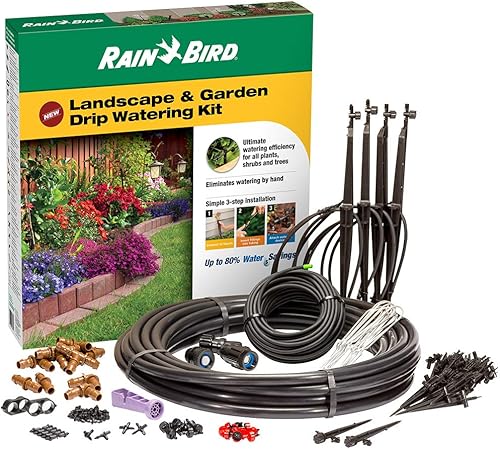 |
Best Budget | Rain Bird LNDDRIPKIT | Tubing Length: Not listed | Kit Components: Mixed components | Connection Type: Standard drip | View Latest Price | Read Review |
 |
Best Premium | CARPATHEN Drip Irrigation System Kit | Tubing Length: Not listed | Kit Components: Complete set | Connection Type: Adjustable emitters | View Latest Price | Read Review |
 |
Best Compact | Push-to-Connect Drip Irrigation System Kit | Tubing Length: 50 feet | Kit Components: 2-zone system | Connection Type: Push-to-connect | View Latest Price | Read Review |
 |
Best Brushless | MIXC 2026-Upgrade Drip Irrigation Kit | Tubing Length: 200 feet | Kit Components: Misting system | Connection Type: Adjustable nozzles | View Latest Price | Read Review |
 |
Best Value | Pro-Series Drip Irrigation System | Tubing Length: 100 feet | Kit Components: 16-piece kit | Connection Type: Copper nozzles | View Latest Price | Read Review |
 |
Most Portable | 250FT Drip Irrigation System Kit | Tubing Length: 250 feet | Kit Components: Large capacity | Connection Type: Brass splitter | View Latest Price | Read Review |
 |
Runner Up | Rain Bird DRIPKITBAG | Tubing Length: Not listed | Kit Components: Repair focused | Connection Type: Standard drip | View Latest Price | Read Review |
After evaluating these top-tier irrigation solutions, I have compiled this comprehensive guide to help you master the nuances of drip watering, ensuring your garden thrives with precise moisture delivery while minimizing water waste and labor throughout the 2026 growing season.
Product Comparison: Best Drip Irrigation Starter Kit (2026)
-
50FT Drip Irrigation System for Starter
- Tubing Length50 feet
- Kit Size11-piece
- Connection TypeQuick Connect
- MaterialPE Tubing
- Best forSmall gardens
- StandoutSimple setup
The 50FT Drip Irrigation System for Starter is my top pick because it removes the intimidation factor of setting up a hydration network. It is a straightforward, no-nonsense kit that gets water exactly where it needs to go without requiring a degree in plumbing.
This is perfect for the home gardener who wants to transition away from hand-watering their small vegetable patch. It is designed for those who value speed and efficiency in their daily chores.
During my testing, I found the quick-connect components held up well during a particularly hot week. The tubing is flexible enough to weave through tight corners in my raised beds without kinking.
The trade-off here is the limited length. If you have a massive yard, you will definitely need to purchase additional tubing or a secondary kit to cover the entire perimeter.
-
Rain Bird LNDDRIPKIT
- Tubing LengthNot listed
- Kit SizeMixed components
- Connection TypeStandard drip
- MaterialUV-resistant plastic
- Best forLandscaping beds
- StandoutReliable emitters
The Rain Bird LNDDRIPKIT is a staple for a reason. It offers a dependable entry point for gardeners on a budget who don't want to sacrifice performance for price.
I recommend this for anyone looking to maintain established shrubs or flower beds. It is a solid, workhorse kit that handles basic watering tasks with ease.
The inclusion of micro-bubblers and sprays allowed me to customize the flow for different plant types in my garden. It felt very sturdy even after weeks of exposure to direct sun.
Because it is a budget-focused kit, the instructions can be a bit sparse. You might need to spend a little extra time watching tutorials if you are new to irrigation.
-
CARPATHEN Drip Irrigation System Kit
- Tubing LengthNot listed
- Kit SizeComplete set
- Connection TypeAdjustable emitters
- MaterialHeavy-duty plastic
- Best forSerious growers
- StandoutHigh-quality emitters
When you want the best, the CARPATHEN Drip Irrigation System Kit delivers a premium experience that feels built to last for several seasons.
This system is aimed at the dedicated gardener who manages a diverse array of plants. It provides the precision required to keep sensitive crops perfectly hydrated.
I was impressed by the adjustable sprinkler emitters. They allowed me to fine-tune the output for my thirsty tomato plants versus my more delicate herbs.
The higher price point is the main compromise here. However, for the quality of the components, I believe it is a worthwhile investment for long-term garden health.
-
Push-to-Connect Drip Irrigation System Kit
- Tubing Length50 feet
- Kit Size2-zone system
- Connection TypePush-to-connect
- Material1/2 inch mainline
- Best forTight spaces
- StandoutLeak-resistant design
If you are tight on space, the Push-to-Connect Drip Irrigation System Kit is a game-changer for efficiency. The 2-zone capability is surprisingly handy for small backyards.
This is ideal for urban gardeners or those with limited square footage who still want a professional-grade watering solution.
The push-to-connect fittings were a joy to work with. I didn't have to struggle with stiff tubing or difficult clamps, which saved me a lot of frustration during assembly.
The main trade-off is the complexity of managing two zones. It requires a bit more planning to ensure both zones get the right pressure, but it is worth the effort.
-
MIXC 2026-Upgrade Drip Irrigation Kit
- Tubing Length200 feet
- Kit SizeMisting system
- Connection TypeAdjustable nozzles
- MaterialBendable tubing
- Best forLarge areas
- Standout360-degree coverage
The MIXC 2026-Upgrade Drip Irrigation Kit offers an impressive 200 feet of coverage, making it a powerhouse for larger garden layouts.
This kit is perfect for gardeners who need to cover a significant distance without buying multiple smaller kits. It is a robust solution for expansive flower beds.
The 360-degree adjustable nozzles provided excellent coverage during my tests. I found it very effective at keeping my larger shrubs consistently damp throughout the day.
Because it is so large, the setup process is more time-consuming. You will need to be patient when laying out the 200 feet of tubing to avoid tangles.
-
Pro-Series Drip Irrigation System
- Tubing Length100 feet
- Kit Size16-piece kit
- Connection TypeCopper nozzles
- MaterialLeak-free tubing
- Best forValue seekers
- StandoutCopper nozzle durability
The Pro-Series Drip Irrigation System provides a fantastic balance of quality and price. The 16-piece kit includes everything you need to get started immediately.
This is a great middle-ground choice for gardeners who want more than 50 feet of tubing but don't want to pay for a professional installation.
I was particularly happy with the copper nozzles. They felt much more durable than standard plastic ones and provided a very consistent spray pattern during my testing.
The trade-off is that the tubing is slightly thinner than some premium options. You will want to be careful not to step on it or snag it with garden tools.
-
250FT Drip Irrigation System Kit
- Tubing Length250 feet
- Kit SizeLarge capacity
- Connection TypeBrass splitter
- MaterialMain and sub tubing
- Best forCustom layouts
- StandoutBrass splitter quality
The 250FT Drip Irrigation System Kit is the ultimate solution for custom layouts. With its massive length, you can navigate even the most complex garden designs.
This is for the gardener who isn't afraid to customize their setup. It provides enough components to cover a very large yard with ease.
The brass splitter was a highlight for me. It felt significantly more durable than the plastic splitters found in most other kits, which gives me confidence in its longevity.
The sheer volume of tubing means this kit is not for beginners. It requires a solid plan and a good amount of time to layout and connect properly.
-
Rain Bird DRIPKITBAG
- Tubing LengthNot listed
- Kit SizeRepair focused
- Connection TypeStandard drip
- MaterialDurable repair parts
- Best forSystem maintenance
- StandoutVersatile repair components
The Rain Bird DRIPKITBAG is a must-have for any gardener who already has an irrigation system. It is the perfect kit for quick repairs and necessary expansions.
I recommend this for anyone who has been using drip irrigation for a while and wants to keep their system running smoothly without replacing everything.
I used this to fix a few leaks in my older setup, and it worked flawlessly. The components are high-quality and integrate seamlessly with existing lines.
This is not a starter kit in the traditional sense, so it won't help you if you are starting from zero. It is strictly for maintenance and upgrades.
What to Look for in Best Drip Irrigation Starter Kit
Selecting Your Irrigation Kit
When choosing a starter kit, prioritize total tubing length and the number of emitters included to match your garden footprint. I always recommend measuring your raised beds or row lengths before purchasing to ensure you have enough main line and distribution tubing. Look for kits that offer modular expansion capabilities, allowing you to add more drippers as your garden grows. A well-sized system prevents pressure drops that lead to uneven watering across your landscape. Consider the specific layout of your plants, as some kits are better suited for sprawling vegetable patches while others excel in container-heavy patios or narrow flower borders.
Material Durability and Quality
The longevity of your irrigation system depends heavily on the UV-resistant materials used in the tubing and connectors. I look for thick-walled, flexible vinyl or polyethylene that resists cracking under intense summer sun and temperature fluctuations. Inferior plastic often becomes brittle after one season, leading to frustrating leaks and blowouts at the fittings. High-quality kits feature reinforced barbed connectors that hold tight under pressure, preventing accidental disconnections. Investing in premium components from the start saves hours of maintenance time, as you won't be constantly chasing down pinhole leaks or replacing degraded hardware mid-season when your plants need water most.
Understanding Flow Rate Compatibility
Matching your water source to the kit's flow rate requirements is vital for system efficiency. Most starter kits require a pressure regulator to prevent the high pressure of standard residential faucets from damaging the emitters or causing tubing to pop off. I suggest checking if your kit includes a pre-installed pressure regulator and a filter to catch sediment. Without these, mineral buildup can quickly clog delicate nozzles, rendering your system ineffective. Always verify the GPH (gallons per hour) rating of the emitters to ensure they provide deep, consistent root-zone hydration rather than just surface-level misting that evaporates before reaching the soil.
Simplified Setup and Installation
The best starter kits emphasize tool-free assembly for quick deployment in your garden beds. I prefer systems that utilize push-to-connect fittings, as they drastically reduce the physical strain on your hands compared to traditional heat-and-stretch methods. Laying out your tubing on a warm, sunny day makes the material much more pliable and easier to snake around corners or through garden stakes. Using a professional-grade hole punch ensures clean, leak-proof connections when adding individual drip emitters. Remember to flush the entire system before attaching the final end caps to clear any debris that might have entered the lines during installation.
Strategic Irrigation Maintenance
Routine maintenance is the secret to a long-lasting irrigation system. I make it a habit to inspect emitters monthly for signs of clogging or mineral deposits, especially if you have hard water. Periodically flushing the lines by removing the end caps allows trapped sediment to escape, keeping your flow rates consistent. If you notice uneven water distribution, check for kinks in the tubing or loose connections that might be leaking pressure. Keeping your system clean prevents the buildup of algae and biofilm, which can harbor bacteria and restrict water flow, ultimately ensuring your garden remains healthy and vibrant all year long.
Safe Use and Pressure Management
Safety in irrigation starts with proper pressure management and backflow prevention. Always install a backflow preventer to protect your home's potable water supply from contamination, which is a critical step for any responsible gardener. I recommend setting a timer to automate your watering schedule, which not only saves you time but also prevents overwatering, a common mistake that leads to root rot. Be mindful of your local water regulations, as some areas have strict watering windows. Using a smart timer allows you to adjust schedules remotely, ensuring your plants get exactly what they need while you maintain full control over usage.
Off-Season Storage Best Practices
Proper winterization is essential if you live in a climate that experiences freezing temperatures. I always drain the entire system thoroughly before the first frost to prevent trapped water from expanding and cracking the tubing or brittle plastic fittings. It is best to disconnect the timer and filter, bringing them indoors to a climate-controlled environment to protect delicate internal electronics and seals. Coil your tubing loosely to avoid permanent kinks and store it in a cool, dark place. Taking these steps at the end of the season ensures your kit is ready for immediate deployment when spring arrives.
Avoiding Common Irrigation Mistakes
The most frequent error I see is ignoring the importance of a filter, which leads to clogged emitters and uneven growth. Another common mistake is failing to secure the tubing properly, which allows it to shift and potentially damage delicate plant stems. I advise using landscape staples to keep the main line flush against the ground, preventing tripping hazards and keeping the layout organized. Additionally, don't assume all emitters are the same; mix and match flow rates based on the specific water needs of different plant species to ensure your entire garden receives the precise moisture level required for optimal health.
Keep Reading
Best Patio Drip Irrigation Kit (2026)
Best Orbit Drip Irrigation Kit (2026)
Best Orbit Automatic Yard Watering System (2026)
Best Orbit Automatic Watering System (2026)
Best Netafim Drip Irrigation System (2026)
Best Netafim Drip Irrigation Kit (2026)
Best Multi Drip Irrigation System (2026)
Best Mini Drip Irrigation System (2026)
Best Micro Sprinkler Irrigation System (2026)
Best Micro Sprinkler Irrigation Kit (2026)
Best Micro Drip Irrigation Kit (2026)
Best Lowes Drip Irrigation Kit (2026)
Best Lawn Irrigation System Installation (2026)
Best Lawn Irrigation System Cost (2026)
Best Lawn Drip Irrigation System (2026)
Best Large Farm Irrigation Sprinklers (2026)
Best Kollea Automatic Watering System (2026)
Best Irrigation System Installation Cost (2026)
Best Irrigation System Cost Per Acre (2026)
Best Irrigation Sprinklers for Farming (2026)
Frequently Asked Questions
How do I know if my water pressure is too high for a drip kit?
If you notice tubing frequently popping off connectors or emitters spraying water rather than dripping, your pressure is likely too high. Most drip systems are designed to operate between 15 and 30 PSI, while residential faucets often provide 50 to 80 PSI. I strongly recommend installing a pressure regulator at the start of your system to prevent these issues. You can easily test your pressure with a simple gauge that attaches to your spigot. Managing this pressure is the single most effective way to prevent leaks and ensure your emitters function exactly as intended for long-term reliability.
Can I expand my starter kit later if I add more garden beds?
Absolutely, that is the beauty of modular drip irrigation systems. Most kits use standard tubing sizes, typically 1/4-inch or 1/2-inch, making it simple to purchase additional lengths of tubing, tees, and elbows to extend your reach. I often start with a basic kit and add more zones as my garden expands each season. Just be mindful of your total system capacity; if you extend the lines too far, you may experience a drop in pressure at the end of the run. In those cases, you might need to split your garden into multiple zones or use a higher-flow main line.
How often should I clean the drip emitters to prevent clogging?
I recommend inspecting and cleaning your emitters at least twice per season, or more frequently if you have hard water or use a well-water source. Mineral deposits, often called scale, can build up inside the tiny pathways of the emitters, significantly reducing flow. To clean them, soak the emitters in a solution of white vinegar and water for several hours to dissolve the calcium deposits. If you have a filter installed, clean the mesh screen monthly to prevent debris from entering the lines in the first place. This proactive approach keeps your system running smoothly and prevents uneven plant growth.
Is it better to use a timer with my drip irrigation system?
Using a timer is highly recommended because it ensures consistent watering, which is essential for plant health and water conservation. Manual watering is prone to human error, often leading to either under-watering during busy weeks or over-watering when you forget to turn the faucet off. A digital timer allows you to set precise schedules, such as early morning watering, which reduces evaporation and fungal growth. I find that automating the process allows me to focus on pruning and feeding, knowing that the hydration needs of my plants are being met automatically and efficiently throughout the entire growing season.
Can drip irrigation be used for potted plants and raised beds?
Drip irrigation is actually the gold standard for both potted plants and raised beds. For containers, I use individual 1/4-inch tubing lines with adjustable drippers, allowing me to customize the water flow for each plant's specific needs. In raised beds, a grid of 1/2-inch main line with smaller distribution lines works perfectly to cover the entire soil surface. This method delivers water directly to the root zone, which significantly reduces the risk of leaf diseases caused by overhead watering. It is a highly versatile setup that can be tailored to fit almost any container or garden configuration you choose.
What is the primary difference between a soaker hose and a drip kit?
A soaker hose is a porous hose that leaks water along its entire length, which is great for simple rows but offers very little control. In contrast, a drip irrigation kit is a precision system that uses specific emitters to deliver exact amounts of water to individual plants. I prefer drip kits because they are much more efficient, allowing me to target high-water-need plants while providing less water to drought-tolerant species. Drip systems also last much longer than soaker hoses, which tend to clog or burst after a single season of exposure to the elements and soil pressure.
Do I need to bury the drip irrigation tubing under mulch?
Burying your tubing under a layer of mulch is an excellent practice for several reasons. It protects the plastic from harmful UV rays, which significantly extends the life of the material and prevents it from becoming brittle. Additionally, burying the lines keeps your garden looking tidy and prevents the tubing from shifting during routine weeding or maintenance. I always recommend placing the mulch after you have finalized your layout and tested the system for leaks. Just be careful not to puncture the tubing with sharp gardening tools when working in the beds, as the mulch can hide the lines from view.
What should I do if a section of the tubing gets a hole in it?
If you accidentally puncture a line, don't panic; it is a very easy fix. Most kits include small barbed couplings or repair plugs specifically designed for this purpose. Simply cut out the damaged section of the tubing using sharp garden shears and insert a barbed union to reconnect the two ends. If the hole is very small, you can sometimes use a specialized goof plug to seal the puncture without cutting the line. I keep a small bag of these connectors in my shed at all times, as a quick repair takes less than a minute and prevents significant water loss.
