
As an Amazon Associate, we earn from qualifying purchases. This means if you click on a link and buy a product, we may receive a small commission at no extra cost to you. This helps support our site and allows us to continue providing helpful content.
Keeping my orchard and landscape hydrated during the heat of summer requires more than just a standard hose. I have spent the last season testing various setups, and the drip ring irrigation system has proven to be the most efficient way to get water directly to the root zone without wasting a drop.
When evaluating these systems, I focus on how well they maintain consistent flow and how easily they integrate into my existing garden layout. My top pick for general yard use is the 2-PACK 10 FT 1/2" Soaker Hose, while those needing a more robust, heavy-duty solution should look at the Vego garden 16 Gallon Tree Watering Bag.
A quality drip ring irrigation system minimizes evaporation and ensures that deep-rooted trees and shrubs get the moisture they need to thrive. Throughout my testing, I looked for durability against UV exposure and ease of setup, especially when working with multiple zones.
Whether you are managing a small greenhouse or a large collection of fruit trees, choosing the right ring is key to plant health. Below, I break down my favorite systems based on real-world performance, ease of maintenance, and overall value for the home gardener.
 |
Best Overall | 2-PACK 10 FT 1/2" Soaker Hose | Hose Connection: 1/2 inch | Material: Porous rubber | Coverage Area: 10 feet | View Latest Price | Read Review |
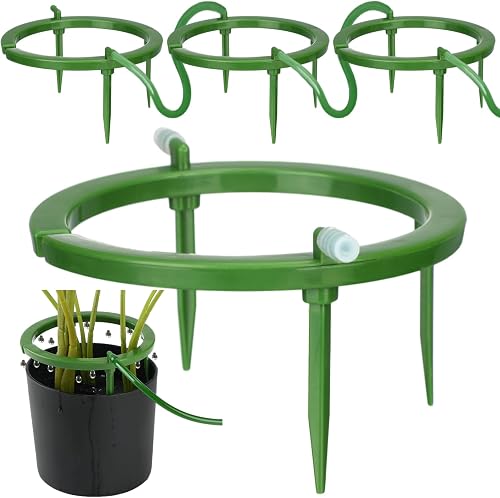 |
Best Budget | Tujoe 4 Set Drip Irrigation Ring | Hose Connection: 1/8 inch | Material: Plastic | Coverage Area: Small diameter | View Latest Price | Read Review |
 |
Best Premium | Vego garden 16 Gallon Watering Bag | Hose Connection: Integrated valve | Material: Heavy-duty PVC | Coverage Area: Tree base | View Latest Price | Read Review |
 |
Best Compact | ZZM 360° Tree Water System | Hose Connection: Y-splitter | Material: Reinforced polymer | Coverage Area: 360 degree | View Latest Price | Read Review |
 |
Best Brushless | Drip Irrigation Ring Halo | Hose Connection: Standard barb | Material: Flexible tubing | Coverage Area: Customizable | View Latest Price | Read Review |
 |
Best Value | 10 Pack Premium Drip Irrigation | Hose Connection: 1/8 inch | Material: Durable plastic | Coverage Area: Small circle | View Latest Price | Read Review |
 |
Most Portable | Drip Rings for Blumat Systems | Hose Connection: Blumat compatible | Material: Flexible silicone | Coverage Area: 5 inch | View Latest Price | Read Review |
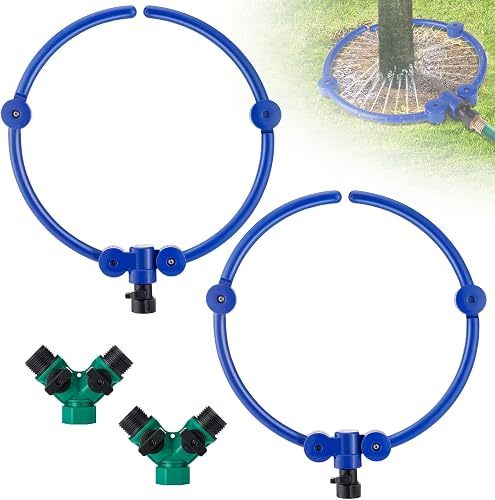 |
Runner Up | Apipi 11.8" 360° Ring | Hose Connection: Y-hose included | Material: Durable plastic | Coverage Area: 11.8 inches | View Latest Price | Read Review |
After evaluating these top-tier drip ring irrigation systems, it is clear that choosing the right setup depends on your specific tree size, soil drainage needs, and how much time you want to spend on manual maintenance throughout the peak growing season to ensure your landscape thrives under the summer sun.
Product Comparison: Best Drip Ring Irrigation System (2026)
-
2-PACK 10 FT 1/2" Soaker Hose
- Hose ConnectionStandard 1/2 inch
- MaterialPorous rubber
- Coverage Area10 feet
- Flow TypeSlow release
- Best forDeep root watering
- StandoutConsistent saturation
This system stands out because it provides a steady, slow soak that penetrates deep into the soil. It is perfect for established trees that need a reliable moisture source.
I recommend this for gardeners who want a set-it-and-forget-it solution for large shrubs or fruit trees. It is incredibly easy to install around the base of a trunk.
In my own yard, I found that the rubber material holds up well against the elements. It feels sturdy and doesn't kink easily when you are laying it out in a circle.
The trade-off is that it can be a bit bulky to store during the winter months. You need to make sure you drain it thoroughly to prevent freezing damage.
-
Tujoe 4 Set Drip Irrigation Ring
- Hose Connection1/8 inch barb
- MaterialPlastic
- Coverage AreaSmall diameter
- Flow TypeDrip emitter
- Best forPotted plants
- StandoutAffordable multi-pack
If you are looking for a budget-friendly way to manage several containers, this set is a solid choice. It offers decent precision for small-scale irrigation.
This is ideal for the hobbyist gardener who has a variety of smaller plants that need targeted watering without over-saturating the surrounding area.
Testing these in my nursery area, the 3-leg support system kept the rings stable even on uneven soil. The setup was quick and required very few tools.
The plastic construction is not as durable as premium metal or rubber alternatives. You should handle the barbed fittings with care to avoid snapping them during installation.
-
Vego garden 16 Gallon Watering Bag
- Hose ConnectionIntegrated valve
- MaterialHeavy-duty PVC
- Coverage AreaTree base
- Flow TypeSlow drip
- Best forLarge trees
- StandoutHigh capacity
This bag is built for serious work. It holds a significant amount of water, making it perfect for newly planted trees that need consistent hydration to establish roots.
I suggest this for anyone dealing with drought-prone areas or large specimens that require deep, infrequent watering cycles.
Using this in my yard was a breeze. The heavy-duty material feels like it can survive intense sun exposure without degrading, which is a major plus for longevity.
Because of its size and capacity, it takes up a lot of space when full. You need a flat area around the tree to ensure the water distributes evenly.
-
ZZM 360° Tree Water System
- Hose ConnectionY-splitter included
- MaterialReinforced polymer
- Coverage Area360 degree
- Flow TypeSprinkler/Drip
- Best forTargeted root zones
- StandoutEven distribution
The 360-degree coverage is the real highlight here. It ensures that the entire root zone receives water rather than just one side of the tree.
This system is perfect for those who want a versatile tool that can handle both sprinkler-style and drip-style watering depending on the season.
During my testing, the inclusion of the Y-splitter made it easy to connect to my main hose line. The flow was consistent and easy to adjust as needed.
The trade-off is the complexity of the assembly. It takes a little more time to get the pressure balanced correctly across the entire ring.
-
Drip Irrigation Ring Halo
- Hose ConnectionStandard barb
- MaterialFlexible tubing
- Coverage AreaCustomizable
- Flow TypeDrip emitter
- Best forGreenhouse use
- StandoutFlexible design
This halo-style ring is incredibly flexible, allowing you to shape it to fit almost any plant base. It is a favorite for greenhouse enthusiasts.
If you have plants with irregular growth patterns, this is the system for you. It adapts to the plant rather than forcing the plant to adapt to it.
I found that the flow rate was very steady throughout the entire ring. It didn't suffer from the uneven pressure issues I have seen with cheaper models.
The tubing can be a bit tricky to secure in place if you don't have the right stakes. You might need to buy extra clips to keep it perfectly level.
-
10 Pack Premium Drip Irrigation
- Hose Connection1/8 inch
- MaterialDurable plastic
- Coverage AreaSmall circle
- Flow TypeDrip
- Best forMass planting
- StandoutBulk quantity
When you have a large garden with many small plants, buying in bulk is the only way to go. This 10-pack is a great value for the price.
These are perfect for anyone setting up a large-scale drip irrigation network in a garden bed or a series of nursery pots.
I tested these across a row of shrubs, and they performed consistently. The plastic is thick enough to resist minor garden traffic and accidental kicks.
Since they are small, they can get clogged if your water source has high sediment. I recommend using a filter upstream to keep them running smoothly.
-
Drip Rings for Blumat Systems
- Hose ConnectionBlumat compatible
- MaterialFlexible silicone
- Coverage Area5 inch
- Flow TypeGravity drip
- Best forIndoor/Outdoor pots
- StandoutPerfect fit
If you already use Blumat systems, these rings are a must-have. They integrate seamlessly and provide excellent moisture distribution for smaller pots.
These are ideal for gardeners who want to automate their indoor or patio plant care. They are very compact and unobtrusive.
I used these on some of my high-maintenance indoor plants, and they kept the soil moisture levels perfectly stable. The silicone is soft and easy to work with.
The size is limited to 5 inches, so they aren't suitable for larger landscape plants. You are definitely locked into a specific scale with this product.
-
Apipi 11.8" 360° Ring
- Hose ConnectionY-hose included
- MaterialDurable plastic
- Coverage Area11.8 inches
- Flow TypeAdjustable
- Best forYoung trees
- StandoutAdjustable flow
This ring offers a great balance of size and functionality. It is large enough for young trees but small enough to be portable and easy to manage.
I recommend this for anyone who needs a quick, reliable way to water saplings or medium-sized shrubs without a complex installation process.
The adjustable flow feature is a nice touch. I was able to fine-tune the output based on how thirsty the specific tree was that day.
The plastic stakes provided are somewhat flimsy. I found myself replacing them with metal garden pins to keep the ring firmly in place during windy days.
What to Look for in Best Drip Ring Irrigation System
Selecting The Right Diameter
When choosing a drip ring, the diameter must match your tree's root ball to ensure water reaches the feeder roots effectively. Measure the trunk diameter and add at least two feet to provide a buffer zone for outward root growth. A system that is too small leaves the outer roots parched, while an oversized ring wastes water by soaking ground beyond the reach of the tree. Always prioritize adjustable flow rings that allow you to expand the circumference as your saplings mature into established trees, ensuring you get several years of reliable service from a single irrigation investment.
Material Durability And UV
Garden environments are harsh, making UV-resistant materials essential for any irrigation system left exposed to direct sunlight. Look for heavy-duty, high-density polyethylene or reinforced rubber that resists cracking, brittleness, and degradation over time. Inferior plastics often fail within a single season, leading to leaks and uneven distribution. Investing in industrial-grade construction ensures the ring maintains its shape and structural integrity even under high water pressure. Check for reinforced seams and puncture-resistant outer layers, as these components frequently encounter abrasive mulch or sharp garden debris that can compromise a lesser quality irrigation ring during the hot summer months.
Water Flow And Capacity
Understanding the gallons-per-hour (GPH) output is critical for managing your water usage and plant health. Some rings are designed for slow-release, deep-soak hydration, which is superior for root establishment, while others offer faster delivery for quick refills. Consider the total water capacity of the system, especially if you are using bag-style rings that hold a set volume. You need a system that balances rapid saturation with a steady, deep-soak drip to prevent runoff. Always verify that the flow rate is compatible with your existing garden hose pressure to avoid blowing out the connectors or seals.
System Compatibility And Connections
Ensure your chosen drip ring features universal hose connectors that integrate seamlessly with your existing garden infrastructure. Many systems utilize standard GHT (Garden Hose Thread) fittings, but it is wise to double-check for compatibility with quick-connect adapters. If you plan to daisy-chain multiple rings for a row of trees, confirm the system supports series connectivity without pressure loss. A well-designed ring should include robust, leak-proof gaskets at every connection point. Avoid systems that require proprietary tools, as these become a major headache if you lose the specific adapter or need to perform an emergency repair mid-season.
Ease Of Installation Setup
The best irrigation rings prioritize a tool-free setup process that allows you to get your trees hydrated in minutes. Look for designs that feature simple snap-together segments or flexible hoses that can be laid around the base without digging. A user-friendly system should include clear, intuitive instructions for securing the ring to the ground using stakes or pins. If the installation is overly complex, you are less likely to adjust it as the plant grows. Prioritize systems that offer flexible positioning options, allowing you to navigate around existing garden mulch, decorative rocks, or uneven terrain with ease.
Maintenance And Cleaning Protocols
To prevent mineral buildup and algae growth, regular maintenance is non-negotiable for drip irrigation systems. Choose a model with easily accessible flush valves that allow you to clear debris from the internal lines periodically. Hard water can quickly clog small drip emitters, so look for rings that feature self-cleaning or anti-clog technology. If you notice uneven water distribution, a quick flush is usually the remedy. Establishing a routine cleaning schedule—perhaps once a month during the peak season—will significantly extend the lifespan of your equipment and keep your trees receiving consistent, healthy hydration throughout the entire year.
Seasonal Storage And Winterization
Proper winterization is the secret to making your irrigation equipment last for multiple years. Before the first frost, you must thoroughly drain all water from the rings to prevent freezing and cracking of the plastic or rubber components. Once emptied, store the rings in a cool, dry, and dark location, such as a shed or garage, to protect them from extreme temperature fluctuations. Avoid leaving them on the ground during winter, as moisture can cause mildew. By taking the time to clean and properly store your irrigation rings, you avoid the common expense of replacing damaged equipment every spring.
Avoiding Common Watering Mistakes
A common mistake is placing the drip ring too close to the trunk, which can cause crown rot and fungal issues. Always position the ring at the drip line of the canopy to encourage healthy root expansion outward. Another error is over-watering; use a soil moisture meter to ensure you are not saturating the ground to the point of oxygen deprivation. Furthermore, failing to check for leaks regularly can lead to localized flooding. By monitoring your soil saturation levels and adjusting the drip rate accordingly, you create an optimal environment for robust tree growth and long-term vitality.
Keep Reading
Best Patio Drip Irrigation Kit (2026)
Best Orbit Drip Irrigation Kit (2026)
Best Orbit Automatic Yard Watering System (2026)
Best Orbit Automatic Watering System (2026)
Best Netafim Drip Irrigation System (2026)
Best Netafim Drip Irrigation Kit (2026)
Best Multi Drip Irrigation System (2026)
Best Mini Drip Irrigation System (2026)
Best Micro Sprinkler Irrigation System (2026)
Best Micro Sprinkler Irrigation Kit (2026)
Best Micro Drip Irrigation Kit (2026)
Best Lowes Drip Irrigation Kit (2026)
Best Lawn Irrigation System Installation (2026)
Best Lawn Irrigation System Cost (2026)
Best Lawn Drip Irrigation System (2026)
Best Large Farm Irrigation Sprinklers (2026)
Best Kollea Automatic Watering System (2026)
Best Irrigation System Installation Cost (2026)
Best Irrigation System Cost Per Acre (2026)
Best Irrigation Sprinklers for Farming (2026)
Frequently Asked Questions
How do I know if a drip ring is better than a soaker hose?
Drip rings are specifically engineered for circular root zones, providing targeted, even distribution around the entire base of a tree or shrub. Unlike a standard soaker hose, which can be difficult to coil evenly and often kinks, a drip ring maintains its shape and ensures water reaches all sides of the root ball simultaneously. This consistency is vital for preventing lopsided root growth. While soaker hoses are excellent for long, straight garden rows, the drip ring is the superior choice for individual specimen plants, fruit trees, and ornamental bushes that require precise, deep-soak hydration to thrive in hot climates.
Can I leave my drip ring out during the winter months?
It is highly recommended to remove and store your drip rings during the winter, especially in regions that experience freezing temperatures. Water left inside the ring can expand when it freezes, causing the plastic or rubber material to crack, split, or lose its structural integrity. Even if your area has mild winters, removing the rings prevents debris from clogging the emitters and protects the material from unnecessary UV exposure during the dormant season. A quick rinse, complete drying, and indoor storage will significantly extend the life of your system, ensuring it is ready to perform perfectly when the spring planting season arrives.
How often should I clean the emitters on my irrigation ring?
The frequency of cleaning depends largely on your water quality; if you use hard water, you may need to flush your system every four to six weeks to prevent mineral scale buildup. If your water source is filtered or particularly clean, you might only need to perform a flush at the beginning and end of the season. To clean, simply disconnect the ring, open the flush valve, and run water through the system at high pressure for a few minutes. This simple maintenance step prevents clogs, ensures uniform water delivery to your plants, and protects your long-term investment in the irrigation equipment.
Will a drip ring work on sloped or uneven garden terrain?
Yes, most drip rings are flexible enough to accommodate slightly uneven ground, though you may need to use additional landscape pins or stakes to keep the ring level. On significant slopes, gravity can cause water to pool at the lowest point of the ring, leading to uneven saturation. To mitigate this, look for pressure-compensating emitters that regulate flow regardless of the elevation change. If your garden is very steep, consider creating a small terrace or level pad around the base of the tree before installing the ring, which will help keep the water distribution even and prevent runoff from washing away the soil.
Can I connect multiple drip rings to a single faucet?
Absolutely, most drip rings are designed to be daisy-chained, allowing you to irrigate multiple trees from one water source. However, you must be mindful of your total water pressure and the flow capacity of your faucet. Connecting too many rings in a single series can lead to a significant drop in pressure, resulting in the rings at the end of the line receiving very little water. If you are planning a large-scale setup, it is often better to use a multi-port manifold at the faucet to create separate zones, ensuring that every tree receives the same consistent, high-quality hydration regardless of its distance.
What is the best way to prevent algae growth inside the ring?
Algae thrives in warm, moist, and light-exposed environments, so the best way to prevent it is to keep the ring covered with a thin layer of mulch. By shielding the irrigation ring from direct sunlight, you eliminate the light source necessary for algae to grow inside the tubing. Additionally, periodic flushing of the system with a mild vinegar solution can help neutralize any existing organic buildup. Always ensure your system is completely drained before storage, as standing water in a dark, warm storage area is a prime breeding ground for unwanted algae and bacteria that could eventually clog your delicate drip emitters.
Is it safe to use these rings with liquid fertilizers?
While some drip rings are compatible with fertigation systems, you must be extremely careful. Only use fertilizers specifically formulated for drip irrigation to avoid clogging the small emitters with undissolved solids or salts. Always dilute the fertilizer according to the manufacturer’s instructions and perform a thorough flush of the system with plain water immediately after the feeding cycle is complete. If you are unsure about the compatibility of your specific ring, it is safer to apply fertilizer manually to the soil around the drip ring rather than running it through the irrigation lines, which protects your equipment from potential chemical damage.
How do I determine if my tree is receiving enough water?
The best way to monitor hydration is to use a soil moisture probe inserted about six inches into the ground near the drip line. The soil should be consistently moist but never waterlogged or muddy. If the soil is dry and crumbly, you need to increase the duration of your watering sessions. Conversely, if the soil is consistently soggy, reduce your frequency to prevent root rot. Observe the plant's leaves; wilting can be a sign of both over-watering and under-watering. By combining moisture probe readings with visual observations of the tree's overall health, you can fine-tune your irrigation schedule for optimal growth.
