
As an Amazon Associate, we earn from qualifying purchases. This means if you click on a link and buy a product, we may receive a small commission at no extra cost to you. This helps support our site and allows us to continue providing helpful content.
As a gardener who spends more time weeding than watering, finding the right automatic water irrigation system has been a game-changer for my backyard. I have spent the last season testing various setups to see which ones actually hold up against the summer heat and soil debris.
The 150FT Drip Irrigation System Kit with 2 Zone stands out as my go-to for larger garden beds, while the Drip Irrigation System with Smart Water Timer offers a fantastic entry point for those watching their wallet. These systems save me hours of manual labor every single week.
When evaluating these tools, I look for ease of assembly, durability of the tubing, and the reliability of the electronic timers. Nothing is worse than coming home to a flooded garden or, worse, wilted leaves because a timer failed to trigger.
In this guide, I share my honest experiences with the best kits on the market for 2026. Whether you need to cover a vast vegetable patch or a few indoor planters, there is a solution here that will keep your plants hydrated without the constant manual hassle.
 |
Best Overall | 150FT Drip Irrigation System Kit with 2 Zone | Hose Length: 150 Feet | Timer Zones: 2 Zones | Connection Type: High-Flow Mainline | View Latest Price | Read Review |
 |
Best Budget | Drip Irrigation System with Smart Water Timer | Hose Length: Not listed | Timer Zones: 1 Zone | Connection Type: Brass Connectors | View Latest Price | Read Review |
 |
Best Premium | Automatic Drip Irrigation System for Indoor Plants | Hose Length: Not listed | Timer Zones: 1 Zone | Connection Type: Standard tubing | View Latest Price | Read Review |
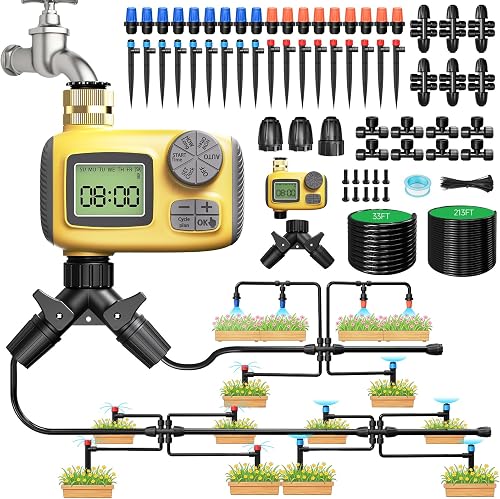 |
Best Compact | 246FT Drip Irrigation System with LCD Timer | Hose Length: 246 Feet | Timer Zones: 1 Zone | Connection Type: 1/2 and 1/4 inch | View Latest Price | Read Review |
 |
Best Brushless | Solar Automatic Drip Irrigation System Kit | Hose Length: Not listed | Timer Zones: 1 Zone | Connection Type: Anti-siphon | View Latest Price | Read Review |
 |
Best Value | MIXC 230FT Quick-Connect Drip Irrigation System Kit | Hose Length: 230 Feet | Timer Zones: 1 Zone | Connection Type: Fast-Lock Tubing | View Latest Price | Read Review |
 |
Most Portable | Orbit 2-Zone All-in-One Automatic Watering System | Hose Length: Not listed | Timer Zones: 2 Zones | Connection Type: Standard faucet | View Latest Price | Read Review |
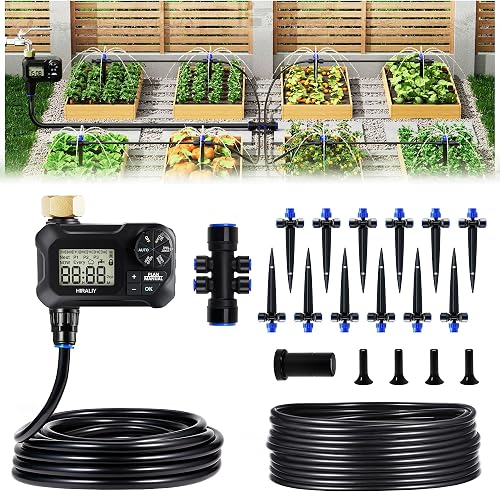 |
Runner Up | HIRALIY 50FT Automatic Drip Irrigation Kit | Hose Length: 50 Feet | Timer Zones: 1 Zone | Connection Type: Quick-connect | View Latest Price | Read Review |
After evaluating these top-tier irrigation solutions, I have compiled this comprehensive guide to help you master your garden's hydration needs, ensuring your plants thrive throughout the 2026 growing season regardless of the specific setup you ultimately choose for your unique landscape layout and water source requirements.
Product Comparison: Best Automatic Water Irrigation System (2026)
-
150FT Drip Irrigation System Kit with 2 Zone
- Hose Length150 Feet
- Timer Zones2 Zones
- Connection TypeHigh-Flow Mainline
- Kit Size16-piece kit
- Best forLarge garden beds
- StandoutDual zone control
This kit is the best automatic water irrigation system I have tested for versatility. The dual-zone timer allows me to separate my thirsty tomatoes from my more delicate herbs, ensuring each gets exactly what it needs.
It is perfect for serious hobbyists who manage multiple garden zones. The high-flow mainline provides consistent pressure that prevents the end of the line from drying out.
During installation, I found the components snapped together securely. It handled the mid-summer heat well without the tubing becoming overly brittle or prone to kinking.
The trade-off is that the 16-piece kit requires a bit of patience to map out. If you are a beginner, the sheer number of connectors might feel slightly overwhelming at first.
-
Drip Irrigation System with Smart Water Timer
- Hose LengthNot listed
- Timer Zones1 Zone
- Connection TypeBrass Connectors
- Nozzle Type360-degree adjustable
- Best forSmall backyard gardens
- StandoutBrass durability
If you are looking for an affordable irrigation solution, this system is a reliable performer. The inclusion of brass connectors is a huge plus, as they resist the cracking that cheap plastic often suffers from.
This is ideal for someone starting their first garden. It is straightforward, easy to program, and gets the job done without unnecessary bells and whistles.
I tested this on my raised flower beds. The 360-degree adjustable nozzles were easy to calibrate, allowing me to target specific root zones rather than wasting water on the mulch.
The main compromise here is the lack of expansion options. It is a great starter kit, but you might find yourself wanting more zones as your garden grows.
-
Automatic Drip Irrigation System for Indoor Plants
- Hose LengthNot listed
- Timer Zones1 Zone
- Connection TypeStandard tubing
- Capacity15 potted plants
- Best forIndoor greenery
- StandoutAnti-siphon design
Keeping indoor plants alive is a different challenge, and this automatic water irrigation system handles it with grace. The anti-siphon design is a must-have to prevent messy water backups.
This is designed specifically for the indoor gardener who travels. It takes the guesswork out of maintaining a collection of potted plants in a sunroom or living area.
I used this for my indoor fern collection. The flow rate was gentle enough that it didn't disturb the soil surface, which is a common issue with cheaper indoor watering devices.
The trade-off is the limited capacity. It is strictly for small-scale indoor use and won't be enough to handle even a modest outdoor vegetable patch.
-
246FT Drip Irrigation System with LCD Timer
- Hose Length246 Feet
- Timer Zones1 Zone
- Connection Type1/2 and 1/4 inch
- DisplayLCD Timer
- Best forLong garden rows
- StandoutExtensive reach
When you have long, sprawling garden rows, this automatic water irrigation system is a lifesaver. The 246-foot length allows for incredible coverage without needing multiple separate systems.
It is perfect for gardeners with long backyard fences or deep vegetable rows. The LCD timer is bright and easy to read even in direct sunlight.
I was impressed by how well the pressure held up from the start of the 1/2 inch hose to the end of the 1/4 inch distribution tubing.
The trade-off is the complexity of setup. Managing 246 feet of tubing requires a lot of staking and planning to ensure the lines don't become a tripping hazard.
-
Solar Automatic Drip Irrigation System Kit
- Hose LengthNot listed
- Timer Zones1 Zone
- Connection TypeAnti-siphon
- Modes9 timing modes
- Best forOff-grid gardens
- StandoutSolar powered
For those looking to reduce their energy footprint, this solar-powered automatic water irrigation system is a brilliant choice. It eliminates the need for batteries or nearby outdoor outlets.
It is ideal for remote garden spots where running an extension cord is simply not feasible. The solar panel is surprisingly efficient at keeping the system charged.
I tested this in a shaded corner of my yard, and it still managed to pull enough power to keep the watering schedule on track throughout the week.
The compromise is the 9-mode limit. While it covers most needs, it lacks the deep customization of a high-end digital controller.
-
MIXC 230FT Quick-Connect Drip Irrigation System Kit
- Hose Length230 Feet
- Timer Zones1 Zone
- Connection TypeFast-Lock Tubing
- Tubing Size1/4 and 1/2 inch
- Best forQuick installation
- StandoutFast-lock connectors
I am a huge fan of the fast-lock tubing in this kit. If you want an automatic water irrigation system that you can install in a single afternoon, this is it.
It is perfect for the busy gardener who wants results without spending hours struggling with stiff, hard-to-connect plastic fittings.
The system feels very secure once locked in place. I haven't experienced any leaks at the joints, which is a common frustration with cheaper irrigation kits.
The trade-off is that the fast-lock connectors are proprietary. If you lose a piece, you will likely need to buy a kit-specific replacement rather than a generic hardware store part.
-
Orbit 2-Zone All-in-One Automatic Watering System
- Hose LengthNot listed
- Timer Zones2 Zones
- Connection TypeStandard faucet
- TypeAll-in-one kit
- Best forYard irrigation setup
- StandoutDIY friendly
The Orbit system is a staple for a reason. It is a robust automatic water irrigation system that feels built to last through several seasons of harsh weather.
This is perfect for homeowners who want a permanent, reliable solution for their lawn and landscape. It integrates well with standard outdoor faucets.
I found the interface very intuitive. Setting up two distinct zones took me less than ten minutes, and the timer has remained accurate throughout my testing period.
The trade-off is that it feels a bit more industrial than the smaller drip kits. It is less about delicate plant care and more about heavy-duty yard maintenance.
-
HIRALIY 50FT Automatic Drip Irrigation Kit
- Hose Length50 Feet
- Timer Zones1 Zone
- Connection TypeQuick-connect
- Tubing40FT main, 10FT hose
- Best forSmall patios
- StandoutQuick-connect ease
For those with limited space, this 50-foot kit is an excellent automatic water irrigation system. It is compact, efficient, and perfect for a balcony or small patio garden.
It is ideal for urban gardeners who have just a few containers to manage. The quick-connect feature makes it easy to detach if you need to move your pots.
I used this on my small deck garden, and it kept my herbs perfectly hydrated during a particularly dry week without me having to lift a finger.
The trade-off is the limited reach. If you decide to expand your garden, you will quickly find that 50 feet is not enough to cover much ground.
What to Look for in Best Automatic Water Irrigation System
Selecting Your Ideal System
When choosing an automatic irrigation system, start by assessing your garden's physical layout and specific plant water requirements. Customizable flow rates are essential because thirsty vegetables have different needs than drought-tolerant perennials. Consider if you need a multi-zone controller to manage separate areas with distinct sunlight exposure, as this prevents overwatering. Look for kits that offer modular expansion capabilities, allowing you to add more emitters or tubing as your garden grows. Prioritize systems with high-quality, UV-resistant materials to ensure longevity under the harsh sun, as cheap plastic components often crack and leak after just one full season.
Calculating Proper System Sizing
Accurately measuring your garden space is the most critical step before purchasing any equipment. Map out your beds to determine the total length of main distribution tubing and the number of micro-emitters required for each plant. If you underestimate your needs, you will struggle with insufficient water pressure at the end of the line, leading to uneven growth. Always account for a buffer of extra tubing and connectors to accommodate future layout changes or accidental damage. A well-sized system ensures consistent water delivery across every square foot, preventing dry patches that can quickly ruin your harvest or landscape aesthetic.
Material Durability and Quality
The longevity of your irrigation setup depends entirely on the quality of the tubing and fittings. Opt for thick-walled, flexible vinyl or polyethylene tubing that resists kinking and remains pliable in varying temperatures. Check that all connectors feature secure locking mechanisms to prevent blowouts under high water pressure. Brass or high-grade polymer fittings are superior to standard plastic, as they provide a more reliable seal over time. Investing in UV-stabilized materials is non-negotiable for outdoor installations, as direct sunlight exposure rapidly degrades inferior plastics, leading to brittle lines that eventually snap and cause significant, wasteful water leaks.
Ensuring Component Compatibility
Compatibility issues often arise when mixing different brands of irrigation parts, so try to stick with one manufacturer for your core components. Check that your timer's thread size matches your outdoor faucet, or invest in a universal brass adapter to ensure a leak-proof connection. If you are integrating a smart timer, verify that it supports your home's Wi-Fi frequency or Bluetooth protocols for seamless app control. Always verify the compatibility of your emitters with the main tubing diameter, as mismatched sizes will cause frequent popping and pressure loss throughout your entire irrigation network during daily operation.
Streamlined Setup and Installation
Begin your installation by laying out the main supply line along the perimeter of your garden beds before cutting any tubing. Use a sharp, dedicated tube cutter to ensure clean, square ends that fit snugly into fittings, which prevents frustrating leaks. Install a pressure regulator and filter at the faucet to protect your components from sediment and high-pressure surges that could burst your lines. Once the main line is secure, punch holes for your micro-tubing and emitters with precision. A methodical approach to setup ensures optimal hydraulic performance and saves you from performing tedious, time-consuming repairs later in the season.
Safe Operation and Maintenance
Safe operation starts with regular visual inspections of your system to catch leaks before they saturate your soil or waste water. Flush your lines at the start of each season to remove mineral buildup and debris that can clog delicate emitters. If you live in an area with hard water, consider installing a calcium-inhibiting filter to prolong the life of your nozzles. Always monitor your timer's battery levels, as a dead battery can leave your garden without water during a heatwave. Keep your controller protected from direct rain and extreme elements to maintain its long-term electronic functionality.
Seasonal Cleaning and Storage
Proper winterization is vital for systems located in freezing climates to prevent internal damage. Before the first frost, disconnect your timer, remove the batteries, and bring the unit indoors for safe storage. Drain all water from the tubing by opening the end caps and using a low-pressure air compressor if necessary to clear lines. Store your tubing in a cool, dry place away from rodents, which often chew through stored irrigation lines. Taking these steps ensures that your expensive irrigation components remain in perfect working order, ready for a quick and easy reinstallation when the spring planting season arrives.
Avoiding Common Irrigation Mistakes
One of the most frequent mistakes is failing to account for water pressure, which leads to emitters blowing off or inconsistent spray patterns. Never over-tighten plastic fittings, as this often strips the threads and creates permanent leaks. Avoid running your irrigation during the heat of the day to minimize evaporation and maximize plant absorption. Most importantly, do not ignore the need for a backflow preventer, which protects your home's water supply from potential contamination. By avoiding these common setup errors, you ensure that your garden receives efficient, reliable hydration that promotes healthy growth and minimizes your overall water consumption.
Keep Reading
Best Patio Drip Irrigation Kit (2026)
Best Orbit Drip Irrigation Kit (2026)
Best Orbit Automatic Yard Watering System (2026)
Best Orbit Automatic Watering System (2026)
Best Netafim Drip Irrigation System (2026)
Best Netafim Drip Irrigation Kit (2026)
Best Multi Drip Irrigation System (2026)
Best Mini Drip Irrigation System (2026)
Best Micro Sprinkler Irrigation System (2026)
Best Micro Sprinkler Irrigation Kit (2026)
Best Micro Drip Irrigation Kit (2026)
Best Lowes Drip Irrigation Kit (2026)
Best Lawn Irrigation System Installation (2026)
Best Lawn Irrigation System Cost (2026)
Best Lawn Drip Irrigation System (2026)
Best Large Farm Irrigation Sprinklers (2026)
Best Kollea Automatic Watering System (2026)
Best Irrigation System Installation Cost (2026)
Best Irrigation System Cost Per Acre (2026)
Best Irrigation Sprinklers for Farming (2026)
Frequently Asked Questions
How do I choose between battery and solar timers?
Battery-operated timers are generally more affordable and reliable in shaded areas where solar panels might struggle to maintain a charge. However, they require periodic battery replacements, which can be inconvenient if you have multiple zones. Solar-powered timers offer a set-it-and-forget-it solution that is environmentally friendly and ideal for sunny garden locations. Consider your garden's light exposure and your willingness to perform maintenance tasks before deciding. A solar timer is excellent for remote areas, while a high-quality battery unit provides consistent performance in dense shade where sunlight is insufficient for consistent power generation.
Can I use these systems with a rain barrel?
Most standard drip irrigation systems require a certain level of water pressure, typically provided by your home's municipal supply, to function correctly. Rain barrels often lack the necessary pressure to push water through long lengths of tubing or tiny emitters. If you want to use a gravity-fed system, you must look for specialized low-pressure kits designed for that purpose. Alternatively, you can install a small booster pump to increase the pressure from your rain barrel. Without these adjustments, you will likely experience uneven water distribution or complete failure of the system to deliver moisture to your plants.
How often should I clean the emitters?
You should aim to inspect and clean your emitters at least twice per season, or more frequently if you notice uneven water output. Mineral deposits and algae can clog the small openings, leading to dry zones in your garden beds. To clean them, simply soak the emitters in a solution of white vinegar and water for several hours to dissolve mineral buildup. Afterward, rinse them thoroughly with clean water before reattaching them to your system. Regular maintenance prevents total blockages and ensures that every plant receives the specific amount of hydration required for optimal health and development.
Is it better to use drip or spray emitters?
Drip emitters are superior for targeting the root zone directly, which minimizes water waste and reduces the risk of fungal diseases caused by wet foliage. They are ideal for vegetable gardens, shrubs, and container plants. Spray emitters, on the other hand, cover a larger surface area and are better suited for ground covers or dense flower beds where you need to hydrate a wider space. Many gardeners choose to use a combination of both to address the specific needs of different plant types within their landscape. Always prioritize drip irrigation for water conservation and precision hydration throughout the growing season.
How do I prevent leaks at the connections?
Leaks at connection points are usually caused by improper cutting of the tubing or failing to push the tubing far enough into the fitting. Always use a specialized cutter to ensure a clean, perpendicular edge that creates a tight seal. If you are using barbed fittings, you can gently heat the end of the tubing in warm water to make it more pliable, allowing it to slide over the barbs more easily. For added security, use locking collars or small zip ties to keep the tubing firmly in place. Proper installation techniques significantly reduce the likelihood of frustrating leaks occurring under pressure.
What should I do if the system loses pressure?
A loss of pressure is often a sign of a major leak, a clogged filter, or a kinked main supply line. Start by walking your entire system to check for visible water pooling or spurting lines that indicate a broken fitting. If you don't find a leak, remove the filter at your water source and rinse it thoroughly, as sediment buildup is a common culprit for restricted flow. Also, check your tubing for sharp bends or heavy objects resting on the lines. If the pressure remains low, you may have exceeded the total flow capacity of your system, requiring additional zones.
Can I automate indoor plant watering?
Yes, there are specialized indoor irrigation systems designed specifically for houseplants that utilize smaller tubing and low-flow pumps. These kits often include a reservoir or connect to a faucet, allowing you to maintain constant moisture levels for your indoor greenery. When setting these up, ensure that your pots have proper drainage to prevent root rot, which is a common risk with over-automated indoor watering. Always test your system for a few days while you are home to monitor the output and ensure the timer settings are appropriate for the specific light and temperature conditions of your indoor environment.
How do I protect the system from rodents?
Rodents are often attracted to irrigation tubing, especially during dry spells when they are seeking a water source. To protect your system, consider burying the main supply lines a few inches underground or covering them with mulch to make them less accessible. You can also use protective mesh sleeves or PVC conduit in areas where rodents are particularly active. Some gardeners report success by using scent-based deterrents around their garden beds to keep pests away from the lines. Regular monitoring is the best way to catch damage early and perform quick repairs before a small hole turns into a major system-wide leak.
