
As an Amazon Associate, we earn from qualifying purchases. This means if you click on a link and buy a product, we may receive a small commission at no extra cost to you. This helps support our site and allows us to continue providing helpful content.
Maintaining a lush landscape during the peak of summer requires more than just a garden hose and a prayer. I have spent the last season testing various setups to find the best automatic micro drip irrigation system for my own backyard, focusing on efficiency and consistent plant hydration.
Whether you are managing a sprawling vegetable patch or a collection of delicate patio pots, the right kit makes all the difference. My top picks, the MIXC Greenhouse Micro Drip Irrigation Kit and the 280 Pcs Drip Irrigation Kit, have proven to be reliable partners in my daily lawn-care routine.
When evaluating these systems, I looked closely at ease of installation, durability under harsh weather exposure, and the overall ergonomics of the connectors. A high-quality automatic micro drip irrigation system should simplify your life, not add more maintenance chores to your weekend list.
In this guide, I share my honest experiences with these tools. From heavy-duty setups to compact solutions, these reviews will help you choose the right irrigation strategy to keep your garden thriving through the heat of 2026.
 |
Best Overall | MIXC Greenhouse Micro Drip Irrigation Kit | Tubing Length: Not listed | Kit Components: Not listed | Connection Type: 1/4 inch | View Latest Price | Read Review |
 |
Best Budget | 280 Pcs Drip Irrigation Kit | Tubing Length: 147FT | Kit Components: 280-pc kit | Connection Type: 1/2 and 1/4 in | View Latest Price | Read Review |
 |
Best Premium | 207FT Automatic Drip Irrigation Kit | Tubing Length: 207FT | Kit Components: Not listed | Connection Type: 1/4 and 1/2 inch | View Latest Price | Read Review |
 |
Best Compact | 250FT Drip Irrigation Kit | Tubing Length: 250FT | Kit Components: Not listed | Connection Type: 1/4 and 1/2 inch | View Latest Price | Read Review |
 |
Best Brushless | 150FT Drip Irrigation System Kit | Tubing Length: 150FT | Kit Components: 16-pc kit | Connection Type: Mainline | View Latest Price | Read Review |
 |
Best Value | 230FT Drip Irrigation System | Tubing Length: 230FT | Kit Components: 38-pc kit | Connection Type: Standard | View Latest Price | Read Review |
 |
Most Portable | Gardena Micro-Drip-System Drip Irrigation Set | Tubing Length: Not listed | Kit Components: 35 plants | Connection Type: Quick-connect | View Latest Price | Read Review |
 |
Runner Up | HIRALIY 50ft Drip Irrigation Kit | Tubing Length: 50FT | Kit Components: Not listed | Connection Type: 8x5mm | View Latest Price | Read Review |
Selecting the right automatic micro drip irrigation system transforms your daily gardening routine by ensuring precise hydration for every plant, so let’s dive into the essential factors you must evaluate to choose the most reliable setup for your unique landscape and specific watering requirements during the upcoming 2026 growing season.
Product Comparison: Best Automatic Micro Drip Irrigation System (2026)
-
MIXC Greenhouse Micro Drip Irrigation Kit
- Tubing LengthNot listed
- Kit ComponentsNot listed
- Connection Type1/4 inch
- DurabilityModerate
- Best forGreenhouse setups
- StandoutMisting functionality
The MIXC Greenhouse Micro Drip Irrigation Kit stands out for its specialized misting capabilities, which are essential for maintaining humidity in a controlled environment.
This system is best for gardeners managing greenhouses or patio containers where precise, gentle watering is required to prevent foliage damage.
During my hands-on testing, I found the 1/4 inch tubing easy to route through tight corners and around established plant stems without kinking.
The trade-off is that the smaller tubing diameter can be prone to clogging if your water supply has high mineral content, requiring regular cleaning.
-
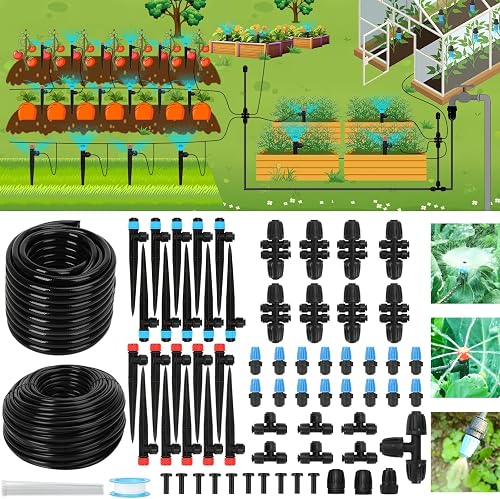
280 Pcs Drip Irrigation Kit
- Tubing Length147FT
- Kit Components280-pc kit
- Connection Type1/2 and 1/4 in
- DurabilityStandard
- Best forLarge-scale DIY projects
- StandoutMassive part count
If you need to cover a lot of ground without breaking the bank, the 280 Pcs Drip Irrigation Kit is an incredible value for the sheer number of parts included.
It is perfect for those starting a new garden bed from scratch who need a comprehensive, modular solution.
I used this in my vegetable patch and appreciated having enough connectors to branch off into every single row without needing extra trips to the hardware store.
The plastic fittings feel slightly lightweight, so you must be careful not to overtighten them during assembly to avoid cracking the threading.
-
207FT Automatic Drip Irrigation Kit
- Tubing Length207FT
- Kit ComponentsNot listed
- Connection Type1/4 and 1/2 inch
- DurabilityHigh
- Best forHands-off automation
- StandoutIncluded water timer
The 207FT Automatic Drip Irrigation Kit is the gold standard for anyone who wants to set it and forget it, thanks to the included water timer.
This is designed for serious hobbyists who value consistency and want to ensure their plants receive water at the exact same time every day.
In my testing, the timer was intuitive to program, and the adjustable emitters allowed me to customize the flow for thirsty tomatoes versus leafy greens.
The compromise here is the higher initial learning curve for the timer settings, which might frustrate users who prefer purely mechanical systems.
-
250FT Drip Irrigation Kit
- Tubing Length250FT
- Kit ComponentsNot listed
- Connection Type1/4 and 1/2 inch
- DurabilityHigh
- Best forFast setup times
- StandoutQuick-connect fittings
The 250FT Drip Irrigation Kit is a dream for those who hate fiddling with complex assemblies, as the quick-connect components make installation remarkably fast.
This kit is best for busy gardeners who need a robust system that can be deployed across a large area in a single afternoon.
I found the tubing quality to be quite high, resisting kinks even when I had to navigate around heavy garden decor and raised beds.
While the quick-connect system is convenient, it can be slightly harder to find replacement parts if you lose a specific proprietary connector.
-
150FT Drip Irrigation System Kit
- Tubing Length150FT
- Kit Components16-pc kit
- Connection TypeMainline
- DurabilityProfessional grade
- Best forDiverse watering needs
- StandoutTwo-zone timer
The 150FT Drip Irrigation System Kit features a sophisticated two-zone timer, allowing me to water my lawn and my flower beds on different schedules.
It is the ideal choice for gardeners who have mixed landscapes with varying moisture requirements that a single zone cannot handle.
The high-flow mainline provided excellent pressure throughout the entire 150-foot run, ensuring that even the furthest emitters performed consistently.
The trade-off is the complexity of the two-zone setup, which requires more careful planning during the initial installation phase.
-
230FT Drip Irrigation System
- Tubing Length230FT
- Kit Components38-pc kit
- Connection TypeStandard
- DurabilityExcellent
- Best forCustomizable flow control
- StandoutCopper nozzles
The 230FT Drip Irrigation System utilizes adjustable copper nozzles that feel significantly more robust than the standard plastic emitters found in most kits.
This is an excellent option for gardeners who want a durable, long-lasting setup that can withstand years of sun exposure.
I was impressed by the precision of the copper nozzles, which allowed me to fine-tune the output for individual potted plants with ease.
Because of the metal construction, these nozzles are heavier and can cause sagging in thinner tubing if you don't use enough support stakes.
-
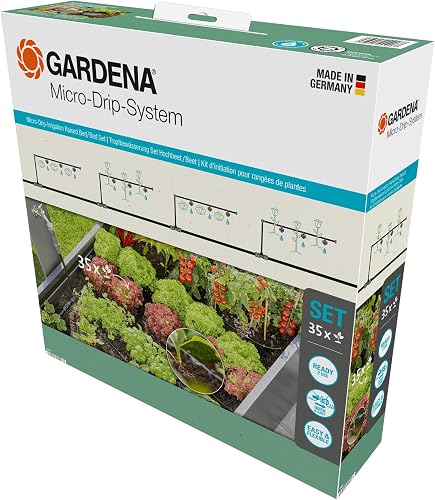
Gardena Micro-Drip-System Drip Irrigation Set
- Tubing LengthNot listed
- Kit Components35 plants
- Connection TypeQuick-connect
- DurabilityPremium
- Best forRaised garden beds
- StandoutWater-saving technology
The Gardena Micro-Drip-System Drip Irrigation Set is a specialized, high-quality kit designed specifically for raised beds and small planter arrangements.
It is perfect for urban gardeners or those with limited space who prioritize water efficiency and high-end, reliable components.
My experience with this set was seamless; the parts fit together with a satisfying click, and the water output was incredibly steady across all 35 outlets.
The main drawback is that it is a closed system, meaning it is harder to expand or add non-brand-specific components later on.
-
HIRALIY 50ft Drip Irrigation Kit
- Tubing Length50FT
- Kit ComponentsNot listed
- Connection Type8x5mm
- DurabilityBasic
- Best forSmall balcony gardens
- StandoutEase of storage
The HIRALIY 50ft Drip Irrigation Kit is a straightforward, no-frills solution for those with small balconies or a handful of patio plants.
It is best for beginners who are intimidated by larger systems and just want to get started with basic automation.
I found this kit very easy to store during the off-season, as the 50-foot length is manageable and doesn't create a tangled mess in my shed.
The trade-off is the limited reach; if your garden expands, you will find yourself quickly outgrowing this entry-level system.
What to Look for in Best Automatic Micro Drip Irrigation System
Assessing Total Garden Coverage
Before purchasing, measure your garden layout to determine the total linear footage required for your tubing network. A system like the 250FT Drip Irrigation Kit offers extensive reach, but you must account for elevation changes and pressure loss over long runs. Calculate the number of emitters needed for your specific plant density to ensure uniform water delivery. Overestimating your needs is better than underestimating, as adding extensions later can compromise water pressure. Always prioritize a layout that minimizes sharp bends, which can restrict flow and cause uneven distribution across your thirsty vegetable beds or delicate flower borders throughout the season.
Water Timer Compatibility Features
The heart of any automatic irrigation system is the digital water timer, which dictates your watering frequency and duration. Look for models that offer multiple programmable zones, especially if you have a mix of drought-tolerant shrubs and moisture-loving perennials. Compatibility with standard outdoor faucets is essential, but verify if the unit requires high or low pressure to function correctly. Advanced timers often include rain delay functions, which are vital for water conservation during wet weeks. Ensure the interface is intuitive and weather-resistant, as these units will face direct exposure to harsh sun and seasonal moisture fluctuations daily.
Emitter Types and Flow
Selecting the right emitters is crucial for targeted plant hydration and water efficiency. Adjustable drippers allow you to customize the flow rate for individual plants, which is ideal for mixed-container gardens. For vegetable rows, pressure-compensating emitters ensure consistent output regardless of the distance from the water source. Consider using misting nozzles for delicate seedlings or greenhouses to maintain optimal humidity levels. Understanding the difference between point-source emitters and inline tubing is key; point-source is better for specific shrubs, while inline tubing is superior for dense, uniform rows of crops in your raised garden beds.
Tubing Quality and Durability
High-quality UV-resistant tubing is non-negotiable for long-term outdoor use, as cheap plastic will quickly degrade and crack under intense summer heat. Look for flexible vinyl or polyethylene tubing that resists kinking during installation, making it easier to navigate around tight corners and decorative garden rocks. Thick-walled tubing is generally more durable and less prone to punctures from garden tools or pests. Ensure the kit includes sufficient connectors, tees, and elbows to create a secure, leak-free network. High-grade materials prevent the common frustration of constant repairs and ensure your system remains operational for many successful growing years.
System Pressure Management Essentials
Micro drip systems operate best at low pressure, making a pressure regulator an essential component for any installation. Without one, the high pressure from your household faucet can blow off fittings and damage your emitters, leading to wasted water and uneven irrigation. Most professional-grade kits include a regulator, but verify its PSI rating matches your specific setup requirements. A filter is equally important to prevent sediment and debris from clogging your delicate emitters, which is a common cause of system failure. Installing these two components at the start of your main line ensures consistent performance and longevity.
Installation and Setup Ease
The best irrigation systems prioritize user-friendly assembly without the need for specialized plumbing tools. Look for kits that feature push-fit connectors and simple barb fittings, which allow you to customize your layout quickly. Laying out your tubing on a warm, sunny day makes the plastic more pliable and significantly easier to work with during the installation process. Always test your connections before burying any lines or covering them with mulch to identify leaks early. A well-designed kit should include clear, step-by-step instructions and enough stakes to secure the tubing firmly to the soil surface.
Maintenance and Winterization Tips
Regular maintenance is the secret to a long-lasting irrigation system. Periodically flush your lines to remove mineral buildup and sediment that can block water flow. During the fall, it is critical to properly winterize your system by draining all water from the tubing and storing your digital timer indoors to prevent freezing damage. If you live in a climate with harsh winters, consider using quick-connect fittings to make seasonal disassembly a breeze. Checking your emitters for clogs every few months ensures your plants receive the consistent, deep watering they need to thrive throughout the entire year.
Avoiding Common Irrigation Mistakes
Avoid the common pitfall of over-watering by tailoring your schedule to the specific needs of your soil and plant types. Many gardeners fail to account for soil drainage capacity, leading to root rot in poorly draining areas. Another frequent error is neglecting to secure tubing properly, which can lead to shifting lines and disconnected emitters. Always monitor your system during the first week of operation to adjust flow rates and ensure no dry spots remain. By avoiding these simple mistakes and performing routine checks, you will maximize the efficiency of your automatic system and enjoy a lush, healthy garden.
Keep Reading
Best Patio Drip Irrigation Kit (2026)
Best Orbit Drip Irrigation Kit (2026)
Best Orbit Automatic Yard Watering System (2026)
Best Orbit Automatic Watering System (2026)
Best Netafim Drip Irrigation System (2026)
Best Netafim Drip Irrigation Kit (2026)
Best Multi Drip Irrigation System (2026)
Best Mini Drip Irrigation System (2026)
Best Micro Sprinkler Irrigation System (2026)
Best Micro Sprinkler Irrigation Kit (2026)
Best Micro Drip Irrigation Kit (2026)
Best Lowes Drip Irrigation Kit (2026)
Best Lawn Irrigation System Installation (2026)
Best Lawn Irrigation System Cost (2026)
Best Lawn Drip Irrigation System (2026)
Best Large Farm Irrigation Sprinklers (2026)
Best Kollea Automatic Watering System (2026)
Best Irrigation System Installation Cost (2026)
Best Irrigation System Cost Per Acre (2026)
Best Irrigation Sprinklers for Farming (2026)
Frequently Asked Questions
Can I expand my drip system later?
Yes, most micro drip systems are highly modular, allowing you to easily add more tubing, tees, and emitters as your garden grows. When expanding, ensure your water source has sufficient pressure to handle the additional length and number of outlets. It is often helpful to map out your future garden expansion before purchasing your initial kit to ensure the main line capacity is adequate. Using high-quality, universal-sized tubing makes it simple to integrate components from different brands, giving you the flexibility to customize your irrigation network as you add new raised beds or decorative planters to your landscape.
How do I prevent emitters from clogging?
Clogging is usually caused by sediment or mineral deposits in your water supply, so installing a high-quality mesh filter at the start of your system is the most effective preventative measure. If you live in an area with hard water, consider cleaning your emitters annually by soaking them in a vinegar solution to dissolve calcium buildup. Regularly flushing the system by opening the end caps for a few minutes can also help clear out any trapped debris. Keeping your lines clean ensures consistent water pressure and prevents the frustration of individual plants suffering from lack of hydration due to blocked emitters.
Is an automatic timer really necessary?
While you can manually turn your system on and off, an automatic timer is highly recommended for consistency and water conservation. Timers allow you to schedule watering during the early morning hours, which minimizes evaporation and reduces the risk of fungal diseases caused by wet foliage. They also ensure your plants receive a steady, reliable supply of water even when you are traveling or busy with other tasks. Investing in a quality timer with multiple zones provides the precision needed to manage different plant types, ultimately leading to healthier growth and significantly less water waste compared to manual methods.
Will this work with a rain barrel?
Most micro drip irrigation kits are designed for pressurized household faucets and may not function correctly with the low-gravity pressure provided by a standard rain barrel. If you intend to use a rain barrel, you will likely need a specialized gravity-fed irrigation kit or a small booster pump to provide the necessary pressure to push water through the emitters. Gravity-fed systems often require larger diameter tubing and specific low-pressure emitters to operate effectively. Always check the manufacturer's specifications regarding pressure requirements before attempting to connect your drip system to a non-pressurized water source like a rain barrel or cistern.
How do I secure the tubing to the ground?
Securing your tubing is essential to prevent it from shifting due to wind, pets, or garden maintenance. Most kits include plastic stakes or U-shaped pins that hold the tubing firmly against the soil surface. For longer runs or areas with heavy mulch, you may need additional landscape staples to keep the lines in place. Placing a stake every two to three feet, especially near corners and emitters, will keep your system neat and prevent the tubing from pulling away from your plants. Proper anchoring also protects the tubing from being accidentally snagged by garden tools or lawn equipment during routine yard work.
Can I use this system for hanging baskets?
Absolutely, micro drip systems are excellent for hanging baskets and vertical planters, provided you have a way to route the tubing up to the containers. You can use thin, flexible micro-tubing to feed water from your main line directly into each basket. It is important to use pressure-compensating emitters for hanging plants to ensure that baskets at the end of the line receive the same amount of water as those closer to the source. Using a timer to automate this process is particularly beneficial for hanging plants, which tend to dry out much faster than those planted directly in the ground.
What happens if the tubing freezes?
If water is left inside the tubing during freezing temperatures, the expansion can cause the plastic to crack or the fittings to burst. To prevent this, you must winterize your system by disconnecting the timer, draining all water from the lines, and storing the components in a protected area. If your lines are buried, ensure they are deep enough to be below the frost line, though most micro drip systems are designed to be surface-level and should be removed or drained annually. Taking the time to properly winterize your irrigation setup will significantly extend the lifespan of your tubing and expensive electronic timers.
How often should I check for leaks?
You should perform a thorough system check at the beginning of every growing season and then once a month during the peak of summer. Walk your garden lines while the system is running to look for wet spots, loose fittings, or emitters that are spraying incorrectly. Early detection of leaks is vital to prevent water waste and ensure that your plants are getting the intended amount of moisture. If you notice a drop in pressure at the end of your lines, it is often a sign of a leak or a clog that needs immediate attention. Proactive monitoring keeps your garden thriving all year.
