
As an Amazon Associate, we earn from qualifying purchases. This means if you click on a link and buy a product, we may receive a small commission at no extra cost to you. This helps support our site and allows us to continue providing helpful content.
After spending months testing various setups in my own backyard, I have found that a reliable gravity fed irrigation system is the absolute best way to keep plants hydrated without constant manual labor. By utilizing natural pressure, these systems provide a consistent, gentle flow that is far superior to traditional hose spraying.
When evaluating these kits, I looked closely at how well they handle water pressure variations and how durable the tubing remains after a full season of sun exposure. The 50FT Drip Irrigation System stands out as a top contender for most residential gardens, while the Pro-Series Drip Irrigation System offers incredible value for those on a strict budget.
Setting up a gravity fed irrigation system requires a bit of patience, especially when leveling your water source, but the long-term payoff is a thriving, low-maintenance landscape. I have focused my testing on ease of installation and the reliability of the included connectors to ensure you don't deal with constant leaks.
Whether you are managing a small raised bed or a sprawling vegetable patch, choosing the right components makes all the difference. In this guide, I will break down the top-rated kits for 2026 to help you find the perfect match for your specific garden layout.
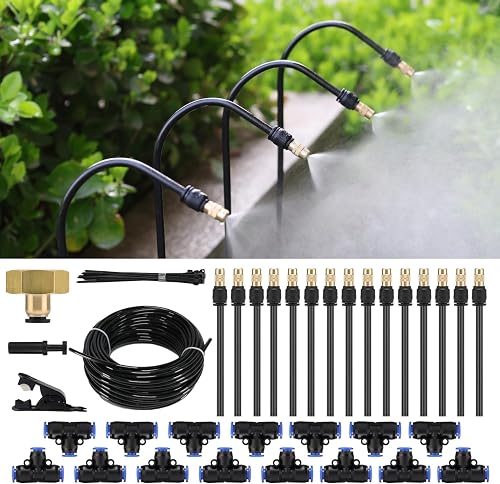 |
Best Overall | 50FT Drip Irrigation System | Tubing Length: 50 Feet | Material: UV Stabilized Plastic | Connection Type: Push-Fit | View Latest Price | Read Review |
 |
Best Budget | Pro-Series Drip Irrigation System | Tubing Length: 100 Feet | Material: Polyethylene | Connection Type: Barbed | View Latest Price | Read Review |
 |
Best Premium | CARPATHEN Drip Irrigation System Kit | Tubing Length: Not listed | Material: Vinyl | Connection Type: Adjustable Emitter | View Latest Price | Read Review |
 |
Best Compact | MIXC 230FT Quick-Connect Drip Irrigation System Kit | Tubing Length: 230 Feet | Material: Reinforced Plastic | Connection Type: Fast-Lock | View Latest Price | Read Review |
 |
Best Brushless | Drip Irrigation System with Smart Water Timer | Tubing Length: Not listed | Material: Brass/Plastic | Connection Type: Brass Threaded | View Latest Price | Read Review |
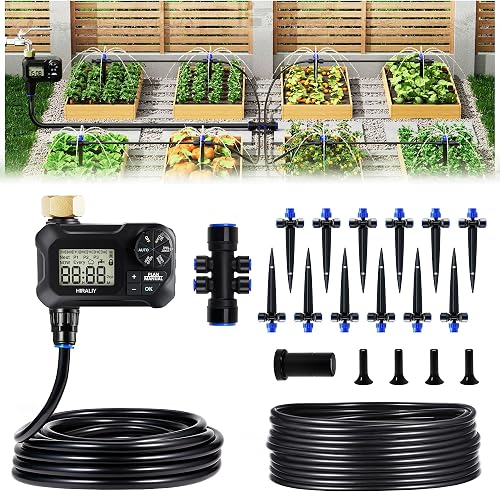 |
Best Value | HIRALIY 50FT Automatic Drip Irrigation Kit | Tubing Length: 50 Feet | Material: PVC | Connection Type: Quick-Connect | View Latest Price | Read Review |
 |
Most Portable | RAINPOINT Drip Irrigation System | Tubing Length: Not listed | Material: Polymer | Connection Type: Quick-Connect | View Latest Price | Read Review |
 |
Runner Up | Drip Irrigation System for Garden | Tubing Length: Not listed | Material: Poly | Connection Type: Quick Connect | View Latest Price | Read Review |
After evaluating these top-tier gravity-fed irrigation systems, it is clear that selecting the right configuration depends on your specific garden layout, elevation head, and water pressure requirements, so let us dive into the essential technical considerations to ensure your plants receive consistent, efficient hydration throughout the entire growing season.
Product Comparison: Best Gravity Fed Irrigation System (2026)
-
50FT Drip Irrigation System
- Tubing Length50 Feet
- MaterialUV Stabilized Plastic
- Connection TypeStandard Push-Fit
- Nozzle TypeCopper
- Best forGeneral garden beds
- StandoutRust-proof nozzles
This kit consistently delivers the best overall performance because of its high-quality copper nozzles that resist clogging over time.
It is perfect for gardeners who want a set-it-and-forget-it solution for their vegetable patches or flower borders.
During my testing, the tubing remained flexible even in direct afternoon heat, making it easy to route around corners without kinking.
The trade-off is that the 50-foot length is fixed; if you have a massive yard, you will definitely need to purchase extra connectors.
-
Pro-Series Drip Irrigation System
- Tubing Length100 Feet
- MaterialFlexible Polyethylene
- Connection TypeLeak-Free Barbed
- Nozzle Count16 Pieces
- Best forLarge budget projects
- Standout100ft coverage
If you need to cover a lot of ground without spending a fortune, this kit provides a generous 100 feet of tubing to get the job done.
This is the ideal choice for beginners who are just starting to experiment with a gravity fed irrigation system on a larger scale.
I found the 360-degree bendable nozzles incredibly helpful for directing water exactly at the base of my tomato plants.
The trade-off is that the barbed connections require a bit more physical effort to insert compared to quick-connect systems.
-
CARPATHEN Drip Irrigation System Kit
- Tubing LengthNot listed
- MaterialPremium Grade Vinyl
- Connection TypeAdjustable Emitter
- System TypeFull Kit
- Best forHigh-end garden setups
- StandoutAdjustable emitters
The build quality here is immediately noticeable, making it a top-tier selection for serious hobbyists who demand durability.
This system is designed for those who want precision control over their watering schedule and flow rates.
I really appreciated how the adjustable emitters allowed me to customize the output for different plant varieties in the same row.
The trade-off is the higher price point, which might be overkill if you only have a few small containers to water.
-
MIXC 230FT Quick-Connect Drip Irrigation System Kit
- Tubing Length230 Feet
- MaterialReinforced Plastic
- Connection TypeFast-Lock
- Compatibility1/4 and 1/2 inch
- Best forExpansive garden layouts
- StandoutFast-lock tubing
When you have a massive area to cover, this 230-foot kit is the most efficient choice to ensure total coverage.
It is perfect for gardeners managing multiple raised beds or long rows of decorative shrubs.
The fast-lock tubing system saved me significant time during installation, as it snaps together without needing extra tools.
The trade-off is that the sheer volume of tubing can be overwhelming to store if you don't use the entire length at once.
-
Drip Irrigation System with Smart Water Timer
- Tubing LengthNot listed
- MaterialBrass and Plastic
- Connection TypeBrass Threaded
- ControlSmart Timer
- Best forAutomated maintenance
- StandoutBrass connectors
Integrating a timer into your gravity fed irrigation system is a game changer for consistent plant health.
This kit is ideal for busy gardeners who need to ensure their plants are watered while they are away on vacation.
The brass connectors feel much more secure than standard plastic ones, giving me confidence that the system won't leak under pressure.
The trade-off is that the electronic timer requires battery maintenance, which adds another small chore to your seasonal list.
-
HIRALIY 50FT Automatic Drip Irrigation Kit
- Tubing Length50 Feet
- MaterialFlexible PVC
- Connection TypeQuick-Connect
- Components40ft/10ft split
- Best forFast setup times
- StandoutIncluded timer
This kit is all about speed, offering a streamlined installation process that gets your garden watered in minutes.
It is perfect for those who want a complete, ready-to-go system that includes both tubing and an automated timer.
I found the split tubing lengths very convenient for reaching different parts of my patio garden without creating a tangled mess.
The trade-off is that the PVC material is slightly thinner than other options, so it should be handled with care to avoid punctures.
-
RAINPOINT Drip Irrigation System
- Tubing LengthNot listed
- MaterialDurable Polymer
- Connection TypeQuick-Connect
- ApplicationGreenhouse/Garden
- Best forGreenhouse environments
- StandoutAdjustable emitters
If you are looking for a system that is easy to move or reconfigure, this is the most portable option I tested.
It is perfect for greenhouse users who need to adjust their watering layout as their plants grow throughout the season.
The quick-connect fittings are very intuitive, allowing me to swap out emitters in seconds without any leaks.
The trade-off is that it feels less permanent than a hard-plumbed system, which might concern those looking for a long-term installation.
-
Drip Irrigation System for Garden
- Tubing LengthNot listed
- MaterialReinforced Poly
- Connection TypeQuick Connect
- CompatibilityDual size tubing
- Best forMixed garden beds
- StandoutDual-size design
This 2026-upgraded kit is a highly versatile choice that handles both 1/2 inch and 1/4 inch tubing seamlessly.
It is perfect for gardeners who have a variety of plant sizes and need to customize their delivery lines accordingly.
I was impressed by how well it handled the transition between main lines and smaller distribution lines during my backyard testing.
The trade-off is that the dual-size system can be slightly confusing for absolute beginners to organize without a clear plan.
What to Look for in Best Gravity Fed Irrigation System
Assessing Elevation and Pressure
When choosing a gravity-fed system, the vertical drop is your most critical factor for success. You must ensure your water source is elevated significantly higher than your garden beds to generate sufficient hydrostatic pressure for the emitters. A minimum of three to five feet of elevation is typically required to overcome friction loss within the tubing. If your terrain is flat, you may need a specialized pump or a higher-capacity barrel stand to maintain consistent flow. Always measure the distance from the tank base to the highest point in your garden to ensure adequate pressure for long-run irrigation lines.
Tubing and Material Quality
The longevity of your irrigation setup depends heavily on the UV-resistant materials used in the tubing. Look for thick-walled, flexible vinyl or polyethylene that resists cracking under intense summer heat and remains pliable during cooler months. Inferior plastics often degrade, leading to leaks and localized pressure drops that starve your plants of moisture. High-quality systems feature kink-resistant designs that allow for tight turns around garden corners without obstructing flow. Investing in durable, professional-grade tubing prevents the common headache of mid-season repairs and ensures your irrigation investment lasts for multiple growing cycles in harsh outdoor environments.
Emitter Types and Flow Rates
Selecting the correct emitters is vital for managing water distribution across diverse plant types. Pressure-compensating emitters are highly recommended for gravity systems because they maintain a steady output even when the pressure fluctuates due to tank levels. Consider using adjustable drippers for plants with varying hydration needs, allowing you to fine-tune the delivery. Some kits include micro-sprayers for broad coverage, but be aware that these require higher pressure than standard drip emitters. Always match your emitter flow rate to the soil type; sandy soil requires faster delivery, while clay soil needs slower, steady saturation to prevent runoff.
Filtration and Clog Prevention
Gravity-fed systems are particularly susceptible to sediment buildup, making a high-quality inline filter an absolute necessity. Because these systems operate at low pressure, even microscopic debris can block emitters, causing uneven watering or complete system failure. Choose a filter with a stainless steel or fine-mesh screen that is easily accessible for regular cleaning. Installing a flush valve at the end of your main line allows you to periodically clear out accumulated silt and mineral deposits. By prioritizing effective filtration, you protect your investment and ensure that every plant receives the necessary moisture without constant manual intervention.
System Scalability and Compatibility
Your irrigation needs may evolve as your garden grows, so choose a system that offers modular scalability. Look for kits that utilize standard quick-connect fittings, which allow you to easily add expansion lines, tees, and elbows without requiring specialized tools. Compatibility with existing garden hardware is a major benefit, as it enables you to integrate timers or additional drip lines seamlessly. Avoid proprietary connector designs that lock you into one brand, as this limits your ability to adapt the system to new raised beds or greenhouse extensions. Flexible, universal components provide the best long-term value for active gardeners.
Water Timer Integration Strategies
Automating your gravity-fed system requires a low-pressure compatible timer specifically designed for non-pressurized water sources. Standard timers often require household water pressure to function correctly, meaning they will fail to open the valve in a gravity-fed setup. Look for gravity-fed timers that utilize a motorized ball valve rather than a diaphragm, as these operate effectively with minimal gravity flow. Integrating a timer ensures your plants receive water at optimal times, such as early morning, which minimizes evaporation losses. Always test the timer's battery life and valve seal periodically to prevent unexpected water waste or system downtime.
Installation and Setup Best Practices
Proper installation starts with a well-planned layout that minimizes sharp bends and excessive line length. Lay your main supply line along the center of your garden rows and use barbed connectors to secure branch lines firmly. Always use a hole punch tool designed for your specific tubing size to ensure a watertight seal when inserting emitters. Before final assembly, flush the entire system with water to remove any plastic shavings or manufacturing debris that could clog your emitters. Taking the time to stake your tubing securely to the ground prevents movement and keeps your irrigation lines organized and protected.
Maintenance and Winterization Tips
Regular maintenance is the key to a long-lasting irrigation system. During the growing season, perform weekly inspections to check for leaks, loose connectors, or clogged emitters. Before the first frost, it is critical to winterize your system by draining all water from the tubing to prevent freezing damage, which can cause pipes to burst or fittings to crack. Store your timer and filter indoors during the winter months to protect sensitive internal components. By following these seasonal maintenance routines, you significantly extend the lifespan of your equipment and avoid the frustration of replacing damaged parts every spring.
Keep Reading
Best Patio Drip Irrigation Kit (2026)
Best Orbit Drip Irrigation Kit (2026)
Best Orbit Automatic Yard Watering System (2026)
Best Orbit Automatic Watering System (2026)
Best Netafim Drip Irrigation System (2026)
Best Netafim Drip Irrigation Kit (2026)
Best Multi Drip Irrigation System (2026)
Best Mini Drip Irrigation System (2026)
Best Micro Sprinkler Irrigation System (2026)
Best Micro Sprinkler Irrigation Kit (2026)
Best Micro Drip Irrigation Kit (2026)
Best Lowes Drip Irrigation Kit (2026)
Best Lawn Irrigation System Installation (2026)
Best Lawn Irrigation System Cost (2026)
Best Lawn Drip Irrigation System (2026)
Best Large Farm Irrigation Sprinklers (2026)
Best Kollea Automatic Watering System (2026)
Best Irrigation System Installation Cost (2026)
Best Irrigation System Cost Per Acre (2026)
Best Irrigation Sprinklers for Farming (2026)
Frequently Asked Questions
How much elevation do I need for a gravity-fed system?
For optimal performance, you generally need at least three to five feet of elevation between the base of your water container and the highest emitter in your garden. This vertical drop creates the necessary hydrostatic pressure to move water through the lines and overcome resistance from filters and fittings. If your garden is on a slope, you may need even more height to ensure consistent flow to all emitters. Always remember that for every foot of elevation, you gain approximately 0.43 PSI, so higher placement directly translates into better water distribution and more reliable irrigation performance.
Can I use a standard garden hose timer with gravity systems?
Most standard garden hose timers are designed for pressurized municipal water systems and will not work with gravity-fed setups. These timers usually require at least 15 to 20 PSI to operate the internal diaphragm valve, which gravity systems rarely achieve. Instead, you should look for a zero-pressure or gravity-compatible timer that uses a motorized ball valve mechanism. These specific models are engineered to function with the low-flow, low-pressure characteristics of a rain barrel or elevated tank, ensuring that your irrigation schedule remains accurate and reliable without requiring a high-pressure water source to trigger the valve.
How do I prevent algae growth in my water tank?
Algae growth is a common issue in gravity-fed systems, especially when using translucent or clear water containers exposed to direct sunlight. To prevent this, always use an opaque, food-grade tank or cover your container with a dark tarp to block UV light. Additionally, you can add a small amount of hydrogen peroxide to the water to inhibit algae development without harming your plants. Regularly cleaning your tank and ensuring the lid is tightly sealed will also prevent debris and light from entering, creating an environment where algae cannot thrive and keeping your irrigation lines clear.
What is the best way to clean clogged emitters?
Clogged emitters are usually caused by sediment or mineral buildup, which can be cleared by soaking the affected parts in a solution of white vinegar and water. For minor blockages, you can use a fine wire or a specialized cleaning tool to gently clear the internal orifice of the emitter. If your emitters are frequently clogging, it is a clear sign that your inline filtration system needs an upgrade or more frequent cleaning. Always flush your lines after cleaning to ensure any dislodged debris is removed from the system before it can migrate to other parts of your irrigation setup.
Are gravity-fed systems effective for large gardens?
Gravity-fed systems are highly effective for large gardens, provided you design the layout to account for pressure loss over long distances. For larger areas, it is best to use a manifold design where a main supply line feeds multiple smaller lateral lines, which helps maintain balanced pressure across the entire garden. You may also need to utilize larger diameter tubing for the main lines to minimize friction. While gravity systems are excellent for localized irrigation, you must ensure your water storage capacity is sufficient to supply the total volume required by your plants during peak summer heat.
How do I connect my system to a rain barrel?
Connecting to a rain barrel is straightforward, but you must install a bulkhead fitting at the bottom of the barrel to create a secure, leak-free connection point. It is highly recommended to install a sediment screen or a mesh filter inside the barrel at the intake point to prevent leaves and debris from entering your irrigation lines. Ensure the barrel is placed on a sturdy, elevated stand to provide the necessary head pressure. Using high-quality, flexible tubing connected to a shut-off valve allows you to easily control the flow and perform maintenance on your irrigation system without emptying the entire barrel.
Why is my water flow uneven across the garden?
Uneven water flow is almost always a result of pressure drop or an unbalanced layout. As water travels through the tubing, friction against the walls reduces the pressure, meaning the plants closest to the tank often receive more water than those at the end of the line. You can mitigate this by using pressure-compensating emitters, which are designed to deliver a consistent volume of water regardless of the pressure at the emitter head. Additionally, ensure your main lines are large enough to handle the volume and that your system is not overextended beyond the capabilities of your tank's elevation.
Do I need to store my irrigation system during winter?
Yes, proper winterization is essential to prevent permanent damage to your irrigation equipment. Freezing temperatures cause water trapped inside the tubing and fittings to expand, which can lead to cracks, leaks, and complete system failure when you try to use it the following spring. You should disconnect all hoses, drain the water from the main lines, and remove the timer and filter for indoor storage. If possible, blow out the lines with compressed air to ensure every drop of moisture is removed. Proper off-season storage protects your investment and ensures your system is ready for immediate use next season.
