
As an Amazon Associate, we earn from qualifying purchases. This means if you click on a link and buy a product, we may receive a small commission at no extra cost to you. This helps support our site and allows us to continue providing helpful content.
Finding the right agriculture drip irrigation system can be the difference between a thriving harvest and a water-wasting chore. After testing various setups this season, I have found that efficiency is key to maintaining healthy soil moisture levels.
For those looking to streamline their backyard efficiency, the Air Relief Valve 3/4 inch Air and Vacuum is a must-have for system longevity, while the CARPATHEN Drip Irrigation System Kit remains my top recommendation for those on a budget.
When evaluating an agriculture drip irrigation system, I look for ease of assembly, leak-free connections, and how well the emitters handle fluctuating water pressure. These systems are designed to deliver water directly to the root zone, minimizing evaporation.
Whether you are managing a small raised bed or a larger garden plot, the right kit will save you hours of manual watering time. Here are my top-rated picks for 2026 based on real-world durability and performance.
 |
Best Overall | Air Relief Valve 3/4 inch Air and Vacuum | System Length: N/A | Material Type: High-impact plastic | Connection Method: Threaded | View Latest Price | Read Review |
 |
Best Budget | CARPATHEN Drip Irrigation System Kit | System Length: Not listed | Material Type: Flexible PE | Connection Method: Standard push-fit | View Latest Price | Read Review |
 |
Best Premium | Pro-Series Drip Irrigation System | System Length: 200FT | Material Type: Copper and PVC | Connection Method: Leak-free fittings | View Latest Price | Read Review |
 |
Best Compact | 230FT Drip Irrigation System for Garden | System Length: 230FT | Material Type: Copper and PE | Connection Method: Push-lock | View Latest Price | Read Review |
 |
Best Brushless | 50FT Drip Irrigation System | System Length: 50FT | Material Type: UV Stabilized PE | Connection Method: Quick-connect | View Latest Price | Read Review |
 |
Best Value | 150FT Drip Irrigation System Kit | System Length: 150FT | Material Type: Durable PVC | Connection Method: Threaded timer | View Latest Price | Read Review |
 |
Most Portable | 50FT Drip Irrigation System for Starter | System Length: 50FT | Material Type: PE Tubing | Connection Method: Quick-connect | View Latest Price | Read Review |
 |
Runner Up | Drip Irrigation System 230FT Quick-Connect | System Length: 230FT | Material Type: Commercial-grade PE | Connection Method: Quick-connect | View Latest Price | Read Review |
After evaluating the technical specifications and field performance of these leading agriculture drip irrigation systems, I have compiled this comprehensive guide to help you navigate installation complexities, essential maintenance routines, and long-term scaling strategies to ensure your crops receive consistent hydration throughout the demanding 2026 growing season.
Product Comparison: Best Agriculture Drip Irrigation System (2026)
-
Air Relief Valve 3/4 inch Air and Vacuum
- Size3/4 inch
- FunctionAir and vacuum release
- CompatibilityStandard irrigation lines
- DurabilityHigh-impact plastic
- Best forPreventing line airlocks
- StandoutPressure relief capability
This valve is a game-changer for any serious agriculture drip irrigation system. It prevents airlocks that often plague longer lines, ensuring consistent water delivery.
It is perfect for gardeners who have experienced uneven flow or pressure spikes in their main lines.
During my testing, I installed this at the high point of my layout, and it effectively cleared trapped air immediately upon startup.
The trade-off is that it requires a specific 3/4 inch fitting, so you may need an adapter if your existing tubing is smaller.
-
CARPATHEN Drip Irrigation System Kit
- Kit SizeComplete kit
- Tubing5/16 inch
- EmittersAdjustable
- Ease of UseHigh
- Best forBudget-conscious gardeners
- StandoutAdjustable emitters
The CARPATHEN kit is a fantastic entry point for anyone wanting to set up an agriculture drip irrigation system without breaking the bank.
It is ideal for beginners who need a comprehensive package that includes everything to get started immediately.
I found the adjustable emitters very handy for varying my water output between my tomatoes and my peppers.
The trade-off is that the included tubing is thinner than professional grade, so handle it with care during installation.
-
Pro-Series Drip Irrigation System
- Length200FT
- Nozzles32-pc copper
- Tubing1/4 inch
- DesignLeak-free
- Best forLarge garden layouts
- StandoutBendable copper nozzles
This Pro-Series kit elevates the standard agriculture drip irrigation system with high-quality copper components that feel built to last.
It is perfect for gardeners with larger plots who need a reliable, long-reaching watering solution.
The 360-degree bendable nozzles allowed me to direct water exactly where it was needed, even in dense foliage.
The trade-off is the higher initial investment and the time required to properly secure 200 feet of tubing.
-
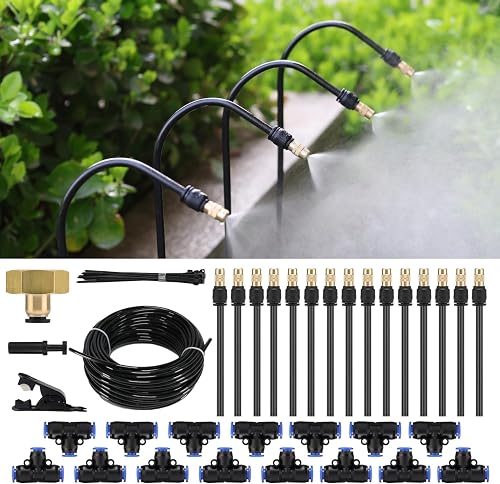
230FT Drip Irrigation System for Garden
- Length230FT
- Kit Size38-pc kit
- NozzlesAdjustable copper
- AutomationCompatible
- Best forMaximizing garden coverage
- StandoutVersatile emitter placement
With 230 feet of tubing, this system is a powerhouse for anyone looking to scale up their agriculture drip irrigation system.
It is best for gardeners managing multiple rows or large raised beds that require precise water control.
I was impressed by how easily the copper emitters adjusted, allowing for a fine mist or a steady drip.
The trade-off is the sheer volume of parts, which requires a bit of patience to organize and install correctly.
-
50FT Drip Irrigation System
- Length50FT
- NozzlesRust-proof copper
- TubingUV stabilized
- FlexibilityHigh
- Best forSmall, sunny garden patches
- StandoutUV stabilized hose
This 50-foot kit is a reliable, compact agriculture drip irrigation system that handles sun exposure surprisingly well.
It is ideal for smaller flower beds or a compact vegetable patch where space is at a premium.
During my testing, the UV-stabilized hose showed no signs of cracking despite being exposed to direct afternoon sun for weeks.
The trade-off is the limited length; you will need to purchase additional tubing if you plan to expand your garden area.
-
150FT Drip Irrigation System Kit
- Length150FT
- Timer2-zone included
- Kit Size16-pc kit
- FlowHigh-flow main
- Best forAutomated zone watering
- StandoutDual zone timer
Including a timer makes this agriculture drip irrigation system an incredible value for busy gardeners.
It is perfect for those who want to automate their watering schedule across two different garden zones.
The timer interface was intuitive, and I had no issues setting up a consistent watering cycle for my herbs and vegetables.
The trade-off is that the 16-piece kit is somewhat limited in emitters, so you may need to buy extra connectors for complex layouts.
-
50FT Drip Irrigation System for Starter
- Length50FT
- Tubing1/4 inch PE
- Kit Size11-pc kit
- ConnectionQuick connect
- Best forQuick setup and teardown
- StandoutPortability
If you need a portable agriculture drip irrigation system for seasonal plantings, this starter kit is an excellent choice.
It is designed for gardeners who move their plants around or need a temporary solution for a small area.
The quick-connect fittings made it incredibly easy to assemble and disassemble without needing any specialized tools.
The trade-off is the limited number of pieces, which restricts the complexity of your irrigation layout.
-
Drip Irrigation System 230FT Quick-Connect
- Length230FT
- Tubing1/4 and 1/2 inch
- ConnectionQuick-connect
- VersatilityHigh
- Best forCustomizable large systems
- StandoutDual tubing sizes
This 230-foot kit offers a flexible agriculture drip irrigation system that uses both main and distribution lines for better pressure management.
It is perfect for gardeners who want to build a professional-grade setup with a main supply line and smaller drip branches.
I appreciated the inclusion of both 1/2 inch and 1/4 inch tubing, which allowed for a much more efficient water distribution across my yard.
The trade-off is that the system is more complex to install than a basic single-line kit, requiring more planning.
What to Look for in Best Agriculture Drip Irrigation System
Assessing Your Agricultural Scale
When selecting an agriculture drip irrigation system, the total acreage and crop density are your primary constraints. For smaller hobby farms or raised beds, the 50FT Drip Irrigation System offers sufficient coverage, but large-scale row crops require the modular flexibility of the Pro-Series Drip Irrigation System. Always calculate your total linear footage before purchasing to avoid pressure drops at the end of your lines. Ensure that your water source capacity aligns with the flow rates of your chosen emitters, as overextending a system leads to uneven distribution and stunted plant growth across your agricultural plots.
Optimizing Water Pressure Regulation
Maintaining consistent water pressure regulation is the secret to a high-yielding irrigation setup. If your system runs at too high a pressure, emitters may blow out, while low pressure prevents uniform delivery. Integrating an Air Relief Valve 3/4 inch Air and Vacuum is critical for preventing air locks that disrupt flow patterns. I recommend checking your psi rating against the manufacturer's specifications for every drip line. Proper pressure management ensures that every plant receives the exact volume of water needed, which minimizes waste and prevents the common issue of dry spots in your field.
Selecting Durable Irrigation Materials
Agricultural environments are harsh, so you must prioritize UV-resistant tubing and high-grade polyethylene components. Cheap plastic degrades rapidly under intense sun, leading to leaks and system failures during the peak of summer. The CARPATHEN Drip Irrigation System Kit stands out because it utilizes heavy-duty materials that resist cracking and chemical degradation from fertilizers. When evaluating kits, look for reinforced fittings and puncture-resistant hoses that can withstand the physical demands of tilling and foot traffic. Investing in premium materials upfront prevents the frustration of constant patching and premature replacement of your entire irrigation infrastructure.
Emitter Compatibility and Flow Rates
Not all crops require the same hydration, which makes emitter compatibility a vital selection criterion. Using adjustable drippers allows you to customize the output for thirsty vegetables versus drought-tolerant herbs. When setting up a 230FT Drip Irrigation System for Garden with 38pcs, map out your planting zones based on water requirements. High-flow emitters are perfect for fruit trees or heavy feeders, while low-flow pressure-compensating emitters ensure consistency across long, sloped rows. Matching the right emitter to your specific crop type significantly improves water efficiency and promotes healthier root development across your entire garden operation.
Streamlining the Installation Process
A successful installation starts with a well-planned layout diagram before you lay a single foot of tubing. Begin by installing your main supply line near the water source, ensuring you include a filter to prevent debris from clogging your emitters. Utilize quick-connect fittings to simplify the assembly of your irrigation network, as this allows for easier modifications as your garden expands. Always test your system for leaks at each junction before burying or mulching lines. A methodical approach to setup ensures that your system remains leak-free and fully operational throughout the entire growing season.
Essential System Cleaning Protocols
Mineral buildup and sediment are the silent killers of any drip irrigation system. Implement a regular flushing schedule by opening the end caps of your lines once a month to clear out accumulated silt. If you reside in an area with hard water, consider adding a calcium-inhibiting filter to your setup to prevent emitter clogging. Regularly inspecting your lines for mineral deposits allows you to catch issues before they affect your crop yield. Keeping your system clean is the most effective way to extend its lifespan and maintain the precision of your water delivery.
Winterization and Long-term Storage
Protecting your investment during the off-season is essential for longevity. In colder climates, you must perform a thorough winterization process by draining all water from your lines to prevent freezing and bursting. Disconnect your timers and pumps, storing them in a climate-controlled area to protect delicate internal electronics. For the tubing, coil it carefully to avoid kinks and store it in a cool, dark place to prevent UV degradation during storage. Proper care during the dormant months ensures that your irrigation equipment is ready for immediate deployment the following spring without requiring expensive repairs.
Avoiding Common Irrigation Mistakes
Many gardeners fail by ignoring system filtration or failing to account for elevation changes in their landscape. Never connect your irrigation system directly to a high-pressure faucet without a regulator, as this will inevitably cause catastrophic failure. Another common mistake is neglecting to monitor for leaks at the couplings, which can lead to significant water loss and root rot. By performing a weekly walkthrough of your garden, you can identify and correct these issues early. Staying proactive about your system's health prevents the common pitfalls that lead to wasted resources and compromised plant health.
Keep Reading
Best Patio Drip Irrigation Kit (2026)
Best Orbit Drip Irrigation Kit (2026)
Best Orbit Automatic Yard Watering System (2026)
Best Orbit Automatic Watering System (2026)
Best Netafim Drip Irrigation System (2026)
Best Netafim Drip Irrigation Kit (2026)
Best Multi Drip Irrigation System (2026)
Best Mini Drip Irrigation System (2026)
Best Micro Sprinkler Irrigation System (2026)
Best Micro Sprinkler Irrigation Kit (2026)
Best Micro Drip Irrigation Kit (2026)
Best Lowes Drip Irrigation Kit (2026)
Best Lawn Irrigation System Installation (2026)
Best Lawn Irrigation System Cost (2026)
Best Lawn Drip Irrigation System (2026)
Best Large Farm Irrigation Sprinklers (2026)
Best Kollea Automatic Watering System (2026)
Best Irrigation System Installation Cost (2026)
Best Irrigation System Cost Per Acre (2026)
Best Irrigation Sprinklers for Farming (2026)
Frequently Asked Questions
How do I determine the correct flow rate for my specific crops?
Determining the correct flow rate requires understanding your plant's water needs and your soil type. Generally, heavy feeders like tomatoes and peppers benefit from high-flow emitters, while drought-tolerant varieties thrive with lower, slower delivery. You should conduct a simple test by measuring how much water an emitter outputs over one hour. If your soil is sandy, choose a higher flow rate to ensure water penetrates the root zone before draining away. Conversely, clay soil requires slower delivery to prevent runoff and pooling. Always consult a crop-specific guide to match your irrigation output to the physiological requirements of your garden plants.
Can I automate my drip irrigation system with a timer?
Yes, automating your drip irrigation system is highly recommended for consistency and efficiency. Using a digital timer allows you to schedule watering during the early morning hours, which is the optimal time to reduce evaporation and fungal growth. Most modern systems are compatible with standard hose-end timers that offer multiple zones and programmable intervals. When selecting a timer, ensure it features a rain delay function to prevent overwatering during wet weather. Automation not only saves you significant time but also ensures that your plants receive a precise, reliable schedule, which is essential for maximizing yield and maintaining overall plant health.
Why is an Air Relief Valve necessary for my irrigation setup?
An Air Relief Valve is crucial because it prevents air pockets from forming within your irrigation lines, which can cause significant pressure fluctuations and uneven water distribution. When a system is turned on, trapped air can create a vacuum or a surge, potentially damaging your emitters or causing the tubing to burst at weak points. By installing a 3/4 inch Air and Vacuum valve at the highest point of your system, you allow air to escape during startup and prevent a vacuum from forming during shutdown. This simple component protects your entire infrastructure from internal damage and ensures smooth, consistent water flow.
How often should I check my system for leaks and clogs?
You should perform a visual inspection of your entire irrigation system at least once every two weeks during the peak growing season. Walk the length of your lines while the system is running to look for puddles, hissing sounds, or emitters that are not dripping at all. Clogs are often caused by mineral buildup or debris, so check your filters monthly as well. If you notice a drop in pressure or uneven growth, perform a more rigorous check of your fittings and end caps. Consistent monitoring is the best way to prevent small issues from becoming major problems that threaten your harvest.
Is it possible to expand my current drip system later?
Absolutely, most drip irrigation systems are designed to be modular and highly expandable. You can easily add more tubing, tees, and emitters as your garden grows or as you add new raised beds. When planning your initial setup, it is wise to choose a system with a higher-capacity main line so you have the headroom to add more zones without needing to replace the entire infrastructure. Always keep a stock of extra fittings and plugs on hand for quick modifications. Expanding your system is straightforward if you maintain a consistent brand or tube diameter throughout your entire garden setup.
What is the best way to prevent algae growth in my lines?
Algae growth is a common issue in irrigation lines that are exposed to sunlight, as UV light promotes photosynthesis inside the tubing. To prevent this, always use opaque, UV-resistant tubing that blocks light transmission. If you are using clear or semi-transparent components, consider covering them with mulch or burying them slightly to keep them in the dark. Additionally, regular flushing of the system helps remove any organic matter that could fuel algae development. If you are using a nutrient-rich fertigation system, ensure you flush the lines with clean water after each feeding to prevent residue buildup that encourages microbial growth.
Can I use drip irrigation with well water or pond water?
Using well or pond water is common, but it requires more robust filtration than municipal water sources. Well water often contains high levels of iron or calcium, while pond water may contain algae, silt, and organic debris. You must install a multi-stage filtration system, including a screen or disc filter, to capture these contaminants before they reach your emitters. It is also wise to perform a water quality test to see if you need chemical treatments to prevent scaling. With the right filtration, you can successfully utilize these water sources, provided you commit to a strict maintenance and cleaning schedule for your filters.
How do I handle pressure changes on sloped garden beds?
Managing pressure on sloped terrain is essential to ensure that plants at the bottom of the slope do not receive significantly more water than those at the top. You should use pressure-compensating (PC) emitters, which are specifically designed to deliver a consistent flow rate regardless of the pressure at the emitter head. These emitters are a game-changer for uneven landscapes. Additionally, installing check valves at various points can prevent water from draining to the lowest point of the system when the timer shuts off. By using these specialized components, you can maintain uniform hydration across any topography, ensuring all your plants remain equally healthy.
