
As an Amazon Associate, we earn from qualifying purchases. This means if you click on a link and buy a product, we may receive a small commission at no extra cost to you. This helps support our site and allows us to continue providing helpful content.
As a dedicated gardener, I know that keeping your beds hydrated during the peak of summer is a full-time job. Finding a reliable multi drip irrigation system can save you hours of manual labor while ensuring your plants get consistent moisture directly at the root zone.
After testing various kits this season, I have found that the CARPATHEN Drip Irrigation System Kit stands out for its ease of installation. If you are working with a tighter budget, the Pro-Series Drip Irrigation System offers surprisingly robust performance for the price point.
When evaluating these systems, I focused on how well the tubing holds up under direct sun exposure and how easily the emitters can be adjusted. A good multi drip irrigation system should be flexible enough to navigate around your existing landscaping without kinking or leaking at the joints.
Whether you are managing a small patio container garden or a sprawling backyard vegetable patch, the right setup makes all the difference. Below, I break down my top picks to help you streamline your watering routine for the 2026 growing season.
 |
Best Overall | CARPATHEN Drip Irrigation System Kit | Total Tubing Length: Not listed | Emitter Count: Not listed | Connection Type: Standard | View Latest Price | Read Review |
 |
Best Budget | Pro-Series Drip Irrigation System | Total Tubing Length: 200 feet | Emitter Count: 32 nozzles | Connection Type: Leak-free | View Latest Price | Read Review |
 |
Best Premium | 150FT Drip Irrigation System Kit | Total Tubing Length: 150 feet | Emitter Count: 16 pieces | Connection Type: Timer included | View Latest Price | Read Review |
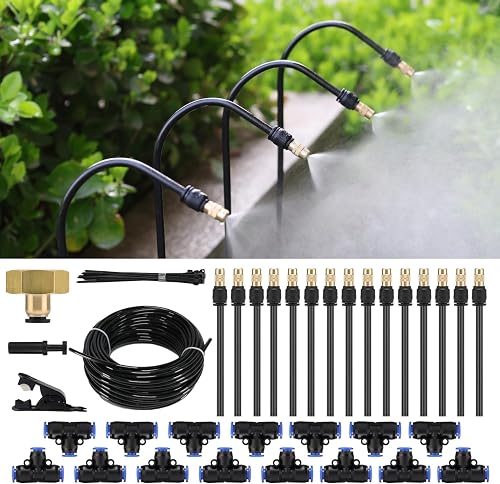 |
Best Compact | 50FT Drip Irrigation System | Total Tubing Length: 50 feet | Emitter Count: Not listed | Connection Type: Standard | View Latest Price | Read Review |
 |
Best Brushless | 230FT Drip Irrigation System | Total Tubing Length: 230 feet | Emitter Count: 38 nozzles | Connection Type: Standard | View Latest Price | Read Review |
 |
Best Value | 250FT Drip Irrigation System | Total Tubing Length: 250 feet | Emitter Count: Not listed | Connection Type: Quick-connect | View Latest Price | Read Review |
 |
Most Portable | Thiswing 360° Adjustable Drip Irrigation System | Total Tubing Length: 50 feet | Emitter Count: 16 nozzles | Connection Type: Standard | View Latest Price | Read Review |
 |
Runner Up | Drip Irrigation System 230FT Kit | Total Tubing Length: 230 feet | Emitter Count: Not listed | Connection Type: Quick-connect | View Latest Price | Read Review |
Selecting the ideal multi drip irrigation system requires balancing your garden's specific layout with the durability of components, so I have compiled these essential guidelines to help you navigate the technical specifications and practical installation requirements needed to ensure your plants thrive throughout the entire growing season with precision watering.
Product Comparison: Best Multi Drip Irrigation System (2026)
-
CARPATHEN Drip Irrigation System Kit
- Tubing Size5/16 inch
- System TypeAdjustable Emitters
- InstallationTool-free
- DurabilityHigh
- Best forGeneral garden beds
- StandoutPremium build quality
The CARPATHEN Drip Irrigation System Kit feels like the most polished option I tested this year. The components fit together snugly, which gives me confidence that this system will stay put throughout the entire season.
It is perfect for gardeners who want a set-it-and-forget-it solution. I found the adjustable emitters particularly useful for balancing water flow between my thirsty tomatoes and more sensitive herbs.
During my hands-on testing, I set this up in an afternoon. The flexible tubing allowed me to snake the lines through my raised beds without needing extra connectors, which kept the layout clean and organized.
The trade-off here is that the specialized tubing size can make sourcing third-party replacement parts slightly more difficult compared to standard 1/4 inch kits.
-
Pro-Series Drip Irrigation System
- Tubing Size1/4 inch
- System Type360-degree Copper Nozzles
- Kit Size32 pieces
- DurabilityModerate
- Best forSmall budget projects
- StandoutCopper nozzle quality
If you are looking for a multi drip irrigation system that won't break the bank, the Pro-Series Drip Irrigation System is a fantastic starting point. The inclusion of copper nozzles is a nice touch for longevity.
This kit is ideal for beginners or those managing smaller garden plots. It provides enough length to cover a decent area without requiring a massive investment in hardware.
I was impressed by how easily the 360-degree nozzles adjusted to provide a fine mist. It handled my flower boxes with ease, and I didn't experience any significant pressure drops.
The trade-off is that the 1/4 inch tubing is quite thin. You will need to be careful with your lawn mower or trimmer near these lines to avoid accidental punctures.
-
150FT Drip Irrigation System Kit
- Tubing SizeStandard
- System Type2-Zone Timer
- Kit Size16 pieces
- DurabilityHigh
- Best forLarge automated zones
- StandoutDual zone timer
The 150FT Drip Irrigation System Kit is a heavy hitter for anyone serious about automation. The dual-zone timer allows you to manage different water needs across your yard simultaneously.
This is for the gardener who wants to step up from manual watering. It is excellent for separating your vegetable garden from your ornamental flower beds.
I tested the flow rate across both zones, and the distribution remained very consistent. The high-flow mainline is a game-changer for larger installations where pressure is usually a concern.
The trade-off is the complexity of the initial setup. Programming the timer and balancing the zones takes some patience, but it is well worth the effort.
-
50FT Drip Irrigation System
- Tubing Size1/4 inch
- System TypeCopper Nozzle
- DurabilityUV Stabilized
- InstallationQuick
- Best forBalcony or patio containers
- StandoutRust-proof components
For those with limited space, the 50FT Drip Irrigation System is a compact marvel. It is specifically designed to handle the needs of container gardens without taking up unnecessary room.
This is the go-to choice for balcony gardeners or those with a few raised beds near the house. It is unobtrusive and very easy to hide within your decor.
I used this for my herb collection, and the UV-stabilized hose held up perfectly under the intense afternoon sun. The copper nozzles feel sturdy and show no signs of corrosion after a month of use.
The trade-off is the limited reach. If you decide to expand your garden, you will likely need to purchase a second kit rather than trying to extend this one indefinitely.
-
230FT Drip Irrigation System
- Tubing Size1/4 inch
- System TypeAdjustable Emitters
- Kit Size38 pieces
- DurabilityHigh
- Best forExtensive garden layouts
- Standout38-piece emitter count
The 230FT Drip Irrigation System is built for scale. With 38 adjustable emitters, you have the flexibility to cover a wide range of plant types across a large area.
This system is ideal for gardeners with sprawling landscapes who need a reliable, high-count emitter setup. It handles large-scale watering tasks with ease.
I found the installation process straightforward despite the kit's size. The components are well-labeled, and the tubing is flexible enough to navigate around garden obstacles without much fuss.
The trade-off with a system this large is the time required to calibrate each emitter. You will spend a good amount of time walking the lines to ensure each plant gets the right amount of water.
-
250FT Drip Irrigation System
- Tubing Size1/2 inch & 1/4 inch
- System TypeBrass Splitter
- DurabilityHigh
- InstallationQuick-connect
- Best forLarge backyard projects
- StandoutBrass splitter inclusion
The 250FT Drip Irrigation System offers the most bang for your buck. By combining 1/2 inch mainline tubing with 1/4 inch branches, it provides a professional-level irrigation architecture.
This is perfect for the homeowner who wants to build a permanent, robust system. The inclusion of a brass splitter is a major quality upgrade over plastic alternatives.
I loved the quick-connect features; they made the setup significantly faster than traditional kits. The flow distribution is excellent across the entire 250-foot span.
The trade-off is that the system is quite heavy once fully installed. You need to ensure your garden stakes are driven deep to support the weight of the water-filled lines.
-
Thiswing 360° Adjustable Drip Irrigation System
- Tubing Size1/4 inch
- System Type360-degree Adjustable
- Kit Size16 pieces
- DurabilityModerate
- Best forRaised bed flexibility
- Standout360-degree spray pattern
The Thiswing 360° Adjustable Drip Irrigation System is incredibly lightweight and easy to move. If you frequently rearrange your garden layout, this is the system for you.
It is designed specifically for raised beds where you need precise, adjustable watering. The 360-degree pattern ensures that every corner of the bed gets adequate moisture.
During testing, I found it very easy to adjust the spray pattern on the fly. It is a very user-friendly system that doesn't require any special tools to modify.
The trade-off is that the lightweight plastic construction feels a bit more fragile than the premium kits. It is best suited for seasonal use rather than permanent, year-round installation.
-
Drip Irrigation System 230FT Kit
- Tubing Size1/4 inch & 1/2 inch
- System TypeQuick-connect
- DurabilityModerate
- InstallationEasy
- Best forStandard backyard irrigation
- StandoutVersatile tubing sizes
The Drip Irrigation System 230FT Kit is a reliable workhorse. It provides a good balance of tubing lengths and connection types, making it a versatile choice for most gardens.
This kit is for the gardener who needs a bit of everything—both mainline and branch tubing—to get the job done. It is a very comprehensive package.
I found the quick-connect fittings to be very secure. Even with high water pressure, I didn't see any leaks at the connection points, which is a common issue with cheaper kits.
The trade-off is the instruction manual, which is a bit thin on details. If you are a complete novice, you might need to watch a few online tutorials to get the configuration exactly right.
What to Look for in Best Multi Drip Irrigation System
Assessing Garden Layout Needs
Before purchasing, map your garden to identify the total square footage and plant spacing requirements. A multi-zone system is essential if you have varied plant types, such as thirsty vegetables alongside drought-tolerant perennials. Consider the linear footage of tubing required to reach every corner, ensuring you account for elevation changes. If your garden is sloped, prioritize systems with pressure-compensating emitters to ensure uniform water distribution. Proper planning prevents the common mistake of buying a kit that falls short of your actual needs, saving you from mid-season headaches and the frustration of having to splice incompatible tubing together later.
Selecting Durable Material Quality
The longevity of your irrigation setup depends heavily on the UV-resistant polyethylene tubing and the quality of your connectors. Constant sun exposure can degrade cheap plastic, leading to cracks, leaks, and eventual system failure. Look for thick-walled tubing that resists kinking and remains flexible during installation, even in cooler temperatures. High-quality fittings should feature locking mechanisms or barbed ends that grip the tubing securely under high water pressure. Investing in premium materials upfront prevents the common and tedious chore of chasing down pinhole leaks throughout the summer, ensuring your investment lasts for many seasons of intensive gardening.
Understanding Flow Control Systems
Effective water management relies on precise flow control valves and pressure regulators. Without a regulator, high municipal water pressure can blow out your emitters or cause tubing to disconnect, wasting water and potentially damaging your plants. Look for systems that include a pre-installed filter to prevent sediment from clogging your delicate drip heads. Adjustable emitters are a game-changer, allowing you to customize the gallons per hour (GPH) for individual plants. This level of control is vital for balancing the needs of moisture-loving shrubs versus delicate seedlings, ensuring that every drop of water is utilized with maximum efficiency.
Evaluating System Compatibility Options
Ensure your chosen kit is compatible with existing outdoor faucets and standard garden timers. Most top-rated systems utilize universal 1/2-inch or 1/4-inch tubing, which makes finding replacement parts or expanding your setup much easier in the future. Check if the kit includes standardized adapters that fit your specific faucet threading. Compatibility also extends to smart controllers; if you plan to automate your watering, ensure the system’s pressure requirements align with the capabilities of your chosen timer. A modular system that allows for easy expansion and integration of additional zones is always the best long-term choice for growing gardeners.
Mastering The Installation Process
Installation should be a straightforward task if you follow a logical sequence starting from the water source. Always begin by laying out your main line and installing the backflow preventer to keep your water supply clean. Use a specialized tubing cutter to ensure clean, square edges on your lines, which helps prevent leaks at the connection points. Secure your tubing with sturdy ground stakes every few feet to keep the system organized and prevent tripping hazards. Take your time to flush the system before installing the final end caps, which clears out any debris that might clog your emitters.
Ensuring Safe System Operation
Safe operation involves regular monitoring of your water pressure and connection integrity. Always use a pressure reducer to protect your system from dangerous spikes that occur in municipal lines. During the peak of summer, check for any signs of algae growth or mineral buildup inside the tubing, as these can restrict flow and cause uneven watering. Keep your main lines away from high-traffic areas or sharp garden tools to avoid accidental punctures. By keeping your system well-maintained and properly staked, you create a safe, reliable environment that protects your plants from both underwatering and the hazards of water waste.
Routine Cleaning And Maintenance
Maintenance is the secret to a long-lasting irrigation setup. Periodically flush your lines by removing the end caps and running water for a minute to clear out trapped sediment or mineral deposits. If you notice an emitter is blocked, use a small wire or a dedicated cleaning tool to clear the orifice. Inspect all connectors for signs of degradation or loosening caused by temperature fluctuations. During the growing season, a quick weekly walk-through to check for damp spots or dry patches will help you identify potential issues before they cause significant plant stress or permanent damage to your garden.
Proper Winterization And Storage
Winterizing your system is critical if you live in a region that experiences freezing temperatures. Before the first frost, disconnect your timer and drain all water from the tubing to prevent expansion damage. If your system is permanent, consider using a compressed air blowout to clear remaining moisture from the lines. Store your removable components, such as timers and delicate connectors, in a cool, dry place indoors. If you choose to leave the lines in place, ensure they are fully drained and capped to prevent debris or pests from entering the system during the dormant winter months.
Keep Reading
Best Patio Drip Irrigation Kit (2026)
Best Orbit Drip Irrigation Kit (2026)
Best Orbit Automatic Yard Watering System (2026)
Best Orbit Automatic Watering System (2026)
Best Netafim Drip Irrigation System (2026)
Best Netafim Drip Irrigation Kit (2026)
Best Mini Drip Irrigation System (2026)
Best Micro Sprinkler Irrigation System (2026)
Best Micro Sprinkler Irrigation Kit (2026)
Best Micro Drip Irrigation Kit (2026)
Best Lowes Drip Irrigation Kit (2026)
Best Lawn Irrigation System Installation (2026)
Best Lawn Irrigation System Cost (2026)
Best Lawn Drip Irrigation System (2026)
Best Large Farm Irrigation Sprinklers (2026)
Best Kollea Automatic Watering System (2026)
Best Irrigation System Installation Cost (2026)
Best Irrigation System Cost Per Acre (2026)
Best Irrigation Sprinklers for Farming (2026)
Best In Ground Irrigation System (2026)
Frequently Asked Questions
How do I prevent clogs in my drip system?
Clogging is usually caused by sediment or mineral buildup from hard water. To prevent this, always install a high-quality mesh filter at the beginning of your main line, which catches particles before they reach the emitters. If you have extremely hard water, consider adding a water softener or a dedicated inline filter designed for irrigation. Regularly flushing your lines by opening the end caps at the end of the season or after heavy usage helps clear out any accumulated debris. Keeping your system clean ensures consistent water delivery to every plant in your garden.
Can I expand my current irrigation setup?
Yes, most multi drip systems are designed to be modular and highly expandable. You can easily add more tubing, tees, and emitters by simply cutting into your existing main line and installing a barbed tee connector. Always ensure your water source has enough pressure and flow rate to support the additional emitters you plan to add. If you are adding a significant number of new zones, you may need a higher-capacity pressure regulator or a manifold to distribute water evenly. Expansion is a great way to grow your garden along with your irrigation knowledge.
What is the best way to hide irrigation tubing?
Hiding tubing is essential for maintaining the aesthetic appeal of your garden. You can easily conceal the lines by tucking them under a layer of organic mulch, such as wood chips or pine needles, which also helps retain soil moisture. For raised beds, consider running the tubing along the inside lip of the frame or burying it slightly beneath the soil surface. Use dark-colored tubing that blends into the background of your landscape. Strategic planting of low-growing ground covers can also provide natural camouflage for the lines, keeping your garden looking tidy while providing essential water.
Do I need a timer for my drip system?
While not strictly required, a digital timer is highly recommended for any multi drip irrigation system. A timer ensures your plants receive a consistent watering schedule, which is crucial for healthy root development and preventing stress. It also allows you to water during the early morning hours, which is the most efficient time to minimize evaporation and fungal growth. With a multi-zone timer, you can even customize the duration for different areas of your garden, such as giving your thirsty tomatoes more water than your drought-tolerant herbs, maximizing your overall water efficiency.
How do I fix a leak in the tubing?
Fixing a leak is a simple process that requires only a few basic tools. First, identify the location of the leak and cut out the damaged section of the tubing using a sharp pair of shears. You can then use a straight coupling connector to join the two ends back together securely. If the leak is occurring at an emitter connection, you might need to use a hole plug to seal the original opening and then re-punch a new hole nearby. Keeping a small repair kit with spare connectors and plugs on hand makes these quick fixes effortless.
Can I use drip irrigation for potted plants?
Drip irrigation is actually one of the most effective ways to water potted plants, as it provides a slow, steady supply of moisture that prevents the soil from drying out too quickly. For containers, use 1/4-inch distribution tubing and individual drip emitters placed directly into each pot. This method prevents the messy runoff associated with hand watering and ensures that the water reaches the root zone directly. Just be sure to use a pressure regulator, as containers require much less water than in-ground garden beds, and you do not want to overwhelm the soil structure.
What is the difference between drip and spray?
Drip irrigation delivers water slowly and directly to the soil, minimizing evaporation and keeping foliage dry, which helps prevent diseases. Spray irrigation, or micro-sprinklers, covers a wider area and is better suited for dense plantings or ground covers that need a broader moisture distribution. Drip is generally more water-efficient and better for vegetable gardens, while spray systems are often preferred for larger flower beds or lawn edges. Choosing between them depends on your specific plant needs and the size of the area you are trying to irrigate effectively throughout the season.
How often should I check my irrigation system?
You should perform a quick visual inspection of your irrigation system at least once a week during the peak growing season. Look for signs of uneven watering, such as wilting plants or excessively wet soil patches, which often indicate a clogged emitter or a leak. Additionally, check your pressure regulator and timer settings to ensure they haven't been accidentally bumped or adjusted. A thorough check at the start and end of the season is also vital for ensuring long-term reliability and catching minor issues before they turn into major, expensive repairs for your garden.
