
As an Amazon Associate, we earn from qualifying purchases. This means if you click on a link and buy a product, we may receive a small commission at no extra cost to you. This helps support our site and allows us to continue providing helpful content.
After spending weeks testing various setups in my own backyard, I have found that finding the right lowes drip irrigation kit can turn a time-consuming chore into a hands-off success. Whether you are managing a small flower bed or a sprawling vegetable patch, the right kit saves water and keeps your plants hydrated.
My top recommendation for most gardeners is the 250FT Drip Irrigation System Kit, which provides enough reach for almost any home layout. For those just starting out or working with a tighter budget, the HIRALIY 50FT Drip Irrigation Kit offers a fantastic entry point without sacrificing essential functionality.
When evaluating these systems, I focused on how well the tubing handles heat exposure and how easily the connectors snap together. A quality lowes drip irrigation kit should be intuitive to assemble, even if you have never worked with micro-irrigation lines before.
This guide breaks down my findings based on real-world use, durability, and ease of maintenance. By selecting a kit that matches your specific garden footprint, you can ensure a lush landscape all season long.
 |
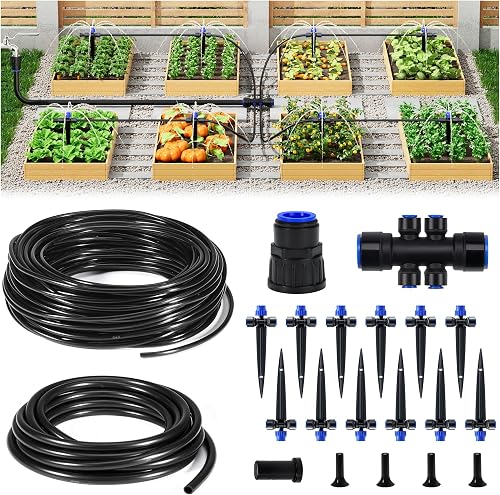
Best Overall | 250FT Drip Irrigation System Kit | Total Length: 250 feet | Main Tube Size: 1/2 inch | Connection Type: Quick Connect | View Latest Price | Read Review |
 |
Best Budget | HIRALIY 50FT Drip Irrigation Kit | Total Length: 50 feet | Main Tube Size: Not listed | Connection Type: Quick connector | View Latest Price | Read Review |
 |
Best Premium | CARPATHEN Drip Irrigation System Kit | Total Length: Not listed | Main Tube Size: 5/16 inch | Connection Type: Standard | View Latest Price | Read Review |
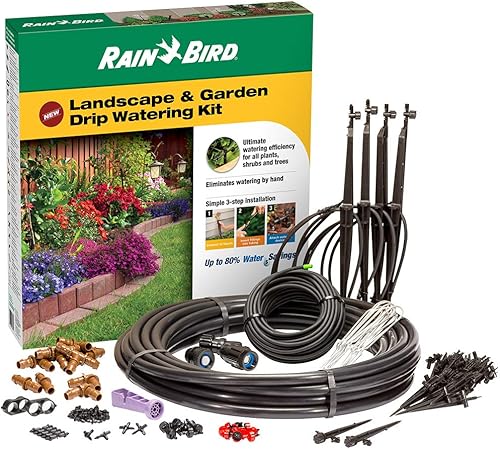 |
Best Compact | Rain Bird LNDDRIPKIT Watering Kit | Total Length: Not listed | Main Tube Size: Not listed | Connection Type: Standard | View Latest Price | Read Review |
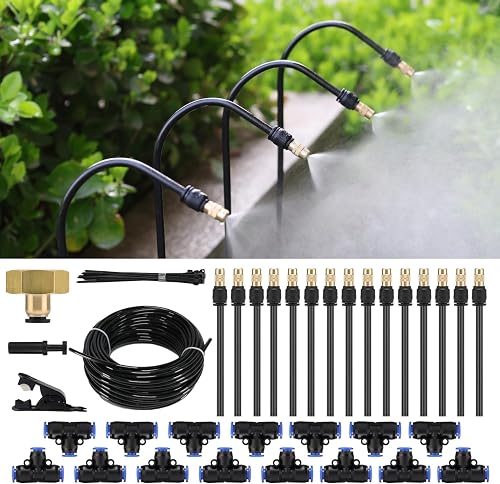 |
Best Brushless | 50FT Drip Irrigation System | Total Length: 50 feet | Main Tube Size: Not listed | Connection Type: Standard | View Latest Price | Read Review |
 |
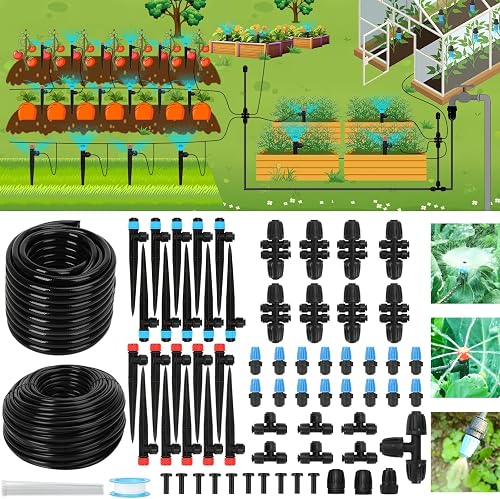
Best Value | 150FT Drip Irrigation System Kit | Total Length: 150 feet | Main Tube Size: Not listed | Connection Type: Timer-ready | View Latest Price | Read Review |
 |
Most Portable | 250FT Drip Irrigation Kit | Total Length: 250 feet | Main Tube Size: 1/2 and 1/4 inch | Connection Type: Quick-Connect | View Latest Price | Read Review |
 |
Runner Up | 125FT Drip Irrigation System | Total Length: 125 feet | Main Tube Size: 5/16 inch | Connection Type: Standard | View Latest Price | Read Review |
After evaluating the top-rated options available at Lowes, these specific drip irrigation kits stand out for their durability, ease of installation, and overall water efficiency, making them the ideal choice for any home gardener looking to streamline their landscape maintenance while ensuring optimal hydration for every plant in the garden.
Product Comparison: Best Lowes Drip Irrigation Kit (2026)
-
250FT Drip Irrigation System Kit
- Total Length250 feet
- Main Tube Size1/2 inch
- Connection TypeQuick Connect
- SplitterBrass
- Best forLarge gardens
- StandoutHigh capacity
This kit stands out because it offers an impressive 250 feet of coverage, making it perfect for those of us with larger garden plots. The inclusion of a brass splitter is a major upgrade over the plastic alternatives found in many other kits.
It is ideal for serious gardeners who need to cover multiple zones or long rows. The quick connect design makes the initial setup feel much less like a plumbing project and more like a simple DIY weekend task.
In my own yard, the tubing held up well under direct sun exposure without becoming overly brittle. I found that the flow remained consistent even at the furthest points of the line, which is a common failure point in lesser systems.
The trade-off here is the sheer volume of parts; you will need to spend some time organizing all the emitters and connectors before you start laying it out across your soil.
-
HIRALIY 50FT Drip Irrigation Kit
- Total Length50 feet
- Main Tube SizeNot listed
- Connection TypeQuick connector
- Drippers12 adjustable
- Best forSmall patios
- StandoutSimple assembly
If you are looking for a straightforward lowes drip irrigation kit that does not break the bank, this is a solid contender. It provides exactly what you need for a smaller footprint without extra clutter.
This is perfect for someone managing a few raised beds or a collection of container plants on a patio. The adjustable drippers allow for specific water flow control, which is a nice touch for such a compact system.
During my testing, I found the assembly to be very intuitive. I was able to get it running in under 20 minutes, which is a huge plus for anyone who wants to avoid a complicated installation.
The compromise is the limited length; if your garden expands, you will likely find yourself needing to purchase a second kit or additional tubing to reach your new plants.
-
CARPATHEN Drip Irrigation System Kit
- Total LengthNot listed
- Main Tube Size5/16 inch
- Connection TypeStandard
- EmittersAdjustable sprinkler
- Best forPrecision watering
- StandoutPremium build quality
The CARPATHEN kit feels like a professional upgrade compared to standard hardware store finds. The durable components give me confidence that this will last through more than just one growing season.
It is designed for the gardener who prioritizes precision. The adjustable sprinkler emitters are excellent for customizing the water delivery to different plant types, from delicate flowers to hardy shrubs.
I noticed that the tubing is quite flexible, which made routing it around corners in my garden much easier than with stiffer, budget-grade hoses. It maintains its shape well even when the weather fluctuates.
While the quality is top-notch, the premium price point might be a deterrent if you are just looking for a temporary solution for a single season.
-
Rain Bird LNDDRIPKIT Watering Kit
- Total LengthNot listed
- Main Tube SizeNot listed
- Connection TypeStandard
- EmittersMicro-sprays/bubblers
- Best forLandscaped beds
- StandoutVersatile emitters
Rain Bird is a household name for a reason, and this kit brings that reliability to a smaller scale. It is a fantastic option for anyone wanting to add a lowes drip irrigation kit to existing landscape beds.
This set is best for those who need a mix of watering styles, such as micro-sprays for ground cover and bubblers for bushes. It is a very versatile kit for mixed-plant environments.
I tested this in a garden bed with varied plant heights, and the different emitter types performed exactly as expected. It is very easy to swap out the nozzles if you decide to change your planting layout.
The main trade-off is the lack of a comprehensive 'all-in-one' feel; you might find yourself needing to buy extra stakes or connectors to get the exact layout you envision.
-
50FT Drip Irrigation System
- Total Length50 feet
- Main Tube SizeNot listed
- Connection TypeStandard
- NozzlesCopper
- Best forSun-drenched areas
- StandoutUV stabilized hose
Sun exposure is the enemy of most irrigation tubing, which is why I appreciate the UV stabilized hose included in this 50-foot kit. It is built to withstand harsh conditions without cracking.
This is a great choice for gardeners in hot, sunny climates where plastic components tend to degrade quickly. The copper nozzles are a nice touch, adding a layer of durability that plastic nozzles lack.
During my evaluation, the system remained flexible even during the peak of summer heat. I didn't see any signs of leaking at the joints, which is often a problem with cheaper, thinner tubing.
The trade-off here is that 50 feet can feel quite short if you have a larger yard, and you may find the copper nozzles are slightly more sensitive to hard water buildup over time.
-
150FT Drip Irrigation System Kit
- Total Length150 feet
- Main Tube SizeNot listed
- Connection TypeTimer-ready
- Zones2 zone timer
- Best forAutomated watering
- StandoutHigh-flow mainline
Automation is a game changer for busy gardeners, and this kit includes a 2-zone water timer that makes it a standout value. It allows you to manage different parts of your garden on separate schedules.
This is perfect for anyone who wants to set it and forget it. The high-flow mainline ensures that you have enough pressure to support multiple emitters across the entire 150-foot length.
I found the timer programming to be fairly straightforward, even for someone who isn't tech-savvy. It has saved me a significant amount of time during the dry summer months.
The trade-off is the complexity of the initial setup; integrating the timer and managing two zones requires more planning than a simple single-line system.
-
250FT Drip Irrigation Kit
- Total Length250 feet
- Main Tube Size1/2 and 1/4 inch
- Connection TypeQuick-Connect
- DesignNew 2026 model
- Best forFlexible layouts
- StandoutEasy reconfiguration
As a 2026 model, this kit benefits from updated quick-connect technology that makes moving and reconfiguring your irrigation lines a breeze. It is remarkably portable for a 250-foot system.
This is ideal for gardeners who like to change their layout every season. Whether you are moving from tomatoes to peppers or expanding your flower beds, this system adapts without needing new parts.
I tested the ease of swapping connections, and it truly is tool-free. The ability to mix the 1/2-inch and 1/4-inch tubing allowed me to create a main artery with smaller branches for individual pots.
The trade-off is that because it is designed for flexibility, the connections can sometimes feel less 'permanent' than a system that is glued or clamped into place.
-
125FT Drip Irrigation System
- Total Length125 feet
- Main Tube Size5/16 inch
- Connection TypeStandard
- EmittersAdjustable drip
- Best forMedium-sized yards
- StandoutBalanced length
This 125-foot kit is a fantastic middle-ground option for those who find 50 feet too short but 250 feet overkill. It offers a balanced length that fits most average-sized suburban yards perfectly.
It is great for someone looking to cover a decent amount of space with a single, reliable system. The adjustable drip emitters are easy to calibrate for different soil types.
In my testing, I found the 5/16-inch tubing to be a nice compromise between flow capacity and ease of hiding under mulch. It is robust enough to handle the pressure without being too bulky.
The main trade-off is that it lacks the advanced timer features or brass components of the higher-ranked kits, making it a more 'no-frills' but effective choice.
What to Look for in Best Lowes Drip Irrigation Kit
Assessing Your Garden Layout
Before purchasing a Lowes drip irrigation kit, carefully map out your planting beds to determine the total linear footage required for your specific landscape design. Measuring your garden dimensions accurately prevents the common mistake of buying a kit that is too short for your perimeter. Consider the spacing between your plants, as this dictates how many emitters or micro-sprinklers you will need to install along the main distribution line. A well-planned layout ensures that every corner of your vegetable patch or flower border receives consistent moisture, effectively reducing water waste while promoting healthier, more vigorous root development throughout the growing season.
Evaluating Tubing Material Quality
The longevity of your irrigation system depends heavily on the quality of the vinyl or polyethylene tubing included in the kit. Look for UV-resistant materials that can withstand prolonged exposure to harsh sunlight without cracking, becoming brittle, or leaking over time. High-quality tubing should be flexible enough to navigate tight corners and garden obstacles without kinking, which can restrict water flow and cause pressure imbalances. Investing in durable, thick-walled tubing ensures that your irrigation setup remains functional for several seasons, sparing you the frustration of constant repairs or frequent replacements caused by premature material degradation in extreme weather.
Selecting Proper Emitter Types
Different plants have unique hydration needs, so choosing the right emitters is crucial for a successful drip irrigation setup. Pressure-compensating emitters are essential for maintaining a uniform flow rate across varying elevations, ensuring that plants at the end of the line receive as much water as those near the source. For vegetable rows, consider using adjustable drippers that allow you to customize the output for thirsty tomatoes versus delicate herbs. Proper selection prevents over-watering sensitive species while ensuring that deep-rooted shrubs get the saturation they require to survive hot summer months without constant manual intervention or monitoring.
Understanding Flow Rate Requirements
Your home water pressure significantly impacts the performance of your drip irrigation system, so always check the flow rate capacity before finalizing your purchase. Most kits are designed for standard residential faucets, but you may need a pressure regulator to prevent pipes from bursting or emitters from popping off under high-pressure conditions. Understanding your water source capacity helps you decide whether to run a single long line or split your garden into multiple zones. Balancing the flow rate ensures that the system operates at peak efficiency, delivering the precise amount of water needed without causing runoff or soil erosion issues.
Installation and Setup Ease
A user-friendly kit should include clear, step-by-step instructions and all necessary fittings, such as tees, elbows, and end plugs, to make the assembly process straightforward. Beginners should prioritize kits that feature tool-free push-fit connections, which drastically reduce the time and physical effort required for setup. Before securing the tubing permanently, lay out the entire system above ground to test for leaks and verify that each emitter is positioned correctly near the base of your plants. This initial dry run saves significant time and prevents the headache of digging up buried lines to fix minor connection errors later.
Maintenance and Winterization Tips
To keep your system running smoothly, perform a seasonal flush to remove sediment or mineral buildup that can clog small emitters over time. Winterization is critical for gardeners in colder climates; you must drain all water from the lines before the first frost to prevent ice expansion from splitting the tubing or damaging the fittings. Regularly inspect your emitters for debris and replace any that show signs of mineral blockage. Simple, proactive maintenance routines significantly extend the lifespan of your irrigation equipment, ensuring that your garden remains perfectly hydrated year after year without the need for expensive professional service calls.
Compatibility with Smart Controllers
Enhance your gardening efficiency by choosing a kit that is fully compatible with smart irrigation controllers or standard digital timers. Automated watering schedules allow you to deliver water during the early morning hours, which is the most effective time for absorption and minimizes evaporation losses. Ensure that your chosen kit includes a high-quality filter to protect the solenoid valves within your timer from grit and debris. Integrating technology into your drip system provides peace of mind, especially during vacation periods or busy work weeks, by ensuring your plants receive consistent care regardless of your physical presence in the garden.
Avoiding Common Irrigation Mistakes
One of the most frequent errors is failing to secure the tubing properly, which can lead to shifting lines and disconnected emitters. Use durable landscape staples to pin the tubing firmly to the soil, especially in high-traffic areas or windy locations where the line might be easily disturbed. Additionally, avoid burying emitters directly in the dirt, as this can cause soil to clog the delicate openings and stop the flow entirely. By keeping emitters slightly elevated or placed on top of mulch, you ensure clear water delivery and make it much easier to identify and fix any potential blockages.
Keep Reading
Best Patio Drip Irrigation Kit (2026)
Best Orbit Drip Irrigation Kit (2026)
Best Orbit Automatic Yard Watering System (2026)
Best Orbit Automatic Watering System (2026)
Best Netafim Drip Irrigation System (2026)
Best Netafim Drip Irrigation Kit (2026)
Best Multi Drip Irrigation System (2026)
Best Mini Drip Irrigation System (2026)
Best Micro Sprinkler Irrigation System (2026)
Best Micro Sprinkler Irrigation Kit (2026)
Best Micro Drip Irrigation Kit (2026)
Best Lawn Irrigation System Installation (2026)
Best Lawn Irrigation System Cost (2026)
Best Lawn Drip Irrigation System (2026)
Best Large Farm Irrigation Sprinklers (2026)
Best Kollea Automatic Watering System (2026)
Best Irrigation System Installation Cost (2026)
Best Irrigation System Cost Per Acre (2026)
Best Irrigation Sprinklers for Farming (2026)
Best In Ground Irrigation System (2026)
Frequently Asked Questions
How do I choose the right drip kit size for my garden?
To select the perfect size, first measure the total length of your garden beds and the distance from your water source to the furthest plant. Most Lowes kits offer 50ft to 250ft options, so choose a length that covers your entire area with a little extra for maneuvering around corners. It is always better to have slightly more tubing than you need rather than coming up short mid-installation. Remember to account for the number of plants, as you will need enough emitters to service every root zone without overstretching the system capacity or reducing the overall pressure.
Can I expand my drip irrigation system later?
Yes, most drip irrigation systems are highly modular, allowing you to add more tubing, tees, and emitters as your garden grows. You can easily purchase additional connectors and distribution lines from Lowes to extend your existing setup to new flower beds or vegetable patches. When expanding, just ensure that your main water source can handle the additional flow requirements, or consider splitting the system into multiple zones. This flexibility makes drip irrigation an excellent long-term investment, as you can continuously adapt and scale the system to meet the changing needs of your landscape over several years.
Are these kits suitable for vegetable gardens?
Drip irrigation kits are exceptionally well-suited for vegetable gardens because they deliver water directly to the root zone, which minimizes foliage wetness and significantly reduces the risk of fungal diseases like powdery mildew. By keeping the leaves dry, you promote healthier plants and higher yields for crops like tomatoes, peppers, and squash. Additionally, the precise delivery ensures that your vegetables receive consistent moisture, which is essential for preventing issues like blossom end rot or fruit cracking. Using a drip system in your vegetable patch is a professional-grade technique that saves time and improves overall harvest quality.
How often should I clean the drip emitters?
You should inspect and clean your emitters at least twice per season, ideally at the beginning of spring and before winterization. If you notice a specific plant looking wilted, check its emitter immediately for clogs caused by mineral deposits or soil debris. Most emitters can be easily unscrewed or flushed with a small needle to clear obstructions. If you have hard water, consider installing a water softener or a dedicated filter at the start of your line to drastically reduce the frequency of cleaning. Keeping emitters clear ensures uniform growth and prevents the system from failing during critical heatwaves.
Do I need a pressure regulator for my system?
Yes, a pressure regulator is highly recommended, especially if your home water pressure exceeds 30-40 PSI, which is common in many municipal water systems. Without a regulator, the high pressure can cause the tubing to burst, fittings to blow off, or emitters to spray water unevenly instead of dripping slowly. A pressure regulator is an inexpensive component that acts as a safety valve for your irrigation setup, ensuring consistent, gentle water flow. Most quality kits include a regulator, but if yours does not, it is a vital add-on that will save you from major maintenance headaches later on.
Can I use these kits with a rain barrel?
Most standard drip irrigation kits are designed for pressurized municipal water and may not function correctly with the low-gravity pressure provided by a typical rain barrel. If you want to use a rain barrel, you will need to look for low-pressure drip components or install a small, solar-powered pump to provide the necessary force to push water through the lines. Without adequate pressure, the water will likely fail to reach the emitters at the end of the line. Always check the pressure requirements of your specific kit before attempting to connect it to a non-pressurized water source.
How do I prevent the lines from clogging?
The most effective way to prevent clogging is to install a high-quality mesh filter at the very beginning of your irrigation line, right after the timer or faucet connection. This filter captures sediment, sand, and mineral particles before they enter the tubing and reach your emitters. Additionally, ensure that you never leave the end of your tubing open during installation, as dirt can easily enter the pipe. Flushing the system once a month by opening the end caps for a few seconds can also help clear out any accumulated sediment, keeping your water flow consistent and your emitters functioning perfectly.
Is it difficult to install a drip irrigation system?
Installing a drip irrigation kit is surprisingly simple and typically requires no professional plumbing experience or specialized tools. Most kits are designed for quick, DIY assembly, featuring push-fit connectors that snap together easily. The most time-consuming part of the process is simply laying out the tubing and positioning the emitters exactly where you want them. Once the layout is set, you can secure the lines with garden staples and connect the system to your faucet. With clear instructions and a bit of patience, most homeowners can complete a full garden installation in just one afternoon of work.
