
As an Amazon Associate, we earn from qualifying purchases. This means if you click on a link and buy a product, we may receive a small commission at no extra cost to you. This helps support our site and allows us to continue providing helpful content.
After spending weeks testing various setups in my own backyard, I have found that a reliable full drip irrigation system is the single best upgrade for any serious gardener. Instead of dragging heavy hoses around, these kits offer a precise way to deliver water directly to the root zone, saving both time and water.
When evaluating these systems, I focused on ease of installation and long-term durability. My top pick, the Carpathen Drip Irrigation System Kit, stood out for its intuitive design, while the 230FT Drip Irrigation System for Garden remains my go-to choice for larger, more complex landscapes.
Whether you are managing a small raised bed or a sprawling vegetable patch, choosing the right full drip irrigation system depends heavily on your specific layout. I have put these kits through the ringer, checking how well the connectors hold up under pressure and how easily the emitters can be adjusted for different plant needs.
In this guide, I share my honest feedback on performance, maintenance, and storage. I have highlighted the pros and cons of each setup to help you decide which kit will best serve your garden's unique watering requirements this season.
 |
Best Overall | CARPATHEN Drip Irrigation System Kit | Total Tubing Length: Not listed | Kit Components: Standard Kit | Connection Type: Standard Thread | View Latest Price | Read Review |
 |
Best Budget | Pro-Series Drip Irrigation System | Total Tubing Length: 100FT | Kit Components: 16-pc kit | Connection Type: Standard Thread | View Latest Price | Read Review |
 |
Best Premium | 230FT Drip Irrigation System for Garden | Total Tubing Length: 230FT | Kit Components: 38-pc kit | Connection Type: Standard Thread | View Latest Price | Read Review |
 |
Best Compact | 150FT Drip Irrigation System Kit | Total Tubing Length: 150FT | Kit Components: 16-pc kit | Connection Type: Timer-Integrated | View Latest Price | Read Review |
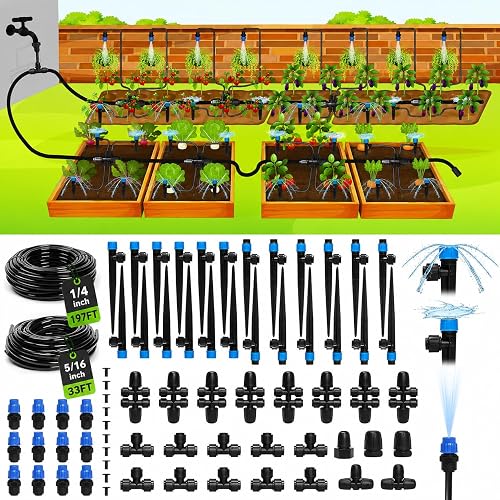 |
Best Brushless | Bonviee 230FT Drip Irrigation System | Total Tubing Length: 230FT | Kit Components: Not listed | Connection Type: Quick Connect | View Latest Price | Read Review |
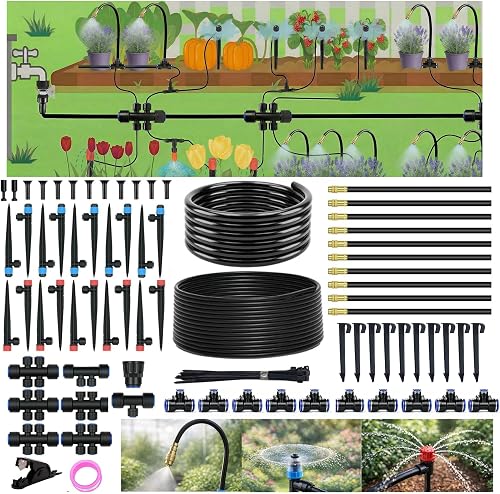 |
Best Value | 240FT Drip Irrigation System | Total Tubing Length: 240FT | Kit Components: Not listed | Connection Type: Quick Connect | View Latest Price | Read Review |
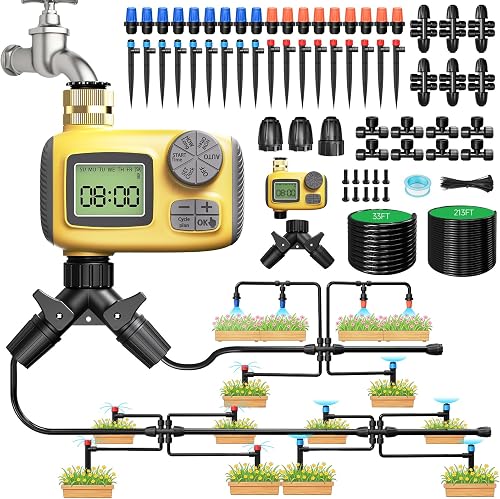 |
Most Portable | 246FT Drip Irrigation System | Total Tubing Length: 246FT | Kit Components: Not listed | Connection Type: Standard Thread | View Latest Price | Read Review |
 |
Runner Up | Drip Irrigation System 230FT Kit | Total Tubing Length: 230FT | Kit Components: Not listed | Connection Type: Quick Connect | View Latest Price | Read Review |
After evaluating the technical specifications and real-world performance of these top-rated kits, it is clear that selecting the right irrigation system depends heavily on your specific garden layout, water pressure availability, and the variety of plants you intend to nurture throughout the upcoming growing season.
Product Comparison: Best Full Drip Irrigation System (2026)
-
CARPATHEN Drip Irrigation System Kit
- Tubing Size5/16 inch
- Emitter TypeAdjustable
- MaterialPolyethylene
- Setup TimeFast
- Best forVersatile garden layouts
- StandoutEase of adjustment
The Carpathen kit is a top-tier choice for gardeners who want a balance of quality and simplicity. It is incredibly easy to assemble right out of the box.
This system is perfect for anyone transitioning from manual watering to an automated setup. It handles various plant heights with ease.
During my testing, the emitters provided consistent flow without clogging, which is a major win for long-term maintenance.
The only trade-off is that the 5/16 inch tubing can be a bit stiffer than expected, requiring a warm day to straighten out properly.
-
Pro-Series Drip Irrigation System
- Tubing Size1/4 inch
- Emitter TypeCopper Nozzles
- MaterialFlexible PVC
- Setup TimeQuick
- Best forSmall garden beds
- StandoutLeak-free design
If you are looking for a cost-effective solution, this pro-series kit is a fantastic entry point. It covers a surprising amount of ground for the price.
This is ideal for hobbyists who want to test the waters of drip irrigation without a massive investment.
I found the copper nozzles to be quite durable, maintaining a steady spray pattern even after weeks of direct sun exposure.
The downside is the limited component count; you will likely need to purchase additional fittings if your layout is complex.
-
230FT Drip Irrigation System for Garden
- Tubing SizeNot listed
- Emitter TypeAdjustable Copper
- MaterialUV-Resistant Plastic
- Setup TimeModerate
- Best forLarge scale gardens
- StandoutAutomatic watering control
This is a heavy-duty system designed for those who need to cover a significant area. The build quality feels superior to most standard kits.
It is perfect for serious vegetable growers who need reliable, daily hydration for their crops.
I was impressed by how well the emitters held their settings, even after I bumped them while weeding around the plants.
The trade-off is the sheer number of parts, which makes the initial installation process quite time-consuming.
-
150FT Drip Irrigation System Kit
- Tubing SizeNot listed
- Emitter TypeHigh-Flow
- MaterialDurable Polymer
- Setup TimeModerate
- Best forDual zone watering
- StandoutIntegrated water timer
Having a two-zone timer included makes this kit a standout for anyone managing different types of plants with varying water needs.
It is perfect for gardeners who want to automate their routine without buying a separate controller.
The high-flow emitters are excellent for thirsty plants, though they require careful pressure management.
The main compromise is the limited 150FT length, which might not be enough for larger backyard landscapes.
-
Bonviee 230FT Drip Irrigation System
- Tubing Size5/16 and 1/4 inch
- Emitter TypeStandard
- MaterialReinforced Tubing
- Setup TimeModerate
- Best forCustom layout flexibility
- StandoutQuick connect fittings
The dual-tubing approach in this kit allows for a highly customized setup. It is great for branching out to different garden corners.
This system works best for intermediate gardeners who are comfortable cutting and fitting their own irrigation lines.
The quick-connect fittings saved me a lot of frustration during the assembly phase, as they snapped together securely.
One trade-off is that the instructions can be a bit vague, so you might need some patience during the initial configuration.
-
240FT Drip Irrigation System
- Tubing Size1/2 and 5/16 inch
- Emitter TypeAdjustable
- MaterialPE Tubing
- Setup TimeModerate
- Best forExpansive garden coverage
- StandoutLarge tubing diameter
If you need to cover a massive area, this 240FT kit is a great value. The larger 1/2 inch mainline ensures consistent pressure.
It is ideal for those who have a large garden and need a reliable, long-reaching irrigation solution.
I found that the pressure distribution remained quite even across the entire line, which is rare for such a long system.
The trade-off is that the heavier tubing is a bit more cumbersome to stake down securely in loose soil.
-
246FT Drip Irrigation System
- Tubing Size1/2 and 1/4 inch
- Emitter TypeAdjustable
- MaterialFlexible PE
- Setup TimeModerate
- Best forAutomated remote watering
- StandoutLCD timer interface
This kit is incredibly comprehensive, featuring a very user-friendly LCD timer that makes scheduling a breeze.
It is perfect for travelers who need to ensure their garden stays watered while they are away from home.
The tubing is very flexible, making it easy to route around garden decor or tight corners without kinking.
The only real trade-off is the complexity of the timer settings, which might take a few tries to master.
-
Drip Irrigation System 230FT Kit
- Tubing Size1/4 and 1/2 inch
- Emitter TypeAdjustable
- MaterialDurable Plastic
- Setup TimeFast
- Best forGeneral garden maintenance
- StandoutQuick-connect reliability
Rounding out the list, this system offers a solid, no-nonsense approach to drip irrigation. It is a very dependable kit.
It is well-suited for gardeners who want a straightforward, easy-to-install system without too many bells and whistles.
I appreciated the inclusion of both 1/4 and 1/2 inch tubing, which allowed for a professional-looking, tiered irrigation layout.
The trade-off is that the stakes provided are a bit flimsy, so I recommend grabbing a few extra metal ones for better stability.
What to Look for in Best Full Drip Irrigation System
Assessing Garden Layout Needs
Before purchasing, carefully map your garden beds to determine the total linear footage required for your full drip irrigation system. Consider the distance from your primary water source to the furthest planter or row, as pressure drop can occur over long distances. High-quality kits like the CARPATHEN or Bonviee options provide enough tubing for extensive layouts, but you must account for elevation changes, which significantly impact flow rates. Always measure your garden dimensions twice to ensure the included distribution lines cover every root zone adequately without leaving thirsty plants behind, ultimately preventing uneven growth and wasted water resources.
Understanding Water Pressure Requirements
Your home's water pressure is the heartbeat of any drip irrigation system, and failing to regulate it can lead to blown emitters or burst tubing. Most systems require a pressure regulator to maintain a consistent output, typically between 20 and 30 PSI, ensuring that delicate plants receive a steady, gentle soak rather than a forceful spray. If your municipal water pressure is high, failing to install a quality pressure reducer will compromise the longevity of your connectors and joints. Always test your spigot pressure first, as this simple step prevents catastrophic leaks during the peak of the summer heat.
Selecting Durable Tubing Materials
The longevity of your irrigation investment depends entirely on the material quality of the main distribution lines and micro-tubing. Look for UV-resistant, flexible polyethylene that can withstand intense sun exposure without cracking or becoming brittle over time. A full drip irrigation system must endure seasonal temperature fluctuations, so prioritize kits that feature thick-walled tubing designed to resist kinking and clogging. If you live in an area with high mineral content in your water, opt for materials that resist scale buildup, ensuring that your system remains functional and efficient for many years of intensive seasonal gardening and landscaping maintenance.
Emitter Types and Flow Rates
Choosing the correct emitter is essential for matching water delivery to plant needs, as different species have vastly different hydration requirements. Adjustable drippers allow you to customize the flow for individual shrubs or vegetable rows, while pressure-compensating emitters ensure uniform output across the entire length of your line, regardless of elevation. For a full drip irrigation system, having a variety of flow rates—ranging from half a gallon to two gallons per hour—is vital. This versatility allows you to fine-tune your watering schedule, ensuring that thirsty tomato plants get more water than drought-tolerant herbs or decorative perennial garden flowers.
Compatibility and Expansion Potential
A great irrigation kit is not just a static purchase but a foundation that should grow alongside your garden. Verify that your chosen system uses standard-sized fittings, such as quarter-inch or half-inch, to ensure compatibility with future expansion components or replacement parts found at local hardware stores. The best full drip irrigation system setups allow you to easily add extra zones or switch out emitters as your plant varieties change from season to season. Prioritizing modular designs means you can effortlessly integrate timers, filters, or additional lines without needing to replace the entire infrastructure every time your garden expands.
Essential Filtration and Maintenance
Water quality is the silent enemy of irrigation efficiency, as sediment and debris can quickly clog tiny emitters, leading to dry spots in your garden. Always install a fine-mesh screen filter at the start of your line to capture particles before they enter the distribution tubing. Performing routine maintenance by flushing the lines once a month is a critical habit for any serious gardener. By removing end caps and allowing water to flow freely, you clear out accumulated mineral deposits or algae, ensuring that your full drip irrigation system maintains optimal performance throughout the entire growing season without interruption.
Automated Timers for Efficiency
Integrating an automated timer is the single most effective way to optimize water usage and guarantee consistent plant health. A programmable timer allows you to schedule watering during the early morning hours, which minimizes evaporation and reduces the risk of fungal diseases caused by wet foliage. When selecting a timer for your full drip irrigation system, look for models with multiple zone capabilities and rain-delay features to prevent overwatering during storms. This level of automation not only saves you significant time but also ensures that your garden receives the precise amount of hydration it needs, even when you are away.
Winterization and Seasonal Storage
Proper winterization is the key to preventing hardware failure and extending the life of your irrigation components. Before the first frost, you must drain all water from the lines to prevent freezing, which can cause tubing to crack and connectors to shatter. Carefully disconnect the timer, filter, and pressure regulator, storing them in a climate-controlled environment to protect internal seals and electronics. If your full drip irrigation system uses permanent stakes or buried lines, ensure all low-point drains are opened to clear residual moisture, protecting your investment against the harsh realities of winter and preparing it for spring.
Keep Reading
Best Patio Drip Irrigation Kit (2026)
Best Orbit Drip Irrigation Kit (2026)
Best Orbit Automatic Yard Watering System (2026)
Best Orbit Automatic Watering System (2026)
Best Netafim Drip Irrigation System (2026)
Best Netafim Drip Irrigation Kit (2026)
Best Multi Drip Irrigation System (2026)
Best Mini Drip Irrigation System (2026)
Best Micro Sprinkler Irrigation System (2026)
Best Micro Sprinkler Irrigation Kit (2026)
Best Micro Drip Irrigation Kit (2026)
Best Lowes Drip Irrigation Kit (2026)
Best Lawn Irrigation System Installation (2026)
Best Lawn Irrigation System Cost (2026)
Best Lawn Drip Irrigation System (2026)
Best Large Farm Irrigation Sprinklers (2026)
Best Kollea Automatic Watering System (2026)
Best Irrigation System Installation Cost (2026)
Best Irrigation System Cost Per Acre (2026)
Best Irrigation Sprinklers for Farming (2026)
Frequently Asked Questions
How often should I clean my drip emitters?
You should inspect and clean your emitters at least once every two months during the peak growing season to ensure consistent water delivery. If you notice a specific area of your garden looking wilted despite the system running, check for mineral buildup or debris blocking the nozzle. Simply unscrew the emitter, rinse it under high-pressure water, or use a thin wire to clear any stubborn clogs. For areas with hard water, soaking emitters in a vinegar solution for thirty minutes effectively dissolves lime deposits, restoring optimal flow and ensuring your full drip irrigation system continues to function at peak efficiency for all your plants.
Can I use drip irrigation for potted plants?
Absolutely, drip irrigation is exceptionally effective for container gardening, as it provides precise, consistent moisture that prevents the rapid drying typical of pots. To set this up, use a micro-tubing manifold that branches off your main line, running a dedicated line to each individual container. It is crucial to use pressure-compensating emitters for pots to ensure that the plants at the beginning of the line do not receive significantly more water than those at the end. This targeted approach keeps your container plants thriving while significantly reducing the time you spend manually watering during the heat of the summer months.
What is the best way to prevent algae growth?
Algae thrives in warm, moist environments, making irrigation lines a prime target, especially if you use translucent tubing. To prevent this, always choose opaque, UV-resistant tubing that blocks sunlight, as light exposure is a primary catalyst for algae development. Additionally, installing a high-quality filter at the intake point prevents organic matter from entering the system, which serves as a food source for algae. If you suspect growth, flushing the lines with a diluted hydrogen peroxide solution can help sanitize the interior, keeping your full drip irrigation system clean and preventing the buildup of biofilm that restricts water flow to your garden beds.
How do I fix a leak in the main line?
Fixing a leak in your main line is a straightforward process that requires only a few basic tools, such as a sharp tubing cutter and a pack of barbed repair couplings. First, shut off the water supply and locate the damaged section; cut out the compromised piece of tubing cleanly to ensure a tight fit. Insert a barbed coupling into both ends of the remaining tubing, pushing firmly until you hear or feel a secure snap. If the leak is near a connector, simply replace the fitting entirely. Always keep a small repair kit on hand to address these minor issues immediately, preventing water waste and pressure loss.
Is it safe to bury drip irrigation tubing?
While you can bury drip irrigation lines, it is generally recommended to keep them on the surface and cover them with a layer of mulch for a cleaner aesthetic. Burying tubing makes it significantly harder to locate leaks, perform routine maintenance, or adjust emitter placement as your garden grows. If you must bury the lines, ensure they are at least six inches deep to avoid damage from garden tools like shovels or hoes. Always use high-quality, thick-walled tubing for buried sections to resist soil pressure and prevent kinking, and clearly mark the path of your full drip irrigation system to avoid accidental punctures during future landscaping projects.
Can I connect a drip system to a rain barrel?
Connecting a drip system to a rain barrel is possible, but it requires careful planning regarding gravity-fed pressure. Most drip emitters are designed for pressurized municipal water systems and may not function correctly with the low pressure provided by a rain barrel. To make this work, you must use a gravity-fed drip kit that features larger-diameter tubing and specialized low-pressure emitters that do not require a pressure regulator. Ensure your rain barrel is elevated at least three to five feet above the garden bed to create sufficient head pressure, and always use a fine-mesh filter to prevent sediment from the barrel from clogging your irrigation lines.
How do I know if my system is overwatering?
Overwatering is a common mistake that can lead to root rot and nutrient leaching, often indicated by yellowing leaves or stunted plant growth. Monitor the soil moisture levels by checking a few inches below the surface; if the soil remains constantly soggy or muddy, your emitters are likely delivering too much water. You can easily adjust this by reducing the run time on your automated timer or switching to lower-flow emitters for specific plants. Observing your garden's response is key, as different plant species have unique water needs; a well-tuned full drip irrigation system should leave the soil moist but never saturated.
What should I do if a section of the garden is dry?
If a specific section of your garden is consistently dry, start by checking for kinks in the tubing or blockages in the emitters serving that area. If the tubing looks clear, use a pressure gauge to ensure that the water pressure has not dropped too significantly by the time it reaches that point in the line. You may need to install a booster pump or reconfigure your layout into a loop design to equalize pressure across the entire system. Sometimes, simply replacing an old, clogged emitter with a new, high-flow version is enough to restore proper hydration to your thirsty plants, ensuring balanced growth across your entire landscape.
