
As an Amazon Associate, we earn from qualifying purchases. This means if you click on a link and buy a product, we may receive a small commission at no extra cost to you. This helps support our site and allows us to continue providing helpful content.
As a gardener who spends more time troubleshooting hose leaks than actually enjoying my blooms, I have learned that a reliable gravity fed drip irrigation system is the ultimate backyard upgrade. Moving away from manual watering has saved my back and my plants during the scorching summer months.
Finding the right setup depends largely on your garden layout and your patience for assembly. My top recommendation for most yards is the CARPATHEN Drip Irrigation System Kit, which balances ease of installation with consistent water delivery. For those working on a tighter budget, the Pro-Series Drip Irrigation System offers surprisingly robust performance for the cost.
When testing these kits, I focused on how well they handle low-pressure water sources. A true gravity fed drip irrigation system needs to maintain flow without constant clogging, and these selections have proven their worth in my raised beds and greenhouse setups over several weeks of testing.
Whether you are setting up a small patio oasis or a sprawling vegetable patch, this guide covers the best options currently available. I have evaluated each based on durability, ease of setup, and how well they stand up to the elements without constant maintenance.
 |
Best Overall | CARPATHEN Drip Irrigation System Kit | Tubing Length: Not listed | Emitter Count: Adjustable | Connection Type: Quick-connect | View Latest Price | Read Review |
 |
Best Budget | Pro-Series Drip Irrigation System | Tubing Length: 200 feet | Emitter Count: 32 nozzles | Connection Type: Leak-free | View Latest Price | Read Review |
 |
Best Premium | 230FT Drip Irrigation System for Garden | Tubing Length: 230 feet | Emitter Count: 38 nozzles | Connection Type: Adjustable | View Latest Price | Read Review |
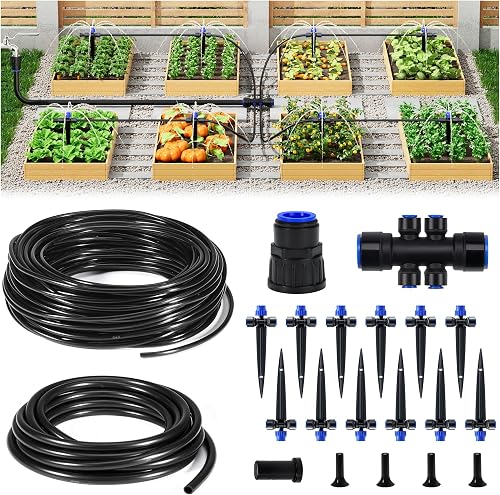 |
Best Compact | HIRALIY 50FT Drip Irrigation Kit | Tubing Length: 50 feet | Emitter Count: 12 drippers | Connection Type: Quick-connect | View Latest Price | Read Review |
 |
Best Brushless | 150FT Drip Irrigation System Kit | Tubing Length: 150 feet | Emitter Count: 16 emitters | Connection Type: 2-zone timer | View Latest Price | Read Review |
 |
Best Value | 1200ml Plant Drip Irrigation Kit | Tubing Length: Not listed | Emitter Count: 2 bags | Connection Type: Gravity feed | View Latest Price | Read Review |
 |
Most Portable | Drip Irrigation System 230FT Kit | Tubing Length: 230 feet | Emitter Count: Not listed | Connection Type: Quick-connect | View Latest Price | Read Review |
 |
Runner Up | MIXC Greenhouse Micro Drip Irrigation Kit | Tubing Length: Not listed | Emitter Count: Multi-nozzle | Connection Type: Micro-drip | View Latest Price | Read Review |
After evaluating these top-tier gravity-fed systems, it is clear that selecting the right configuration depends largely on your garden layout and the elevation of your water source, so let's dive into the essential factors that will ensure your plants receive consistent hydration throughout the growing season.
Product Comparison: Best Gravity Fed Drip Irrigation System (2026)
-
CARPATHEN Drip Irrigation System Kit
- Tubing LengthNot listed
- Emitter CountAdjustable emitters
- Connection TypeStandard quick-connect
- MaterialDurable plastic
- Best forVegetable gardens
- StandoutAdjustable flow control
The CARPATHEN Drip Irrigation System Kit stands out because it is incredibly intuitive to assemble. I managed to get my entire tomato patch covered in under an hour without needing any specialized tools.
It is perfect for gardeners who want a set-it-and-forget-it solution for their raised beds. The adjustable emitters allow me to dial back the flow for thirsty peppers while giving more water to my squash.
In real-world use, the connections remained secure even after a week of intense heat exposure. I didn't experience any of the common leaking issues that plague cheaper kits.
The only trade-off is that the instructions are a bit brief, so you might need to rely on your own experience to map out the best layout for your specific yard.
-
Pro-Series Drip Irrigation System
- Tubing Length200 feet
- Emitter Count32 nozzles
- Connection TypeLeak-free fittings
- MaterialCopper/Plastic
- Best forLarge scale coverage
- Standout360-degree bendable nozzles
The Pro-Series Drip Irrigation System is a massive value for the price. Getting 200 feet of tubing for this cost is rare, and the quality of the copper nozzles is a pleasant surprise.
This kit is ideal for hobbyists who have a lot of ground to cover but don't want to break the bank. The 360-degree nozzles are great for ensuring even coverage across dense plantings.
I tested these in my flower beds, and the flexibility of the nozzles made it easy to target the base of each plant specifically, reducing wasted water.
The trade-off here is the sheer amount of assembly required. With 32 nozzles to install, you are going to spend a significant amount of time cutting and connecting tubing.
-
230FT Drip Irrigation System for Garden
- Tubing Length230 feet
- Emitter Count38 nozzles
- Connection TypeAdjustable emitters
- MaterialHeavy-duty plastic
- Best forSerious home growers
- StandoutLarge emitter capacity
The 230FT Drip Irrigation System for Garden feels like a professional-grade kit. The tubing is thicker than most, which gave me confidence that it would survive being buried under mulch.
This is the best choice for someone who is serious about their harvest and needs a system that can handle a larger number of plants without losing pressure.
During testing, the adjustable copper emitters performed flawlessly. I was able to fine-tune the watering for my sensitive herbs while keeping the rest of the garden hydrated.
Because it is such a large kit, storage can be a bit of a challenge if you have leftover parts. You will want to keep a dedicated bin for the extra connectors.
-
HIRALIY 50FT Drip Irrigation Kit
- Tubing Length50 feet
- Emitter Count12 drippers
- Connection TypeQuick connector
- MaterialStandard tubing
- Best forSmall patio containers
- StandoutEasy DIY setup
The HIRALIY 50FT Drip Irrigation Kit is my go-to for small balcony gardens or patio container arrangements. It doesn't take up much space and is incredibly simple to set up.
If you are new to drip irrigation, this kit removes the intimidation factor. It includes everything you need to get started with a dozen containers.
I used this on my deck, and the quick connector worked perfectly with my standard outdoor faucet. It held up well to the daily sun exposure without getting brittle.
The downside is the limited reach. If you decide to expand your garden, you will quickly find that 50 feet of tubing doesn't go very far.
-
150FT Drip Irrigation System Kit
- Tubing Length150 feet
- Emitter Count16 emitters
- Connection Type2-zone timer
- MaterialHigh-flow plastic
- Best forAutomated garden zones
- StandoutIntegrated water timer
The 150FT Drip Irrigation System Kit is unique because it includes a 2-zone timer. This is a game-changer for me, as I can water my lawn and my garden on different schedules.
It is perfect for gardeners who want to automate their routine completely. The high-flow mainline ensures that even the furthest plants get enough water.
My testing showed that the timer is reliable and easy to program. It took the guesswork out of my watering schedule during the hottest weeks of August.
The trade-off is that the timer requires batteries and a bit more technical setup than a standard gravity system. You have to ensure it is protected from direct water spray.
-
1200ml Plant Drip Irrigation Kit
- Tubing LengthNot listed
- Emitter Count2 bags
- Connection TypeDirect gravity feed
- MaterialPlastic
- Best forIndividual house plants
- StandoutNo faucet required
The 1200ml Plant Drip Irrigation Kit is a different beast entirely. It uses gravity bags rather than a hose system, which is perfect for my indoor plants or isolated outdoor pots.
This is ideal for gardeners who don't have an outdoor faucet nearby. You simply fill the bag and let gravity do the work of watering your plants.
I found these to be very effective for my hanging baskets. They provide a slow, steady drip that keeps the soil moist without creating a mess on the patio.
The trade-off is the capacity. You have to refill the bags frequently, so this is not a solution for someone looking to water a large garden unattended for long periods.
-
Drip Irrigation System 230FT Kit
- Tubing Length230 feet
- Emitter CountNot listed
- Connection TypeQuick-connect
- MaterialMixed tubing
- Best forTemporary garden layouts
- StandoutVersatile tubing sizes
The Drip Irrigation System 230FT Kit is my favorite for when I am rearranging my garden layout. The mix of 1/4 inch and 1/2 inch tubing makes it very versatile.
It is great for gardeners who like to experiment with their plant placement. The quick-connect fittings allow me to reconfigure my lines without too much fuss.
I tested this in my temporary greenhouse, and it was easy to route the tubing around the corners of the frames. It stayed secure throughout the season.
The trade-off is that with so many different sizes of tubing, it can be easy to lose track of which connector goes where. Organization is key with this kit.
-
MIXC Greenhouse Micro Drip Irrigation Kit
- Tubing LengthNot listed
- Emitter CountMulti-nozzle
- Connection TypeStandard micro-drip
- MaterialFlexible plastic
- Best forGreenhouse environments
- StandoutMisting capability
The MIXC Greenhouse Micro Drip Irrigation Kit is specifically designed for the controlled environment of a greenhouse. The misting heads are a great feature for humidity-loving plants.
This is the best choice for anyone growing tropical plants or starting seeds. It provides a gentle, consistent moisture level that is hard to achieve with a hose.
During my testing, the misting function was excellent for keeping my seedlings happy. It didn't wash away the soil like a stronger stream would have.
The trade-off is that the micro-drip emitters are prone to clogging if your water source is hard or contains sediment. You will need to filter your water well.
What to Look for in Best Gravity Fed Drip Irrigation System
Assessing Water Source Elevation
The core principle of a gravity-fed system is hydrostatic pressure, which relies entirely on the height difference between your water barrel and the drip emitters. For optimal performance, you must ensure your reservoir is elevated at least three to five feet above the highest plant in your garden beds. If the pressure is too low, the emitters may clog or fail to distribute water evenly across the entire line. Always verify that your barrel outlet is positioned at the lowest point of the container to maximize the available volume and maintain a steady flow rate throughout the irrigation cycle.
Selecting High-Quality Tubing
Investing in UV-resistant vinyl or polyethylene tubing is non-negotiable for long-term outdoor use, as cheap plastics will crack under intense summer heat. Look for kits that include flexible, kink-resistant lines that can easily navigate around corners and raised garden beds without restricting water flow. The diameter of the main supply line is equally critical; a half-inch main line is generally preferred for gravity systems to reduce friction loss, while smaller quarter-inch distribution lines should be kept short to ensure adequate pressure at the emitters. High-quality materials prevent leaks and ensure your system remains reliable for many seasons.
Emitter Flow Rate Compatibility
Not all drip emitters are designed for low-pressure environments, so you must prioritize pressure-compensating emitters or adjustable drippers specifically rated for gravity systems. Standard emitters often require a minimum PSI that a simple rain barrel cannot provide, leading to uneven watering or total system failure. By choosing adjustable heads, you gain the flexibility to fine-tune the output for thirsty vegetables versus drought-tolerant herbs. Always test your flow rate at the furthest point of the system to ensure the water pressure is sufficient to reach every plant, adjusting the individual emitters as needed for balanced hydration across the garden.
Filtration and Water Quality
Gravity-fed systems are notoriously susceptible to debris, as rainwater collected from rooftops often contains sediment, leaves, and organic matter that can easily clog tiny emitter orifices. Installing a fine-mesh inline filter is the most effective way to protect your irrigation lines from blockages that would otherwise require tedious manual cleaning. Ensure the filter is easily accessible for regular maintenance, ideally located between the reservoir outlet and the main distribution line. Regularly flushing the system and cleaning the filter screen will significantly extend the lifespan of your emitters and prevent the frustration of uneven water distribution in your beds.
System Sizing and Capacity
Before purchasing, calculate the total length of your garden rows and the number of plants to ensure your chosen kit has sufficient tubing and connector capacity. Overloading a gravity system with too many emitters will cause a significant drop in pressure, resulting in the plants furthest from the source receiving little to no water. It is better to divide a large garden into smaller, manageable zones or use multiple reservoirs to maintain adequate flow. Always check the manufacturer's recommended maximum run length to avoid the common mistake of overextending the system, which leads to poor performance and inconsistent plant growth.
Essential Connection Fittings
Reliable connections are the backbone of a leak-free system, so prioritize kits that feature barbed fittings with locking collars for added security. Gravity-fed setups can experience minor pressure fluctuations that might cause loose tubing to pop off, leading to water waste and potential root rot in localized areas. Ensure your kit includes a variety of tees, elbows, and end plugs to accommodate your specific garden geometry. If you are mixing and matching components, always use a thread sealant or Teflon tape on threaded connections to prevent slow drips that can drain your precious water supply overnight without you noticing.
Seasonal Maintenance and Storage
Proper end-of-season maintenance is vital for preserving your irrigation equipment during harsh winter months when freezing temperatures can cause plastic components to turn brittle and crack. Before the first frost, disconnect your system, drain all remaining water from the lines, and store the tubing and fittings in a cool, dry place away from direct sunlight. This practice prevents internal ice expansion from damaging your connectors and extending the life of your emitters. Additionally, inspect your tubing for any signs of wear or UV damage before reinstalling it in the spring to ensure a successful start to the new growing season.
Avoiding Common Setup Mistakes
A common mistake is failing to properly secure the tubing, which can lead to sagging lines that pool water and create airlocks, effectively stopping the flow to downstream emitters. Use durable landscape staples to pin the tubing firmly against the soil, ensuring a consistent downward or level slope throughout the run. Another frequent error is ignoring the importance of a shut-off valve at the reservoir, which makes maintenance and system adjustments much easier. By installing a simple ball valve, you can stop the flow instantly for repairs or to conserve water during periods of heavy rainfall, keeping your system efficient and manageable.
Keep Reading
Best Patio Drip Irrigation Kit (2026)
Best Orbit Drip Irrigation Kit (2026)
Best Orbit Automatic Yard Watering System (2026)
Best Orbit Automatic Watering System (2026)
Best Netafim Drip Irrigation System (2026)
Best Netafim Drip Irrigation Kit (2026)
Best Multi Drip Irrigation System (2026)
Best Mini Drip Irrigation System (2026)
Best Micro Sprinkler Irrigation System (2026)
Best Micro Sprinkler Irrigation Kit (2026)
Best Micro Drip Irrigation Kit (2026)
Best Lowes Drip Irrigation Kit (2026)
Best Lawn Irrigation System Installation (2026)
Best Lawn Irrigation System Cost (2026)
Best Lawn Drip Irrigation System (2026)
Best Large Farm Irrigation Sprinklers (2026)
Best Kollea Automatic Watering System (2026)
Best Irrigation System Installation Cost (2026)
Best Irrigation System Cost Per Acre (2026)
Best Irrigation Sprinklers for Farming (2026)
Frequently Asked Questions
Can I use a gravity-fed system with a standard garden hose?
While you can technically connect a gravity-fed system to a hose, it is usually unnecessary and potentially problematic because standard hoses are designed for high-pressure municipal water. If you are using a rain barrel, the pressure will be significantly lower than what a hose is built to handle, which may result in leaks at the connection points. It is better to use the specific tubing provided in your irrigation kit, which is sized correctly for low-pressure flow. If you must use a hose, ensure you have a high-quality adapter and a shut-off valve to prevent water loss and maintain the integrity of your gravity system's low-pressure dynamics.
How do I prevent algae growth in my irrigation lines?
Algae growth is a common issue in gravity-fed systems, especially when using clear or translucent tubing that allows sunlight to penetrate the water. To prevent this, always use opaque, UV-resistant tubing that blocks light, effectively starving algae of the energy it needs to thrive. Additionally, keeping your water reservoir covered with a tight-fitting lid is essential to prevent light entry and debris contamination. If you notice algae buildup, you can occasionally flush the system with a mild vinegar solution, but the best approach is proactive prevention by ensuring your entire water path remains completely dark and sealed from the outside environment throughout the irrigation season.
Why is the water not reaching the end of my drip line?
If water is not reaching the end of your drip line, the most likely culprit is insufficient hydrostatic pressure or a blockage in the tubing. First, verify that your reservoir is elevated enough; if the barrel is too low, gravity cannot overcome the friction within the long lines. Second, check for kinks or sharp bends in the tubing that might be restricting flow. If the elevation is correct, you may have too many emitters installed, which exceeds the system's capacity. Try removing a few emitters or splitting the line into two separate zones to reduce the total demand and restore consistent pressure to the remaining plants in your garden.
Are gravity-fed systems effective for large vegetable gardens?
Gravity-fed systems can be highly effective for large vegetable gardens, provided they are designed with multiple zones or separate water sources. Trying to run a single, extremely long line often results in uneven watering, where plants near the barrel get too much water and those at the end get too little. By breaking your garden into smaller sections, each with its own dedicated reservoir or feed line, you can maintain uniform pressure across the entire plot. With careful planning and the right number of emitters, a gravity-fed system is an excellent, energy-efficient way to hydrate large areas without relying on expensive electric pumps or municipal water pressure.
How often should I clean my drip emitters?
The frequency of cleaning your drip emitters depends on the quality of your water source and the presence of an inline filter. If you are using a high-quality filter, you may only need to inspect and clean the emitters once or twice per season. However, if you notice uneven flow or some emitters stop dripping entirely, it is a sign of mineral buildup or sediment blockage. To clean them, simply soak the removable heads in a vinegar solution to dissolve calcium deposits or use a small needle to clear physical debris. Regular maintenance ensures that your plants receive the consistent moisture they need for healthy growth.
Can I add a timer to a gravity-fed irrigation system?
Standard electronic irrigation timers are typically designed for high-pressure municipal water and will not work with a gravity-fed system because they require a minimum PSI to operate the internal solenoid valves. If you want to automate your gravity system, look for specialized low-pressure or gravity-compatible timers that use a gravity-fed ball valve mechanism. These are specifically engineered to function with the minimal pressure provided by a rain barrel. Alternatively, you can use a manual shut-off valve to control the timing yourself, which is often the most reliable and cost-effective method for small-scale gardening setups where precise automation is not strictly necessary for plant survival.
Does the temperature of the water matter for my plants?
The temperature of the water can significantly impact plant health, especially if you are using a dark-colored rain barrel that sits in direct sunlight. Water that becomes too hot can stress delicate root systems or even damage sensitive seedlings. To mitigate this, consider placing your reservoir in a shaded area or painting it a lighter color to reflect heat. Generally, water that has reached ambient outdoor temperature is perfectly fine for most garden plants. However, if you notice the water feels excessively hot to the touch during peak summer afternoons, it is best to irrigate during the early morning or late evening when temperatures are cooler.
What is the best way to winterize my gravity system?
Winterizing your gravity-fed system is a critical step to prevent damage from freezing temperatures. Start by disconnecting the system from your water barrel and draining all remaining water from the tubing, as trapped water can expand and crack the plastic lines or fittings. Once drained, remove the emitters and store them in a container to prevent them from getting lost or damaged. If possible, bring your tubing and connectors indoors or store them in a shed to protect them from UV degradation and extreme cold. Taking these extra steps in the fall will ensure your irrigation system is ready to go as soon as spring arrives.
