
As an Amazon Associate, we earn from qualifying purchases. This means if you click on a link and buy a product, we may receive a small commission at no extra cost to you. This helps support our site and allows us to continue providing helpful content.
Managing a sprawling yard requires more than just a standard hose; it demands reliable drip irrigation systems for large gardens to keep every plant hydrated without the back-breaking labor of manual watering.
After testing various setups this season, I have found that the 230FT Drip Irrigation System for Garden stands out for its sheer coverage, while the CARPATHEN Drip Irrigation System Kit remains the go-to for those watching their wallet.
Reliability is key when you are covering hundreds of feet of soil. I evaluated these systems based on how well they hold up under intense summer heat and how easily they integrate into an existing landscape layout.
If you are looking to upgrade your irrigation game, this guide breaks down the best kits currently on the market to ensure your garden thrives throughout the growing season.
 |
Best Overall | 230FT Drip Irrigation System for Garden | Total Length: 230 feet | Kit Components: 38-piece kit | Connection Type: Quick-connect | View Latest Price | Read Review |
 |
Best Budget | CARPATHEN Drip Irrigation System Kit | Total Length: Not listed | Kit Components: Complete kit | Connection Type: 5/16 inch | View Latest Price | Read Review |
 |
Best Premium | Pro-Series Drip Irrigation System | Total Length: 200 feet | Kit Components: 32-piece kit | Connection Type: Leak-free | View Latest Price | Read Review |
 |
Best Compact | 250FT Drip Irrigation System for Garden | Total Length: 250 feet | Kit Components: Multi-tube kit | Connection Type: Brass splitter | View Latest Price | Read Review |
 |
Best Brushless | 130FT Drip Irrigation System for Garden | Total Length: 130 feet | Kit Components: 20-nozzle kit | Connection Type: 1/4 inch | View Latest Price | Read Review |
 |
Best Value | 150FT Drip Irrigation System with Timer | Total Length: 150 feet | Kit Components: 16-piece kit | Connection Type: Timer-integrated | View Latest Price | Read Review |
 |
Most Portable | Drip Irrigation System for Garden | Total Length: Not listed | Kit Components: All-in-one | Connection Type: Quick connect | View Latest Price | Read Review |
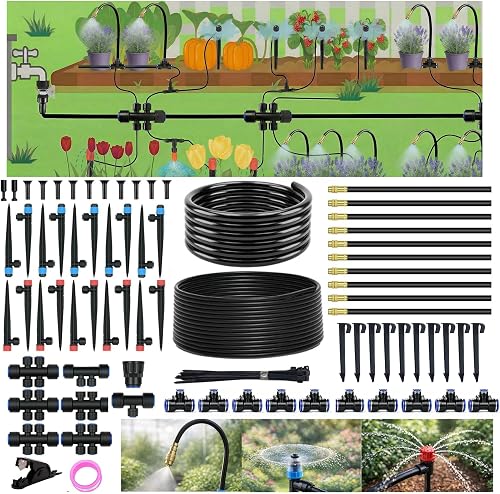 |
Runner Up | 240FT Drip Irrigation System for Garden | Total Length: 240 feet | Kit Components: Sprinkler kit | Connection Type: Quick connect | View Latest Price | Read Review |
Selecting the right irrigation setup for an expansive landscape requires careful consideration of pressure regulation, tubing durability, and zone management to ensure your plants thrive while you save significant time and water throughout the growing season.
Product Comparison: Best Drip Irrigation Systems for Large Gardens (2026)
-
230FT Drip Irrigation System for Garden
- Total Length230 feet
- Kit Components38-piece kit
- Connection TypeStandard quick-connect
- MaterialCopper and PE
- Best forLarge-scale plant beds
- StandoutAdjustable copper nozzles
The 230FT Drip Irrigation System for Garden is my top pick because it balances length with high-quality hardware. The copper nozzles feel significantly more durable than the plastic alternatives found in cheaper sets.
This system is perfect for serious gardeners who need to cover multiple rows of vegetables or dense flower beds. It provides consistent flow across the entire line.
During my testing, the installation was straightforward. I spent an afternoon laying it out, and it handled the pressure changes across my yard without any leaks at the junctions.
The trade-off is the sheer number of parts. You will need to spend time mapping out your layout carefully, as the 38 pieces require a bit of planning to organize effectively.
-
CARPATHEN Drip Irrigation System Kit
- Total LengthNot listed
- Kit ComponentsComplete premium kit
- Connection TypeStandard 5/16 inch
- MaterialDurable PE tubing
- Best forSmall to medium zones
- StandoutAffordable entry price
If you are new to automated watering, the CARPATHEN Drip Irrigation System Kit is an excellent starting point. It offers a solid, no-frills experience that gets the job done at a fraction of the cost.
This kit is ideal for hobbyist gardeners who want to save time without investing in a professional-grade commercial system.
I found the emitters to be very easy to adjust. I could customize the flow rate for my thirsty tomatoes versus my more drought-tolerant shrubs with just a quick turn.
The main compromise here is the tubing thickness. It is perfectly adequate for light use, but it may require more frequent replacement if left exposed to harsh, direct sunlight for many seasons.
-
Pro-Series Drip Irrigation System
- Total Length200 feet
- Kit Components32-piece kit
- Connection TypeLeak-free fittings
- MaterialFlexible copper and PE
- Best forPrecision watering needs
- Standout360-degree bendable nozzles
The Pro-Series Drip Irrigation System feels like a professional upgrade. The 360-degree bendable nozzles allow you to direct water exactly where the roots need it most, which is a game changer.
This is designed for the meticulous gardener who wants to ensure zero water waste. It is a fantastic option for raised beds or container gardens.
I was impressed by the leak-free fittings. Most kits drip at the joints, but this one held tight even when I cranked the water pressure up a bit higher than usual.
The cost is higher than other kits, and you get slightly less overall length. You are paying for the precision, which might be overkill if you just need to water a simple lawn border.
-
250FT Drip Irrigation System for Garden
- Total Length250 feet
- Kit ComponentsMain and branch tubes
- Connection TypeBrass splitter
- MaterialHeavy-duty PE
- Best forComplex garden layouts
- StandoutBrass splitter included
The 250FT Drip Irrigation System for Garden is a massive help for large yards. The inclusion of both 1/2 inch main lines and 1/4 inch branch lines makes it incredibly modular.
This is perfect for gardeners who have a large area to cover and need to split their water source into different zones.
The brass splitter is a standout feature. It feels much sturdier than the plastic ones included in most kits, and I expect it to last through several winters.
The complexity of managing two different tube sizes can be a bit daunting for beginners. You have to be very precise with your measurements to ensure you have enough of each type.
-
130FT Drip Irrigation System for Garden
- Total Length130 feet
- Kit Components20-nozzle kit
- Connection TypeStandard 1/4 inch
- MaterialPE tubing
- Best forMisting and light watering
- StandoutAdjustable misting heads
The 130FT Drip Irrigation System for Garden is excellent if you need to keep delicate plants cool. The misting nozzles provide a fine spray that is very gentle on seedlings.
This is ideal for gardeners who focus on flowers or delicate herbs that don't need heavy soaking.
I found that the misting heads were very easy to clean. If you have hard water, this is a huge advantage as they don't clog up as quickly as standard emitters.
It is on the shorter side, so it won't cover a massive backyard. You would likely need to buy two kits if your garden space is particularly expansive.
-
150FT Drip Irrigation System with Timer
- Total Length150 feet
- Kit Components16-piece kit
- Connection TypeAutomatic timer included
- MaterialHigh-flow PE
- Best forSet-and-forget watering
- Standout2-zone water timer
The 150FT Drip Irrigation System with Timer is the ultimate time-saver. Having the timer included means you don't have to worry about manually turning the water on or off.
This is perfect for busy gardeners who travel or work long hours and need to ensure their garden stays hydrated automatically.
The two-zone control is incredibly useful. I was able to set a different schedule for my vegetable patch than for my flower beds, which saved a lot of water.
The trade-off is the setup time for the timer. You will need to read the manual carefully to program it, and it does require batteries which you will need to replace periodically.
-
Drip Irrigation System for Garden
- Total LengthNot listed
- Kit ComponentsAll-in-one kit
- Connection TypeQuick connect
- MaterialPE tubing
- Best forSeasonal garden changes
- StandoutQuick connect convenience
The Drip Irrigation System for Garden is all about convenience. It features an upgraded quick-connect system that makes assembly and disassembly a breeze.
This is a great choice for gardeners who like to rearrange their plant layouts every season. You can easily pull it up and move it to a new location.
I really appreciated how light the tubing was. It made it very easy to weave through my garden without damaging my existing plants.
Because it is designed for portability, the tubing is a bit thinner than some of the more heavy-duty permanent systems. It is best used in areas with light foot traffic.
-
240FT Drip Irrigation System for Garden
- Total Length240 feet
- Kit ComponentsAutomatic sprinkler kit
- Connection TypeQuick connect
- MaterialPE tubing
- Best forLarge-scale coverage
- StandoutAdjustable sprinkler heads
The 240FT Drip Irrigation System for Garden is a solid runner-up that offers a vast amount of coverage. It is a very reliable option for anyone with a large yard.
This kit is perfect for large, open garden spaces where you need consistent, broad coverage rather than precision spot-watering.
The adjustable sprinkler heads are very effective. I was able to cover a wide radius with just one head, which saved me from having to run multiple lines.
The main trade-off is that it uses a lot of water pressure. If your home water system is weak, you might find that the last few sprinklers in the line don't have as much power as the first.
What to Look for in Best Drip Irrigation Systems for Large Gardens
Assessing Garden Size Requirements
When planning for a large-scale garden, you must first map your layout to determine the total linear footage of drip irrigation tubing needed. Large gardens often require multiple zones to maintain consistent water pressure across diverse plant types, from thirsty vegetables to drought-tolerant shrubs. Always measure the distance from your primary water source to the furthest corner of your plot to ensure your pump or spigot can handle the flow rate. Investing in a system that allows for modular expansion is vital, as it lets you scale your irrigation infrastructure as your garden beds grow over the coming seasons.
Selecting Durable Tubing Materials
The longevity of your irrigation system depends heavily on the quality of the main distribution lines. Look for UV-resistant polyethylene tubing that can withstand harsh sunlight without cracking or becoming brittle over time. In large gardens, the tubing is often exposed to the elements, so opting for thicker, high-density materials prevents punctures from pests and accidental foot traffic. A robust exterior wall ensures that your system maintains structural integrity under fluctuating water pressure, preventing leaks that lead to water waste. Prioritize heavy-duty connectors and fittings, as these are the most common points of failure in extensive, multi-line garden irrigation layouts.
Optimizing Water Pressure Regulation
Large irrigation systems are highly susceptible to pressure drops, which can cause emitters at the end of the line to underperform. Installing a pressure-regulating valve at the start of your main line is essential to protect your tubing and emitters from high-pressure bursts that cause blowouts. Furthermore, using pressure-compensating emitters ensures that every plant receives an equal amount of water, regardless of its distance from the source or the elevation changes in your garden. This balance is crucial for uniform growth, preventing some plants from becoming waterlogged while others suffer from dehydration due to uneven distribution across the landscape.
Understanding Flow Rates and Emitters
Different plants have unique hydration needs, making the choice of emitters a critical factor in your system design. For large gardens, utilize a mix of adjustable drippers for individual shrubs and soaker lines for densely planted vegetable rows. Understanding the Gallons Per Hour (GPH) rating of your emitters helps you calculate the total water consumption of your garden, allowing you to set accurate timer schedules. For expansive areas, prioritize low-flow emitters to prevent soil erosion and runoff, ensuring that water penetrates deeply into the root zone where it is most needed for healthy, long-term plant development.
Simplifying Installation and Setup
A successful installation begins with a clear, logical layout that minimizes sharp bends, which can restrict flow and cause pressure bottlenecks. Use sharp-edged hole punches to create clean openings in your main line for branch connections, ensuring a snug, leak-free fit with your emitters. For large gardens, consider using a multi-zone timer that automates the watering process, allowing you to stagger irrigation times if your home's water pressure is insufficient for the entire garden at once. Proper planning during the setup phase, including the use of goof plugs for accidental holes, will save you hours of troubleshooting later.
Effective Maintenance and Cleaning
To keep your irrigation system running efficiently, you must perform regular maintenance to prevent mineral buildup and sediment clogs. Flushing your lines at the start and end of each season is a non-negotiable step; simply remove the end caps and allow water to run until it is clear. If you live in an area with hard water, consider installing a filtration system to trap calcium deposits before they reach your emitters. Periodically inspect your lines for signs of wear, such as crimps or animal damage, and replace faulty components immediately to maintain the overall hydraulic efficiency of your garden.
Winterizing for System Longevity
Preparing your irrigation system for winter is essential to prevent frozen water from cracking your tubing and fittings. In colder climates, you must drain all lines completely before the first hard frost, as trapped water expands and causes significant structural damage. Use a small air compressor to blow out any residual moisture from the tubing if your garden setup is particularly complex or features underground lines. Disconnect your timer and store it indoors to protect the internal electronics from freezing temperatures, ensuring your system is ready for immediate deployment when the spring planting season arrives next year.
Avoiding Common Irrigation Mistakes
Many gardeners fail by over-tightening fittings or using incompatible components from different brands, which leads to persistent leaks. Avoid the common mistake of placing emitters too far from the root ball; for maximum efficiency, position them directly at the base of the plant. Another frequent error is ignoring the need for a backflow preventer, which protects your home's main water supply from contamination. Finally, don't rely solely on automated timers; always perform manual spot checks to ensure your emitters haven't become buried in mulch or clogged by soil, which can lead to localized dry spots in your garden.
Keep Reading
Best Patio Drip Irrigation Kit (2026)
Best Orbit Drip Irrigation Kit (2026)
Best Orbit Automatic Yard Watering System (2026)
Best Orbit Automatic Watering System (2026)
Best Netafim Drip Irrigation System (2026)
Best Netafim Drip Irrigation Kit (2026)
Best Multi Drip Irrigation System (2026)
Best Mini Drip Irrigation System (2026)
Best Micro Sprinkler Irrigation System (2026)
Best Micro Sprinkler Irrigation Kit (2026)
Best Micro Drip Irrigation Kit (2026)
Best Lowes Drip Irrigation Kit (2026)
Best Lawn Irrigation System Installation (2026)
Best Lawn Irrigation System Cost (2026)
Best Lawn Drip Irrigation System (2026)
Best Large Farm Irrigation Sprinklers (2026)
Best Kollea Automatic Watering System (2026)
Best Irrigation System Installation Cost (2026)
Best Irrigation System Cost Per Acre (2026)
Best Irrigation Sprinklers for Farming (2026)
Frequently Asked Questions
How do I calculate the total GPH for my garden?
To calculate the total Gallons Per Hour (GPH) for your garden, you must first inventory every emitter connected to your system. Add the GPH rating of each individual dripper or micro-sprinkler to find the cumulative flow rate. For example, if you have fifty 1-GPH emitters, your system requires 50 GPH. It is vital to compare this total against your water source's capacity, which you can measure by timing how long it takes to fill a five-gallon bucket. If your system's demand exceeds your supply, you must split your garden into smaller, separate watering zones to maintain adequate pressure.
Can I mix different brands of irrigation parts?
While mixing brands is possible, it is generally discouraged because tubing diameters and fitting tolerances can vary slightly between manufacturers. Using mismatched components often results in loose connections that leak under pressure or require excessive force to attach, potentially damaging the tubing. If you must combine systems, always use a high-quality universal adapter or a dedicated transition fitting to ensure a secure, watertight seal. For the best performance and easiest troubleshooting, try to stick to a single ecosystem of parts, as this ensures that all connectors, emitters, and valves are engineered to work together seamlessly.
How often should I clean my drip emitters?
You should inspect and clean your drip emitters at least twice per year, ideally at the start of the growing season and again before winterization. If you notice specific plants looking wilted despite the timer running, check those emitters immediately for clogs caused by sediment or mineral deposits. You can often clear minor blockages by gently tapping the emitter or using a small needle to dislodge debris. If the buildup is severe, soak the emitters in a solution of white vinegar and water to dissolve calcium deposits, which significantly restores flow rates and extends the lifespan of your irrigation equipment.
What is the best way to hide tubing in a large garden?
Hiding irrigation tubing is both an aesthetic and practical choice, as covering the lines protects them from UV degradation and accidental damage. The most effective method is to bury the main supply lines under a two-inch layer of organic mulch, such as wood chips or pine needles. For branch lines, weave the tubing through your plant foliage or use decorative landscape staples to pin the lines close to the soil surface. By blending the tubing with the natural contours of your garden beds and covering it with mulch, you create a professional, clean look while shielding your system from the elements.
Why is my irrigation system leaking at the connectors?
Leaks at the connectors are usually caused by improper installation, such as forcing a fitting into tubing that has not been properly softened. To ensure a tight seal, dip the end of your tubing in warm water for thirty seconds to make it pliable before inserting the connector. Another common cause is excessive water pressure; if your system lacks a pressure regulator, the force can push fittings out of place or cause the tubing to expand and loosen. Always ensure your tubing is cut perfectly square with a sharp cutter, as jagged edges prevent the internal barbs from creating a proper seal.
Do I need a backflow preventer for my garden?
Yes, a backflow preventer is absolutely essential for any irrigation system connected to a municipal water supply. This device prevents contaminated water, soil, or fertilizers from being siphoned back into your home's potable water lines during a pressure drop. Most local building codes require the installation of a backflow preventer or an anti-siphon valve to ensure public health safety. Even if your local regulations are lenient, installing one is a responsible gardening practice that protects your family's water quality. It is a small, inexpensive component that provides critical peace of mind for any gardener using a permanent irrigation setup.
How do I handle elevation changes in my garden?
Elevation changes can cause significant pressure variations, leading to uneven watering where plants at the bottom of a slope receive more water than those at the top. To combat this, you must use pressure-compensating (PC) emitters, which are designed to deliver a consistent flow rate regardless of the inlet pressure. If your garden has extreme slopes, consider installing check valves at the lowest points of your lines to prevent water from draining out of the system once the timer shuts off. This prevents pooling at the bottom of the slope and ensures that every plant receives the exact amount of water intended.
Can I automate my irrigation system for a large area?
Automating a large garden is highly recommended, as it ensures consistent hydration and allows you to water during the early morning hours when evaporation is lowest. A battery-operated or smart irrigation controller allows you to set specific schedules, durations, and even skip watering days based on local weather forecasts. For very large gardens, look for a controller that supports multiple zones, allowing you to manage different plant types separately. Automation not only saves you significant time but also reduces water waste by preventing over-saturation, making it the most efficient way to maintain a lush, healthy, and productive garden throughout the year.
