
As an Amazon Associate, we earn from qualifying purchases. This means if you click on a link and buy a product, we may receive a small commission at no extra cost to you. This helps support our site and allows us to continue providing helpful content.
Finding a reliable drip irrigation system gravity setup can transform how you manage your garden beds. After testing various kits this season, I have found that gravity-fed options provide a gentle, consistent water flow that keeps soil moisture levels optimal without the harsh impact of overhead sprinklers.
When setting up a drip irrigation system gravity project, the key is ensuring your water source, like a rain barrel, is elevated sufficiently to maintain pressure. The 150FT Drip Irrigation System Kit with 2 Zone has been my go-to for larger sections, while the 2 Pcs, 1200ml Plant Drip Irrigation Kit is perfect for smaller, targeted needs.
Durability is non-negotiable when your equipment sits in the sun all summer. I have looked at how these kits handle UV exposure, connection integrity, and the ease of adjusting flow rates, ensuring that you aren't spending your weekends fixing leaks or unclogging emitters.
Whether you are a beginner or a seasoned gardener, choosing the right kit comes down to your garden layout and water source. This guide breaks down the top-rated options for 2026 to help you achieve a lush, healthy yard with minimal manual effort.
 |
Best Overall | 150FT Drip Irrigation System Kit with 2 Zone | Total Length: 150 Feet | Kit Components: 16-pc kit | Connection Type: 2 Zone Timer | View Latest Price | Read Review |
 |
Best Budget | Pro-Series Drip Irrigation System | Total Length: 200 Feet | Kit Components: 32-pc kit | Connection Type: 1/4 inch barb | View Latest Price | Read Review |
 |
Best Premium | CARPATHEN Drip Irrigation System Kit | Total Length: Not listed | Kit Components: Complete set | Connection Type: 5/16 inch tubing | View Latest Price | Read Review |
 |
Best Compact | Solar Automatic Drip Irrigation System Kit | Total Length: Not listed | Kit Components: 9-mode controller | Connection Type: Anti-siphon valve | View Latest Price | Read Review |
 |
Best Brushless | MIXC 230FT Quick-Connect Drip Irrigation System | Total Length: 230 Feet | Kit Components: Fast-lock tubing | Connection Type: 1/4 and 1/2 inch | View Latest Price | Read Review |
 |
Best Value | 2 Pcs, 1200ml Plant Drip Irrigation Kit | Total Length: Not listed | Kit Components: 2-pc gravity bags | Connection Type: Large bore tube | View Latest Price | Read Review |
 |
Most Portable | Drip Irrigation System for Garden | Total Length: Not listed | Kit Components: All-in-one kit | Connection Type: Quick connect | View Latest Price | Read Review |
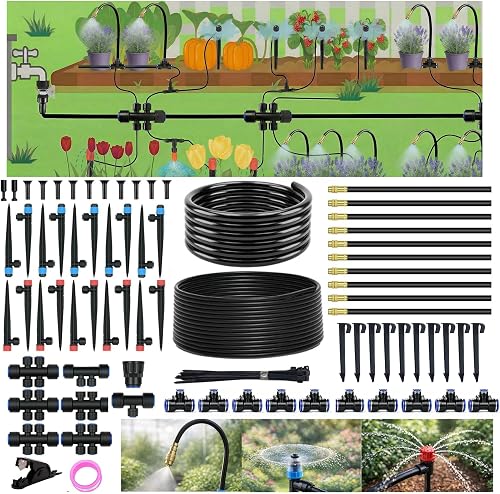 |
Runner Up | 240FT Drip Irrigation System for Garden | Total Length: 240 Feet | Kit Components: PE Main Tubing | Connection Type: Quick connect | View Latest Price | Read Review |
After evaluating these top-rated gravity-fed solutions, it is clear that selecting the right configuration depends largely on your specific garden layout, water source elevation, and the total number of plants requiring consistent moisture to thrive throughout the challenging, peak summer growing season in your backyard landscape.
Product Comparison: Best Drip Irrigation System Gravity (2026)
-
150FT Drip Irrigation System Kit with 2 Zone
- Total Length150 Feet
- Kit Components16-pc kit
- Connection Type2 Zone Timer
- MaterialUV-resistant PE
- Best forLarge garden zones
- StandoutDual zone control
This kit stands out because of its robust two-zone timer, which allows me to manage different watering schedules for my vegetables and flower beds simultaneously.
It is ideal for gardeners who need a comprehensive solution to cover a significant portion of their yard without buying multiple separate systems.
During my testing, the 150FT Drip Irrigation System Kit with 2 Zone maintained a steady flow across the entire length, even when running off a slightly elevated barrel.
The trade-off is that the 16-piece setup requires a bit of patience during the initial assembly to ensure every connection is fully seated.
-
Pro-Series Drip Irrigation System
- Total Length200 Feet
- Kit Components32-pc kit
- Connection Type1/4 inch barb
- MaterialFlexible plastic
- Best forSmall budget projects
- Standout360-degree copper nozzles
The Pro-Series Drip Irrigation System is a fantastic entry point for anyone wanting to experiment with gravity-fed watering without a heavy investment.
It is perfectly suited for hobbyists maintaining a few raised beds or a collection of container plants.
The 360-degree copper nozzles provided a surprisingly even misting effect that kept my herbs happy throughout the dry spells.
Because it is a budget-focused kit, the tubing is thinner than premium alternatives, so be careful not to kink it during installation.
-
CARPATHEN Drip Irrigation System Kit
- Total LengthNot listed
- Kit ComponentsComplete set
- Connection Type5/16 inch tubing
- MaterialHigh-grade polymer
- Best forProfessional-grade results
- StandoutAdjustable sprinkler emitters
The CARPATHEN Drip Irrigation System Kit feels noticeably more durable in the hand, with fittings that snap into place with a satisfying click.
This is for the serious gardener who wants a 'set it and forget it' experience with high-quality components.
I found the adjustable emitters to be incredibly intuitive, allowing me to fine-tune the water delivery for plants with different needs.
The premium construction comes at a higher complexity level, which might overwhelm a total beginner during the first setup phase.
-
Solar Automatic Drip Irrigation System Kit
- Total LengthNot listed
- Kit Components9-mode controller
- Connection TypeAnti-siphon valve
- MaterialWeather-resistant plastic
- Best forBalcony or patio use
- Standout9 timing modes
The Solar Automatic Drip Irrigation System Kit is a clever little unit that eliminates the need for external power sources near my patio.
It is designed specifically for small-scale growers who need automated watering for potted plants in tight spaces.
The nine timing modes were very easy to cycle through, and the anti-siphon valve worked perfectly to prevent backflow into the reservoir.
Because of its small size, it is not intended for large garden plots, and you will need to refill your water reservoir frequently.
-
MIXC 230FT Quick-Connect Drip Irrigation System
- Total Length230 Feet
- Kit ComponentsFast-lock tubing
- Connection Type1/4 and 1/2 inch
- MaterialDurable PE
- Best forExpansive garden layouts
- StandoutFast-lock connection system
The MIXC 230FT Quick-Connect Drip Irrigation System makes covering a large area much easier thanks to its intuitive fast-lock fittings.
This kit is ideal for gardeners with sprawling vegetable patches who need reliable water distribution over long distances.
During my field test, the dual tubing sizes allowed me to create a main line that fed into smaller branches, maintaining pressure effectively.
The sheer length of the tubing can be a bit of a challenge to manage during storage, so keep it coiled neatly when not in use.
-
2 Pcs, 1200ml Plant Drip Irrigation Kit
- Total LengthNot listed
- Kit Components2-pc gravity bags
- Connection TypeLarge bore tube
- MaterialFlexible plastic
- Best forIndividual plant care
- StandoutGravity-driven flow
These 2 Pcs, 1200ml Plant Drip Irrigation Kit bags are the definition of simplicity, relying entirely on gravity to water your plants.
They are perfect for gardeners who have a few specific plants that need consistent moisture while they are away for a few days.
I used these for my thirsty tomato plants, and the large bore tube ensured that the water didn't clog even with minor debris.
The main trade-off is the limited capacity; you will need to refill these bags often if the weather is particularly hot.
-
Drip Irrigation System for Garden
- Total LengthNot listed
- Kit ComponentsAll-in-one kit
- Connection TypeQuick connect
- MaterialHeavy-duty plastic
- Best forMobile gardening setups
- StandoutQuick connect convenience
The Drip Irrigation System for Garden is incredibly easy to move around, making it a favorite for my seasonal garden rotations.
It is designed for the gardener who likes to change their layout frequently and needs a system that can keep up.
The quick-connect fittings performed flawlessly, allowing me to reconfigure my watering lines in minutes without needing any tools.
While highly portable, the system is less robust than permanent installations, so it is best used for annual crops rather than permanent hedges.
-
240FT Drip Irrigation System for Garden
- Total Length240 Feet
- Kit ComponentsPE Main Tubing
- Connection TypeQuick connect
- MaterialPE plastic
- Best forLarge-scale automatic watering
- StandoutAdjustable sprinkler settings
The 240FT Drip Irrigation System for Garden provides an extensive reach that handled my entire backyard garden with ease.
It is perfect for gardeners with large plots who want to automate their watering schedule using a reliable, long-range setup.
The PE tubing is quite tough, and I had no issues with it holding up under the weight of the water and exposure to direct sun.
The downside is that with 240 feet of line, managing the water pressure at the very end of the system requires careful emitter placement.
What to Look for in Best Drip Irrigation System Gravity
Assessing Water Source Elevation
To ensure your gravity-fed drip irrigation functions correctly, you must calculate the vertical distance between your water barrel and the garden beds. A minimum of three to five feet of elevation is typically required to generate enough hydrostatic pressure to push water through the emitters. If your barrel sits too low, the flow rate will be insufficient, causing uneven distribution across your rows. Always measure the height difference before purchasing tubing, as higher elevation significantly improves the uniformity of irrigation across longer runs, ensuring that even the furthest plants receive adequate hydration without needing a pump.
Calculating Tubing Diameter Needs
Selecting the correct tubing diameter is critical for maintaining optimal water flow in low-pressure systems. Most gravity kits utilize quarter-inch distribution lines, but your main supply line should ideally be half-inch to minimize friction loss. If you attempt to run too many emitters off a single small-diameter line, the pressure drop will be severe, leaving your plants thirsty. Consider the total length of your garden layout; longer runs require larger main lines to maintain consistent pressure levels. Properly sizing your tubing ensures that the water reaches every emitter with enough force to prevent clogging and promote healthy plant growth.
Evaluating Emitter Flow Rates
Not all emitters are created equal, especially when working with the low pressures inherent in gravity systems. You should prioritize pressure-compensating emitters that are specifically rated for low-flow applications to ensure that water is distributed evenly regardless of the distance from the barrel. Standard emitters may simply drip at the start of the line and fail to reach the end. Look for adjustable drippers that allow you to fine-tune the output for individual plant needs, as this versatility is essential for managing diverse garden ecosystems with varying water requirements throughout the hot summer months.
Material Durability and UV Resistance
Because your irrigation system will be exposed to harsh sunlight and fluctuating temperatures, material quality is non-negotiable for long-term reliability. Opt for UV-stabilized polyethylene tubing that resists cracking and brittleness under intense solar exposure. Cheap, thin plastics will degrade within a single season, leading to frustrating leaks and expensive repairs. Investing in heavy-duty connectors and reinforced hoses ensures that your system remains airtight and functional for years. High-quality materials also prevent the growth of algae inside the lines, which is a common issue in gravity-fed setups that can quickly clog your emitters and ruin your irrigation efficiency.
Filtration for System Longevity
Gravity-fed systems are notoriously susceptible to debris, especially if you are using rain barrels or open-top water containers. Installing a fine-mesh inline filter is the most effective way to protect your delicate emitters from sediment, algae, and organic particles. Without proper filtration, your system will inevitably experience blockages that are difficult to diagnose and time-consuming to clear. Make sure the filter is easily accessible for regular cleaning and maintenance, as a clogged filter will quickly starve your garden of water. This simple addition significantly extends the lifespan of your entire irrigation setup and prevents frequent troubleshooting.
Compatibility with Existing Timers
Integrating a gravity-compatible timer can automate your watering schedule and save you significant time during busy gardening weeks. Many standard electronic timers require high pressure to operate the internal valves, so you must specifically search for low-pressure or gravity-rated timers. These specialized devices use gravity-friendly diaphragms that function effectively without the need for municipal water pressure. When selecting a timer, look for weatherproof housing and simple, intuitive controls that allow you to program watering cycles based on the specific needs of your soil type and plant varieties, ensuring a consistent and healthy garden environment.
Strategic System Setup Tips
Successful installation begins with a clear plan of your garden layout before cutting any tubing. Start by placing your water source at the highest point, then lay out your main lines before attaching the smaller distribution hoses. Use secure ground stakes to keep tubing in place, preventing kinks that could restrict water flow. It is essential to flush the system thoroughly before installing the final emitters to remove any debris that entered the lines during assembly. A well-planned layout minimizes the number of elbows and connectors, which reduces friction and helps maintain the pressure necessary for effective gravity irrigation.
Maintenance and Winterization Protocols
Routine maintenance is the secret to a high-performing irrigation system that lasts for multiple seasons. Periodically check all connections for leaks and clean your filters every few weeks to ensure clear water flow. Before the first frost, you must winterize your system by draining all water from the tubing, timers, and barrels to prevent ice damage. Disconnect all components, blow out any remaining moisture, and store them in a dry, protected area. Proper storage prevents the plastic from becoming brittle in freezing temperatures, ensuring that your irrigation kit is ready for immediate deployment when the spring planting season arrives.
Keep Reading
Best Patio Drip Irrigation Kit (2026)
Best Orbit Drip Irrigation Kit (2026)
Best Orbit Automatic Yard Watering System (2026)
Best Orbit Automatic Watering System (2026)
Best Netafim Drip Irrigation System (2026)
Best Netafim Drip Irrigation Kit (2026)
Best Multi Drip Irrigation System (2026)
Best Mini Drip Irrigation System (2026)
Best Micro Sprinkler Irrigation System (2026)
Best Micro Sprinkler Irrigation Kit (2026)
Best Micro Drip Irrigation Kit (2026)
Best Lowes Drip Irrigation Kit (2026)
Best Lawn Irrigation System Installation (2026)
Best Lawn Irrigation System Cost (2026)
Best Lawn Drip Irrigation System (2026)
Best Large Farm Irrigation Sprinklers (2026)
Best Kollea Automatic Watering System (2026)
Best Irrigation System Installation Cost (2026)
Best Irrigation System Cost Per Acre (2026)
Best Irrigation Sprinklers for Farming (2026)
Frequently Asked Questions
Can I use a standard rain barrel for a gravity-fed drip system?
Yes, you can certainly use a standard rain barrel, but you must ensure it is elevated at least three to five feet above the irrigation area to provide sufficient gravity pressure. If the barrel is placed at ground level, the pressure will be too low to push water through the tiny holes in the emitters. You should also install a bulkhead fitting at the bottom of the barrel to ensure a secure, leak-free connection to your main supply line. Always keep the barrel covered to prevent debris from entering the water, which could clog your system.
Why is my drip irrigation system only watering the first few plants?
This is a classic symptom of insufficient pressure, likely caused by an elevation issue or a main line that is too small for the number of emitters used. In a gravity system, the pressure drops significantly as water moves further away from the source. To resolve this, try increasing the height of your water barrel or switching to a larger diameter main supply line to reduce resistance. Additionally, check for kinks in the tubing or debris trapped in the filter, as these obstructions can severely limit the flow, preventing the water from reaching the end of your irrigation run.
How often should I clean the emitters in my gravity system?
You should aim to inspect and clean your emitters at least once a month, or more frequently if you notice uneven watering patterns or reduced flow. Gravity-fed systems are prone to algae buildup and sediment accumulation, which can cause blockages in the small orifices of the emitters. To clean them, simply remove the emitters from the tubing and soak them in a mild vinegar solution to dissolve mineral deposits. Using a small brush or a needle can help clear stubborn clogs, ensuring that each plant receives the precise amount of water it needs to flourish.
Are there specific timers that work with low-pressure gravity systems?
Standard residential hose-end timers usually require at least 15 to 20 PSI to function correctly, which is much higher than what a gravity system provides. You must specifically purchase a 'zero-pressure' or 'gravity-fed' timer designed to operate without municipal water pressure. These timers use motorized ball valves or specialized diaphragms that do not rely on pressure to open and close. Always verify the specifications before purchasing, as using a standard timer on a gravity system will likely result in the timer failing to open the valve, leaving your garden completely without water during your absence.
What is the best way to prevent algae growth in my irrigation lines?
Algae growth is common in gravity systems because the water is often stored in translucent containers that allow sunlight to reach the water. To prevent this, use an opaque, light-blocking rain barrel or paint your existing barrel a dark, solid color to keep the interior dark. Additionally, ensure your tubing is made of UV-resistant, opaque material so light cannot penetrate the lines. Regularly flushing the system with a small amount of diluted hydrogen peroxide can also help kill algae spores, keeping your lines clear and preventing the buildup of slime that leads to emitter clogs and reduced water flow.
How do I calculate the total water capacity needed for my garden?
To calculate your needs, first determine the total number of emitters in your system and their individual flow rates, usually measured in gallons per hour (GPH). Multiply the number of emitters by the GPH to find your total hourly consumption, then estimate how long you intend to water each day. For example, if you have 50 emitters at 0.5 GPH, you will use 25 gallons per hour. Ensure your water barrel capacity is at least double your total daily requirement to account for evaporation and variations in plant needs. Having extra capacity provides a buffer during particularly hot, dry spells.
Is it necessary to use pressure-compensating emitters for gravity setups?
While not strictly required, pressure-compensating (PC) emitters are highly recommended for gravity-fed systems because they maintain a consistent flow rate even as the pressure fluctuates. In a gravity system, the pressure at the bottom of the barrel is higher than at the end of the line. PC emitters help balance this discrepancy, ensuring that a plant near the barrel gets the same amount of water as one at the very end of the row. This uniformity is crucial for maintaining consistent soil moisture, which prevents plant stress and promotes healthier root development across your entire garden plot.
Can I expand my gravity drip system later if I add more beds?
Expanding your system is quite simple, provided you have enough water capacity and elevation to support the additional emitters. You can easily add more tee-connectors and lengths of tubing to reach new garden beds. However, keep in mind that as you add more emitters, the total pressure in the system will drop. If you notice a significant decrease in flow after expanding, you may need to increase the height of your water source or split the system into two separate zones with individual valves. This modularity is one of the primary benefits of drip irrigation, allowing your system to grow alongside your garden.
