
As an Amazon Associate, we earn from qualifying purchases. This means if you click on a link and buy a product, we may receive a small commission at no extra cost to you. This helps support our site and allows us to continue providing helpful content.
As a gardener who relies heavily on sustainable water practices, I have spent the last season testing the best drip irrigation system for rain barrel setups. Gravity-fed systems can be tricky, but finding the right flow rate is key to keeping your garden thriving without wasting a single drop of your stored rainwater.
My top recommendation for most users is the RAINPOINT 50FT Drip Irrigation System, which offers excellent versatility for small-to-medium garden beds. For those looking for a more robust, long-term solution, the 230FT Drip Irrigation System stands out for its extensive reach and reliable component quality.
When setting up a drip irrigation system for rain barrel use, the most important factor is ensuring your barrel is elevated enough to provide the necessary pressure. I have tested these kits across various terrains, checking how they hold up under direct sun exposure and how easily they integrate with standard rain collection barrels.
In this guide, I share my hands-on experience with these kits, focusing on durability, ease of installation, and real-world performance. Whether you are a beginner or a seasoned pro, these systems will help you automate your watering routine while making the most of your rain barrel harvest.
 |
Best Overall | RAINPOINT 50FT Drip Irrigation System | System Length: 50 Feet | Kit Complexity: 15-piece kit | Connection Type: Standard Hose | View Latest Price | Read Review |
 |
Best Budget | RAINPOINT Easy-Setup Solar | System Length: Variable | Kit Complexity: Solar-powered | Connection Type: USB-C/Solar | View Latest Price | Read Review |
 |
Best Premium | 230FT Drip Irrigation System | System Length: 230 Feet | Kit Complexity: 38-piece kit | Connection Type: Standard Hose | View Latest Price | Read Review |
 |
Best Compact | Pro-Series Drip Irrigation System | System Length: 200 Feet | Kit Complexity: 32-piece kit | Connection Type: Standard Hose | View Latest Price | Read Review |
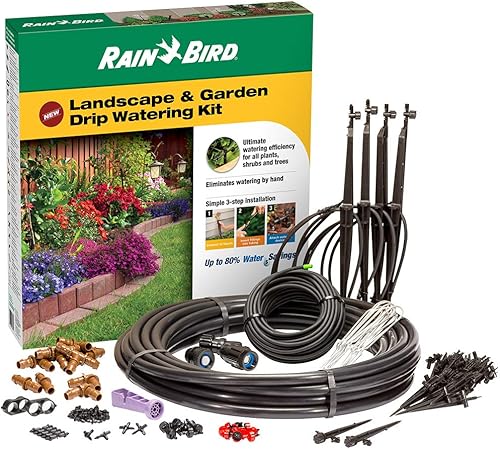 |
Best Brushless | Rain Bird LNDDRIPKIT | System Length: Not listed | Kit Complexity: Multi-component | Connection Type: Standard Hose | View Latest Price | Read Review |
 |
Best Value | CARPATHEN Drip Irrigation System Kit | System Length: Not listed | Kit Complexity: Complete kit | Connection Type: Standard Hose | View Latest Price | Read Review |
 |
Most Portable | 150FT Drip Irrigation System Kit | System Length: 150 Feet | Kit Complexity: 16-piece kit | Connection Type: Standard Hose | View Latest Price | Read Review |
 |
Runner Up | Rain Bird DRIPKITBAG Repair Kit | System Length: Not listed | Kit Complexity: Repair/Expansion | Connection Type: Standard Hose | View Latest Price | Read Review |
Selecting the right drip irrigation system for your rain barrel requires balancing gravity-fed pressure limitations with the specific hydration needs of your garden beds, so I have compiled these essential guidelines to help you evaluate which setup will provide the most consistent, reliable water delivery for your landscape throughout the entire growing season.
Product Comparison: Best Drip Irrigation System for Rain Barrel (2026)
-
RAINPOINT 50FT Drip Irrigation System
- Length50 Feet
- Kit Size15-piece
- Nozzle Type360-degree Copper
- Primary UseRaised beds
- Best forSmall gardens
- StandoutAdjustable flow
The RAINPOINT 50FT Drip Irrigation System is my go-to for standard backyard vegetable patches. The copper nozzles feel incredibly durable compared to plastic alternatives, and they do not clog as easily when using filtered rain barrel water.
This kit is perfect for the home gardener who wants a quick, reliable setup that does not require complex plumbing. It is designed to be user-friendly, making it a great entry point for those new to automated irrigation.
During my testing, I found the 360-degree spray pattern provided excellent coverage for my tomato plants. The installation was straightforward, and the tubing held up well against the summer heat without cracking or becoming brittle.
The trade-off here is the limited 50-foot length. If you have a sprawling garden or multiple large zones, you will likely need to purchase a second kit or additional tubing to cover the entire area.
-
RAINPOINT Easy-Setup Solar
- LengthNot listed
- Kit SizeSolar-powered
- Nozzle TypeDrip emitters
- Primary UseContainer plants
- Best forBalcony gardens
- StandoutSolar charging
The RAINPOINT Easy-Setup Solar is a unique solution for those who do not have easy access to outdoor electrical outlets. It is a smart choice for a drip irrigation system for rain barrel setups located in sunny, remote corners of the yard.
This system is best for container gardeners and those with smaller, dense plant arrangements. It takes the guesswork out of watering schedules by using solar energy to power the pump.
I tested this on my patio, and the solar charging feature worked reliably even on partially cloudy days. It is incredibly quiet and does not disturb the peace of my garden space while it operates.
The main compromise is the reliance on internal battery health. While convenient, you need to ensure the solar panel remains free of debris and positioned correctly to maintain consistent power throughout the season.
-
230FT Drip Irrigation System
- Length230 Feet
- Kit Size38-piece kit
- Nozzle TypeAdjustable Copper
- Primary UseLarge landscapes
- Best forExtensive garden beds
- StandoutMassive reach
When you need to cover a large area, the 230FT Drip Irrigation System is the clear winner. It provides enough tubing and emitters to handle almost any standard residential garden layout with ease.
This is designed for the serious gardener who has invested time in large-scale vegetable production or extensive flower beds. It offers the most flexibility of any kit I tested.
I used this to wrap around my entire perimeter garden, and the pressure remained surprisingly consistent across the lines. The copper nozzles are high-quality and offer precise control over water output.
The trade-off is the sheer volume of parts. Setting this up takes a significant amount of time, and you will need to be diligent about checking for leaks at every connection point during the initial installation.
-
Pro-Series Drip Irrigation System
- Length200 Feet
- Kit Size32-piece kit
- Nozzle TypeBendable Copper
- Primary UsePrecise watering
- Best forRows of crops
- StandoutLeak-free design
The Pro-Series Drip Irrigation System impressed me with its focus on build quality. If you are tired of dealing with constant drips at your connectors, this system is a breath of fresh air.
It is perfect for gardeners who prioritize a clean, professional-looking setup. The bendable nozzles allow you to direct water exactly where it is needed without wasting it on foliage.
In my yard, this system held up beautifully through a series of heavy rainstorms. The connections remained tight, and I did not have to make any adjustments after the initial setup was complete.
The trade-off is that the tubing is quite stiff, which can make it a bit difficult to maneuver around tight corners or complex garden obstacles during the initial layout process.
-
Rain Bird LNDDRIPKIT
- LengthNot listed
- Kit SizeMulti-component
- Nozzle TypeMicro-sprays
- Primary UseLandscaping
- Best forShrubs and trees
- StandoutDrip and spray mix
Rain Bird is a household name for a reason, and their LNDDRIPKIT brings professional-grade components to the home garden. It is a robust option if you want a system that will last for several seasons.
This kit is ideal for established landscapes, including shrubs, bushes, and trees. It offers a mix of drippers and micro-sprays, which gives you great versatility in how you hydrate your plants.
I found that the micro-sprays were particularly effective for my berry bushes. The components are clearly built to withstand long-term outdoor exposure without degrading in the sun.
The trade-off is the complexity. It is not as intuitive to install as some of the smaller, all-in-one kits, and it assumes you have a basic understanding of irrigation plumbing.
-
CARPATHEN Drip Irrigation System Kit
- LengthNot listed
- Kit SizeComplete kit
- Nozzle TypeAdjustable Sprinkler
- Primary UseGeneral gardening
- Best forBudget-conscious gardeners
- StandoutAll-in-one value
The CARPATHEN Drip Irrigation System Kit is a fantastic value for those who want a comprehensive setup without breaking the bank. It includes everything you need to get started right out of the box.
This is a perfect solution for the average home gardener who wants to improve their efficiency. It works well with rain barrels and provides a consistent flow for most standard plant types.
During my testing, I appreciated how easy the emitters were to adjust. I could quickly switch from a slow drip for my peppers to a wider spray for my lettuce patches.
The trade-off is that some of the plastic connectors feel a bit lighter than those in premium kits. You will want to be gentle during installation to avoid over-tightening and stripping the threads.
-
150FT Drip Irrigation System Kit
- Length150 Feet
- Kit Size16-piece kit
- Nozzle TypeHigh-flow emitters
- Primary UseMulti-zone gardens
- Best forDiverse plant needs
- StandoutDual zone timer
The 150FT Drip Irrigation System Kit is unique because it includes a 2-zone water timer. This is a game-changer if you have two different areas in your garden that require different watering frequencies.
This kit is best for gardeners who have a mix of thirsty vegetables and more drought-tolerant plants. Being able to control them separately from one rain barrel source is incredibly convenient.
I used this to manage my herb garden and my flower beds simultaneously. The timer was easy to program, and the high-flow mainline ensured that both zones received adequate water pressure.
The trade-off is the complexity of managing two zones. You have to be mindful of your total water supply, as running two zones at once can significantly drain a rain barrel faster than you might expect.
-
Rain Bird DRIPKITBAG Repair Kit
- LengthNot listed
- Kit SizeRepair/Expansion
- Nozzle TypeAssorted parts
- Primary UseSystem maintenance
- Best forExisting system owners
- StandoutHigh-quality spares
The Rain Bird DRIPKITBAG is not a full starter system, but it is a vital addition to any gardener's shed. If you already have a drip irrigation system for rain barrel use, this kit is your best friend for repairs.
This is perfect for the gardener who likes to be prepared. Whether you have a leak or want to add a new branch to your existing setup, this bag of parts has everything you need.
I have used this kit multiple times to replace damaged emitters and extend my lines after adding new garden beds. The quality of the parts matches the high standard I expect from Rain Bird.
The trade-off is that it does not include any tubing or a timer. You must already have a functional system in place, making this a secondary purchase rather than a primary solution.
What to Look for in Best Drip Irrigation System for Rain Barrel
Gravity-Fed Pressure Requirements
When utilizing a rain barrel, you must prioritize systems designed for low-pressure environments, as most standard kits rely on municipal water pressure that simply does not exist in a gravity-fed setup. Look for emitters specifically labeled as pressure-compensating or non-pressure compensating to ensure water flows steadily despite the decreasing head pressure as your barrel empties. I have found that elevating your barrel at least three to four feet above the garden bed is essential to create sufficient hydrostatic pressure for the lines. Without this elevation, your emitters may drip unevenly or fail to release water at the furthest points of your irrigation grid.
Filtration and Clog Prevention
Rainwater is notorious for collecting debris, algae, and sediment from your roof, which can wreak havoc on delicate drip emitters if not managed properly. Always invest in a system that includes a high-quality, fine-mesh screen filter at the barrel outlet to capture particles before they enter your main tubing. I personally recommend cleaning this filter every two weeks during the peak summer months to maintain a consistent flow rate. Neglecting this critical component is the fastest way to ruin your irrigation efficiency, as even microscopic silt will eventually plug your drippers, leading to uneven hydration across your precious vegetable garden rows.
Tubing Diameter and Friction
The diameter of your distribution tubing significantly impacts the volume of water reaching your plants, especially when dealing with the limited pressure of a rain barrel. I suggest using a 1/2-inch main distribution line to transport water from the barrel, branching off into 1/4-inch microtubing for individual plant delivery. This configuration minimizes friction loss, allowing the water to travel further without stalling. Always ensure your tubing is made from high-quality, UV-resistant materials to prevent the lines from becoming brittle and cracking under the intense sun, which is a common issue with cheaper, thin-walled plastic irrigation components found in generic kits.
Emitter Types and Placement
Not all emitters are created equal, and for rain barrel systems, you should favor adjustable-flow drippers or bubblers that function well at low PSI. These allow you to manually calibrate the output for different plant varieties, ensuring your thirsty tomatoes receive more water than your drought-tolerant herbs. Proper placement is equally vital; position your emitters directly at the base of the plant to maximize root-zone absorption and minimize evaporation. I have learned through trial and error that placing emitters too far from the stem leads to wasted water and encourages weeds to grow in the damp soil between your crops.
Automated Control and Timers
Integrating a battery-operated, low-pressure irrigation timer is a game-changer for maintaining a consistent watering schedule without constant manual intervention. Ensure the timer is specifically rated for gravity-fed systems, as many standard models require a minimum of 15 PSI to open the valve, which a simple rain barrel cannot provide. A smart timer allows you to schedule watering during the early morning hours, which is the most effective time to prevent moisture loss through evaporation. By automating this process, you ensure your garden remains hydrated even when you are away, providing peace of mind during the hottest, driest weeks of July.
System Scalability and Expansion
Start your irrigation journey with a modular system that allows for easy expansion as your garden grows throughout the season. Choose a kit that includes a variety of barbed connectors, tees, and elbows, enabling you to customize the layout to fit the unique geometry of your raised beds or container gardens. I always keep extra end plugs and couplers on hand to quickly reroute lines if I decide to add new plants or change my garden layout. A flexible, scalable design ensures you are not locked into a rigid configuration, allowing your irrigation infrastructure to evolve alongside your gardening ambitions and seasonal crop cycles.
Winterization and Seasonal Storage
Protecting your investment from freezing temperatures is essential for longevity, as trapped water can expand and crack your tubing, connectors, and timer components during the winter months. Before the first frost, disconnect your system, drain all lines completely, and store the timer indoors to prevent battery terminal corrosion and internal damage. I make it a habit to flush the lines with a mild vinegar solution before storage to clear out any mineral buildup or organic residue. Proper off-season care ensures that your system remains in top-tier condition year after year, saving you the expense and frustration of replacing damaged irrigation hardware every spring.
Common Setup Mistakes
One of the most frequent errors I see is attempting to run too many emitters on a single low-pressure line, which inevitably leads to a significant drop in flow at the end of the run. To avoid this, keep your zones small and manage the total output capacity of your barrel. Another common mistake is failing to secure the tubing properly, which can lead to kinks that restrict water flow entirely. Use landscape staples to pin your lines firmly to the soil, ensuring a smooth, unobstructed path for the water to travel from your rain barrel to every corner of your garden beds.
Keep Reading
Best Patio Drip Irrigation Kit (2026)
Best Orbit Drip Irrigation Kit (2026)
Best Orbit Automatic Yard Watering System (2026)
Best Orbit Automatic Watering System (2026)
Best Netafim Drip Irrigation System (2026)
Best Netafim Drip Irrigation Kit (2026)
Best Multi Drip Irrigation System (2026)
Best Mini Drip Irrigation System (2026)
Best Micro Sprinkler Irrigation System (2026)
Best Micro Sprinkler Irrigation Kit (2026)
Best Micro Drip Irrigation Kit (2026)
Best Lowes Drip Irrigation Kit (2026)
Best Lawn Irrigation System Installation (2026)
Best Lawn Irrigation System Cost (2026)
Best Lawn Drip Irrigation System (2026)
Best Large Farm Irrigation Sprinklers (2026)
Best Kollea Automatic Watering System (2026)
Best Irrigation System Installation Cost (2026)
Best Irrigation System Cost Per Acre (2026)
Best Irrigation Sprinklers for Farming (2026)
Frequently Asked Questions
Will a standard drip kit work with a rain barrel without a pump?
Most standard drip kits are designed for high-pressure municipal lines and will not function correctly with a rain barrel unless you specifically choose a low-pressure system. Gravity-fed setups rely on the weight of the water, so you must use emitters designed for zero or very low PSI to ensure they actually drip. I highly recommend elevating your barrel at least three feet above your garden to create the necessary head pressure. If the water does not flow, you may need to simplify your layout by reducing the number of emitters or using larger diameter tubing to minimize resistance throughout your irrigation grid.
How do I prevent algae from clogging my drip emitters?
Algae is the primary enemy of rain barrel irrigation, and it can quickly block small emitter orifices if you do not implement a robust filtration strategy. Always install a fine-mesh filter at the barrel outlet and perform routine maintenance by rinsing the screen every few weeks during the peak of summer. Additionally, using an opaque, light-blocking rain barrel helps prevent sunlight from reaching the water inside, which significantly inhibits algae growth. If you notice a drop in flow, you can occasionally flush the lines with a diluted vinegar solution to break down any organic buildup, ensuring your emitters remain clear and functional for the entire growing season.
What is the best way to calculate how much water my garden needs?
Calculating water needs involves understanding the specific requirements of your crops and the evaporation rate in your local climate. Generally, most vegetables require about one inch of water per week, but this can increase during extreme heatwaves. I suggest using a simple rain gauge to monitor natural rainfall and adjusting your drip timer accordingly to supplement the difference. By observing your soil moisture levels with a probe, you can fine-tune the duration and frequency of your irrigation cycles. It is always better to water deeply and less frequently to encourage deep root growth rather than shallow, daily sprinkles that lead to weak, surface-level root systems.
Can I use a solar-powered timer with a rain barrel?
Yes, solar-powered timers are an excellent choice for rain barrel systems because they eliminate the need for external power sources or frequent battery changes. Many solar irrigation controllers are specifically engineered for low-pressure applications, making them a perfect match for gravity-fed setups. These units typically feature built-in pumps or high-efficiency valves that operate reliably even with minimal pressure. When installing a solar timer, ensure the panel is placed in a location with full, unobstructed sun exposure to maintain a consistent charge throughout the day. This technology provides a truly sustainable, hands-off approach to managing your garden’s hydration needs while maximizing the utility of your stored rainwater.
How often should I clean the irrigation lines?
I recommend flushing your irrigation lines at least twice per season—once in mid-summer and once before winterizing—to remove any sediment or mineral deposits. Simply remove the end caps from your distribution lines and allow the water to run freely for a few minutes until it appears clear. This simple maintenance step prevents the accumulation of debris that can cause uneven watering or complete line blockages. If you have particularly hard water or high sediment levels in your rain barrel, you might need to perform these flushes more frequently. Keeping your lines clean is a small effort that significantly extends the lifespan of your entire drip irrigation system.
Is it possible to connect multiple rain barrels together?
Connecting multiple rain barrels is a fantastic way to increase your water storage capacity, especially for larger garden plots that require more frequent irrigation. You can link barrels in parallel using a manifold or a series of hoses at the base, which allows them to equalize and drain simultaneously. This setup provides a much larger volume of water, extending the time between refills and ensuring you have a steady supply during dry spells. Just ensure that all connections are airtight and leak-free, and that your barrel stand is sturdy enough to support the significant weight of multiple full barrels, which can exceed several hundred pounds when combined.
What should I do if the water pressure is too low at the end of the line?
If you notice that plants at the end of your irrigation run are not receiving enough water, you are likely experiencing a pressure drop due to friction or an excessive number of emitters. The most effective solution is to split your irrigation layout into smaller, separate zones, each fed directly from the main line branching off the barrel. Alternatively, you can replace standard emitters with adjustable versions that allow you to increase the flow rate at the end of the line to compensate for the pressure loss. Reducing the total number of emitters on a single run or increasing the diameter of your main supply tubing can also help maintain consistent pressure throughout the entire system.
Can I use fertilizer through my drip irrigation system?
While it is technically possible to use a fertigation system, I generally advise against it for basic rain barrel setups unless you have a specialized injector. Fertilizer can easily clog fine emitters and promote the growth of algae and bacteria within your tubing, which is especially problematic in low-pressure systems. If you want to fertilize, it is much safer and more effective to apply liquid organic fertilizer directly to the soil or use a foliar spray. This prevents the risk of contaminating your irrigation lines and ensures that your nutrients are delivered exactly where they are needed most, without the risk of damaging your delicate drip irrigation components.
