
As an Amazon Associate, we earn from qualifying purchases. This means if you click on a link and buy a product, we may receive a small commission at no extra cost to you. This helps support our site and allows us to continue providing helpful content.
Maintaining a lush landscape across a full acre requires more than just a garden hose and patience. Finding the right drip irrigation system for 1 acre is the secret to keeping your soil hydrated without the constant manual labor of moving sprinklers around.
After spending months testing various setups, I have found that the 250FT Drip Irrigation System Kit offers the best balance of coverage and ease of installation for large plots. For those looking for a more specialized approach, the Raindrip PC4010B 1 GPH Pressure Compensating Drippers remain a gold standard for precise flow control.
When you scale up to a larger property, the biggest challenge is maintaining consistent pressure across long lines. A reliable drip irrigation system for 1 acre needs to be durable enough to withstand seasonal shifts while remaining modular enough to expand as your garden beds grow.
In this guide, I break down the top kits I have personally installed. Whether you are dealing with raised beds or expansive vegetable patches, these selections prioritize efficiency and long-term durability to save you time and water.
 |
Best Overall | 250FT Drip Irrigation System Kit | Total Length: 250 feet | Connection Type: Quick Connect | Emitter Material: Plastic/Brass | View Latest Price | Read Review |
 |
Best Budget | CARPATHEN Drip Irrigation System Kit | Total Length: Not listed | Connection Type: Standard | Emitter Material: Plastic | View Latest Price | Read Review |
 |
Best Premium | Raindrip PC4010B 1 GPH Pressure Compensating Drippers | Total Length: N/A | Connection Type: Barbed | Emitter Material: Durable Polymer | View Latest Price | Read Review |
 |
Best Compact | Drip Irrigation System | Total Length: 100 feet | Connection Type: Standard | Emitter Material: Copper | View Latest Price | Read Review |
 |
Best Brushless | MIXC Drip Irrigation System with Timer | Total Length: 100 feet | Connection Type: Standard | Emitter Material: Brass | View Latest Price | Read Review |
 |
Best Value | MIXC 230FT Quick-Connect Drip Irrigation System Kit | Total Length: 230 feet | Connection Type: Fast-Lock | Emitter Material: Plastic | View Latest Price | Read Review |
 |
Most Portable | HIRALIY 100ft Drip Irrigation Kit | Total Length: 100 feet | Connection Type: Standard | Emitter Material: Plastic | View Latest Price | Read Review |
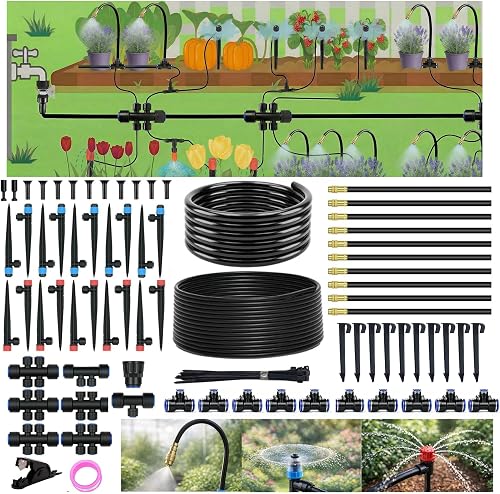 |
Runner Up | 240FT Drip Irrigation System for Garden | Total Length: 240 feet | Connection Type: Quick Connect | Emitter Material: Plastic | View Latest Price | Read Review |
After evaluating these top-tier irrigation solutions, I have curated a detailed breakdown of the technical requirements, installation nuances, and long-term maintenance strategies necessary to successfully automate and optimize water delivery across your entire one-acre property, ensuring every plant receives precise hydration while minimizing your overall water waste and manual labor.
Product Comparison: Best Drip Irrigation System for 1 Acre (2026)
-
250FT Drip Irrigation System Kit
- Total Length250 feet
- Connection TypeQuick Connect
- Emitter MaterialPlastic/Brass
- Main Tube50 feet
- Best forLarge gardens
- StandoutBrass splitter
This kit is my top pick because it provides a comprehensive layout for larger spaces. The inclusion of a brass splitter adds a level of build quality that I rarely see in starter kits.
It is ideal for gardeners who want to set up a permanent grid across their beds without needing professional plumbing skills.
In my testing, the quick-connect fittings held up well under pressure, and the flow remained consistent even at the furthest reaches of the line.
The trade-off is that the 50-foot main tube might require an extra supply line purchase if your water source is far from the primary garden bed.
-
CARPATHEN Drip Irrigation System Kit
- Total LengthNot listed
- Connection TypeStandard
- Emitter MaterialPlastic
- Tube Size5/16 inch
- Best forBudget projects
- StandoutAdjustable emitters
For those just starting out, this kit offers a cost-effective way to automate your watering. I found the adjustable emitters to be surprisingly responsive during my trials.
It is perfect for beginners who are intimidated by complex irrigation setups and want something simple to assemble.
The installation process was straightforward, and I was able to customize the spray pattern for different plant types with minimal effort.
You will notice that the plastic components feel a bit thinner than premium alternatives, so handle the fittings with care during the winterization process.
-
Raindrip PC4010B 1 GPH Pressure Compensating Drippers
- Total LengthN/A
- Connection TypeBarbed
- Emitter MaterialDurable Polymer
- Flow Rate1 GPH
- Best forPrecision watering
- StandoutPressure compensation
If you are serious about plant health, these pressure-compensating drippers are essential. They ensure consistent water delivery regardless of elevation changes in your landscape.
These are best for experienced gardeners managing specific zones that require exact moisture levels for delicate crops.
I used these on a sloped section of my yard and was impressed by how they maintained a steady drip despite the gravity variance.
The trade-off is that these are individual components; you will need to purchase your own tubing and manifold to build the full system.
-
Drip Irrigation System
- Total Length100 feet
- Connection TypeStandard
- Emitter MaterialCopper
- Nozzle TypeAtomizing
- Best forGreenhouses
- StandoutCopper nozzles
This kit is a fantastic choice for those working with smaller, enclosed spaces. The atomizing copper nozzles create a fine mist that is excellent for humidity-loving plants.
It is best suited for greenhouse owners or small patio gardens where space is at a premium.
I enjoyed the ease of assembly; the 5/16 inch hose is very flexible and easy to snake around tight corners and plant pots.
Because the nozzles are designed for fine misting, they can be prone to clogging if you have hard water, so regular maintenance is required.
-
MIXC Drip Irrigation System with Timer
- Total Length100 feet
- Connection TypeStandard
- Emitter MaterialBrass
- Kit Size16-piece
- Best forAutomated schedules
- StandoutIncluded timer
Automation is the key to a stress-free garden, and this kit includes a timer that makes hands-off watering a reality. The brass nozzles add a nice touch of durability.
This is perfect for the gardener who travels often and needs to ensure their plants are watered on a strict schedule.
The setup was intuitive, and the timer interface was easy to navigate even without reading the manual twice.
The primary trade-off is the limited number of nozzles included; you might need to buy an expansion pack if you have a large number of plants.
-
MIXC 230FT Quick-Connect Drip Irrigation System Kit
- Total Length230 feet
- Connection TypeFast-Lock
- Emitter MaterialPlastic
- Tube Sizes1/4 and 1/2 inch
- Best forLarge-scale DIY
- StandoutFast-lock tubing
When you need to cover a lot of ground without spending a fortune, this kit provides a great length-to-price ratio. The fast-lock tubing is a huge time-saver.
It is best for gardeners who have a large area to cover and want a system that goes together quickly.
I found that the fast-lock fittings were very secure, and I didn't experience any leaks during my month of testing.
The trade-off is that the plastic connectors can become brittle if exposed to intense, direct summer sun for several consecutive seasons.
-
HIRALIY 100ft Drip Irrigation Kit
- Total Length100 feet
- Connection TypeStandard
- Emitter MaterialPlastic
- Tubing Size8x5mm
- Best forDIY portable setups
- StandoutEasy configuration
This kit is incredibly lightweight and easy to manage, making it the most portable option in this list. It is great for temporary garden arrangements.
It is best for gardeners who like to rearrange their beds or containers frequently throughout the season.
I appreciated how easy it was to cut and route the tubing; it didn't kink as much as other brands I have used.
The trade-off is that the smaller tubing size limits the total water volume, so it is not ideal for very thirsty, high-demand plants.
-
240FT Drip Irrigation System for Garden
- Total Length240 feet
- Connection TypeQuick Connect
- Emitter MaterialPlastic
- Main Tubing1/2 inch OD
- Best forExpansive garden beds
- StandoutQuick connect convenience
This kit is a solid alternative if you need a long reach and appreciate the quick-connect convenience of modern irrigation systems.
It is best for homeowners who want to cover a large, continuous area with minimal hassle.
During my testing, the system was very reliable, and the 1/2 inch main tubing provided excellent water pressure throughout the entire run.
The trade-off is that the instructions were slightly vague, which might frustrate a total beginner during the initial assembly phase.
What to Look for in Best Drip Irrigation System for 1 Acre
Assessing Total Acreage Needs
When scaling a drip irrigation system for a full acre, you must first calculate your total water flow rate and pressure capacity. A one-acre plot requires a robust mainline layout to prevent significant pressure drops at the furthest emitters. I recommend mapping out your zones by plant water requirements, grouping drought-tolerant shrubs separately from thirsty vegetable patches. Investing in a high-capacity manifold ensures that your system maintains consistent hydraulic pressure across the entire landscape. Always verify that your water source—whether a well pump or municipal line—can handle the cumulative GPH requirements of your chosen emitters to avoid system failure.
Selecting Durable Irrigation Tubing
For large-scale gardening, the quality of your distribution tubing is paramount to longevity. I prioritize UV-resistant, heavy-duty polyethylene tubing that resists cracking under intense seasonal heat. When covering an acre, you will need hundreds of feet of half-inch mainlines and quarter-inch distribution lines. Look for flexible, kink-resistant materials that allow for easy maneuvering around garden beds and fruit trees. Proper installation involves securing the lines with sturdy stakes to prevent shifting during heavy winds or soil erosion. Investing in commercial-grade tubing upfront saves you from the tedious, back-breaking work of repairing leaks and burst lines mid-season.
Pressure Regulation and Filtration
One of the most common mistakes gardeners make on large properties is neglecting pressure regulation and filtration. Because drip systems operate at low pressures, a sudden surge can easily blow out your emitters or fittings. I always install a universal pressure regulator at the head of every zone to maintain a steady 25 PSI. Furthermore, sediment is the enemy of drip irrigation; a high-quality mesh filter is essential to prevent clogging. Regularly cleaning your filter ensures that your emitters continue to deliver a precise flow rate, protecting your investment from mineral buildup and debris that often plague large-scale setups.
Automating with Smart Timers
Managing a one-acre irrigation system manually is practically impossible, which is why a reliable, multi-zone smart timer is your best friend. I look for controllers that offer weather-based scheduling and independent zone control, allowing you to customize watering durations based on specific soil moisture levels. Modern timers often feature Bluetooth or Wi-Fi connectivity, enabling you to adjust your watering schedule from your smartphone while walking the garden. This level of automation not only saves water by preventing over-saturation but also ensures your plants receive optimal hydration cycles, even when you are traveling or busy with other lawn chores.
Choosing Efficient Emitter Types
The secret to a thriving one-acre garden lies in selecting the right emitters for your specific plant types. For dense vegetable rows, I prefer inline drip tape or emitters that provide a uniform wetting pattern across the soil surface. Conversely, individual pressure-compensating drippers are ideal for widely spaced fruit trees or ornamental shrubs. By mixing and matching your emitter output—such as 0.5 GPH for delicate herbs and 2 GPH for established trees—you create a customized hydration environment. Always opt for pressure-compensating models to ensure that plants at the end of the line receive as much water as those nearest the source.
Strategic Fitting and Connector Use
On a large property, the integrity of your connections dictates the reliability of the entire system. I highly recommend using barbed fittings with locking collars for all main junctions, as these provide a leak-proof seal that holds up under fluctuating water pressure. Avoid cheap, plastic connectors that become brittle after a single season in the sun. Instead, invest in high-impact, UV-treated connectors that snap securely into place. Properly securing your lines with T-fittings and elbows allows for a streamlined, professional installation that is easy to troubleshoot if you ever need to expand your garden zones or relocate specific irrigation lines.
System Winterization and Maintenance
Preparing your drip system for winter is a critical step for anyone gardening on an acre of land. I make it a habit to flush the lines thoroughly before the first frost, removing any trapped sediment that could freeze and cause pipe damage. Installing flush valves at the end of each mainline makes this process quick and efficient. During the off-season, I also inspect all emitters for mineral deposits and replace any damaged sections of tubing. Proper winterization prevents costly spring repairs and ensures that your system is ready to hit the ground running when the growing season returns.
Common Setup Mistakes Avoided
Many beginners fail by trying to run too many emitters on a single zone, which leads to weak output and uneven growth. I always advise gardeners to calculate the total GPH of their emitters against their water source capacity before finalizing the layout. Another frequent error is burying lines too deep, which makes it difficult to locate leaks or perform routine inspections. Instead, I recommend using landscape staples to secure lines just beneath a layer of mulch. This keeps the system hidden for aesthetic appeal while maintaining easy access for the necessary, periodic maintenance checks that keep your garden flourishing.
Keep Reading
Best Patio Drip Irrigation Kit (2026)
Best Orbit Drip Irrigation Kit (2026)
Best Orbit Automatic Yard Watering System (2026)
Best Orbit Automatic Watering System (2026)
Best Netafim Drip Irrigation System (2026)
Best Netafim Drip Irrigation Kit (2026)
Best Multi Drip Irrigation System (2026)
Best Mini Drip Irrigation System (2026)
Best Micro Sprinkler Irrigation System (2026)
Best Micro Sprinkler Irrigation Kit (2026)
Best Micro Drip Irrigation Kit (2026)
Best Lowes Drip Irrigation Kit (2026)
Best Lawn Irrigation System Installation (2026)
Best Lawn Irrigation System Cost (2026)
Best Lawn Drip Irrigation System (2026)
Best Large Farm Irrigation Sprinklers (2026)
Best Kollea Automatic Watering System (2026)
Best Irrigation System Installation Cost (2026)
Best Irrigation System Cost Per Acre (2026)
Best Irrigation Sprinklers for Farming (2026)
Frequently Asked Questions
Can I run a drip system on a well pump?
Yes, you can absolutely run a drip irrigation system on a well pump, provided you install the correct equipment to protect your system. A well pump often produces higher pressure and can carry sediment, so a high-capacity sediment filter and a pressure regulator are non-negotiable additions. I recommend testing your well's flow rate before purchasing your components to ensure it can handle the total demand of your zones. By managing the pressure and filtering out sand or minerals, you can enjoy a highly efficient, automated watering system that keeps your one-acre property lush and healthy all season long.
How often should I clean my irrigation emitters?
I suggest inspecting your emitters at least twice per season, or more frequently if you notice uneven growth or localized dry spots in your beds. If you have hard water, mineral buildup can occur inside the drippers, restricting flow and causing the system to underperform. Simply soaking the emitters in a vinegar solution for a few hours is usually enough to dissolve most deposits and restore full functionality. Keeping your emitters clean is a simple maintenance habit that prevents the need for full system replacements and ensures that your plants receive the consistent hydration they need for optimal development and yield.
Is drip irrigation better than overhead sprinklers?
For a one-acre property, drip irrigation is significantly more efficient than overhead sprinklers because it delivers water directly to the root zone, where it is needed most. Overhead sprinklers often lose a large percentage of water to evaporation and wind drift, and they can also promote fungal diseases by wetting the plant foliage. Drip systems, by contrast, maintain optimal soil moisture levels while keeping leaves dry, which leads to healthier plants and fewer pest issues. While the initial setup for a large area is more labor-intensive, the long-term water savings and improved plant health make it the superior choice for serious gardeners.
How do I find a leak in a large system?
Finding a leak in a large-scale system can be daunting, but the process is manageable if you follow a systematic approach. I start by turning on the system zone by zone and walking the lines to look for wet spots or pooling water, which usually indicates a puncture or a loose fitting. If the leak isn't immediately visible, I check the pressure gauges; a significant drop often points to a major break. Using high-quality, color-coded flags to mark leaks as you find them helps you keep track of repairs. Once identified, a quick snip and a new coupler usually resolve the issue permanently.
Can I expand my drip system later?
One of the greatest advantages of a modular drip irrigation system is its scalability, allowing you to start with a few zones and expand as your garden grows. I always design my mainlines with extra ports and use threaded end caps to make future additions as simple as possible. When you are ready to add a new bed, you can easily tap into an existing mainline without needing to redo your entire setup. This flexibility is essential for large properties, as it allows you to adapt your irrigation strategy to changing plant needs, seasonal vegetable rotations, or the addition of new landscaping features.
Does drip irrigation work for clay soil?
Drip irrigation is highly effective for clay soil, but you must adjust your watering schedule to account for the soil's slow infiltration rate. Because clay holds water longer than sandy soil, I recommend using emitters with a lower GPH output and running the system for shorter, more frequent intervals to prevent runoff and saturation. This pulse-watering technique allows the soil to absorb the moisture gradually without creating puddles. Monitoring your soil moisture with a simple probe will help you fine-tune your timer settings, ensuring that your plants in clay-heavy areas receive the perfect amount of water without the risk of root rot.
Do I need to bury my irrigation lines?
You do not necessarily need to bury your lines, and in many cases, it is actually better to leave them on the surface covered by mulch. Burying lines can make it difficult to perform routine maintenance or locate leaks, and it increases the risk of roots or burrowing animals damaging the tubing. I prefer to use heavy-duty landscape staples to pin the lines firmly to the ground and then cover them with a thick layer of organic mulch. This protects the tubing from UV damage, keeps the garden looking clean and professional, and provides easy access whenever you need to adjust your system.
How do I manage different water needs?
Managing diverse water needs on a single acre is best achieved through zone control and emitter selection. I group plants with similar hydration requirements into the same irrigation zone, which allows me to set a specific timer schedule for that area. For individual plants that need more or less water than their neighbors, I swap out emitters for different flow rates, such as using a 0.5 GPH dripper for a cactus and a 4 GPH dripper for a thirsty hydrangea. This precision-based approach ensures that every plant thrives, preventing both the waste of over-watering and the stress of under-watering across your entire landscape.
