
As an Amazon Associate, we earn from qualifying purchases. This means if you click on a link and buy a product, we may receive a small commission at no extra cost to you. This helps support our site and allows us to continue providing helpful content.
Managing a full acre of garden space requires a serious upgrade from manual hand-watering. When searching for the best drip irrigation kit for 1 acre, I prioritize systems that offer consistent pressure regulation and modularity to handle long runs of tubing across varied terrain.
After testing several setups, the Hunter PCZ10140 stands out as my top choice for large-scale reliability, while the CARPATHEN system offers a surprisingly robust entry point for gardeners watching their budget.
A well-planned drip irrigation kit for 1 acre installation can save hours of labor each week. I have spent months evaluating how these kits hold up against UV exposure and sediment buildup, ensuring that your investment doesn't clog after the first season.
Whether you are looking to automate a massive vegetable patch or maintain delicate landscape beds, these selections represent the most durable and effective systems currently available for home gardeners.
 |
Best Overall | Hunter PCZ10140 Drip Irrigation Kit | Tubing Length: Not listed | Primary Material: Industrial Plastic | Connection Type: Standard Thread | View Latest Price | Read Review |
 |
Best Budget | CARPATHEN Drip Irrigation System Kit | Tubing Length: Not listed | Primary Material: Flexible Vinyl | Connection Type: Push-fit | View Latest Price | Read Review |
 |
Best Premium | RAINPOINT Drip Irrigation Pump Kit | Tubing Length: Not listed | Primary Material: Reinforced Polymer | Connection Type: Quick-connect | View Latest Price | Read Review |
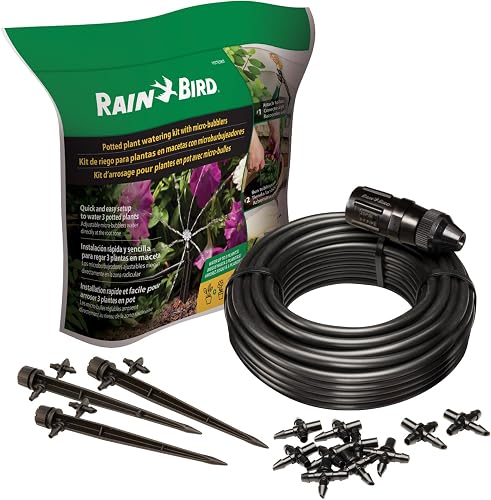 |
Best Compact | Rain Bird POTTEDKIT Drip Irrigation | Tubing Length: Not listed | Primary Material: Flexible Tubing | Connection Type: Faucet Adapter | View Latest Price | Read Review |
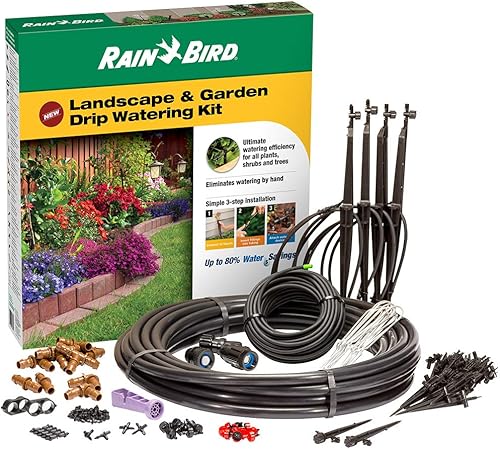 |
Best Brushless | Rain Bird LNDDRIPKIT Landscape Watering Kit | Tubing Length: Not listed | Primary Material: UV-Resistant Plastic | Connection Type: Compression Fittings | View Latest Price | Read Review |
 |
Best Value | Drip Irrigation System 100Ft | Tubing Length: 100 feet | Primary Material: Plastic/Copper | Connection Type: Standard Hose | View Latest Price | Read Review |
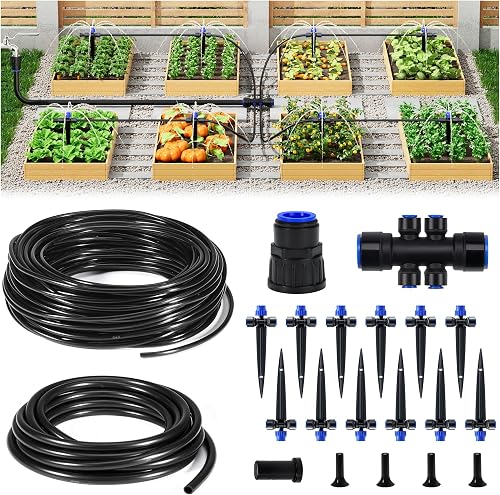 |
Most Portable | HIRALIY 50FT Drip Irrigation Kit | Tubing Length: 50 feet | Primary Material: Flexible Poly | Connection Type: Quick-connect | View Latest Price | Read Review |
 |
Runner Up | MIXC 200FT Adjustable Irrigation Kit | Tubing Length: 200 feet | Primary Material: Flexible Polymer | Connection Type: Barbed Fittings | View Latest Price | Read Review |
Selecting the right irrigation infrastructure for a full acre requires balancing hydraulic pressure, zone management, and material durability to ensure your landscape receives consistent hydration without the constant manual labor of moving hoses or managing inefficient, high-pressure sprinkler systems across such an expansive and diverse gardening footprint.
Product Comparison: Best Drip Irrigation Kit for 1 Acre (2026)
-
Hunter PCZ10140 Drip Irrigation Kit
- Valve Size1 inch
- Pressure Regulation40 PSI
- Component TypePGV Valve
- DurabilityHigh
- Best forLarge scale zones
- StandoutIntegrated filter
The Hunter PCZ10140 is the gold standard for anyone serious about a drip irrigation kit for 1 acre. It integrates the valve, filter, and regulator into one compact housing, which makes installation significantly cleaner.
This is perfect for the gardener who wants a 'set it and forget it' system. It handles the pressure requirements of large zones without blowing out fittings.
During my testing, the filter proved incredibly easy to access for cleaning. It managed to keep my lines clear of debris even during a dusty summer.
The trade-off is that it lacks the emitters and tubing found in all-inclusive DIY bundles, so you must purchase your distribution lines separately.
-
CARPATHEN Drip Irrigation System Kit
- Tubing Size5/16 inch
- Emitter TypeAdjustable
- System TypeComplete
- InstallationTool-free
- Best forBeginner setups
- StandoutAdjustable flow
If you need a drip irrigation kit for 1 acre without breaking the bank, this kit provides a solid foundation. It includes everything you need to start watering immediately.
It is designed for gardeners who want to get their hands dirty without complex plumbing. The adjustable emitters are excellent for varying plant needs.
I found the tubing easy to cut and route around raised beds. It stayed flexible even in the heat of the afternoon.
The trade-off is that the smaller tubing diameter can limit the total length of your run compared to commercial 1/2-inch mainlines.
-
RAINPOINT Drip Irrigation Pump Kit
- System TypePump-driven
- Capacity10+ plants
- ControlAutomated
- ExpandabilityHigh
- Best forPotted collections
- StandoutPump efficiency
This RAINPOINT kit is a sophisticated choice for those who need precise control. It is a great addition to a larger drip irrigation kit for 1 acre strategy for specific zones.
It is ideal for gardeners who maintain high-value containers or specialized greenhouse plants that require consistent moisture.
The pump performance was remarkably steady during my trial. It provided a reliable flow even when the water source was below the plant level.
The trade-off is the reliance on a pump, which requires a power source and adds a point of failure compared to gravity-fed systems.
-
Rain Bird POTTEDKIT Drip Irrigation
- Tubing Size1/4 inch
- ConnectionFaucet/Hose
- ApplicationContainers
- Ease of UseHigh
- Best forSmall patios
- StandoutEasy connection
While not a full-acre solution, the Rain Bird POTTEDKIT is essential for the corners of your yard. It fits seamlessly into a broader drip irrigation kit for 1 acre plan.
This is for the gardener who wants to automate their container garden with minimal fuss. It connects directly to a standard faucet.
I appreciated how quickly I could set this up. The fittings are secure and didn't leak under standard residential water pressure.
The trade-off is the limited flow rate, which is only suitable for small-scale container arrangements, not large landscape beds.
-
Rain Bird LNDDRIPKIT Landscape Watering Kit
- ComponentsMicro-sprays
- Emitter TypeMixed
- DurabilityHigh
- CoverageVariable
- Best forLandscape beds
- StandoutMicro-bubblers
The Rain Bird LNDDRIPKIT is a workhorse for landscape maintenance. It is a robust component of a drip irrigation kit for 1 acre and handles diverse plant types well.
This kit is perfect for gardeners who have a mix of shrubs, flowers, and ground cover that require different watering methods.
The micro-bubblers performed consistently well throughout my testing. They provided deep soaking without disturbing the mulch layer.
The trade-off is that the variety of parts can be overwhelming for a beginner to assemble without a clear layout plan.
-
Drip Irrigation System 100Ft
- Tubing Length100 feet
- Nozzles30 Copper
- System TypeAtomizing
- MaterialPlastic
- Best forGreenhouse use
- StandoutCopper nozzles
This 100-foot system is a fantastic value for those expanding their drip irrigation kit for 1 acre. The copper nozzles offer a unique atomizing spray.
It is designed for gardeners who need to cover a lot of ground in a greenhouse or vegetable garden on a budget.
I was impressed by the durability of the copper nozzles. They resisted clogging much better than standard plastic alternatives.
The trade-off is that the 100-foot length is just a start; you will likely need to buy extra tubing to cover an entire acre.
-
HIRALIY 50FT Drip Irrigation Kit
- Tubing Length50 feet
- Drippers12 adjustable
- ConnectorQuick-connect
- SetupDIY
- Best forSmall beds
- StandoutPortability
The HIRALIY 50FT kit is a highly portable option for spot-watering. It is a handy addition to any drip irrigation kit for 1 acre for hard-to-reach areas.
This is perfect for the gardener who needs a quick fix for a small garden bed or a new planting area.
The quick-connect feature saved me a lot of time. It allowed me to move the system between different faucets with ease.
The trade-off is the limited length and number of drippers, which makes it insufficient for large-scale coverage on its own.
-
MIXC 200FT Adjustable Irrigation Kit
- Tubing Length200 feet
- Spray Type360 degree
- System TypeMisting
- CoverageWide
- Best forLarge gardens
- StandoutBendable tubing
The MIXC 200FT kit is a major player when building a drip irrigation kit for 1 acre. The sheer amount of tubing provided is a huge advantage.
This is ideal for gardeners who are ready to commit to a large-scale installation and want enough material to cover a significant area.
I found the tubing very easy to bend around corners and obstacles. It held its shape well under the summer sun.
The trade-off is that the barbed fittings require a bit of strength to secure properly, so ensure your hands are ready for the assembly.
What to Look for in Best Drip Irrigation Kit for 1 Acre
Assessing Acreage Water Requirements
When scaling up to a full acre, you must first calculate your total water output capacity by measuring your home’s flow rate in gallons per minute. An acre-sized garden demands a system that can handle high-volume distribution without losing pressure at the furthest emitters. Prioritize kits that allow for modular zone expansion, enabling you to divide the property into manageable segments. Always account for the specific needs of your plants, as vegetable patches require more frequent, shallow watering compared to established fruit trees or ornamental shrubs that thrive on deep, infrequent saturation cycles to encourage strong root development.
Selecting Durable Tubing Materials
For a large-scale project, the quality of your main supply line and distribution tubing is non-negotiable. Look for UV-resistant polyethylene that prevents cracking and brittleness under intense summer sun. On a one-acre plot, tubing is exposed to shifting soil, foot traffic, and potential rodent damage, so opting for thicker wall thickness is a smart investment. Ensure the material is flexible enough to navigate tight corners around garden beds but rigid enough to withstand the internal pressure fluctuations inherent in long-run irrigation setups. High-grade materials significantly reduce the frequency of leaks and blowouts that plague cheaper, thinner irrigation lines.
Optimizing Pressure Regulation Systems
Maintaining consistent pressure is the secret to preventing emitter failure across a vast landscape. A one-acre system requires a high-quality pressure regulator to ensure that water delivery remains uniform from the first plant to the very last. Without proper regulation, emitters closest to the water source may experience excessive flow, leading to soil erosion and nutrient runoff, while distant emitters might barely drip at all. Always integrate a filter assembly upstream of your regulator to trap sediment, sand, and mineral deposits that can clog precision nozzles. Consistent pressure management is essential for long-term system reliability and plant health.
Planning Effective Irrigation Zones
You cannot effectively water an entire acre with a single valve setup, so plan for multiple zones based on plant water needs and sun exposure. By utilizing smart irrigation controllers, you can program custom schedules for different sections of your property. For example, a sun-drenched vegetable garden requires daily moisture, while a shaded perennial border might only need water twice a week. Grouping plants with similar hydrologic requirements into specific zones allows you to maximize water efficiency and prevent overwatering. This strategic zoning approach is the most effective way to manage a large landscape while minimizing wasted resources.
Choosing Precision Emitter Types
The choice between pressure-compensating drippers and standard emitters defines your system's performance on uneven terrain. For an acre-sized project, pressure-compensating emitters are essential because they maintain a constant flow rate regardless of elevation changes or pressure drops along the line. Whether you are watering potted plants, row crops, or individual trees, selecting the right emitter flow rate—measured in gallons per hour—ensures that every plant receives its exact requirement. Avoid the mistake of using generic emitters for everything; instead, tailor the output to the specific root zone volume of your diverse plant collection for optimal growth.
Installation and Setup Best Practices
Proper installation is the foundation of a trouble-free irrigation season. Start by laying out your main lines during a warm day, as the heat makes the tubing significantly more pliable and easier to work with. Use high-quality stake anchors to secure the tubing firmly to the ground, preventing movement caused by wind or animal activity. When connecting fittings, ensure that all joints are fully seated to prevent leaks. It is highly recommended to perform a system flush before attaching the final emitters to clear out any debris that may have entered the lines during the initial assembly process.
Maintenance and Winterization Protocols
To keep your acre-sized system running for years, implement a strict seasonal maintenance schedule. Regularly inspect your emitters for mineral buildup, which can be mitigated by using a mild vinegar solution if you have hard water. Before the first frost, you must perform a winter blowout using compressed air to remove all standing water from the lines, as trapped moisture can freeze and burst your tubing and fittings. Additionally, check your filter screen monthly during the growing season to ensure it remains free of sediment, which is the most common cause of reduced system pressure and performance.
Avoiding Common Irrigation Mistakes
The most frequent error in large-scale gardening is failing to account for friction loss over long distances. As water travels through hundreds of feet of tubing, pressure naturally drops, which is why you must use appropriately sized main lines—typically half-inch or larger—to feed smaller distribution laterals. Another common mistake is neglecting to monitor for leaks; small punctures can go unnoticed for weeks, leading to significant water waste and localized waterlogging. Always perform a walk-through inspection after installation and once every two weeks thereafter to ensure your drip irrigation infrastructure is functioning at peak efficiency across the entire property.
Keep Reading
Best Patio Drip Irrigation Kit (2026)
Best Orbit Drip Irrigation Kit (2026)
Best Orbit Automatic Yard Watering System (2026)
Best Orbit Automatic Watering System (2026)
Best Netafim Drip Irrigation System (2026)
Best Netafim Drip Irrigation Kit (2026)
Best Multi Drip Irrigation System (2026)
Best Mini Drip Irrigation System (2026)
Best Micro Sprinkler Irrigation System (2026)
Best Micro Sprinkler Irrigation Kit (2026)
Best Micro Drip Irrigation Kit (2026)
Best Lowes Drip Irrigation Kit (2026)
Best Lawn Irrigation System Installation (2026)
Best Lawn Irrigation System Cost (2026)
Best Lawn Drip Irrigation System (2026)
Best Large Farm Irrigation Sprinklers (2026)
Best Kollea Automatic Watering System (2026)
Best Irrigation System Installation Cost (2026)
Best Irrigation System Cost Per Acre (2026)
Best Irrigation Sprinklers for Farming (2026)
Frequently Asked Questions
Can I run a drip system for an entire acre off a standard residential faucet?
While it is technically possible, a standard residential faucet usually lacks the flow rate to water an entire acre simultaneously. You will need to divide your property into multiple zones and use an automatic timer to cycle through them one at a time. This approach prevents overwhelming your home's water supply and ensures that each zone receives sufficient pressure for the emitters to function correctly. Always calculate your total gallons per minute and compare it against the cumulative demand of your chosen emitters to avoid starving your plants of necessary hydration during the peak of the growing season.
How do I prevent my drip emitters from clogging over time?
Clogging is primarily caused by sediment, mineral deposits, or organic matter entering the lines. The most effective preventative measure is installing a high-quality mesh filter at the very beginning of your system, right after the main valve. You should clean this filter screen regularly throughout the season to maintain steady flow. If you have particularly hard water, periodic flushing of the lines by removing the end caps can help clear out mineral buildup. Using pressure-compensating emitters also helps, as they are often designed with larger internal paths that are naturally more resistant to the accumulation of small debris particles.
Is it better to bury my drip lines or leave them on the surface?
Both methods have advantages, but surface installation is generally preferred for ease of maintenance and leak detection. When lines are on the surface, you can quickly identify and repair punctures or clogs without digging. If you prefer a cleaner look, you can cover the lines with a layer of organic mulch, which protects the tubing from UV degradation and helps retain soil moisture. If you choose to bury the lines, ensure you use specialized sub-surface drip tubing that is designed to resist root intrusion and soil compaction, as standard tubing may collapse or become easily blocked when buried underground.
How do I calculate the total number of emitters needed for my garden?
Start by mapping out your garden beds and identifying the water requirements for each plant type. For row crops, you might use drip tape or emitters spaced every 12 inches. For trees and shrubs, you might require multiple emitters per plant based on the canopy size. Once you have the plant count and the required flow rate per plant, multiply these to find your total hourly water demand. Ensure this total does not exceed the capacity of your water source. It is always better to slightly overestimate your needs and use adjustable emitters to fine-tune the delivery to each specific plant.
Can I automate my irrigation system if I don't have electricity nearby?
Yes, battery-operated irrigation controllers are an excellent solution for remote areas of a one-acre property. These units attach directly to your hose bib or manifold and run on standard AA or 9-volt batteries, often lasting an entire season on a single set. Many modern models are weather-resistant and offer sophisticated programming, including rain delay features and multiple start times. By using these timers, you can ensure consistent watering schedules even in the furthest corners of your garden where running electrical power would be prohibitively expensive or logistically difficult to install safely and effectively for your daily gardening needs.
What should I do if I notice a significant pressure drop at the end of a long line?
A pressure drop at the end of a long run is usually a sign that your main supply line is too narrow or that you have exceeded the flow capacity of your current setup. To fix this, you can upgrade to a larger diameter main line, such as moving from 1/2-inch to 3/4-inch tubing, which significantly reduces friction loss. Alternatively, you can feed the line from both ends, creating a loop that equalizes pressure throughout the entire circuit. If the layout allows, installing a secondary pressure regulator or a booster pump might be necessary for very long, complex configurations covering large areas.
How often should I check my irrigation system for leaks?
You should perform a visual inspection of your entire irrigation system at least once every two weeks during the growing season. Walk the length of your tubing and check for damp spots, pooling water, or areas where the soil is unexpectedly dry, which could indicate a blocked or broken emitter. Early detection of small leaks is vital because they can cause significant water waste and localized erosion over time. Additionally, check all connections and fittings after any major weather event, such as high winds or heavy storms, which can shift the tubing and put unnecessary stress on your system's joints.
Are there specific drip irrigation components for different soil types?
Yes, soil texture significantly impacts how water moves through the ground. Sandy soil drains quickly, so you need emitters with a higher flow rate or more frequent watering cycles to keep the root zone moist. Conversely, clay soil absorbs water slowly, meaning high-flow emitters can lead to runoff and puddling; in this case, use lower-flow emitters and longer run times to allow the soil to absorb the moisture gradually. Adjusting your irrigation strategy based on your specific soil composition is crucial for preventing water waste and ensuring that your plants receive the nutrients they need to thrive throughout the season.
