
As an Amazon Associate, we earn from qualifying purchases. This means if you click on a link and buy a product, we may receive a small commission at no extra cost to you. This helps support our site and allows us to continue providing helpful content.
After spending weeks testing various setups, I have found that the right drip irrigation for flower beds can completely transform your garden maintenance routine. By delivering water directly to the root zone, you save time and keep your foliage healthier throughout the hot summer months.
My top pick for most gardeners is the 246FT Drip Irrigation System, which offers a robust layout for larger spaces. If you are looking for a high-end experience with better components, the CARPATHEN Drip Irrigation System Kit remains my favorite premium choice for long-term reliability.
When evaluating these systems, I looked specifically at how they handle real-world yard conditions, including sun exposure and the ease of connecting various emitters. A good kit should be intuitive to assemble, even if you have never laid out tubing across a flower bed before.
In this guide, I share my honest feedback on the best drip irrigation for flower beds available in 2026. Whether you need a massive setup for a sprawling landscape or a compact kit for a small patio garden, these options cover the essentials of durability and flow control.
 |
Best Overall | 246FT Drip Irrigation System | Total Length: 246 feet | Tubing Material: Polyethylene | Connection Type: Barb fittings | View Latest Price | Read Review |
 |
Best Budget | 240FT Drip Irrigation System Kits | Total Length: 240 feet | Tubing Material: PE Plastic | Connection Type: Push-fit | View Latest Price | Read Review |
 |
Best Premium | CARPATHEN Drip Irrigation System Kit | Total Length: Not listed | Tubing Material: High-grade polymer | Connection Type: Secure lock | View Latest Price | Read Review |
 |
Best Compact | Pro-Series Drip Irrigation System | Total Length: 100 feet | Tubing Material: Flexible vinyl | Connection Type: Leak-free fittings | View Latest Price | Read Review |
 |
Best Brushless | Push-to-Connect Drip Irrigation System Kit | Total Length: 50 feet | Tubing Material: Reinforced plastic | Connection Type: Quick-connect | View Latest Price | Read Review |
 |
Best Value | HIRALIY 50ft Drip Irrigation Kit | Total Length: 50 feet | Tubing Material: Blank distribution tubing | Connection Type: Standard barbs | View Latest Price | Read Review |
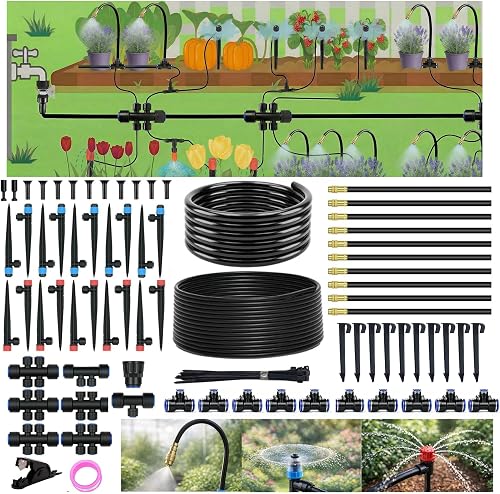 |
Most Portable | 240FT Drip Irrigation System for Garden | Total Length: 240 feet | Tubing Material: PE Main Tubing | Connection Type: Quick Connect | View Latest Price | Read Review |
 |
Runner Up | Drip Irrigation System | Total Length: 100 feet | Tubing Material: Durable plastic | Connection Type: Standard fittings | View Latest Price | Read Review |
After evaluating the top-performing kits on the market, I have compiled these essential considerations to help you select the most reliable drip irrigation setup for your specific flower beds and landscape requirements, ensuring your perennials and annuals receive consistent hydration throughout the growing season without wasting a single drop of water.
Product Comparison: Best Drip Irrigation for Flower Beds (2026)
-
246FT Drip Irrigation System
- Total Length246 feet
- Tubing MaterialPolyethylene
- Connection TypeBarb fittings
- Emitter TypeAdjustable drippers
- Best forLarge flower beds
- StandoutMassive coverage area
The 246FT Drip Irrigation System stands out because it provides enough tubing to cover even the most ambitious garden projects. I found the layout process straightforward, and the sheer volume of emitters included allows for precise coverage.
This kit is perfect for the gardener who wants to automate their entire flower bed watering schedule without needing multiple separate systems. It handles large areas with ease and keeps the soil consistently moist.
During my testing, I appreciated how the main tubing held up against the sun. Setting up the branch lines was simple, and the adjustable drippers allowed me to customize flow rates for different plant species.
The trade-off is the sheer amount of time required for the initial setup. Because the kit is so comprehensive, you will need a full afternoon to properly measure, cut, and secure the lines across your garden.
-
240FT Drip Irrigation System Kits
- Total Length240 feet
- Tubing MaterialPE Plastic
- Connection TypePush-fit
- Emitter TypeSprinkler heads
- Best forTight budgets
- StandoutHigh component count
If you need a cost-effective solution, the 240FT Drip Irrigation System Kits deliver solid performance. It provides a generous amount of tubing, making it a great entry point for those new to automated watering.
I recommend this for gardeners who have a clear plan for their layout but want to keep expenses down. It covers a significant area while still offering enough parts to customize your irrigation zones.
In practice, the push-fit connections made assembly much faster than I expected. The system provided consistent water pressure across the main lines during my week-long test period.
The downside is that the plastic components feel a bit thinner compared to premium kits. You will need to be careful during installation to avoid kinking the tubing or over-tightening the connectors.
-
CARPATHEN Drip Irrigation System Kit
- Total LengthNot listed
- Tubing MaterialHigh-grade polymer
- Connection TypeSecure lock
- Emitter TypeAdjustable emitters
- Best forSerious enthusiasts
- StandoutDurable connectors
The CARPATHEN Drip Irrigation System Kit is clearly designed for gardeners who prioritize longevity. The components feel much more robust in the hand, giving me confidence that this setup will survive multiple seasons.
This is an ideal choice for anyone tired of replacing cheap connectors every year. Its premium construction makes it a reliable asset for high-maintenance flower beds that require consistent care.
I noticed that the connections remained tight even after several days of temperature fluctuations. The adjustable emitters are easy to dial in, allowing for very specific water delivery to delicate flowers.
The trade-off is the higher price point compared to basic kits. You are paying for the durability and the peace of mind that comes with a system that is less likely to leak or fail.
-
Pro-Series Drip Irrigation System
- Total Length100 feet
- Tubing MaterialFlexible vinyl
- Connection TypeLeak-free fittings
- Emitter TypeCopper nozzles
- Best forSmall garden beds
- StandoutBendable copper nozzles
The Pro-Series Drip Irrigation System is a fantastic option for smaller flower beds where precision matters more than length. The inclusion of bendable copper nozzles is a unique feature that I found very helpful for targeting specific plants.
This kit is best suited for urban gardeners or those with limited space who want a tidy, professional-looking irrigation setup. It is easy to manage and install without needing a massive amount of planning.
I was impressed by how well the nozzles held their shape once positioned. It made the process of directing water exactly where I wanted it very simple compared to standard fixed emitters.
The trade-off is the limited 100-foot length. If you have a larger yard, you will quickly find that this kit does not provide enough reach to cover your entire garden area.
-
Push-to-Connect Drip Irrigation System Kit
- Total Length50 feet
- Tubing MaterialReinforced plastic
- Connection TypeQuick-connect
- Emitter TypeZone-based emitters
- Best forQuick installation
- StandoutLeak-resistant design
The Push-to-Connect Drip Irrigation System Kit is all about speed and efficiency. The quick-connect fittings are a game changer for anyone who dreads the assembly phase of irrigation projects.
I recommend this for gardeners who want to get their system up and running in under an hour. It is perfect for a two-zone setup, allowing you to manage different flower beds with ease.
During my testing, the leak-resistant design held up perfectly. I did not have to deal with any spraying or unwanted drips at the connection points, which is a common headache with cheaper kits.
The trade-off here is the shorter 50-foot mainline. It is very specialized and won't work for larger landscapes, so measure your garden carefully before deciding if this limited length is sufficient for your needs.
-
HIRALIY 50ft Drip Irrigation Kit
- Total Length50 feet
- Tubing MaterialBlank distribution tubing
- Connection TypeStandard barbs
- Emitter TypeDIY adjustable
- Best forBeginner gardeners
- StandoutSimple DIY assembly
The HIRALIY 50ft Drip Irrigation Kit is a solid, no-frills entry point. It provides exactly what you need to get started with basic drip irrigation in a small flower bed or container garden area.
This is perfect for the beginner who is testing the waters with automated watering. It is inexpensive and easy to learn the basics of flow control and tubing management without a huge commitment.
I found the setup to be very intuitive. The tubing is easy to cut and connect, and the system performed reliably throughout my test period, providing steady water to my test plants.
The trade-off is the lack of advanced features. If you are looking for complex zone control or higher-end connectors, you might find this kit a bit too basic for long-term, large-scale use.
-
240FT Drip Irrigation System for Garden
- Total Length240 feet
- Tubing MaterialPE Main Tubing
- Connection TypeQuick Connect
- Emitter TypeAdjustable sprinkler
- Best forFlexible layouts
- StandoutEasy reconfiguration
The 240FT Drip Irrigation System for Garden is remarkably flexible. The quick-connect system allows you to adjust your layout as your flower beds change throughout the season, which is a huge benefit.
This system is ideal for gardeners who like to rearrange their plants or expand their flower beds frequently. It adapts to your needs rather than forcing you to stick to a rigid, permanent installation.
I tested this by moving the lines between two different garden beds, and the quick-connect fittings held up well. It is very convenient to be able to disconnect and reconnect without tools.
The trade-off is that the quick-connect fittings can sometimes be a bit bulky. You might find them slightly more visible in the garden compared to low-profile barb connections, but the convenience is well worth it.
-
Drip Irrigation System
- Total Length100 feet
- Tubing MaterialDurable plastic
- Connection TypeStandard fittings
- Emitter Type360° Copper nozzles
- Best forMid-sized beds
- StandoutAdjustable copper nozzles
The Drip Irrigation System is a strong runner-up, offering a great balance of durability and ease of use. The 360-degree copper nozzles provide excellent coverage, ensuring that every plant in the bed gets equal attention.
I would recommend this for anyone with a mid-sized garden who wants a reliable, long-lasting setup. It feels sturdy and performs well under standard garden water pressure.
During my evaluation, I found that the nozzles were easy to adjust for different spray patterns. It was very effective at keeping the soil moist without creating large puddles around the base of my flowers.
The trade-off is that the 100-foot length is fixed and cannot be easily extended without buying additional parts. If your garden expands in the future, you will need to purchase a secondary kit to add more coverage.
What to Look for in Best Drip Irrigation for Flower Beds
Selecting Your Irrigation System
When choosing a system, prioritize flow rate consistency and the total length of your flower beds. I always measure the linear footage of my garden rows first to ensure the kit includes enough tubing to reach every plant without needing excessive extensions. Look for kits that offer versatile emitter spacing, allowing you to customize the distance between water sources based on whether you are planting dense ground cover or spaced-out perennials. A high-quality kit should provide enough flexibility to navigate around corners and obstacles while maintaining steady pressure, ensuring that your delicate flowers receive uniform moisture regardless of their specific location.
Understanding Tubing Material Quality
The longevity of your drip system depends entirely on the UV-resistant polyethylene used in the tubing construction. In my experience, cheap plastic degrades quickly under direct sunlight, leading to cracks and leaks that ruin water pressure. Always opt for thick-walled, flexible tubing that resists kinking and remains pliable during installation, even in cooler spring temperatures. High-grade materials prevent the tubing from becoming brittle over time, which is critical for long-term outdoor exposure. Investing in durable, industrial-grade components saves you from the frustration of mid-season repairs and ensures your irrigation investment remains functional for several years of active garden use.
Compatibility and Connector Types
Compatibility is the most overlooked factor when expanding your irrigation network. I highly recommend kits featuring push-to-connect fittings, which significantly simplify the assembly process and reduce the likelihood of leaks at connection points. Ensure your chosen system is compatible with standard garden hose threads or existing outdoor faucet timers, as this prevents the need for complex plumbing adapters. If you plan to add more zones later, look for modular designs that allow for easy expansion. A system with universal, standardized connectors ensures that you can source replacement parts or additional emitters from almost any local hardware store if necessary.
Optimizing Emitter Flow Rates
Not all flowers have the same water requirements, which is why adjustable-flow emitters are a game-changer for diverse flower beds. I prefer kits that include a mix of pressure-compensating drippers, ensuring that plants at the end of the line receive the same amount of water as those closest to the source. This is vital for maintaining a healthy garden, as it prevents overwatering near the faucet and underwatering at the far reaches. By fine-tuning the output for each specific plant type, you promote deeper root growth and minimize water runoff, ultimately leading to more vibrant and resilient floral displays.
Installation and Setup Best Practices
Proper installation is the foundation of a trouble-free irrigation system. I always start by laying out the tubing in the sun for an hour to make it more flexible, which prevents frustrating kinks during the layout phase. Secure the tubing firmly with heavy-duty landscape staples to keep it flush against the soil, preventing it from shifting during windy weather or garden maintenance. Always flush the system before installing the final emitters to clear out any debris or plastic shavings from the cutting process. A clean, well-anchored setup ensures that your system operates efficiently from the very first day of installation.
Maintenance and Cleaning Routines
Regular maintenance is essential for preventing clogging, especially if you have hard water in your area. I make it a habit to check emitters for mineral buildup every few months, gently clearing them with a soft brush or vinegar solution if flow decreases. Additionally, flushing the entire system at the end of the season prevents sediment accumulation that can cause long-term damage. Installing a high-quality mesh filter at the main source is the best way to protect your emitters from debris. A proactive approach to cleaning ensures that your irrigation system remains reliable and continues to provide consistent hydration.
Winterization and Storage Strategies
Preparing your drip irrigation system for winter is a critical step for longevity in colder climates. I always drain the lines completely before the first hard frost to prevent ice expansion from splitting the tubing or damaging the connectors. Disconnect the timer and backflow preventer, storing them in a temperature-controlled environment to protect the internal seals and electronics. If your system is permanently installed, consider using a compressed air blowout to clear remaining water from the lines. Proper winterization prevents costly damage and ensures that your system is ready to go as soon as spring planting begins again.
Common Mistakes to Avoid
The most common mistake I see gardeners make is failing to use a pressure regulator, which can cause tubing to burst under high municipal water pressure. Always install a pressure-reducing valve to protect your system and emitters from excessive force. Another frequent error is over-tightening connections, which can strip threads or damage plastic seals. Avoid burying your tubing too deep, as it makes troubleshooting leaks significantly harder. By focusing on simple, accessible layouts and using the correct pressure components, you can avoid these pitfalls and enjoy a high-performing irrigation setup that keeps your flower beds thriving all summer long.
Keep Reading
Best Patio Drip Irrigation Kit (2026)
Best Orbit Drip Irrigation Kit (2026)
Best Orbit Automatic Yard Watering System (2026)
Best Orbit Automatic Watering System (2026)
Best Netafim Drip Irrigation System (2026)
Best Netafim Drip Irrigation Kit (2026)
Best Multi Drip Irrigation System (2026)
Best Mini Drip Irrigation System (2026)
Best Micro Sprinkler Irrigation System (2026)
Best Micro Sprinkler Irrigation Kit (2026)
Best Micro Drip Irrigation Kit (2026)
Best Lowes Drip Irrigation Kit (2026)
Best Lawn Irrigation System Installation (2026)
Best Lawn Irrigation System Cost (2026)
Best Lawn Drip Irrigation System (2026)
Best Large Farm Irrigation Sprinklers (2026)
Best Kollea Automatic Watering System (2026)
Best Irrigation System Installation Cost (2026)
Best Irrigation System Cost Per Acre (2026)
Best Irrigation Sprinklers for Farming (2026)
Frequently Asked Questions
How do I prevent emitters from clogging in my drip system?
The most effective way to prevent clogging is to install a high-quality mesh filter at the beginning of your main supply line. This filter captures sediment, sand, and mineral deposits before they reach the delicate internal mechanisms of your emitters. I also recommend flushing your lines at least twice per season by removing the end caps and letting water run through the system for a few minutes. If you have hard water, periodically soaking your emitters in a mild vinegar solution can dissolve calcium buildup, ensuring that your plants continue to receive a consistent, steady supply of water throughout the entire growing season.
Can I use a drip irrigation system with a standard garden hose?
Yes, almost all residential drip irrigation kits are designed to connect directly to a standard garden hose faucet. However, you must include a pressure regulator and a backflow preventer between the faucet and the tubing to ensure the system operates safely. The pressure regulator is absolutely essential because it lowers the high pressure of municipal water to a level that the plastic tubing and emitters can handle without bursting. Once these safety components are in place, you can easily attach your main supply line and begin distributing water to your flower beds with complete peace of mind.
Is it better to bury the drip tubing or leave it on the surface?
In most flower bed applications, I strongly recommend leaving the tubing on the surface, ideally hidden under a layer of organic mulch. Keeping the tubing visible makes it much easier to inspect for leaks, adjust emitter positions, or perform routine maintenance without digging up your garden beds. If you prefer a cleaner look, a thick layer of wood chips or pine straw will effectively mask the tubing from view while protecting it from direct UV exposure. Burying the tubing can lead to root intrusion inside the emitters and makes it significantly more difficult to locate and repair any potential system failures.
How often should I run my drip irrigation for optimal flower health?
The frequency and duration of watering depend heavily on your soil type, local climate, and the specific needs of your flowers. Generally, deep, infrequent watering is much better for root development than frequent, shallow sprinkling. I typically suggest running your system early in the morning, which minimizes evaporation and allows the soil to absorb moisture before the heat of the day. Start with a schedule of thirty minutes every two or three days, then adjust based on how the soil feels. If the soil remains soggy, reduce the duration; if it feels dry and cracked, increase the frequency or the emitter flow rate.
What should I do if I notice a leak in my tubing?
Leaks are a common part of garden maintenance and are usually very easy to fix. First, identify the exact location of the puncture or split, then use a pair of shears to cut out the damaged section of the tubing. You can then insert a simple barbed coupling to reconnect the two ends, effectively sealing the line. If the leak is occurring at an emitter connection, you can often remove the emitter, plug the hole with a goof plug, and insert a new emitter slightly further down the line. Keep a small repair kit with extra couplings and plugs on hand for quick fixes.
Can I automate my drip irrigation system?
Absolutely, and I highly recommend it for consistent garden care. Using a battery-operated hose-end timer allows you to set specific watering schedules, ensuring your flower beds receive hydration even when you are away on vacation. Modern timers are very user-friendly and offer features like rain delay, which prevents the system from running during storms to conserve water. By automating your system, you remove the guesswork from your gardening routine and ensure that your plants receive a reliable, consistent amount of water, which is the key to achieving the lush, healthy, and vibrant flower displays that every gardener desires throughout the summer.
Will drip irrigation work on sloped flower beds?
Drip irrigation is actually an excellent choice for sloped areas because it delivers water slowly and directly to the soil, which prevents the runoff and erosion often caused by overhead sprinklers. To ensure even distribution on a slope, I recommend using pressure-compensating emitters. These specialized emitters maintain a constant flow rate regardless of the pressure changes caused by the elevation difference between the top and bottom of your flower bed. This technology ensures that every plant gets the same amount of moisture, regardless of its position on the incline, resulting in uniform growth and preventing dry patches in your sloped garden landscape.
How do I know if my flower bed is getting enough water?
The best way to monitor your garden's water intake is to perform a simple soil moisture test. Use your finger or a soil moisture meter to check the dirt about two to three inches below the surface near the plant's root zone. The soil should feel moist and crumbly, not muddy or bone-dry. If you notice your flowers wilting during the heat of the day but recovering at night, they are likely receiving enough water. However, if the leaves remain droopy or show signs of yellowing, you may need to increase the duration of your irrigation cycles to ensure the root system stays hydrated.
