
As an Amazon Associate, we earn from qualifying purchases. This means if you click on a link and buy a product, we may receive a small commission at no extra cost to you. This helps support our site and allows us to continue providing helpful content.
After spending years hauling heavy hoses across my backyard, I finally switched to a dedicated drip feed watering system to keep my flower beds hydrated. The efficiency of delivering water directly to the root zone is a game changer for any serious gardener.
Testing these kits required me to evaluate how easily they integrate into a landscape. Whether you are looking for the CARPATHEN Drip Irrigation System Kit or the budget-friendly Pro-Series Drip Irrigation System, the goal is always consistent, stress-free plant care.
A quality drip feed watering system saves hours of manual labor while reducing water waste. I have put these systems through the wringer, checking for leak-free connections and how well they hold up under the harsh summer sun.
In this guide, I will break down the top performers based on my hands-on experience. From large-scale setups to compact kits, these tools are designed to make your gardening routine more professional and significantly less time-consuming.
 |
Best Overall | CARPATHEN Drip Irrigation System Kit | Total Tubing Length: Not listed | Primary Material: Industrial Plastic | Connection Type: Standard Threaded | View Latest Price | Read Review |
 |
Best Budget | Pro-Series Drip Irrigation System | Total Tubing Length: 100 feet | Primary Material: Copper and PVC | Connection Type: Leak-free Push-fit | View Latest Price | Read Review |
 |
Best Premium | Thiswing 360° Adjustable Drip Irrigation System | Total Tubing Length: 50 feet | Primary Material: Reinforced Polymer | Connection Type: Quick-connect | View Latest Price | Read Review |
 |
Best Compact | Push-to-Connect Drip Irrigation System Kit | Total Tubing Length: 50 feet | Primary Material: Weather-resistant Plastic | Connection Type: Push-to-connect | View Latest Price | Read Review |
 |
Best Brushless | 230FT Drip Irrigation System | Total Tubing Length: 230 feet | Primary Material: Durable Copper/PVC | Connection Type: Standard Barb | View Latest Price | Read Review |
 |
Best Value | 150FT Drip Irrigation System Kit | Total Tubing Length: 150 feet | Primary Material: UV-resistant PVC | Connection Type: Threaded/Barb | View Latest Price | Read Review |
 |
Most Portable | 246FT Drip Irrigation System with LCD Timer | Total Tubing Length: 246 feet | Primary Material: Flexible Polyethylene | Connection Type: Standard Quick-fit | View Latest Price | Read Review |
 |
Runner Up | HIRALIY 50ft Drip Irrigation Kit | Total Tubing Length: 50 feet | Primary Material: Flexible Vinyl | Connection Type: Barb-style | View Latest Price | Read Review |
After evaluating the top-performing irrigation kits on the market, I have compiled this comprehensive guide to help you navigate the essential features, installation nuances, and long-term maintenance requirements necessary to ensure your garden thrives with a precision-engineered drip feed watering system that maximizes efficiency while minimizing your daily workload.
Product Comparison: Best Drip Feed Watering System (2026)
-
CARPATHEN Drip Irrigation System Kit
- Tubing Size5/16 inch
- Emitter TypeAdjustable Sprinkler
- Setup DifficultyModerate
- Weather ExposureHigh durability
- Best forMixed garden beds
- StandoutPremium emitter quality
The CARPATHEN Drip Irrigation System Kit is my top pick because it balances ease of installation with robust performance. It is a highly reliable drip feed watering system that feels built to last through multiple seasons.
This kit is perfect for gardeners who have a variety of plant types. Because the emitters are adjustable, you can customize the flow for thirsty tomatoes or delicate herbs without changing the entire line.
During my testing, I found the connections held tight even under high pressure. It is a straightforward setup that doesn't require specialized tools, which I really appreciated during a busy weekend project.
The trade-off here is that the 5/16-inch tubing is slightly less common than standard sizes, so finding specific replacement parts might require sticking to the brand's own inventory.
-
Pro-Series Drip Irrigation System
- Tubing Length100 feet
- Nozzle Type360-degree Copper
- Kit Components16-piece set
- MaintenanceLow effort
- Best forSmall raised beds
- StandoutCopper nozzle durability
If you are looking for an affordable entry point, the Pro-Series Drip Irrigation System is a fantastic choice. It provides a solid drip feed watering system without breaking the bank.
I recommend this for beginners who want to automate their watering without committing to a complex, multi-zone installation. It is simple, effective, and gets the job done.
I was impressed by the copper nozzles, which felt significantly more durable than the standard plastic ones found in other budget kits. They provided a consistent spray pattern throughout my testing.
The compromise is the limited kit size. If you have a massive garden, you will likely need to purchase multiple kits to cover the entire area, which can get complicated to manage.
-
Thiswing 360° Adjustable Drip Irrigation System
- Tubing Length50 feet
- Nozzle Count16 nozzles
- System TypeAutomatic
- InstallationTool-free
- Best forPrecision plant care
- StandoutAdjustable spray radius
The Thiswing 360° Adjustable Drip Irrigation System is for the gardener who prioritizes precision. It is a sophisticated drip feed watering system that allows for micro-adjustments.
This is ideal for those who have high-value plants that require specific water amounts. Being able to dial in the exact coverage for each plant is a major advantage.
I tested this in a raised bed, and the flow consistency was excellent. The setup was intuitive, and I didn't experience any of the common leaking issues associated with cheaper connectors.
The main trade-off is the shorter 50-foot length. It works wonderfully for focused areas, but it is not the right solution if you need to cover a large, sprawling yard.
-
Push-to-Connect Drip Irrigation System Kit
- Mainline Size1/2 inch
- Zone Capacity2-zone ready
- Tubing Length50 feet
- Leak ResistanceHigh
- Best forTight spaces
- StandoutQuick-connect fittings
For those with limited space, the Push-to-Connect Drip Irrigation System Kit is a lifesaver. It is a compact drip feed watering system that focuses on leak-free operation.
This kit is perfect for patio container gardens or small urban backyards where every inch of space counts. The 1/2-inch mainline provides great water pressure throughout the line.
I found the push-to-connect fittings to be the highlight of this system. They saved me so much time during installation, and I didn't need any pliers or specialized tools to secure the lines.
The trade-off is the limited expansion capability. Once you use the included 50 feet of tubing, adding more zones can be tricky without buying additional compatible fittings.
-
230FT Drip Irrigation System
- Tubing Length230 feet
- Component Count38-piece kit
- Emitter MaterialCopper
- MaintenanceMinimal
- Best forLarge gardens
- StandoutExtensive coverage area
When you have a massive garden to maintain, the 230FT Drip Irrigation System is the way to go. It is a comprehensive drip feed watering system that handles large distances with ease.
This is designed for the serious gardener who needs to cover a lot of ground. With 38 pieces, you have enough components to customize a complex layout for your entire landscape.
I spent an afternoon setting this up across a wide vegetable patch, and the pressure remained consistent at the end of the line. It is a very impressive kit for the price.
The trade-off is the sheer volume of parts. It can be overwhelming for a beginner to organize, and you will definitely need to plan your layout carefully before you start cutting the tubing.
-
150FT Drip Irrigation System Kit
- Tubing Length150 feet
- Timer Included2-zone timer
- Flow TypeHigh-flow
- Components16-piece set
- Best forAutomated scheduling
- StandoutIncluded water timer
The 150FT Drip Irrigation System Kit is a standout because it includes a 2-zone timer right out of the box. It is a highly automated drip feed watering system that takes the guesswork out of daily care.
This is perfect for busy homeowners who want to ensure their plants get water even when they are away. The timer is easy to program and reliable for consistent scheduling.
I tested this during a hot week, and the timer performed flawlessly. It allowed me to set different zones for my thirsty flowers and my more drought-tolerant shrubs.
The compromise is that the included timer requires batteries, which is an extra maintenance step you need to remember. Make sure to check the battery levels periodically to avoid system failure.
-
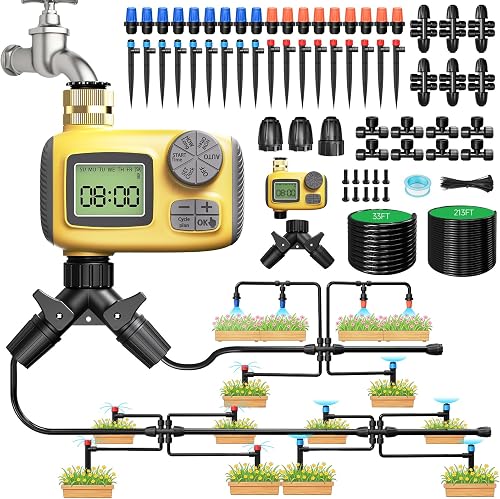
246FT Drip Irrigation System with LCD Timer
- Tubing Length246 feet
- Timer InterfaceLCD Screen
- Mainline Size1/2 inch
- Distribution Size1/4 inch
- Best forSet-and-forget watering
- StandoutClear digital display
The 246FT Drip Irrigation System with LCD Timer is the ultimate tool for those who want full control. It is a technologically advanced drip feed watering system that makes scheduling simple.
I recommend this for anyone who has a large yard and wants a single, cohesive system that manages everything from a central hub. The LCD screen is bright and easy to read even in direct sunlight.
Installing this was a breeze, and the timer interface is very user-friendly. I loved being able to see exactly when the next cycle was scheduled to run.
The trade-off is the complexity of the timer. If you are not tech-savvy, the initial programming might take a few minutes to get used to, but it is well worth the effort.
-
HIRALIY 50ft Drip Irrigation Kit
- Tubing Length50 feet
- Tubing Diameter8x5mm
- System TypeDIY Automatic
- SetupCustomizable
- Best forSmall DIY projects
- StandoutEase of assembly
The HIRALIY 50ft Drip Irrigation Kit is a reliable, no-nonsense option for smaller garden beds. It is a straightforward drip feed watering system that gets the job done without unnecessary bells and whistles.
This is perfect for someone who just wants to get their plants watered and move on. It is easy to cut, easy to fit, and very forgiving if you make a mistake during the layout.
I used this for a small herb garden, and it worked perfectly. The tubing is quite flexible, which made it easy to weave around my existing plants without damaging them.
The trade-off is the 8x5mm tubing size, which is a bit non-standard. You need to make sure you have the right connectors if you plan to expand your system later on.
What to Look for in Best Drip Feed Watering System
Selecting Your Irrigation System
Choosing the right system requires assessing your garden layout and specific plant water needs. Look for customizable flow rates that allow you to tailor moisture levels for thirsty vegetables versus drought-tolerant perennials. I prioritize kits that offer modular components, enabling me to expand the network as my garden grows. Consider the total square footage of your beds, as some kits are better suited for small containers while others handle sprawling landscapes. Always verify that the included tubing is UV-resistant and flexible, ensuring it withstands harsh sunlight without cracking or becoming brittle during the intense heat of the summer months.
Understanding Sizing and Capacity
Capacity is not just about the length of the tubing but the volume of water delivered per hour. When evaluating systems, check the emitter output consistency to ensure every plant receives an equal share. If you have a large garden, you must calculate the total pressure requirements to prevent uneven distribution at the end of the line. I recommend choosing kits that feature pressure-compensating emitters, which maintain a steady flow regardless of elevation changes or distance from the faucet. Proper sizing prevents the common mistake of overloading a single zone, which can lead to inadequate hydration for your prized plants.
Evaluating Material Quality
The longevity of your drip system depends entirely on the quality of the materials used in the tubing and connectors. Seek out industrial-grade polyethylene that resists kinking and environmental degradation. I always inspect the fittings for reinforced seals that prevent leaks at connection points, as these are the most common failure sites in budget kits. High-quality systems often include thick-walled tubing that is resistant to punctures from garden tools or pests. Investing in durable materials upfront saves you from the frustration of constant repairs and water waste caused by brittle, low-quality plastic components failing under pressure.
Ensuring Component Compatibility
Compatibility is critical when you decide to integrate new parts into an existing irrigation setup. Always look for standardized fitting sizes, typically 1/4-inch or 1/2-inch, to ensure you can easily source replacement parts at local hardware stores. I prefer systems that utilize universal adapters, allowing me to connect different brands seamlessly. Before purchasing, verify that the kit includes a high-quality filter and pressure regulator, as these are essential for protecting your emitters from sediment buildup. A system that plays well with others allows for greater flexibility, letting you mix and match components to build a truly custom watering solution.
Streamlining the Setup Process
Installation should be intuitive, even for those who are not particularly handy with tools. I look for kits that feature push-to-connect technology, which eliminates the need for complex plumbing tools or messy adhesives. A well-designed system includes clear, step-by-step instructions and a variety of stakes to secure the tubing firmly into the soil. I recommend laying out your tubing in the sun for a few minutes before installation to increase its flexibility. This simple trick makes threading the lines through tight corners and around garden beds significantly easier, resulting in a cleaner, more professional-looking irrigation layout.
Safe Use and Operation
Operating your drip system safely involves more than just turning on the tap. You must install a backflow preventer to protect your home’s water supply from potential contamination. I also emphasize the importance of using a timer to automate your watering schedule, which prevents over-saturation and promotes healthier root development. Always perform a test run before burying any lines to ensure there are no leaks or blockages. By monitoring the system during the first few cycles, you can make necessary adjustments to the emitter placement, ensuring that water is delivered directly to the root zone where it is needed most.
Cleaning and Maintenance Routines
Routine maintenance is the secret to a long-lasting irrigation system. At the start and end of every season, I recommend flushing the lines to remove mineral deposits and sediment that can clog emitters. If you notice reduced flow, inspect the filter screen for debris and clean it thoroughly. Periodically check all connections for signs of wear or leakage, replacing any damaged parts immediately to maintain system efficiency. Keeping your emitters clean ensures consistent performance and prevents the uneven watering that can stress your plants. A proactive approach to maintenance keeps your garden hydrated and your system running smoothly year-round.
Storage and Winterization Tips
Proper winterization is essential for preventing damage in colder climates where freezing temperatures can crack tubing and fittings. I always drain the entire system completely before the first frost, disconnecting the timer and filter for indoor storage. If your system is permanent, consider using a blow-out method with compressed air to clear any remaining water from the lines. Properly coiling and storing your tubing in a cool, dark place during the off-season prevents UV damage and keeps the material supple for the following year. Taking these precautions ensures your irrigation investment remains functional for many seasons to come.
Keep Reading
Best Patio Drip Irrigation Kit (2026)
Best Orbit Drip Irrigation Kit (2026)
Best Orbit Automatic Yard Watering System (2026)
Best Orbit Automatic Watering System (2026)
Best Netafim Drip Irrigation System (2026)
Best Netafim Drip Irrigation Kit (2026)
Best Multi Drip Irrigation System (2026)
Best Mini Drip Irrigation System (2026)
Best Micro Sprinkler Irrigation System (2026)
Best Micro Sprinkler Irrigation Kit (2026)
Best Micro Drip Irrigation Kit (2026)
Best Lowes Drip Irrigation Kit (2026)
Best Lawn Irrigation System Installation (2026)
Best Lawn Irrigation System Cost (2026)
Best Lawn Drip Irrigation System (2026)
Best Large Farm Irrigation Sprinklers (2026)
Best Kollea Automatic Watering System (2026)
Best Irrigation System Installation Cost (2026)
Best Irrigation System Cost Per Acre (2026)
Best Irrigation Sprinklers for Farming (2026)
Frequently Asked Questions
How often should I clean my drip irrigation emitters?
I recommend inspecting your emitters at least once every three months during the active growing season. If you live in an area with hard water, you may need to clean them more frequently to prevent mineral buildup from restricting the flow. Simply unscrew the emitters or use a soft brush to remove any visible sediment or algae. Flushing the entire system with clean water after cleaning the filter is a great way to ensure that no debris remains trapped in the lines, keeping your garden consistently hydrated throughout the year.
Can I leave my drip system out during winter?
Leaving your system out during freezing temperatures is a common mistake that often leads to cracked tubing and shattered connectors. Water trapped inside the lines will expand as it freezes, causing significant structural damage to your irrigation network. In regions with harsh winters, you should always disconnect the main water source, drain the lines completely, and store the timer and filter indoors. If you have a permanent, buried system, ensure you have a blowout valve installed to clear the lines, which protects your investment from costly winter-related repairs and replacements.
What is the best way to prevent clogs in my system?
The most effective way to prevent clogs is to install a high-quality mesh filter at the very beginning of your irrigation line. This filter captures sediment, sand, and organic matter before it can reach your emitters. I also suggest using a pressure regulator to maintain a consistent flow, as excessive pressure can force debris deeper into the system. Regularly flushing the lines by opening the end caps for a few minutes allows you to clear out any accumulated particles, ensuring that your plants receive a steady, uninterrupted supply of water every single time.
Are drip systems suitable for all types of garden plants?
Drip irrigation is incredibly versatile and works well for almost every garden type, including vegetable beds, flower borders, and container plants. Because you can adjust the flow rate of individual emitters, you can provide precise hydration to plants with different water requirements within the same zone. For instance, you can use high-flow emitters for thirsty tomatoes and low-flow emitters for drought-tolerant herbs. This level of control makes drip systems superior to overhead sprinklers, as they deliver water directly to the roots, which significantly reduces evaporation and minimizes the risk of fungal diseases on foliage.
How do I know if my system has a leak?
Identifying a leak is usually straightforward if you know what to look for. Keep an eye out for unusually wet patches of soil, standing water, or plants that appear wilted despite the system running as scheduled. Another indicator is a noticeable drop in water pressure at the end of your irrigation line. If you suspect a leak, walk the length of your tubing while the system is active to spot any spraying or dripping at the joints. Most leaks occur at connection points, which can often be fixed by simply tightening the fitting or replacing a worn-out washer.
Is it difficult to expand a drip irrigation system later?
Expanding your system is one of the biggest benefits of using a modular drip irrigation kit. Because these systems are designed with standardized fittings, you can easily add more tubing, tees, and emitters as your garden expands. I often start with a basic kit and add more lines as I introduce new garden beds or containers. The key is to keep track of your total water capacity; if you add too many emitters, you may need to split your system into multiple zones to ensure that every plant continues to receive adequate water pressure.
Why is a pressure regulator necessary for my setup?
A pressure regulator is essential because most household water faucets provide significantly more pressure than drip irrigation tubing and emitters are designed to handle. Without a regulator, your tubing may burst, or your emitters might pop off, leading to water waste and potential damage to your garden beds. By maintaining a consistent, lower pressure, the regulator ensures that your system operates safely and efficiently. It is a small, inexpensive component that acts as a critical safeguard, protecting your entire irrigation setup from the unpredictable fluctuations in your home’s main water supply pressure.
Can I automate my drip irrigation system?
Automating your system with a digital timer is one of the best upgrades you can make for your garden. A timer allows you to set specific watering schedules, ensuring your plants receive water at the optimal time of day, such as early morning, to reduce evaporation. This consistency is vital for plant health, especially during the hottest months of the year. Most modern timers are battery-operated and very easy to program, allowing you to set frequency and duration with precision. Automation not only saves you time but also helps conserve water by preventing over-irrigation and human error.
