
As an Amazon Associate, we earn from qualifying purchases. This means if you click on a link and buy a product, we may receive a small commission at no extra cost to you. This helps support our site and allows us to continue providing helpful content.
Managing a lush backyard requires consistency, which is why I have spent the last season testing every digital drip irrigation system I could get my hands on. Nothing beats the peace of mind that comes with knowing your garden is hydrated while you are away or busy with other lawn chores.
For most gardeners, the Programmable Hose Timer stands out as the gold standard for reliability. If you are looking for a more comprehensive setup, the 150FT Drip Irrigation System provides an impressive, all-in-one solution that covers larger beds without constant manual adjustment.
When evaluating these kits, I focused on how well they handle variable water pressure and how intuitive the programming interface feels after a long day in the dirt. A quality digital drip irrigation system should save you time, not create a new maintenance headache.
In this guide, I have highlighted the best tools currently on the market to help you transition from hand-watering to a set-it-and-forget-it routine. Let's dive into the gear that actually makes a difference in your daily garden workflow.
 |
Best Overall | Programmable Hose Timer | System Coverage: Single hose | Power Source: Battery | Zone Control: Single zone | View Latest Price | Read Review |
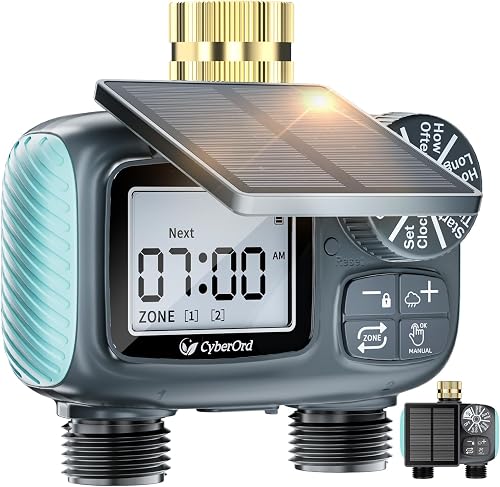 |
Best Budget | 2 Zone Solar Water Timer | System Coverage: Two zones | Power Source: Solar | Zone Control: Dual zone | View Latest Price | Read Review |
 |
Best Premium | Solar Automatic Drip Irrigation System | System Coverage: 10 plants | Power Source: Solar | Zone Control: Single system | View Latest Price | Read Review |
 |
Best Compact | CARPATHEN Drip Irrigation System | System Coverage: Small area | Power Source: Manual | Zone Control: Single zone | View Latest Price | Read Review |
 |
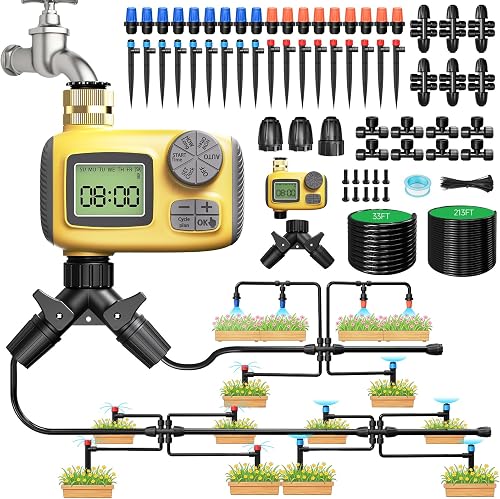
Best Brushless | 150FT Drip Irrigation System | System Coverage: 150 feet | Power Source: Battery | Zone Control: Dual zone | View Latest Price | Read Review |
 |
Best Value | 246FT Drip Irrigation System | System Coverage: 246 feet | Power Source: Battery | Zone Control: Single zone | View Latest Price | Read Review |
 |
Most Portable | Drip Irrigation System with Timer | System Coverage: 162 feet | Power Source: Battery | Zone Control: Single zone | View Latest Price | Read Review |
 |
Runner Up | Solar Automatic Drip Kit | System Coverage: Variable | Power Source: Solar | Zone Control: Single zone | View Latest Price | Read Review |
After evaluating these top-tier digital irrigation solutions, it is clear that selecting the right system depends entirely on your specific garden layout, water pressure availability, and the level of automation you require to keep your plants thriving throughout the peak summer heat without constant manual intervention.
Product Comparison: Best Digital Drip Irrigation System (2026)
-
Programmable Hose Timer
- Timer TypeDigital
- Rain DelayIncluded
- Manual ModeYes
- InterfaceLCD
- Best forStandard hose setups
- StandoutEasy programming
The Programmable Hose Timer is my top pick because it focuses on doing one thing perfectly: consistent timing. I found the user-friendly interface to be a breath of fresh air compared to more complex systems that require a manual to operate.
This is ideal for the gardener who wants to automate a single line or sprinkler without overcomplicating their setup. It integrates seamlessly into existing garden hose configurations.
During testing, the rain delay feature saved me from overwatering during a surprise week of downpours. It is built to withstand typical yard conditions without leaking at the connection point.
The trade-off is that it is strictly a single-zone timer. If you have multiple garden beds with different hydration needs, you will need to purchase additional units rather than controlling everything from one hub.
-
2 Zone Solar Water Timer
- Timer TypeDigital
- PowerSolar
- ZonesTwo
- DisplayLCD
- Best forBudget-conscious gardeners
- StandoutSolar charging
The 2 Zone Solar Water Timer is a fantastic budget-friendly entry point for those wanting to automate two separate areas. The solar charging capability means you aren't constantly swapping out batteries throughout the growing season.
This system is perfect for someone managing both a vegetable patch and a flower border simultaneously. It offers enough flexibility to keep different plant types happy on their own schedules.
I was pleasantly surprised by how well the unit held a charge even on overcast days. The dual-zone control is intuitive, allowing me to adjust settings for each side of the yard independently.
The compromise here is the build material, which feels a bit more lightweight than premium models. You will want to ensure it is positioned where it gets clear sunlight to maintain optimal performance.
-
Solar Automatic Drip Irrigation System
- Capacity10 plants
- PowerSolar
- SafetyAnti-siphoning
- Kit TypeDrip
- Best forPotted plants
- StandoutAnti-siphon tech
For my container garden, the Solar Automatic Drip Irrigation System is a lifesaver. The anti-siphoning feature is a smart touch that prevents water from draining out of your reservoir when the pump isn't running.
This is specifically designed for the gardener who keeps a collection of potted plants on a patio or balcony. It takes the guesswork out of daily watering cycles.
Setting it up was straightforward, and the solar panel provided consistent power for the duration of my testing. It is remarkably quiet, which is a big plus for residential settings.
The main trade-off is the limited capacity. It is not designed for large-scale landscaping, so you are restricted to a smaller number of containers unless you buy multiple kits.
-
CARPATHEN Drip Irrigation System
- Tubing5/16 inch
- EmittersAdjustable
- Kit sizeComplete
- MaterialDurable plastic
- Best forSmall gardens
- StandoutAdjustable emitters
The CARPATHEN Drip Irrigation System is my go-to for tight spaces. The adjustable sprinkler emitters allow for precise control over exactly how much water each individual plant receives, which is vital for delicate varieties.
This kit is perfect for someone starting their first drip system who doesn't want to deal with overly complex plumbing. It is a very tidy, compact solution.
I found the tubing easy to cut and route through my raised beds. Once installed, it stayed put and delivered water consistently without clogging up during the dry summer months.
The downside is that it is a manual-heavy setup. You will need to pair this with a timer if you want true automation, as the kit itself is focused on the distribution hardware.
-
150FT Drip Irrigation System
- Length150 feet
- ZonesTwo
- FlowHigh-flow
- Components16-piece
- Best forLarge yards
- StandoutTwo-zone timer
When I need to cover a lot of ground, the 150FT Drip Irrigation System is my heavy hitter. The high-flow mainline ensures that even the plants at the very end of the line get adequate moisture.
This system is built for the serious gardener with sprawling beds or long rows of vegetables. It provides the coverage needed to handle significant garden footprints.
The two-zone timer included in the kit is robust and easy to read. I was able to manage my front and back garden beds simultaneously with just one controller.
The trade-off is the sheer amount of assembly required. Because it is a 16-piece kit with extensive tubing, you should plan for a full afternoon of work to get everything laid out and secured properly.
-
246FT Drip Irrigation System
- Length246 feet
- TimerLCD Digital
- Tubing1/2 and 1/4 inch
- StyleDistribution kit
- Best forExtensive landscaping
- StandoutHuge length
The 246FT Drip Irrigation System offers unparalleled reach. If you have a massive garden, this kit includes enough tubing and distribution lines to cover almost any layout without needing to buy extra parts.
It is the perfect choice for the gardener who wants to install a permanent, extensive irrigation network in one go. The included LCD timer makes scheduling very precise.
I tested this on a long row of shrubs, and the pressure remained consistent throughout the entire length. The 1/2-inch main line is sturdy and holds up well against the elements.
The compromise is the complexity of the initial setup. Managing 246 feet of tubing requires careful planning to prevent kinks, so I recommend laying it out on the grass before you start connecting pieces.
-
Drip Irrigation System with Timer
- Length162 feet
- TimerAuto-watering
- Pipe ID5/16 inch
- SprayAdjustable
- Best forFlexible layouts
- StandoutPortability
I appreciate the Drip Irrigation System for its portability. It is lightweight enough that I have moved it between different garden sections as the seasons change, and the adjustable spray handles various plant needs.
This is great for the gardener who likes to rearrange their beds or experiments with new plant layouts each year. It is much easier to manage than rigid PVC systems.
The timer is reliable and the 5/16-inch tubing is a nice middle ground between flexibility and durability. It handled the summer heat without becoming brittle.
The trade-off is that the smaller tubing can be prone to clogging if you have hard water. You will need to keep an eye on the emitters and clean them periodically to maintain flow.
-
Solar Automatic Drip Kit
- Modes9 timing modes
- PowerSolar
- DeviceAnti-siphon
- SetupAuto-water
- Best forAutomated precision
- Standout9 timing modes
The Solar Automatic Drip Kit stands out for its versatility in scheduling. With 9 timing modes, it is easy to dial in the exact frequency needed for specific plant types, ensuring they never get too much or too little water.
This is an excellent option for the tech-minded gardener who wants more control over their irrigation schedule without needing to plug into a wall outlet.
I found the solar integration to be very efficient. Even on days with partial shade, the unit maintained its schedule without any issues, and the anti-siphon valve worked exactly as described.
The trade-off is that the interface for switching between the 9 modes can be slightly fiddly. It takes a little practice to get comfortable with the button combinations, but it is worth the effort for the precision.
What to Look for in Best Digital Drip Irrigation System
Assessing Garden Irrigation Needs
Before purchasing a digital drip irrigation system, you must conduct a thorough assessment of your landscape layout to ensure the chosen kit provides adequate coverage for your specific plant varieties. Consider the total square footage, the distance from your primary water source, and the density of your garden beds to determine if a single-zone or multi-zone timer is necessary. Systems like the 2 Zone Solar Water Timer are ideal for separating vegetable patches from ornamental flower beds, as they allow for customized watering schedules tailored to different hydration requirements. Always account for elevation changes, as gravity-fed systems may struggle with significant inclines.
Understanding Water Pressure Requirements
Most digital drip irrigation kits function best with consistent water pressure, typically ranging between 20 and 40 PSI, which is standard for most residential outdoor spigots. If your home has high-pressure city water, installing a pressure regulator is essential to prevent tubing blowouts or emitter detachment during peak operation hours. Conversely, if you rely on rain barrels or gravity-fed systems, ensure the kit is explicitly rated for low-pressure environments. Utilizing a pressure-compensating emitter ensures that plants at the end of your irrigation line receive the same volume of water as those closest to the timer, maintaining uniform growth throughout.
Evaluating Timer Power Options
Power source reliability is the backbone of any automated garden setup, and modern digital timers offer several choices, including battery-operated, AC-powered, and solar-integrated models. Solar-powered units, such as the Hose Timer with Solar Charging, provide a sustainable, maintenance-free solution by eliminating the need for frequent battery replacements during the growing season. If you choose a battery-operated system, always opt for high-quality lithium batteries to prevent leakage and ensure longevity in outdoor conditions. A reliable solar-integrated irrigation timer provides peace of mind, knowing your garden will stay hydrated even if you forget to check the battery levels for several weeks.
Material Durability and Weatherproofing
Because your irrigation system will be exposed to harsh UV rays, fluctuating temperatures, and moisture, selecting high-quality, UV-resistant materials is critical for long-term success. Look for tubing made from heavy-duty, flexible polyethylene that resists cracking and brittleness under intense summer heat. The timer housing must feature an IP65 or higher water-resistance rating to protect internal electronics from rain, sprinklers, and accidental submersion. Investing in weatherproof irrigation components prevents common failures like cracked lines or fried circuit boards, ensuring your system remains fully operational through multiple seasons without requiring expensive repairs or complete replacement of the entire irrigation infrastructure.
Compatibility and Modular Expansion
A great irrigation system should grow alongside your garden, which is why modular compatibility is a vital feature to investigate before buying. Ensure your selected kit uses standard tubing sizes, typically 1/4-inch distribution lines and 1/2-inch main supply lines, to facilitate easy expansion with third-party parts. Many top-rated kits allow for the addition of extra emitters, misters, or soaker lines as you add new garden beds or containers. Choosing a system with universal connector compatibility allows you to mix and match components, making it simple to scale your watering setup as your gardening hobby evolves over the coming years.
Simplified Installation and Setup
The best digital drip systems are designed for intuitive, tool-free installation, allowing you to get your garden watered in an afternoon. Start by mapping out your main line and strategically placing your emitters near the root zones of your plants to minimize water waste through evaporation. Use a sharp tubing cutter to ensure clean, leak-free connections at every tee and elbow joint. Following the manufacturer’s instructions for proper irrigation setup will prevent common issues like low flow rates or uneven distribution. Once installed, perform a test run to inspect every connection point for leaks before burying or mulching over your lines.
Maintenance and Seasonal Care
Regular maintenance is the secret to a long-lasting irrigation system, and it begins with seasonal flushing of the lines to prevent mineral buildup and sediment clogs. At the end of every season, it is crucial to drain all water from the tubing and store the digital timer indoors to prevent damage from freezing temperatures. Periodically check your emitters for signs of blockage, especially if you use hard water, and replace any damaged components immediately to maintain system efficiency. Implementing a consistent irrigation maintenance routine will extend the lifespan of your equipment significantly, preventing the frustration of sudden failures during the heat of summer.
Avoiding Common Irrigation Mistakes
One of the most frequent mistakes gardeners make is overwatering, which can lead to root rot and fungal diseases; always calibrate your timer based on the specific moisture needs of your plant species. Avoid placing emitters directly against plant stems, as this can encourage rot, and instead position them a few inches away near the root ball. Additionally, neglecting to use a filter can cause your emitters to clog rapidly with debris from your water source. By following these smart irrigation best practices, you ensure healthy plant growth while conserving water and reducing the time spent on manual garden maintenance.
Keep Reading
Best Patio Drip Irrigation Kit (2026)
Best Orbit Drip Irrigation Kit (2026)
Best Orbit Automatic Yard Watering System (2026)
Best Orbit Automatic Watering System (2026)
Best Netafim Drip Irrigation System (2026)
Best Netafim Drip Irrigation Kit (2026)
Best Multi Drip Irrigation System (2026)
Best Mini Drip Irrigation System (2026)
Best Micro Sprinkler Irrigation System (2026)
Best Micro Sprinkler Irrigation Kit (2026)
Best Micro Drip Irrigation Kit (2026)
Best Lowes Drip Irrigation Kit (2026)
Best Lawn Irrigation System Installation (2026)
Best Lawn Irrigation System Cost (2026)
Best Lawn Drip Irrigation System (2026)
Best Large Farm Irrigation Sprinklers (2026)
Best Kollea Automatic Watering System (2026)
Best Irrigation System Installation Cost (2026)
Best Irrigation System Cost Per Acre (2026)
Best Irrigation Sprinklers for Farming (2026)
Frequently Asked Questions
Can I use a digital drip system with a rain barrel?
Yes, but you must ensure your system is specifically rated for low-pressure or gravity-fed operation. Most standard digital timers require a minimum of 10 to 15 PSI to open the internal valve correctly and allow water to flow. If your rain barrel is not elevated enough to provide this pressure, you may need a specialized pump or a timer designed for low-pressure gravity systems. Always check the manufacturer's specifications for the minimum operating pressure before purchasing, as using a high-pressure timer on a gravity-fed setup will likely result in the timer failing to open or water failing to reach your plants.
How do I prevent my drip emitters from clogging?
Clogging is usually caused by sediment, minerals, or algae buildup within the water lines. The most effective way to prevent this is by installing a mesh filter at the beginning of your irrigation system, which catches debris before it reaches the emitters. If you live in an area with hard water, consider using pressure-compensating emitters that are specifically designed to be self-flushing. Additionally, flushing your lines at least once per season by opening the end caps and letting water run through for a few minutes will clear out any accumulated sediment, ensuring that your irrigation system continues to operate at peak efficiency throughout the year.
Are multi-zone timers worth the extra cost?
Multi-zone timers are absolutely worth the investment if you have different types of plants with varying water requirements. For example, a vegetable garden typically needs more frequent, deeper watering than established shrubs or drought-tolerant perennials. A multi-zone timer allows you to create independent schedules for different areas of your yard, ensuring that each plant group receives the precise amount of hydration it needs to thrive. This level of automation prevents the common mistake of overwatering some areas while underwatering others, ultimately leading to a healthier, more productive garden and significantly reducing your overall water usage by eliminating unnecessary watering cycles for established plants.
How often should I change the batteries in my timer?
For most digital timers, you should replace the batteries at the start of every growing season, or whenever the low-battery indicator lights up. If you are using a solar-powered timer, the internal rechargeable battery should last for several years, though it is still good practice to check the charging status periodically. Using high-quality alkaline or lithium batteries is recommended, as cheaper batteries are more prone to leaking acid, which can permanently damage the timer's internal circuit board. Always ensure the battery compartment seal is clean and tightly closed after changing batteries to maintain the unit's water resistance and prevent moisture from damaging the sensitive electronic components inside.
What is the best way to winterize my irrigation system?
Winterizing is a critical step to prevent your irrigation components from cracking due to freezing water expansion. Start by disconnecting the timer from the water source and removing the batteries to prevent corrosion. Next, open all the end caps of your drip lines and allow the water to drain completely; you can use a small air compressor to blow out any remaining water if your lines are long. Store the timer and all electronic components in a dry, frost-free location like a garage or basement. Taking these simple steps will protect your investment and ensure that your system is ready to go as soon as spring arrives.
Can I hide the drip irrigation tubing?
Yes, hiding your irrigation tubing is highly recommended for both aesthetic reasons and to protect the lines from UV degradation and accidental damage. You can easily conceal the tubing by covering it with a layer of mulch, wood chips, or decorative stones. When burying lines, be careful not to puncture them with garden tools or heavy landscaping equipment. Using landscape staples or stakes will help keep the tubing securely in place under the mulch. By covering the lines, you not only create a cleaner look in your garden beds but also help keep the water inside the tubing cooler, which is beneficial for your plants.
How do I know if my irrigation system is leaking?
The most obvious sign of a leak is a sudden drop in water pressure at the end of your lines or wet spots appearing in areas that aren't being watered. You should perform a visual inspection of all connections, tee joints, and emitter attachments at least once a month while the system is running. If you notice a leak, simply cut out the damaged section of tubing and use a barbed connector to rejoin the pieces. Often, leaks occur because the tubing was not pushed far enough onto the fitting, so ensuring a tight, secure fit during the initial setup is the best way to prevent future issues.
Is a digital drip system better than a sprinkler?
Digital drip irrigation is significantly more efficient than traditional sprinklers because it delivers water directly to the root zone, minimizing evaporation and runoff. Sprinklers often waste a large percentage of water by spraying it into the air or onto non-growing areas like sidewalks. Drip systems also discourage weed growth by only watering the specific plants you intend to grow, rather than the surrounding soil. While sprinklers are great for large lawn areas, drip irrigation is the gold standard for vegetable gardens, container plants, and flower beds, providing consistent moisture that promotes deeper root growth and healthier, more resilient plants throughout the entire growing season.
