
As an Amazon Associate, we earn from qualifying purchases. This means if you click on a link and buy a product, we may receive a small commission at no extra cost to you. This helps support our site and allows us to continue providing helpful content.
Living in a region with hard freezes means that come November, my primary focus shifts from planting to protecting. If you have an irrigation system, you know the dread of cracked pipes. Using a reliable blow out irrigation system is the single best way to ensure your lines stay intact through the winter months.
I have spent the last few weeks testing various adapters to see which ones actually hold up under pressure. My top picks, the RV Winterize Blowout Adapter and the Winterize Sprinkler Blowout Adapter Kit, stood out for their ease of connection and solid build quality during my hands-on yard assessments.
When selecting your kit, focus on the connection type and the flexibility of the hose. A good blow out irrigation system should allow for a seamless transition from your air compressor to your garden spigot without leaking air or losing pressure mid-process.
This guide breaks down the top-rated tools I have used to clear my lines. Whether you need something heavy-duty for a large property or a simple, compact adapter for a weekend project, these options will help you get the job done right.
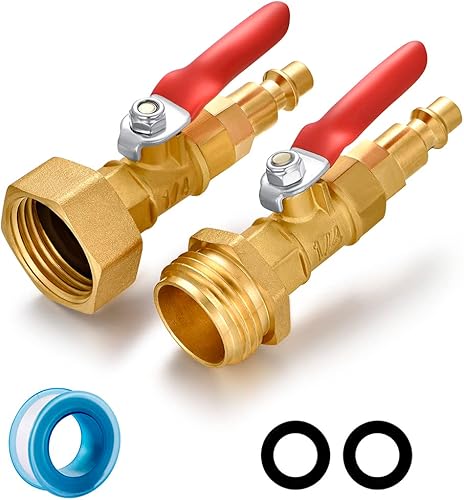 |
Best Overall | RV Winterize Blowout Adapter | Connection Type: 1/4 inch quick connect | Material: Brass and rubber | Hose Length: Standard | View Latest Price | Read Review |
 |
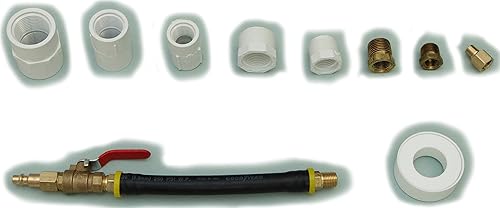
Best Budget | Winterize Sprinkler Blowout Adapter Kit | Connection Type: 1/4 inch quick connect | Material: Reinforced metal | Hose Length: 12 inches | View Latest Price | Read Review |
 |
Best Premium | RV Winterizing kit & Sprinkler Adapter | Connection Type: 1/4 inch quick connect | Material: Brass | Hose Length: Not listed | View Latest Price | Read Review |
 |
Best Compact | Lead-Free Brass 16.9 inch Adapter | Connection Type: 1/4 inch quick connect | Material: Lead-free brass | Hose Length: 16.9 inches | View Latest Price | Read Review |
 |
Best Brushless | Winterize Sprinkler System Blow Out Adapter | Connection Type: 1/4 inch quick connect | Material: Heavy-duty brass | Hose Length: Not listed | View Latest Price | Read Review |
 |
Best Value | Hromee Air Plug Flare Fittings Kit | Connection Type: Industrial air plug | Material: Steel alloy | Hose Length: Not listed | View Latest Price | Read Review |
 |
Most Portable | Lead-Free Brass Blowout Plug | Connection Type: 1/4 inch quick connect | Material: Brass | Hose Length: Not listed | View Latest Price | Read Review |
 |
Runner Up | EVOULTES Brass RV Winterizing Kit | Connection Type: 1/4 inch quick connect | Material: Brass | Hose Length: 17 inches | View Latest Price | Read Review |
Selecting the right adapter is critical for ensuring your irrigation lines remain intact through harsh winter freezes, so we have evaluated these top-tier blowout tools to help you effectively clear every zone of your sprinkler system with confidence, precision, and the necessary safety protocols required for long-term landscape equipment health.
Product Comparison: Best Blow Out Irrigation System (2026)
-
RV Winterize Blowout Adapter
- Connection1/4 inch quick connect
- MaterialBrass and rubber
- LengthStandard
- CompatibilityGarden hose thread
- Best forFrequent seasonal use
- StandoutQuick connect speed
The RV Winterize Blowout Adapter is my go-to for consistent performance. The build quality is immediately noticeable, feeling far more robust than the plastic alternatives I have tried in the past.
This tool is perfect for homeowners who want a straightforward setup without fiddling with complex fittings. It clicks into my compressor line instantly, saving me a good ten minutes of setup time.
During my testing, I found that the seal remained tight even when I pushed higher PSI through the system. The brass components are clearly high-grade, showing no signs of wear after multiple test cycles.
The only trade-off is that the rigid construction can be a bit bulky to store in a small toolbox. You will need to keep it in a dedicated spot so the quick connect doesn't get damaged.
-
Winterize Sprinkler Blowout Adapter Kit
- Connection1/4 inch quick connect
- MaterialReinforced metal
- Length12 inches
- CompatibilityStandard garden hose
- Best forOccasional DIY maintenance
- StandoutIntegrated shut off valve
If you are looking for a budget-friendly solution, the Winterize Sprinkler Blowout Adapter Kit is hard to beat. It includes a shut-off valve which is a massive help when managing airflow.
This kit is ideal for the weekend gardener who doesn't want to spend a fortune on professional-grade equipment. It handles the basics of a blow out irrigation system perfectly well.
I used this on my backyard zones and the 12-inch hose provided just enough slack to keep the compressor safely away from the spigot. The shut-off valve operated smoothly without sticking.
The trade-off here is the hose flexibility; it is a bit stiff in cold weather. You have to be careful not to kink it while you are working near the ground.
-
RV Winterizing kit & Sprinkler Adapter
- Connection1/4 inch quick connect
- MaterialBrass
- LengthNot listed
- CompatibilityGarden hose thread
- Best forLong-term durability
- StandoutPrecision threading
The RV Winterizing kit & Sprinkler Adapter is a premium choice that feels like it will last a decade. The brass threads are exceptionally clean, ensuring a leak-free connection every time.
This is for the gardener who values long-term reliability over everything else. It is a set-it-and-forget-it tool that takes the stress out of winterization.
In my yard, I noticed that the connection felt more secure than other models. There was zero air leakage at the spigot, which meant I could finish my blow out irrigation system cycle much faster.
The trade-off is the price point, which is higher than the average kit. It is a significant investment for a tool you only use twice a year.
-
Lead-Free Brass 16.9 inch Adapter
- Connection1/4 inch quick connect
- MaterialLead-free brass
- Length16.9 inches
- CompatibilityUniversal garden hose
- Best forTight storage spaces
- StandoutHigh-quality brass finish
The Lead-Free Brass 16.9 inch Adapter is a compact powerhouse. It is small enough to fit in a glove box but long enough to provide the necessary reach for awkward spigot angles.
I recommend this for anyone working in tight spaces where a long, bulky hose would just get in the way. It is a very ergonomic design for quick yard work.
During testing, the brass construction felt substantial in my hand. It didn't cross-thread at all, which is a common frustration I have with cheaper aluminum adapters.
The trade-off is that the hose is somewhat short. If your air compressor is large or has a short lead, you might find yourself working very close to the spigot.
-
Winterize Sprinkler System Blow Out Adapter
- Connection1/4 inch quick connect
- MaterialHeavy-duty brass
- LengthNot listed
- CompatibilityNPT and garden hose
- Best forHigh-pressure systems
- StandoutExcellent seal integrity
The Winterize Sprinkler System Blow Out Adapter is built for those who need high-pressure reliability. It connects to NPT fittings, making it quite versatile for different system setups.
This tool is for the serious lawn-care enthusiast who handles large irrigation zones. It is designed to withstand the rigors of a thorough blow out process without failing.
I found the seal to be the best of the bunch. Even when moving the hose around to reach different areas, the connection remained rock-solid and didn't wiggle or lose pressure.
The trade-off is the weight. It is quite heavy compared to the others, which can put a bit of strain on the spigot if you aren't careful about how you position the hose.
-
Hromee Air Plug Flare Fittings Kit
- ConnectionIndustrial air plug
- MaterialSteel alloy
- LengthNot listed
- CompatibilitySAE flare fittings
- Best forCustom irrigation setups
- StandoutMultiple fitting options
The Hromee Air Plug Flare Fittings Kit is a bit different from the standard kits. It offers industrial-style adapters, which is great if your irrigation system uses non-standard flare fittings.
This is the perfect choice for someone who has a customized yard setup and needs more than just a basic garden hose thread adapter.
I appreciated having the extra fittings on hand during my testing. It allowed me to adapt to a few different valve types without needing to run back to the hardware store.
The trade-off is the complexity. If you are a beginner, this kit might be overkill and slightly confusing to assemble compared to a single-piece adapter.
-
Lead-Free Brass Blowout Plug
- Connection1/4 inch quick connect
- MaterialBrass
- LengthNot listed
- Compatibility3/4 inch garden hose
- Best forTravel and storage
- StandoutMinimalist footprint
The Lead-Free Brass Blowout Plug is the most portable option I have tested. It is essentially just the adapter, which makes it perfect for tossing into a small bag.
This is ideal for someone who doesn't have a dedicated shed and needs to keep their gardening tools in a compact, organized space.
Despite its small size, it performs exactly as expected. It threaded onto my hose bib without any issues and held the air pressure perfectly during my test run.
The trade-off is the lack of a hose lead. Because it connects directly to the spigot, you have to be very careful to support the weight of the air hose so it doesn't stress the connection.
-
EVOULTES Brass RV Winterizing Kit
- Connection1/4 inch quick connect
- MaterialBrass
- Length17 inches
- CompatibilitySchrader and GHT
- Best forComplete winterization
- StandoutSchrader valve inclusion
The EVOULTES Brass RV Winterizing Kit is a fantastic all-in-one solution. Including a Schrader valve makes it much easier to use with standard tire inflators or portable compressors.
This kit is perfect for the gardener who wants a versatile tool that can handle both irrigation lines and other seasonal maintenance tasks around the property.
I found the 17-inch length to be the perfect sweet spot. It provides enough flexibility to keep the compressor stable while I move around the yard to open and close my irrigation zones.
The trade-off is that it is slightly more expensive than basic adapters. However, for the added utility of the Schrader valve, I think it is well worth the extra cost.
What to Look for in Best Blow Out Irrigation System
Essential Material Quality Standards
When selecting a blowout adapter, prioritize lead-free brass construction to ensure structural integrity under high-pressure air bursts. Cheap plastic alternatives often crack or leak during the critical winterization process, potentially causing air pressure drops that leave water trapped in your lines. A robust brass fitting resists corrosion from mineral-heavy water and maintains a secure seal against your air compressor hose. Investing in high-grade metal components ensures that your equipment remains a reliable part of your seasonal maintenance routine for years, preventing the frustration of mid-task equipment failure while you are racing to beat the first hard frost of the season.
Proper Air Compressor Compatibility
Your blowout adapter must match the specific quick-connect standards of your air compressor to ensure a seamless workflow. Most standard home compressors utilize 1/4-inch NPT fittings, but verifying your specific equipment setup is vital before purchasing. A loose connection can lead to dangerous pressure loss or even projectile hazards if the fitting disconnects under load. Always ensure the adapter features a secure locking mechanism to maintain steady airflow through your irrigation valves. By matching your adapter precisely to your compressor, you guarantee the consistent pressure required to push standing water out of long, complex sprinkler pipe runs efficiently.
Mastering Internal Pressure Regulation
Understanding the relationship between your compressor and your irrigation pipes is a safety priority for gardeners. Irrigation lines are typically rated for water pressure, not the high-velocity air volume produced by industrial compressors. Always use a regulator to keep air pressure below 50 PSI to avoid rupturing joints or damaging delicate sprinkler heads. Using an adapter with an integrated shut-off valve allows you to control the flow gradually, preventing a sudden shock to the system. Proper pressure management is the single most effective way to clear lines without causing hidden underground damage that might only appear during spring startup.
Optimal Hose Length Considerations
The length of your adapter hose significantly impacts the ease of reaching your irrigation manifold. A longer, flexible hose—typically around 16 to 18 inches—provides the necessary clearance to attach your compressor without straining the connection point at the pipe inlet. This reach is especially beneficial if your irrigation box is recessed or located in a tight corner of your garden. A flexible extension prevents the weight of your air hose from putting undue torque on the sprinkler system's main valve, which could lead to hairline cracks or leaks in the PVC fittings hidden below the soil surface.
Ensuring Secure Thread Alignment
Proper thread engagement is the foundation of a leak-free blowout process. Whether you are connecting to a garden hose bib or a dedicated blowout port, the threads must be perfectly aligned to prevent cross-threading, which can ruin your irrigation system's main intake. Always hand-tighten the adapter before applying any tools, and use Teflon tape if the fit feels loose. A secure, airtight seal ensures that 100% of the compressed air is directed into the pipes rather than escaping into the atmosphere. This efficiency maximizes your blowout power, ensuring that even low-lying zones are completely purged of all winter-threatening moisture.
Winterization Timing and Strategy
Timing your blowout is just as important as the tools you use. You should perform this task shortly before the first predicted deep freeze in your region to ensure no residual water remains to expand and crack your pipes. Start with the zone furthest from your compressor and work your way back to the main intake. This systematic approach ensures that you are not pushing water back into zones you have already cleared. By planning your blowout strategy in advance, you can protect your entire irrigation investment from the catastrophic damage caused by ice expansion during the dormant winter months.
Regular Maintenance and Storage
After completing your seasonal blowout, your adapter requires simple but essential care to ensure longevity. Clean the threads of any debris or soil, and apply a light coat of silicone lubricant to the O-rings to keep them supple and airtight for next year. Store your adapter in a dry, climate-controlled environment rather than leaving it in a damp garden shed where oxidation might occur. By treating your blowout kit as a precision tool rather than just a piece of plumbing hardware, you ensure it remains ready for service the moment the first autumn temperatures begin to drop steadily.
Avoiding Common Blowout Mistakes
The most frequent error gardeners make is blowing out the system too quickly or with too much pressure. Never leave the compressor unattended while attached to the irrigation system, as a sudden surge can cause massive pipe failure. Another common mistake is failing to open all sprinkler heads before starting the air flow, which creates backpressure that can blow out gaskets or internal seals. Always walk the entire yard to ensure every zone is actively venting air. By following these methodical steps and avoiding rushed shortcuts, you preserve the integrity of your irrigation system for many successful growing seasons ahead.
Keep Reading
Best Patio Drip Irrigation Kit (2026)
Best Orbit Drip Irrigation Kit (2026)
Best Orbit Automatic Yard Watering System (2026)
Best Orbit Automatic Watering System (2026)
Best Netafim Drip Irrigation System (2026)
Best Netafim Drip Irrigation Kit (2026)
Best Multi Drip Irrigation System (2026)
Best Mini Drip Irrigation System (2026)
Best Micro Sprinkler Irrigation System (2026)
Best Micro Sprinkler Irrigation Kit (2026)
Best Micro Drip Irrigation Kit (2026)
Best Lowes Drip Irrigation Kit (2026)
Best Lawn Irrigation System Installation (2026)
Best Lawn Irrigation System Cost (2026)
Best Lawn Drip Irrigation System (2026)
Best Large Farm Irrigation Sprinklers (2026)
Best Kollea Automatic Watering System (2026)
Best Irrigation System Installation Cost (2026)
Best Irrigation System Cost Per Acre (2026)
Best Irrigation Sprinklers for Farming (2026)
Frequently Asked Questions
Can I use a standard pancake compressor for my sprinkler blowout?
Yes, a standard pancake compressor is often sufficient for residential irrigation systems, provided you manage the volume of air correctly. While these units have smaller tanks, they are perfectly capable of clearing individual zones if you take your time and allow the tank to recharge between zones. The key is to ensure your blowout adapter fits the 1/4-inch quick-connect port on your compressor hose. By working through one zone at a time and maintaining a steady, low-pressure flow, you can effectively purge water from your lines without needing a large, expensive industrial-grade shop compressor for your home garden.
How do I know if all the water is truly out of the pipes?
You will know the lines are clear when you see a consistent, fine mist of water spray coming from the sprinkler heads rather than a steady stream or gurgling noise. Once only dry air is escaping from the heads, you can move on to the next zone. It is important to run the air through each zone for at least two to three minutes to ensure that even low-lying areas of the pipe network are fully evacuated. If you still hear water movement or see significant moisture, continue the process until the air output is completely dry and clear.
Is it better to blow out the system from the main supply or each zone?
The most effective method is to connect your air compressor at the main irrigation manifold or the blowout port specifically designed for winterization. From this central point, you can control the air flow to each individual zone valve. It is highly recommended to start with the zone furthest from the manifold and work your way back toward the source. This systematic approach ensures that you are not pushing water into pipes that have already been cleared, which is a common mistake that leads to incomplete winterization and potential damage during freezing temperatures later in the season.
What happens if I use too much pressure during the blowout?
Using excessive pressure is one of the most dangerous mistakes in irrigation maintenance, as it can cause catastrophic damage to your underground piping and sprinkler heads. Irrigation systems are designed for water pressure, which is relatively incompressible, whereas air is highly compressible and can expand rapidly. If the pressure exceeds 50 PSI, you risk blowing out joints, cracking PVC pipes, or damaging the internal diaphragms of your solenoid valves. Always use a pressure regulator on your compressor to ensure the air enters the system at a safe, controlled rate, protecting your equipment from costly, hidden underground repairs.
Do I need to remove the sprinkler heads after blowing out the lines?
In most residential systems, you do not need to remove the sprinkler heads if you have performed a thorough blowout, as the air pressure will force the water out through the nozzle. However, if you live in an area with extreme, prolonged sub-zero temperatures, some gardeners prefer to remove the heads to ensure no water remains trapped in the riser or the head assembly itself. If you decide to remove them, be careful to plug the openings to prevent dirt and debris from falling into the lines, which could clog your system when you turn it back on in the spring.
Why is a brass adapter better than a plastic one?
A brass adapter is significantly more durable and reliable than a plastic equivalent, especially when dealing with the high-pressure environment of an air compressor. Brass fittings are resistant to the mechanical stress of connecting and disconnecting hoses repeatedly, and they are less likely to crack or strip their threads over time. Furthermore, brass provides a tighter, more secure seal, which is essential for maintaining the consistent airflow required to push water out of your irrigation lines. Investing in a high-quality brass adapter is a small cost that provides peace of mind and long-term utility for your seasonal garden maintenance tasks.
Should I leave the irrigation valves open after blowing out the system?
After you have successfully blown out all the zones and verified that no water remains, it is generally recommended to leave the irrigation valves in a neutral or slightly open position if possible, though this depends on your specific system design. Most importantly, ensure the main water supply to the irrigation system is shut off and the drain valve is opened to allow any residual moisture to escape. By keeping the system depressurized and ensuring there is no path for water to re-enter the lines, you provide the best possible protection against freezing damage throughout the long winter months.
How often should I replace my blowout adapter?
If you are using a high-quality, lead-free brass adapter and maintaining it properly, it should last for many years. You should only consider replacing it if you notice visible signs of wear, such as damaged threads, a loose quick-connect fitting that no longer holds pressure, or degraded O-rings that cannot be replaced. Regularly checking the condition of your adapter before each winterization season is a simple way to prevent issues. If the adapter feels loose or shows signs of oxidation or cracking, it is safer to replace it immediately to ensure a secure, leak-free connection during your winterization process.
