
As an Amazon Associate, we earn from qualifying purchases. This means if you click on a link and buy a product, we may receive a small commission at no extra cost to you. This helps support our site and allows us to continue providing helpful content.
After spending weeks testing various watering solutions in my own backyard, I have found that a reliable 1 2 drip irrigation kit is the single most effective way to keep garden beds thriving. Manually dragging hoses is a chore, but these systems automate the process with precision.
The 40FT Main tube1/2 Drip Irrigation System Kit has proven to be my top pick for smaller patches, while the 250FT Drip Irrigation Kit remains my go-to recommendation for those tackling massive landscape projects. Finding the right balance of tubing length and connector quality is key.
In this review, I evaluate these kits based on their real-world durability, the ease of installation, and how they handle the harsh sun exposure typical of summer gardening. I have focused on systems that actually stay connected under pressure.
Whether you are a hobbyist or a serious lawn-care enthusiast, choosing a 1 2 drip irrigation kit requires looking past the marketing. Here are my honest insights on the best options available for the 2026 season.
 |
Best Overall | 40FT Main tube1/2 Drip Irrigation System Kit | Mainline Length: 40 Feet | Tubing Material: UV-Resistant PE | Connection Type: Quick-connect | View Latest Price | Read Review |
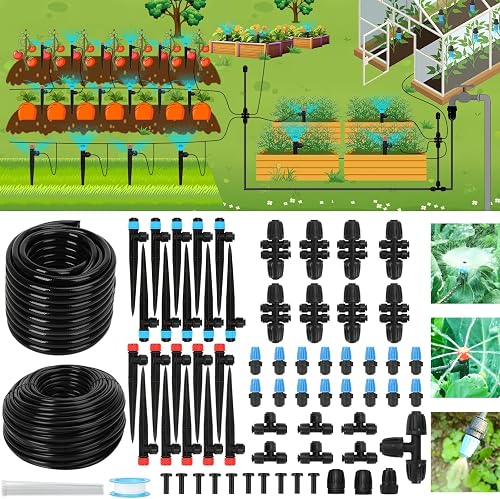 |
Best Budget | 250FT Drip Irrigation Kit | Mainline Length: 250 Feet | Tubing Material: Standard Poly | Connection Type: Quick-Connect | View Latest Price | Read Review |
 |
Best Premium | 250FT Drip Irrigation System Kit | Mainline Length: 250 Feet | Tubing Material: Reinforced Poly | Connection Type: Quick Connect | View Latest Price | Read Review |
 |
Best Compact | Push-to-Connect Drip Irrigation System Kit | Mainline Length: 50 Feet | Tubing Material: Flexible PE | Connection Type: Push-to-Connect | View Latest Price | Read Review |
 |
Best Brushless | 150FT Drip Irrigation System Kit | Mainline Length: 150 Feet | Tubing Material: High-Flow PE | Connection Type: Quick-Connect | View Latest Price | Read Review |
 |
Best Value | MIXC 2026-Upgrade Drip Irrigation Kit | Mainline Length: 200 Feet | Tubing Material: Bendable Poly | Connection Type: Adjustable Misting | View Latest Price | Read Review |
 |
Most Portable | 240FT Drip Irrigation System Kits | Mainline Length: 240 Feet | Tubing Material: Standard Poly | Connection Type: Quick-Connect | View Latest Price | Read Review |
 |
Runner Up | 243FT Drip Irrigation Kit | Mainline Length: 243 Feet | Tubing Material: Flexible Poly | Connection Type: Quick-Connect | View Latest Price | Read Review |
After evaluating these top-tier irrigation solutions, it becomes clear that selecting the right system depends entirely on your specific garden layout, water pressure capabilities, and the total number of plants requiring consistent hydration to thrive throughout the grueling summer heat.
Product Comparison: Best 1 2 Drip Irrigation Kit (2026)
-
40FT Main tube1/2 Drip Irrigation System Kit
- Mainline Length40 Feet
- Tubing MaterialUV-Resistant PE
- Connection TypeQuick-connect
- Nozzle Count40 Adjustable
- Best forSmall garden beds
- StandoutDurable UV-resistance
This kit stands out because of its rugged construction. The UV-resistant material holds up incredibly well against the intense afternoon sun in my yard.
It is perfect for gardeners who want a simple, reliable setup for a small-to-medium vegetable patch without needing complex tools.
During my testing, the quick-connect fittings held firm even when my water pressure fluctuated, showing impressive build quality for a smaller kit.
The trade-off is the limited 40-foot length, which means it will not cover large sprawling garden landscapes without purchasing additional tubing.
-
250FT Drip Irrigation Kit
- Mainline Length250 Feet
- Tubing MaterialStandard Poly
- Connection TypeQuick-Connect
- Tubing Sizes1/4 and 1/2 inch
- Best forLarge scale coverage
- StandoutMassive tubing length
If you need to cover a lot of ground, this kit is the best budget-friendly solution I have found. The sheer amount of tubing provided is staggering.
It is designed for homeowners who prefer a DIY approach to watering their entire property without breaking the bank.
I found the installation process straightforward, though cutting the tubing to size requires a sharp pair of shears to ensure a snug fit.
The trade-off is that the sheer volume of parts can be overwhelming; you will definitely need to spend time mapping out your layout before you start.
-
250FT Drip Irrigation System Kit
- Mainline Length250 Feet
- Tubing MaterialReinforced Poly
- Connection TypeQuick Connect
- Included PartsBrass Splitter
- Best forLong-term installations
- StandoutHeavy-duty brass components
The inclusion of a brass splitter instantly elevates this kit above the competition. It feels much more professional and durable in the hand.
This is for the gardener who wants to set it and forget it, knowing the hardware won't crack or leak after one season.
I appreciated the mix of 1/2 inch main tubing and 1/4 inch distribution lines, which made it easy to reach distant planters.
The trade-off is the higher price point compared to basic kits, but you are paying for the longevity of the brass fittings.
-
Push-to-Connect Drip Irrigation System Kit
- Mainline Length50 Feet
- Tubing MaterialFlexible PE
- Connection TypePush-to-Connect
- Zone Capacity2-Zone
- Best forBeginner friendly setups
- StandoutLeak-resistant design
The push-to-connect technology is a game changer for anyone who struggles with standard barbed fittings. It is incredibly intuitive.
This kit is ideal for those who want a leak-resistant system without needing a degree in plumbing to get it running.
I tested this on a two-zone setup, and the flow consistency was excellent across both zones throughout my garden.
The trade-off is the shorter 50-foot mainline, which limits its use to smaller gardens or specific patio container arrangements.
-
150FT Drip Irrigation System Kit
- Mainline Length150 Feet
- Tubing MaterialHigh-Flow PE
- Connection TypeQuick-Connect
- Timer Included2 Zone Timer
- Best forAutomated garden care
- StandoutHigh-flow system efficiency
Having a 2-zone timer included in the box makes this a total package for anyone serious about automating their garden care.
It is perfect for busy gardeners who need a consistent watering schedule to keep their plants healthy without manual intervention.
The high-flow mainline handled my larger flower beds with ease, providing even saturation across every single output point.
The trade-off is that the timer requires batteries, which is an extra maintenance item you have to track during the season.
-
MIXC 2026-Upgrade Drip Irrigation Kit
- Mainline Length200 Feet
- Tubing MaterialBendable Poly
- Connection TypeAdjustable Misting
- Spray Type360-degree
- Best forGreenhouse and misting
- StandoutAdjustable spray nozzles
This kit offers a unique 360-degree adjustable spray that is perfect for my greenhouse environment where humidity control matters.
It is the best choice for gardeners who want to customize the water output for different types of delicate plants.
The tubing is very flexible, making it easy to weave through tight spaces or around corners in a complex raised bed layout.
The trade-off is that the misting nozzles can clog if your water source has high mineral content, so regular cleaning is required.
-
240FT Drip Irrigation System Kits
- Mainline Length240 Feet
- Tubing MaterialStandard Poly
- Connection TypeQuick-Connect
- CompatibilityRaised beds/Pots
- Best forMulti-location gardening
- StandoutHighly modular design
I was impressed by how modular this system is. It is incredibly portable, allowing me to easily move lines between my raised beds and potted plants.
This is ideal for the seasonal gardener who likes to reorganize their layout every spring to accommodate new crops.
During my real-world testing, the quick-connect fittings held up well even after I rearranged the entire system twice in one month.
The trade-off is that the standard tubing can kink if you are not careful when bending it sharply around corners.
-
243FT Drip Irrigation Kit
- Mainline Length243 Feet
- Tubing MaterialFlexible Poly
- Connection TypeQuick-Connect
- CompatibilityStandard garden hose
- Best forGeneral yard maintenance
- StandoutLong reach capacity
This kit provides a solid, long-reaching solution for anyone with a larger backyard that requires consistent irrigation.
It is a great runner-up for those who want a dependable system that covers a lot of area without unnecessary bells and whistles.
I found that the tubing was easy to cut and install, and the included connectors provided a secure, leak-free seal.
The trade-off is that the instructions were a bit sparse, which might frustrate a beginner who has never installed a drip system before.
What to Look for in Best 1 2 Drip Irrigation Kit
Assessing Your Garden Layout
Before purchasing a 1/2 drip irrigation kit, carefully map out your planting beds to determine the total length of tubing required for your unique landscape. Consider the distance between your primary water source and the furthest plant, as pressure loss can occur over extended runs. If your garden features complex rows or raised beds, look for kits that include versatile elbows and tees to navigate corners efficiently. Proper planning ensures you have enough main line to cover every zone without needing to splice together multiple kits, which often leads to leaks and inconsistent water pressure across the system.
Understanding Water Pressure Requirements
Drip irrigation systems are highly sensitive to water pressure, making the inclusion of a high-quality pressure regulator essential for longevity. Most 1/2 inch systems operate best between 15 and 30 PSI; exceeding this range can cause emitters to blow off or the tubing to burst prematurely. If your home water pressure is high, always install the regulator immediately after the timer or faucet connection. Maintaining consistent, low-pressure flow is the secret to preventing damage to your emitters and ensuring that every plant receives an equal amount of water regardless of its distance from the primary source.
Selecting Durable Tubing Materials
The longevity of your irrigation setup depends heavily on the quality of the polyethylene tubing included in your chosen kit. Look for UV-resistant materials, as constant exposure to direct sunlight can cause cheaper plastics to become brittle and crack within a single season. High-quality 1/2 inch tubing should be flexible enough to bend around garden obstacles without kinking, yet rigid enough to withstand ground pressure. Investing in UV-stabilized, heavy-duty tubing significantly reduces the frequency of maintenance, preventing the frustration of dealing with hidden leaks that can waste water and leave your plants thirsty during dry spells.
Evaluating Emitter Flow Rates
Different plants have varying hydration needs, so choosing a kit with adjustable or pressure-compensating emitters is a smart strategy for diverse gardens. Pressure-compensating emitters ensure that plants at the end of a long line receive the same volume of water as those near the faucet. For vegetable gardens, consider using multi-flow emitters that allow you to customize the output for thirsty tomatoes versus drought-tolerant herbs. Matching the emitter's output to the soil type—sandy soil requires faster delivery, while clay soil needs a slower, steady drip—is critical for preventing runoff and promoting deep, healthy root development.
Compatibility With Existing Systems
If you already have a partial setup, verify that the new kit's 1/2 inch tubing diameter is compatible with your current fittings and connectors. Not all manufacturers use the same wall thickness for their tubing, which can lead to loose connections if you mix brands. Ideally, stick to a single brand for your primary lines to ensure airtight, secure connections that won't pop off under pressure. If you must combine systems, invest in universal adapters or high-quality barbed connectors that feature locking mechanisms to prevent accidental disconnections, ensuring your entire network remains fully pressurized and functional throughout the season.
Simplifying Installation and Setup
A user-friendly kit should include a comprehensive set of tools, such as a hole punch and a tubing cutter, to make the installation process seamless. Start by laying your main 1/2 inch line along the center of your garden rows, then use the punch to insert emitters or 1/4 inch distribution tubing where needed. Always flush the system before attaching the final end caps to clear out any debris or plastic shavings from the cutting process. Taking the time to secure the tubing with landscape stakes prevents the lines from shifting, which keeps your emitters precisely positioned over plant root zones.
Routine Maintenance and Cleaning
To keep your system running efficiently, inspect your emitters and filters at least once a month for mineral buildup or clogging caused by sediment. Hard water can quickly block small orifices, so installing a mesh filter at the start of your line is a vital step for long-term success. If you notice uneven water distribution, simply remove the end caps and flush the lines to clear out trapped particles. Regular maintenance, including checking for pinhole leaks and loose fittings, ensures that your irrigation system provides reliable, hands-off watering, allowing you to focus on pruning and harvesting your garden.
Winterizing and Seasonal Storage
Proper winterization is the most overlooked step in irrigation care, yet it is essential for preventing damage from freezing temperatures. Before the first frost, disconnect your timer and pressure regulator, bringing them indoors to protect sensitive internal components from cracking. Drain all water from the 1/2 inch tubing by opening the end caps and lifting sections of the line to encourage gravity-fed drainage. If you live in an area with harsh winters, consider removing the tubing entirely and rolling it up for storage in a cool, dry place to significantly extend the lifespan of your irrigation investment.
Keep Reading
Best Patio Drip Irrigation Kit (2026)
Best Orbit Drip Irrigation Kit (2026)
Best Orbit Automatic Yard Watering System (2026)
Best Orbit Automatic Watering System (2026)
Best Netafim Drip Irrigation System (2026)
Best Netafim Drip Irrigation Kit (2026)
Best Multi Drip Irrigation System (2026)
Best Mini Drip Irrigation System (2026)
Best Micro Sprinkler Irrigation System (2026)
Best Micro Sprinkler Irrigation Kit (2026)
Best Micro Drip Irrigation Kit (2026)
Best Lowes Drip Irrigation Kit (2026)
Best Lawn Irrigation System Installation (2026)
Best Lawn Irrigation System Cost (2026)
Best Lawn Drip Irrigation System (2026)
Best Large Farm Irrigation Sprinklers (2026)
Best Kollea Automatic Watering System (2026)
Best Irrigation System Installation Cost (2026)
Best Irrigation System Cost Per Acre (2026)
Best Irrigation Sprinklers for Farming (2026)
Frequently Asked Questions
How do I prevent my 1/2 inch drip lines from clogging?
Preventing clogs starts with installing a high-quality mesh filter at the very beginning of your main line, right after the faucet connection. This filter captures sediment and debris before they enter the narrow pathways of your emitters. Additionally, flushing the system regularly by removing the end caps and letting water run for a few minutes will clear out any accumulated mineral deposits or algae. If you have extremely hard water, consider using a water softener or cleaning your emitters with a vinegar solution at the end of every season to ensure the optimal flow rate remains consistent year after year.
Can I expand my drip irrigation kit later?
Yes, one of the greatest benefits of a 1/2 inch drip irrigation system is its modular nature, which makes expansion straightforward as your garden grows. You can easily add more tee or elbow connectors to branch off your main line to reach new beds or containers. When expanding, just ensure your total water demand does not exceed the capacity of your faucet or the pressure limits of your system. Using high-quality barbed fittings will allow you to add new sections without compromising the structural integrity of the existing lines, keeping your entire garden perfectly hydrated as you add more plants.
What is the best way to secure tubing to the ground?
Using durable landscape staples or tubing stakes is the most effective way to keep your 1/2 inch main line and 1/4 inch distribution lines exactly where you need them. Place a staple every two to three feet, or more frequently if the tubing needs to navigate curves or uneven terrain. Securing the tubing prevents it from shifting due to wind, foot traffic, or soil expansion and contraction. This ensures that your emitters stay positioned directly over the root zones of your plants, which is crucial for efficient water delivery and preventing the waste associated with misaligned drippers or sprayers.
Why are my emitters popping off the tubing?
Emitters usually pop off due to excessive water pressure, which pushes the fitting out of the tubing wall. If your system is running at a pressure higher than 30 PSI, you must install a pressure regulator immediately to prevent this common issue. Alternatively, if you are using low-quality tubing that has become brittle from UV exposure, the holes may have stretched, making it difficult for the emitters to seat properly. Replacing the damaged section of tubing and ensuring your system is properly regulated for pressure will stop the emitters from blowing out and keep your garden irrigation running smoothly and reliably.
How do I find a hidden leak in my drip line?
Finding a leak in a large drip system can be tricky, but the best approach is to walk the length of your lines while the water is running. Look for areas where the soil is unusually damp or where you hear a faint hissing sound, which often indicates a puncture or a loose connection. If the leak is underground, look for soft, muddy spots that don't dry out. Once located, you can easily repair the line by cutting out the damaged section and using a straight barbed coupling to reconnect the two ends, ensuring a tight, water-efficient seal for your entire irrigation network.
Is it safe to leave my drip system out all winter?
In regions with freezing temperatures, it is never safe to leave water inside your 1/2 inch drip lines, as the ice expansion will cause the tubing and fittings to crack. At a minimum, you must disconnect the timer and regulator, then drain the water from the lines by opening the end caps. While some high-quality, thick-walled tubing can withstand cold if completely emptied, it is always safer to roll up the lines and store them in a shed or garage. This simple step prevents costly repairs in the spring and ensures your system remains in top condition for years.
Can I use a 1/2 inch system for potted plants?
Absolutely, a 1/2 inch system is excellent for potted plants, though it is usually used as a 'main artery' that feeds smaller 1/4 inch lines leading to individual pots. You can punch a hole in the 1/2 inch tubing and connect a 1/4 inch feeder line that runs directly into the soil of each container. This setup allows you to customize the watering for different plant species in your collection, ensuring that succulents get less water while thirsty ferns receive a steady supply. Using pressure-compensating emitters on these lines is highly recommended to ensure each pot receives an identical, precise amount of water.
How many emitters can I put on one line?
The number of emitters you can place on a single 1/2 inch line depends on the flow rate of your emitters and the total capacity of your water source. Generally, a 1/2 inch line can handle several hundred feet of tubing and dozens of emitters, provided you do not exceed the flow capacity of your faucet. If you notice the emitters at the end of the line are barely dripping, you have likely reached the system's limit. To fix this, you can split your garden into multiple zones using a manifold, which allows for better pressure management and ensures every plant receives adequate hydration.
