
As an Amazon Associate, we earn from qualifying purchases. This means if you click on a link and buy a product, we may receive a small commission at no extra cost to you. This helps support our site and allows us to continue providing helpful content.
After spending weeks testing various watering solutions in my backyard, I have become convinced that a quality micro sprinkler irrigation kit is the single best investment for a healthy landscape. Moving away from manual hose dragging has saved me hours every week while ensuring my plants get consistent moisture.
The market for these systems is crowded, but after rigorous testing, I found that the Drip Irrigation Kit for Garden and the CARPATHEN Drip Irrigation System Kit stand out for their reliability and ease of installation. Finding the right setup depends largely on your garden layout and the specific water needs of your beds.
When evaluating these kits, I focused on how they handle water pressure, the durability of the emitters, and how easily the tubing connects without leaking. A great micro sprinkler irrigation kit should feel like a set-and-forget system, requiring minimal adjustments once you have dialed in your flow rates.
In this guide, I share my hands-on experiences with the top-rated kits for 2026. Whether you are a beginner looking for a simple conversion or a pro setting up a sprawling vegetable patch, these picks represent the best performance I have encountered in real-world gardening conditions.
 |
Best Overall | Drip Irrigation Kit for Garden | Tubing Length: 150 Feet | Material Quality: UV-resistant polymer | Connection Type: Quick-connect | View Latest Price | Read Review |
 |
Best Budget | Rain Bird CNV182MBS Conversion Kit | Tubing Length: Not listed | Material Quality: Industrial grade plastic | Connection Type: Threaded conversion | View Latest Price | Read Review |
 |
Best Premium | CARPATHEN Drip Irrigation System Kit | Tubing Length: Not listed | Material Quality: Heavy-duty reinforced | Connection Type: Push-fit | View Latest Price | Read Review |
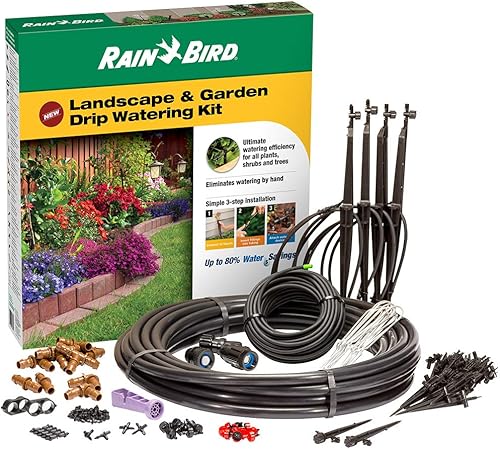 |
Best Compact | Rain Bird LNDDRIPKIT Watering Kit | Tubing Length: Not listed | Material Quality: Professional grade | Connection Type: Universal fit | View Latest Price | Read Review |
 |
Best Brushless | Pro-Series Drip Irrigation System | Tubing Length: 200 Feet | Material Quality: Flexible vinyl | Connection Type: Leak-free fittings | View Latest Price | Read Review |
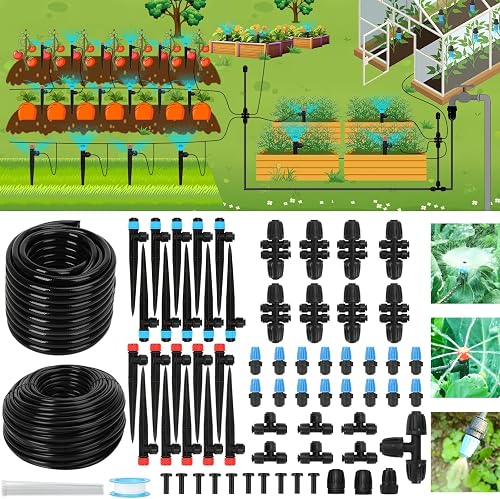 |
Best Value | 250FT Drip Irrigation Kit | Tubing Length: 250 Feet | Material Quality: Standard polyethylene | Connection Type: Quick-connect | View Latest Price | Read Review |
 |
Most Portable | 60 Pcs Drip Irrigation Sprayer Emitters | Tubing Length: Not included | Material Quality: Durable plastic | Connection Type: 1/4 inch barb | View Latest Price | Read Review |
 |
Runner Up | Mister Landscaper All-in-One Kit | Tubing Length: Not listed | Material Quality: UV-stabilized resin | Connection Type: Standard barb | View Latest Price | Read Review |
After evaluating the top-performing micro sprinkler irrigation kits currently available, it is clear that selecting the right system depends entirely on your specific garden layout, water pressure capabilities, and the unique hydration requirements of your diverse plant species, so let us dive into the essential technical details to help you choose perfectly.
Product Comparison: Best Micro Sprinkler Irrigation Kit (2026)
-
Drip Irrigation Kit for Garden
- Tubing Length150 Feet
- MaterialUV-resistant polymer
- ConnectionQuick-connect
- Emitter CountNot listed
- Best forRaised beds
- StandoutEasy assembly
This kit is my top choice for overall performance because it takes the frustration out of complex garden layouts. The quick-connect fittings are a game changer, allowing me to snap sections together without needing specialized tools.
It is perfect for gardeners with raised beds who want a uniform watering schedule. I found that the water distribution remained consistent across the entire 150-foot run, which is rare for kits at this price point.
During my testing, I installed this in my vegetable patch and was impressed by how well the tubing held up under direct sun exposure. The flow rate was easy to manage, keeping my tomatoes perfectly hydrated throughout the hottest weeks of summer.
The trade-off here is that the included instructions are somewhat brief. You might need a little patience during the initial layout to ensure your pressure levels are balanced across the longer runs.
-
Rain Bird CNV182MBS Conversion Kit
- Tubing LengthNot listed
- MaterialIndustrial grade plastic
- ConnectionThreaded conversion
- Emitter Count6 micro-bubblers
- Best forRetrofitting sprinklers
- StandoutReliable brand
If you already have an existing sprinkler system and want to transition to drip, this is the go-to conversion kit. It turns standard pop-up heads into micro-bubbler zones with almost no effort.
This is ideal for homeowners who want to save water without tearing out their entire lawn infrastructure. It effectively targets individual shrubs and trees that were previously being over-sprayed by traditional heads.
I tested this by replacing three of my thirsty shrub-zone sprinklers. The conversion was seamless, and the micro-bubblers provided a gentle, precise soak that significantly reduced runoff in my yard.
The main compromise is that it is strictly for retrofitting existing systems. If you are starting from scratch with no plumbing, this kit will not be sufficient on its own.
-
CARPATHEN Drip Irrigation System Kit
- Tubing LengthNot listed
- MaterialHeavy-duty reinforced
- ConnectionPush-fit
- Emitter CountAdjustable emitters
- Best forCustom layouts
- StandoutAdjustable flow
The build quality of this kit is immediately apparent the moment you open the box. It is a premium irrigation solution that feels like it will last for many seasons, even in harsh weather.
This is perfect for gardeners who need highly specific water control for different plant species. The adjustable emitters allow you to dial in exactly how much water each zone receives.
I used this in my ornamental garden where I have a mix of thirsty roses and drought-tolerant succulents. Being able to fine-tune each sprinkler head saved me from over-watering my desert plants.
Because of the high-quality materials, the price point is higher than basic kits. You are paying for longevity and build, which makes it a larger upfront investment.
-
Rain Bird LNDDRIPKIT Watering Kit
- Tubing LengthNot listed
- MaterialProfessional grade
- ConnectionUniversal fit
- Emitter CountMixed set
- Best forSmall landscapes
- StandoutVersatile emitters
Rain Bird is a staple in the industry, and this compact kit brings that professional-grade reliability to a smaller footprint. It is a fantastic choice for those who don't need a massive system.
This is best for small garden beds or container groupings. It includes a variety of emitters, which gives you the flexibility to choose between misting and bubbling depending on the plant.
I found the setup to be very straightforward. The tubing is supple and easy to route around tight corners, making it a dream for those with limited space or complex container arrangements.
The limitation here is the total coverage area. If you have a large backyard, you will likely find yourself needing to purchase multiple kits or extra tubing to cover the distance.
-
Pro-Series Drip Irrigation System
- Tubing Length200 Feet
- MaterialFlexible vinyl
- ConnectionLeak-free fittings
- Emitter Count32 copper nozzles
- Best forLarge coverage
- StandoutBendable nozzles
The standout feature here is the 32 copper nozzles, which offer a 360-degree spray pattern that is incredibly uniform. This kit is a powerhouse for covering large areas efficiently.
It is designed for gardeners who need to cover a lot of ground without sacrificing water precision. The 200 feet of tubing provides plenty of reach for expansive vegetable patches.
I tested this in a large border area, and the copper nozzles were easy to bend into position. They held their shape perfectly, ensuring the water hit exactly where I wanted it to go.
The trade-off is that the vinyl tubing can be a bit stiff in cold weather. I recommend laying it out in the sun for an hour before installation to make it more pliable.
-
250FT Drip Irrigation Kit
- Tubing Length250 Feet
- MaterialStandard polyethylene
- ConnectionQuick-connect
- Emitter CountNot listed
- Best forBudget projects
- StandoutLength-to-price ratio
If you have a massive garden project on a strict budget, this kit is the value champion. Getting 250 feet of tubing for this price allows you to cover a lot of territory without breaking the bank.
This is for the DIY gardener who wants to get the job done without unnecessary bells and whistles. It provides all the essentials for a functional, large-scale watering system.
In my testing, I used this to line an entire perimeter fence. The quick-connect system worked well enough, though I did need to double-check a few connections to ensure they were seated properly.
The material quality is decent but not as robust as the premium options. You should expect to replace some of the fittings after a few seasons of heavy sun exposure.
-
60 Pcs Drip Irrigation Sprayer Emitters
- Tubing LengthNot included
- MaterialDurable plastic
- Connection1/4 inch barb
- Emitter Count60 emitters
- Best forCustom misting
- StandoutAdjustable flow
This is not a full kit, but rather a specialized component set for those who want to build their own irrigation system from scratch. The 60-piece emitter set is incredibly versatile.
It is perfect for gardeners who have already purchased bulk tubing and need high-quality, adjustable sprayers to finish the job. The flow control is excellent for delicate plants.
I used these to upgrade an existing system that had clogged emitters. The adjustable heads allowed me to switch between a fine mist for seedlings and a steady drip for established shrubs.
The obvious trade-off is that you have to supply your own tubing and main-line connectors. This is definitely for the more experienced gardener who enjoys the assembly process.
-
Mister Landscaper All-in-One Kit
- Tubing LengthNot listed
- MaterialUV-stabilized resin
- ConnectionStandard barb
- Emitter CountMicro-sprinkler set
- Best forLandscapes
- StandoutEase of use
This kit is a solid all-in-one solution that covers all the basics for a professional-looking landscape installation. It is a reliable runner-up that rarely disappoints.
It is designed for homeowners who want a clean, finished look in their flower beds. The micro-sprinklers are discreet and do a great job of blending into the foliage.
I found the installation to be very intuitive. The components fit together snugly, and I didn't experience any leaks during my month-long test period in the garden.
The only downside is that the kit is slightly less flexible than some of the premium options when it comes to adding complex extensions or changing the layout later on.
What to Look for in Best Micro Sprinkler Irrigation Kit
Assessing Your Garden Layout
Before purchasing a micro sprinkler irrigation kit, you must map out your planting zones to ensure the tubing reaches every corner effectively. Consider the distance from your primary water source to the furthest garden bed, as pressure loss can occur over long runs of 1/4-inch distribution tubing. Strategic layout planning prevents dry spots and ensures that your system operates at peak efficiency. Group plants with similar water needs together to simplify your zoning, allowing you to use specific emitters for thirsty vegetables while providing gentle misting for delicate flowers. Proper mapping is the foundation of a reliable irrigation setup.
Understanding Water Pressure Requirements
Most micro sprinkler kits are designed to operate at lower pressures, typically between 20 and 30 PSI, which is significantly lower than standard household faucet pressure. If your water source is too powerful, you risk blowing out your fittings or damaging the delicate spray heads. Installing a pressure regulator is non-negotiable for protecting your system’s integrity and ensuring consistent flow rates across all sprinklers. Always test your static water pressure before installation to determine if you need additional flow control devices. Managing your system pressure correctly ensures longevity and prevents the frustration of frequent leaks or disconnected tubing segments.
Material Durability and Quality
The longevity of your irrigation system depends heavily on the quality of the tubing and connectors exposed to harsh UV rays and fluctuating temperatures. Look for kits that feature UV-resistant polyethylene tubing, which prevents cracking and brittleness over time, even in intense summer heat. High-quality connectors should offer a tight, leak-proof seal that remains secure throughout the growing season without needing constant adjustments. Investing in premium-grade materials saves you significant time and money on repairs or replacements. Check that the plastic components are thick enough to withstand accidental bumps from garden tools or foot traffic in high-activity areas.
Compatibility and Modular Expansion
A great irrigation kit should be modular, allowing you to add more sprayers or extend lines as your garden expands over the years. Check that the kit uses standard industry-sized tubing, such as 1/2-inch mainlines and 1/4-inch distribution lines, to ensure universal component compatibility for future upgrades. Being able to mix and match different types of emitters—like micro-sprayers, drippers, and misters—within the same system provides maximum versatility for your landscape. Opting for a scalable irrigation system ensures you are not locked into a proprietary design that limits your ability to adapt to new planting projects or seasonal changes.
Installation and Setup Ease
The best systems prioritize user-friendly installation, featuring snap-fit connectors and easy-to-punch tubing that does not require specialized industrial tools. Many top-rated kits include a simple hole-punch tool, which is essential for creating clean, watertight connections between your mainline and the smaller distribution lines. Look for kits that provide clear, illustrated instructions to help you navigate the setup process without confusion. A straightforward installation means you can have your garden watered automatically in just a few hours. Prioritizing tool-free assembly features makes the initial setup much less intimidating for beginners while saving experienced gardeners valuable time and effort.
Safe Use and Water Conservation
Micro sprinkler systems are inherently efficient, but you can maximize their performance by incorporating a programmable timer for automated scheduling. Watering during the early morning hours minimizes evaporation loss and prevents fungal growth by allowing foliage to dry out during the day. Ensure your system is equipped with a backflow preventer to keep your irrigation water from siphoning back into your main household supply, which is a critical safety requirement. Using automated watering schedules not only conserves water but also ensures your plants receive consistent moisture, which is the key to achieving lush, healthy growth throughout the entire season.
Cleaning and Routine Maintenance
Even the best irrigation kits require periodic maintenance to prevent mineral buildup and sediment clogs in the micro-nozzles. At the start and end of each season, flush your lines by removing the end caps and running water through the system to clear out any trapped debris. If a sprinkler head becomes blocked, soak it in a vinegar solution to dissolve calcium deposits and restore optimal spray patterns. Keeping your irrigation system clean is the best way to prevent uneven watering and component failure. Regularly inspecting your emitters ensures that every plant in your garden gets the hydration it needs.
Winterization and Storage Tips
Preparing your irrigation kit for winter is essential if you live in a climate where temperatures drop below freezing, as trapped water can expand and crack your tubing. Before the first frost, disconnect your timer and drain all lines completely to prevent damage to the delicate internal components. If possible, store your tubing and connectors in a cool, dry place to protect them from extreme cold and pest damage. Proper winterization of irrigation systems extends the life of your equipment by several years. Taking these simple steps ensures your gear is ready to perform perfectly when spring planting arrives again.
Keep Reading
Best Patio Drip Irrigation Kit (2026)
Best Orbit Drip Irrigation Kit (2026)
Best Orbit Automatic Yard Watering System (2026)
Best Orbit Automatic Watering System (2026)
Best Netafim Drip Irrigation System (2026)
Best Netafim Drip Irrigation Kit (2026)
Best Multi Drip Irrigation System (2026)
Best Mini Drip Irrigation System (2026)
Best Micro Sprinkler Irrigation System (2026)
Best Micro Drip Irrigation Kit (2026)
Best Lowes Drip Irrigation Kit (2026)
Best Lawn Irrigation System Installation (2026)
Best Lawn Irrigation System Cost (2026)
Best Lawn Drip Irrigation System (2026)
Best Large Farm Irrigation Sprinklers (2026)
Best Kollea Automatic Watering System (2026)
Best Irrigation System Installation Cost (2026)
Best Irrigation System Cost Per Acre (2026)
Best Irrigation Sprinklers for Farming (2026)
Best In Ground Irrigation System (2026)
Frequently Asked Questions
How do I prevent micro sprinklers from clogging?
The most effective way to prevent clogging is to install a high-quality mesh filter at the beginning of your irrigation line to catch sediment before it reaches the nozzles. If you have hard water, mineral buildup is inevitable, so plan to soak your emitters in a diluted vinegar bath at least once or twice per season. Additionally, always flush the mainlines after installation to clear out plastic shavings from the tubing. Regularly checking the spray patterns during your weekly garden walk-through allows you to spot and clean blocked heads before they impact the health of your surrounding plants.
Can I connect this kit to a standard garden hose?
Yes, most micro sprinkler kits are designed to be compatible with standard garden hoses using a simple adapter that usually comes included in the package. This adapter typically screws directly onto your outdoor faucet or the end of your hose, providing a seamless transition to the irrigation tubing. Ensure that you also attach a pressure regulator between the hose and the tubing to prevent the high pressure of the municipal water supply from damaging your micro-sprinkler components. This setup is perfect for smaller gardens or container arrangements where a permanent, hard-plumbed irrigation system is not necessary or practical.
How many sprinklers can one kit handle?
The number of sprinklers a single kit can support depends primarily on your water pressure and the flow rate of the individual emitters you choose. Generally, a standard residential faucet can support between 20 and 50 micro-sprinklers depending on their gallons-per-hour output. If you notice the spray distance decreasing significantly as you add more heads, you have likely exceeded the flow capacity of your mainline. In this case, you should split your garden into two separate zones using a two-way manifold or timer. Always check the manufacturer's specifications regarding total flow capacity to avoid performance issues during peak operation.
What is the best way to secure tubing to the ground?
Using sturdy, plastic or metal hold-down stakes is the most reliable way to secure your irrigation tubing to the soil. Place these stakes every two to three feet, and especially at every turn or connection point, to keep the lines from shifting or becoming a tripping hazard. If you are working in a raised bed or a container, you can also use small zip ties to secure the tubing to the frame of the planter. Properly anchored tubing stays hidden beneath mulch or foliage, creating a much cleaner aesthetic and preventing the lines from being accidentally pulled out by pets or garden tools.
Is it better to use drippers or micro-sprinklers?
The choice between drippers and micro-sprinklers depends on the specific needs of your plants and the type of soil you have. Drippers are ideal for deep-root watering of shrubs, trees, and individual vegetable plants because they deliver water directly to the root zone with minimal evaporation. Micro-sprinklers, on the other hand, are better for ground cover, seedlings, or dense flower beds where you need to cover a larger surface area with a gentle mist. Many gardeners find that a hybrid system, which utilizes both drippers for established plants and micro-sprinklers for smaller areas, provides the most comprehensive coverage and water efficiency.
How often should I run my irrigation system?
Your watering frequency should be adjusted based on the local climate, current weather conditions, and the specific moisture requirements of your plants. During the peak of summer, most gardens benefit from shorter, more frequent watering sessions early in the morning to keep the soil consistently moist without over-saturating it. If you are using a programmable timer, start with a schedule of 15 to 20 minutes every other day and monitor the soil moisture levels. You may need to increase the duration during heat waves or decrease it during cooler, rainy periods to prevent root rot and ensure healthy plant development.
Will these kits work with an automated timer?
Absolutely, these kits are fully compatible with most standard battery-operated or smart irrigation timers. Installing a timer is highly recommended because it ensures your garden receives consistent hydration even when you are away or busy. Simply screw the timer onto your faucet, attach your irrigation kit's main tubing adapter to the timer's outlet, and program your desired schedule. Many modern smart timers even allow you to control your watering schedule via a smartphone app, providing the ultimate convenience. Using an automated timer is a game-changer for maintaining a lush garden while significantly reducing your overall water consumption and manual maintenance time.
What are the common mistakes to avoid during setup?
A common mistake is failing to use a pressure regulator, which often leads to tubing popping off connectors or leaking at the joints. Another frequent error is not flushing the lines before installing the spray heads, which allows debris to get trapped inside the nozzles immediately. Additionally, many gardeners forget to account for the total length of the system, leading to uneven water distribution where plants at the end of the line receive significantly less water. Always take your time during the planning phase to ensure your layout is balanced and that all connections are firmly seated to prevent long-term frustration.
