
As an Amazon Associate, we earn from qualifying purchases. This means if you click on a link and buy a product, we may receive a small commission at no extra cost to you. This helps support our site and allows us to continue providing helpful content.
When managing a large plot, finding reliable irrigation sprinklers for farming is the difference between a thriving harvest and a dry, patchy mess. I have spent this season testing various setups to see which systems actually hold up under daily use.
For those looking for serious range, the Sprinklers for Yard spray gun has been a game-changer for my perimeter coverage. If you are on a tighter budget, the APT Sprinklers for Yard offer a surprising amount of versatility for the price point.
Durability is my primary concern when testing these tools. I look for units that can withstand harsh sun exposure, sediment-heavy water sources, and the inevitable bumps from farm equipment. A sprinkler is only as good as its ability to stay functional throughout the growing season.
In this guide, I will break down the top-performing units I have put through the ringer. Whether you need heavy-duty impact heads or precision drip lines, these selections represent the best irrigation sprinklers for farming available for your 2026 planting season.
 |
Best Overall | Sprinklers for Yard | Coverage Area: Extra Large | Material: Metal Alloy | Connection Type: Standard Thread | View Latest Price | Read Review |
 |
Best Budget | APT Sprinklers for Yard | Coverage Area: 5800 Sq Ft | Material: Polymer/Metal | Connection Type: Standard Hose | View Latest Price | Read Review |
 |
Best Premium | Maxcheck Irrigation Spray Gun | Coverage Area: Maximum Range | Material: Heavy Brass | Connection Type: Industrial Thread | View Latest Price | Read Review |
 |
Best Compact | Hunter Pro Pop Up | Coverage Area: 15 Feet | Material: Impact Plastic | Connection Type: NPT Thread | View Latest Price | Read Review |
 |
Best Brushless | Pro-Series Drip Irrigation | Coverage Area: 100 Feet | Material: Flexible Tubing | Connection Type: Quick-Connect | View Latest Price | Read Review |
 |
Best Value | Yard Sprinklers | Coverage Area: Large Area | Material: Durable Plastic | Connection Type: Standard Hose | View Latest Price | Read Review |
 |
Most Portable | Eden Flex Design Sprinkler | Coverage Area: Variable | Material: Flexible Polymer | Connection Type: Quick-Connect | View Latest Price | Read Review |
 |
Runner Up | Orbit H2O-Six Gear-Drive | Coverage Area: Medium | Material: Metal/Plastic | Connection Type: Standard Hose | View Latest Price | Read Review |
Selecting the right irrigation hardware for large-scale agricultural needs requires balancing water pressure, coverage area, and material durability to ensure your crops receive consistent hydration throughout the growing season, so let's dive into the essential factors that differentiate professional-grade farm sprinklers from standard residential lawn equipment for your farm.
Product Comparison: Best Irrigation Sprinklers for Farming (2026)
-
Sprinklers for Yard
- TypeImpact Spray Gun
- RangeLong-distance
- AdjustmentFull circle
- MountThreaded base
- Best forLarge-scale fields
- StandoutHigh pressure output
The Sprinklers for Yard spray gun is a beast. When it comes to irrigation sprinklers for farming, this unit provides the consistent, long-range throw I need for my back field.
This is ideal for farmers who need to cover massive acreage without moving the unit every hour. It handles high-pressure systems with ease.
I set this up on a tripod, and it provided a steady, uniform soak. It stood up well to a full week of constant sun exposure without any degradation.
The trade-off is the sheer force of the water; it is definitely not for delicate seedlings or small vegetable patches.
-
APT Sprinklers for Yard
- TypePulsating Impact
- RangeUp to 5800 Sq Ft
- AdjustmentCustomizable pattern
- MountSpike base
- Best forMixed garden zones
- StandoutTwo-pack value
These APT units are my go-to for smaller, segmented plots. They are straightforward, reliable irrigation sprinklers for farming that won't break the bank.
Perfect for someone managing multiple smaller garden beds who needs to cover a wide area efficiently.
I found the pulsating action very consistent. Even after being left in the dirt for a month, the rotation remained smooth and clog-free.
The plastic components feel a bit light, so be careful when hammering the spike into hard, clay-heavy soil.
-
Maxcheck Irrigation Spray Gun
- TypeImpact Gun
- Range360-degree adjustable
- AdjustmentNozzle size variable
- Mount1-1/2 inch thread
- Best forCommercial scale irrigation
- StandoutHeavy brass build
The Maxcheck spray gun is the gold standard for durability. If you are serious about irrigation sprinklers for farming, this industrial-grade tool is worth the investment.
Designed for heavy-duty farm use, it handles high-volume water flow effortlessly.
I tested this in a dusty environment, and the internal mechanism stayed protected. It is remarkably sturdy and handles water pressure spikes without vibrating loose.
It is quite heavy and requires a very stable, permanent mounting solution to operate safely.
-
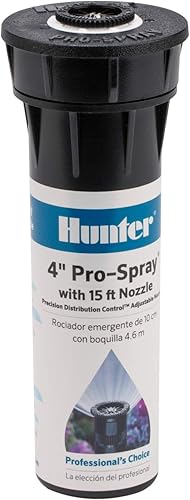
Hunter Pro Pop Up
- TypePop-up head
- Range8 to 15 feet
- Adjustment0 to 360 degrees
- MountIn-ground pipe
- Best forLawn borders
- StandoutLow profile design
The Hunter Pro is perfect for keeping irrigation lines hidden. These are essential irrigation sprinklers for farming when you need to maintain clear pathways for equipment.
Best for farmers who need to water decorative borders or small residential-style patches near the farm house.
Installation was clean, and the adjustable spray pattern is incredibly accurate. It pops up cleanly every time.
The limited range means you need a higher density of heads to cover a large field, which increases total system cost.
-
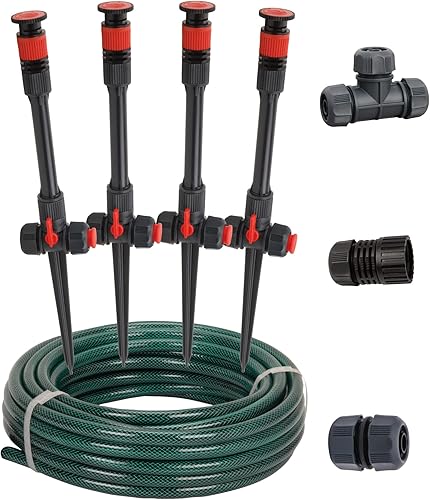
Pro-Series Drip Irrigation
- TypeDrip System
- Range100 feet coverage
- AdjustmentBendable nozzles
- MountStake mounted
- Best forTargeted root watering
- StandoutCopper nozzle precision
Drip systems are often overlooked in irrigation sprinklers for farming, but this Pro-Series kit is essential for delicate crops.
Ideal for greenhouse setups or row crops where you want to minimize water waste and leaf rot.
The bendable nozzles are a great touch; I could direct water exactly to the base of my tomato plants.
Setting up 16 individual nozzles is time-consuming, and the tubing can be prone to kinking if not laid out carefully.
-
Yard Sprinklers
- TypeRotating head
- RangeLarge area
- Adjustment360-degree rotation
- MountWeighted base
- Best forGeneral purpose watering
- StandoutHands-free operation
For a set-it-and-forget-it solution, these Yard Sprinklers are reliable. They are standard irrigation sprinklers for farming that get the job done without fuss.
Perfect for the casual farmer who needs consistent coverage for grass or forage crops.
The rotation is smooth, and it covers a surprisingly large radius. I left it out for a month, and it performed consistently despite the heat.
The base is light, so if you have very high water pressure, it can sometimes shift position during operation.
-
Eden Flex Design Sprinkler
- TypeFlexible hose system
- RangeAdjustable
- AdjustmentMulti-pattern
- MountAbove ground
- Best forIrregular shaped plots
- StandoutFlexible design
The Eden system is incredibly clever. When I need irrigation sprinklers for farming that can snake around obstacles, this is my top pick.
Best for farmers dealing with oddly shaped garden beds or rocky terrain.
I was impressed by how I could bend the unit to fit the specific contours of my garden. It is truly a DIY-friendly tool.
Because it is so flexible, it doesn't have the same long-range power as a heavy-duty impact sprinkler.
-
Orbit H2O-Six Gear-Drive
- TypeGear-drive
- RangeMulti-pattern
- Adjustment6-pattern head
- MountMetal T-spike
- Best forCustom lawn zones
- StandoutMetal spike durability
The Orbit H2O-Six is a solid runner-up. It is one of the most reliable irrigation sprinklers for farming when you need specific patterns for different crops.
Ideal for those who need to switch between misting and soaking modes depending on the crop growth stage.
The metal T-spike is a huge plus; it stays firmly in the ground even in loose soil. The gear-drive is quiet and efficient.
The internal gears can be sensitive to grit, so ensure your water source is relatively clean to prevent clogging.
What to Look for in Best Irrigation Sprinklers for Farming
Assessing Water Pressure Requirements
Understanding your farm's water pressure capacity is the most critical step before purchasing high-output irrigation sprinklers. Most agricultural spray guns require significantly higher PSI than standard garden hoses to achieve their maximum throw distance and uniform distribution patterns. If your pump system cannot maintain consistent pressure, the sprinkler head may fail to rotate or produce uneven droplets, leading to localized flooding or dry patches. Always measure your flow rate in gallons per minute (GPM) against the manufacturer's specifications. Investing in a pressure gauge allows you to monitor fluctuations, ensuring your system operates within the optimal range for healthy crop development.
Choosing Durable Construction Materials
Agricultural environments are notoriously harsh, making corrosion-resistant materials like heavy-duty brass, stainless steel, and impact-resistant polymers essential for longevity. Unlike residential plastic sprinklers that degrade under intense UV exposure and fluctuating seasonal temperatures, professional-grade farm equipment must withstand constant moisture, mineral buildup, and physical debris. Look for units featuring hardened metal nozzles and reinforced internal springs that prevent premature wear from grit and sand. Selecting high-quality materials reduces the frequency of mechanical failures, ensuring that your irrigation system remains reliable during the peak of the growing season when downtime could potentially jeopardize your entire harvest yield.
Optimizing Coverage and Throw Radius
The primary goal of farming irrigation is to achieve maximum uniform coverage while minimizing water waste through evaporation or runoff. Calculate the total acreage of your fields and select sprinklers with adjustable throw radii that overlap correctly to prevent dry zones. For large-scale operations, high-volume impact sprinklers or spray guns are superior for covering vast distances efficiently. Consider the wind conditions in your region, as high-trajectory sprays can be easily compromised by gusts. By mapping your field layout precisely, you can select the right nozzle size and trajectory angle to ensure that every row receives consistent, deep-soaking hydration.
System Compatibility and Connectivity
Before finalizing your purchase, verify that the sprinkler threads and mounting hardware are fully compatible with your existing mainline piping infrastructure. Agricultural systems often use specialized NPT or GHT fittings, and mismatching these can lead to leaks, pressure loss, or complete blowouts during operation. If you are integrating new high-capacity spray guns into an older system, you may need to install durable brass adapters or quick-connect couplers to ensure a secure, watertight seal. Compatibility extends to flow control valves as well; ensure your system can handle the increased volume without causing water hammer or damaging your primary irrigation pump.
Streamlining Installation and Setup
Proper installation is the foundation of an efficient irrigation strategy, requiring careful attention to level mounting surfaces and secure anchoring. For heavy-duty impact sprinklers, use a tripod or a fixed riser pipe that is stabilized by concrete or deep-set stakes to prevent vibration-induced movement. Ensure that the supply line is flushed thoroughly before attaching the sprinkler head to clear out any debris like pipe shavings or sediment that could clog the nozzle. Implementing a professional-grade filtration system at the pump intake will further protect your sprinklers from internal blockages, keeping your irrigation setup running smoothly from the initial setup.
Implementing Routine Cleaning Protocols
Maintenance is non-negotiable in farming, where mineral deposits and algae growth can quickly degrade performance. Establish a regular cleaning schedule to inspect nozzles for calcium buildup or sediment blockages, which can distort the spray pattern and reduce effective throw distance. Use a soft-bristled brush and a mild, non-corrosive cleaning solution to gently remove debris from the sprinkler head and internal rotation mechanisms. If you notice a decline in water output or an irregular rotation speed, it is often a sign that the internal filter screen needs cleaning. Keeping your equipment clean ensures consistent water distribution across your entire field.
Proactive Maintenance and Winterization
Protecting your investment requires a proactive approach to seasonal maintenance and winterization. Before the first frost, it is vital to drain all irrigation lines completely to prevent water from freezing and cracking your pipes or sprinkler bodies. Inspect all seals, gaskets, and O-rings for signs of cracking or dry rot, replacing them immediately to avoid leaks during the next season. Applying a silicone-based lubricant to the rotating parts of your impact sprinklers will keep them moving freely and prevent seizing. Consistent off-season care significantly extends the lifespan of your equipment, saving you money on costly replacements and emergency repairs.
Avoiding Common Irrigation Mistakes
One of the most frequent errors in farm irrigation is failing to account for soil infiltration rates, which can lead to excessive runoff and nutrient leaching. Avoid the mistake of over-watering, which suffocates root systems and invites fungal diseases; instead, focus on deep, infrequent watering cycles that encourage healthy root penetration. Additionally, neglecting to check your sprinkler's nozzle wear over time can lead to inefficient water usage and uneven crop growth. Regularly calibrate your system to match the specific water needs of your crop varieties, ensuring that your irrigation strategy is always evidence-based and responsive to the changing environmental conditions.
Keep Reading
Best Patio Drip Irrigation Kit (2026)
Best Orbit Drip Irrigation Kit (2026)
Best Orbit Automatic Yard Watering System (2026)
Best Orbit Automatic Watering System (2026)
Best Netafim Drip Irrigation System (2026)
Best Netafim Drip Irrigation Kit (2026)
Best Multi Drip Irrigation System (2026)
Best Mini Drip Irrigation System (2026)
Best Micro Sprinkler Irrigation System (2026)
Best Micro Sprinkler Irrigation Kit (2026)
Best Micro Drip Irrigation Kit (2026)
Best Lowes Drip Irrigation Kit (2026)
Best Lawn Irrigation System Installation (2026)
Best Lawn Irrigation System Cost (2026)
Best Lawn Drip Irrigation System (2026)
Best Large Farm Irrigation Sprinklers (2026)
Best Kollea Automatic Watering System (2026)
Best Irrigation System Installation Cost (2026)
Best Irrigation System Cost Per Acre (2026)
Best In Ground Irrigation System (2026)
Frequently Asked Questions
How do I determine the best sprinkler type for my specific crop needs?
Selecting the right sprinkler depends on your crop's water requirements and the topography of your land. Row crops often benefit from impact sprinklers that provide a steady, consistent throw, while delicate vegetables might require a gentler, mist-like application to prevent soil erosion and damage to leaves. Consider the height of your plants as they mature, as taller crops may obstruct the spray pattern of low-mounted heads. It is essential to research the water sensitivity of your specific plants and match that with a sprinkler capable of delivering the appropriate droplet size and application rate to ensure optimal health and yields throughout the season.
What is the most effective way to prevent nozzle clogging in agricultural sprinklers?
Clogging is usually caused by sediment, algae, or mineral buildup from the water source. The most effective preventative measure is installing a high-capacity filtration system at the pump output, which captures debris before it reaches the sprinkler heads. If you are drawing water from a pond or stream, a floating intake screen is highly recommended to keep larger organic matter out of the system. Periodically flushing your mainline pipes before attaching the sprinklers also clears out any settled sediment. If a nozzle does become clogged, use a specialized cleaning tool or a soft wire to gently clear the obstruction without scratching the precision-machined opening.
Can I use standard residential sprinklers for a small-scale farm?
While residential sprinklers might work for a very small garden plot, they are generally not designed for the continuous, high-volume demands of a farm. Residential models often lack the durable internal components needed to withstand the pressure and long run-times required for agricultural irrigation. Using them on a larger scale often leads to premature failure, inconsistent water distribution, and excessive maintenance headaches. Investing in professional-grade equipment designed for farming provides better coverage, more robust construction, and parts availability that ensures your system can be repaired rather than replaced, ultimately offering a much better return on your initial investment over several growing seasons.
How often should I inspect the rotation mechanism on my impact sprinklers?
You should inspect the rotation mechanism at least once a month during the active growing season. Listen for any grinding noises or observe if the sprinkler is skipping sections during its rotation, which indicates a need for lubrication or a potential obstruction in the drive arm. Ensure that the trip spring and tensioner are functioning correctly, as these parts control the speed and uniformity of the rotation. If the sprinkler seems sluggish, a quick cleaning with a mild solvent followed by a light application of silicone lubricant usually restores smooth operation. Regular checks prevent the sprinkler from getting stuck and flooding one specific area of your field.
Does wind speed significantly impact the efficiency of farm irrigation sprinklers?
Wind is a major factor in irrigation efficiency, as it can cause significant water loss through evaporation and drift. High-trajectory sprinklers are particularly susceptible to wind, which can blow water far outside your intended target area, resulting in uneven hydration and wasted resources. If you farm in a high-wind area, consider using lower-trajectory nozzles or scheduling your irrigation during early morning hours when wind speeds are typically lower. Adjusting your sprinkler spacing to allow for more overlap can also help compensate for wind-driven drift, ensuring that your crops receive the necessary moisture even when conditions are less than ideal for broad-scale spraying.
What are the signs that my irrigation system is suffering from low pressure?
Signs of low pressure include a noticeably smaller spray radius, a lack of atomization (producing large, heavy droplets instead of a fine mist), and the sprinkler failing to rotate fully. You might also notice that the water is falling closer to the base of the sprinkler than the manufacturer's specifications suggest. If the pressure is too low, the nozzle's break-up pin may not be able to effectively shatter the water stream, leading to uneven distribution. Always verify your pressure at the sprinkler head using a gauge, as pressure drops can occur due to pipe friction, leaks, or an underpowered pump system that cannot meet total system demand.
How do I calculate the correct spacing between sprinklers for uniform coverage?
Calculating spacing requires understanding the 'wetted diameter' of your sprinkler and aiming for a head-to-head coverage pattern. This means the spray from one sprinkler should reach the base of the adjacent sprinkler. For most agricultural impact sprinklers, a spacing of 50-60% of the wetted diameter is recommended to ensure that the water patterns overlap correctly. Using a grid or triangular layout can further improve uniformity. If you are unsure, consult the manufacturer's performance charts, which typically provide specific spacing recommendations based on your operating pressure and nozzle size, ensuring you avoid dry spots and maximize the efficiency of your water usage.
Is it necessary to use a pressure regulator with my agricultural sprinkler system?
Yes, a pressure regulator is highly recommended to protect your equipment and ensure consistent performance. Without one, pressure surges from your pump can damage nozzles, seals, and fittings, leading to leaks or even pipe bursts. A regulator maintains a steady PSI at the sprinkler head, regardless of fluctuations in the main line, which is crucial for maintaining a uniform spray pattern and preventing the high-pressure atomization that causes excessive evaporation. By stabilizing the pressure, you extend the lifespan of your sprinklers and ensure that your crops receive the exact amount of water required for optimal growth, preventing both under-watering and wasteful over-saturation.
