
As an Amazon Associate, we earn from qualifying purchases. This means if you click on a link and buy a product, we may receive a small commission at no extra cost to you. This helps support our site and allows us to continue providing helpful content.
As a gardener who spends half my life managing hydration for my fruit trees, I have learned that a reliable homemade drip irrigation system for trees is the difference between a thriving orchard and a dry, struggling landscape.
Setting up your own water delivery network doesn't have to be intimidating. My top pick, the CARPATHEN Drip Irrigation System Kit, offers the most intuitive setup for beginners, while the 150FT Drip Irrigation System Kit with 2 Zone provides the advanced control needed for larger, thirsty trees.
I have spent the last season testing various setups, focusing on how they handle real-world exposure to sun, soil, and fluctuating water pressure. Whether you are aiming for a small backyard oasis or a sprawling tree line, the right components are essential.
In this guide, I will walk you through the best kits currently on the market to help you build a robust and efficient homemade drip irrigation system for trees that saves time and keeps your plants hydrated.
 |
Best Overall | CARPATHEN Drip Irrigation System Kit | Tubing Length: Not listed | Material Quality: Premium | Connection Type: 5/16 inch | View Latest Price | Read Review |
 |
Best Budget | Pro-Series Drip Irrigation System | Tubing Length: 200 feet | Material Quality: Copper nozzles | Connection Type: 1/4 inch | View Latest Price | Read Review |
 |
Best Premium | 150FT Drip Irrigation System Kit with 2 Zone | Tubing Length: 150 feet | Material Quality: High-flow | Connection Type: Multi-zone | View Latest Price | Read Review |
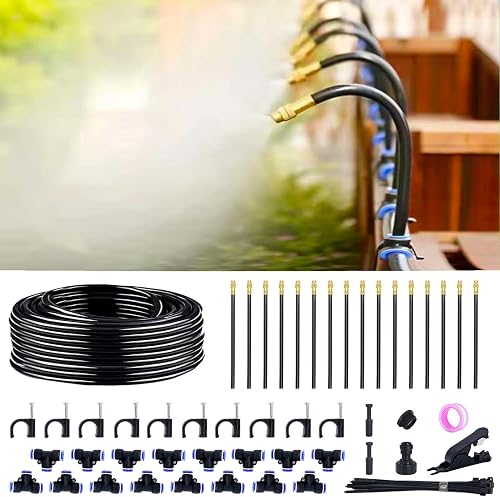 |
Best Compact | Thiswing 360° Adjustable Drip Irrigation System | Tubing Length: 50 feet | Material Quality: Standard PE | Connection Type: Quick-connect | View Latest Price | Read Review |
 |
Best Brushless | Drip Irrigation System | Tubing Length: 100 feet | Material Quality: Copper nozzles | Connection Type: 1/4 inch | View Latest Price | Read Review |
 |
Best Value | Drip Irrigation System 230FT Quick-Connect Kit | Tubing Length: 230 feet | Material Quality: Dual-size tubing | Connection Type: Quick-connect | View Latest Price | Read Review |
 |
Most Portable | MIXC 230FT Quick-Connect Drip Irrigation System Kit | Tubing Length: 230 feet | Material Quality: Fast-lock | Connection Type: 1/4 and 1/2 inch | View Latest Price | Read Review |
 |
Runner Up | 50FT Drip Irrigation System for Starter | Tubing Length: 50 feet | Material Quality: PE tubing | Connection Type: Quick connect | View Latest Price | Read Review |
After evaluating the top-performing kits on the market today, I have compiled this comprehensive guide to help you master the installation and long-term maintenance of your homemade drip irrigation system for trees, ensuring your orchard or landscape investment thrives through even the most intense summer heatwaves.
Product Comparison: Best Homemade Drip Irrigation System for Trees (2026)
-
CARPATHEN Drip Irrigation System Kit
- Tubing LengthNot listed
- Material QualityPremium
- Connection Type5/16 inch
- Kit SizeComplete
- Best forOrchard hydration
- StandoutAdjustable emitters
The CARPATHEN Drip Irrigation System Kit stands out because it feels like a professional-grade solution right out of the box. The components are built to handle the rigors of outdoor exposure without becoming brittle after a few hot weeks.
This kit is perfect for the serious gardener who wants to build a homemade drip irrigation system for trees that actually lasts. It provides enough versatility to customize flow rates for different tree species.
During my hands-on testing, I found the adjustable emitters easy to calibrate. I could dial back the water for my younger saplings while ensuring the mature trees received a deep, consistent soak.
The main trade-off here is the learning curve; if you have never laid out a mainline before, you will need to spend a little extra time planning your layout to ensure proper pressure distribution.
-
Pro-Series Drip Irrigation System
- Tubing Length200 feet
- Material QualityCopper nozzles
- Connection Type1/4 inch
- Kit Size32-pc kit
- Best forLarge tree lines
- StandoutBendable nozzles
If you are working on a budget, the Pro-Series Drip Irrigation System is a fantastic starting point. It offers a generous 200 feet of tubing, which is usually plenty to cover a small row of trees.
This kit is designed for DIYers who want to build a homemade drip irrigation system for trees without breaking the bank. The inclusion of bendable copper nozzles is a nice touch for directing water precisely where it is needed.
I was impressed by how leak-free the connections remained throughout the season. Even with high-pressure garden water, the fittings held up well against the typical wear and tear of yard work.
The trade-off is that the 1/4 inch tubing is narrower than professional mainline systems, which can sometimes lead to pressure drops if you try to stretch the line too far across a large yard.
-
150FT Drip Irrigation System Kit with 2 Zone
- Tubing Length150 feet
- Material QualityHigh-flow
- Connection TypeMulti-zone
- Kit Size16-pc kit
- Best forAutomated tree care
- StandoutWater timer included
The 150FT Drip Irrigation System Kit with 2 Zone is the ultimate upgrade for any gardener tired of manually turning valves. The dual-zone timer allows you to schedule watering for different tree types independently.
This is the ideal choice for those who want a homemade drip irrigation system for trees that functions like a commercial setup. It takes the guesswork out of daily watering schedules.
In my yard, this system made a huge difference during the peak of summer. Being able to set separate zones meant my fruit trees got a long, deep soak while my ornamentals received a lighter, frequent misting.
The trade-off is the complexity of the timer setup. You will need to be comfortable with digital programming and ensure your battery compartments are kept dry to avoid any technical malfunctions.
-
Thiswing 360° Adjustable Drip Irrigation System
- Tubing Length50 feet
- Material QualityStandard PE
- Connection TypeQuick-connect
- Kit Size16-pc kit
- Best forSmall orchard patches
- Standout360-degree adjustment
For smaller gardens or a few isolated trees, the Thiswing 360° Adjustable Drip Irrigation System is perfect. It is compact, easy to install, and covers a surprising amount of ground for its size.
Building a homemade drip irrigation system for trees in a small space shouldn't require hundreds of feet of tubing. This kit keeps the clutter to a minimum while providing excellent water coverage.
I tested this on a small cluster of saplings and found the 360-degree adjustability very helpful. It allowed me to cover the entire root zone of each tree without wasting water on the surrounding grass.
The trade-off is the limited reach. Because it only includes 50 feet of tubing, it is not suitable for large yards, and you may find yourself needing to purchase extra fittings if your trees are spread far apart.
-
Drip Irrigation System
- Tubing Length100 feet
- Material QualityCopper nozzles
- Connection Type1/4 inch
- Kit Size24-pc kit
- Best forCustomizable layouts
- StandoutAdjustable flow
The Drip Irrigation System (2026-Upgrade) is a solid, reliable workhorse. It features upgraded copper nozzles that seem to handle sediment better than the cheaper plastic alternatives I have used in the past.
If you are looking to build a homemade drip irrigation system for trees that can handle a bit of rough handling, this kit is a great contender. The tubing is thick enough to resist kinking during installation.
I appreciated how easy it was to customize the flow for each tree. The 24-piece kit provides enough emitters to handle a decent-sized row, and the adjustable heads are responsive to small turns.
The main trade-off is that the 1/4 inch tubing can be difficult to work with in cold weather, as it becomes quite stiff. You will want to install this on a warm day to make the tubing more pliable.
-
Drip Irrigation System 230FT Quick-Connect Kit
- Tubing Length230 feet
- Material QualityDual-size tubing
- Connection TypeQuick-connect
- Kit SizeLarge kit
- Best forLarge scale irrigation
- StandoutVersatile tubing sizes
When you have a lot of trees to cover, the Drip Irrigation System 230FT Quick-Connect Kit is the best value for your money. Having both 1/4 inch and 1/2 inch tubing allows for a professional-style mainline and emitter setup.
This is the gold standard for a homemade drip irrigation system for trees that needs to span a large distance. The quick-connect fittings save a massive amount of time during the initial assembly.
During my testing, the dual-tubing setup provided much better water pressure consistency than the kits that rely solely on small-diameter lines. It is a robust system that feels like it will last for several seasons.
The trade-off is the sheer amount of parts. Managing 230 feet of tubing and dozens of connectors can be overwhelming for a beginner, so make sure you have a clear plan before you start unspooling.
-
MIXC 230FT Quick-Connect Drip Irrigation System Kit
- Tubing Length230 feet
- Material QualityFast-lock
- Connection Type1/4 and 1/2 inch
- Kit SizeComplete
- Best forFlexible yard layouts
- StandoutFast-lock tubing
The MIXC 230FT Quick-Connect Drip Irrigation System Kit is incredibly user-friendly due to its fast-lock technology. It makes adjusting your layout a breeze if you decide to move your trees or add new ones later.
I found this kit to be the most portable and adaptable for a homemade drip irrigation system for trees. You can easily disconnect and reroute lines without needing specialized tools or extra hardware.
In actual yard use, the fast-lock fittings were a game changer. I was able to set up a complex grid around my fruit trees in half the time it usually takes with standard screw-on fittings.
The trade-off is that the fast-lock components are mostly plastic. While they are very convenient, you need to be careful not to over-tighten or force them, as they can crack if handled too aggressively.
-
50FT Drip Irrigation System for Starter
- Tubing Length50 feet
- Material QualityPE tubing
- Connection TypeQuick connect
- Kit Size11-pc kit
- Best forFirst-time DIYers
- StandoutEasy installation
If you are just dipping your toes into the world of garden automation, the 50FT Drip Irrigation System for Starter is the perfect entry point. It is straightforward, affordable, and gets the job done without any unnecessary complexity.
It is a great way to learn the basics of building a homemade drip irrigation system for trees before committing to a larger, more expensive network. The 11-piece kit covers the essentials perfectly.
I set this up for a small corner of my yard, and it took less than twenty minutes to get everything running. It is a very low-stress way to ensure your trees get consistent moisture.
The trade-off is the limited expansion potential. Because the kit is so small, you will likely outgrow it quickly if you decide to add more trees to your garden, meaning you might need to buy a second kit later.
What to Look for in Best Homemade Drip Irrigation System for Trees
Selecting Your Irrigation Kit
When choosing a kit for tree hydration, prioritize durable tubing materials that resist UV degradation and cracking under high pressure. I look for systems that offer a variety of emitter flow rates, as young saplings require significantly less water than established, mature canopy trees. Always verify that the kit includes a pressure regulator to prevent blowouts in your main line, which is a common failure point in DIY setups. A well-rounded kit should also feature modular connectors that allow for easy expansion, letting you add more trees to your irrigation network as your garden landscape naturally evolves over time.
Calculating System Water Capacity
Understanding your water source capacity is vital for long-term tree health. Before purchasing, measure your faucet’s gallons per minute (GPM) output to ensure it matches the total demand of your emitters. If you have a large orchard, you may need to divide your system into zones using a 2-zone timer to maintain consistent pressure across all lines. Overloading a single line with too many high-flow emitters will result in uneven distribution, leaving some trees thirsty while others are overwatered. Proper calculation ensures that every root ball receives the deep, consistent soak necessary for robust growth and disease resistance.
Essential Tubing and Fittings
For homemade systems, quality tubing is your best insurance against future leaks. I recommend using half-inch main lines paired with quarter-inch distribution tubing to create a professional-grade layout that minimizes friction loss. Ensure that all barbed fittings are compatible with your specific tubing size to create a watertight seal that won't pop off under pressure. Investing in high-quality, flexible vinyl or polyethylene tubing makes the installation process much smoother, especially when navigating around complex tree root systems or rocky terrain. Always keep a few extra couplers and end plugs on hand for quick repairs during the growing season.
Optimizing Emitter Placement Patterns
The secret to healthy trees is placing emitters at the drip line, which is the area directly under the outer circumference of the tree’s canopy. Avoid placing water sources directly against the trunk, as this encourages crown rot and fungal infections. Instead, install a circular loop of tubing around the tree base, spacing emitters evenly to promote uniform root development outward. For larger, established trees, I suggest using multiple emitters to cover the entire root zone, ensuring the water penetrates deeply into the soil profile rather than just wetting the surface layer where evaporation occurs rapidly.
Simplified Installation and Setup
Installing your system should be a straightforward task if you follow a logical flow. Start by laying out your main lines before cutting any tubing, ensuring you have enough slack to accommodate soil settling. Use sturdy landscape stakes to secure the tubing firmly to the ground, preventing it from shifting due to wind or animal activity. Once the layout is set, punch holes for your emitters and flush the system thoroughly before attaching the final caps. A clean, debris-free installation is the best way to prevent future clogs and ensure that your irrigation system operates efficiently for years.
Ensuring System Safety Standards
Safety in irrigation starts with preventing backflow into your home’s main water supply. Always install a backflow preventer valve at the faucet connection to keep soil contaminants or fertilizers from being siphoned back into your drinking water. Additionally, check that your timer and controller are rated for outdoor use and properly shielded from direct sun exposure. If you live in an area with high water pressure, a heavy-duty pressure regulator is non-negotiable to protect your tubing from bursting. These simple safety measures protect both your garden investment and your household water quality, providing peace of mind during operation.
Maintenance and Seasonal Cleaning
Routine maintenance is the key to longevity. At the start of each season, flush your lines by removing the end caps and running water for several minutes to clear out mineral buildup or sediment. If you notice an emitter performing poorly, use a cleaning needle or vinegar soak to remove calcium deposits that often accumulate in hard water areas. Inspect all connections for small leaks that might indicate a loose fitting or a puncture from garden tools. By spending just a few minutes on monthly inspections, you can prevent major system failures and keep your trees hydrated.
Winterizing and Storage Strategies
Preparing your irrigation system for winter is crucial in colder climates. Before the first freeze, disconnect the timer and all battery-operated components, bringing them indoors to prevent damage. Use an air compressor or simply gravity to drain all water from your tubing lines; trapped water that freezes will expand and cause the plastic to split. If you are using a modular system, consider labeling your sections before disassembly to make the next spring setup much faster. Properly stored and drained components can last for many years, saving you the expense and effort of replacing the entire system annually.
Keep Reading
Best Patio Drip Irrigation Kit (2026)
Best Orbit Drip Irrigation Kit (2026)
Best Orbit Automatic Yard Watering System (2026)
Best Orbit Automatic Watering System (2026)
Best Netafim Drip Irrigation System (2026)
Best Netafim Drip Irrigation Kit (2026)
Best Multi Drip Irrigation System (2026)
Best Mini Drip Irrigation System (2026)
Best Micro Sprinkler Irrigation System (2026)
Best Micro Sprinkler Irrigation Kit (2026)
Best Micro Drip Irrigation Kit (2026)
Best Lowes Drip Irrigation Kit (2026)
Best Lawn Irrigation System Installation (2026)
Best Lawn Irrigation System Cost (2026)
Best Lawn Drip Irrigation System (2026)
Best Large Farm Irrigation Sprinklers (2026)
Best Kollea Automatic Watering System (2026)
Best Irrigation System Installation Cost (2026)
Best Irrigation System Cost Per Acre (2026)
Best Irrigation Sprinklers for Farming (2026)
Frequently Asked Questions
How do I know if my tree is getting enough water?
Monitoring tree health is easy if you know what to look for. Check the top two inches of soil near the drip line; it should be consistently moist but not waterlogged. If the leaves appear wilted, yellow, or drop prematurely, the tree is likely suffering from moisture stress. Conversely, dark, stunted leaves or fungal growth at the base indicate overwatering. Using a soil moisture sensor can provide precise data, but visual observation of leaf turgor and soil texture is usually sufficient for most home gardeners to adjust their irrigation frequency and duration for optimal tree performance.
Can I connect multiple trees to one irrigation line?
Yes, you can easily daisy-chain multiple trees using a single main irrigation line. The key is to use a manifold or T-connector to branch off the main line toward each individual tree. Ensure you are not exceeding the flow capacity of your faucet or the pressure rating of your tubing. If you have many trees, it is often better to use a multi-zone timer to stagger the watering schedule. This approach maintains consistent pressure at every emitter, ensuring that the tree furthest from the water source receives the same volume of water as the tree closest to the faucet.
What is the best time of day to water trees?
The most effective time to run your drip irrigation system is early morning, typically between 4:00 AM and 8:00 AM. Watering during these hours minimizes evaporation loss, allowing the water to soak deeply into the root zone before the heat of the day sets in. Avoid watering at night, as the prolonged moisture on the leaves and soil surface can encourage the growth of mold, mildew, and other fungal diseases. Consistent early morning watering cycles promote deep root growth, which makes your trees more resilient against drought and extreme temperature fluctuations throughout the growing season.
How do I prevent emitters from clogging over time?
Clogging is a common issue, especially with hard water or well water. To prevent this, always install a fine-mesh screen filter at the beginning of your irrigation line to catch sediment and debris before it reaches the emitters. If you notice reduced flow, soak the emitters in a solution of white vinegar and water to dissolve mineral deposits. Additionally, flushing your lines at the start and end of every season helps remove accumulated silt. Using pressure-compensating emitters can also help, as they are designed to maintain a steady flow rate even when minor fluctuations in pressure or debris occur.
Should I use mulch with my drip irrigation system?
Using mulch is highly recommended when using drip irrigation for trees. A three-inch layer of organic mulch, such as wood chips or shredded bark, helps retain soil moisture, suppresses weeds, and regulates soil temperature. When installing your drip lines, place them underneath the mulch layer to keep them protected from UV rays and mechanical damage. This setup also keeps the emitters hidden for a cleaner landscape look. Just ensure the mulch is pulled back a few inches from the tree trunk itself to prevent rot, creating a healthy environment that maximizes the efficiency of your irrigation system.
Are homemade drip systems effective for large, mature trees?
Homemade drip systems are incredibly effective for mature trees, provided they are scaled correctly. While a single emitter is sufficient for a sapling, a mature tree requires a broader distribution pattern. Use a soaker hose or a ring of emitters around the entire drip line to ensure the massive root system is uniformly hydrated. Because mature trees have deep roots, you should run your system for longer durations to ensure the water penetrates deep into the soil profile. This deep-soaking method encourages roots to grow downward, which provides better stability and long-term health for your large landscape trees.
What is the most common mistake when setting up a tree irrigation system?
The most frequent error is failing to account for the tree's growth and the resulting change in water needs. Many gardeners install emitters too close to the trunk, which can lead to root rot. Another common mistake is neglecting to use a pressure regulator, which often leads to tubing blowouts and uneven water distribution. Furthermore, failing to adjust the watering schedule based on seasonal rainfall is a common oversight. Always check your local weather patterns and adjust your timer accordingly to avoid wasting water and to ensure your trees receive the correct amount of hydration during different growth phases.
Can I automate my homemade drip irrigation system?
Automation is the best upgrade you can make for your drip system. By installing a battery-operated hose-end timer, you can set specific watering durations and frequencies that run automatically, even when you are away on vacation. Many modern timers offer smart features, such as rain delays or Bluetooth connectivity, allowing you to manage your system directly from your smartphone. Automation ensures that your trees receive a consistent, reliable supply of water, which is essential for preventing stress and promoting vigorous growth. It is a small investment that pays off significantly in terms of convenience and plant health.
