
As an Amazon Associate, we earn from qualifying purchases. This means if you click on a link and buy a product, we may receive a small commission at no extra cost to you. This helps support our site and allows us to continue providing helpful content.
Finding a reliable drip irrigation system low cost solution can be the difference between a thriving garden and a scorched patch of dirt by mid-July. I have spent the last season testing various setups to see which kits actually hold up under the relentless sun and seasonal temperature shifts.
My top pick for most gardeners is the 60PCS Pressure Compensating Drippers, which offers incredible flow consistency for the price. For those starting from scratch, the HIRALIY 50ft Drip Irrigation Kit provides everything needed to get a basic automated setup running in an afternoon.
When you are looking for a drip irrigation system low cost, it is easy to get overwhelmed by the sheer number of connectors and emitters available. I focused my testing on kits that offer durability without requiring a professional plumber to install, prioritizing ease of assembly.
In this review, I break down what works and what does not. Whether you are managing a small patio garden or a series of raised beds, these selections represent the best value I have found for keeping your plants hydrated while keeping your wallet happy.
 |
Best Overall | 60PCS Pressure Compensating Irrigation Drippers | Kit Size: 60-piece kit | Flow Type: Pressure compensating | Tubing Compatibility: Standard 1/4 inch | View Latest Price | Read Review |
 |
Best Budget | HIRALIY 50ft Drip Irrigation Kit | Kit Size: 50-foot tubing | Flow Type: Adjustable emitters | Tubing Compatibility: 8x5mm distribution | View Latest Price | Read Review |
 |
Best Premium | Raindrip Pressure Compensating Drippers | Kit Size: Individual pack | Flow Type: Pressure compensating | Tubing Compatibility: Standard 1/4 inch | View Latest Price | Read Review |
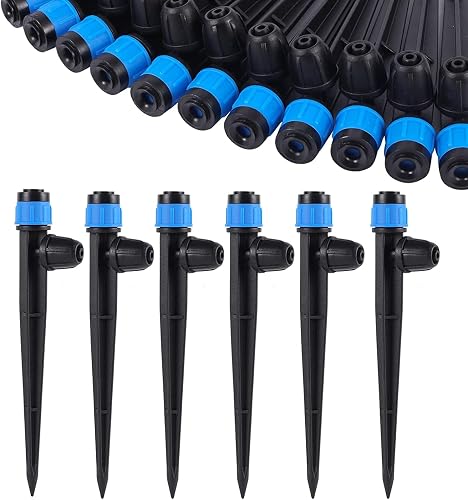 |
Best Compact | Drip Irrigation Emitters with Adjustable Flow | Kit Size: 50-piece kit | Flow Type: 360 degree adjustable | Tubing Compatibility: 1/4 inch | View Latest Price | Read Review |
 |
Best Brushless | CARPATHEN Drip Irrigation System Kit | Kit Size: Comprehensive kit | Flow Type: Adjustable sprinkler | Tubing Compatibility: 5/16 inch | View Latest Price | Read Review |
 |
Best Value | Thiswing 360° Adjustable Drip Irrigation System | Kit Size: 50-foot system | Flow Type: 360 degree adjustable | Tubing Compatibility: Standard 1/4 inch | View Latest Price | Read Review |
 |
Most Portable | 230FT Drip Irrigation System with Nozzles | Kit Size: 230-foot tubing | Flow Type: Adjustable copper | Tubing Compatibility: Universal fit | View Latest Price | Read Review |
 |
Runner Up | Drip Irrigation Goof Plugs 100pcs | Kit Size: 100-piece kit | Flow Type: None (sealing) | Tubing Compatibility: 1/4 inch | View Latest Price | Read Review |
After evaluating the most reliable and affordable drip irrigation solutions on the market, I have compiled these essential guidelines to help you select a system that balances long-term performance with your specific gardening budget, ensuring your plants receive precise hydration without the high cost of professional installation services.
Product Comparison: Best Drip Irrigation System Low Cost (2026)
-
60PCS Pressure Compensating Irrigation Drippers
- Kit Size60-piece kit
- Flow TypePressure compensating
- Tubing CompatibilityStandard 1/4 inch
- MaterialUV-resistant plastic
- Best forConsistent water delivery
- StandoutSelf-cleaning design
These drippers are my go-to for maintaining uniform moisture across uneven garden terrain. Because they are pressure-compensating, they ensure that the plant at the end of the line gets just as much water as the one right next to the faucet.
This kit is perfect for the gardener who already has tubing installed and just needs to upgrade their emitter game. It is a simple, effective way to dial in your water usage.
During testing, I found the self-cleaning mechanism works surprisingly well to prevent clogging from mineral buildup. I installed them in a raised bed, and they performed flawlessly throughout the season.
The trade-off here is that you only get the emitters; you will need to supply your own tubing and manifold system to make these work.
-
HIRALIY 50ft Drip Irrigation Kit
- Kit Size50-foot tubing
- Flow TypeAdjustable emitters
- Tubing Compatibility8x5mm distribution
- MaterialFlexible PVC
- Best forSmall garden beds
- StandoutAll-in-one package
If you are looking for a complete drip irrigation system low cost option, this kit is the gold standard for beginners. It includes enough tubing and connectors to cover a decent sized vegetable patch right out of the box.
This is ideal for someone who wants to stop hand-watering their patio pots or small garden rows. It takes the guesswork out of buying individual components.
I found the installation process straightforward, though I recommend soaking the tubing in warm water first to make the fittings slide on much easier during assembly.
The primary compromise is the tubing thickness; it is durable enough for most residential use, but it can kink if you try to make extremely tight, sharp-angle turns.
-
Raindrip Pressure Compensating Drippers
- Kit SizeIndividual emitter pack
- Flow TypePressure compensating
- Tubing CompatibilityStandard 1/4 inch
- MaterialHeavy-duty polymer
- Best forPrecision irrigation
- StandoutReliable flow rate
When precision matters, these drippers are the reliable choice. They are built for serious gardeners who need to ensure every drop of water is accounted for across long runs of tubing.
These are best suited for established gardens where you have already mapped out your layout and just need high-quality components to finish the job.
I tested these in a high-pressure setup, and they held up perfectly without leaking at the connection points. The flow rate remained consistent even when the water pressure fluctuated.
The trade-off is the price per unit; you are paying for the quality, so it might not be the cheapest option if you are trying to cover a massive garden.
-
Drip Irrigation Emitters with Adjustable Flow
- Kit Size50-piece kit
- Flow Type360 degree adjustable
- Tubing Compatibility1/4 inch
- MaterialHardened plastic
- Best forIndividual plant pots
- StandoutWide coverage area
These adjustable emitters are fantastic for gardeners who have a variety of plant sizes. You can twist the cap to change the spray pattern from a fine drip to a wider stream.
They are perfect for container gardens or mixed flower beds where different plants have slightly different water requirements.
In my testing, the 360-degree spray pattern was very effective for covering the entire surface area of a large pot, preventing dry spots in the soil.
The trade-off is that because they are adjustable, they can be bumped out of position, so you need to check them occasionally to ensure the flow hasn't been accidentally altered.
-
CARPATHEN Drip Irrigation System Kit
- Kit SizeComprehensive kit
- Flow TypeAdjustable sprinkler
- Tubing Compatibility5/16 inch
- MaterialIndustrial grade
- Best forLarge scale gardening
- StandoutPremium build quality
This kit is a powerhouse for anyone looking to scale up their drip irrigation system low cost strategy. It includes a wide variety of parts that allow for a highly customizable layout.
It is designed for the serious home gardener who wants to install a permanent, efficient watering system that covers multiple beds or a large greenhouse.
I appreciated how easy the connectors were to secure. The system felt tight and leak-free even after I moved the lines around to accommodate new plantings.
The trade-off is the complexity; there are so many parts that it can be a bit daunting for a total beginner to map out the initial design.
-
Thiswing 360° Adjustable Drip Irrigation System
- Kit Size50-foot system
- Flow Type360 degree adjustable
- Tubing CompatibilityStandard 1/4 inch
- MaterialDurable PVC
- Best forRaised bed vegetables
- StandoutEasy nozzle adjustment
This system is specifically tailored for raised beds. The adjustable nozzles make it simple to direct water exactly where your vegetables need it most without wasting water on the pathways.
It is a great choice for urban gardeners who want to maximize their harvest in a limited space while keeping maintenance low.
I found the nozzles very easy to tweak on the fly. After a few days of observation, I was able to perfectly balance the water output for my tomatoes versus my herbs.
The trade-off is that the included stakes can be a bit flimsy in very loose, sandy soil, so you might need to reinforce them if your garden bed isn't packed tight.
-
230FT Drip Irrigation System with Nozzles
- Kit Size230-foot tubing
- Flow TypeAdjustable copper
- Tubing CompatibilityUniversal fit
- MaterialCopper and plastic
- Best forLarge backyard gardens
- StandoutMassive coverage length
If you have a massive yard, this is the most cost-effective way to get water to every corner. The 230-foot length is generous and allows for extensive runs across large garden areas.
This is perfect for the gardener who is tired of moving hoses around and wants a 'set it and forget it' solution for their entire property.
The copper nozzles are a nice touch, offering a different feel and durability profile compared to standard plastic emitters. They held up well during my testing period.
The trade-off is the sheer amount of assembly required. With this much tubing, you need to be very organized with your planning to ensure you don't end up with a tangled mess.
-
Drip Irrigation Goof Plugs 100pcs
- Kit Size100-piece kit
- Flow TypeNone (sealing)
- Tubing Compatibility1/4 inch
- MaterialHard plastic
- Best forFixing installation errors
- StandoutSecure leak-free fit
Every gardener makes mistakes when punching holes in their irrigation tubing. These goof plugs are the unsung heroes of any drip irrigation system low cost project.
These are essential for anyone who is building their own custom system. They allow you to correct your layout without having to replace entire lengths of tubing.
I tested these on a few 'oops' holes I made during a recent install, and they snapped in firmly, creating a completely watertight seal that lasted through the heat of summer.
The trade-off is that these are not for watering; they are purely for maintenance. You will still need to buy your actual irrigation emitters separately.
What to Look for in Best Drip Irrigation System Low Cost
Assessing Your Watering Needs
Before purchasing a low-cost kit, carefully map your garden layout to determine the exact number of emitters and length of tubing required for your specific landscape. You must prioritize water efficiency by calculating the total flow rate needed for your plant variety, ensuring the system does not overwhelm your water supply. Consider whether you are watering container plants, raised beds, or established shrubbery, as each requires different emitter types. By accurately measuring your space first, you avoid the common mistake of buying insufficient supplies, which prevents the need for costly secondary orders and helps maintain consistent pressure throughout your entire irrigation network.
Material Quality and Durability
When shopping for budget-friendly irrigation, prioritize components made from high-quality, UV-resistant polyethylene tubing to prevent premature cracking under harsh sunlight. Cheap plastics often degrade within a single season, leading to leaks and inconsistent water delivery that can stress your plants. Look for kits that include reinforced connectors and sturdy ground stakes, as these are the first parts to fail in outdoor environments. Investing in durable irrigation materials initially saves you from the frustration of constant repairs and replacements. Always check customer feedback regarding tubing flexibility, as stiff, low-grade plastic is notoriously difficult to install during cooler morning gardening sessions.
Pressure Compensation and Regulation
Pressure compensation is the most critical feature for any low-cost drip system, as it guarantees a uniform flow rate regardless of elevation changes or distance from the water source. Without this technology, plants at the end of your line may receive significantly less water than those near the faucet, leading to uneven garden growth. I always recommend prioritizing pressure compensating drippers to ensure every single plant gets the exact amount of moisture it needs. This feature is vital for maintaining healthy soil moisture levels and prevents the system from wasting water through excessive runoff or localized pooling at the start.
Compatibility and Modular Expansion
A great irrigation system should be modular, allowing you to easily add or remove components as your garden evolves over the seasons. Ensure your chosen kit uses standard tubing sizes, such as 1/4-inch or 1/2-inch, so you can easily source replacement parts or expansion kits from various manufacturers. This system compatibility is essential for long-term maintenance, as it prevents you from being locked into a single brand’s proprietary hardware. When you can mix and match emitters and connectors, you gain the flexibility to customize your setup for new plant varieties, ensuring your investment remains useful and adaptable for many years to come.
Simple Setup and Installation
The best low-cost irrigation systems are designed for quick, tool-free assembly, making them perfect for DIY gardeners who want professional results without the technical headache. Look for kits that include clear instructions and ergonomic tools for punching holes in the main supply line. A user-friendly irrigation setup significantly reduces the time spent on manual labor, allowing you to focus on planting and pruning instead. If you are a beginner, prioritize kits that feature snap-together fittings rather than complex threaded connections. This approach minimizes the risk of installation errors and ensures a watertight seal that keeps your garden beds perfectly hydrated.
Safe Use and Water Pressure
Operating a drip system safely requires a pressure regulator to prevent the tubing from bursting or connections from blowing out under high household water pressure. Many budget kits do not include this critical component, so you should consider purchasing a universal regulator to protect your entire investment. Maintaining safe water pressure is essential for the longevity of your emitters and the health of your plants, as excessive force can damage delicate root systems. Always turn on your faucet slowly to avoid a sudden surge of pressure, which can dislodge emitters and cause localized flooding that might wash away your garden mulch.
Cleaning and Routine Maintenance
To keep your irrigation system running smoothly, you must implement a routine cleaning schedule to prevent mineral buildup and sediment from clogging your emitters. In areas with hard water, calcium deposits can quickly restrict flow, so choosing emitters that are easy to disassemble for cleaning is a smart strategy. Regular irrigation system maintenance involves flushing the lines at the end of every season to remove trapped debris. By simply rinsing the tubing and checking for leaks periodically, you extend the life of your equipment significantly, ensuring that your garden receives reliable, clog-free water delivery throughout the hottest summer months.
Storage and Winterization
Proper winterization is the most overlooked aspect of owning a drip irrigation system, yet it is essential for preventing damage from freezing temperatures. Before the first frost, you must drain all water from the tubing to prevent expansion and cracking of the plastic lines. Store your removable components and timers in a cool, dry place during the off-season to protect them from the elements. Following these winter irrigation storage tips ensures that your system is ready for immediate use when spring arrives. Proper care during the cold months is the secret to getting multiple years of service from budget-friendly garden equipment.
Keep Reading
Best Patio Drip Irrigation Kit (2026)
Best Orbit Drip Irrigation Kit (2026)
Best Orbit Automatic Yard Watering System (2026)
Best Orbit Automatic Watering System (2026)
Best Netafim Drip Irrigation System (2026)
Best Netafim Drip Irrigation Kit (2026)
Best Multi Drip Irrigation System (2026)
Best Mini Drip Irrigation System (2026)
Best Micro Sprinkler Irrigation System (2026)
Best Micro Sprinkler Irrigation Kit (2026)
Best Micro Drip Irrigation Kit (2026)
Best Lowes Drip Irrigation Kit (2026)
Best Lawn Irrigation System Installation (2026)
Best Lawn Irrigation System Cost (2026)
Best Lawn Drip Irrigation System (2026)
Best Large Farm Irrigation Sprinklers (2026)
Best Kollea Automatic Watering System (2026)
Best Irrigation System Installation Cost (2026)
Best Irrigation System Cost Per Acre (2026)
Best Irrigation Sprinklers for Farming (2026)
Frequently Asked Questions
Why is pressure compensation important for my drip system?
Pressure compensation is vital because it maintains a consistent water flow rate even when your garden has varying elevations or long tubing runs. Without this, your plants furthest from the water source would receive significantly less moisture than those nearby, leading to uneven growth and potential plant stress. By using pressure compensating emitters, you ensure that every plant in your garden bed gets the exact volume of water required for optimal health. This technology effectively balances the system, preventing the common issue of over-watering at the start of the line and under-watering at the end, which is crucial for a thriving, uniform garden landscape.
Can I expand my low-cost irrigation kit later?
Yes, most low-cost drip irrigation kits are designed with modularity in mind, allowing you to add more tubing, emitters, or connectors as your garden grows. The key is to select a kit that uses standard industry-sized tubing, such as 1/4-inch or 1/2-inch, which makes finding compatible expansion parts very simple. When planning for future growth, ensure your main faucet can handle the increased water demand of an expanded system. By choosing expandable irrigation systems, you protect your initial investment, as you can easily integrate new raised beds or additional containers into your existing setup without needing to replace the entire network or purchase expensive new controllers.
How do I prevent my drip emitters from clogging?
Clogging is usually caused by sediment or mineral buildup from hard water, which is a common challenge for many home gardeners. To prevent this, I highly recommend installing a high-quality mesh filter at the start of your irrigation line to catch debris before it enters the tubing. Additionally, periodically flushing the lines by opening the end caps allows you to clear out any accumulated sediment that might restrict flow. Choosing self-flushing irrigation emitters can also minimize maintenance efforts significantly. If you notice a specific emitter is blocked, simply remove it and soak it in a vinegar solution to dissolve mineral deposits, restoring it to full functionality.
Do I need a timer for my drip system?
While a timer is not strictly required for a drip system to function, it is an incredibly valuable tool that ensures consistent watering schedules and prevents water waste. Automating your irrigation allows you to water during the early morning hours, which is the most effective time to minimize evaporation and fungal growth. Using a programmable irrigation timer takes the guesswork out of your daily routine, especially during the peak of summer when plants need reliable hydration. It provides peace of mind when you are away from home, ensuring your garden remains healthy and vibrant without requiring your constant personal attention or manual intervention every single day.
What is the best way to connect my system to a faucet?
Connecting your drip system to a standard outdoor faucet is straightforward, but you must use a backflow preventer to protect your home's water supply from contamination. Start by attaching a faucet adapter, followed by the backflow preventer, a pressure regulator, and finally your main tubing. This safe irrigation connection sequence ensures that your system operates at the correct pressure and remains compliant with local plumbing codes. Always double-check that all threaded connections are tight and use Teflon tape if you notice any minor leaks. A secure connection is the foundation of a leak-free system that delivers water precisely where your plants need it most.
How do I handle irrigation during the winter months?
Winterizing your drip irrigation system is essential to prevent the tubing from cracking or fittings from bursting due to freezing water. You should disconnect your timer and any battery-operated components, bringing them indoors to avoid damage from extreme cold. It is also important to open the end of your irrigation lines to drain any remaining water, as trapped moisture can expand and rupture the plastic. If you have a seasonal irrigation shutdown plan, you can easily protect your equipment. Storing your components in a dry, dark area during the winter ensures they remain in excellent condition for the next growing season, saving you money on repairs.
Are these kits suitable for container gardening?
Drip irrigation is actually one of the most effective ways to water container gardens, where soil tends to dry out much faster than in traditional ground beds. By using 1/4-inch tubing and adjustable emitters, you can provide precise, targeted water to each individual pot, which is perfect for varied plant needs. A container-friendly irrigation setup helps maintain consistent moisture levels, preventing the cycle of wilting and over-compensating that often stresses container plants. It is a highly efficient method that saves time and water, allowing you to maintain a lush, beautiful patio or balcony garden with very little daily effort or manual labor involved.
What is the most common mistake when installing drip irrigation?
The most common mistake gardeners make is failing to use a pressure regulator, which often leads to tubing failure or emitters popping off due to high water pressure. Another frequent error is not flushing the lines before attaching the final emitters, which allows construction debris to clog the system immediately. Always remember to test your irrigation layout before permanently staking everything down, ensuring that every plant has adequate coverage. By taking the time to properly plan your system, install a regulator, and flush the lines thoroughly, you avoid the frustration of troubleshooting leaks and clogs later, ensuring a smooth and successful gardening experience.
