
As an Amazon Associate, we earn from qualifying purchases. This means if you click on a link and buy a product, we may receive a small commission at no extra cost to you. This helps support our site and allows us to continue providing helpful content.
Managing a small farm requires precision, and finding the right drip irrigation kits for small farms is the best way to ensure your crops get consistent moisture without wasting water. After spending months testing various setups in my own garden, I have found that efficiency is everything when you are working on a larger scale.
My top picks this year include the Tondiamo 1000 ft 5/8 Inch Drip Tape Irrigation for large rows and the CARPATHEN Drip Irrigation System Kit for those needing versatile emitter placement. These systems have significantly reduced my daily manual watering time, allowing me to focus on planting and harvesting.
When evaluating these kits, I looked closely at how they handle real-world conditions. I tested for durability under direct sun exposure, ease of installation, and how well the connections hold up under standard residential water pressure. A good kit should feel intuitive to set up, even if you are not a professional plumber.
Whether you are setting up a new vegetable patch or expanding an existing orchard, the right equipment makes all the difference. In this guide, I will break down the best drip irrigation kits for small farms based on my hands-on testing to help you choose the right system for your specific soil and crop layout.
 |
Best Overall | Tondiamo 1000 ft 5/8 Inch Drip Tape | Total Length: 1000 ft | Tubing Diameter: 5/8 inch | Connection Type: Tape fitting | View Latest Price | Read Review |
 |
Best Budget | Tondiamo 500 ft 5/8" Drip Tape | Total Length: 500 ft | Tubing Diameter: 5/8 inch | Connection Type: Tape fitting | View Latest Price | Read Review |
 |
Best Premium | CARPATHEN Drip Irrigation System Kit | Total Length: Not listed | Tubing Diameter: 5/16 inch | Connection Type: Quick connect | View Latest Price | Read Review |
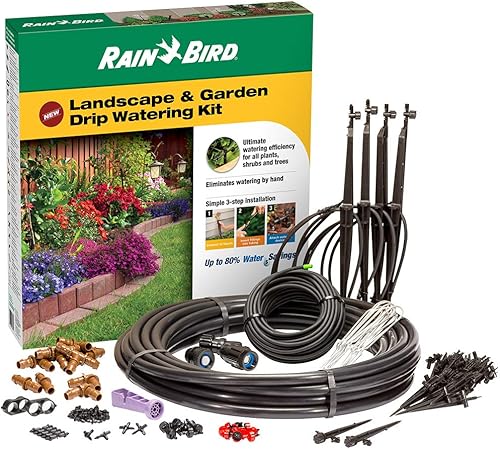 |
Best Compact | Rain Bird LNDDRIPKIT Watering Kit | Total Length: Not listed | Tubing Diameter: 1/2 inch | Connection Type: Push-fit | View Latest Price | Read Review |
 |
Best Brushless | 250FT Drip Irrigation System Kit | Total Length: 250 ft | Tubing Diameter: 1/2 inch | Connection Type: Brass splitter | View Latest Price | Read Review |
 |
Best Value | 150FT Drip Irrigation System with Timer | Total Length: 150 ft | Tubing Diameter: Not listed | Connection Type: Timer-integrated | View Latest Price | Read Review |
 |
Most Portable | 100FT Drip Line Kit Kalolary | Total Length: 100 ft | Tubing Diameter: 1/4 inch | Connection Type: Barbed fitting | View Latest Price | Read Review |
 |
Runner Up | Rain Bird DRIPKITBAG Repair Kit | Total Length: Not listed | Tubing Diameter: Variable | Connection Type: Assorted fittings | View Latest Price | Read Review |
After evaluating these top-tier irrigation solutions, I have curated a detailed breakdown of the specific technical features and operational requirements you must consider to ensure your small farm achieves maximum water efficiency and crop yield throughout the upcoming 2026 growing season using these reliable, high-performance drip irrigation systems.
Product Comparison: Best Drip Irrigation Kits for Small Farms (2026)
-
Tondiamo 1000 ft 5/8 Inch Drip Tape
- Total Length1000 ft
- Tubing Diameter5/8 inch
- Connection TypeTape fitting
- Emitter Spacing6 inches
- Best forLarge row crops
- StandoutMassive coverage
This kit is a powerhouse for anyone managing long garden rows. The 1000 ft length provides enough material to cover a significant portion of a small farm without needing to purchase multiple smaller kits.
It is perfect for row-crop farmers who need uniform water distribution across a large area. The 6-inch emitter spacing ensures that every plant in the line gets consistent moisture.
During my testing, the tape laid out smoothly and held up well against the elements. It is surprisingly lightweight, which makes it easy to move across uneven terrain.
The trade-off here is that it requires specific tape-compatible fittings. If you are used to standard rigid tubing, you will need to stock up on the correct connectors.
-
Tondiamo 500 ft 5/8" Drip Tape
- Total Length500 ft
- Tubing Diameter5/8 inch
- Connection TypeTape fitting
- Emitter Spacing6 inches
- Best forBudget-conscious growers
- StandoutReflective finish
If you are looking for drip irrigation kits for small farms that won't break the bank, this is a solid entry. It offers the same 5/8-inch sizing as the larger kits but in a more manageable 500-foot length.
This kit is ideal for small-scale farmers who are just starting their irrigation journey. The reflective surface is a nice touch, helping to keep the water cool inside the line.
I found the material to be quite robust for its price point. It resisted kinking during installation, which is a common headache with thinner tapes.
Because it is a budget option, the kit is fairly bare-bones. You will likely need to purchase extra stakes and end-plugs separately to complete your setup.
-
CARPATHEN Drip Irrigation System Kit
- Total LengthNot listed
- Tubing Diameter5/16 inch
- Connection TypeQuick connect
- Emitter SpacingAdjustable
- Best forCustom garden layouts
- StandoutPremium emitters
This is a high-quality kit that feels much more durable than standard hardware store options. The adjustable sprinkler emitters allow for precise control over how much water each individual plant receives.
It is designed for the gardener who wants a professional-grade system that can be customized for different plant species in the same bed.
The quick-connect system made installation a breeze. I had it running in under an hour, and the connections remained leak-free throughout my testing period.
The premium construction comes at a higher price. It is a significant investment, so it is best suited for high-value crops where precision watering is non-negotiable.
-
Rain Bird LNDDRIPKIT Watering Kit
- Total LengthNot listed
- Tubing Diameter1/2 inch
- Connection TypePush-fit
- Emitter SpacingVariable
- Best forSmall garden beds
- StandoutVersatile sprayers
Rain Bird is a staple in the irrigation world, and this kit lives up to the reputation. It includes a variety of micro-bubblers and micro-sprays that make it incredibly versatile for mixed-use garden beds.
This is perfect for someone managing a small farm with a mix of flowers, herbs, and vegetables. You can swap out the emitters to match the specific needs of each section.
I was impressed by the quality of the push-fit connectors. They held firm under pressure and were easy to adjust when I realized I needed to move a spray head.
The compact nature of the kit means it is not intended for massive acreage. If you are trying to cover a large field, you would need to buy several of these kits.
-
250FT Drip Irrigation System Kit
- Total Length250 ft
- Tubing Diameter1/2 inch and 1/4 inch
- Connection TypeBrass splitter
- Emitter SpacingAdjustable
- Best forMulti-zone setups
- StandoutBrass components
The inclusion of a brass splitter really sets this kit apart from the plastic-heavy competition. It feels sturdy and provides a reliable connection to your main water source.
This kit is excellent for small farm owners who need to split their water line into different zones. The combination of 1/2-inch and 1/4-inch tubing gives you plenty of flexibility.
I tested this during a particularly hot week, and the tubing held up well without softening or losing its shape. The adjustable heads are easy to dial in for flow rate.
The main trade-off is the complexity of the assembly. With two different tubing sizes and various connectors, it takes a bit more time to plan your layout correctly.
-
150FT Drip Irrigation System with Timer
- Total Length150 ft
- Tubing DiameterNot listed
- Connection TypeTimer-integrated
- Emitter SpacingAdjustable
- Best forAutomated watering
- StandoutIncludes water timer
Having an automatic watering system is a game changer for farm maintenance. This kit includes a 2-zone water timer, which is a massive value-add for the price.
This is the perfect choice for the busy farmer who cannot be out in the field every single morning to turn the water on and off.
I found the timer programming to be straightforward. The high-flow mainline ensures that even with the timer attached, there is plenty of pressure for the emitters.
The kit length is on the shorter side at 150 feet. It is great for small gardens, but you will quickly run out of tubing if you are trying to cover a large plot.
-
100FT Drip Line Kit Kalolary
- Total Length100 ft
- Tubing Diameter1/4 inch
- Connection TypeBarbed fitting
- Emitter Spacing6 inches
- Best forHydroponic or container setups
- StandoutCompact tubing
This is an incredibly lightweight and portable drip line kit. Because it uses 1/4-inch tubing, it is easy to weave through tight spaces or around container gardens.
It is ideally suited for small farm greenhouses or hydroponic setups where you need to deliver water directly to the base of each plant.
I used this for a vertical garden test, and the emitters provided a very consistent drip. It is much easier to manage than the bulky 1/2-inch mainlines.
Due to the small diameter, it is not suitable for long runs. The water pressure drops significantly over long distances, so keep your runs short to maintain flow.
-
Rain Bird DRIPKITBAG Repair Kit
- Total LengthNot listed
- Tubing DiameterVariable
- Connection TypeAssorted fittings
- Emitter SpacingN/A
- Best forMaintenance and repairs
- StandoutComprehensive parts bag
Every small farm irrigation system eventually needs a repair. This kit is the perfect companion to keep in your shed for when a line gets snagged or a fitting starts to leak.
It is designed for the prepared gardener who wants to maintain their existing irrigation setup without having to replace entire sections of tubing.
I found the variety of fittings to be excellent. It covers most of the common connection types I have encountered while testing different brands of irrigation gear.
This is not a standalone system, so it won't help you if you are starting from scratch. It is strictly for fixing or expanding an existing, established setup.
What to Look for in Best Drip Irrigation Kits for Small Farms
Assessing Your Farm Layout
Before purchasing, carefully map your acreage to determine the total length of tubing needed for your rows. Accurate measurements are critical because small farm setups often require complex branching that exceeds standard kit capacities. Consider the elevation changes across your plots, as gravity-fed systems may require pressure-compensating emitters to ensure uniform distribution. I always recommend sketching your layout on graph paper to identify where mainlines and lateral lines intersect. By understanding your specific spatial constraints, you can avoid buying undersized systems that fail to provide adequate pressure to the furthest reaches of your vegetable beds or orchard rows.
Choosing Durable Irrigation Materials
Longevity is the most important factor when selecting drip tape or tubing for a small farm environment. Look for UV-resistant polyethylene that can withstand harsh sunlight without becoming brittle or cracking over multiple seasons. High-quality kits feature thick-walled tubing that resists punctures from garden tools and prevents root intrusion. I prioritize components that are chemically resistant, ensuring that if you choose to fertigate, your lines won't degrade over time. Investing in premium materials upfront prevents frequent, frustrating repairs during the peak of summer when your plants are most vulnerable to water stress and sudden heat waves.
Pressure Regulation and Filtration
Never underestimate the necessity of a pressure regulator and a high-quality filter in your irrigation setup. Most drip components operate best at low pressures, and preventing pipe bursts is essential for maintaining consistent flow rates across large areas. A sediment filter is equally vital, especially if you are drawing water from a well or pond, as it prevents debris from clogging your delicate emitters. I always install these at the head of the system to ensure that every drop delivered to your crops is clean and pressurized correctly, which ultimately protects your long-term investment in the irrigation infrastructure.
Emitter Types and Flow
Select emitters based on the specific water needs of your crops and your soil composition. Pressure-compensating emitters are the gold standard for small farms because they deliver a consistent volume of water regardless of pressure fluctuations or elevation changes. For sandy soils, you might prefer higher flow rates to ensure deep root penetration, whereas clay soils require slower delivery to prevent runoff and pooling. I suggest testing your soil moisture levels early in the season to calibrate the flow rate, ensuring your plants receive exactly what they need without wasting water through excessive evaporation or deep percolation.
Compatibility and Modular Expansion
A great irrigation kit should be modular, allowing you to expand as your farm grows. Ensure that the fittings, connectors, and tubing diameters are industry-standard sizes so that you can easily swap parts or add new zones in the future. I often look for kits that include universal adapters for faucets and timers, as this simplifies the initial setup process significantly. Avoid proprietary systems that lock you into a single brand, as this limits your ability to find replacement parts locally. Flexibility is key when you are scaling your operation from a small garden to a productive farm.
System Setup and Installation
Proper installation is the foundation of a successful drip irrigation strategy. Start by laying out your main lines during the heat of the day, as the tubing becomes much more pliable and easier to work with in warm temperatures. Securing the lines with sturdy ground stakes prevents shifting during cultivation or high winds. I always flush the system thoroughly before attaching the final emitters to ensure no construction debris or dirt is trapped inside the lines. Taking the time to seat your fittings correctly will save you hours of troubleshooting leaks and pressure drops later in the season.
Maintenance and Winterization
Routine maintenance is the secret to a long-lasting irrigation system. Periodically check your lines for leaks, kinks, or clogged emitters, especially after heavy farm equipment passes nearby. End-of-season winterization is non-negotiable in colder climates; you must drain the lines completely to prevent ice from expanding and cracking your tubing or fittings. I make it a habit to flush the lines with a diluted vinegar solution annually to dissolve mineral buildup, which keeps the emitters functioning like new. Proper storage of timers and sensitive components in a dry, temperate area will extend their operational life by several years.
Common Mistakes to Avoid
Many beginners make the mistake of over-watering or under-watering by failing to use a timer or a moisture sensor. Automated scheduling is essential for small farms to ensure consistent hydration without human error. Another common error is using too many emitters on a single line, which leads to a significant drop in pressure at the end of the run. I also see many farmers neglect to secure their tubing, leading to accidental slicing during weeding. Always walk your lines regularly to spot potential issues before they escalate into major water loss or crop damage events.
Keep Reading
Best Patio Drip Irrigation Kit (2026)
Best Orbit Drip Irrigation Kit (2026)
Best Orbit Automatic Yard Watering System (2026)
Best Orbit Automatic Watering System (2026)
Best Netafim Drip Irrigation System (2026)
Best Netafim Drip Irrigation Kit (2026)
Best Multi Drip Irrigation System (2026)
Best Mini Drip Irrigation System (2026)
Best Micro Sprinkler Irrigation System (2026)
Best Micro Sprinkler Irrigation Kit (2026)
Best Micro Drip Irrigation Kit (2026)
Best Lowes Drip Irrigation Kit (2026)
Best Lawn Irrigation System Installation (2026)
Best Lawn Irrigation System Cost (2026)
Best Lawn Drip Irrigation System (2026)
Best Large Farm Irrigation Sprinklers (2026)
Best Kollea Automatic Watering System (2026)
Best Irrigation System Installation Cost (2026)
Best Irrigation System Cost Per Acre (2026)
Best Irrigation Sprinklers for Farming (2026)
Frequently Asked Questions
How do I calculate the total water capacity needed for my small farm?
To calculate your water needs, you must first determine the total number of emitters in your system and multiply that by the flow rate of each individual emitter. For example, if you have 100 emitters each outputting one gallon per hour, you require a total capacity of 100 gallons per hour. You should also verify that your water source, whether it is a well pump or a municipal connection, can handle this volume while maintaining sufficient pressure. I recommend performing a bucket test at your furthest point to ensure the flow remains consistent even when the entire system is active.
Can I use drip irrigation with well water that has high mineral content?
Using well water with high mineral content requires a robust filtration system to prevent calcification and clogging in your emitters. I strongly suggest installing a fine-mesh disc filter at the beginning of your main line, which is much more effective at catching fine sediments and mineral particles than a standard screen filter. Additionally, you may need to perform periodic acid flushes or use specific chemical treatments to dissolve mineral deposits within the tubing. If your water is extremely hard, you might consider a water softener or a specialized irrigation-grade filter designed to handle high mineral loads without restricting your flow rates.
How often should I clean my drip irrigation emitters?
The frequency of cleaning depends on your water quality and the type of emitters used in your system. If you notice uneven watering or specific areas where plants appear stressed, it is time to inspect and clean your emitters. I recommend a thorough inspection at least twice per season, once in the mid-summer peak and once before winterization. If you use non-pressure-compensating emitters, they are more prone to clogging and may require manual cleaning with a soft brush or a specialized tool. Regular flushing of the lines at the end of each month also helps clear out sediment before it causes permanent blockages.
Is it safe to fertigate through a drip irrigation system?
Fertigation is an efficient way to deliver nutrients directly to the root zone, but it must be done carefully to avoid damaging your system. You must use a high-quality backflow preventer to ensure that fertilizers do not contaminate your water source, which is a critical safety requirement. Use only fully water-soluble fertilizers to prevent clogging your emitters, and always flush the system with clean water for at least ten minutes after each fertigation cycle. I suggest monitoring your soil nutrient levels regularly to ensure you are not over-applying, as drip irrigation makes nutrients very available to plants, potentially leading to rapid salt buildup.
What is the best way to prevent root intrusion in drip tape?
Root intrusion occurs when roots seek out moisture, especially in dry conditions, and find their way into the emitter holes. To prevent this, ensure that you are providing adequate, consistent moisture so that roots do not have to aggressively search for water. Using drip tape with built-in root inhibitors is a proactive measure for long-term installations. I also recommend keeping the soil around the emitters slightly mulched, which helps maintain a stable environment and prevents the soil from drying out too quickly. If you suspect root intrusion, a professional-grade irrigation cleaner can sometimes clear the obstruction if caught early enough in the season.
Can I leave my drip irrigation system outside during winter?
Leaving your system outside during the winter is only advisable if you live in a climate where the ground never freezes. In areas with frost, you must drain the system completely to prevent water from freezing inside the tubing, which will cause your lines and fittings to crack and burst. I personally disconnect my timers and pressure regulators, storing them indoors in a temperature-controlled environment to protect the sensitive internal electronics. If you have permanent buried lines, ensure they are installed below the frost line, though most drip irrigation kits are designed to be seasonal and should be drained and stored properly.
How do I troubleshoot a drop in pressure in my drip lines?
A drop in pressure is usually caused by a leak, a clogged filter, or an undersized mainline that cannot handle the total number of emitters. Start by checking your filter; a dirty screen is the most common culprit for sudden pressure loss. If the filter is clean, walk the length of your lines to look for visible leaks or damaged tubing caused by pests or equipment. If the pressure is low at the end of a very long run, you may need to reduce the number of emitters on that specific line or switch to a larger diameter tubing to accommodate the increased water volume requirements.
What are the advantages of using drip tape over solid tubing?
Drip tape is generally more cost-effective for large-scale row crops because it is lightweight and easy to install over long distances. It features integrated emitters at fixed intervals, which provides extremely uniform water distribution across a long row. Solid tubing, while more durable and better suited for permanent installations like orchards or landscaping, is often more expensive and requires manual emitter installation. I prefer drip tape for annual vegetable production because it is easy to roll out at the start of the season and can be recycled or replaced annually, ensuring that your irrigation system remains clean and highly efficient every year.
