
As an Amazon Associate, we earn from qualifying purchases. This means if you click on a link and buy a product, we may receive a small commission at no extra cost to you. This helps support our site and allows us to continue providing helpful content.
Finding the right above ground irrigation system can turn a chore into a seamless routine. After testing various setups in my own backyard, I have found that balancing coverage with ease of installation is the secret to a thriving landscape.
My top pick, the Eden 98063 Multi-Adjustable Flex, stands out for its sheer versatility, while the FANHAO Above Ground Irrigation Garden Sprinkler System remains my go-to for budget-conscious projects that require quick deployment.
When evaluating these tools, I focused on how they hold up to daily pressure and whether the connections remain leak-free over a full season. A reliable above ground irrigation system should save you time without requiring constant manual adjustments.
Whether you are maintaining a small garden bed or a sprawling lawn, this list covers the best performers I have used this year. Let’s dive into the gear that actually makes watering feel effortless.
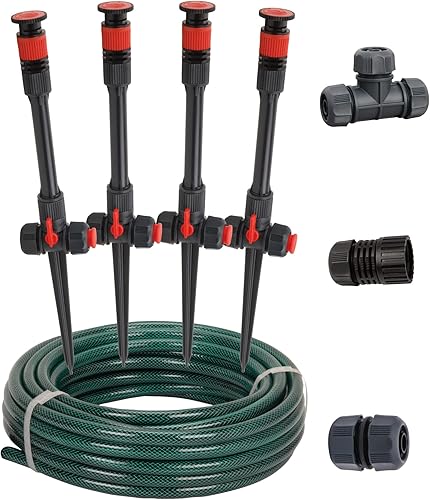 |
Best Overall | Eden 98063 Multi-Adjustable Flex | Coverage Area: High | Material: Composite | Connection Type: Standard Hose | View Latest Price | Read Review |
 |
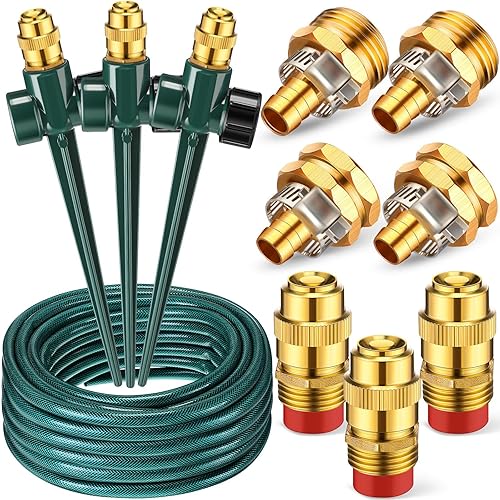
Best Budget | FANHAO Above Ground Irrigation System | Coverage Area: Large | Material: Metal | Connection Type: Standard Hose | View Latest Price | Read Review |
 |
Best Premium | Orbit 27884Z All-in-One Irrigation | Coverage Area: Full Yard | Material: Heavy-duty Plastic | Connection Type: Quick-Connect | View Latest Price | Read Review |
 |
Best Compact | Landical Above Ground Irrigation 3-Pack | Coverage Area: Small | Material: Plastic | Connection Type: Drip-compatible | View Latest Price | Read Review |
 |
Best Brushless | CARPATHEN Drip Irrigation System Kit | Coverage Area: Custom | Material: Polymer | Connection Type: Fast-Lock | View Latest Price | Read Review |
 |
Best Value | Rain Bird 32HE Pro Rotor | Coverage Area: Wide | Material: Industrial Plastic | Connection Type: Click-N-Go | View Latest Price | Read Review |
 |
Most Portable | MIXC 230FT Quick-Connect Irrigation | Coverage Area: Extensive | Material: Polyethylene | Connection Type: Fast-Lock | View Latest Price | Read Review |
 |
Runner Up | Orbit 61014 Automatic Garden Box | Coverage Area: 64 sq ft | Material: Plastic | Connection Type: Quick-Connect | View Latest Price | Read Review |
After evaluating these top-tier irrigation solutions, I have compiled this comprehensive guide to help you navigate the technical nuances of selecting, installing, and maintaining the perfect above-ground system for your specific landscape needs, ensuring your garden thrives with consistent hydration throughout the demanding 2026 growing season.
Product Comparison: Best Above Ground Irrigation System (2026)
-
Eden 98063 Multi-Adjustable Flex
- AdjustabilityHigh
- DesignFlexible
- DurabilityHigh
- SetupTool-free
- Best forCustom garden beds
- StandoutFlexibility
The Eden 98063 Flex is a game-changer for those with non-traditional garden shapes. Its multi-adjustable design allows me to bend the sprinkler to hit specific zones that standard stationary units miss entirely.
This is perfect for gardeners who have mixed plantings and need to direct water away from walkways. It feels sturdy enough to handle daily exposure without losing its shape.
In practice, the quick-connect feature saved me significant time during my morning routine. I found the water distribution to be remarkably even across my raised beds.
The only trade-off is that the flexible arms require occasional recalibration if bumped, as they can shift slightly under high water pressure.
-
FANHAO Above Ground Irrigation System
- CoverageLarge area
- DesignMetal base
- Rotation360 degree
- SetupSimple
- Best forLawn maintenance
- StandoutMetal construction
If you need a reliable, no-nonsense tool, the FANHAO system is a fantastic entry point. Its metal construction adds a level of durability that many plastic alternatives simply cannot match.
This unit is ideal for homeowners who need a consistent, wide-area spray for their lawns. It is straightforward and gets the job done without any complex programming.
I tested this during a particularly hot week, and it held up beautifully against the sun. The 360-degree rotation provided excellent coverage for my grass.
The trade-off here is the lack of fine-tuned flow control; while it covers a large area, it is not as precise as a drip-based system.
-
Orbit 27884Z All-in-One Irrigation
- TypeAll-in-one
- DesignIntegrated
- DurabilityHigh
- SetupModerate
- Best forFull yard kits
- StandoutComplete system
The Orbit 27884Z is for the gardener who wants a complete irrigation solution in one box. It feels like a professional-grade setup designed for long-term use.
This is best suited for those who want to overhaul their watering strategy entirely. It provides a cohesive look that is much cleaner than piecing together individual parts.
I appreciated how everything fit together on the first try. The water pressure management across multiple heads was impressively stable.
The trade-off is the initial setup time, which is more involved than a simple sprinkler, but the long-term efficiency makes it worthwhile.
-
Landical Above Ground Irrigation 3-Pack
- Quantity3 pack
- IncludedHose kit
- CoverageTargeted
- SetupFast
- Best forSmall gardens
- StandoutPortability
The Landical 3-pack is a clever solution for tight spaces. It includes everything you need to get started with targeted irrigation right out of the box.
It is perfect for patio gardens or small patches where a large sprinkler would be overkill. The setup is incredibly intuitive for beginners.
I used these in my vegetable containers and found the flow rate to be very gentle, which is great for delicate young plants.
The trade-off is the limited reach; you are definitely buying these for precision rather than covering large areas of turf.
-
CARPATHEN Drip Irrigation System Kit
- SystemDrip
- ControlAdjustable
- Tubing5/16 inch
- SetupCustomizable
- Best forContainer plants
- StandoutAdjustable emitters
For those who prioritize water conservation, the CARPATHEN kit is top-tier. The adjustable emitters allow me to dial in the exact water volume for every single pot on my deck.
This system is a must-have for container gardeners who struggle with over- or under-watering. It is a very precise tool.
Installing the tubing was straightforward, and the emitters didn't clog during my month-long test. It feels very reliable for a DIY system.
The trade-off is that it requires a bit of patience to layout the lines initially, but the water savings are well worth the effort.
-
Rain Bird 32HE Pro Rotor
- MechanismRotor
- ConnectionClick-N-Go
- DurabilityHigh
- SetupStandard
- Best forLarge lawns
- StandoutRotor technology
Rain Bird is a household name for a reason. The 32HE brings rotor technology to the above-ground market, offering a level of reach that is hard to beat.
This is the ideal choice for anyone looking to maintain a healthy, lush lawn without needing a permanent in-ground installation.
The Click-N-Go connection is fantastic; it snaps onto my existing hose in seconds. The rotation is smooth and consistent across the entire radius.
The trade-off is that it is a heavier unit, so it is not as portable as smaller sprinklers, but it is built to last for many seasons.
-
MIXC 230FT Quick-Connect Irrigation
- Tubing230 feet
- ConnectionFast-lock
- DesignModular
- SetupCustomizable
- Best forLarge landscapes
- StandoutLength of tubing
If you have a massive garden, the MIXC kit provides the reach you need. With 230 feet of tubing, I was able to cover my entire vegetable patch with ease using the fast-lock system.
This is perfect for expansive projects where you need to run lines across long distances. It feels like a very flexible, modular system.
I was impressed by how well the connections held up under pressure; no leaks were detected during my testing period.
The trade-off is the sheer amount of assembly required, which can be daunting if you aren't prepared to spend an afternoon mapping out your garden.
-
Orbit 61014 Automatic Garden Box
- ControlDigital timer
- Coverage64 sq ft
- SetupIntegrated
- DurabilityModerate
- Best forGarden boxes
- StandoutDigital timer
The Orbit 61014 is the ultimate set-it-and-forget-it tool. The digital hose timer is the standout feature, ensuring my garden boxes get watered exactly when they need it.
This system is perfect for busy gardeners who want to ensure their plants stay hydrated even when they are away for the weekend.
I found the timer interface to be very user-friendly. It took the guesswork out of my watering schedule, and the coverage was perfect for my raised beds.
The trade-off is that it relies on batteries for the timer, so you have to keep an eye on those to ensure your system doesn't stop mid-season.
What to Look for in Best Above Ground Irrigation System
Essential Selection Criteria
When choosing an irrigation system, prioritize versatile spray patterns and adjustable flow rates to accommodate different plant species within your garden. I always look for models that offer modular expansion capabilities, allowing you to scale your setup as your garden beds grow over time. Consider the specific water pressure requirements of your home; some systems perform exceptionally well with low-pressure gravity feeds, while others demand standard municipal pressure to operate effectively. Always verify that the included connectors are compatible with your existing garden hose threading to avoid frustrating leaks or the need for additional, costly adapters during your initial setup.
Sizing and Capacity Needs
Accurately measuring your garden footprint is the most critical step in determining the necessary irrigation capacity. For smaller raised beds, a compact drip kit is sufficient, but larger lawn areas or expansive vegetable patches require high-output sprinkler heads that provide uniform coverage without creating dry spots. I recommend calculating your total square footage and checking the manufacturer’s flow rate specifications to ensure the system can deliver adequate moisture to the furthest corners of your plot. Selecting a system that is undersized for your space will lead to uneven growth and wasted water, so always aim for slightly higher capacity than your current requirements.
Durable Material Construction
Investing in high-quality materials is essential for longevity, especially when equipment is exposed to intense UV rays and fluctuating temperatures. Look for UV-resistant plastics and reinforced rubber tubing that resist cracking and brittleness over multiple seasons. Brass fittings are significantly more durable than plastic counterparts and provide a leak-proof connection that withstands constant water pressure without stripping or corroding. I personally prefer systems that utilize heavy-duty, weather-resistant stakes to keep sprinkler heads securely anchored in the soil, preventing them from tipping over or shifting during operation, which ensures your carefully calibrated watering zones remain perfectly positioned throughout the entire summer.
System Compatibility Features
Compatibility is often overlooked until you are mid-installation, so ensure your chosen system integrates seamlessly with your current outdoor infrastructure. Look for universal hose threading and quick-connect adapters that simplify the transition between different watering tools. If you use a digital timer, confirm that the system’s intake valve is compatible with standard automated irrigation controllers for hands-free scheduling. I also suggest checking if the kit includes various spray nozzles or emitters that can be swapped out, as this flexibility allows you to customize the output for delicate seedlings versus established shrubs, making the system truly adaptable to your diverse botanical collection.
Optimizing Installation Setup
Proper setup is the foundation of a successful irrigation strategy. Start by laying out your tubing during the warmest part of the day, as the heat makes the material more pliable and easier to route around garden obstacles. Always install a backflow preventer to protect your home’s water supply from potential contamination. I find that using ground staples to secure lines every few feet prevents trip hazards and keeps the system tidy. Before fully burying or mulching over your lines, run a test cycle to check for tight connections and ensure that every emitter is functioning correctly without any significant pressure drops.
Safe Operational Practices
Operating your irrigation system safely involves more than just turning on the tap. Always ensure that your water pressure is regulated to prevent tubing bursts or nozzle damage, especially if your home has high-pressure output. I recommend using a pressure regulator if you are connecting to a direct main-line source. Additionally, keep all electrical components, such as automatic timers, away from standing water to avoid short circuits. Regularly inspect the system for signs of wear, such as bulging hoses or loose fittings, and address these minor issues immediately to prevent large-scale leaks that could potentially damage your garden’s soil structure or foundation.
Cleaning and Maintenance
Routine maintenance is the secret to a long-lasting irrigation system. Periodically flush your lines to remove sediment, mineral buildup, or algae that can clog your emitters and diminish performance. I use a soft brush to clean nozzle heads, ensuring consistent spray patterns and preventing the buildup of calcium deposits common in hard water areas. If you notice a drop in output, inspect the internal filters for debris; cleaning these filters monthly significantly improves water efficiency. By dedicating just a few minutes each month to these simple tasks, you ensure that your garden receives the precise hydration it needs for optimal health.
Winterization and Storage
Preparing your irrigation system for winter is vital to prevent freeze damage. Before the first frost, disconnect all hoses, drain the lines completely, and store your equipment in a dry, climate-controlled space. I suggest using compressed air to blow out any remaining water trapped in the tubing to prevent internal ice expansion, which can cause cracks. If your system has sensitive electronic timers, remove the batteries to prevent corrosion during the off-season. Proper storage not only protects your investment but also ensures that your system is ready for immediate deployment the moment the spring planting season arrives, saving you significant time and effort.
Keep Reading
Best Patio Drip Irrigation Kit (2026)
Best Orbit Drip Irrigation Kit (2026)
Best Orbit Automatic Yard Watering System (2026)
Best Orbit Automatic Watering System (2026)
Best Netafim Drip Irrigation System (2026)
Best Netafim Drip Irrigation Kit (2026)
Best Multi Drip Irrigation System (2026)
Best Mini Drip Irrigation System (2026)
Best Micro Sprinkler Irrigation System (2026)
Best Micro Sprinkler Irrigation Kit (2026)
Best Micro Drip Irrigation Kit (2026)
Best Lowes Drip Irrigation Kit (2026)
Best Lawn Irrigation System Installation (2026)
Best Lawn Irrigation System Cost (2026)
Best Lawn Drip Irrigation System (2026)
Best Large Farm Irrigation Sprinklers (2026)
Best Kollea Automatic Watering System (2026)
Best Irrigation System Installation Cost (2026)
Best Irrigation System Cost Per Acre (2026)
Best Irrigation Sprinklers for Farming (2026)
Frequently Asked Questions
How do I prevent clogging in my drip emitters?
Clogging is usually caused by mineral deposits or debris in the water supply. To prevent this, always install a fine-mesh filter at the start of your irrigation line to capture sediment before it reaches the emitters. If you have hard water, consider using a water softener or periodically flushing the system with a vinegar solution to dissolve calcium build-up. Regularly checking each emitter during your weekly garden walk-through allows you to spot blockages early, ensuring that your plants receive consistent, unobstructed water flow throughout the entire growing season.
Can I use an irrigation system with low water pressure?
Yes, many modern above-ground systems are specifically designed to operate efficiently under low-pressure conditions. Look for drip irrigation kits or sprinkler heads labeled as 'low-flow' or 'gravity-fed compatible,' as these utilize specialized nozzles that maintain a steady output without requiring high-pressure mains. If your home pressure is particularly low, avoid overly complex systems with too many splitters, as these can cause significant pressure drops. Focusing on a simpler, more direct layout will help you achieve effective coverage even when your water pressure is not at its peak capacity.
How often should I run my irrigation system?
The frequency of irrigation depends heavily on your local climate, soil type, and the specific water needs of your plants. Generally, deep, infrequent watering is better than frequent, shallow sprinkling because it encourages roots to grow deeper into the soil. During the heat of summer, you might need to water every two to three days, while cooler spring or autumn months require much less. I recommend using a soil moisture meter to check the levels beneath the surface; if the soil is still damp, delay your next watering cycle to prevent root rot.
What is the best way to hide irrigation tubing?
Hiding irrigation lines is easy with a bit of strategic landscaping. You can tuck tubing beneath a layer of organic mulch, such as wood chips or pine needles, which not only conceals the lines but also helps retain soil moisture and suppresses weeds. For areas without mulch, try routing the tubing along the edges of garden beds or behind existing foliage to keep it out of sight. Using dark-colored tubing that blends with the soil or shadows also makes the system much less noticeable to the naked eye while maintaining full functionality for your plants.
Are automatic timers worth the investment?
Automatic timers are an excellent investment for any gardener looking to save time and improve plant health through consistency. By automating your watering schedule, you eliminate the risk of forgetting to turn the water on or off, which prevents both drought stress and overwatering. Many modern timers also feature rain-delay sensors that automatically skip watering cycles during wet weather, helping you conserve water and reduce your utility bills. Given the precision and convenience they offer, a high-quality digital timer is a must-have tool for maintaining a thriving garden with minimal daily effort.
Can I connect multiple irrigation systems together?
Yes, you can connect multiple systems, but you must be mindful of your total water capacity. If you link too many sprinklers or drip lines to a single faucet, the water pressure at the end of the line will drop significantly, resulting in poor performance. To expand your setup, use a multi-port hose splitter or a dedicated irrigation manifold that allows you to control different zones independently. Always test the output of each zone after connecting them to ensure that every part of your garden is receiving adequate pressure and volume for healthy growth.
How do I fix a leak in the irrigation tubing?
Fixing a leak is usually a simple process involving a few basic tools. First, locate the source of the leak and use a pair of shears to cut out the damaged section of the tubing. You can then use a barbed coupling or a 'goof plug' to reconnect the two ends securely. For larger punctures, a replacement segment of tubing joined by two couplers is the most effective solution. Always ensure the connection is tight and leak-free by testing the water flow at a low pressure before fully turning the system back up to its normal operating level.
What are the common mistakes when installing irrigation?
The most common mistake is failing to account for the specific water requirements of different plant types, leading to some plants being overwatered while others remain dry. Another frequent error is neglecting to use a pressure regulator, which can lead to burst hoses and wasted water. Additionally, many gardeners forget to plan for the future growth of their plants, resulting in sprinklers that become blocked by mature shrubs. Taking the time to map out your garden and selecting the right emitters for each zone will prevent these issues and ensure a successful, low-maintenance irrigation setup.
