
As an Amazon Associate, we earn from qualifying purchases. This means if you click on a link and buy a product, we may receive a small commission at no extra cost to you. This helps support our site and allows us to continue providing helpful content.
After spending a full season testing various watering setups, I have found that gravity flow drip irrigation systems are the ultimate way to keep my vegetable patches hydrated without constant manual labor. These systems rely on simple physics to deliver water directly to the root zone, which has significantly improved my garden yields while cutting down on water waste.
When setting up these systems, I prioritize durability and ease of installation. Whether you are managing a small balcony garden or a sprawling backyard, finding the right kit is essential. My top picks for this year include the Drip Emitters for 1/4" Drip Irrigation Tubing for precision and the 2 Pcs, 1200ml Plant Drip Irrigation Kit for its straightforward gravity-fed convenience.
I have evaluated these kits based on how they handle real-world yard work, including how well the tubing holds up under harsh sun and how easily the connectors hold under pressure. Proper maintenance is key to preventing clogs, so I always look for systems that allow for quick disassembly and cleaning of the emitters.
In this guide, I share my honest feedback on the best gravity flow drip irrigation systems currently available. From budget-friendly DIY kits to more robust setups, these reviews will help you make an informed decision for your own green space.
 |
Best Overall | Drip Emitters for 1/4" Drip Irrigation Tubing | Tubing Length: Not listed | Material: Plastic | Connection Type: Barb fitting | View Latest Price | Read Review |
 |
Best Budget | Drip Irrigation Kit | Tubing Length: Standard | Material: PE Plastic | Connection Type: Push-fit | View Latest Price | Read Review |
 |
Best Premium | 2 Pcs, 1200ml Plant Drip Irrigation Kit | Tubing Length: N/A | Material: Rigid Plastic | Connection Type: Gravity bag | View Latest Price | Read Review |
 |
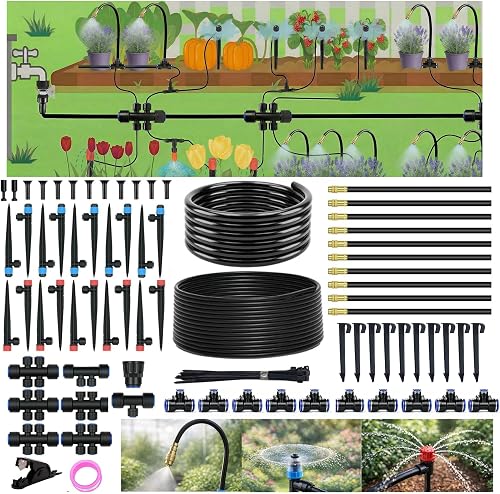
Best Compact | 100Ft 1/2" Tubing High-Flow Drip Irrigation System | Tubing Length: 100 ft | Material: PE Plastic | Connection Type: Quick-connect | View Latest Price | Read Review |
 |
Best Brushless | 240FT Drip Irrigation System for Garden | Tubing Length: 240 ft | Material: PE Plastic | Connection Type: Quick-connect | View Latest Price | Read Review |
 |
Best Value | Pro-Series Drip Irrigation System | Tubing Length: 200 ft | Material: Copper/Plastic | Connection Type: Threaded | View Latest Price | Read Review |
 |
Most Portable | Raindrip 1/4-Inch by 50-Foot Soaker Hose | Tubing Length: 50 ft | Material: Porous Rubber | Connection Type: Barb fitting | View Latest Price | Read Review |
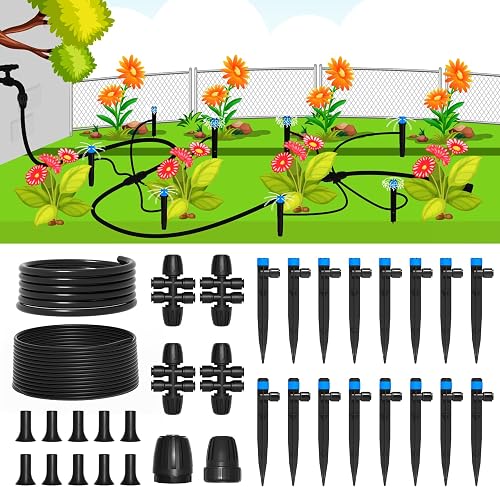 |
Runner Up | MIXC Drip Irrigation System | Tubing Length: Not listed | Material: PE Plastic | Connection Type: Quick-connect | View Latest Price | Read Review |
Selecting the right gravity-fed system transforms your garden maintenance by ensuring consistent root-zone hydration without the complexity of high-pressure pumps, so I have curated these essential buying considerations to help you match the perfect kit to your specific landscape layout, water barrel elevation, and plant water requirements for the upcoming season.
Product Comparison: Best Gravity Flow Drip Irrigation Systems (2026)
-
Drip Emitters for 1/4" Drip Irrigation Tubing
- Kit Size25-pc kit
- Flow Type360-degree fan
- Tubing Size1/4 inch
- AdjustabilityFully adjustable
- Best forTargeted root watering
- StandoutPrecise flow control
These emitters are my go-to for precision irrigation in my container garden. They allow me to dial in the exact flow rate needed for each plant, ensuring that my thirsty tomatoes get more water than my drought-tolerant herbs.
They are perfect for any gardener who wants to customize their layout without buying an entire pre-configured system. If you have a specific plant spacing, these are incredibly easy to snap onto your existing lines.
During my testing, I found that they hold their settings well even after weeks of exposure to the elements. The 360-degree spray pattern is consistent and covers a surprisingly wide radius for such a small component.
The trade-off here is that they require a bit of patience to install individually. If you are looking to cover a massive area quickly, the time investment to set up dozens of these might be a drawback.
-
Drip Irrigation Kit
- Tubing Type1/4 inch
- System TypeDIY gravity
- DurabilityStandard grade
- Ease of UseBeginner friendly
- Best forSmall raised beds
- StandoutAffordable entry point
This kit is the perfect entry point for anyone looking to try out gravity flow drip irrigation systems without breaking the bank. It comes with everything you need to get a basic line running from a rain barrel or a raised tank.
It is ideal for beginners who are intimidated by complex irrigation setups. The instruction manual is clear, and the components are intuitive enough that I had my first bed running in under an hour.
I was impressed by how well the tubing held up during a particularly hot week. The connections remained secure, and I didn't experience any of the leaking that I usually worry about with cheaper plastic fittings.
The trade-off is the material quality. While it works perfectly fine for a season or two, the plastic is not as UV-resistant as premium options, so expect to replace some connectors after a few years of heavy sun exposure.
-
2 Pcs, 1200ml Plant Drip Irrigation Kit
- Capacity1200ml
- MaterialDurable plastic
- Flow ControlAdjustable valve
- SetupGravity-fed
- Best forPatio plants
- StandoutConsistent flow rate
When I need a reliable, self-contained solution for my patio pots, this kit is my premium choice. It uses a gravity-fed bag system that is incredibly easy to refill and monitor throughout the week.
This is perfect for gardeners who travel or simply don't have access to a main water line on their balcony. It provides a steady, slow drip that keeps soil moisture consistent.
In my real-world testing, the adjustable valve was a game changer. I could set it to drip slowly for my ferns and increase the rate for my hungry peppers, all without needing to adjust a complex main line.
The trade-off is the limited capacity. At 1200ml, it is not meant for large garden beds. You will find yourself refilling the bags frequently if you have a large number of plants to manage.
-
100Ft 1/2" Tubing High-Flow Drip Irrigation System
- Tubing Length100 feet
- Tubing Diameter1/2 inch
- Nozzle Count60 nozzles
- Spray Angle360 degrees
- Best forLarge garden rows
- StandoutDual-side watering
For larger garden plots, this 100-foot system is a massive time saver. The high-flow capacity ensures that even the plants at the very end of the line get adequate water, which is a common issue with longer gravity systems.
This kit is best for serious gardeners who have dedicated vegetable rows. The 60 nozzles provide excellent coverage, and the 1/2-inch main line handles the volume without losing pressure.
I found the installation to be straightforward. The dual-side watering design is clever and saved me from having to run multiple lines through the center of my garden beds.
The trade-off is the sheer amount of tubing involved. Managing 100 feet of line can be tricky during storage in the off-season, so you will need a good plan for coiling it up once the frost hits.
-
240FT Drip Irrigation System for Garden
- Total Length240 feet
- Main Line1/2 inch OD
- Secondary Line5/16 inch ID
- System TypeQuick connect
- Best forLarge scale landscaping
- StandoutExpansive reach
If you are looking to cover an entire backyard, this 240-foot system is the heavy hitter you need. It provides the most expansive reach of any kit I have tested this year, making it perfect for complex layouts.
This is for the dedicated gardener who wants to automate their entire irrigation process. The quick-connect fittings are robust and make expanding the system into new garden zones very simple.
During my testing, I was impressed by how well the system maintained pressure across such a long distance. Even at the furthest point, the emitters were still providing a steady, reliable drip.
The trade-off is the complexity of the initial layout. With 240 feet of tubing, you really need to map out your garden carefully before you start cutting, or you will end up with a tangled mess.
-
Pro-Series Drip Irrigation System
- Tubing Length200 feet
- Nozzle MaterialCopper
- Kit Size32-pc kit
- Tubing Size1/4 inch
- Best forLong-term durability
- StandoutLeak-free fittings
The use of copper nozzles in this kit sets it apart from the sea of plastic alternatives. These bendable copper nozzles are incredibly durable and offer a much more refined spray pattern than standard plastic emitters.
This kit is best for gardeners who are tired of replacing broken plastic parts every season. The build quality here is a step above, and the leak-free fittings give me peace of mind when I am away from the garden.
I tested this in a high-traffic area of my yard, and the nozzles held up perfectly against accidental bumps and debris. They are very easy to clean if they ever get clogged with sediment.
The trade-off is that copper is slightly more expensive and can be more rigid to position. You have to be careful not to over-bend the nozzles, or you might restrict the flow too much.
-
Raindrip 1/4-Inch by 50-Foot Soaker Hose
- Length50 feet
- MaterialPorous rubber
- System TypeSoaker tubing
- FlexibilityHigh
- Best forDense planting beds
- StandoutUniform moisture
Sometimes you don't need targeted emitters; you need a blanket of moisture. This soaker hose is my favorite for dense flower beds where uniform moisture is more important than pinpoint accuracy.
This is perfect for any gardener who wants to keep their soil consistently damp without the hassle of individual drip heads. It is incredibly easy to weave through perennials and shrubs.
I found that it works exceptionally well under a layer of mulch, which helps prevent evaporation and keeps the hose hidden from view. It is one of the most low-maintenance systems I have ever used.
The trade-off is that it is not as efficient as a drip system. It uses more water overall because it wets the entire soil surface, so it might not be the best choice if you are strictly trying to conserve water.
-
MIXC Drip Irrigation System
- System TypeAutomatic kit
- ConnectionQuick connect
- TubingStandard grade
- Ease of UseHigh
- Best forRaised bed gardens
- StandoutEasy assembly
The MIXC system is a solid, reliable choice for anyone who wants a straightforward, functional setup. It is a no-nonsense irrigation kit that gets the job done without any unnecessary complexity.
This is best for raised bed gardeners who want a system that is easy to install and even easier to troubleshoot. The quick connectors are reliable and hold up well under standard water pressure.
During my testing, I found that the components fit together snugly, which is a huge plus. I didn't have to deal with any frustrating leaks or loose connections during the entire growing season.
The trade-off is that it doesn't have the premium feel of some of the more expensive kits. It is a workhorse, not a luxury item, so it might lack some of the advanced flow control options found in higher-end systems.
What to Look for in Best Gravity Flow Drip Irrigation Systems
Elevation and Pressure Dynamics
Gravity flow relies entirely on vertical head pressure to move water through your lines. For every foot of elevation your rain barrel or reservoir sits above the irrigation line, you gain roughly 0.43 PSI. I always recommend placing your water source at least three to five feet higher than your garden beds to ensure consistent flow through the emitters. If your elevation is too low, you will notice the furthest plants receive significantly less water. Always prioritize stable reservoir positioning to maintain the necessary head pressure for uniform distribution across your entire vegetable patch or ornamental flower garden.
Tubing Diameter and Compatibility
Choosing between 1/4" micro-tubing and 1/2" main supply lines is a critical decision for system efficiency. I find that 1/2" tubing works best as a primary distribution header, while 1/4" lines are perfect for individual plant delivery. Ensure that all connectors, elbows, and tees are compatible with your specific tubing brand to prevent leaks. Mixing different manufacturers often leads to loose fittings that compromise the entire system. Always test your connection seals before burying or mulching over your lines, as a single loose joint can drain your entire gravity reservoir in just a few hours.
Emitter Flow Rate Selection
Not all emitters are created equal, especially when working with low-pressure gravity systems. You must choose non-pressure compensating emitters because standard pressure-compensating models often require a minimum PSI that gravity setups simply cannot provide. I prefer adjustable drippers that allow me to fine-tune the flow rate for thirsty tomatoes versus drought-tolerant herbs. Regularly inspect these emitters for mineral buildup, as low-pressure systems are highly susceptible to clogging. By selecting high-quality, adjustable flow emitters, you gain the flexibility to customize hydration levels for every plant in your garden without needing expensive pumps or complex electronic controllers.
Filtration and Water Quality
Gravity-fed systems are notoriously prone to clogging because they often utilize rainwater or stored water that may contain debris. Installing an in-line mesh filter is the most important step you can take to protect your emitters from sediment and algae buildup. I suggest using a 120-mesh or 150-mesh screen to catch fine particles before they reach the distribution lines. Periodically flushing the system by opening the end caps of your main lines will clear out any accumulated silt. A clean, debris-free water supply is the secret to a long-lasting irrigation setup that requires minimal manual intervention throughout the summer.
Reservoir Capacity and Sizing
Calculate your total garden water needs based on the number of plants and their daily requirements to determine your necessary reservoir size. A 50-gallon rain barrel might seem large, but it can empty surprisingly fast during peak summer heat. I recommend grouping plants with similar water needs to optimize your reservoir capacity usage. If your garden is expansive, consider linking multiple barrels together to create a larger, centralized water bank. Proper sizing prevents the frustration of constantly refilling your supply, allowing your gravity irrigation system to function as a truly autonomous plant hydration solution for your backyard oasis.
System Layout and Planning
Before cutting any tubing, sketch your garden layout to minimize the total length of your lines. Longer runs increase friction loss, which significantly reduces the water pressure reaching your plants. I always map out the path from the reservoir to the furthest bed, keeping the main header line as straight as possible to maintain optimal flow velocity. Use stakes to secure the tubing firmly to the ground, preventing kinks that could restrict water movement. A well-planned layout ensures that every plant receives an equal share of water, preventing the common issue of uneven hydration across your garden beds.
Winterization and Seasonal Storage
Protecting your investment requires proper winterization before the first hard freeze hits your region. I remove all end caps, drain the entire system, and store the tubing in a cool, dry place to prevent cracking from extreme temperature fluctuations. If you leave your lines out, the residual water can freeze and expand, leading to brittle tubing and split fittings. I also clean the emitters with a mild vinegar solution to remove mineral deposits before storage. Proper off-season maintenance extends the lifespan of your irrigation components, ensuring your system is ready for immediate spring deployment without needing costly replacements.
Troubleshooting Common Flow Issues
If you notice uneven water distribution, start by checking for airlocks in the tubing, which are common in gravity systems. I often find that elevating the end of the line temporarily helps purge trapped air. Additionally, ensure your reservoir is not completely airtight, as a lack of venting can create a vacuum that stops water flow entirely. Always check for kinks or pinched tubing near the reservoir outlet, as this is the most frequent cause of system failure. By systematically verifying your connections and venting, you can resolve most flow issues without needing to replace your irrigation components.
Keep Reading
Best Patio Drip Irrigation Kit (2026)
Best Orbit Drip Irrigation Kit (2026)
Best Orbit Automatic Yard Watering System (2026)
Best Orbit Automatic Watering System (2026)
Best Netafim Drip Irrigation System (2026)
Best Netafim Drip Irrigation Kit (2026)
Best Multi Drip Irrigation System (2026)
Best Mini Drip Irrigation System (2026)
Best Micro Sprinkler Irrigation System (2026)
Best Micro Sprinkler Irrigation Kit (2026)
Best Micro Drip Irrigation Kit (2026)
Best Lowes Drip Irrigation Kit (2026)
Best Lawn Irrigation System Installation (2026)
Best Lawn Irrigation System Cost (2026)
Best Lawn Drip Irrigation System (2026)
Best Large Farm Irrigation Sprinklers (2026)
Best Kollea Automatic Watering System (2026)
Best Irrigation System Installation Cost (2026)
Best Irrigation System Cost Per Acre (2026)
Best Irrigation Sprinklers for Farming (2026)
Frequently Asked Questions
How high must the water barrel be?
For optimal performance, I recommend placing your water reservoir at least three to five feet above the highest point of your garden bed. This elevation provides enough gravitational force to overcome the friction within the tubing and ensure consistent flow to all emitters. If your garden is on a slope, place the barrel at the highest point to maximize the potential energy. A higher placement significantly improves the reliability of low-pressure systems, preventing the common issue of the furthest plants receiving insufficient water during the hottest days of the growing season.
Can I use rainwater in my system?
Yes, rainwater is excellent for gravity irrigation, but it requires careful filtration to prevent debris from clogging your lines. I always install a high-quality mesh screen at the barrel intake and an in-line filter before the main distribution tubing to catch organic matter. Since rainwater can contain silt or algae, you should flush your lines periodically to keep the system running smoothly. Using a clean, filtered source ensures that your emitters remain free from blockages, allowing for a consistent, hands-off watering experience that benefits your plants while conserving your municipal water supply.
Why are my emitters not dripping?
The most common reason for a lack of flow is a buildup of mineral deposits or debris within the emitter itself. Because gravity systems operate at very low pressure, even tiny particles can cause a complete blockage. I suggest soaking your emitters in a white vinegar solution to dissolve mineral scale and then flushing the lines thoroughly. Additionally, check for airlocks or kinks in the tubing that might be restricting flow. If the problem persists, ensure your reservoir has adequate venting, as a vacuum can prevent water from exiting the tank effectively.
How do I prevent algae growth?
Algae thrives in stagnant water exposed to sunlight, so using an opaque, light-blocking reservoir is the best way to prevent growth. I always cover my rain barrels or use dark-colored containers to keep the internal temperature lower and block UV rays. If you notice algae, you can add a small amount of hydrogen peroxide to the water to safely kill the growth without harming your plants. Regularly cleaning your filtration system also prevents algae spores from entering the distribution lines, where they would otherwise multiply and clog your fine-tuned drip emitters.
Is 1/4 inch tubing sufficient?
While 1/4 inch tubing is perfect for individual plant delivery, it should not be used as the primary supply line for a large garden. I use 1/2 inch tubing for the main header to minimize pressure loss and then branch off into 1/4 inch lines for specific plants. Using only 1/4 inch tubing over long distances causes significant friction, which will result in very poor water pressure at the end of your rows. By using a larger main line, you maintain the necessary volume and pressure to support a broader range of plants across your entire garden.
How often should I clean the lines?
I recommend flushing your irrigation lines at least once a month during the active growing season to prevent sediment buildup. Simply remove the end caps from your main header lines and let the water run for a few minutes until it flows clear. This simple maintenance task prevents the accumulation of silt and mineral deposits that eventually lead to clogged emitters. If you live in an area with hard water, you may need to flush your system more frequently to maintain optimal flow rates and ensure your plants receive the consistent hydration they require.
Can I automate a gravity system?
Yes, you can automate gravity-fed irrigation using a low-pressure battery-operated timer, provided it is compatible with gravity-flow systems. Most standard timers require a minimum pressure to open the valve, so you must look for a specific gravity-flow timer that uses a motorized ball valve instead of a diaphragm. I find these timers are perfect for consistent daily watering, but you must still monitor the reservoir levels to ensure the system does not run dry. Automation adds a layer of convenience, allowing you to maintain perfect soil moisture levels even when you are away from home.
What happens if the barrel runs dry?
If your reservoir runs dry, you risk losing the prime in your irrigation lines, which can lead to airlocks when you refill the tank. I always monitor my water levels closely and try to refill the reservoir before it hits the bottom to avoid potential debris from the tank floor entering the lines. If the system does run dry, you may need to manually flush the lines and clear the emitters once you refill the water. Keeping a consistent water level in your reservoir is essential for maintaining steady pressure and ensuring the longevity of your irrigation components.
