
As an Amazon Associate, we earn from qualifying purchases. This means if you click on a link and buy a product, we may receive a small commission at no extra cost to you. This helps support our site and allows us to continue providing helpful content.
Finding the right gravity fed drip irrigation setup can turn a chore into a seamless routine. After spending months testing various kits in my own backyard, I have learned that consistent moisture is the secret to a thriving landscape.
The 2 Pcs 1200ml Plant Drip Irrigation Kit stands out for its simplicity, while the CARPATHEN Drip Irrigation System Kit offers a more robust solution for those with larger garden plots to manage.
Whether you are dealing with raised beds or container plants, choosing a reliable gravity fed drip irrigation system saves water and prevents the stress of daily hand-watering during the peak heat of summer.
In this guide, I have evaluated these products based on my hands-on experience, focusing on ease of setup, durability in the elements, and how well they perform when the water pressure is low.
 |
Best Overall | 2 Pcs 1200ml Plant Drip Irrigation Kit | System Length: N/A | Material: Plastic | Connection Type: Gravity-fed | View Latest Price | Read Review |
 |
Best Budget | Pro-Series Drip Irrigation System | System Length: 100FT | Material: Copper/Plastic | Connection Type: 1/4 inch | View Latest Price | Read Review |
 |
Best Premium | CARPATHEN Drip Irrigation System Kit | System Length: Not listed | Material: Heavy-duty plastic | Connection Type: 5/16 inch | View Latest Price | Read Review |
 |
Best Compact | Rain Bird Spot Watering Dripper | System Length: N/A | Material: Plastic | Connection Type: Drip emitter | View Latest Price | Read Review |
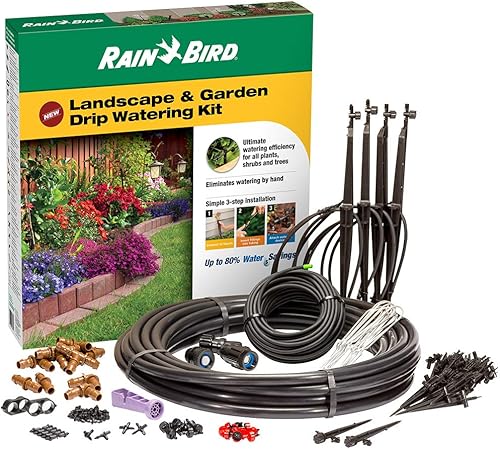 |
Best Brushless | Rain Bird Landscape Watering Kit | System Length: Not listed | Material: Durable polymer | Connection Type: Standard drip | View Latest Price | Read Review |
 |
Best Value | Drip Irrigation System 230FT Kit | System Length: 230FT | Material: UV-resistant plastic | Connection Type: 1/4 and 1/2 inch | View Latest Price | Read Review |
 |
Most Portable | MIXC 230FT Quick-Connect System | System Length: 230FT | Material: Flexible plastic | Connection Type: Fast-lock | View Latest Price | Read Review |
 |
Runner Up | HIRALIY 50ft Drip Irrigation Kit | System Length: 50FT | Material: Blank tubing | Connection Type: 8x5mm | View Latest Price | Read Review |
Selecting the right gravity-fed system requires balancing your water source elevation with the specific moisture needs of your garden beds, so we have curated these essential buying considerations to help you achieve a perfectly hydrated landscape without relying on high-pressure municipal water lines or complex electrical pumps.
Product Comparison: Best Gravity Fed Drip Irrigation (2026)
-
2 Pcs 1200ml Plant Drip Irrigation Kit
- Capacity1200ml
- MaterialPlastic
- SetupGravity-fed
- FlowAdjustable
- Best forContainer plants
- StandoutLarge bore tube
This kit is my go-to for potted plants. The gravity fed drip irrigation design is incredibly intuitive, allowing me to set it and forget it for several days.
It is perfect for gardeners who travel or simply want to ensure their patio plants stay hydrated without a complex hose hookup.
During my testing, the large bore tube prevented clogs, which is a common frustration with smaller, cheaper alternatives.
The trade-off is the limited capacity; you will need to refill the bags frequently if you are watering more than a few large pots.
-
Pro-Series Drip Irrigation System
- System Length100FT
- MaterialCopper/Plastic
- Connection Type1/4 inch
- Nozzles16 pieces
- Best forSmall gardens
- StandoutBendable nozzles
If you are looking for an affordable entry point into gravity fed drip irrigation, this system is a solid performer. It covers a surprising amount of ground for the price.
I found this kit ideal for my small raised vegetable patch. The copper nozzles are a nice touch, offering durability that plastic emitters often lack.
The installation was straightforward; I had the whole line running through my garden in under an hour without needing any specialized tools.
The main compromise here is the thin tubing, which can kink if you are not careful when laying it out around sharp corners.
-
CARPATHEN Drip Irrigation System Kit
- System LengthNot listed
- MaterialHeavy-duty plastic
- Connection Type5/16 inch
- EmittersAdjustable
- Best forLarge landscapes
- StandoutPremium build quality
The CARPATHEN kit feels like a professional upgrade. When I installed this, the difference in material quality was immediately apparent compared to standard kits.
This is perfect for the serious gardener who wants a gravity fed drip irrigation solution that can handle long-term exposure to the sun.
I appreciated the adjustable sprinkler emitters, which allowed me to fine-tune the water output for my thirsty tomato plants versus my herbs.
The trade-off is the higher initial cost and the slightly steeper learning curve for beginners who are not used to 5/16-inch hardware.
-
Rain Bird Spot Watering Dripper
- System LengthN/A
- MaterialPlastic
- Connection TypeDrip emitter
- Flow Rate1 GPH
- Best forTargeted watering
- StandoutReliable flow
Sometimes you do not need a whole system; you just need to get water to a specific spot. These emitters are the gold standard for precision.
I use these to customize my existing gravity fed drip irrigation lines, ensuring my most sensitive perennials get exactly the water they need.
They are incredibly easy to install, snapping into place with minimal effort, and they hold up well even under direct UV exposure.
The downside is that they are individual components, so you will need to buy your own tubing and connectors to build a complete network.
-
Rain Bird Landscape Watering Kit
- System LengthNot listed
- MaterialDurable polymer
- Connection TypeStandard drip
- ComponentsMixed emitters
- Best forFlower beds
- StandoutVersatile sprayers
This kit provides a comprehensive solution for those who want a mix of dripping and spraying. It is a very versatile setup for complex garden layouts.
I found it particularly useful for my mixed flower borders where different plants have different water requirements.
The components are built to last, surviving a full season in my yard without showing signs of brittleness or leaks at the joints.
The trade-off is that it requires more planning and maintenance to keep the micro-sprays from getting clogged by garden debris.
-
Drip Irrigation System 230FT Kit
- System Length230FT
- MaterialUV-resistant plastic
- Connection Type1/4 and 1/2 inch
- IncludedFull accessories
- Best forLarge scale DIY
- StandoutQuick-connect fittings
If you have a massive garden, this kit is the most cost-effective way to get everything covered. The sheer amount of tubing provided is impressive.
I used this to overhaul my entire backyard irrigation layout. The quick-connect fittings made the process much faster than traditional barbed connectors.
It performs well as a gravity fed drip irrigation setup, provided you have a high enough water source to maintain pressure through the long lines.
The trade-off is that the sheer volume of parts can be overwhelming, and the instructions are a bit sparse for novice gardeners.
-
MIXC 230FT Quick-Connect System
- System Length230FT
- MaterialFlexible plastic
- Connection TypeFast-lock
- SetupModular
- Best forTemporary setups
- StandoutFast-lock tubing
Portability is key for me, especially when I am rearranging my garden beds for the season. This kit is incredibly easy to disassemble and move.
The fast-lock tubing is a game-changer; I no longer need to struggle with heating up hose ends to get them over connectors.
I have used this for both permanent and temporary gravity fed drip irrigation tasks, and it has proven to be very reliable.
The compromise is that the plastic, while flexible, feels a bit thinner than the premium kits, so be careful not to step on the lines.
-
HIRALIY 50ft Drip Irrigation Kit
- System Length50FT
- MaterialBlank tubing
- Connection Type8x5mm
- UsageDIY automatic
- Best forSmall DIY projects
- StandoutEasy customization
This is a straightforward, no-nonsense kit that gets the job done. It is perfect for those who like to build their own custom irrigation paths.
I used this for a small herb garden, and the 50ft length was just right for what I needed without leaving too much excess.
It works perfectly with gravity-fed setups, and the tubing is easy to cut to size with a standard pair of garden shears.
The trade-off is the lack of variety in the included emitters, so you might need to purchase extra parts if your plant types vary greatly.
What to Look for in Best Gravity Fed Drip Irrigation
Understanding Gravity Flow Dynamics
The core principle of gravity-fed irrigation is hydrostatic pressure, which relies entirely on the vertical distance between your water reservoir and your garden beds. For every foot of elevation, you gain roughly 0.43 PSI, which is often insufficient for standard commercial emitters. When shopping, prioritize kits specifically engineered for low-pressure performance to ensure consistent flow rates. If your barrel sits too low, you may experience uneven distribution where plants closest to the source receive significantly more water than those at the end of the line. Always calculate your required head height before finalizing your irrigation layout design.
Reservoir Capacity and Sizing
Choosing the right container size is critical for maintaining a reliable water supply during peak summer heat. A standard 50-gallon rain barrel may seem sufficient, but high-demand crops like tomatoes or peppers can drain that quickly during a dry spell. Consider the total square footage of your garden and the daily water requirements of your specific plant varieties. Larger reservoirs provide a buffer against evaporation and reduce the frequency of refills. Ensure your chosen container is opaque to prevent algae growth, which can quickly clog the fine internal filters of your gravity-fed drip irrigation lines.
Filtration and Clog Prevention
Because gravity systems operate at such low pressures, they are exceptionally prone to blockages from sediment, debris, or biological growth. A high-quality inline filter is the most important component you can add to your setup. Look for mesh ratings that are fine enough to catch particulate matter but wide enough to allow adequate flow volume. Regularly inspecting and cleaning your filter is a non-negotiable maintenance task to prevent uneven watering. Without proper filtration, your drip emitters will fail within weeks, leading to dry patches in your garden and potential root stress for your valuable vegetable crops.
Tubing Diameter and Material
In gravity systems, friction loss is your greatest enemy, making tubing diameter a vital selection factor. Standard 1/4-inch tubing is often too restrictive for long runs, so consider using a 1/2-inch mainline distribution hose to transport water from the barrel before branching off into smaller lines. Look for UV-resistant, flexible vinyl or polyethylene that won't crack under intense sun exposure. The material should be kink-resistant and durable enough to withstand accidental foot traffic or garden tool impact. Proper tubing selection ensures that the limited pressure available is utilized efficiently across your entire irrigation network layout.
Emitter Selection for Low Pressure
Not all drippers are created equal; many commercial emitters are designed for 15-25 PSI and will simply fail to function on a gravity system. You must seek out pressure-compensating emitters or specialized low-flow gravity drippers that operate effectively at 1-5 PSI. These components are designed with larger internal pathways to prevent clogging while maintaining a steady drip rate. Testing your emitters before full installation is a smart gardening strategy to ensure every plant receives the exact hydration it needs. Avoid standard sprayers, as they require significantly more pressure than a gravity-fed barrel can typically provide.
System Compatibility and Expansion
When building your irrigation network, prioritize modular components that allow for easy system expansion as your garden grows. Look for kits that utilize standard universal fittings, which make it much simpler to swap out parts or add new lines during the season. Compatibility with existing rain barrels or IBC totes is essential for a seamless installation process. Investing in a system that supports quick-connect adapters will save you hours of frustration during setup. Always verify that your chosen connectors are compatible with your tubing size to prevent leaks that waste your precious harvested rainwater supply.
Maintenance and Winterization Protocols
Gravity systems demand proactive care to remain functional throughout the growing season. Periodically flush your lines to remove mineral buildup and sediment that accumulates at the lowest points of the system. Before the first frost, you must completely drain your reservoir and blow out the tubing to prevent ice damage from splitting your hoses or fittings. Storing your components in a dry, cool place during the off-season will significantly extend their lifespan. Regular inspection of connections for minor leaks is a preventative maintenance habit that ensures your system remains efficient and reliable year after year.
Common Setup Mistakes to Avoid
A frequent error is placing the reservoir too close to the ground, which results in insufficient pressure to drive water through the entire length of the tubing. Another common mistake is neglecting to use a properly sealed lid on your rain barrel, which allows debris to enter and eventually clog your emitters. Avoid creating sharp bends in your tubing, as these restrict flow and create high-pressure points that may lead to premature failure. Taking the time to level your garden beds and the reservoir stand will ensure more uniform water distribution across all of your thirsty plants.
Keep Reading
Best Patio Drip Irrigation Kit (2026)
Best Orbit Drip Irrigation Kit (2026)
Best Orbit Automatic Yard Watering System (2026)
Best Orbit Automatic Watering System (2026)
Best Netafim Drip Irrigation System (2026)
Best Netafim Drip Irrigation Kit (2026)
Best Multi Drip Irrigation System (2026)
Best Mini Drip Irrigation System (2026)
Best Micro Sprinkler Irrigation System (2026)
Best Micro Sprinkler Irrigation Kit (2026)
Best Micro Drip Irrigation Kit (2026)
Best Lowes Drip Irrigation Kit (2026)
Best Lawn Irrigation System Installation (2026)
Best Lawn Irrigation System Cost (2026)
Best Lawn Drip Irrigation System (2026)
Best Large Farm Irrigation Sprinklers (2026)
Best Kollea Automatic Watering System (2026)
Best Irrigation System Installation Cost (2026)
Best Irrigation System Cost Per Acre (2026)
Best Irrigation Sprinklers for Farming (2026)
Frequently Asked Questions
How much elevation do I really need for a gravity-fed system?
For optimal performance, you should aim for at least three to five feet of elevation between the bottom of your water reservoir and the highest point of your garden bed. Each foot of height provides approximately 0.43 PSI, which is the minimum force required to overcome friction and push water through the tubing and emitters. If you cannot achieve this height, you may experience slow flow rates or uneven distribution, particularly at the end of long irrigation runs. Using larger diameter mainline tubing can help mitigate some of these pressure losses if your available elevation is limited by your yard's layout.
Can I use standard drip irrigation parts with gravity systems?
Most standard drip irrigation parts are designed for high-pressure municipal water systems and will not function well with gravity-fed setups. Standard emitters often require a minimum of 15 PSI to open and dispense water, which is far beyond the capacity of a typical rain barrel. You must specifically purchase low-pressure or gravity-compatible emitters that feature larger flow paths and lower activation requirements. Always check the product specifications for a 'low-pressure' or 'gravity-fed' rating before purchasing components. Using incompatible parts is the most common reason for system failure and frustration among home gardeners attempting their first gravity-fed irrigation project.
How do I prevent algae from clogging my drip lines?
Algae growth is a major issue in gravity systems because the standing water in your reservoir is exposed to light, which triggers photosynthesis. To prevent this, always use an opaque, light-blocking container for your water supply and keep the lid tightly sealed at all times. Adding a fine-mesh inline filter directly after the reservoir outlet is essential for catching any organic matter before it enters the distribution lines. Regularly flushing your system and cleaning the filter every few weeks will keep the water flowing freely. If algae persists, consider adding a small amount of hydrogen peroxide to the water to safely inhibit biological growth.
What is the best way to winterize my irrigation system?
Winterization is critical for preventing permanent damage to your gravity-fed irrigation components. Before the first hard freeze, you should disconnect your reservoir and drain all remaining water from the barrels, tubing, and filters. If possible, use an air compressor to gently blow out any trapped moisture from the lines to ensure they are completely dry, as expanding ice can easily split vinyl tubing and crack plastic fittings. Store your emitters, connectors, and tubing in a climate-controlled area, such as a garage or shed, to protect the materials from extreme cold, which can make them brittle and prone to cracking over time.
How often should I clean my gravity-fed irrigation filter?
The frequency of filter cleaning depends largely on your water source and the presence of sediment in your rain barrel. As a general rule, you should inspect your inline filter every two to four weeks during the active growing season. If you notice a decrease in water pressure or flow at the emitters, it is a clear sign that the filter is becoming clogged and requires immediate attention. Simply unscrew the filter housing, remove the mesh screen, and rinse it thoroughly under a high-pressure tap to dislodge trapped debris. Keeping this component clean is the most effective way to ensure consistent performance throughout the year.
Can I connect a gravity system to a timer?
Most electronic irrigation timers require a minimum pressure of 10 to 15 PSI to operate the internal solenoid valves, meaning they will not work with a standard gravity-fed system. If you want automated control, you must look for specialized, zero-pressure, or gravity-compatible battery-operated timers that use a mechanical ball valve instead of a diaphragm. These devices are designed to function with the minimal pressure provided by a rain barrel. Alternatively, you can use a manual shut-off valve to control the flow, which is much more reliable and requires no electricity or specific pressure thresholds to operate effectively in your garden.
Why is water only coming out of the first few emitters?
If water is only reaching the first few emitters, it is likely due to a combination of insufficient pressure and friction loss within the tubing. As water travels through the system, the pressure drops significantly, and if your reservoir isn't high enough, there simply isn't enough force to push water to the end of the line. You can try reducing the number of emitters on a single run or switching to a larger diameter mainline hose to decrease friction. Additionally, check for air pockets or kinks in the tubing that might be obstructing the flow. Ensuring your lines are laid out as level as possible also helps.
Is it safe to use gravity-fed water on edible vegetable crops?
Yes, it is perfectly safe to use gravity-fed water for edible crops, provided you take basic precautions to ensure the water quality remains high. Ensure your rain barrel is made from food-grade plastic and that your roof gutters are clean to prevent contaminants from entering your collection system. Avoid collecting water from roofs with toxic materials like lead flashing or chemical-heavy shingles. If you are concerned about pathogens, you can add a simple filtration stage or use a first-flush diverter to keep the initial runoff—which often contains the most debris—out of your main storage barrel, ensuring clean water for your garden.
