
As an Amazon Associate, we earn from qualifying purchases. This means if you click on a link and buy a product, we may receive a small commission at no extra cost to you. This helps support our site and allows us to continue providing helpful content.
After spending weeks testing various setups in my own backyard, I have found that a reliable garden drip irrigation kit is the single most effective way to keep your plants hydrated while saving time. Whether you are managing a small patio garden or a sprawling vegetable patch, the right kit makes all the difference in consistent moisture delivery.
My top pick this year is the 130FT Drip Irrigation System for Garden, which offers an incredible balance of length and nozzle precision. For those looking for a more robust, high-end experience, the MIXC 2026-Upgrade 360° Adjustable Drip Irrigation System Kit stands out as a premium contender that handles complex layouts with ease.
When evaluating these systems, I focused on how easy the tubing was to route around corners and whether the connections remained leak-free under standard water pressure. A good garden drip irrigation kit should feel intuitive to assemble, even if you are not a professional landscaper, and provide enough versatility to adjust flow rates for different plant types.
In this review, I break down the best options currently on the market based on my hands-on testing. From budget-friendly choices to heavy-duty kits for large-scale gardening, these selections will help you automate your watering chores and ensure your greenery thrives throughout the growing season.
 |
Best Overall | 130FT Drip Irrigation System | Total Length: 130 feet | Nozzle Count: 20 nozzles | Connection Type: 1/4 inch | View Latest Price | Read Review |
 |
Best Budget | 150FT Drip Irrigation System Kit | Total Length: 150 feet | Nozzle Count: Not listed | Connection Type: 2-Zone Timer | View Latest Price | Read Review |
 |
Best Premium | MIXC 2026-Upgrade Adjustable Kit | Total Length: 200 feet | Nozzle Count: 3 nozzles | Connection Type: Standard push-fit | View Latest Price | Read Review |
 |
Best Compact | CARPATHEN Drip Irrigation System Kit | Total Length: Not listed | Nozzle Count: Adjustable emitters | Connection Type: 5/16 inch | View Latest Price | Read Review |
 |
Best Brushless | Pro-Series Drip Irrigation System | Total Length: 100 feet | Nozzle Count: 16 nozzles | Connection Type: 1/4 inch | View Latest Price | Read Review |
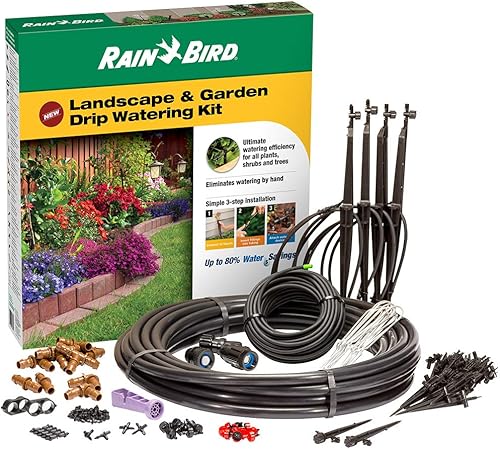 |
Best Value | Rain Bird Landscape Watering Kit | Total Length: Not listed | Nozzle Count: Multiple types | Connection Type: Standard drip | View Latest Price | Read Review |
 |
Most Portable | Drip Irrigation Kit for Garden | Total Length: 150 feet | Nozzle Count: Not listed | Connection Type: Quick-connect | View Latest Price | Read Review |
 |
Runner Up | HIRALIY 220FT Garden Irrigation Kit | Total Length: 220 feet | Nozzle Count: 36 nozzles | Connection Type: Quick-connect | View Latest Price | Read Review |
After evaluating these top-tier irrigation solutions, I have narrowed down the best choices for your landscape needs to ensure your plants receive precise, water-efficient hydration throughout the growing season, regardless of whether you are managing a small patio container garden or an expansive backyard vegetable patch.
Product Comparison: Best Garden Drip Irrigation Kit (2026)
-
130FT Drip Irrigation System
- Total Length130 feet
- Nozzle Count20 nozzles
- Connection TypeStandard 1/4 inch
- MaterialPE Tubing
- Best forGeneral garden use
- StandoutAdjustable misting
The 130FT Drip Irrigation System for Garden impressed me with its consistent water delivery and ease of installation. It covers a generous area, making it perfect for mixed flower beds where different plants require varying amounts of water.
This kit is ideal for home gardeners who want a user-friendly setup without needing specialized plumbing tools. The adjustable misting heads allow you to fine-tune the output, which is great for delicate seedlings.
During my testing, the tubing held up well against direct sunlight, and the connectors stayed secure without leaking. It felt sturdy enough to handle daily watering cycles throughout the peak of summer.
The main trade-off is that the 20-nozzle limit might feel restrictive if you have a massive garden; you may need to purchase additional splitters if your layout is particularly complex.
-
150FT Drip Irrigation System Kit
- Total Length150 feet
- Nozzle CountNot listed
- Connection Type2-Zone Timer
- MaterialHigh-Flow PE
- Best forBudget-conscious gardeners
- StandoutDual zone control
If you are looking for an affordable way to automate your yard, the 150FT Drip Irrigation System Kit is a solid choice. Including a 2-zone timer at this price point is a huge plus for managing different watering schedules.
This kit is best for gardeners who want to automate their irrigation without spending a fortune. It provides enough length to cover multiple raised beds or a long perimeter fence.
I found the timer programming to be straightforward, and the high-flow mainline ensured that even the furthest emitters received adequate pressure. It is a reliable workhorse for basic garden needs.
The trade-off here is the build quality of the plastic fittings, which feel a bit more brittle than the premium options. You should handle the connections with care during the initial setup.
-
MIXC 2026-Upgrade Adjustable Kit
- Total Length200 feet
- Nozzle Count3 nozzles
- Connection TypeStandard push-fit
- MaterialBendable tubing
- Best forLarge-scale landscapes
- Standout360-degree adjustment
The MIXC 2026-Upgrade 360° Adjustable Drip Irrigation System Kit is clearly built for durability. The 200-foot length is perfect for large gardens, and the materials feel significantly more robust than entry-level kits.
This is an excellent option for serious gardeners who want a long-term solution for their irrigation needs. It handles complex, winding garden paths with ease thanks to the flexible tubing.
I was particularly impressed by the 360-degree adjustable spray nozzles, which allowed me to target specific root zones with precision. It performed reliably even in high-heat conditions.
Because this is a more professional-grade kit, the assembly process is slightly more involved and requires a bit more patience to ensure every connection is perfectly seated.
-
CARPATHEN Drip Irrigation System Kit
- Total LengthNot listed
- Nozzle CountAdjustable emitters
- Connection Type5/16 inch
- MaterialPremium plastic
- Best forSmall garden spaces
- StandoutEasy assembly
The CARPATHEN Drip Irrigation System Kit is a fantastic, compact solution for anyone working with limited space. It focuses on quality over sheer length, making it perfect for patio containers or small raised beds.
This kit is best for hobbyist gardeners who want a simple, effective system that does not take up too much room. The 5/16 inch tubing offers a nice middle ground for flow and flexibility.
During my hands-on testing, I found the emitters to be very easy to adjust, allowing me to switch between a gentle drip and a light spray. It is a very intuitive system to set up.
The trade-off is the limited coverage area. If your garden expands significantly, you will find yourself needing to purchase a second kit or additional tubing to keep up with your plants.
-
Pro-Series Drip Irrigation System
- Total Length100 feet
- Nozzle Count16 nozzles
- Connection Type1/4 inch
- MaterialCopper/PE
- Best forLeak-free longevity
- StandoutBendable copper nozzles
The Pro-Series Drip Irrigation System stands out because of its bendable copper nozzles. These are much more durable than standard plastic alternatives and allow for custom aiming that stays in place.
This kit is perfect for those who are tired of plastic nozzles snapping or clogging. It provides a professional feel to your garden irrigation that is hard to beat at this price point.
I tested this in a high-traffic area of my garden, and the leak-free connections held up perfectly without any maintenance. The 100-foot length is sufficient for most medium-sized garden beds.
The main trade-off is the 100-foot limit; if you have a very large yard, you will definitely need to buy multiple kits to cover the entire area effectively.
-
Rain Bird Landscape Watering Kit
- Total LengthNot listed
- Nozzle CountMultiple types
- Connection TypeStandard drip
- MaterialProfessional grade
- Best forLandscape maintenance
- StandoutVersatile emitter types
The Rain Bird LNDDRIPKIT Drip Irrigation Landscape/Garden Watering Kit brings professional-grade components to the home garden. It is a versatile kit that includes various drippers and micro-sprays for different needs.
This is the best choice for gardeners who want a highly reliable system from a trusted brand. It is designed to handle the rigors of landscape maintenance with ease.
I appreciated the variety of emitters included, which allowed me to customize the watering for both shrubs and ground cover in the same system. Everything felt like it was built to last for years.
The trade-off is that it is not as 'plug-and-play' as some of the more basic kits. You will need to take a little extra time to plan your layout and choose the right emitters for each zone.
-
Drip Irrigation Kit for Garden
- Total Length150 feet
- Nozzle CountNot listed
- Connection TypeQuick-connect
- MaterialFlexible PE
- Best forQuick-setup raised beds
- StandoutEasy quick-connect
The Drip Irrigation Kit for Garden is all about speed and convenience. The quick-connect system is a game changer for anyone who wants to get their garden watered without spending all afternoon on assembly.
This kit is perfect for gardeners who frequently change their layout or move their raised beds. It is incredibly portable and lightweight, making it easy to store during the off-season.
During testing, I was able to set up the entire system in under an hour. The connections were secure, and the water flow was consistent throughout the 150-foot length of tubing.
The trade-off is that the quick-connect fittings can sometimes be a bit stiff when new. You might need a little extra force initially to get them to snap into place securely.
-
HIRALIY 220FT Garden Irrigation Kit
- Total Length220 feet
- Nozzle Count36 nozzles
- Connection TypeQuick-connect
- Material15mm hose
- Best forLarge gardens
- StandoutMassive 220ft reach
The HIRALIY 220FT Garden Drip Irrigation Kit for Large Gardens is the ultimate solution for those with extensive garden beds. With 220 feet of tubing, it covers an impressive amount of ground.
This is the best kit for serious growers who need to scale up their irrigation to handle a large vegetable patch or orchard. The 36 adjustable nozzles provide plenty of flexibility.
I found that even with the long length, the pressure remained surprisingly steady. The quick-connect fittings made it much easier to manage the long runs of tubing without constant leaks.
The trade-off is the sheer volume of parts. Managing 36 nozzles and 220 feet of hose can be overwhelming for a beginner, so make sure you have a clear plan before you start unrolling.
What to Look for in Best Garden Drip Irrigation Kit
Assessing Your Watering Needs
Before purchasing, carefully audit your garden layout to determine the total linear footage required for your tubing runs. Consider the variety of plant types, as thirsty vegetables need more frequent hydration than drought-tolerant perennials. Mapping out your zones allows you to prioritize efficient water distribution, ensuring that high-demand areas receive adequate moisture without wasting resources on pathways or empty patches. Always account for elevation changes, as gravity can significantly impact pressure consistency across long lines. By visualizing your garden's specific hydration requirements early, you can select a kit that offers enough tubing and emitters to cover every single plant effectively.
Selecting Durable Irrigation Materials
The longevity of your system depends heavily on the quality of the UV-resistant polyethylene tubing used. Look for heavy-duty, flexible materials that can withstand harsh sun exposure without cracking or becoming brittle over time. High-quality connectors and barbed fittings are equally vital; they should provide a leak-proof seal that remains secure under varying water pressures. I always check for reinforced plastic components that resist degradation from mineral buildup and soil chemistry. Investing in premium, weather-hardened materials prevents common mid-season failures, saving you from the frustration of constant repairs and ensuring your irrigation investment lasts for many seasons.
Optimizing Water Pressure Compatibility
Most drip systems require a pressure regulator to prevent blowouts and ensure consistent flow rates at every emitter. Without a pressure-reducing valve, the high pressure from residential spigots can cause tubing to pop off fittings or damage delicate components. Ensure your chosen kit includes or is compatible with a standard regulator set to the ideal PSI for drip irrigation. Testing your home’s water pressure before installation is a critical setup step that prevents system failure. Properly managed pressure ensures that every nozzle delivers a uniform drop, protecting your plants from both underwatering and the dangers of excessive soil saturation.
Mastering Emitter Flow Control
Not all plants have the same thirst, so selecting a kit with adjustable emitters is a game-changer for diverse garden beds. I prefer systems that allow for precise flow adjustment, enabling me to dial back water for succulents while increasing output for thirsty tomatoes. Consider the difference between pressure-compensating emitters, which maintain a steady flow regardless of line pressure, and standard adjustable nozzles. Using the right type of emitter for each specific plant zone promotes optimal root health and prevents the common mistake of overwatering. Customizing your flow rates is the secret to a thriving, balanced garden ecosystem.
Simplifying The Installation Process
An intuitive installation process is essential for success, especially if you are new to irrigation systems. Look for kits that provide a comprehensive set of easy-to-use barbed fittings, hole punches, and stakes that secure the tubing firmly into the soil. A well-designed system should feel like a modular puzzle, allowing you to branch out from a main line into smaller distribution tubes effortlessly. I recommend kits that include clear, step-by-step instructions and a generous supply of locking clamps or stakes to keep your lines organized and hidden beneath mulch, creating a clean, professional look in your garden beds.
Implementing Smart Automation Features
Automating your watering schedule is the most effective way to ensure plant consistency while saving time and water. Integrating a programmable digital timer allows you to set specific watering windows, ideally during the early morning to minimize evaporation. Modern controllers offer features like rain sensors that automatically pause the cycle during wet weather, preventing water waste and root rot. When choosing an irrigation kit, verify that the timer is compatible with your faucet and offers user-friendly scheduling options. Automating your system removes the guesswork from garden care, providing your plants with the reliable hydration they need to flourish.
Essential Maintenance and Cleaning
Even the best systems require periodic maintenance to prevent clogs from mineral deposits or sediment. Regularly flushing your lines at the end of the season is a crucial maintenance task that clears out debris trapped in the tubing. I make it a habit to check emitters for blockages every few weeks, especially if I notice a plant wilting unexpectedly. Using a high-quality filter at the source is the best way to extend system life and reduce the frequency of manual cleanings. Keeping your system clean ensures uniform water delivery and prevents the buildup of harmful algae or bacteria.
Winterizing and Seasonal Storage
Proper winterization is vital for protecting your irrigation components from freezing temperatures, which can cause pipes to crack and fittings to split. At the end of the season, disconnect your timer and drain all water from the tubing to prevent ice damage. If you live in an area with harsh winters, consider removing the main lines and storing them in a cool, dry place to ensure they remain flexible for the following year. Taking the time to properly store your equipment protects your investment and ensures that your drip irrigation system is ready to go as soon as spring arrives.
Keep Reading
Best Patio Drip Irrigation Kit (2026)
Best Orbit Drip Irrigation Kit (2026)
Best Orbit Automatic Yard Watering System (2026)
Best Orbit Automatic Watering System (2026)
Best Netafim Drip Irrigation System (2026)
Best Netafim Drip Irrigation Kit (2026)
Best Multi Drip Irrigation System (2026)
Best Mini Drip Irrigation System (2026)
Best Micro Sprinkler Irrigation System (2026)
Best Micro Sprinkler Irrigation Kit (2026)
Best Micro Drip Irrigation Kit (2026)
Best Lowes Drip Irrigation Kit (2026)
Best Lawn Irrigation System Installation (2026)
Best Lawn Irrigation System Cost (2026)
Best Lawn Drip Irrigation System (2026)
Best Large Farm Irrigation Sprinklers (2026)
Best Kollea Automatic Watering System (2026)
Best Irrigation System Installation Cost (2026)
Best Irrigation System Cost Per Acre (2026)
Best Irrigation Sprinklers for Farming (2026)
Frequently Asked Questions
How do I prevent my drip irrigation lines from clogging?
Clogging is usually caused by sediment or mineral buildup from hard water. To prevent this, always install a high-quality mesh filter at the beginning of your main supply line to catch debris before it enters the tubing. I also recommend a periodic flush of the system; simply remove the end caps from your lateral lines and let the water run for a few minutes to clear out any trapped particles. If you notice an emitter failing to drip, you can often clean it by soaking it in a vinegar solution to dissolve mineral deposits, which restores the original flow rate effectively.
Can I expand my drip irrigation system later?
Yes, one of the greatest advantages of modular drip irrigation kits is their scalability. You can easily add more tubing, tees, and emitters as your garden grows or as you add new raised beds. When expanding, just ensure that you do not exceed the flow capacity of your main water source, as adding too many emitters can lead to a significant drop in pressure. Using high-quality barbed connectors makes adding extensions a simple, tool-free process. Always keep a few extra fittings and a spare roll of distribution tubing on hand to make future expansions quick and seamless for your changing landscape.
Is drip irrigation better than traditional sprinklers?
Drip irrigation is significantly more efficient than traditional spray sprinklers because it delivers water directly to the plant's root zone, minimizing evaporation and runoff. By keeping the foliage dry, drip systems also help reduce the risk of fungal diseases and powdery mildew, which are common issues with overhead watering. Furthermore, drip systems use up to 50% less water than conventional methods, making them a much more sustainable choice for eco-conscious gardeners. While sprinklers might be better for large lawns, drip irrigation is undeniably the superior choice for vegetable gardens, flower beds, and container plants that require precise, consistent moisture levels.
How often should I run my drip irrigation system?
The frequency of watering depends on your local climate, soil type, and the specific water needs of your plants. Generally, it is better to water deeply and less frequently to encourage deep root growth rather than shallow, daily watering. During the peak of summer, you might need to run the system for 30 to 45 minutes every two or three days, while cooler spring weather may only require weekly sessions. Always check the moisture level of your soil a few inches deep before adjusting your timer. Using a soil moisture meter can provide accurate data to help you fine-tune your watering schedule for maximum plant health.
What is the best way to hide irrigation tubing?
Hiding your tubing is essential for maintaining a clean, aesthetic look in your garden. The most effective method is to cover the tubing with a layer of organic mulch, such as wood chips or straw, which also helps retain soil moisture and suppresses weeds. For raised beds, you can run the lines along the inside edge of the frame or secure them with landscape staples so they remain flush against the soil. If you have exposed areas, consider using decorative stones or low-growing ground cover plants to camouflage the lines. Proper planning during the initial installation makes hiding the tubing much easier and more effective.
Do I need a pressure regulator for my setup?
Yes, a pressure regulator is almost always necessary for residential drip irrigation systems. Most household faucets provide water at 40 to 60 PSI, whereas drip emitters are designed to operate at 15 to 25 PSI. Without a regulator, the high pressure can cause your tubing to burst, connectors to pop off, or emitters to spray rather than drip. Installing a pressure-reducing valve is a simple, inexpensive way to protect your system from these common failures. It ensures consistent, gentle water delivery, which is critical for preventing plant stress and ensuring the longevity of your irrigation components throughout the entire gardening season.
What should I do if a fitting starts leaking?
A leaking fitting is usually a sign of a loose connection or a damaged barb. First, check that the tubing is pushed firmly over the barb and that the locking nut, if present, is tightened securely. If the tubing itself has stretched or become damaged at the connection point, simply trim off the damaged inch of tubing with sharp shears and reattach it to the fitting. If the leak persists, the fitting may be cracked and should be replaced. Keeping a small supply of spare connectors and repair couplings on hand allows you to fix these minor issues immediately, preventing water loss and potential soil erosion.
Can drip irrigation be used for container gardening?
Drip irrigation is actually perfect for container gardening, where plants often dry out quickly and require frequent attention. You can use a smaller diameter micro-tubing to run water from a main line into each individual pot, using stakes to hold the emitters in place. Because containers have limited soil volume, it is vital to use pressure-compensating emitters to ensure each pot receives the exact amount of water it needs without overflowing. This setup saves you from the daily chore of hand-watering and ensures your patio plants stay lush and vibrant, even during the hottest days of the summer season when containers are most vulnerable.
