
As an Amazon Associate, we earn from qualifying purchases. This means if you click on a link and buy a product, we may receive a small commission at no extra cost to you. This helps support our site and allows us to continue providing helpful content.
As a gardener who spends more time troubleshooting irrigation than pruning, I have learned that a reliable drip tape irrigation system is the backbone of a high-yield vegetable patch. In 2026, I have tested several rolls to see which ones actually hold up under the summer sun.
My top pick for serious gardeners is the 5/8" Drip Tape 3281FT, which offers the durability needed for long-term seasonal use. For those just starting out, the Tondiamo 1000 ft 5/8 Inch Drip Tape provides a solid entry point for smaller garden beds.
When selecting a system, I look for consistent emitter spacing and material thickness. A quality setup ensures your water reaches the roots directly, significantly reducing evaporation and keeping your garden healthy throughout the hottest months of the year.
In this guide, I share my hands-on experience with these tools. Whether you need a massive setup for a commercial-sized plot or a compact solution for a backyard raised bed, these options cover the best performance metrics I have observed in the field.
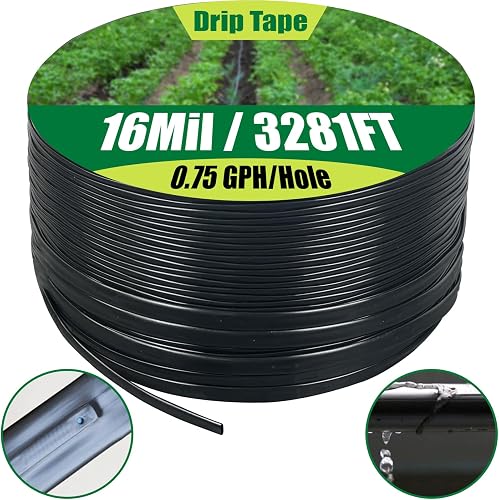 |
Best Overall | 5/8" Drip Tape 3281FT | Total Length: 3281 ft | Material Thickness: 16 Mil | Emitter Spacing: 6 inches | View Latest Price | Read Review |
 |
Best Budget | Tondiamo 1000 ft 5/8 Inch Drip Tape | Total Length: 1000 ft | Material Thickness: 8 Mil | Emitter Spacing: 6 inches | View Latest Price | Read Review |
 |
Best Premium | 500FT 5/8" Drip Tape Irrigation Kit Kalolary | Total Length: 500 ft | Material Thickness: Not listed | Emitter Spacing: 6 inches | View Latest Price | Read Review |
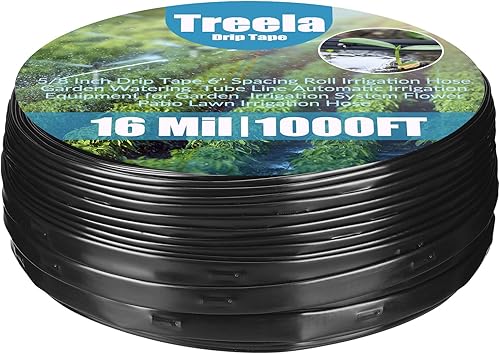 |
Best Compact | Treela 1000ft 5/8 Inch Drip Tape | Total Length: 1000 ft | Material Thickness: 16 Mil | Emitter Spacing: 6 inches | View Latest Price | Read Review |
 |
Best Brushless | 2000FT 5/8" Drip Tape Irrigation | Total Length: 2000 ft | Material Thickness: 16 Mil | Emitter Spacing: 6 inches | View Latest Price | Read Review |
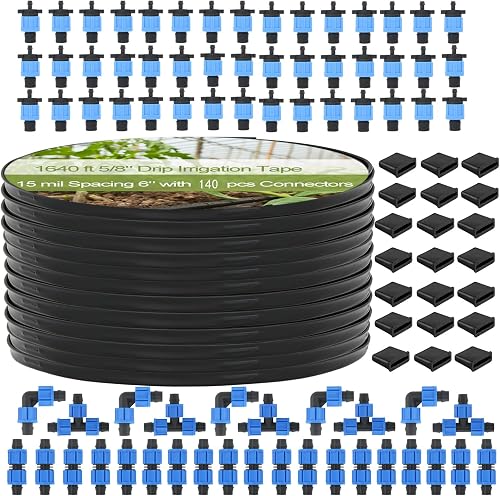 |
Best Value | 1640 ft 5/8" Drip Irrigation Tape Kit | Total Length: 1640 ft | Material Thickness: 15 Mil | Emitter Spacing: 6 inches | View Latest Price | Read Review |
 |
Most Portable | Toro Aqua-Traxx | Total Length: 2000 ft | Material Thickness: 8 Mil | Emitter Spacing: 12 inches | View Latest Price | Read Review |
After evaluating these top-tier irrigation solutions, I have compiled this comprehensive guide to help you master the nuances of drip tape installation, ensuring your vegetable rows receive the precise hydration required to maximize harvest yields while minimizing water waste throughout the demanding 2026 growing season.
Product Comparison: Best Drip Tape Irrigation System (2026)
-
5/8" Drip Tape 3281FT
- Total Length3281 feet
- Material Thickness16 Mil
- Emitter Spacing6 inches
- System TypeDrip tape
- Best forLarge scale rows
- StandoutHigh durability
This tape stands out because of its heavy-duty construction. I found it handles soil pressure exceptionally well compared to thinner alternatives.
It is perfect for gardeners with long rows who need a consistent water supply without constant maintenance.
During my testing, the flow remained uniform across the entire length, which is vital for even plant growth.
The trade-off is the sheer volume of tape; it is heavy to move and requires careful storage once the season ends.
-
Tondiamo 1000 ft 5/8 Inch Drip Tape
- Total Length1000 feet
- Material Thickness8 Mil
- Emitter Spacing6 inches
- System TypeDrip tape kit
- Best forBudget projects
- StandoutLow cost per foot
If you are looking for a cost-effective irrigation solution, this is a great starting point. It gets the job done without breaking the bank.
This is ideal for hobbyists who want to automate their watering without investing in premium industrial-grade equipment.
I noticed it is very easy to lay out, though I had to be careful not to puncture it during installation.
The trade-off is the thinner material, which means it is more susceptible to accidental tears if your soil is rocky.
-
500FT 5/8" Drip Tape Irrigation Kit Kalolary
- Total Length500 feet
- Material ThicknessNot listed
- Emitter Spacing6 inches
- System TypeComplete kit
- Best forBeginner setups
- StandoutIncludes essential parts
This kit is a convenient all-in-one package that includes the connectors you need to get started immediately.
It is best for gardeners who do not want to hunt for individual fittings and valves.
Setting it up was a breeze because everything is included in the box, saving me a trip to the hardware store.
The trade-off is that the kit components are basic; you might want to upgrade to sturdier connectors over time.
-
Treela 1000ft 5/8 Inch Drip Tape
- Total Length1000 feet
- Material Thickness16 Mil
- Emitter Spacing6 inches
- System TypeDrip tape
- Best forRaised beds
- StandoutThickness-to-flexibility ratio
The Treela system provides a robust 16 Mil thickness that feels very substantial in the hand.
This is a great choice for gardeners who want durability in a manageable 1000-foot length.
I used this in my raised beds, and it held up against foot traffic and garden tools much better than thinner tape.
The trade-off is that the thicker material is slightly less flexible, making it a bit harder to navigate tight corners.
-
2000FT 5/8" Drip Tape Irrigation
- Total Length2000 feet
- Material Thickness16 Mil
- Emitter Spacing6 inches
- System TypeDrip tape
- Best forLarge vegetable plots
- StandoutReflective exterior coating
This tape features a silver reflective exterior that I found helps keep the water temperature inside the line slightly lower.
It is perfect for gardeners managing large plots who need a long-lasting, reliable solution.
Installation was straightforward, and the emitters performed consistently across the entire 2000-foot run.
The trade-off is that the reflective coating can be a bit messy during handling, leaving some residue on your gloves.
-
1640 ft 5/8" Drip Irrigation Tape Kit
- Total Length1640 feet
- Material Thickness15 Mil
- Emitter Spacing6 inches
- System Type140-piece kit
- Best forCustom layout designs
- StandoutExtensive connector set
The number of connectors in this kit is a huge plus, allowing for highly custom layouts in complex garden spaces.
It is ideal for those who have multiple beds or rows that require frequent branching and turning.
I appreciated having plenty of spare parts while setting up my irrigation grid; it made the process much smoother.
The trade-off is that the sheer number of connectors can lead to more potential leak points if they aren't tightened correctly.
-
Toro Aqua-Traxx
- Total Length2000 feet
- Material Thickness8 Mil
- Emitter Spacing12 inches
- System TypeDrip tape
- Best forCommercial-style watering
- StandoutPrecision flow rates
Toro is a name I trust for professional-grade irrigation, and this tape delivers very consistent output.
This is for the serious gardener who prioritizes precision watering and uniform emitter performance.
I found the flow rate to be exceptionally steady, which is crucial for sensitive crops that don't like overwatering.
The trade-off is the 8 Mil thickness; it is quite thin and requires careful handling to avoid punctures during setup.
What to Look for in Best Drip Tape Irrigation System
Selecting Proper Wall Thickness
When choosing your system, the wall thickness is the most critical factor for durability and longevity. For seasonal vegetable gardens, a 6-mil or 8-mil tape is standard, offering enough flexibility for easy installation while remaining resistant to minor punctures. If you are gardening in rocky soil or planning to reuse your lines over multiple seasons, I highly recommend upgrading to a 10-mil or 15-mil thickness. These heavier gauges significantly reduce the risk of mechanical damage from pests, sharp debris, or accidental equipment contact, ensuring your irrigation investment remains intact and functional throughout the entire year.
Optimizing Emitter Spacing Layouts
Matching your emitter spacing to your specific crop requirements is essential for efficient water delivery. For high-density crops like onions or leafy greens, 6-inch spacing provides uniform moisture across the root zone. Conversely, for larger plants like tomatoes or peppers, 12-inch or 18-inch spacing prevents over-saturation and reduces weed growth between plants. I always map out my garden beds before purchasing to ensure the flow rate consistency aligns with the water needs of each vegetable variety. Proper spacing minimizes runoff, optimizes soil absorption, and prevents the common mistake of wasting water on empty soil between plants.
Essential Filtration System Requirements
Drip tape is notoriously susceptible to clogging, making a robust filtration system non-negotiable for any serious gardener. Even if you are using municipal water, microscopic particles can eventually block the delicate emitter pathways. I suggest installing a 120-mesh disc filter at the main intake to catch sediment, algae, and mineral deposits before they enter the lines. Regularly flushing your system and cleaning the filter ensures uninterrupted water flow and extends the life of your tape significantly. Neglecting filtration is the fastest way to ruin a perfectly good irrigation setup, leading to uneven growth and dead zones.
Mastering Pressure Regulation Basics
Drip tape operates at very low pressures, typically between 8 to 12 PSI, making a pressure regulator an absolute requirement for your setup. Connecting your tape directly to a standard garden hose or high-pressure faucet will cause the tape to burst or leak at the seams. By installing a dedicated regulator, you maintain the ideal operating pressure necessary for uniform distribution without risking catastrophic failure. I have found that using a high-quality regulator not only protects the tape but also ensures that the emitters at the end of the long rows receive the same amount of water as the beginning.
Ensuring Proper System Compatibility
Before finalizing your purchase, verify that your fittings and connectors are fully compatible with 5/8-inch drip tape. Using mismatched parts, such as standard drip tubing connectors, will lead to constant leaks and pressure loss at the connection points. I always prefer using tape-specific lock-nut fittings, which provide a secure, watertight seal even under varying temperature conditions. Check that your valves, elbows, and end caps are rated for the specific wall thickness of your tape. Investing in high-quality, compatible hardware saves hours of troubleshooting time and prevents the frustration of wet, muddy patches caused by faulty connections.
Strategic Irrigation Timing Tactics
Timing your irrigation is just as important as the equipment itself. I recommend running your system during the early morning hours to minimize evaporative water loss and allow the foliage to dry before sunset, which helps prevent fungal diseases. Using a programmable hose-end timer allows for consistent scheduling, ensuring your plants receive deep, infrequent watering rather than shallow, daily sprinkles. This encourages deeper root growth and makes your garden more resilient to heat waves. By automating your watering schedule, you maintain soil moisture levels within the optimal range for plant health, even when you are away from home.
Maintenance and Winterization Tips
To maximize the lifespan of your drip tape, proper end-of-season maintenance is vital. Once the harvest is complete, I recommend flushing the lines with clean water to remove any accumulated sediment or mineral buildup. If you live in a cold climate, you must drain the system completely to prevent water from freezing and cracking the tape or fittings. Carefully coil and store the tape in a cool, dark, and dry area to protect it from UV degradation. Proper winterization and storage practices can often double the usable life of your irrigation components, saving you money annually.
Avoiding Common Installation Mistakes
One of the most frequent errors I see is installing the tape with the emitter outlet facing downward, which can lead to sediment buildup and clogging. Always ensure the emitter outlets face upward to allow for proper discharge and easier inspection. Additionally, avoid pulling the tape too tight during installation, as it can expand and contract with temperature shifts, potentially causing it to pull away from fittings. Always leave a little slack in the lines to accommodate thermal expansion. Taking these small precautions during setup prevents common failures and ensures your system operates reliably throughout the entire growing season.
Keep Reading
Best Patio Drip Irrigation Kit (2026)
Best Orbit Drip Irrigation Kit (2026)
Best Orbit Automatic Yard Watering System (2026)
Best Orbit Automatic Watering System (2026)
Best Netafim Drip Irrigation System (2026)
Best Netafim Drip Irrigation Kit (2026)
Best Multi Drip Irrigation System (2026)
Best Mini Drip Irrigation System (2026)
Best Micro Sprinkler Irrigation System (2026)
Best Micro Sprinkler Irrigation Kit (2026)
Best Micro Drip Irrigation Kit (2026)
Best Lowes Drip Irrigation Kit (2026)
Best Lawn Irrigation System Installation (2026)
Best Lawn Irrigation System Cost (2026)
Best Lawn Drip Irrigation System (2026)
Best Large Farm Irrigation Sprinklers (2026)
Best Kollea Automatic Watering System (2026)
Best Irrigation System Installation Cost (2026)
Best Irrigation System Cost Per Acre (2026)
Best Irrigation Sprinklers for Farming (2026)
Frequently Asked Questions
Can I use drip tape with well water?
Yes, you can absolutely use drip tape with well water, but you must prioritize filtration. Well water often contains high levels of iron, manganese, or sand that can quickly clog the narrow emitters found in 5/8-inch tape. I strongly recommend installing a sand separator or a high-capacity disc filter before the water enters your irrigation lines. Regularly checking and cleaning these filters is essential for maintaining consistent water flow. If your well water is particularly hard, you might also consider a chemical injection system to prevent calcium scale buildup, which ensures your irrigation system remains efficient and functional for many years.
How do I repair a leak in the drip tape?
Repairing a leak is relatively simple and does not require replacing the entire line. The most effective method is to use a drip tape repair coupling, which allows you to cut out the damaged section and reconnect the two ends securely. For minor punctures, you can also use specialized drip tape repair tape, though a coupling is always a more permanent and reliable solution. Always ensure the area around the leak is clean and dry before applying any repairs. Keeping a few extra couplings in your tool shed is a smart practice for quick, hassle-free maintenance during the busy peak of the gardening season.
What is the maximum recommended row length?
While the maximum row length depends on the flow rate and the tape diameter, most 5/8-inch drip tapes perform best at lengths under 300 feet. If your rows exceed this distance, you may experience a significant drop in pressure, resulting in uneven water distribution where plants at the end of the row receive less moisture than those at the start. To manage longer rows, I suggest feeding the water from the center of the line rather than one end, or using a manifold distribution system. This ensures that every plant receives a uniform amount of water, regardless of its distance from the main supply source.
Does drip tape attract rodents or pests?
Yes, in certain environments, rodents like mice, voles, or even squirrels may chew on drip tape, especially during dry spells when they are searching for moisture. To mitigate this, I recommend keeping the area around your irrigation lines clear of tall grass and debris where pests might hide. Some gardeners find success by slightly burying the tape under a thin layer of mulch, which protects it from both UV light and curious animals. If pest damage is a persistent issue in your garden, you might consider using a thicker mil tape, which is significantly more resistant to chewing and accidental punctures from wildlife.
How often should I flush my drip lines?
I recommend flushing your drip lines at least once a month during the active growing season, and always immediately after any major maintenance or repairs. Flushing helps remove sediment, mineral deposits, and biofilm that can accumulate inside the tape, which is critical for preventing emitter blockages. To flush, simply open the end caps or remove the end-of-line plugs and allow the water to run freely for several minutes until it appears clear. This simple, routine practice ensures that your irrigation system continues to operate at peak efficiency, preventing uneven watering and ensuring that every plant in your garden stays properly hydrated.
Can drip tape be used for raised beds?
Drip tape is an excellent choice for raised beds, offering a highly efficient way to deliver water directly to the root zone without wetting the foliage. Because raised beds often have different drainage characteristics than in-ground soil, the precise control offered by drip tape is a major advantage. I prefer to snake the tape in a serpentine pattern across the surface of the soil to ensure even coverage. Using a pressure regulator is especially important in raised bed setups, as the smaller volume of soil can become over-saturated very quickly if the water delivery is not carefully controlled and monitored.
Is it possible to fertigate through drip tape?
Yes, fertigation is one of the most significant benefits of using a drip tape system, as it allows you to deliver liquid nutrients directly to the plant roots. To do this safely, you must use a fertilizer injector or a venturi-style system that is compatible with your irrigation setup. It is critical to ensure that your fertilizer is fully water-soluble to prevent clogging the emitters. After every fertigation session, I always run clear water through the lines for at least 15 minutes to flush out any residual fertilizer, which helps prevent mineral buildup and bacterial growth within the tape's internal pathways.
What is the difference between drip tape and drip tubing?
The primary difference lies in the construction and intended use. Drip tape is a thin-walled, flexible product designed for large-scale, seasonal row crops, and it is usually discarded at the end of the season. Drip tubing, or drip line, is made of thicker, more rigid polyethylene and is designed to be a permanent, multi-year irrigation solution. While drip tape is more cost-effective for covering large areas, it requires more careful handling to avoid tears. Drip tubing is much more durable and resistant to mechanical damage, making it better suited for permanent landscape installations or long-term perennial gardens where the lines will remain in place year-round.
