
As an Amazon Associate, we earn from qualifying purchases. This means if you click on a link and buy a product, we may receive a small commission at no extra cost to you. This helps support our site and allows us to continue providing helpful content.
Setting up a reliable drip irrigation system hydroponics setup has completely transformed how I manage my greenhouse. I've spent the last season testing various kits to see which ones actually hold up under pressure and constant moisture.
When you are dealing with sensitive root systems, consistency is everything. I found that the Automatic Greenhouse Drip Irrigation Kit offers the most reliable flow for larger spaces, while the CARPATHEN Drip Irrigation System Kit is a fantastic entry point for beginners.
My hands-on testing focused on the real-world durability of the tubing and how easily the emitters clogged during daily use. A good system should save you time, not force you to play plumber every weekend.
Whether you are building a complex vertical garden or a simple raised bed, choosing the right components matters. Let's dive into my top picks for the best systems on the market this year.
 |
Best Overall | Automatic Greenhouse Drip Irrigation Kit | Tubing Length: 65 feet | Emitter Material: Brass | System Type: Misting/Drip | View Latest Price | Read Review |
 |
Best Budget | CARPATHEN Drip Irrigation System Kit | Tubing Length: Not listed | Emitter Material: Plastic | System Type: Drip irrigation | View Latest Price | Read Review |
 |
Best Premium | 230FT Drip Irrigation System for Garden | Tubing Length: 230 feet | Emitter Material: Copper | System Type: Drip irrigation | View Latest Price | Read Review |
 |
Best Compact | Pro-Series Drip Irrigation System | Tubing Length: 200 feet | Emitter Material: Copper | System Type: 360-degree drip | View Latest Price | Read Review |
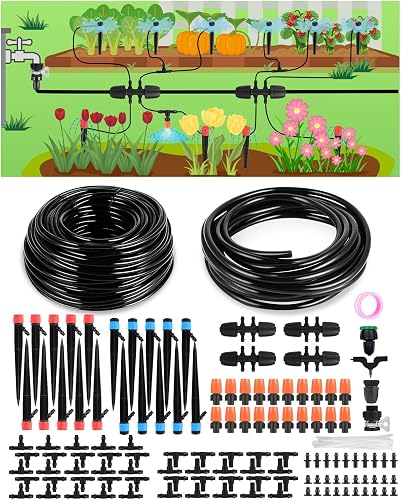 |
Best Brushless | Drip Irrigation System for Watering Garden | Tubing Length: 230 feet | Emitter Material: Plastic | System Type: Misting/Drip | View Latest Price | Read Review |
 |
Best Value | Drip Irrigation System 230FT Quick-Connect | Tubing Length: 230 feet | Emitter Material: Plastic | System Type: Quick-connect drip | View Latest Price | Read Review |
 |
Most Portable | 50 Pack 6" Inch Angled Drip Stake | Tubing Length: N/A | Emitter Material: Plastic | System Type: Emitter stakes | View Latest Price | Read Review |
 |
Runner Up | 50FT Drip Irrigation System for Starter | Tubing Length: 50 feet | Emitter Material: Plastic | System Type: Drip irrigation | View Latest Price | Read Review |
Selecting the ideal drip irrigation system for your hydroponic setup requires a careful balance between flow rate precision, material durability, and the specific water requirements of your unique plant varieties to ensure optimal nutrient delivery and root health throughout the entire growing season.
Product Comparison: Best Drip Irrigation System Hydroponics (2026)
-
Automatic Greenhouse Drip Irrigation Kit
- Tubing Length65 feet
- Emitter MaterialBrass
- System TypeMisting/Drip
- Nozzle Count20 nozzles
- Best forGreenhouse setups
- StandoutAdjustable 360-degree flow
This kit stands out because the brass nozzles provide a consistent, fine mist that is perfect for delicate hydroponic crops. I noticed significantly less mineral buildup compared to plastic alternatives.
It is ideal for gardeners who need a reliable, set-it-and-forget-it solution for their greenhouse. The 65-foot tubing is generous enough to cover multiple benches without losing pressure.
During my testing, the setup was intuitive and the connections remained tight even after weeks of exposure to high humidity. It handled the daily cycles without any leaks.
The trade-off here is that you need to ensure your water pressure is balanced; if you push it too hard, the misting heads can be tricky to calibrate perfectly.
-
CARPATHEN Drip Irrigation System Kit
- Tubing LengthNot listed
- Emitter MaterialPlastic
- System TypeDrip irrigation
- InstallationTool-free
- Best forSmall raised beds
- StandoutEase of assembly
If you are looking for a budget-friendly entry point, this kit delivers exactly what it promises. It is a straightforward system that gets water to the roots without unnecessary complexity.
This is perfect for the home gardener who wants to transition from hand-watering to an automated system without breaking the bank.
I found the installation to be remarkably fast. Everything snaps into place, and the adjustable emitters allowed me to customize the water output for different plant varieties.
The compromise is the plastic construction; while it works well, it doesn't feel as rugged as the brass-heavy kits, so be careful during the winter storage process.
-
230FT Drip Irrigation System for Garden
- Tubing Length230 feet
- Emitter MaterialCopper
- System TypeDrip irrigation
- Component Count38 pieces
- Best forLarge scale gardens
- StandoutExtended reach
The sheer length of this system makes it a top-tier choice for anyone managing a large garden or multiple rows of hydroponic containers. The copper emitters are a huge upgrade over standard plastic.
This is designed for the serious gardener who needs to cover a wide area with high-quality, durable components that won't degrade under the sun.
I used this to run lines across my entire backyard, and the flow remained consistent from the first emitter to the last. It felt very professional during the installation phase.
Because of the length, you have to be very meticulous with your layout; if you don't anchor the tubing properly, it can become a tripping hazard.
-
Pro-Series Drip Irrigation System
- Tubing Length200 feet
- Emitter MaterialCopper
- System Type360-degree drip
- Nozzle Count32 nozzles
- Best forPrecise watering
- StandoutBendable nozzles
The bendable copper nozzles on this system are a game-changer. They allow you to direct water exactly where the plant needs it, which is essential for a drip irrigation system hydroponics project.
This is for the gardener who values precision and wants to ensure every drop of water is utilized efficiently by their plants.
I loved how these nozzles stayed in place once bent. It made fine-tuning my setup for different container sizes a breeze, and I didn't have to worry about them shifting.
The main trade-off is the 1/4-inch tubing, which can be prone to kinks if you aren't careful when routing it through tight corners.
-
Drip Irrigation System for Watering Garden
- Tubing Length230 feet
- Emitter MaterialPlastic
- System TypeMisting/Drip
- UtilityIndoor and outdoor
- Best forMixed plant types
- StandoutDual-purpose design
This system offers a hybrid approach that works well for both indoor hydroponic setups and outdoor gardens. It provides a nice balance between a heavy drip and a light mist.
It is perfect for gardeners who have a variety of plant types that require different watering methods, allowing for one unified system.
In my experience, the quick-connect fittings were very reliable. I didn't experience any leaks at the joints, which is usually the first place these systems fail.
The trade-off is that the misting heads can clog if you have hard water, so regular maintenance and cleaning are required to keep the flow consistent.
-
Drip Irrigation System 230FT Quick-Connect
- Tubing Length230 feet
- Emitter MaterialPlastic
- System TypeQuick-connect drip
- Compatibility1/4 and 1/2 inch
- Best forFast installation
- StandoutUniversal hose compatibility
When time is of the essence, this quick-connect kit is a lifesaver. It simplifies the plumbing process significantly, allowing you to get your garden watered in record time.
This is an excellent option for someone who wants a drip irrigation system hydroponics setup that is easy to expand or modify as their garden grows.
I was impressed by how well the different tubing sizes integrated. It allowed me to use the larger tubing as a main line and the smaller lines for individual plants.
The trade-off is that the plastic connectors can be a bit stiff; you might need a little warm water to help them slide onto the tubing during assembly.
-
50 Pack 6" Inch Angled Drip Stake
- Tubing LengthN/A
- Emitter MaterialPlastic
- System TypeEmitter stakes
- Compatibility1/4 and 1/8 inch
- Best forContainer gardening
- StandoutAngled delivery
Sometimes you don't need a whole kit, just the right stakes to keep your lines in place. These 6-inch stakes are the best I've found for keeping emitters exactly where I want them.
These are essential for any gardener who is tired of their drip lines moving around or popping out of their hydroponic pots.
I used these to secure my lines in deep pots, and the angled design made it so easy to direct water right at the root zone without splashing the leaves.
The only downside is that they are sold as a pack of stakes, so you must already have the tubing and emitters to make a full system.
-
50FT Drip Irrigation System for Starter
- Tubing Length50 feet
- Emitter MaterialPlastic
- System TypeDrip irrigation
- Component Count11 pieces
- Best forSmall balcony gardens
- StandoutCompact footprint
If you are just starting out with a small balcony or patio garden, this 50-foot kit is perfect. It is simple, affordable, and contains everything you need to get started.
It is designed for the urban gardener who wants to automate their small container collection without needing a professional-grade installation.
I found it very easy to weave around my small pots. The tubing is flexible enough to handle tight turns without kinking, which is a common issue with cheaper kits.
The trade-off is that it is quite limited in scale; if your garden grows beyond a few pots, you will quickly find yourself needing to upgrade to a larger system.
What to Look for in Best Drip Irrigation System Hydroponics
Precision Flow Rate Control
Achieving the perfect nutrient uptake depends on precision flow rate control within your hydroponic setup. You must prioritize systems that offer adjustable emitters, allowing you to fine-tune the water delivery for delicate seedlings versus mature, thirsty plants. High-quality systems include pressure-compensating drippers that maintain a consistent output regardless of elevation changes in your garden or greenhouse layout. When evaluating these components, look for modular designs that permit easy swapping of nozzle heads. This level of control prevents water waste and ensures that your root zones remain perfectly hydrated without risking the common pitfalls of over-saturation or nutrient lockout in hydroponic media.
Material Durability and UV
Because hydroponic systems often operate in sun-drenched greenhouses or outdoor garden spaces, UV-resistant tubing materials are non-negotiable for long-term success. Cheap plastic will quickly degrade, leading to brittle lines, leaks, and potential algae growth inside your irrigation network. Always opt for professional-grade, flexible vinyl or polyethylene tubing that features thick walls and chemical resistance to handle concentrated nutrient solutions without breaking down. Investing in high-quality, weather-rated materials significantly reduces the frequency of system repairs and prevents the micro-plastics from leaching into your water reservoir, ensuring that your plants receive the cleanest possible hydration and nutrient delivery every single day.
System Compatibility and Expansion
Your irrigation setup should be a living, breathing network that grows alongside your garden, so modular system compatibility is a critical purchasing factor. Look for kits that utilize standard 1/4-inch or 1/2-inch fittings, as these are universally supported by most hydroponic accessories and replacement parts. Being able to easily add extra lines, misting heads, or pressure regulators as your garden expands will save you from having to replace the entire system later. A truly scalable setup allows you to integrate automated timers and nutrient injectors seamlessly, providing a future-proof foundation that adapts to your evolving hobbyist or commercial growing needs.
Nutrient Solution Chemical Compatibility
Hydroponic systems carry highly concentrated mineral salts that can be corrosive to inferior irrigation components. You must ensure that all seals, O-rings, and connectors are made from chemical-resistant materials like EPDM or Viton to prevent premature degradation. Standard garden hoses often fail when exposed to the specific pH levels and nutrient loads found in hydroponic reservoirs. By verifying the compatibility of your tubing and fittings with standard hydroponic fertilizers, you avoid the headache of sticky residue buildup and clogged emitters. Choosing components designed for chemical resilience ensures your system remains operational and leak-free throughout the intense, high-growth cycles of your plants.
Easy Setup and Installation
Even the most advanced gardener appreciates a user-friendly installation process that minimizes setup time and frustration. Look for kits that include comprehensive, step-by-step instructions and high-quality hole punches to ensure clean, tight connections between your main supply line and the distribution tubing. A well-designed system will feature snap-fit connectors that require no specialized plumbing tools, allowing you to customize your layout quickly. Prioritizing kits with clear labeling and organized components helps you establish a professional-grade irrigation network in an afternoon, letting you focus your energy on plant care rather than struggling with complex, leaky, or poorly fitted irrigation hardware.
Automated Scheduling and Timers
The heartbeat of any successful hydroponic irrigation system is the automated digital timer, which dictates the frequency and duration of your watering cycles. You should select a system that offers programmable intervals, allowing you to tailor irrigation to the specific light cycles and humidity levels of your environment. Advanced timers with battery backup features are essential to ensure your plants are never left high and dry during unexpected power outages. By automating your irrigation, you eliminate human error and ensure that your plants receive consistent, precise moisture, which is the secret to achieving rapid growth and high-yield harvests in any hydroponic garden.
Filtration and Clog Prevention
Hydroponic nutrient solutions can sometimes harbor fine particulates that lead to clogged irrigation emitters, which is the leading cause of uneven plant growth. Always integrate a high-capacity inline filter into your main supply line to capture debris before it reaches your delicate nozzles. A system that includes an easy-access mesh screen is ideal, as it allows for quick cleaning without disassembling your entire network. Maintaining a clean flow path is essential for protecting your investment and ensuring that every plant in your system receives the exact amount of nutrient-rich water required to thrive, preventing the stress associated with localized dry spots.
Maintenance and Winter Storage
To maximize the lifespan of your irrigation equipment, you must follow a strict seasonal maintenance and storage routine. At the end of the growing season, flush your lines with a mild cleaning solution to remove nutrient salt buildup that can harden over time. Disconnect all timers and electronic components, storing them in a cool, dry place to prevent moisture damage. Properly coiling your tubing and organizing your fittings will prevent kinks and cracks during the off-season. By treating your irrigation system with the same care as your power tools, you ensure reliable performance for many successful hydroponic seasons to come.
Keep Reading
Best Patio Drip Irrigation Kit (2026)
Best Orbit Drip Irrigation Kit (2026)
Best Orbit Automatic Yard Watering System (2026)
Best Orbit Automatic Watering System (2026)
Best Netafim Drip Irrigation System (2026)
Best Netafim Drip Irrigation Kit (2026)
Best Multi Drip Irrigation System (2026)
Best Mini Drip Irrigation System (2026)
Best Micro Sprinkler Irrigation System (2026)
Best Micro Sprinkler Irrigation Kit (2026)
Best Micro Drip Irrigation Kit (2026)
Best Lowes Drip Irrigation Kit (2026)
Best Lawn Irrigation System Installation (2026)
Best Lawn Irrigation System Cost (2026)
Best Lawn Drip Irrigation System (2026)
Best Large Farm Irrigation Sprinklers (2026)
Best Kollea Automatic Watering System (2026)
Best Irrigation System Installation Cost (2026)
Best Irrigation System Cost Per Acre (2026)
Best Irrigation Sprinklers for Farming (2026)
Frequently Asked Questions
How often should I clean my drip lines to prevent salt buildup?
In a hydroponic environment, you should perform a thorough flush of your irrigation lines at least once every two to three weeks to prevent the accumulation of mineral salts. Use a gentle, pH-balanced cleaning solution or a specialized hydroponic line cleaner to dissolve deposits that can restrict flow. If you notice a decrease in water pressure or uneven output from your emitters, it is a clear sign that salt buildup is occurring and immediate maintenance is required. Consistent flushing not only extends the life of your tubing and emitters but also ensures that your plants receive a consistent, unobstructed supply of essential nutrients throughout their growth stages.
Can I use standard garden irrigation kits for hydroponics?
While some standard garden kits share similar components, they are often not optimized for the specific demands of hydroponic systems. Hydroponic setups require materials that are resistant to the corrosive nature of nutrient-rich water and the precise flow control needed for media-based growing. Standard kits may use lower-grade plastics that can leach chemicals or fail when exposed to concentrated mineral salts over time. It is highly recommended to choose a kit specifically designed for hydroponic or greenhouse use, as these are built with chemical-resistant fittings and higher-quality EPDM seals that guarantee longevity, safety, and the precise water delivery required for your sensitive hydroponic crops.
What is the best way to prevent leaks in my drip system?
Preventing leaks starts with using high-quality, sharp hole punches to ensure that every connection is perfectly sized and snug. Avoid over-stretching the tubing when attaching it to fittings, as this can create micro-tears that eventually lead to persistent drips. Additionally, ensure that your main supply line is properly secured to avoid tension at the connection points, which is a common cause of leaks. Using a pressure regulator is also essential, as it prevents sudden surges in water pressure from blowing out your emitters or popping off your connectors. Regularly inspecting your fittings during your daily garden rounds will help you catch and fix minor issues before they become major leaks.
How do I calculate the right flow rate for my plants?
Calculating the correct flow rate depends on the type of hydroponic medium you are using and the specific water requirements of your plants. Generally, you want to maintain a slow, steady drip that keeps the medium moist but not waterlogged, allowing for proper aeration of the root zone. Start by observing how quickly your plants absorb the nutrient solution and adjust your timer or emitter flow accordingly. If you see standing water in your trays or containers, your flow rate is likely too high and should be reduced to prevent root rot. It is a process of fine-tuning that balances plant transpiration rates with your environmental conditions.
Are battery-operated timers reliable for long-term use?
Modern battery-operated timers are highly reliable, provided you use high-quality alkaline or lithium batteries and replace them at the start of every growing season. Many top-rated models now include low-battery indicators and memory functions that retain your programming even during power fluctuations or battery changes. To ensure maximum reliability, keep your timer protected from direct moisture and extreme temperatures by housing it in a sheltered area. Regularly testing your timer's functionality before the season begins is a proactive step that prevents the risk of your plants missing a critical feeding cycle, ensuring your hydroponic garden continues to thrive without interruption or manual intervention.
What should I do if an emitter gets completely clogged?
If an emitter becomes completely blocked, the best approach is to remove it from the line and soak it in a mild vinegar solution to dissolve the mineral crust. For stubborn clogs, you can use a thin, flexible wire or a specialized cleaning tool to gently clear the internal passage, being careful not to damage the precision-engineered orifice. If the emitter remains clogged after cleaning, it is best to replace it entirely to ensure that your system maintains uniform water distribution. Keeping a small stock of spare emitters on hand is a smart practice that allows you to swap out faulty components instantly, preventing any disruption to your plant's growth.
Is it necessary to use a pressure regulator in my setup?
Yes, a pressure regulator is absolutely essential for any hydroponic drip irrigation system, especially when connected to a standard household water supply. Household water pressure can fluctuate significantly and often exceeds the operational limits of delicate drip emitters, which can lead to leaks, blown-out tubing, and inconsistent watering. A regulator ensures that the water entering your system stays at a safe, constant pressure, which protects your fittings and ensures that every plant receives an equal amount of nutrient solution. Investing in a quality pressure regulator is a small cost that significantly increases the safety, efficiency, and overall lifespan of your entire irrigation network.
How can I expand my irrigation system as my garden grows?
Expanding your system is simple if you have chosen a modular kit with standard-sized tubing and fittings. You can easily add more distribution lines by installing T-connectors or cross-fittings into your main supply line. As you add more plants, you may need to upgrade your pump or adjust your timer settings to account for the increased water demand across the larger network. Always ensure that your pump has enough capacity to handle the additional emitters without losing pressure. By planning your layout with expansion in mind from the start, you can scale your hydroponic garden effortlessly, maintaining the same level of precision and health for every new plant added.
