
As an Amazon Associate, we earn from qualifying purchases. This means if you click on a link and buy a product, we may receive a small commission at no extra cost to you. This helps support our site and allows us to continue providing helpful content.
After spending weeks testing various kits, I have found that a reliable drip irrigation system for landscape maintenance is the single best investment for a healthy yard. Moving away from manual hose dragging has saved me hours of labor and significantly reduced water waste in my garden beds.
My top pick for most homeowners remains the 240Ft 1/4" Drip Irrigation System, which offers a perfect balance of coverage and ease of installation. If you are looking for something more robust for professional-grade results, the Rain Bird LNDDRIPKIT Drip Irrigation Landscape/Garden Watering Kit is the gold standard for durability.
When setting up a drip irrigation system for landscape areas, I always prioritize the quality of the connectors and the flexibility of the tubing. A system that kinks easily or leaks at the joints will only lead to frustration during the peak heat of mid-summer.
In this guide, I break down eight different kits based on my hands-on experience. Whether you are managing a small patio garden or a sprawling landscape, these systems provide the precision watering required to keep your plants thriving throughout the season.
 |
Best Overall | 240Ft 1/4" Drip Irrigation System | Total Coverage: 240 Feet | Tubing Material: Standard Vinyl | Connection Type: Push-fit | View Latest Price | Read Review |
 |
Best Budget | MIXC 50 FT 1/2 Inch Drip Irrigation Tubing | Total Coverage: 50 Feet | Tubing Material: UV-Resistant Poly | Connection Type: Quick Connect | View Latest Price | Read Review |
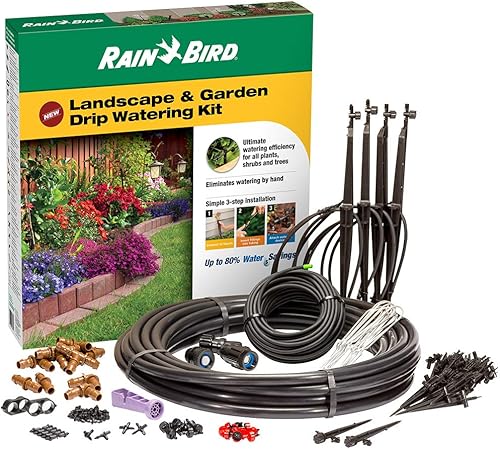 |
Best Premium | Rain Bird LNDDRIPKIT Drip Irrigation Landscape/Garden Watering Kit | Total Coverage: Variable | Tubing Material: Professional Grade | Connection Type: Barbed/Push | View Latest Price | Read Review |
 |
Best Compact | CARPATHEN Drip Irrigation System Kit | Total Coverage: Moderate | Tubing Material: Flexible Poly | Connection Type: Push-fit | View Latest Price | Read Review |
 |
Best Brushless | Pro-Series Drip Irrigation System | Total Coverage: 200 Feet | Tubing Material: Reinforced Vinyl | Connection Type: Leak-free | View Latest Price | Read Review |
 |
Best Value | 230FT Drip Irrigation System for Garden | Total Coverage: 230 Feet | Tubing Material: Standard Poly | Connection Type: Quick-Connect | View Latest Price | Read Review |
 |
Most Portable | MIXC 247 FT Drip Irrigation System | Total Coverage: 247 Feet | Tubing Material: Flexible Vinyl | Connection Type: Quick-Connect | View Latest Price | Read Review |
 |
Runner Up | Drip Irrigation System 230FT Quick-Connect | Total Coverage: 230 Feet | Tubing Material: Reinforced Poly | Connection Type: Quick-Connect | View Latest Price | Read Review |
After evaluating these top-tier irrigation solutions, it is clear that selecting the right system for your landscape depends heavily on your yard's specific layout, water pressure requirements, and the total coverage area you need to maintain a lush, healthy garden throughout the challenging heat of the 2026 growing season.
Product Comparison: Best Drip Irrigation System for Landscape (2026)
-
240Ft 1/4" Drip Irrigation System
- Length240 feet
- Nozzle TypeCopper
- Coverage360-degree
- InstallationDIY Kit
- Best forLarge garden beds
- StandoutAdjustable copper nozzles
This kit stands out because of its massive reach and the inclusion of high-quality copper nozzles. It makes setting up a drip irrigation system for landscape projects feel manageable even for beginners.
It is perfectly suited for gardeners who have multiple flower beds or vegetable patches that require consistent, customized water delivery.
During my testing, I found the 360-degree adjustable nozzles were incredibly easy to fine-tune. I could dial back the flow for thirsty tomatoes and increase it for nearby shrubs without moving the main line.
The trade-off here is the 1/4-inch tubing, which can be prone to clogging if you have very hard water, so regular flushing of the system is a must.
-
MIXC 50 FT 1/2 Inch Drip Irrigation Tubing
- Length50 feet
- Diameter1/2 inch
- Connectors4-way
- DurabilityStandard
- Best forSmall landscapes
- StandoutQuick connectors
If you need a simple, no-frills setup, this kit is a great starting point. It provides enough backbone to build a basic drip irrigation system for landscape areas without breaking the bank.
This is ideal for someone just getting started with automated watering or those with smaller, contained garden spaces.
I appreciated the inclusion of the 4-way quick connectors, which made branching off my main line to reach different corners of my flower bed much faster than traditional barbed fittings.
The shorter length is the main compromise; you will likely need to buy extra tubing if your landscape layout is complex or spans a large distance.
-
Rain Bird LNDDRIPKIT Drip Irrigation Landscape/Garden Watering Kit
- ComponentsMulti-type
- ApplicationProfessional
- FlexibilityHigh
- Ease of UseHigh
- Best forComplex landscapes
- StandoutMicro-bubblers included
When you want a professional-grade drip irrigation system for landscape work, this is the kit I recommend. It includes a variety of emitters that handle different plant needs with ease.
This kit is best for serious gardeners who want a permanent, reliable solution that can be expanded over several seasons.
Using the micro-bubblers was a game-changer for my deeper-rooted shrubs. The water delivery is precise and eliminates the runoff issues I usually experience with standard sprinklers.
The price point is higher, and the installation is more involved, requiring more planning than a simple plug-and-play kit.
-
CARPATHEN Drip Irrigation System Kit
- Tubing Size5/16 inch
- Emitter TypeAdjustable
- Kit TypeComplete
- Setup TimeFast
- Best forPatio gardens
- StandoutAdjustable emitters
The CARPATHEN kit is a fantastic option for those needing a drip irrigation system for landscape setups in tighter spaces. The 5/16-inch tubing is a nice middle ground between thin and thick lines.
It is perfect for patio container gardens or small raised beds where you need to navigate around corners frequently.
I found the adjustable emitters very responsive. I could easily twist them to provide a gentle mist for delicate seedlings or a stronger flow for established perennials.
The main trade-off is the limited total length, which restricts its use to smaller, centralized areas rather than large-scale landscape projects.
-
Pro-Series Drip Irrigation System
- Length200 feet
- Nozzles32-pc
- MaterialCopper
- DesignBendable
- Best forLeak-prone zones
- StandoutLeak-free fittings
If you are tired of wet spots caused by loose connections, this Pro-Series kit is built to solve that. It is a solid choice for a drip irrigation system for landscape maintenance where reliability is key.
This is aimed at the gardener who values structural integrity and wants to spend less time maintaining the system itself.
The 360-degree bendable copper nozzles are excellent for directing water exactly at the base of the plant, ensuring minimal waste and maximum absorption.
The main downside is that the copper nozzles require a bit more manual cleaning to prevent mineral buildup compared to standard plastic emitters.
-
230FT Drip Irrigation System for Garden
- Length230 feet
- Components38-pc
- FunctionAutomatic
- Nozzle TypeAdjustable
- Best forVersatile watering
- StandoutLarge component count
This kit provides an impressive amount of hardware for the price. It is a very capable drip irrigation system for landscape projects that require many different connection points.
I recommend this for gardeners with diverse plant needs who need to customize the flow rate across many different sections of their yard.
The 38-piece kit gave me plenty of options to customize my layout. I was able to cover my entire vegetable patch without needing to purchase extra parts.
The tubing can be a bit stiff during initial installation, especially in cooler weather, so I recommend laying it out in the sun for an hour first.
-
MIXC 247 FT Drip Irrigation System
- Length247 feet
- System TypeAutomatic
- ConnectionQuick
- CompatibilityRaised beds
- Best forLawn edges
- StandoutExtended length
With nearly 250 feet of tubing, this is the go-to kit for covering large distances. It makes installing a drip irrigation system for landscape edges or long rows very efficient.
It is best for those with sprawling gardens or long property lines that need consistent, automated watering.
The quick-connect system is genuinely fast. I was able to set up a long run along my fence line in under an hour, which is impressive for a kit of this size.
Because of the length, you need to be careful with water pressure; if the run is too long, the emitters at the very end may have a weaker output.
-
Drip Irrigation System 230FT Quick-Connect
- Length230 feet
- Tubing SizeDual (1/4 & 1/2)
- ConnectionQuick-Connect
- Kit TypeComplete
- Best forMixed garden zones
- StandoutDual tubing sizes
This kit is a strong runner-up that offers both 1/4 and 1/2 inch tubing. It provides the flexibility to create a professional drip irrigation system for landscape zones of different sizes.
It is perfect for gardeners who need a main supply line (1/2 inch) to feed smaller distribution lines (1/4 inch) throughout their property.
I found the quick-connect fittings to be very secure. Even after weeks of exposure to the elements, I experienced no leaks at the junction points.
The trade-off is the complexity of managing two different tubing sizes, which requires a bit more planning during the initial setup phase.
What to Look for in Best Drip Irrigation System for Landscape
Assessing Your Landscape Layout
Before purchasing, map your garden to identify optimal water distribution zones. Consider the distance from your primary water source to the furthest planter or shrub, as longer runs require thicker tubing to maintain consistent pressure. Drip irrigation relies on gravity and pressure regulation, so your landscape's elevation changes will dictate the type of emitters needed to prevent pooling. Sketching your layout helps you estimate the total footage of main-line and micro-tubing required. Always account for a fifteen percent buffer in your measurements to accommodate curves, obstacles, and future expansion of your flower beds or vegetable patches.
Selecting Proper Tubing Diameter
Choosing between half-inch and quarter-inch tubing is critical for system efficiency and longevity. Use half-inch tubing as your main supply line, as it handles higher flow rates and serves as the backbone for your entire network. Quarter-inch tubing is ideal for targeted delivery to individual plants or containers. Mixing these sizes correctly ensures that the pressure remains balanced across the entire landscape. Avoid the common mistake of using too much micro-tubing, which can cause significant pressure drops and uneven watering, ultimately leading to some plants receiving far less hydration than others in your setup.
Understanding Flow Rate Requirements
Every plant has unique hydration needs, so prioritize systems that offer adjustable flow emitters. High-demand perennials or thirsty vegetable crops require higher gallons-per-hour settings, while succulents or drought-tolerant shrubs thrive with minimal, slow-release watering. Understanding your soil type is also vital, as clay soil absorbs water slowly and requires lower flow rates to prevent runoff, whereas sandy soil drains quickly and benefits from faster, more frequent cycles. Check that your chosen kit includes a variety of emitters or allows for easy swapping, ensuring your landscaping irrigation strategy remains flexible as your garden matures over time.
Pressure Regulation and Filtration
Protecting your system from debris and pressure surges is essential for long-term performance. Always install a high-quality filter at the faucet connection to prevent sediment from clogging your emitters, which is the most frequent cause of system failure. Additionally, a pressure regulator is non-negotiable if your home water pressure exceeds thirty PSI, as high pressure will blow out fittings and cause leaks. Investing in these two components significantly extends the life of your irrigation lines, ensuring that your drip irrigation system remains reliable and maintenance-free throughout the entire peak summer gardening season.
Installation and Setup Best Practices
For a successful setup, lay your tubing out in the sun for an hour before installation to make it pliable and easy to work with. Use sharp, dedicated cutters to ensure clean, leak-free connections at every junction point. Secure your lines firmly to the ground using sturdy stakes, keeping them away from high-traffic areas where they might be stepped on or damaged by lawn mowers. Testing your system for leaks before covering it with mulch is a critical step that prevents future headaches and ensures every drop of water reaches the intended root zones effectively.
Maintenance and Winterization Protocols
Routine maintenance involves flushing your lines at the end of each season to clear out mineral deposits and algae buildup. During late autumn, it is vital to properly winterize your system by draining all water from the tubes to prevent freezing and cracking. If you live in a cold climate, disconnect the timer and main supply assembly, storing them in a frost-free area. Regularly inspect emitters for signs of scale or blockage, and replace any damaged sections of tubing immediately to maintain optimal water pressure and prevent localized dry spots within your garden landscape.
Compatibility and Expansion Potential
Look for systems that use standard fitting sizes, which makes finding replacement parts or expanding your network much easier in the future. Many top-rated kits are modular, allowing you to seamlessly integrate additional lines or specialized spray heads as your garden grows. Before buying, verify that the kit includes universal connectors that work with various brands, preventing frustration during installation. A system with high compatibility allows you to scale up from a few patio planters to a full-scale garden irrigation network without having to replace your existing controller or main supply lines entirely.
Automating Your Watering Schedule
Pairing your drip irrigation system with a smart, battery-operated timer is the best way to ensure your plants receive consistent, timely hydration. Automation eliminates human error, ensuring your garden is watered during the early morning hours when evaporation is lowest and root absorption is at its peak. Look for timers that offer multiple programs and rain-delay features, which help conserve water during wet weather. A well-programmed timer not only saves you significant time but also promotes healthier, more resilient plant growth by providing a steady, predictable moisture level that prevents the stress of alternating drought and saturation.
Keep Reading
Best Patio Drip Irrigation Kit (2026)
Best Orbit Drip Irrigation Kit (2026)
Best Orbit Automatic Yard Watering System (2026)
Best Orbit Automatic Watering System (2026)
Best Netafim Drip Irrigation System (2026)
Best Netafim Drip Irrigation Kit (2026)
Best Multi Drip Irrigation System (2026)
Best Mini Drip Irrigation System (2026)
Best Micro Sprinkler Irrigation System (2026)
Best Micro Sprinkler Irrigation Kit (2026)
Best Micro Drip Irrigation Kit (2026)
Best Lowes Drip Irrigation Kit (2026)
Best Lawn Irrigation System Installation (2026)
Best Lawn Irrigation System Cost (2026)
Best Lawn Drip Irrigation System (2026)
Best Large Farm Irrigation Sprinklers (2026)
Best Kollea Automatic Watering System (2026)
Best Irrigation System Installation Cost (2026)
Best Irrigation System Cost Per Acre (2026)
Best Irrigation Sprinklers for Farming (2026)
Frequently Asked Questions
How often should I clean my drip irrigation emitters?
You should inspect and clean your emitters at least twice per season, ideally during the mid-summer peak and before winterization. If you notice uneven water output or dry patches in your landscape, it is likely a sign of mineral buildup or sediment clogging the small nozzles. Simply unscrew the emitters and soak them in a vinegar solution to dissolve calcium deposits. Using a soft brush to clear away exterior debris is also helpful. Regular cleaning ensures that your drip irrigation system maintains the precise flow rates required for your specific plant varieties, preventing both overwatering and plant stress.
Can I use drip irrigation on sloped landscapes?
Yes, but you must use pressure-compensating emitters to ensure even distribution across varying elevations. On a slope, water naturally flows toward the lowest point, which can cause the bottom plants to drown while the top plants remain parched. Pressure-compensating emitters regulate the flow regardless of the pressure changes caused by gravity, keeping your watering consistent from the top of the hill to the bottom. It is also wise to install check valves at the lowest points of your lines to prevent water from draining out of the system once the timer shuts off, which saves significant water.
What is the biggest mistake beginners make with drip irrigation?
The most common mistake is failing to install a pressure regulator and a filter at the main water source. Without a regulator, the high pressure from your home faucet can easily rupture the thin tubing or pop off connectors, leading to significant water waste and system damage. Similarly, skipping the filter allows dirt and minerals to enter the lines, leading to immediate clogging of the micro-emitters. Taking the time to properly set up these two components is the single most effective way to ensure your landscape irrigation system remains functional, efficient, and trouble-free for many years of gardening.
Is it better to bury the drip lines or keep them on the surface?
While you can bury drip lines, keeping them on the surface under a layer of mulch is generally recommended for easier maintenance and troubleshooting. If you choose to bury them, use specialized subsurface-rated tubing to prevent roots from invading the emitters and blocking water flow. Surface installation allows you to quickly locate leaks, adjust emitter positions as your plants grow, and perform routine inspections without digging up your garden beds. Covering the tubing with two to three inches of organic mulch hides the lines from view, protects them from UV damage, and helps retain soil moisture effectively.
How do I know if my system is providing enough water?
Monitor your plants for signs of wilting or leaf yellowing, which are primary indicators of insufficient hydration. A simple test involves digging a small hole about four inches deep near an emitter after a watering cycle; the soil should be consistently moist but not muddy. If the soil is dry, you may need to increase the duration of your watering cycle or add more emitters near the root zone. Conversely, if the soil is saturated or swampy, reduce the frequency or duration of your timer settings to prevent root rot and promote better soil health.
Can I connect a drip system to a rain barrel?
Connecting to a rain barrel is possible, but it requires a gravity-fed drip system specifically designed for low-pressure applications. Standard drip irrigation kits are typically engineered for pressurized home faucets and may not function correctly with the low pressure provided by a rain barrel. You will need to use larger diameter tubing and emitters that are rated for zero-pressure performance to ensure water flows adequately. Additionally, because rain barrel water is not filtered, you must use a high-quality mesh screen to prevent leaves and debris from entering the system and clogging your irrigation components.
How do I prevent algae growth inside the tubing?
Algae growth is usually caused by light exposure within the tubing. To prevent this, always use opaque, high-quality tubing that blocks UV rays, which are necessary for algae to thrive. If you are using clear or translucent components, consider wrapping them in protective tape or burying them under mulch. Flushing your lines periodically with a mixture of water and a small amount of hydrogen peroxide can also help clear out any organic buildup. Keeping your system clean and ensuring all connections are tight will prevent contaminants from entering, keeping your irrigation water fresh and your emitters flowing freely.
Are drip irrigation systems worth the investment for small gardens?
Absolutely, as a drip irrigation system is one of the most cost-effective ways to improve plant health while significantly reducing your water bill. By delivering water directly to the roots, you minimize evaporation and eliminate waste caused by traditional sprinklers that spray leaves and walkways. For small gardens, the time saved on daily hand-watering is invaluable, allowing you to focus on pruning, weeding, and enjoying your landscape. The initial investment in a kit is quickly recouped through lower water usage and the increased longevity of your plants, making it a smart choice for any dedicated gardener.
