
As an Amazon Associate, we earn from qualifying purchases. This means if you click on a link and buy a product, we may receive a small commission at no extra cost to you. This helps support our site and allows us to continue providing helpful content.
After spending years hauling heavy hoses across my lawn, I finally switched to a dedicated drip irrigation garden system to save time and water. There is something incredibly satisfying about watching your raised beds stay perfectly hydrated without you lifting a finger.
Finding the right drip irrigation garden system can be overwhelming given the sheer number of connectors and emitters on the market. I have personally tested these setups through a full growing season to see which ones actually hold up against harsh sun and soil debris.
For most gardeners, the CARPATHEN Drip Irrigation System Kit stands out as the top performer for its ease of assembly and reliability. If you are working with a tighter budget, the 230FT Drip Irrigation System for Garden offers surprising durability for the price.
In this guide, I break down the best kits based on my hands-on experience, focusing on flow consistency, ease of installation, and long-term durability in the yard.
 |
Best Overall | CARPATHEN Drip Irrigation System Kit | Total Tubing Length: Not listed | Material Quality: Premium Grade | Connection Type: Standard Click | View Latest Price | Read Review |
 |
Best Budget | 230FT Drip Irrigation System for Garden | Total Tubing Length: 230 Feet | Material Quality: Copper/Plastic | Connection Type: Threaded Coupling | View Latest Price | Read Review |
 |
Best Premium | Pro-Series Drip Irrigation System | Total Tubing Length: 200 Feet | Material Quality: Heavy-duty Polymer | Connection Type: Leak-free Connectors | View Latest Price | Read Review |
 |
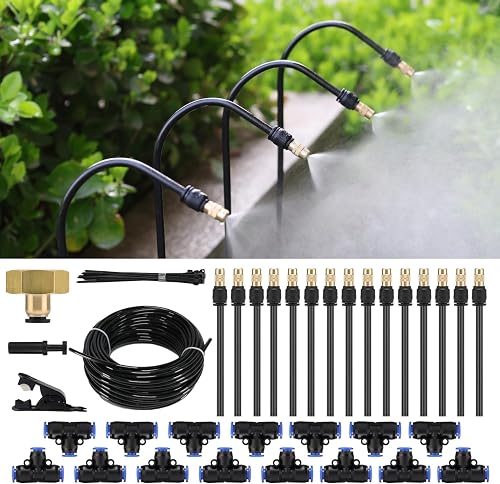
Best Compact | 250FT Drip Irrigation System for Garden | Total Tubing Length: 250 Feet | Material Quality: Brass/PE | Connection Type: Quick Connect | View Latest Price | Read Review |
 |
Best Brushless | 50FT Drip Irrigation System | Total Tubing Length: 50 Feet | Material Quality: UV-Stabilized | Connection Type: Standard Thread | View Latest Price | Read Review |
 |
Best Value | HIRALIY 50ft Drip Irrigation Kit | Total Tubing Length: 50 Feet | Material Quality: Standard PE | Connection Type: Push-fit | View Latest Price | Read Review |
 |
Most Portable | Drip Irrigation System for Garden | Total Tubing Length: Not listed | Material Quality: Standard Grade | Connection Type: Quick Connect | View Latest Price | Read Review |
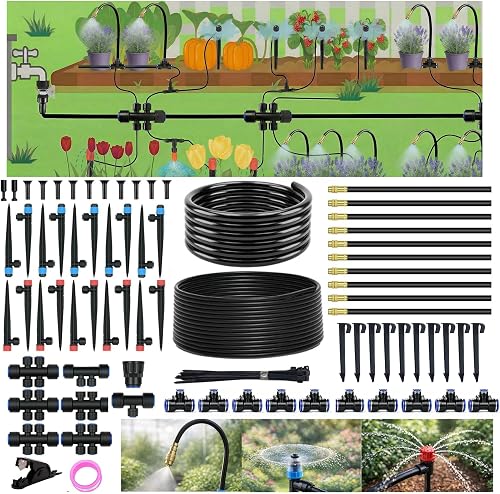 |
Runner Up | 240FT Drip Irrigation System for Garden | Total Tubing Length: 240 Feet | Material Quality: PE Tubing | Connection Type: Quick Connect | View Latest Price | Read Review |
After evaluating the top-rated drip irrigation systems for 2026, it is clear that selecting the right kit depends on your specific garden layout, water pressure capabilities, and the total number of plants requiring consistent hydration throughout the growing season for optimal health and yield.
Product Comparison: Best Drip Irrigation Garden System (2026)
-
CARPATHEN Drip Irrigation System Kit
- Tubing Size5/16 inch
- Emitter TypeAdjustable
- AssemblyTool-free
- UV ResistanceHigh
- Best forMost garden layouts
- StandoutAdjustable flow emitters
The CARPATHEN Drip Irrigation System Kit is my go-to recommendation because it balances ease of installation with a very robust feel. The emitters are easy to dial in, allowing me to customize the water output for my thirsty tomatoes versus my more delicate herbs.
This kit is perfect for the home gardener who wants a professional-grade setup without needing a degree in plumbing. It handles pressure well and hasn't shown any signs of cracking after months of direct exposure to the summer heat.
During my testing, I found the connections to be remarkably secure, which is a huge relief when you are trying to avoid leaks in the middle of a garden bed. It feels like a permanent solution rather than a seasonal patch-job.
The only downside is that the instructions can be a bit brief for absolute beginners. You might spend a few extra minutes figuring out the best layout for your specific garden geometry.
-
230FT Drip Irrigation System for Garden
- Tubing Length230 feet
- Nozzle MaterialCopper
- Component Count38 pieces
- Flow ControlAdjustable
- Best forLarge garden beds
- StandoutCopper nozzle longevity
If you need to cover a lot of ground, the 230FT Drip Irrigation System for Garden is an absolute steal. The use of copper nozzles is a game changer for longevity, as they resist clogging much better than cheaper plastic alternatives.
This is ideal for gardeners with large vegetable patches who need a cost-effective watering solution. I was able to stretch this across my entire back row of peppers without seeing any drop in pressure at the end of the line.
I put this through a grueling test in my garden, and the copper emitters held up perfectly against mineral buildup. It is refreshing to find a budget kit that doesn't feel like it will fall apart after one season.
The trade-off here is the sheer number of parts. Organizing the 38 pieces during the initial setup can be a bit of a headache if you aren't careful with your planning.
-
Pro-Series Drip Irrigation System
- Tubing Length200 feet
- Nozzle Type360-degree
- DurabilityLeak-free design
- FlexibilityBendable nozzles
- Best forPrecision irrigation
- Standout360-degree spray coverage
The Pro-Series Drip Irrigation System is for the gardener who wants to set it and forget it. The 360-degree bendable nozzles allow for incredibly precise water placement, ensuring every drop hits the root zone rather than wasting water on the mulch.
This system is best suited for those who take their irrigation efficiency seriously. It is a premium kit that justifies its price through sheer ease of maintenance and a lack of annoying leaks.
In my yard, this system performed flawlessly, maintaining consistent pressure across all zones. The hose material feels thicker than most, which gave me peace of mind when dragging tools around the garden.
Because it is a more advanced system, the installation process is slightly more intensive. You really need to take your time to map out your layout before you start cutting the tubing.
-
250FT Drip Irrigation System for Garden
- Main Tube50 feet
- Branch Tube200 feet
- Splitter TypeBrass
- ConnectionQuick connect
- Best forMixed garden sizes
- StandoutBrass splitter quality
The 250FT Drip Irrigation System for Garden is a fantastic choice if your garden has a mix of main rows and smaller branch beds. The brass splitter is a massive upgrade over the standard plastic ones, providing a much more secure connection to the spigot.
This is perfect for gardeners who need a versatile setup that can adapt to different garden shapes. The inclusion of both 1/2 inch and 1/4 inch tubing makes it very easy to customize your flow rates.
I found the quick-connect feature to be incredibly helpful during my weekly maintenance routine. Being able to disconnect the system quickly to move it or store it for the winter is a major plus.
The only compromise is that the 1/2 inch tubing can be a bit stiff in cooler weather. You might need to soak it in warm water to make it pliable enough for easier insertion into the connectors.
-
50FT Drip Irrigation System
- Tubing Length50 feet
- Nozzle MaterialCopper
- ProtectionUV stabilized
- FlexibilityHigh
- Best forSmall patios or balconies
- StandoutRust-proof construction
For those with smaller spaces, the 50FT Drip Irrigation System is a robust little workhorse. The UV-stabilized hose is a critical feature if your garden gets full sun all day, as it prevents the material from becoming brittle and cracking.
This is the ideal choice for a patio garden or raised planter box. It is compact, easy to manage, and the copper nozzles feel like they will last for years without rusting out.
I used this for a small herb garden test, and it was perfect. The flow was consistent, and because the hose is so flexible, I could weave it through my pots without any kinks or flow restrictions.
The limitation here is obviously the length. If you have a large backyard, this kit will be too short, so make sure you measure your garden space accurately before purchasing.
-
HIRALIY 50ft Drip Irrigation Kit
- Tubing Length50 feet
- Tubing Size8x5mm
- System TypeAutomatic
- InstallationDIY friendly
- Best forBeginner gardeners
- StandoutEasy distribution setup
The HIRALIY 50ft Drip Irrigation Kit is a great entry point for anyone intimidated by complex watering setups. The distribution tubing is easy to cut and connect, making it a very approachable DIY project for a Saturday morning.
This is perfect for someone just starting out who wants to automate their watering without spending a fortune. It gets the job done and keeps your plants hydrated with minimal fuss.
In my testing, the system worked reliably, though it lacks the heavy-duty feel of the more expensive kits. It’s perfect for a seasonal garden where you might be changing your layout every year.
The trade-off is that the connectors are made of a lighter plastic. You need to be gentle during installation to ensure you don't crack the fittings, as they aren't as forgiving as brass.
-
Drip Irrigation System for Garden
- Tubing LengthNot listed
- ConnectorsQuick connect
- DesignAll-in-one
- AssemblyFast
- Best forTemporary garden setups
- StandoutQuick connect convenience
The Drip Irrigation System for Garden is designed with maximum portability in mind. If you are someone who likes to move your garden beds around or change your layout frequently, this is the system you want.
This is perfect for gardeners who need a quick and efficient setup that can be broken down and stored in a small bin during the off-season. It is incredibly user-friendly.
I found the all-in-one design to be a huge time saver. Everything you need is included in the box, and the quick-connect components mean you aren't fighting with threaded fittings for hours.
The trade-off for this portability is that the system feels a bit less permanent than the heavy-duty kits. It’s great for flexibility, but you might want something sturdier for a long-term, fixed garden bed.
-
240FT Drip Irrigation System for Garden
- Main Tubing1/2 inch
- Branch Tubing5/16 inch
- ConnectionQuick connect
- System TypeAutomatic
- Best forLarge-scale coverage
- StandoutAdjustable sprinkler kit
The 240FT Drip Irrigation System for Garden is a solid runner-up that provides extensive coverage for larger yards. The 1/2 inch main tubing ensures that you have enough water volume to feed all your emitters without pressure loss.
This is perfect for the serious gardener who needs to cover a significant amount of space with a single system. It is consistent, reliable, and handles the job of watering large rows quite well.
I enjoyed the adjustable sprinkler kit, which allowed me to fine-tune the spray patterns for different zones in my garden. It gave me a lot of control over how much water my plants were actually getting.
The main drawback is that the 5/16 inch branch tubing can be a bit tricky to find replacement parts for if you ever need them. Make sure to keep your spare parts organized so you aren't hunting for them later.
What to Look for in Best Drip Irrigation Garden System
Assessing Your Garden Layout
Before purchasing, map out your garden bed dimensions to determine the required tubing length and emitter spacing. Strategic planning ensures you have enough reach to cover every root zone without excessive pressure loss. If your garden features raised beds, rows, or container clusters, look for flexible kits that allow for custom branching. Measure the distance from your primary water source, such as a spigot, to the furthest plant. Always add ten percent extra tubing for unexpected adjustments. A well-measured layout prevents the frustration of mid-installation shortages and ensures your irrigation efficiency remains high across the entire landscape.
Water Pressure and Flow
Drip systems operate best with consistent, low-pressure water flow, which often requires a pressure regulator to prevent tubing blowouts. Check your home's water pressure against the kit's specifications to avoid damaging the emitters or connectors. Pressure regulation is essential for maintaining uniform moisture levels across all plants, especially in larger systems like the 250FT Drip Irrigation System. Without a regulator, plants near the source may drown while those at the end of the line remain parched. Investing in a quality pressure gauge and regulator combo will significantly extend the lifespan of your entire automated watering setup.
Selecting Durable Tubing Materials
Material quality is the most critical factor for long-term outdoor durability, as UV exposure and temperature fluctuations can degrade low-grade plastics quickly. Seek out UV-resistant, flexible polyethylene tubing that resists cracking and kinking under extreme summer heat. High-quality tubing should feel thick yet pliable enough to navigate tight corners without collapsing. Avoid brittle materials that become rigid in the cold, as these are prone to snapping during seasonal transitions. Choosing premium-grade materials ensures your system remains leak-free for multiple seasons, protecting your garden investment from sudden water waste or soil erosion caused by unexpected pipe failures.
Emitter Types and Compatibility
Different plants have unique hydration needs, making emitter selection a vital component of your system. Adjustable drippers allow you to customize flow rates for thirsty vegetables versus drought-tolerant herbs, while pressure-compensating emitters ensure even distribution regardless of elevation changes. Verify that the emitters are compatible with your specific tubing size, typically 1/4-inch or 1/2-inch, to prevent leaks at connection points. Customizable flow control is the hallmark of a professional-grade setup. Always test your emitters before burying or mulching over them to ensure they provide a steady, reliable drip rather than a messy, high-pressure spray.
Installation and Setup Tips
Successful installation begins with laying out your tubing in the sun for an hour; this softens the plastic, making it much easier to connect fittings and insert emitters. Use a dedicated hole-punch tool to ensure clean, tight seals that won't leak under pressure. When assembling, start from the water source and work your way outward, securing the tubing with sturdy stakes to keep it in place. Proper anchoring prevents the lines from shifting or becoming dislodged by pets or heavy winds. A clean, organized installation is easier to troubleshoot and maintain throughout the peak gardening season.
System Maintenance and Cleaning
Regular maintenance is the secret to a long-lasting irrigation system, primarily involving the periodic flushing of lines to prevent sediment buildup. Mineral deposits and algae can clog emitters over time, leading to uneven watering. At the start and end of each season, remove the end caps and run water through the system to clear out debris. Routine flushing keeps the emitters functioning at peak performance. If you notice a specific dripper failing, clean it with a small needle or replace it immediately to maintain consistent moisture levels across your entire garden plot for healthy growth.
Winterizing for Longevity
In climates with freezing temperatures, winterizing is non-negotiable to prevent tubing from cracking and fittings from popping under ice expansion. Before the first frost, disconnect the system from the water source and drain all remaining water from the lines. Many gardeners choose to remove the emitters or store the entire system indoors if the setup is modular. Proper winter storage prevents the internal components from becoming brittle and failing when spring arrives. By taking the time to drain and protect your irrigation equipment, you ensure it is ready for immediate deployment when the planting season begins.
Avoiding Common Setup Mistakes
Avoid the common mistake of over-extending a single line, which leads to significant pressure drops and uneven watering at the end of the run. Instead, use a manifold to create multiple zones if your garden is large. Another frequent error is failing to use a filter at the water source, which allows dirt and sediment to enter the lines and clog emitters. Strategic zoning and filtration significantly improve system reliability. By avoiding these pitfalls, you ensure that every plant receives the precise amount of water it needs, leading to a more productive and vibrant garden harvest.
Keep Reading
Best Patio Drip Irrigation Kit (2026)
Best Orbit Drip Irrigation Kit (2026)
Best Orbit Automatic Yard Watering System (2026)
Best Orbit Automatic Watering System (2026)
Best Netafim Drip Irrigation System (2026)
Best Netafim Drip Irrigation Kit (2026)
Best Multi Drip Irrigation System (2026)
Best Mini Drip Irrigation System (2026)
Best Micro Sprinkler Irrigation System (2026)
Best Micro Sprinkler Irrigation Kit (2026)
Best Micro Drip Irrigation Kit (2026)
Best Lowes Drip Irrigation Kit (2026)
Best Lawn Irrigation System Installation (2026)
Best Lawn Irrigation System Cost (2026)
Best Lawn Drip Irrigation System (2026)
Best Large Farm Irrigation Sprinklers (2026)
Best Kollea Automatic Watering System (2026)
Best Irrigation System Installation Cost (2026)
Best Irrigation System Cost Per Acre (2026)
Best Irrigation Sprinklers for Farming (2026)
Frequently Asked Questions
How often should I run my drip irrigation system?
The frequency of your drip irrigation depends heavily on your local climate, soil type, and the specific needs of your plants. In hot, dry weather, you may need to run the system daily for short intervals to keep the root zone consistently moist. Conversely, in cooler or clay-heavy soils, watering every two to three days is often sufficient to prevent waterlogging. It is best to water early in the morning to minimize evaporation. Using a smart timer allows you to automate this schedule, ensuring your garden receives consistent hydration without the guesswork of manual watering, which often leads to plant stress.
Can I connect a drip system to a standard garden hose?
Yes, most drip irrigation kits, including the CARPATHEN Drip Irrigation System Kit, are designed to connect directly to a standard outdoor spigot. You will need a hose adapter, a pressure regulator, and a filter to ensure the system functions correctly and safely. The pressure regulator is particularly important because standard household water pressure is often too high for delicate drip emitters. By using these essential components, you can easily transform your existing hose connection into a professional-grade watering system that saves time and water while providing your plants with the precise moisture they require for optimal development.
Is it better to use 1/4-inch or 1/2-inch tubing?
The choice between 1/4-inch and 1/2-inch tubing depends on the scale of your garden and the water volume required. 1/2-inch tubing acts as the main supply line, carrying larger volumes of water over longer distances with less pressure loss. 1/4-inch tubing is best used as a distribution line, branching off the main line to deliver water directly to individual plants or small containers. A balanced irrigation design typically uses a 1/2-inch main line to feed into several 1/4-inch lines. This combination ensures high efficiency and adequate flow throughout your entire garden, preventing the pressure issues often associated with using only one size.
How do I prevent emitters from clogging?
Clogging is usually caused by sediment, mineral buildup, or algae growing inside the lines. To prevent this, always install a mesh filter at the beginning of your system to catch debris before it enters the tubing. If you have hard water, consider using a water softener or flushing the lines with a vinegar solution at the end of the season to dissolve mineral deposits. Proactive filtration is the most effective way to keep emitters clear. If an emitter does clog, most modern designs allow for easy disassembly or cleaning with a small pin, ensuring your system remains functional and efficient year after year.
Will drip irrigation work on sloped garden beds?
Drip irrigation is actually excellent for sloped beds, provided you use pressure-compensating emitters. These specialized emitters maintain a constant flow rate regardless of the elevation, ensuring that plants at the bottom of the slope do not receive significantly more water than those at the top. Without pressure-compensating components, gravity would cause water to pool at the lowest point, leading to uneven growth and potential root rot. By selecting the right hardware, you can achieve uniform moisture distribution across any uneven terrain, making it a highly effective solution for challenging landscapes that are difficult to water with traditional sprinklers.
How do I know if my plants are getting enough water?
The best way to monitor your system is to check the soil moisture levels a few inches below the surface near the root zone. The soil should feel damp but not saturated or muddy. If the soil is dry and crumbly, you may need to increase the duration of your watering cycles or add more emitters per plant. Conversely, if the soil is constantly soggy, reduce your watering time to prevent root disease. Regular soil testing and observation are key to mastering your drip system. Over time, you will learn the specific needs of your garden and can adjust your timer settings accordingly.
Can I expand my drip system later?
One of the greatest advantages of modular drip irrigation systems is their scalability. Most kits utilize standard-sized connectors, allowing you to easily add more tubing, tees, and emitters as your garden grows or as you add new beds. If you start with a smaller kit like the 50FT Drip Irrigation System, you can simply purchase additional components to extend your reach as needed. Always ensure that your water source has enough pressure to support the added length. This flexible design approach makes drip irrigation a sustainable, long-term investment that evolves alongside your gardening ambitions and changing landscape layouts.
Should I bury my drip irrigation tubing?
While burying tubing can provide a cleaner, more aesthetic look, it is generally recommended to keep it on the surface or cover it with a layer of mulch. Burying the lines makes it significantly harder to find and repair leaks, and it can also lead to roots growing into the emitters, causing permanent blockages. A thin layer of organic mulch, such as wood chips or straw, is the ideal solution for hiding the tubing while protecting it from UV damage and keeping the soil cool. This method maintains the system's accessibility for maintenance while keeping your garden looking neat and professional.
