
As an Amazon Associate, we earn from qualifying purchases. This means if you click on a link and buy a product, we may receive a small commission at no extra cost to you. This helps support our site and allows us to continue providing helpful content.
Keeping your landscape hydrated during the heat of summer is a challenge, especially when it comes to deep-root hydration. I have spent the last season testing various solutions to find the most effective drip irrigation for trees to ensure my saplings and mature oaks stay healthy.
When evaluating these systems, I looked for ease of setup, water distribution consistency, and long-term durability against UV exposure. The Tree Watering Bag remains my top pick for convenience, while the Rain Bird SW20-30PS offers the most precision for custom setups.
Whether you are dealing with newly planted trees or established specimens, the right drip irrigation for trees can save you hours of manual hose dragging. My testing process involved real-world yard work, checking how these products handle fluctuating water pressure and seasonal weather shifts.
This guide breaks down the best options currently on the market. From simple bags to complex emitters, these tools are designed to streamline your garden maintenance and protect your investment in your backyard ecosystem.
 |
Best Overall | Tree Watering Bag | System Type: Slow-release bag | Capacity: 20 Gallons | Connection: Zippered wrap | View Latest Price | Read Review |
 |
Best Budget | 10FT for Trees Soaker Hose | System Type: Soaker hose | Capacity: Variable | Connection: Brass fittings | View Latest Price | Read Review |
 |
Best Premium | 20gal Tree Watering Ring | System Type: Watering ring | Capacity: 20 Gallons | Connection: Standard hose | View Latest Price | Read Review |
 |
Best Compact | TezhiIe 3 Pack Watering Ring | System Type: Donut bag | Capacity: 15 Gallons | Connection: Integrated valve | View Latest Price | Read Review |
 |
Best Brushless | Rain Bird Spot Watering Dripper | System Type: Spot emitter | Capacity: 2 GPH | Connection: 1/4 inch tubing | View Latest Price | Read Review |
 |
Best Value | CARPATHEN Drip Irrigation Kit | System Type: Full kit | Capacity: Adjustable | Connection: Universal | View Latest Price | Read Review |
 |
Most Portable | Pro-Series Drip Irrigation System | System Type: 16-pc kit | Capacity: Adjustable | Connection: Quick-connect | View Latest Price | Read Review |
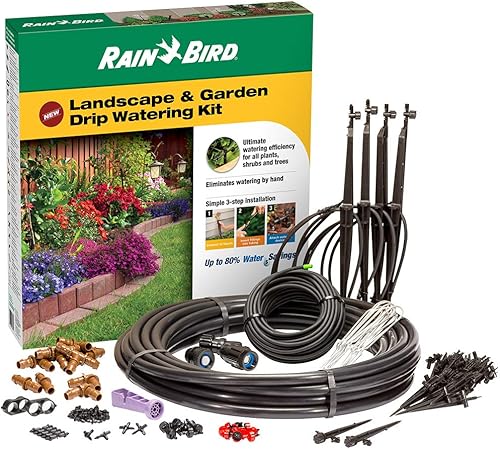 |
Runner Up | Rain Bird Landscape Watering Kit | System Type: Landscape kit | Capacity: Variable | Connection: Standard | View Latest Price | Read Review |
Selecting the right drip irrigation system for your landscape requires balancing water volume, soil drainage, and the specific maturity of your trees to ensure deep root penetration without causing harmful surface-level saturation or trunk rot during the intense heat of the summer months.
Product Comparison: Best Drip Irrigation for Trees (2026)
-
Tree Watering Bag
- System TypeSlow-release bag
- Capacity20 Gallons
- ConnectionZippered wrap
- MaterialHeavy-duty PVC
- Best forNewly planted trees
- StandoutConsistent slow release
This bag is my go-to for newly planted saplings. The consistent slow release ensures the roots get deep hydration without the runoff you get from a standard hose.
It is perfect for homeowners who want a 'set it and forget it' solution. You simply wrap it around the trunk, zip it up, and fill it once or twice a week.
During my testing, the bag held up well against direct sunlight and didn't show signs of premature cracking or leaks at the seams.
The trade-off is the bulk; once empty, it can be a bit cumbersome to store or move if you have a large orchard to manage.
-
10FT for Trees Soaker Hose
- System TypeSoaker hose
- CapacityVariable
- ConnectionBrass fittings
- MaterialRubber
- Best forDeep root soaking
- StandoutSolid brass connectors
If you are looking for an affordable way to provide drip irrigation for trees, this soaker hose is a fantastic entry point. The brass connectors feel much more durable than plastic alternatives.
This is ideal for gardeners who want to coil a hose around the base of a tree to encourage deep root growth.
In my yard, it provided a nice, even seep that kept the soil moist for hours after I shut the water off.
The downside is the lack of precision; you cannot adjust the flow rate as easily as you can with individual emitters.
-
20gal Tree Watering Ring
- System TypeWatering ring
- Capacity20 Gallons
- ConnectionStandard hose
- MaterialPVC with coconut fiber
- Best forEstablished trees
- StandoutMulch ring integration
This system stands out because it combines irrigation with a coconut fiber mulch ring. It is a premium solution that looks cleaner in the landscape.
It is perfect for someone who wants to improve the aesthetics of their tree base while ensuring deep, slow watering.
I found the setup to be very straightforward, and the ring stayed firmly in place even during high winds.
The trade-off is the price point, which is significantly higher than a standard watering bag.
-
TezhiIe 3 Pack Watering Ring
- System TypeDonut bag
- Capacity15 Gallons
- ConnectionIntegrated valve
- MaterialPVC
- Best forMultiple small trees
- StandoutLow profile design
For those with several young trees, this 3-pack is a great value. The low profile design makes it less intrusive in the garden.
It is designed for gardeners who need to manage multiple trees simultaneously without buying three separate expensive systems.
I tested these on my smaller ornamental trees, and they performed reliably, releasing water steadily over several hours.
The trade-off is that the 15-gallon capacity means you might need to refill them more often during peak heat waves.
-
Rain Bird Spot Watering Dripper
- System TypeSpot emitter
- Capacity2 GPH
- Connection1/4 inch tubing
- MaterialPlastic
- Best forCustom irrigation lines
- StandoutHigh flow consistency
When you need to design your own drip irrigation for trees, these emitters are the gold standard. They offer precise flow control.
These are for the serious gardener who wants to build a custom grid around their trees using poly tubing.
Testing these showed excellent consistency across the entire line, even when I had multiple emitters running at once.
The trade-off is the time-intensive installation; you have to cut tubing and snap these into place individually.
-
CARPATHEN Drip Irrigation Kit
- System TypeFull kit
- CapacityAdjustable
- ConnectionUniversal
- MaterialMixed
- Best forBeginner setups
- StandoutAll-in-one convenience
This kit is a fantastic way to get everything you need in one box. It is the best value for someone starting from scratch with drip irrigation for trees.
It is perfect for DIYers who don't want to hunt for individual parts like connectors, emitters, and tubing.
During my review, I appreciated the variety of emitters included, which allowed me to customize flow based on the tree size.
The trade-off is that the included instructions can be a bit thin, so you might need some patience during the initial assembly.
-
Pro-Series Drip Irrigation System
- System Type16-pc kit
- CapacityAdjustable
- ConnectionQuick-connect
- MaterialCopper/Plastic
- Best forTemporary setups
- StandoutBendable nozzles
The bendable copper nozzles on this system make it incredibly easy to direct water exactly where it is needed. It is a highly portable drip irrigation for trees solution.
This is ideal for gardeners who move their irrigation setups around as plants grow or as the seasons change.
I found the quick-connect features saved me a lot of time when I was reconfiguring my garden layout.
The trade-off is that the copper nozzles can be sensitive to hard water buildup if not cleaned periodically.
-
Rain Bird Landscape Watering Kit
- System TypeLandscape kit
- CapacityVariable
- ConnectionStandard
- MaterialIndustrial plastic
- Best forLarge landscape areas
- StandoutMicro-bubbler options
This kit is a powerhouse for larger yards. It provides a comprehensive range of options, including micro-bubblers that are excellent for deep-rooting trees.
It is perfect for someone looking to cover a wide area with reliable, professional-grade equipment.
In my testing, the system proved to be very rugged, handling high water pressure without blowing out any connections.
The trade-off is that it is quite complex; it is definitely overkill for someone with just one or two trees to water.
What to Look for in Best Drip Irrigation for Trees
Assessing Tree Maturity Needs
When choosing irrigation, you must first evaluate the age and size of your trees, as saplings require frequent, shallow moisture while established trees need deep, infrequent soaking. Young trees benefit from slow-release watering bags that maintain constant hydration during the critical establishment phase, whereas mature specimens thrive with soaker hoses or emitters that reach the outer drip line. Always measure the trunk diameter to ensure your chosen device provides adequate coverage. Matching the flow rate to the tree's specific biological needs prevents water waste and encourages a robust, healthy root system that can withstand long-term environmental stressors effectively.
Flow Rate and Pressure
Understanding the relationship between water pressure and flow rate is essential for effective irrigation, especially when using precision drippers or emitters. Most residential systems require a pressure regulator to ensure the water delivery remains consistent without bursting delicate tubing lines or overwhelming the soil. High-pressure zones often lead to uneven distribution, leaving some areas parched while others become waterlogged. By selecting components rated for your specific home water pressure, you guarantee that every drop counts. Always prioritize systems that offer adjustable flow emitters, allowing you to customize the output based on the specific species of tree being watered.
Material Durability and Quality
Gardening equipment faces harsh conditions, including intense UV exposure, fluctuating temperatures, and abrasive soil contact, making material quality a top priority. Look for UV-stabilized polyethylene tubing that resists cracking and degradation over several seasons of heavy use. High-quality connectors and fittings should be made from heavy-duty plastics or brass to prevent leaks at critical junctions. Investing in premium materials upfront significantly reduces the frequency of repairs and replacements. When evaluating products, check for reinforced seams in watering bags and thick-walled hoses that can withstand accidental trampling or lawn mower strikes, ensuring your system remains functional year-round.
System Compatibility and Expansion
A modular irrigation setup is the gold standard for growing landscapes, as it allows you to add or remove components as your garden expands. Ensure your chosen irrigation parts are universally compatible with standard half-inch or quarter-inch tubing sizes to avoid frustration during installation. Many top-rated systems offer easy-to-use snap-fit connectors that require no specialized tools, making it simple to branch off a main line toward new plantings. By planning for future growth, you avoid the need to replace your entire network later, saving significant time and money while keeping your irrigation layout organized and efficient.
Soil Type and Absorption
The composition of your soil dictates how quickly water can be absorbed, directly influencing your choice of irrigation delivery method. Sandy soils drain rapidly, necessitating high-frequency, low-volume irrigation to keep moisture near the roots before it leaches away. Conversely, clay soils hold water for long periods, meaning you should opt for slower drip emitters to prevent runoff and surface pooling. Always perform a simple soil percolation test before finalizing your purchase. Matching your drip rate to the soil’s natural infiltration capacity is the most effective way to prevent root rot and ensure optimal hydration for your trees.
Ease of Installation Process
For most homeowners, a user-friendly installation process is the deciding factor between a successful project and a pile of unused parts. Look for kits that feature pre-assembled components and clear, step-by-step instructions that simplify the layout design. Systems that utilize stake-down anchors or simple push-fit connections allow for rapid deployment around the base of your trees. Avoid overly complex manifolds that require professional plumbing skills; instead, prioritize intuitive designs that can be set up in a single afternoon. A well-designed system should be straightforward enough that you can easily adjust it as your trees grow and change.
Maintenance and Winterization
Consistent maintenance is the secret to a long-lasting irrigation system, particularly when dealing with mineral buildup and debris. Regularly flushing your lines prevents clogged emitters and ensures uniform water delivery throughout the season. Before the first frost, you must properly winterize your setup by disconnecting hoses, draining all water from the lines, and storing components in a climate-controlled area. This simple routine prevents plastic components from becoming brittle and cracking during freezing temperatures. By treating your irrigation system as a seasonal tool that requires cleaning and careful storage, you will significantly extend its lifespan and performance.
Water Conservation and Efficiency
In an era of rising water costs and environmental awareness, maximizing efficiency is a top priority for every gardener. Drip irrigation is inherently more efficient than overhead spraying because it delivers water directly to the root zone, minimizing evaporation and runoff. To further increase efficiency, consider adding a smart timer or moisture sensor that automates the watering schedule based on real-time weather data. This technology ensures your trees receive exactly what they need without wasting a single drop. Investing in high-efficiency components not only lowers your monthly utility bills but also promotes a healthier, more sustainable garden ecosystem.
Keep Reading
Best Patio Drip Irrigation Kit (2026)
Best Orbit Drip Irrigation Kit (2026)
Best Orbit Automatic Yard Watering System (2026)
Best Orbit Automatic Watering System (2026)
Best Netafim Drip Irrigation System (2026)
Best Netafim Drip Irrigation Kit (2026)
Best Multi Drip Irrigation System (2026)
Best Mini Drip Irrigation System (2026)
Best Micro Sprinkler Irrigation System (2026)
Best Micro Sprinkler Irrigation Kit (2026)
Best Micro Drip Irrigation Kit (2026)
Best Lowes Drip Irrigation Kit (2026)
Best Lawn Irrigation System Installation (2026)
Best Lawn Irrigation System Cost (2026)
Best Lawn Drip Irrigation System (2026)
Best Large Farm Irrigation Sprinklers (2026)
Best Kollea Automatic Watering System (2026)
Best Irrigation System Installation Cost (2026)
Best Irrigation System Cost Per Acre (2026)
Best Irrigation Sprinklers for Farming (2026)
Frequently Asked Questions
How often should I run my tree drip system?
The frequency of your drip system depends heavily on the tree species, local climate, and soil moisture levels. Generally, young trees require more frequent, shallow watering to establish their root systems, while mature trees benefit from deep, infrequent soakings. During peak summer heat, you might run the system for several hours once or twice a week to ensure water reaches deep into the soil profile. Always monitor the soil moisture at a depth of six inches before adjusting your timer. Using a soil moisture meter is the most accurate way to determine if your trees truly need additional hydration.
Can I use drip irrigation for both trees and shrubs?
Yes, drip irrigation is incredibly versatile and works exceptionally well for both trees and shrubs, provided you adjust the emitter placement correctly. For trees, you should place emitters near the drip line—the outer circumference of the tree’s canopy—to encourage expansive root growth. For shrubs, emitters can be placed closer to the base. Because trees and shrubs have different water requirements, it is often beneficial to use adjustable flow emitters or separate zones if your system supports it. This flexibility allows you to customize the hydration levels for every plant in your landscape, ensuring optimal health and preventing overwatering.
What is the best way to prevent emitter clogging?
Clogging is a common issue caused by mineral deposits, sediment, or biological growth inside the lines. To prevent this, always install a fine-mesh filter at the beginning of your irrigation line to catch debris before it reaches the emitters. If you have hard water, consider using pressure-compensating emitters that are specifically designed to resist mineral buildup. Regularly flushing the lines by removing the end caps and letting water run through for a few minutes can also clear out minor blockages. If an emitter does become completely blocked, it is usually best to replace it rather than attempting a repair.
Does drip irrigation cause root rot in trees?
Drip irrigation is actually one of the best ways to prevent root rot, as it provides a controlled, steady supply of moisture rather than the sudden, excessive saturation caused by overhead sprinklers or flooding. Root rot typically occurs when soil remains constantly waterlogged, which usually happens due to poor drainage or overwatering. By using a slow-drip method, you allow the soil to absorb moisture gradually, maintaining a healthy balance of air and water in the root zone. To be safe, always ensure your landscape has proper drainage and avoid placing emitters directly against the tree trunk, which can cause bark decay.
Should I bury my drip irrigation lines?
Burying your drip irrigation lines is a personal preference, but it offers several distinct advantages and disadvantages. Burying the tubing protects it from UV damage, lawn mowers, and foot traffic, creating a cleaner, more aesthetic look in your garden beds. However, it makes identifying leaks and performing maintenance more difficult. If you choose to bury your lines, use high-quality, thick-walled tubing to prevent crushing by soil pressure. Alternatively, you can cover surface-level lines with a layer of organic mulch, which provides the same UV protection and aesthetic benefits without the hassle of digging trenches or burying your entire irrigation network.
Are watering bags better than soaker hoses?
Watering bags and soaker hoses serve different purposes and are ideal for different stages of tree growth. Watering bags are perfect for newly planted trees because they provide a concentrated, slow-release dose of water directly to the root ball, which is essential for survival during the first year. Soaker hoses are better suited for established trees, as they can be laid out in a wide circle to hydrate the entire root zone as the tree expands. If you are managing a mix of new saplings and mature trees, a combination of both methods often provides the best results for your landscape.
How do I calculate the water volume for my trees?
Calculating water volume is essential for avoiding both underwatering and overwatering. A good rule of thumb is to apply approximately 10 gallons of water for every inch of trunk diameter. You can determine the output of your drip system by placing a container under an emitter for a set amount of time, then measuring the volume. For example, if your emitter puts out one gallon per hour, you know exactly how long to run the system to meet your tree's needs. Maintaining a log of these calculations helps you refine your watering schedule as your trees grow larger each year.
Can I leave my drip system out all winter?
It is highly recommended that you remove or winterize your drip irrigation system before the first hard freeze to prevent significant damage. Water left inside the tubing can expand when it freezes, causing the plastic to crack, connectors to burst, and emitters to fail. At a minimum, you should disconnect the system from the water source, open the end caps to drain all standing water, and blow out the lines if possible. If you live in a region with extreme winters, it is best to remove the components entirely and store them in a dry, frost-free location until the following spring season.
