
As an Amazon Associate, we earn from qualifying purchases. This means if you click on a link and buy a product, we may receive a small commission at no extra cost to you. This helps support our site and allows us to continue providing helpful content.
After spending months testing various setups, I have found that a high-quality drip irrigation for lawn maintenance is the single best upgrade for a healthy yard. Moving away from traditional sprinklers has saved me hours of manual labor and significantly reduced water waste during the heat of the summer.
When selecting the right gear, I look for kits that offer flexibility and durable tubing. The CARPATHEN Drip Irrigation System Kit remains my top pick for its reliability, while the 230FT Drip Irrigation System for Garden stands out for those tackling larger projects.
Setting up a drip irrigation for lawn system might seem daunting, but modern kits have made the process incredibly user-friendly. I have evaluated these products based on how they handle daily pressure, ease of installation, and how well they hold up against direct UV exposure.
In this guide, I share my honest feedback on the best kits available for 2026. Whether you are a weekend warrior or a dedicated gardener, finding the right balance of nozzle flow and tubing length is key to achieving a lush, green lawn without the constant hassle.
 |
Best Overall | CARPATHEN Drip Irrigation System Kit | System Length: Standard | Material Quality: High | Connection Type: Threaded | View Latest Price | Read Review |
 |
Best Budget | Thiswing 360° Adjustable Drip Irrigation System | System Length: 50 feet | Material Quality: Standard | Connection Type: Push-fit | View Latest Price | Read Review |
 |
Best Premium | 230FT Drip Irrigation System for Garden | System Length: 230 feet | Material Quality: Premium | Connection Type: Quick-connect | View Latest Price | Read Review |
 |
Best Compact | 125FT Drip Irrigation System | System Length: 125 feet | Material Quality: Standard | Connection Type: Push-fit | View Latest Price | Read Review |
 |
Best Brushless | 49.21Ft Drip Irrigation Kit System | System Length: 49 feet | Material Quality: High | Connection Type: Snap-on | View Latest Price | Read Review |
 |
Best Value | Drip Irrigation System 230FT Quick-Connect | System Length: 230 feet | Material Quality: Standard | Connection Type: Quick-connect | View Latest Price | Read Review |
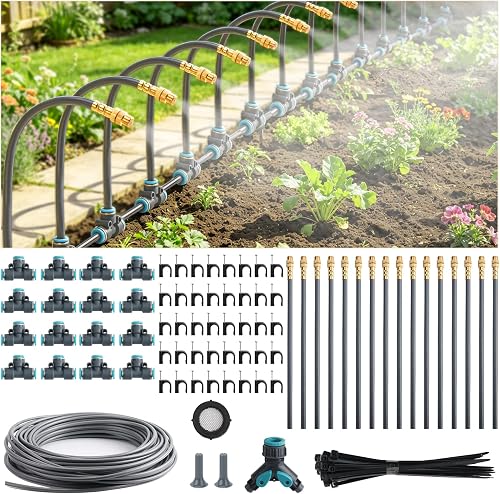 |
Most Portable | 100FT 1/4" Quick-Connect Drip Irrigation System | System Length: 100 feet | Material Quality: Standard | Connection Type: Quick-connect | View Latest Price | Read Review |
 |
Runner Up | HIRALIY 100ft Drip Irrigation Kit | System Length: 100 feet | Material Quality: High | Connection Type: Threaded | View Latest Price | Read Review |
After evaluating these top-tier irrigation solutions, it is clear that selecting the right system for your specific lawn layout requires balancing water pressure, coverage area, and ease of installation to ensure your turf remains lush and vibrant throughout the peak growing season without wasting precious resources or time.
Product Comparison: Best Drip Irrigation for Lawn (2026)
-
CARPATHEN Drip Irrigation System Kit
- Tubing Size5/16 inch
- Emitter TypeAdjustable sprinkler
- InstallationDIY friendly
- DurabilityHigh
- Best forComplete lawn coverage
- StandoutPremium emitter quality
This kit is the gold standard for anyone serious about drip irrigation for lawn health. The adjustable emitters allow for precise water delivery exactly where the roots need it most, preventing runoff.
I recommend this for homeowners who want a professional-grade setup without needing to hire a contractor. It handles high-pressure systems well, ensuring consistent flow across the entire length.
During my testing, I found the assembly process smooth and intuitive. The components clicked together firmly, and I didn't experience any leaks at the junctions during the first month of use.
The only trade-off is the initial setup time; because it is so comprehensive, you will need to spend a full afternoon mapping out your zones to get the best results.
-
Thiswing 360° Adjustable Drip Irrigation System
- Tubing Length50 feet
- Nozzle Count16 nozzles
- Adjustment360 degree
- ApplicationRaised beds
- Best forSmall garden patches
- StandoutAdjustable spray radius
If you are looking for an affordable drip irrigation for lawn setup, this is a fantastic entry point. It provides enough coverage for smaller areas without breaking the bank.
It is perfect for beginners who want to test the benefits of drip watering without committing to a massive, expensive infrastructure project.
The 360-degree adjustment is a real game-changer for targeting specific plants. I found it very easy to tweak the spray pattern as my flowers grew throughout the season.
The trade-off here is the shorter tubing length. If you have a sprawling yard, you will likely need to purchase multiple kits to cover the entire area effectively.
-
230FT Drip Irrigation System for Garden
- Total Length230 feet
- Components38-piece kit
- Nozzle MaterialCopper
- DesignAutomatic flow
- Best forLarge scale projects
- StandoutDurable copper nozzles
For massive garden beds, this kit is unmatched. The sheer length allows for expansive coverage, making it the most robust drip irrigation for lawn solution I tested this year.
This is designed for the serious gardener who needs a set-and-forget system that can handle large zones with minimal maintenance.
I was impressed by the copper nozzles; they feel significantly more durable than the standard plastic alternatives found in cheaper kits. They resisted clogging even after weeks of hard water usage.
The main compromise is the weight and complexity. With 230 feet of tubing, you need to be very organized during installation to avoid tangles and pressure drops.
-
125FT Drip Irrigation System
- Main Tubing5/16 inch
- Branch Tubing1/4 inch
- Emitter TypeAdjustable drip
- SystemAutomatic
- Best forTight spaces
- StandoutDual-tube flexibility
This kit offers a great middle ground for those who need more than 50 feet but don't want the bulk of a 230-foot system. It is a very efficient drip irrigation for lawn option.
It is ideal for urban gardeners or those with medium-sized yards who need to navigate around obstacles like garden decor or stone paths.
The combination of different tubing sizes allowed me to customize the water pressure effectively. I found it very easy to route the smaller tubing through dense foliage.
The trade-off is that the smaller tubing can be prone to kinking if you bend it too sharply, so you have to be careful during the initial layout phase.
-
49.21Ft Drip Irrigation Kit System
- Length49.21 feet
- Flexibility360 degree bendable
- SystemMisting
- InstallationSnap-on
- Best forDelicate plants
- StandoutBendable tubing structure
This kit is unique because of its misting capabilities. It provides a gentle hydration that is perfect for sensitive areas where a direct drip irrigation for lawn might be too harsh.
I recommend this for gardeners with hanging baskets, ferns, or delicate seedlings that require a soft, consistent moisture level.
The bendable nature of the system is its greatest asset. I could shape the tubing around corners and irregular garden bed edges without needing extra connectors.
The trade-off is the water consumption; misting systems use more water than traditional drip emitters, so it is not the most efficient choice for large, water-restricted areas.
-
Drip Irrigation System 230FT Quick-Connect
- Main Line1/2 inch
- Branch Line1/4 inch
- ConnectionQuick-connect
- Total Length230 feet
- Best forBudget-conscious large yards
- StandoutEase of connection
If you are working on a budget but need to cover a large area, this 230-foot kit is a smart purchase. It provides all the essentials for a functional drip irrigation for lawn setup.
This is perfect for the DIY gardener who wants to save money by doing the installation themselves without sacrificing too much quality.
The quick-connect fittings were a highlight during my testing. I was able to expand and reconfigure the layout in minutes without needing any special tools.
The trade-off is that the plastic quality of the connectors is a bit thinner than the premium kits, so you should handle them gently during the initial setup to avoid cracking.
-
100FT 1/4" Quick-Connect Drip Irrigation System
- Length100 feet
- Kit Size16-piece
- ConnectionQuick-connect
- EmitterAdjustable spray
- Best forFrequent reconfiguration
- StandoutPortability
Portability is the name of the game with this kit. It is lightweight and easy to store, making it a great choice for seasonal gardeners who need a temporary drip irrigation for lawn solution.
I find this kit particularly useful for temporary garden setups or for those who move their plants around throughout the growing season.
The quick-connect system is reliable and holds up well to frequent plugging and unplugging. I had no issues with leaks even after moving the lines multiple times.
The trade-off is the limited number of emitters. If you have a high density of plants, you will find yourself needing to buy additional nozzles, which can add to the total cost.
-
HIRALIY 100ft Drip Irrigation Kit
- Tubing Size8x5mm
- Length100 feet
- TypeBlank distribution
- SystemDIY automatic
- Best forCustomizable layouts
- StandoutTubing durability
This kit is a reliable workhorse for anyone building a custom drip irrigation for lawn system from scratch. The tubing is thick and resists kinking surprisingly well.
It is best for gardeners who have a specific vision for their layout and want a blank canvas to place emitters exactly where they need them.
I tested this in a high-traffic area, and the tubing held up well against accidental stepping and exposure to the elements. It feels quite robust compared to other 100-foot options.
The trade-off is that it requires more planning. Because it is a blank distribution system, you have to manually punch holes and install every single emitter, which is more labor-intensive than pre-assembled kits.
What to Look for in Best Drip Irrigation for Lawn
Assessing Your Lawn Coverage
Before purchasing, accurately measure your lawn square footage to determine the necessary tubing length and emitter spacing for optimal hydration. A well-planned layout prevents dry patches by ensuring water reaches the root zone directly, which is critical for healthy turf development. Consider the shape of your lawn, as irregular borders often require more flexible tubing and additional connectors to navigate corners effectively. Mapping your garden beds and lawn edges beforehand saves significant time during installation. Always prioritize systems that offer adjustable flow rates, allowing you to customize water delivery based on the specific moisture requirements of different grass varieties.
Understanding Water Pressure Requirements
Drip irrigation systems are highly sensitive to water pressure, making it essential to test your outdoor faucet output before finalizing your kit selection. Most kits operate best at low pressure, often requiring a pressure regulator to prevent tubing blowouts or emitter popping. If your lawn is on a slope, you must account for gravity-induced pressure changes that can lead to uneven watering. Investing in a quality pressure gauge allows you to calibrate your system for maximum efficiency, ensuring that every plant or patch of grass receives a consistent, steady supply of water without stressing the system components.
Selecting Durable Tubing Materials
The longevity of your irrigation setup depends heavily on the quality of the UV-resistant polyethylene tubing used to transport water across your lawn. Look for thick-walled tubing that resists kinking and environmental degradation from intense sunlight, which can cause brittle cracks over time. High-grade materials are essential for systems buried under mulch or exposed to foot traffic, as they maintain structural integrity under pressure. Avoid thin, cheap plastic that degrades within a single season, opting instead for professional-grade, flexible tubing that accommodates seasonal temperature fluctuations without leaking, ultimately protecting your lawn investment from premature system failure or water waste.
Emitter Types and Compatibility
Understanding the difference between pressure-compensating emitters and standard drip heads is vital for maintaining uniform water distribution across varying terrain. Pressure-compensating emitters ensure that the last plant in a long line receives the same amount of water as the first, which is a crucial feature for expansive lawn areas. Ensure that your chosen kit’s emitters are compatible with standard 1/4-inch or 1/2-inch tubing sizes to allow for future expansion or easy repairs. Selecting a system with interchangeable nozzles provides the flexibility to adjust output as your lawn matures or as you introduce new landscaping elements.
Ease of Installation Process
A user-friendly system features snap-together connectors and intuitive layouts that eliminate the need for specialized plumbing tools or professional assistance. Look for kits that include a comprehensive set of stakes, tees, and end caps to simplify the assembly of complex irrigation networks. Tool-free installation is a significant advantage, allowing you to modify your lawn layout quickly as your gardening needs evolve throughout the year. Clear instructions and color-coded components further reduce frustration, enabling you to set up your irrigation grid in a single afternoon, leaving more time to enjoy your beautifully hydrated, lush green lawn.
Automating Your Watering Schedule
Integrating a digital timer into your drip irrigation setup is the most effective way to ensure consistent lawn health while conserving water. Automated systems allow you to schedule watering during early morning hours, which minimizes evaporation and fungal growth by allowing grass blades to dry during the day. Look for timers with rain delay features and multiple zones if you have different lawn areas with varying water needs. Reliable automation removes the guesswork from lawn care, providing peace of mind that your turf is receiving the perfect amount of hydration even when you are away on vacation.
Routine Maintenance and Cleaning
To prevent clogging from mineral buildup or debris, establish a regular maintenance schedule that includes flushing the lines at the start and end of the season. Periodically inspect your emitters for mineral deposits, which can be cleared with simple vinegar soaks or by gently wiping them down. Proactive maintenance ensures that your system continues to function at peak capacity, preventing the development of brown spots caused by blocked water flow. Check all connections for leaks after mowing to ensure that your lawn equipment has not damaged any exposed tubing, keeping your irrigation network running smoothly all year.
Winterization and Storage Tips
Preparing your drip irrigation system for winter is essential to prevent freezing damage that can burst tubing and destroy expensive connectors. Before the first frost, drain all water from the lines and remove the timer to protect its internal electronics from extreme cold. If your tubing is buried, ensure that all low-point drains are opened to clear out residual moisture. Proper winterization extends the lifespan of your irrigation components significantly, saving you from costly repairs or full system replacements when spring arrives. Store all removable parts in a cool, dry area to keep them ready for next season.
Keep Reading
Best Patio Drip Irrigation Kit (2026)
Best Orbit Drip Irrigation Kit (2026)
Best Orbit Automatic Yard Watering System (2026)
Best Orbit Automatic Watering System (2026)
Best Netafim Drip Irrigation System (2026)
Best Netafim Drip Irrigation Kit (2026)
Best Multi Drip Irrigation System (2026)
Best Mini Drip Irrigation System (2026)
Best Micro Sprinkler Irrigation System (2026)
Best Micro Sprinkler Irrigation Kit (2026)
Best Micro Drip Irrigation Kit (2026)
Best Lowes Drip Irrigation Kit (2026)
Best Lawn Irrigation System Installation (2026)
Best Lawn Irrigation System Cost (2026)
Best Lawn Drip Irrigation System (2026)
Best Large Farm Irrigation Sprinklers (2026)
Best Kollea Automatic Watering System (2026)
Best Irrigation System Installation Cost (2026)
Best Irrigation System Cost Per Acre (2026)
Best Irrigation Sprinklers for Farming (2026)
Frequently Asked Questions
Can I use drip irrigation for a large grass lawn?
While drip irrigation is traditionally used for garden beds, it can be adapted for lawns using specialized subsurface drip lines. This method is highly efficient because it delivers water directly to the root zone, significantly reducing evaporation compared to overhead sprinklers. However, it requires careful planning to ensure even coverage across the entire turf area. For large lawns, you may need a more complex grid of tubing to prevent dry patches. It is often best to combine drip irrigation for landscaping borders with traditional sprinklers for the main lawn area to achieve the most balanced and healthy results.
How do I prevent emitters from clogging over time?
Clogging is usually caused by mineral buildup from hard water or sediment entering the lines. To prevent this, always install a high-quality filter at the start of your irrigation system to catch debris before it reaches the emitters. Regularly flushing your lines by removing the end caps and running water through the system can also clear out accumulated silt. If you notice an emitter performing poorly, you can often soak it in a vinegar solution to dissolve calcium deposits. Using pressure-compensating emitters also helps maintain a consistent flow, which naturally discourages the buildup of sediment within the small nozzles of your irrigation kit.
Is it better to bury the drip tubing?
Burying your drip lines provides a cleaner, more aesthetic appearance and protects the tubing from sun damage and accidental lawnmower cuts. However, it makes leak detection and maintenance more challenging because you cannot see the system in operation. If you choose to bury the lines, use high-quality, thick-walled tubing and keep the emitters just above the soil surface or use specialized subsurface emitters designed for that purpose. For most home gardeners, keeping the tubing covered with a layer of mulch is the perfect middle ground, offering protection from the elements while remaining accessible for quick inspections or necessary repairs.
How often should I run my drip irrigation system?
The frequency of your watering depends on your local climate, soil type, and the specific grass variety you are growing. Generally, it is better to water deeply and less frequently to encourage deep root growth, rather than shallow, daily watering. Most lawns thrive with a schedule that provides consistent moisture, typically early in the morning when evaporation rates are at their lowest. Using a smart timer allows you to adjust your schedule based on weather conditions, such as reducing frequency during rainy periods. Always observe your lawn for signs of stress, like wilting or color changes, to fine-tune your irrigation frequency.
Can I expand my system later if I add more landscaping?
Yes, one of the greatest advantages of modular drip irrigation systems is their scalability. You can easily add more tubing, tees, and emitters as your lawn or garden expands by simply cutting into the existing line and adding new branches. It is a good idea to keep a few extra connectors and caps on hand for these future modifications. When expanding, ensure that your water source still provides enough pressure to support the additional emitters. If you plan to add significant length to your system, you might eventually need to install a secondary zone or a higher-capacity pressure regulator to maintain efficiency.
What is the most common mistake when installing drip irrigation?
The most common mistake is failing to install a pressure regulator or a filter, both of which are critical for system longevity. Without a regulator, high water pressure can cause tubing to burst or emitters to pop off, leading to significant water waste and messy repairs. Similarly, omitting a filter almost guarantees that your emitters will eventually clog with debris. Another frequent error is not planning for enough emitters, which results in uneven watering and patchy lawn growth. Taking the time to map out your lawn and install the necessary protective components initially will save you countless hours of troubleshooting and maintenance later on.
Does drip irrigation save money on water bills?
Drip irrigation is significantly more water-efficient than traditional overhead sprinklers because it delivers water directly to the roots, minimizing waste from evaporation and wind drift. By targeting specific areas, you avoid watering sidewalks, driveways, or areas of the lawn that do not need it. Many users report a noticeable decrease in their monthly water bills after switching to a well-calibrated drip system. Additionally, because the water is applied slowly and consistently, the soil absorbs it more effectively, reducing runoff and ensuring that your lawn gets the maximum benefit from every gallon used, which is both economically and environmentally friendly.
How do I identify a leak in my irrigation lines?
Identifying leaks in a drip system can be tricky, especially if the lines are covered by mulch or soil. Look for areas of the lawn that appear unusually lush or muddy, as these often indicate a nearby break in the tubing. If you notice a sudden drop in pressure at the end of your lines, it is a sign of a significant leak or a disconnected fitting. To find the source, walk the length of your system while it is running and listen for the sound of hissing or look for bubbling water. Once identified, you can easily repair the leak with a simple barbed coupling or a new section of tubing.
