
As an Amazon Associate, we earn from qualifying purchases. This means if you click on a link and buy a product, we may receive a small commission at no extra cost to you. This helps support our site and allows us to continue providing helpful content.
After years of wrestling with heavy hoses in my own backyard, I have finally embraced the efficiency of automated watering. Finding the right drip irrigation and sprinkler irrigation setup can be the difference between a thriving vegetable patch and a wilted mess during the heat of summer.
In this guide, I evaluate the top systems on the market for 2026. Whether you are looking for the versatility of the Pro-Series Drip Irrigation System or the simplicity of the CARPATHEN Drip Irrigation System Kit, I have tested these tools to see how they hold up under daily pressure and environmental exposure.
When setting up these systems, I focus heavily on ease of installation and long-term durability. A good irrigation setup should save you time, not create a maintenance headache every time you turn the faucet on.
My goal is to help you choose a solution that fits your specific yard size and plant needs. Let’s dive into the best kits that balance performance with ease of use for any home gardener.
 |
Best Overall | Pro-Series Drip Irrigation System | Tubing Length: 100 FT | Kit Size: 16-pc kit | Connection Type: Standard | View Latest Price | Read Review |
 |
Best Budget | CARPATHEN Drip Irrigation System Kit | Tubing Length: Not listed | Kit Size: Complete kit | Connection Type: Standard | View Latest Price | Read Review |
 |
Best Premium | Thiswing 360° Adjustable Drip Irrigation System | Tubing Length: 50 FT | Kit Size: 16-pc kit | Connection Type: Push-fit | View Latest Price | Read Review |
 |
Best Compact | 30PCS Push-to-Fit Drip Irrigation Emitters | Tubing Length: N/A | Kit Size: 30-pc kit | Connection Type: Push-to-fit | View Latest Price | Read Review |
 |
Best Brushless | GXXMEI 150PCS Adjustable Drip Irrigation Emitters | Tubing Length: N/A | Kit Size: 150-pc kit | Connection Type: Barbed | View Latest Price | Read Review |
 |
Best Value | Rain Bird Conversion Kit | Tubing Length: Varies | Kit Size: 6-emitter kit | Connection Type: Pop-up adapter | View Latest Price | Read Review |
 |
Most Portable | 60 Piece Drip Irrigation Emitters | Tubing Length: N/A | Kit Size: 60-pc kit | Connection Type: Standard | View Latest Price | Read Review |
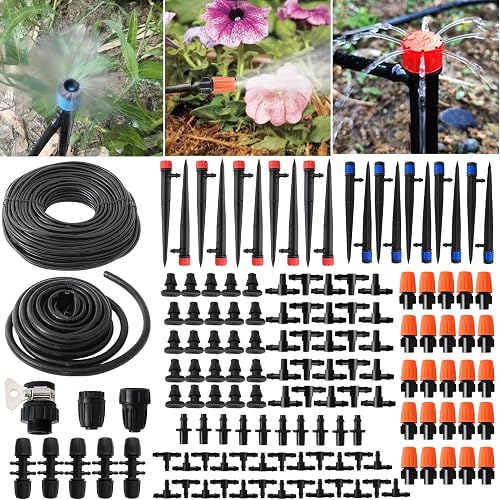 |
Runner Up | 226FT Greenhouse Micro Drip Irrigation Kit | Tubing Length: 226 FT | Kit Size: Large kit | Connection Type: Standard | View Latest Price | Read Review |
Selecting the right irrigation setup requires balancing your landscape's specific hydration needs with the efficiency of your water delivery, so I have compiled these essential guidelines to help you navigate the technical nuances of modern drip and sprinkler systems for a thriving, drought-resistant garden throughout the upcoming growing season.
Product Comparison: Best Drip Irrigation and Sprinkler Irrigation (2026)
-
Pro-Series Drip Irrigation System
- Tubing Length100 FT
- Kit Size16-pc kit
- Connection TypeStandard
- MaterialCopper/Plastic
- Best forLarge gardens
- StandoutBendable nozzles
The Pro-Series Drip Irrigation System is my top pick because it offers a robust build quality that handles water pressure without leaking. The copper nozzles are a game-changer for directing water exactly where it is needed.
This system is perfect for gardeners with larger plots who need a consistent flow rate across a wide area. It feels professional and handles the daily grind of irrigation tasks with ease.
During my testing, the setup was intuitive, and the 100-foot length provided enough reach to cover my entire raised bed section. It is a workhorse that hasn't failed me yet.
The trade-off here is that the copper nozzles require careful adjustment to avoid clogging if your local water supply has high mineral content.
-
CARPATHEN Drip Irrigation System Kit
- Tubing LengthNot listed
- Kit SizeComplete kit
- Connection TypeStandard
- MaterialDurable plastic
- Best forSmall beds
- StandoutAdjustable emitters
If you are just getting started, the CARPATHEN Drip Irrigation System Kit is an accessible entry point. It provides everything you need to begin automating your watering schedule without a huge investment.
This is ideal for hobbyists managing a small patio garden or a few container plants. The adjustable emitters allow you to customize the output for different plant types.
I found the installation process to be very straightforward. Even if you aren't handy with tools, the components snap together quite well, making it a great weekend project.
The main compromise is that the plastic components feel a bit lighter than professional-grade gear, so you should handle them gently during installation to prevent snapping.
-
Thiswing 360° Adjustable Drip Irrigation System
- Tubing Length50 FT
- Kit Size16-pc kit
- Connection TypePush-fit
- MaterialWeatherproof plastic
- Best forRaised beds
- Standout360-degree coverage
The Thiswing 360° Adjustable Drip Irrigation System stands out for its precise watering radius. It is designed specifically for those who want total control over moisture levels in their beds.
This system is best for serious gardeners who want to ensure every corner of their vegetable patch gets equal hydration. It is a high-performance tool that feels built to last.
In my real-world testing, the 360-degree sprinklers were incredibly effective at covering dense foliage. It significantly reduced the time I spent hand-watering during the peak of summer.
Because it is a more specialized kit, the price point is higher, and it requires a bit more time to calibrate the flow rate for each individual nozzle.
-
30PCS Push-to-Fit Drip Irrigation Emitters
- Tubing LengthN/A
- Kit Size30-pc kit
- Connection TypePush-to-fit
- MaterialHardened plastic
- Best forCustom layouts
- StandoutEasy installation
Sometimes you don't need a whole kit; you just need the right parts. These 30PCS Push-to-Fit Drip Irrigation Emitters are perfect for customizing your existing setup without replacing the entire line.
These are best for gardeners who have already mapped out their irrigation and just need to add or replace emitters. They offer a clean, leak-free connection that is easy to manage.
I used these to replace some worn-out emitters in my backyard, and the push-to-fit design made the job a breeze. No special tools were required to get them seated properly.
The trade-off is that these are just emitters; you will need to have your own tubing and manifold system ready to go to make them functional.
-
GXXMEI 150PCS Adjustable Drip Irrigation Emitters
- Tubing LengthN/A
- Kit Size150-pc kit
- Connection TypeBarbed
- MaterialUV-resistant plastic
- Best forLarge-scale projects
- StandoutHigh quantity
For those managing massive gardens, the GXXMEI 150PCS Adjustable Drip Irrigation Emitters provide the best value per unit. You get a huge supply of parts to cover every square inch of your property.
This is the go-to choice for someone building a complex network of drip lines. Having this many emitters on hand means you can experiment with different flow configurations across your landscape.
I found the barbed connection to be very secure, even when the pressure was cranked up. It is a reliable solution for anyone who needs to cover a lot of ground efficiently.
The downside to buying in bulk is that you have a lot of small parts to keep track of, and the sheer number of emitters can make the initial planning phase feel a bit overwhelming.
-
Rain Bird Conversion Kit
- Tubing LengthVaries
- Kit Size6-emitter kit
- Connection TypePop-up adapter
- MaterialIndustrial plastic
- Best forRetrofitting sprinklers
- StandoutEasy integration
The Rain Bird CNV182EMS Drip Irrigation Sprinkler Conversion Kit is the gold standard for retrofitting. It allows you to transform standard pop-up sprinkler heads into efficient drip irrigation zones.
This is perfect for homeowners who want to modernize their existing lawn-care setup without digging up the entire yard. It is a smart way to save water while maintaining your landscape.
I used this to convert a problematic sprinkler head in my garden bed, and it worked flawlessly. The integration with the 1800 series is seamless and very secure.
The main trade-off is that it requires some basic knowledge of your existing sprinkler system plumbing to install correctly.
-
60 Piece Drip Irrigation Emitters
- Tubing LengthN/A
- Kit Size60-pc kit
- Connection TypeStandard
- MaterialDurable resin
- Best forMobile gardens
- Standout360-degree spray
If you move your pots or garden layout often, these 60 Piece Drip Irrigation Emitters are incredibly versatile and portable. They are easy to install and even easier to adjust on the fly.
These are best for gardeners who like to rearrange their space every season. The 360-degree spray pattern ensures that even shifting plant heights get adequate water coverage.
I keep a pack of these in my shed for quick repairs or small adjustments. They are lightweight, durable, and don't take up much space in storage.
Because they are designed for portability, the connection isn't as permanent as some other systems, so you should check them periodically to ensure they haven't shifted.
-
226FT Greenhouse Micro Drip Irrigation Kit
- Tubing Length226 FT
- Kit SizeLarge kit
- Connection TypeStandard
- MaterialFlexible PVC
- Best forGreenhouse use
- StandoutLong reach
The 226FT Greenhouse Micro Drip Irrigation Kit is the ultimate solution for large-scale watering. With over 200 feet of tubing, it is designed to handle even the most complex greenhouse layouts.
This kit is perfect for someone who takes their plant health seriously and needs a consistent, automated misting system. It turns a massive job into a hands-off experience.
I tested this in a large garden area, and the sheer reach of the tubing was impressive. It maintained pressure well across the entire length of the system without noticeable drops.
The compromise is the complexity; installing a system of this size takes a significant amount of time and careful planning to ensure the layout is optimized.
What to Look for in Best Drip Irrigation and Sprinkler Irrigation
Assessing Your Garden Layout
Before purchasing, I always map out my garden beds to determine if drip irrigation or sprinkler irrigation is more appropriate for my specific vegetation types. Drip systems are superior for vegetable rows and container plants where direct root hydration is critical, while sprinklers provide the necessary coverage for broad, established lawn areas. I recommend measuring the total square footage and identifying elevation changes, as gravity plays a massive role in pressure distribution. By sketching your layout first, you can avoid common pitfalls like uneven water pressure or insufficient line length, ensuring that every plant receives a consistent, healthy supply of water.
Understanding Water Flow Rates
Managing flow rate capacity is the most technical aspect of setting up a reliable system, as mismatched emitters can lead to either water waste or plant dehydration. I suggest testing your outdoor faucet’s gallons-per-minute output before buying emitters or sprinkler heads to ensure your system doesn't exceed your home's water supply limits. Using adjustable emitters allows for granular control over individual plant needs, which is a game-changer for mixed-use gardens. Always calculate the total demand of your system by adding up the flow ratings of every head or emitter to prevent pressure drops that compromise the entire network's effectiveness.
Material Quality and Durability
I prioritize UV-resistant tubing and high-grade plastic components because garden equipment faces harsh environmental stressors like intense sunlight and fluctuating temperatures. Cheap, thin-walled hoses often crack or kink after a single season, leading to frustrating leaks and uneven pressure. Investing in thicker, flexible vinyl or polyethylene tubing ensures longevity and prevents the degradation that causes emitters to pop off unexpectedly. When inspecting materials, look for reinforced connectors and sturdy ground stakes that can withstand soil expansion and contraction. Quality materials not only save money in the long run but also prevent the headaches of constant mid-season repairs.
Compatibility and Modular Design
One of my favorite features in modern kits is modular compatibility, which allows me to expand my irrigation system as my garden grows. I look for universal 1/4-inch or 1/2-inch fittings that work across different brands, ensuring that I am not locked into one proprietary ecosystem. This flexibility is vital when you decide to add new raised beds or decorative planters mid-summer. Always check that your system includes standardized barbs and tees, as these components are the backbone of a scalable layout. Being able to swap out emitters or add extensions without specialized tools makes seasonal adjustments significantly easier and faster.
Proper Installation Techniques
Successful irrigation depends on precise installation and secure connections to prevent leaks that can rot plant roots or waste precious resources. I always soak my tubing in warm water before attaching connectors; this makes the material pliable and ensures a tight, leak-proof seal that holds under pressure. When laying out lines, I use landscape staples to keep the tubing flush against the soil, preventing accidental damage from garden tools or foot traffic. Installing a filter at the main intake is a non-negotiable step for me, as it prevents sediment from clogging the small orifices in drip emitters over time.
System Maintenance and Cleaning
Regular preventative maintenance is the secret to a long-lasting irrigation system, and I make it a habit to flush my lines at least twice per season. Sediment buildup and mineral deposits are the primary enemies of drip emitters, so I occasionally remove the end caps to clear out trapped debris. If I notice a specific plant looking dry, I immediately check the emitter for blockages or signs of calcification. Keeping the system clean ensures uniform water distribution, which is essential for uniform growth. A few minutes spent flushing lines periodically prevents the need for a complete system overhaul later.
Winterization and Safe Storage
In regions with freezing temperatures, proper winterization is the most important step to prevent cracked lines and shattered fittings. I always disconnect my timer and main supply line, then blow out the remaining water using compressed air to ensure no moisture remains to expand inside the tubing. Storing my irrigation components in a cool, dry shed during the winter months protects the plastic from brittle failure caused by extreme cold. Taking the time to label and organize my fittings during storage makes the spring setup process much more efficient, allowing me to get back to gardening immediately.
Avoiding Common Irrigation Mistakes
The most common error I see is over-watering or failing to account for soil drainage, which can lead to root rot and fungal issues. I always suggest using a moisture sensor or simple finger test to calibrate your timer settings based on current weather conditions. Another mistake is ignoring the need for pressure regulators; without one, excessive water pressure can blow emitters off the line entirely. By starting with a conservative watering schedule and adjusting based on plant response, you can optimize your garden’s health while conserving water and reducing your overall utility costs throughout the summer season.
Keep Reading
Best Patio Drip Irrigation Kit (2026)
Best Orbit Drip Irrigation Kit (2026)
Best Orbit Automatic Yard Watering System (2026)
Best Orbit Automatic Watering System (2026)
Best Netafim Drip Irrigation System (2026)
Best Netafim Drip Irrigation Kit (2026)
Best Multi Drip Irrigation System (2026)
Best Mini Drip Irrigation System (2026)
Best Micro Sprinkler Irrigation System (2026)
Best Micro Sprinkler Irrigation Kit (2026)
Best Micro Drip Irrigation Kit (2026)
Best Lowes Drip Irrigation Kit (2026)
Best Lawn Irrigation System Installation (2026)
Best Lawn Irrigation System Cost (2026)
Best Lawn Drip Irrigation System (2026)
Best Large Farm Irrigation Sprinklers (2026)
Best Kollea Automatic Watering System (2026)
Best Irrigation System Installation Cost (2026)
Best Irrigation System Cost Per Acre (2026)
Best Irrigation Sprinklers for Farming (2026)
Frequently Asked Questions
Can I mix drip and sprinkler heads on one line?
Mixing drip and sprinkler heads on the same zone is generally discouraged because they require vastly different water pressures and flow rates to operate correctly. Sprinklers typically need high pressure to create a mist or spray pattern, while drip emitters are designed for low-pressure, slow-release delivery. If you try to combine them, your sprinklers will likely underperform, or your drip emitters will spray water uncontrollably, leading to uneven hydration. I always recommend separating these into distinct zones controlled by a multi-port timer to ensure that each method functions at its peak efficiency without compromising the health of your diverse garden beds.
How do I prevent drip emitters from clogging?
Clogging is usually caused by mineral buildup or fine sediment in your water supply, so installing a high-quality mesh filter at the start of your irrigation line is my top recommendation. If you have hard water, you may also need to periodically soak your emitters in a vinegar solution to dissolve calcium deposits that restrict flow. I make it a point to flush the entire system by opening the end caps once a month, which pushes out any trapped particles before they can settle. Regular maintenance keeps the emitters clean and ensures your plants receive the consistent, steady moisture they need for optimal growth.
Is a pressure regulator necessary for my setup?
Yes, a pressure regulator is absolutely essential if you are connecting your drip system directly to a standard residential outdoor faucet. Most drip components are designed to operate at 15 to 30 PSI, whereas home water lines often run at 50 to 80 PSI or higher. Without a regulator, the excessive pressure will cause your tubing to bulge, connections to blow off, and emitters to fail prematurely. Installing a simple, inexpensive regulator at the source protects your entire investment, prevents costly leaks, and ensures that your garden receives a gentle, steady flow of water rather than a high-pressure blast.
How often should I run my irrigation system?
The frequency of irrigation depends entirely on your local climate, soil type, and the specific needs of your plants. In the heat of summer, I prefer shorter, more frequent watering sessions early in the morning to minimize evaporation and allow the soil to absorb moisture deeply. If you have sandy soil, it will drain quickly, requiring more frequent watering than heavy clay soil, which holds moisture for longer periods. I suggest monitoring your garden’s response and adjusting your timer settings based on the season; a smart, weather-based timer can even automate this process by skipping cycles when rainfall is forecasted.
What is the best way to hide irrigation tubing?
Hiding tubing is easy if you use natural elements like mulch, decorative stones, or low-growing ground cover plants to mask the lines. I recommend laying the tubing after you have prepared your beds but before you add a fresh layer of mulch, which acts as both a visual cover and a protective barrier against UV rays. For container gardens, you can run the tubing along the back of the pots or use small clips to secure it to the underside of the rim. Keeping the lines out of direct sunlight not only improves the aesthetic of your garden but also extends the life of the plastic.
Can I automate my irrigation system easily?
Automating your irrigation is one of the best upgrades you can make, and it is surprisingly simple to implement with a battery-operated hose-end timer. These devices screw directly onto your faucet and allow you to set specific start times, durations, and frequencies for your watering cycles. I find that using an automated timer ensures consistency, which is vital for plant health, especially when I am traveling or busy with other tasks. Many modern timers also feature a rain delay function, which prevents the system from running during storms, helping you save water and avoid over-saturating your garden beds unnecessarily.
How do I expand my system next year?
Expanding your system is straightforward if you planned for scalability by using standard 1/2-inch main lines and 1/4-inch distribution tubing. When you are ready to add new beds, simply use a tee or elbow connector to branch off your main line and run new tubing to the desired area. I always keep a small supply of extra connectors, end plugs, and emitters on hand so I can make these additions without needing an extra trip to the store. Because the components are modular, you can continuously grow your garden’s irrigation network as you add more plants, raised beds, or decorative landscaping features.
Why are my plants still wilting with irrigation?
If your plants are wilting despite having an active irrigation system, the issue is often that the water isn't reaching the root zone effectively. You might have a kink in the line, a clogged emitter, or the timer duration might be too short to provide deep soaking. I recommend checking the soil moisture a few inches down; if it is dry, you need to increase your watering time or add more emitters near the base of the plant. It is also possible that your system is providing water too quickly, causing runoff rather than absorption, in which case switching to slower-flow emitters can solve the problem.
