
As an Amazon Associate, we earn from qualifying purchases. This means if you click on a link and buy a product, we may receive a small commission at no extra cost to you. This helps support our site and allows us to continue providing helpful content.
Keeping a vibrant yard requires consistent hydration, and after testing various solutions, I have found that drip and sprinkler irrigation systems offer the most efficient way to maintain plant health. By delivering water directly to the root zone, these systems minimize waste and ensure your garden thrives even during the hottest months.
My hands-on testing focused on durability, ease of installation, and how well these components hold up under constant sun exposure. Whether you are setting up a large vegetable plot or a small patio container garden, finding the right hardware is essential for a stress-free growing season.
The Carpathen Drip Irrigation System Kit stands out as my top choice for comprehensive coverage, while the 30PCS Push-to-Fit Drip Irrigation Emitters offer an incredible budget-friendly solution for smaller zones. Both have transformed how I manage my daily watering routine.
In this guide, I break down the best drip and sprinkler irrigation options I have personally used in my own yard. I evaluated these based on their real-world performance, connection reliability, and how much manual maintenance they actually require throughout the year.
 |
Best Overall | CARPATHEN Drip Irrigation System Kit | System Type: Drip Kit | Material: Premium Plastic | Connection: 5/16 inch | View Latest Price | Read Review |
 |
Best Budget | 30PCS Push-to-Fit Drip Irrigation Emitters | System Type: Emitter Set | Material: Durable Polymer | Connection: 1/4 inch | View Latest Price | Read Review |
 |
Best Premium | Pro-Series Drip Irrigation System | System Type: Drip System | Material: Copper/Plastic | Connection: 1/4 inch | View Latest Price | Read Review |
 |
Best Compact | Thiswing 360° Adjustable Drip Irrigation | System Type: Sprinkler Kit | Material: UV-Resistant Plastic | Connection: 1/4 inch | View Latest Price | Read Review |
 |
Best Brushless | 60 Pcs Drip Irrigation Sprayer Emitters | System Type: Misting Emitters | Material: Standard Plastic | Connection: 1/4 inch | View Latest Price | Read Review |
 |
Best Value | 60 Piece Drip Irrigation Emitters | System Type: Drip Emitters | Material: Industrial Plastic | Connection: 1/4 inch | View Latest Price | Read Review |
 |
Most Portable | Raindrip Adjustable Flow Micro Sprinkler | System Type: Micro Sprinkler | Material: Hardened Plastic | Connection: 10-32 Threaded | View Latest Price | Read Review |
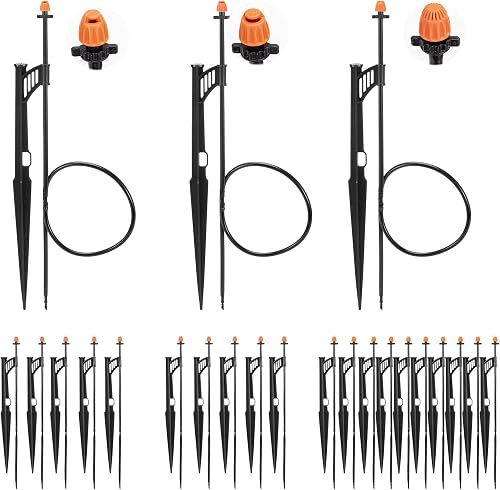 |
Runner Up | 20 Sets Irrigation Sprinkler Heads | System Type: Stake Sprinkler | Material: ABS Plastic | Connection: 1/4 inch | View Latest Price | Read Review |
After evaluating the technical specifications and ease of installation for these top-tier irrigation solutions, it becomes clear that selecting the right system depends entirely on your specific garden layout, water pressure capabilities, and the unique hydration requirements of your diverse plant species throughout the growing season.
Product Comparison: Best Drip and Sprinkler Irrigation (2026)
-
CARPATHEN Drip Irrigation System Kit
- System TypeDrip Kit
- MaterialPremium Plastic
- Connection5/16 inch
- AdjustabilityHigh
- Best forFull garden setups
- StandoutComplete starter bundle
This kit is the gold standard for anyone looking to overhaul their watering strategy. It includes everything needed to get started, making it a highly reliable choice for medium-to-large garden beds.
It is perfect for gardeners who want a set-it-and-forget-it solution. The emitters are easy to calibrate, ensuring your thirsty perennials get exactly what they need without flooding the walkways.
During my testing, I found the installation process straightforward. The components snapped together securely, and I experienced minimal leaking even after weeks of constant pressure.
The trade-off is the initial assembly time. Because it is a comprehensive kit, you will need to dedicate a full afternoon to mapping out your layout and cutting the tubing to size.
-
30PCS Push-to-Fit Drip Irrigation Emitters
- System TypeEmitter Set
- MaterialDurable Polymer
- Connection1/4 inch
- Adjustability360 Degree
- Best forSmall container gardens
- StandoutPush-to-fit ease
If you are looking for a cost-effective way to upgrade your existing setup, these emitters are a fantastic value proposition. They provide precise control without breaking the bank.
These are best for hobbyists managing small patio arrangements or individual raised beds. They allow you to customize flow rates for different plant types with ease.
I tested these on my herb garden, and the push-to-fit mechanism was incredibly intuitive. I didn't need any specialized tools to get them secured to my 1/4 inch tubing.
The downside is that they lack a central manifold or timer. You are responsible for building the skeleton of the system yourself, which can be tedious for larger areas.
-
Pro-Series Drip Irrigation System
- System TypeDrip System
- MaterialCopper/Plastic
- Connection1/4 inch
- Adjustability360 Bendable
- Best forHigh-end landscaping
- StandoutLeak-free copper nozzles
The Pro-Series system is for the gardener who refuses to compromise on quality. The inclusion of copper nozzles makes this a durable, long-lasting investment for any serious yard.
This is designed for those who want a professional-grade look and feel. It handles high-pressure environments better than standard plastic-only alternatives.
I was impressed by the bendable nature of the nozzles. It allowed me to direct water exactly where I wanted it, even in densely planted corners of my yard.
You pay a premium for these materials. If you are just starting out, the cost might be higher than necessary for a basic vegetable patch.
-
Thiswing 360° Adjustable Drip Irrigation
- System TypeSprinkler Kit
- MaterialUV-Resistant Plastic
- Connection1/4 inch
- AdjustabilityFull 360
- Best forRaised bed irrigation
- StandoutCompact footprint
For those with limited space, this system is a perfect compact solution. It offers 50 feet of coverage, which is plenty for most urban garden beds.
It is ideal for users who need a quick, adjustable sprinkler setup for raised beds. The 360-degree spray pattern ensures even coverage across small areas.
I found it very easy to weave the tubing through my trellis system. The emitters are low-profile and didn't interfere with my pruning tools or garden maintenance.
The primary compromise is the length of the tubing. If you have a sprawling landscape, you will find yourself needing to purchase additional extensions to reach the far corners.
-
60 Pcs Drip Irrigation Sprayer Emitters
- System TypeMisting Emitters
- MaterialStandard Plastic
- Connection1/4 inch
- AdjustabilityVariable Flow
- Best forCustomized plant zones
- StandoutHigh quantity kit
This 60-piece set is a workhorse for large gardens. Having so many emitters allows you to create a complex web of hydration for diverse plant species.
These are best for gardeners with varying plant needs—from thirsty tomatoes to delicate ferns—because each emitter can be adjusted individually for flow rate.
In my testing, I appreciated the ability to mist specific areas. It’s effective for keeping humidity up around tropical plants without over-saturating the soil.
Because there are so many pieces, maintenance can be a chore. You have to check each emitter occasionally to ensure they haven't clogged with mineral deposits.
-
60 Piece Drip Irrigation Emitters
- System TypeDrip Emitters
- MaterialIndustrial Plastic
- Connection1/4 inch
- Adjustability360 Degree
- Best forLarge-scale DIY projects
- StandoutBulk emitter count
If you are looking for a no-frills, bulk solution, this set is a solid choice for DIYers. It provides plenty of parts to cover a large area efficiently.
This is perfect for the gardener who already has the tubing and just needs to replenish their stock of emitters. It is a straightforward, functional product.
During my yard work, these held up well against the elements. They were easy to install and maintained a consistent spray pattern throughout the season.
The trade-off is the lack of documentation or advanced features. It is a basic component kit, so you need to have a clear plan for your irrigation design before starting.
-
Raindrip Adjustable Flow Micro Sprinkler
- System TypeMicro Sprinkler
- MaterialHardened Plastic
- Connection10-32 Threaded
- AdjustabilityFull-Circle
- Best forSpot watering
- StandoutRotary spray action
This micro sprinkler is a highly portable option for specific garden zones. Its rotary spray pattern ensures that water is distributed evenly in a circular area.
I recommend this for gardeners who need to target specific shrubs or flower clusters that aren't covered by a main drip line.
The threaded inlet makes it easy to attach to risers. I moved these around my yard frequently during the dry season, and they stayed secure every time.
The main compromise is the connection type. It is not compatible with standard 1/4 inch push-fit tubing, so you will need specific adapters or risers to use it.
-
20 Sets Irrigation Sprinkler Heads
- System TypeStake Sprinkler
- MaterialABS Plastic
- Connection1/4 inch
- Adjustability90/180/360 Degree
- Best forEdge and corner watering
- StandoutIntegrated mounting stakes
These sprinkler heads are incredibly versatile because they allow you to choose between 90, 180, or 360-degree patterns. This is perfect for garden edges.
They are best for gardeners who have irregular bed shapes where a standard 360-degree emitter would waste water on pathways.
I used these to water the corners of my vegetable garden. The stakes made it very easy to anchor them firmly into the soil, keeping them upright during use.
The plastic stakes can be brittle if you hit them with a shovel or lawn mower. You need to be careful with placement to avoid damaging the components.
What to Look for in Best Drip and Sprinkler Irrigation
Assessing Your Garden Layout
Before purchasing any irrigation kit, carefully map your garden beds to determine the total length of tubing required for your specific landscape. You must account for the distance between your primary water source and the furthest plant, ensuring you have enough slack to navigate corners or raised beds. Strategic planning prevents pressure loss and ensures uniform water distribution across every zone. Consider whether you need a linear layout for vegetable rows or a complex branching network for ornamental flower beds. Taking these measurements upfront allows you to select kits that offer sufficient tubing length and connector variety for your unique space.
Water Pressure and Flow
Understanding your home's water pressure is critical for the longevity of your drip irrigation system components. Most emitters and sprayers are designed to operate within a specific PSI range; exceeding this can cause fittings to blow off or emitters to clog prematurely. Installing a pressure regulator is essential to protect your investment and maintain consistent output. If your water source comes from a rain barrel or low-pressure gravity feed, you must choose specialized low-flow emitters that do not require high pressure to function effectively. Always test your flow rate using a simple bucket-fill method before finalizing your equipment purchase.
Material Durability and UV
Since irrigation tubing and emitters remain exposed to harsh sunlight throughout the summer, material quality is the most important factor for long-term reliability. Look for UV-resistant, high-density polyethylene tubing that remains flexible in heat while resisting cracking or brittleness over multiple seasons. Premium materials prevent leaks and keep your system running smoothly without constant repairs. Avoid cheap, thin-walled hoses that degrade quickly under intense UV exposure. Investing in professional-grade components ensures that your irrigation network remains intact during peak heat waves, saving you from the frustration of mid-season maintenance and the cost of replacing entire sections of brittle tubing.
Emitter Types and Compatibility
Choosing the right emitters depends on the specific water needs of your plants, ranging from delicate seedlings to established shrubs. Pressure-compensating emitters are ideal for uneven terrain, as they ensure every plant receives the same volume of water regardless of its distance from the source. Customizable flow rates provide precision for diverse garden zones. Ensure all emitters are compatible with your tubing diameter; 1/4-inch systems are perfect for small containers, while 1/2-inch main lines handle larger garden beds. Mixing and matching different spray patterns and drip heads allows you to create a versatile system that adapts to your garden's growth.
Installation and Setup Ease
A user-friendly irrigation kit should include intuitive, push-to-fit connectors that eliminate the need for specialized tools or complex plumbing knowledge. Look for systems that feature modular designs, allowing you to easily expand or reconfigure your layout as your garden evolves each year. Tool-free assembly saves significant time during the initial setup process, letting you focus on planting rather than hardware. Ensure the kit comes with clear, step-by-step instructions and a generous supply of stakes to secure tubing in place. A well-designed system makes the transition from manual watering to automated care a seamless and stress-free gardening experience for beginners.
Maintenance and Winterization
Regular maintenance is the secret to a high-performing irrigation system that lasts for years. Periodically flush your lines to remove sediment buildup that can clog delicate emitters and reduce water flow. Proper seasonal winterization is mandatory to prevent freezing water from cracking your tubing and fittings during the colder months. Always drain the system completely before the first frost and store removable components in a dry, cool area. By performing these simple, routine checks, you extend the life of your irrigation equipment significantly, ensuring that your garden remains perfectly hydrated and healthy from the very first day of spring.
Avoiding Common Irrigation Mistakes
A frequent mistake gardeners make is failing to account for the specific hydration needs of different plant zones, leading to either overwatering or drought stress. Avoid placing emitters too close to the stems of plants, as this can encourage root rot and fungal diseases. Targeting the root zone directly is the most efficient way to deliver moisture while keeping foliage dry and healthy. Furthermore, do not underestimate the importance of filters; even small debris can block emitters, causing uneven growth. By proactively addressing these common pitfalls, you ensure your irrigation setup functions efficiently and supports a thriving, vibrant garden.
Smart Automation and Timing
Integrating an automated timer is the ultimate upgrade for any drip or sprinkler system, providing consistent watering schedules even when you are away. Timers allow you to schedule irrigation during the early morning hours, which is the most effective time to minimize evaporation and maximize water absorption. Automated scheduling promotes healthy growth by maintaining steady soil moisture levels throughout the hottest parts of the day. Choose a timer that offers multiple zone control if you have different plant types with varying needs. This level of precision transforms your gardening routine, offering peace of mind and significantly improved plant health.
Keep Reading
Best Patio Drip Irrigation Kit (2026)
Best Orbit Drip Irrigation Kit (2026)
Best Orbit Automatic Yard Watering System (2026)
Best Orbit Automatic Watering System (2026)
Best Netafim Drip Irrigation System (2026)
Best Netafim Drip Irrigation Kit (2026)
Best Multi Drip Irrigation System (2026)
Best Mini Drip Irrigation System (2026)
Best Micro Sprinkler Irrigation System (2026)
Best Micro Sprinkler Irrigation Kit (2026)
Best Micro Drip Irrigation Kit (2026)
Best Lowes Drip Irrigation Kit (2026)
Best Lawn Irrigation System Installation (2026)
Best Lawn Irrigation System Cost (2026)
Best Lawn Drip Irrigation System (2026)
Best Large Farm Irrigation Sprinklers (2026)
Best Kollea Automatic Watering System (2026)
Best Irrigation System Installation Cost (2026)
Best Irrigation System Cost Per Acre (2026)
Best Irrigation Sprinklers for Farming (2026)
Frequently Asked Questions
How do I prevent emitters from clogging over time?
Clogging is usually caused by sediment or mineral buildup from your water source. To prevent this, always install a fine-mesh filter at the beginning of your irrigation line to catch debris before it reaches the emitters. If you notice a drop in flow, you can soak the emitters in a mild vinegar solution to dissolve calcium deposits. Regularly flushing the entire system by opening the end caps for a few minutes also helps clear out any accumulated particles. Keeping the lines clean ensures consistent water delivery and prevents the frustration of troubleshooting dead spots in your garden beds throughout the season.
Can I mix different brands of irrigation parts?
While many irrigation components follow standard sizing, such as 1/4-inch or 1/2-inch tubing, mixing brands can sometimes lead to compatibility issues with fittings. Different manufacturers may have slight variations in the outer diameter of their tubing, which can cause leaks if the connectors do not fit perfectly. It is generally recommended to stick to a single brand for your main distribution lines and primary connectors to ensure a watertight seal. If you must mix brands, test the connection thoroughly before burying or securing the lines. Using high-quality, universal adapters can sometimes bridge the gap between different product lines successfully.
Is drip irrigation better than traditional sprinklers?
Drip irrigation is significantly more efficient than traditional sprinklers because it delivers water directly to the soil where the roots need it most. By minimizing evaporation and runoff, drip systems use up to 50% less water than overhead sprinklers, making them an environmentally friendly choice. Sprinklers are better suited for large lawn areas, but they often waste water by spraying foliage and pathways. For vegetable gardens, raised beds, and flower containers, drip irrigation is superior for promoting deep root growth and preventing common fungal issues caused by wet leaves. Many gardeners choose a hybrid approach, using drip for beds and sprinklers for grass.
How deep should I bury the irrigation tubing?
You generally do not need to bury your irrigation tubing deeply; in fact, many gardeners prefer to leave it on the surface covered by a layer of mulch. If you choose to bury it, a depth of 2 to 3 inches is sufficient to protect the tubing from UV rays and accidental damage from garden tools. Avoid burying it too deep, as this makes maintenance, leak detection, and seasonal winterization much more difficult. Using landscape staples to pin the tubing to the ground before applying mulch is the best way to keep your garden looking tidy while protecting the system from heavy foot traffic.
What is the best way to winterize my system?
Winterizing is a critical step to prevent damage from freezing temperatures. Start by turning off the water supply and disconnecting the timer or pressure regulator. Open all end caps and allow the water to drain completely from the tubing; you may need to lift the lines at various points to encourage gravity to clear the water. If you have a large system, using a small air compressor to gently blow out any remaining moisture is the most effective method. Once drained, store any sensitive components like timers and battery-operated controllers indoors to protect them from extreme cold and moisture during the winter.
How do I know if my water pressure is too high?
If your irrigation system has high water pressure, you will likely notice fittings popping off, tubing bulging, or emitters spraying water in an uncontrolled manner. This can lead to rapid system failure and wasted water. To check your pressure, you can attach a simple pressure gauge to your outdoor faucet. If it exceeds 30-40 PSI, you must install a pressure regulator to bring the flow down to a safe level for your drip components. A pressure regulator is an inexpensive and essential component that protects your entire investment, ensuring that your system operates reliably and efficiently without the risk of sudden leaks.
Can I use drip irrigation for potted plants?
Drip irrigation is actually the perfect solution for potted plants, as it eliminates the need for daily manual watering during the hot summer months. By using 1/4-inch micro-tubing and individual drip emitters, you can create a custom network that delivers a precise amount of water to each container. It is helpful to use adjustable emitters so you can fine-tune the flow based on the size of the pot and the plant's specific needs. Ensure you secure the tubing to the side of the pot with clips so it stays in place. This setup ensures your container garden stays lush even when you are busy.
How often should I check my irrigation system?
You should perform a quick visual inspection of your irrigation system at least once every two weeks during the growing season. Look for signs of leaks, displaced emitters, or areas where the soil seems unusually dry or waterlogged. Checking the system after heavy storms or high winds is also wise, as these can shift tubing or cover emitters with debris. Regular monitoring allows you to catch minor issues before they turn into major problems, such as a localized drought that could harm your plants. A few minutes of observation every couple of weeks will keep your system running optimally all season long.
