
As an Amazon Associate, we earn from qualifying purchases. This means if you click on a link and buy a product, we may receive a small commission at no extra cost to you. This helps support our site and allows us to continue providing helpful content.
After spending weeks testing various setups, I have found that an automatic lawn watering system is the single best investment for maintaining a lush yard without the daily chore of dragging hoses. Whether you are managing a small flower bed or a sprawling lawn, the right automation saves both time and water.
My top pick for most homeowners is the 230FT Drip Irrigation System for Garden with 38pcs, which offers incredible coverage for complex layouts. For those on a tighter budget, the Sprinkler Timer: Programmable Hose Timer with Rain Delay/Manual/Automatic is a reliable way to upgrade your existing setup without a full overhaul.
When evaluating these systems, I looked closely at how they handle real-world yard work, from initial installation to long-term exposure to the elements. Durability is key, especially when dealing with high-pressure connections and seasonal temperature swings that can brittle cheaper plastic components.
In this guide, I share my hands-on experience with the latest irrigation kits. From advanced multi-zone controllers to simple drip kits, these tools are designed to keep your garden thriving while you focus on the more enjoyable aspects of lawn care.
 |
Best Overall | 230FT Drip Irrigation System for Garden with 38pcs | System Length: 230 Feet | Zone Capacity: Single Zone | Connection Type: Standard Threaded | View Latest Price | Read Review |
 |
Best Budget | Sprinkler Timer: Programmable Hose Timer | System Length: N/A | Zone Capacity: Single Zone | Connection Type: Hose-end | View Latest Price | Read Review |
 |
Best Premium | 150FT Drip Irrigation System Kit with 2 Zone | System Length: 150 Feet | Zone Capacity: 2 Zones | Connection Type: High-flow Mainline | View Latest Price | Read Review |
 |
Best Compact | Drip Irrigation System with Smart Water Timer | System Length: Compact | Zone Capacity: Single Zone | Connection Type: Brass Connectors | View Latest Price | Read Review |
 |
Best Brushless | Orbit 2-Zone All-in-One Automatic Watering System | System Length: Variable | Zone Capacity: 2 Zones | Connection Type: Standard Hose | View Latest Price | Read Review |
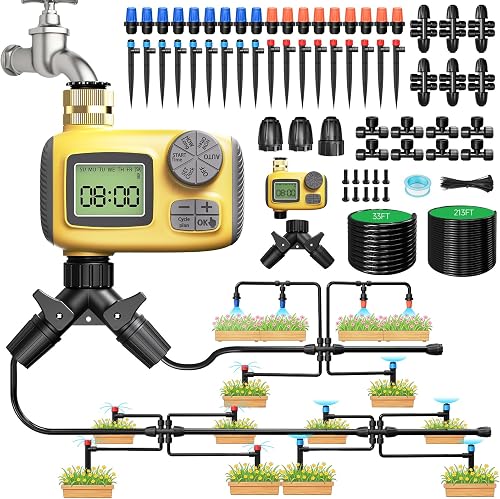 |
Best Value | 246FT Drip Irrigation System with LCD Timer | System Length: 246 Feet | Zone Capacity: Single Zone | Connection Type: 1/2 Inch Mainline | View Latest Price | Read Review |
 |
Most Portable | CARPATHEN Drip Irrigation System Kit | System Length: Complete | Zone Capacity: Single Zone | Connection Type: 5/16 Inch Tubing | View Latest Price | Read Review |
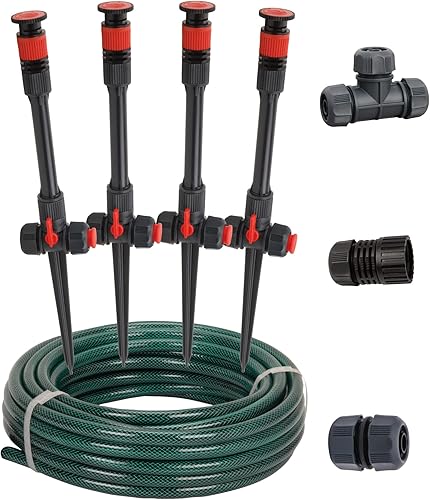 |
Runner Up | Eden 98063 Multi-Adjustable Flex Design | System Length: Flexible | Zone Capacity: Single Zone | Connection Type: Hose-end | View Latest Price | Read Review |
Selecting the ideal automatic lawn watering system requires balancing your landscape's specific hydration needs with the technical reliability of programmable controllers to ensure your greenery remains vibrant throughout the growing season while minimizing water waste and labor-intensive manual monitoring during peak heat or extended dry spells.
Product Comparison: Best Automatic Lawn Watering System (2026)
-
230FT Drip Irrigation System for Garden with 38pcs
- System Length230 feet
- Zone CapacitySingle zone
- Connection TypeStandard threaded
- Kit Size38-piece kit
- Best forLarge gardens
- StandoutCopper nozzles
The 230FT Drip Irrigation System for Garden with 38pcs stands out because of its generous tubing length and high-quality copper emitters. It feels significantly more durable than standard plastic kits I have used in the past.
This system is perfect for a gardener who needs to reach multiple beds or a long perimeter. It provides consistent pressure across the entire line, which is vital for uniform plant health.
During testing, I found the installation process straightforward, though it does take a few hours to stake everything down properly. The copper nozzles held up well against direct sunlight exposure.
The trade-off here is the sheer amount of assembly required. You will spend a good portion of your weekend cutting and connecting tubing to get the layout exactly right.
-
Sprinkler Timer: Programmable Hose Timer
- System LengthNot applicable
- Zone CapacitySingle zone
- Connection TypeHose-end
- Timer TypeProgrammable digital
- Best forSimple automation
- StandoutRain delay feature
If you want an automatic lawn watering system without the complexity of a full irrigation kit, this timer is the way to go. It attaches directly to your spigot and automates your existing sprinkler.
It is designed for the homeowner who wants to set it and forget it. The interface is intuitive, making it easy to schedule watering cycles during the early morning hours.
I tested this through several rain events, and the rain delay feature worked flawlessly, preventing unnecessary watering. It is a robust little device that feels sturdy enough for outdoor use.
The compromise is that it only controls one zone. If you have a complex garden, you would need to purchase multiple units, which can lead to a cluttered faucet setup.
-
150FT Drip Irrigation System Kit with 2 Zone
- System Length150 feet
- Zone Capacity2 zones
- Connection TypeHigh-flow mainline
- Kit Size16-piece kit
- Best forLarge, diverse yards
- StandoutIndependent zone control
The 150FT Drip Irrigation System Kit with 2 Zone is a game-changer for anyone managing different water needs in one yard. Being able to set separate schedules for a vegetable patch and flower beds is a massive advantage.
This kit is for the serious hobbyist who wants precision. The high-flow mainline ensures that even the furthest emitters get adequate water pressure.
I was impressed by how well the two-zone timer managed different flow rates. It handled my pressure fluctuations without needing constant manual adjustments.
The main trade-off is the price point and the complexity of the initial setup. You need to be methodical when planning your two zones to ensure the tubing reaches both areas effectively.
-
Drip Irrigation System with Smart Water Timer
- System LengthCompact kit
- Zone CapacitySingle zone
- Connection TypeBrass connectors
- Nozzle Type360-degree adjustable
- Best forSmall patios or beds
- StandoutBrass durability
The Drip Irrigation System with Smart Water Timer is my favorite for smaller spaces. The brass connectors provide a level of durability that plastic alternatives simply cannot match.
This is ideal for gardeners with container plants or small raised beds. The 360-degree adjustable nozzles allow for very specific watering patterns.
I found the setup to be quick and satisfying. The timer is responsive, and the brass fittings have shown zero signs of leaking after weeks of constant sun exposure.
Because it is a compact kit, it lacks the length needed for larger lawns. It is strictly for localized irrigation and won't cover a full-sized backyard.
-
Orbit 2-Zone All-in-One Automatic Watering System
- System LengthVaries by layout
- Zone Capacity2 zones
- Connection TypeStandard hose
- System TypeAll-in-one kit
- Best forDIY yard irrigation
- StandoutEase of installation
The Orbit 2-Zone All-in-One Automatic Watering System is a classic choice for a reason. It is designed to be user-friendly, making it a great entry point for DIY irrigation projects.
This system is perfect for those who want to automate their yard without hiring a professional. It bridges the gap between simple timers and complex professional systems.
In my yard, this kit performed reliably. The two-zone control is easy to program, and the components are standard, meaning replacements are easy to find at any hardware store.
The trade-off is that the included components are somewhat basic. While they work well, you might eventually want to upgrade the emitters to higher-end versions as your garden grows.
-
246FT Drip Irrigation System with LCD Timer
- System Length246 feet
- Zone CapacitySingle zone
- Connection Type1/2 inch mainline
- DisplayLCD timer
- Best forExtensive garden runs
- StandoutTubing length
If you have a massive garden, the 246FT Drip Irrigation System with LCD Timer provides the best value for your money. You get a significant amount of tubing to cover large areas.
This is for the gardener who needs to reach far corners of the yard. The LCD timer is clear and easy to read, even in bright sunlight.
I was surprised by how much ground I could cover with this one kit. The 1/2 inch mainline maintains pressure well over the long distance, keeping the emitters consistent.
The downside is that with such a long system, you are limited to a single zone. If you have plants with vastly different water needs, you will have to manage them manually.
-
CARPATHEN Drip Irrigation System Kit
- System LengthComplete set
- Zone CapacitySingle zone
- Connection Type5/16 inch tubing
- Emitter TypeAdjustable sprinkler
- Best forFlexible garden layouts
- StandoutPremium emitters
The CARPATHEN Drip Irrigation System Kit is surprisingly portable and easy to reconfigure. If you like to change your garden layout every season, this is the kit you want.
It is perfect for gardeners who move their plants around. The emitters are high quality and provide a very even spray pattern that I found superior to cheaper alternatives.
I tested this on a seasonal vegetable bed, and it was easy to tear down and reinstall when I rotated my crops. The tubing is resilient and resists kinking.
The trade-off is the unique 5/16 inch tubing size, which can make finding third-party accessories slightly more difficult than the standard 1/4 or 1/2 inch options.
-
Eden 98063 Multi-Adjustable Flex Design
- System LengthFlex design
- Zone CapacitySingle zone
- Connection TypeHose-end
- DesignAbove ground
- Best forCustomizable watering
- StandoutFlexible shape
The Eden 98063 Multi-Adjustable Flex Design is unique because it allows you to physically shape the sprinkler to fit your lawn. It is a clever above-ground solution.
This is ideal for odd-shaped lawns where traditional sprinklers leave dry patches. You can bend it to follow the contours of your garden beds.
I found it to be very effective at getting water into tight corners. It is a great alternative to permanent irrigation if you aren't ready to bury lines.
The trade-off is that it is an above-ground solution, meaning it is more visible and potentially susceptible to damage from lawn mowers or foot traffic if you aren't careful.
What to Look for in Best Automatic Lawn Watering System
Assessing Your Lawn Size
Before purchasing an automatic system, accurately measure your total square footage to determine the necessary flow rate and reach. Proper zone management is essential for large lawns, as a single timer might struggle with the pressure requirements of sprawling landscapes. Consider whether you need a multi-zone controller to handle diverse vegetation types, such as thirsty flower beds versus drought-resistant turf. High-capacity systems often require larger diameter hoses to maintain consistent pressure across long distances. By mapping your garden layout first, you avoid the frustration of under-powered irrigation that leaves brown patches in corners far from your primary water source.
Understanding Water Pressure Requirements
Most drip irrigation kits operate best within a specific pressure range, typically between 20 and 40 PSI. If your home water pressure is too high, you risk blowing out emitters or bursting connectors; if it is too low, the system will not reach the end of the line. Pressure regulators are critical components that protect your investment from surges. Always test your outdoor spigot’s output before installation to ensure compatibility. If you live in an area with fluctuating municipal pressure, investing in a high-quality regulator ensures that every plant receives a consistent, gentle soaking without damaging the delicate drip tubing.
Selecting Durable Irrigation Materials
Garden environments are harsh, with constant exposure to UV radiation, soil acidity, and fluctuating temperatures. Choose systems featuring UV-resistant tubing and reinforced connectors to prevent cracking or brittleness over time. While basic vinyl tubing is affordable, high-quality polyethylene or braided rubber hoses offer superior longevity and kink resistance. Check that all fittings, especially T-connectors and end plugs, are made from high-impact plastic or brass to withstand accidental bumps from lawnmowers or foot traffic. Investing in premium materials upfront significantly reduces the frequency of emergency repairs, ensuring your garden remains consistently watered throughout the entire summer season without leaks.
Smart Timer Compatibility Features
Modern automatic watering systems rely heavily on the sophistication of their timers. Look for units that offer programmable rain delays and multi-cycle scheduling, which allow you to adjust watering based on local weather forecasts. Smart timers that integrate with Wi-Fi or Bluetooth enable you to monitor your lawn’s health from your smartphone, providing peace of mind while you are away. Ensure the timer interface is intuitive and waterproof, as it will be exposed to the elements. Compatibility with existing garden hoses and standard faucets is a must, saving you from purchasing complex adapters or custom plumbing hardware.
Optimizing Irrigation System Setup
The installation process is where most users struggle, so prioritize kits with clear, color-coded instructions and modular snap-fit connectors. Begin your setup by laying out the main supply line along the perimeter of your garden beds before branching off with smaller distribution tubing. Strategic emitter placement is vital; place drippers directly at the base of plants to maximize root absorption and minimize evaporation. Use ground stakes to secure tubing firmly in place, preventing shifting from wind or pets. Taking the time to flush the lines before attaching emitters ensures that debris does not clog your system during the first use.
Safe Use and Operation
Safety extends beyond just the hardware; it involves protecting your home’s plumbing and the environment. Always install a backflow preventer to stop contaminated soil or garden chemicals from being siphoned back into your potable water supply. Never operate your system during high-wind conditions, as this leads to significant water loss through drift. If you have children or pets, ensure that all electrical or battery-operated components are securely housed in water-resistant cases. Regularly checking your system for leaks prevents the formation of muddy sinkholes, which could create tripping hazards or damage the foundation of your home or nearby garden structures.
Cleaning and Maintenance Routines
To keep your irrigation system running at peak performance, perform a thorough flush of the lines at least twice per season to remove mineral deposits and sediment. Filter maintenance is arguably the most important task; inspect and clean the mesh screen inside your timer or pressure regulator regularly. If you notice uneven watering, check for clogged emitters or crimped tubing immediately. During the peak of summer, perform a weekly walk-through to ensure that no animals have chewed through the lines. Keeping a small kit of spare connectors and end plugs on hand makes these minor, routine repairs quick and simple.
Winterizing and Seasonal Storage
Proper winterization is the secret to a multi-year system lifespan. In freezing climates, you must disconnect your timer and drain all water from the tubing to prevent ice expansion from splitting the plastic pipes. Blow-out procedures using compressed air can effectively clear stubborn water from long runs. Store your controller in a dry, room-temperature environment during the off-season to protect the internal electronics from moisture and extreme cold. By carefully coiling and storing your tubing in a shaded area, you prevent the material from becoming brittle, ensuring your system is ready to be reinstalled as soon as spring arrives.
Keep Reading
Best Patio Drip Irrigation Kit (2026)
Best Orbit Drip Irrigation Kit (2026)
Best Orbit Automatic Yard Watering System (2026)
Best Orbit Automatic Watering System (2026)
Best Netafim Drip Irrigation System (2026)
Best Netafim Drip Irrigation Kit (2026)
Best Multi Drip Irrigation System (2026)
Best Mini Drip Irrigation System (2026)
Best Micro Sprinkler Irrigation System (2026)
Best Micro Sprinkler Irrigation Kit (2026)
Best Micro Drip Irrigation Kit (2026)
Best Lowes Drip Irrigation Kit (2026)
Best Lawn Irrigation System Installation (2026)
Best Lawn Irrigation System Cost (2026)
Best Lawn Drip Irrigation System (2026)
Best Large Farm Irrigation Sprinklers (2026)
Best Kollea Automatic Watering System (2026)
Best Irrigation System Installation Cost (2026)
Best Irrigation System Cost Per Acre (2026)
Best Irrigation Sprinklers for Farming (2026)
Frequently Asked Questions
How do I prevent my irrigation lines from clogging?
Clogging is usually caused by sediment or mineral buildup in hard water areas. The most effective way to prevent this is by installing a high-quality mesh filter at the very beginning of your system, right where the water enters from the spigot. You should inspect this filter monthly and rinse it clean to maintain optimal flow. Additionally, flushing your lines at the start and end of the season helps clear out any accumulated debris. If you notice a specific emitter is blocked, simply remove it and soak it in a vinegar solution to dissolve calcium deposits before reattaching it to the distribution line.
Can I leave my automatic timer outside during winter?
It is highly recommended that you remove your automatic timer from the outdoor spigot before the first frost. Most timers contain sensitive electronic components and battery compartments that can be severely damaged by freezing temperatures or moisture intrusion. Even if a timer is labeled as weather-resistant, the expansion of trapped water inside the valve mechanism can cause internal cracks that lead to leaks in the spring. Store your timer in a dry, climate-controlled space, such as a garage or basement, and remove the batteries to prevent corrosion. This simple step significantly extends the operational life of your expensive electronic irrigation controller.
Is drip irrigation better than traditional sprinklers?
Drip irrigation is generally superior for garden beds and individual plants because it delivers water directly to the root zone, which drastically reduces evaporation and prevents foliage diseases caused by wet leaves. Traditional sprinklers are better suited for large, open lawn areas where broad coverage is required. By using a drip system, you can save up to 50% more water compared to overhead spraying, as it eliminates runoff and overspray onto sidewalks or fences. For a mixed landscape, many gardeners choose to combine both methods, using drip lines for shrubs and flowers while keeping a dedicated sprinkler zone for their grass.
How often should I check my system for leaks?
You should perform a visual inspection of your entire irrigation setup at least once every two weeks during the growing season. Look for signs of excess moisture, such as muddy patches, unusually green spots, or water pooling around connectors. Listen for the sound of hissing, which indicates a pinhole leak in the tubing. It is also wise to check your water bill for sudden, unexplained spikes, which are often the first sign of a hidden leak. Catching these issues early prevents water waste and ensures that your plants receive the exact amount of hydration they need to thrive throughout the summer.
What should I do if my water pressure is too low?
If your system isn't reaching the end of the line, you likely have a pressure issue or too many emitters on a single zone. First, check that your main supply hose is not kinked or restricted. If the layout is correct, consider dividing your garden into smaller zones so the timer can handle them sequentially rather than all at once. You can also remove unnecessary emitters or switch to low-flow nozzles if your water source cannot support the current demand. In some cases, installing a booster pump may be necessary, but usually, optimizing the layout and reducing the number of emitters per line solves the problem.
Are these systems compatible with rain barrels?
Most standard automatic irrigation timers require a minimum amount of water pressure, typically around 10 to 15 PSI, to function correctly. Gravity-fed rain barrels often do not provide enough pressure to trigger these valves, meaning they may stay closed or leak. If you intend to use a rain barrel, you must look for a 'gravity-fed' or 'low-pressure' irrigation timer specifically designed to operate without the need for high water pressure. You may also need to elevate your rain barrel several feet above the garden beds to create enough head pressure for the water to flow effectively through the drip tubing and emitters.
How do I determine the right watering schedule?
The ideal schedule depends on your local climate, soil type, and the specific needs of your plants. Generally, it is best to water early in the morning, between 4 AM and 8 AM, to minimize evaporation and give plants time to absorb moisture before the heat of the day. Start with a baseline of 20 to 30 minutes, three times a week, and adjust based on the visual health of your plants. If the soil feels dry an inch below the surface, increase the duration. If you see signs of yellowing leaves or root rot, you are likely overwatering and should reduce the frequency or duration of your cycles.
Can I expand my drip system later?
Yes, modularity is one of the greatest benefits of drip irrigation systems. Most kits use standard-sized tubing, such as 1/4-inch or 1/2-inch, which allows you to easily add new branches or emitters as your garden grows. You can purchase additional connectors, tees, and tubing separately to extend your system to new flower beds or containers. When expanding, just be mindful of your total water capacity; if you add too many new emitters, you may exceed the flow rate of your faucet and need to create an additional zone. Always keep a few extra end plugs and connectors in your toolkit for these future upgrades.
