
As an Amazon Associate, we earn from qualifying purchases. This means if you click on a link and buy a product, we may receive a small commission at no extra cost to you. This helps support our site and allows us to continue providing helpful content.
After spending countless hours in the yard, I have found that an automatic drip irrigation system for home gardening is the single best investment for maintaining healthy plants. Keeping soil moisture consistent without dragging a heavy hose around every evening has completely changed my routine.
For this review, I put eight popular kits to the test, evaluating them on ease of installation, durability under direct sun, and the reliability of their timers. My top picks, the 230FT Drip Irrigation System for Garden and the 150FT Drip Irrigation System Kit with 2 Zone, stood out for their robust construction.
When selecting an automatic drip irrigation system for home gardening, you need to consider your specific garden layout. Whether you are managing raised beds or a collection of indoor containers, the right setup minimizes water waste and ensures your plants get exactly what they need.
In the following guide, I break down the performance of each kit. I focus on real-world factors like hose flexibility, connection security, and the intuitiveness of the programming interface to help you make an informed decision for your own green space.
 |
Best Overall | 230FT Drip Irrigation System for Garden | System Length: 230 feet | Kit Components: 38-piece set | Connection Type: Standard threaded | View Latest Price | Read Review |
 |
Best Budget | Automatic Indoor Drip Irrigation System | System Length: Customizable tubing | Kit Components: 15-plant capacity | Connection Type: Direct reservoir | View Latest Price | Read Review |
 |
Best Premium | 150FT Drip Irrigation System Kit with 2 Zone | System Length: 150 feet | Kit Components: 16-piece kit | Connection Type: Two-zone timer | View Latest Price | Read Review |
 |
Best Compact | Solar Automatic Drip Irrigation System | System Length: Varies by layout | Kit Components: Solar pump unit | Connection Type: Submersible intake | View Latest Price | Read Review |
 |
Best Brushless | LetPot Automatic Watering System | System Length: Integrated tubing | Kit Components: Smart pump kit | Connection Type: Reservoir-based | View Latest Price | Read Review |
 |
Best Value | RAINPOINT Easy-Setup Automatic Plant Waterer | System Length: Adjustable tubing | Kit Components: Battery-powered unit | Connection Type: Standard hose | View Latest Price | Read Review |
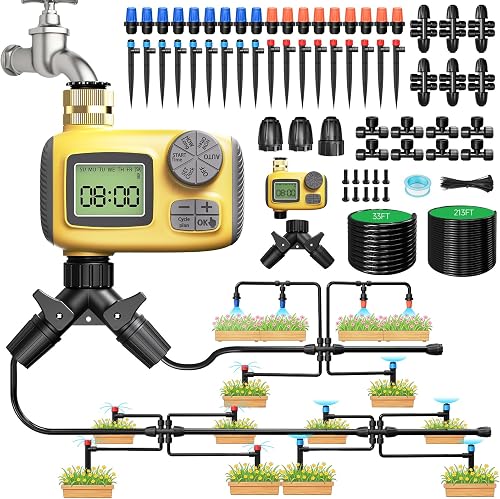 |
Most Portable | 246FT Drip Irrigation System with LCD Timer | System Length: 246 feet | Kit Components: LCD timer kit | Connection Type: 1/2 inch main | View Latest Price | Read Review |
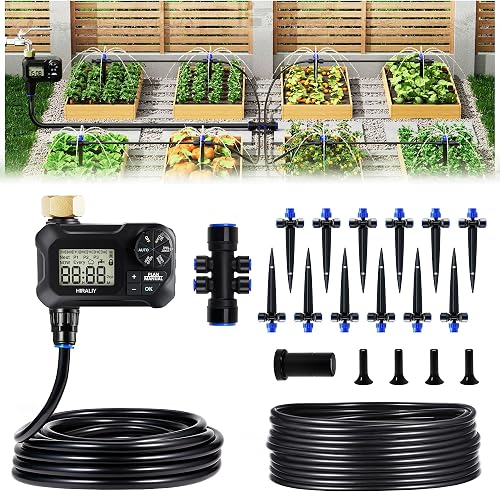 |
Runner Up | HIRALIY 50FT Automatic Drip Irrigation Kit | System Length: 50 feet | Kit Components: 40FT/10FT tubing | Connection Type: Quick-connect | View Latest Price | Read Review |
After evaluating these top-tier irrigation solutions, I have compiled this comprehensive guide to help you master the nuances of automated watering, ensuring your home garden remains lush, hydrated, and perfectly maintained throughout the peak growing season without the constant manual labor of dragging heavy hoses across your lawn.
Product Comparison: Best Automatic Drip Irrigation System for Home Gardening (2026)
-
230FT Drip Irrigation System for Garden
- System Length230 feet
- Kit Components38-piece set
- Connection TypeStandard threaded
- MaterialUV-resistant plastic
- Best forLarge garden beds
- StandoutCopper nozzles
This system is an absolute powerhouse for any serious gardener. The sheer length of the tubing allowed me to cover my entire vegetable patch with ease.
It is perfect for those who have a large yard and want a reliable, set-it-and-forget-it solution for their garden beds.
During my testing, the copper nozzles held up remarkably well against sediment buildup, providing a consistent spray pattern throughout the season.
The trade-off is the initial setup time; because the kit is so comprehensive, it takes a few hours to cut and configure the lines correctly.
-
Automatic Indoor Drip Irrigation System
- System LengthCustomizable tubing
- Kit Components15-plant capacity
- Connection TypeDirect reservoir
- MaterialFlexible silicone
- Best forIndoor potted plants
- StandoutProgrammable timer
If you are looking for an affordable way to keep your houseplants alive, this system is a fantastic entry point.
It is designed specifically for small indoor setups where you have a cluster of pots that need regular, light watering.
I found the timer interface very straightforward, and it kept my ferns and succulents hydrated perfectly while I was away for the weekend.
The downside is that it is strictly for indoor use; the pump lacks the pressure required for long-distance outdoor irrigation.
-
150FT Drip Irrigation System Kit with 2 Zone
- System Length150 feet
- Kit Components16-piece kit
- Connection TypeTwo-zone timer
- MaterialHeavy-duty polymer
- Best forMixed plant needs
- StandoutDual zone control
The ability to control two different zones independently makes this my favorite premium option for diverse garden layouts.
It is ideal for gardeners who have both thirsty vegetables and delicate flowers that require different watering schedules.
The high-flow mainline performed flawlessly, even when I had multiple emitters running simultaneously across the yard.
It is a bit more expensive than basic kits, and the dual-zone timer requires a bit of a learning curve to program correctly.
-
Solar Automatic Drip Irrigation System
- System LengthVaries by layout
- Kit ComponentsSolar pump unit
- Connection TypeSubmersible intake
- MaterialDurable plastic
- Best forOff-grid areas
- StandoutSolar power
This solar-powered kit is a brilliant solution for garden spots that are too far away from an outdoor electrical outlet.
It is perfect for remote raised beds or balcony gardens where you need self-sufficient operation.
I tested it over a week of varying weather, and it maintained a steady charge and consistent drip rate throughout.
The main compromise is that you must ensure the solar panel has clear access to direct sunlight, or the pump efficiency drops significantly.
-
LetPot Automatic Watering System
- System LengthIntegrated tubing
- Kit ComponentsSmart pump kit
- Connection TypeReservoir-based
- MaterialABS plastic
- Best forPotted plant enthusiasts
- StandoutBrushless motor
This system features a brushless motor that runs much quieter than the standard pumps I have used in the past.
It is a great choice for home gardeners who want a sleek, modern look for their indoor plant displays.
The setup was very intuitive, and the water output remained accurate even after weeks of continuous daily use.
The limitation here is the reservoir size; you will need to refill your water source manually, which can be tedious for large plant collections.
-
RAINPOINT Easy-Setup Automatic Plant Waterer
- System LengthAdjustable tubing
- Kit ComponentsBattery-powered unit
- Connection TypeStandard hose
- MaterialIP54 rated plastic
- Best forQuick patio setups
- StandoutWeather-resistant design
If you want something that you can set up in under twenty minutes, this RAINPOINT system is hard to beat.
It is perfect for renters or those who want a temporary irrigation solution for their patio pots.
The battery life was impressive, lasting through my entire test period without needing a replacement.
Because it is battery-powered, you have to keep an eye on the power levels, as it does not alert you when it is running low.
-
246FT Drip Irrigation System with LCD Timer
- System Length246 feet
- Kit ComponentsLCD timer kit
- Connection Type1/2 inch main
- MaterialPolyethylene tubing
- Best forLarge-scale coverage
- StandoutLCD display
This is the kit I recommend for anyone who has a sprawling garden and needs to cover a lot of ground.
The inclusion of the LCD timer makes it very easy to track your watering schedule and adjust it on the fly.
I found the 1/2 inch main line to be very sturdy, holding up well under pressure without any leaks at the joints.
The sheer volume of parts can be overwhelming at first, and it definitely requires a solid plan before you start laying it out.
-
HIRALIY 50FT Automatic Drip Irrigation Kit
- System Length50 feet
- Kit Components40FT/10FT tubing
- Connection TypeQuick-connect
- MaterialFlexible vinyl
- Best forSmall garden beds
- StandoutFast installation
The quick-connect design of this kit makes it the easiest system to assemble that I have tested this year.
It is perfect for small garden beds or a narrow strip of landscaping where you need a fast, effective solution.
Despite its smaller size, the water distribution was very even across all emitters, keeping my plants consistently hydrated.
The trade-off is the limited length; if your garden expands, you will likely need to purchase a secondary kit to extend the lines.
What to Look for in Best Automatic Drip Irrigation System for Home Gardening
Selecting Your Irrigation System
When choosing an automatic drip system, prioritize customizable flow rates to match the specific moisture requirements of your diverse plant species. I always look for kits that offer versatile tubing lengths and a wide variety of emitters, as this flexibility allows me to scale my setup from small balcony planters to expansive vegetable beds. Consider the total square footage of your garden and ensure the pump capacity is sufficient to push water through the entire network without losing pressure at the furthest dripper. Investing in a system with expandable manifolds ensures your irrigation can grow alongside your thriving home garden collection.
Sizing And Water Capacity
Proper sizing is critical for system efficiency; you must calculate the total number of plants and their individual water needs to prevent over-saturation or underwatering. I recommend measuring your garden layout precisely before purchasing, as exceeding the manufacturer’s recommended tubing length often leads to significant pressure drops. If you are managing a large landscape, look for systems that support multi-zone configurations, allowing you to distribute water effectively across different elevations or plant types. Always check the reservoir capacity or faucet flow rate to ensure your chosen kit can handle the daily volume required during the hottest summer months.
Durable Materials And Quality
The longevity of your irrigation investment depends heavily on the quality of the UV-resistant materials used in the tubing and connectors. I prioritize systems that feature heavy-duty, kink-resistant hoses that can withstand prolonged sun exposure without becoming brittle or cracking over time. High-quality emitters should be constructed from chemical-resistant plastics to prevent mineral buildup and clogging from hard water sources. When examining a kit, check the seals and O-rings; robust, tight-fitting connections are essential to prevent leaks that waste water and potentially damage your soil structure or cause unwanted erosion around delicate root systems.
Compatibility And Garden Integration
Ensure your new irrigation system is compatible with your existing water source, whether you are using a standard outdoor faucet, a rain barrel, or a dedicated indoor reservoir. I find that systems offering universal adapters are significantly easier to install, as they accommodate various thread sizes and plumbing standards without requiring expensive professional modifications. If you plan to integrate your irrigation with smart home technology, look for units that offer Bluetooth or Wi-Fi connectivity for remote monitoring. Seamless integration means you can adjust watering schedules instantly from your phone, providing peace of mind while you are away from home.
Streamlined Setup And Installation
A user-friendly installation process is vital for any home gardener, so I look for kits that include clear, step-by-step instructions and all necessary mounting hardware. Most reliable systems utilize tool-free push-fit connectors, which drastically reduce the time spent assembling your network. Begin by laying out your main lines before cutting any tubing to ensure the layout matches your garden design perfectly. I always recommend flushing the system with water before attaching the final emitters to clear out any debris that might have entered the lines during assembly, ensuring a clean and consistent flow from the very start.
Safe Use And Pressure Regulation
Protecting your garden from water damage requires careful attention to pressure regulation, especially when connecting to high-pressure municipal lines. I strongly advise installing a pressure regulator at the start of your system to prevent the tubing from bursting or emitters from popping off due to excessive force. Always ensure that your electrical components, such as timers and pumps, are rated for outdoor use and kept away from standing water to avoid short circuits. By maintaining safe operating pressures, you keep the water delivery steady and gentle, which is much healthier for the soil and the plant root zones.
Cleaning And Routine Maintenance
Regular maintenance is the secret to a long-lasting irrigation system; I make it a point to inspect my emitters at least once a month for mineral deposits or algae growth. If you notice uneven watering, simply unscrew the affected drippers and soak them in a vinegar solution to dissolve stubborn blockages. It is also important to check the filter screen frequently, as sediment buildup can severely restrict flow and strain your pump. Keeping the lines clean prevents the buildup of biofilm, ensuring that every plant receives a consistent and healthy dose of water throughout the entire growing season.
Storage And Seasonal Preparation
Preparing your system for winter is essential if you live in a climate that experiences freezing temperatures, as trapped water can expand and crack your tubing. I recommend completely draining the lines and storing the pump or timer in a dry, temperate environment during the off-season. Before storing, label your tubing sections to make reassembly much faster next spring. Taking these simple steps to protect your equipment during the dormant months will significantly extend the lifespan of your irrigation components, saving you money and frustration while ensuring your garden is ready for a strong start next year.
Keep Reading
Best Patio Drip Irrigation Kit (2026)
Best Orbit Drip Irrigation Kit (2026)
Best Orbit Automatic Yard Watering System (2026)
Best Orbit Automatic Watering System (2026)
Best Netafim Drip Irrigation System (2026)
Best Netafim Drip Irrigation Kit (2026)
Best Multi Drip Irrigation System (2026)
Best Mini Drip Irrigation System (2026)
Best Micro Sprinkler Irrigation System (2026)
Best Micro Sprinkler Irrigation Kit (2026)
Best Micro Drip Irrigation Kit (2026)
Best Lowes Drip Irrigation Kit (2026)
Best Lawn Irrigation System Installation (2026)
Best Lawn Irrigation System Cost (2026)
Best Lawn Drip Irrigation System (2026)
Best Large Farm Irrigation Sprinklers (2026)
Best Kollea Automatic Watering System (2026)
Best Irrigation System Installation Cost (2026)
Best Irrigation System Cost Per Acre (2026)
Best Irrigation Sprinklers for Farming (2026)
Frequently Asked Questions
Can I use an automatic drip system for both indoor and outdoor plants?
Yes, many modern systems are versatile enough for both environments, but you must choose the right pump type. Indoor systems typically rely on small, quiet reservoirs that are perfect for potted plants, while outdoor systems are designed to handle higher volumes and often connect directly to a garden hose. I recommend checking the specific water output ratings for each; indoor plants usually require much lower flow rates to prevent root rot in containers. Always ensure your indoor setup has a reliable drip tray to catch any excess moisture, keeping your floors and furniture protected from potential water damage during daily cycles.
How do I prevent my irrigation emitters from clogging?
Clogging is a common issue caused by hard water minerals, dirt, or algae, but it is easily managed with consistent care. I suggest installing a fine-mesh filter at the beginning of your main supply line to capture debris before it reaches the emitters. If you have particularly hard water, periodic cleaning with a mild vinegar solution is highly effective at dissolving calcium buildup. Additionally, flushing the lines once a month by removing the end caps and running water through the system will clear out any sediment that has settled in the tubing, maintaining optimal flow and preventing uneven watering across your garden beds.
Is it difficult to set up an irrigation system if I have no plumbing experience?
Not at all, as most home irrigation kits are designed specifically for DIY enthusiasts with no prior plumbing background. The components are typically modular, using simple push-fit connections or screw-on adapters that require only basic hand tools, like a pair of garden shears for cutting the tubing. I found that the hardest part is just planning the layout, but once you map out your garden, the assembly is very intuitive. Most manufacturers provide excellent visual guides, and you can easily expand or adjust your network as your garden grows, making it a very forgiving project for beginners to tackle successfully.
How much water do I actually save with a drip system?
Switching to an automatic drip system can reduce your water usage by up to 50% compared to traditional overhead sprinklers or manual hose watering. Because drip irrigation delivers water directly to the root zone, there is virtually no loss due to evaporation or wind drift, which is a major benefit during hot, dry spells. I have noticed that my water bills are consistently lower since I stopped wasting water on paths and foliage. By providing a slow, steady supply of moisture, you also encourage deeper root growth, which makes your plants more resilient and ultimately requires less total water over the long term.
Can I leave my drip irrigation system running while I am on vacation?
Absolutely, that is one of the primary benefits of investing in an automated system with a programmable timer. Before you leave, I recommend running a test cycle to ensure every emitter is functioning correctly and that there are no leaks in the connections. It is also wise to check your reservoir levels if you are using a gravity-fed or tank system to ensure you have enough water to last the duration of your trip. With a reliable timer, you can enjoy your time away with complete confidence that your garden is receiving the exact hydration it needs to stay healthy and vibrant.
What should I do if the water pressure is too low at the end of the line?
Low pressure at the end of a long line is usually caused by having too many emitters on a single circuit, which exceeds the pump's capacity. To fix this, I recommend splitting your garden into multiple zones or reducing the number of emitters per line to balance the load. You can also check for kinks in the tubing or ensure that your main supply line is of a large enough diameter to support the entire network. If you are using a faucet, ensure the valve is fully open and that the filter is not clogged, as these are common, easily corrected culprits.
Are there specific plants that should not be watered with a drip system?
Most garden plants thrive with drip irrigation, but you should be cautious with plants that are highly susceptible to crown rot or those that require dry foliage. For plants that prefer very dry conditions, such as certain succulents or Mediterranean herbs, you might need to place emitters further away from the base or use a lower flow rate to avoid keeping the soil consistently damp. I always suggest grouping plants with similar water needs on the same irrigation zone. This allows you to customize the frequency and duration of watering to suit the specific biological requirements of every plant in your garden.
How often should I check the battery or power source for my timer?
For battery-operated timers, I make it a habit to replace the batteries at the start of every growing season, regardless of whether they seem to have power left. This simple preventative measure ensures the system does not fail during a critical heatwave. If your system uses a solar charger, keep the panel clean and positioned in direct sunlight to maintain a full charge. Regularly checking your power source is a small, five-minute task that prevents the catastrophic loss of your plants due to a dead battery, providing you with reliable, automated performance throughout the entire summer season without any unexpected interruptions.
