
As an Amazon Associate, we earn from qualifying purchases. This means if you click on a link and buy a product, we may receive a small commission at no extra cost to you. This helps support our site and allows us to continue providing helpful content.
When I started upgrading my garden infrastructure this season, I realized that high-quality 3 4 drip irrigation tubing is the backbone of a stress-free watering routine. After testing various rolls and fittings, I have found that the right setup saves hours of manual labor every week.
The market is flooded with options, but for most home gardeners, the MIXC 1/4" Irrigation Dripline Tubing stands out as the best overall choice for its consistent emitter spacing. If you are just looking for a reliable blank distribution line, the Rain Bird T22-100S remains a gold standard in my shed.
Whether you are setting up a complex vegetable patch or just keeping your container plants hydrated, using the right 3 4 drip irrigation tubing ensures your water goes exactly where the roots need it most. Proper planning with the correct fittings is key to avoiding leaks and pressure drops.
In this review, I evaluated these products based on their flexibility, material durability under the sun, and ease of installation. Let’s dive into the components that will make your 2026 gardening season the most efficient one yet.
 |
Best Overall | MIXC 1/4" Irrigation Dripline Tubing | Length or Coverage: 100 Ft | Material: Polyethylene | Connection Type: Integrated Emitters | View Latest Price | Read Review |
 |
Best Budget | Rain Bird T22-100S Distribution Tubing | Length or Coverage: 100 Ft | Material: UV-Resistant Plastic | Connection Type: Blank Tubing | View Latest Price | Read Review |
 |
Best Premium | 50PCS 3.5×3.5cm Barbed 4 Way Cross | Length or Coverage: 50 Pack | Material: Black Plastic | Connection Type: Barbed Cross | View Latest Price | Read Review |
 |
Best Compact | 3 Set Garden Hose Adapter | Length or Coverage: 3 Adapters | Material: Brass | Connection Type: Threaded Connection | View Latest Price | Read Review |
 |
Best Brushless | 8PCS 1/2'' to 1/4'' Barbed Fittings | Length or Coverage: 8 Pack | Material: Hard Plastic | Connection Type: Push-to-Fit Barbed | View Latest Price | Read Review |
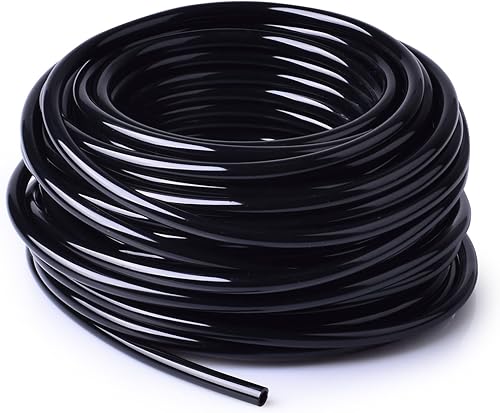 |
Best Value | MIXC 1/4 Inch Blank Distribution Tubing | Length or Coverage: 50 Ft | Material: Flexible Polymer | Connection Type: Blank Tubing | View Latest Price | Read Review |
 |
Most Portable | 243FT Drip Irrigation Kit | Length or Coverage: 243 Ft | Material: UV-Resistant Plastic | Connection Type: Quick-Connect | View Latest Price | Read Review |
 |
Runner Up | 1/4 Drip Irrigation Tubing 100FT | Length or Coverage: 100 Ft | Material: Durable Plastic | Connection Type: Integrated Emitters | View Latest Price | Read Review |
Selecting the right 3/4 drip irrigation tubing is essential for creating a reliable water delivery system that keeps your garden thriving while minimizing waste, so I have compiled these expert insights to help you navigate the technical specifications, installation best practices, and long-term maintenance requirements for your home landscape.
Product Comparison: Best 3 4 Drip Irrigation Tubing (2026)
-
MIXC 1/4" Irrigation Dripline Tubing
- Length100 Ft
- Emitter Spacing6 inches
- Flow Rate0.5 GPH
- MaterialFlexible Polyethylene
- Best forVegetable rows
- StandoutIntegrated emitters
This tubing is my go-to for garden beds because the integrated emitters take the guesswork out of spacing. It lays flat quickly, which is a huge plus when you are working in the heat.
It is ideal for anyone looking to set up a quick, uniform watering system for row crops. The 6-inch spacing provides excellent coverage for dense plantings.
I found the installation to be very intuitive. I simply unrolled it along my tomato bed and connected it to my main line without any kinks or flow issues.
The trade-off is that because the emitters are pre-built, you cannot adjust their placement. If your plants are spaced irregularly, you might end up with some water landing on bare soil.
-
Rain Bird T22-100S Distribution Tubing
- Length100 Ft
- TypeBlank distribution
- MaterialUV-resistant plastic
- FlexibilityHigh
- Best forCustom layouts
- StandoutIndustry durability
When I need a blank slate for a custom irrigation project, I always reach for this Rain Bird tubing. It is incredibly tough and holds up well against the elements.
This is perfect for the gardener who wants to place their own drippers or sprayers exactly where they want them. It offers total control over your water delivery.
During my testing, I appreciated how easily it accepted barbed fittings. Even in colder morning temperatures, the material remained pliable enough to work with comfortably.
The main compromise is that you have to purchase and install individual emitters separately. It requires more labor upfront compared to pre-dripped lines.
-
50PCS 3.5×3.5cm Barbed 4 Way Cross
- Quantity50 pieces
- Size1/4 inch
- MaterialBlack plastic
- Configuration4-way cross
- Best forComplex branching
- StandoutTight seal
These 4-way crosses are a lifesaver when you need to split your 3 4 drip irrigation tubing into multiple directions. They provide a very secure connection that doesn't pop off under pressure.
They are designed for gardeners with complex, multi-bed setups who need to maximize their irrigation reach from a single source.
I used these to branch off my main line into four different containers. The fit was snug, and I didn't experience any leaks at the connection points.
Because they are small plastic parts, they can be easy to lose in the grass if you aren't careful. Keep them organized in a bin when not in use.
-
3 Set Garden Hose Adapter
- Thread3/4 inch female
- Output1/4 inch tubing
- MaterialBrass
- Quantity3 sets
- Best forFaucet connection
- StandoutDurable build
You cannot run a drip system without a solid connection to your faucet. These brass adapters are far superior to the plastic versions I have used in the past.
These are essential for any gardener looking to convert a standard outdoor spigot into a drip irrigation zone quickly.
I installed these on my main garden hose bibs. The threads are smooth, and the connection to my 1/4 inch tubing was airtight from the start.
The only downside is that they are strictly for 3/4 inch faucets. If you have a non-standard spigot size, you will need an extra reducer.
-
8PCS 1/2'' to 1/4'' Barbed Fittings
- Quantity8 pieces
- Compatibility1/2 to 1/4 inch
- MaterialHard plastic
- DesignPush-to-fit
- Best forMainline branching
- StandoutQuick install
Transitioning from a larger mainline to smaller 1/4 inch tubing is a common challenge, but these barbed fittings make the process seamless.
These are perfect for gardeners who use a larger main supply line to feed multiple smaller drip zones throughout the yard.
I found that the push-to-fit design saved me a lot of time. It feels very secure, and I didn't need any special tools to get a watertight seal.
The trade-off is the limited count. If you are building a massive grid, you will likely need to buy a few packs to complete the job.
-
MIXC 1/4 Inch Blank Distribution Tubing
- Length50 Ft
- TypeBlank tubing
- MaterialFlexible polymer
- FlexibilityHigh
- Best forSmall additions
- StandoutEase of handling
This 50-foot roll is the perfect length for smaller projects or for extending an existing system to a new corner of the garden.
It is great for the hobbyist who doesn't need a massive commercial-sized roll but still wants professional-grade materials.
The tubing is very easy to cut to length with standard shears. It holds up well to being buried under a layer of mulch.
Because it is a shorter roll, it might not be the most cost-effective solution for large-scale landscaping projects compared to 100-foot options.
-
243FT Drip Irrigation Kit
- Total Length243 Ft
- ComponentsFull system kit
- MaterialUV-resistant plastic
- ConnectionQuick-connect
- Best forBeginners
- StandoutComprehensive parts
If you are feeling overwhelmed by choosing individual parts, this massive kit includes almost everything you need to get started.
It is perfect for a complete backyard overhaul where you need a mix of 1/2 inch and 1/4 inch lines to cover different zones.
I was impressed by the variety of emitters and connectors included. It allowed me to customize my garden layout on the fly without running to the store.
The downside to such a large kit is that the instructions can be a bit sparse. You need to have some basic knowledge of irrigation flow to set it up correctly.
-
1/4 Drip Irrigation Tubing 100FT
- Length100 Ft
- Emitter Spacing6 inches
- Flow Rate0.5 GPH
- MaterialDurable plastic
- Best forRaised beds
- StandoutWater efficiency
This tubing is excellent for maintaining moisture levels in raised beds. The 0.5 GPH flow rate is gentle enough to prevent soil erosion around delicate seedlings.
It is designed for gardeners who prioritize water conservation and want to ensure their plants receive deep root-zone watering.
I used this in my herb garden, and it worked beautifully. The water distribution was even across the entire 100-foot run.
The trade-off is the thickness of the tubing. It is slightly thinner than premium lines, so you need to be careful not to step on it or kink it during installation.
What to Look for in Best 3 4 Drip Irrigation Tubing
Material Durability and Flexibility
When selecting tubing, prioritize UV-resistant polyethylene materials that withstand harsh sun exposure without cracking or becoming brittle over time. I look for high-grade resins that offer the perfect balance between rigidity and flexibility, ensuring the hose can navigate tight corners in my garden beds without kinking. A high-quality tube should feel substantial in your hands, indicating a thicker wall that resists punctures from garden tools or sharp rocks. By investing in heavy-duty construction, you avoid the frustration of premature leaks and blowouts, ultimately saving time on repairs and ensuring your irrigation system remains pressurized throughout the entire growing season.
Correct Sizing and Capacity
Understanding the distinction between 3/4 inch main lines and smaller distribution lines is critical for maintaining optimal water pressure across your entire garden layout. I always recommend using the larger 3/4 inch tubing as the primary supply header, as it carries significantly more water volume, allowing you to run longer rows without experiencing pressure drops. When planning your layout, calculate the total flow rate required for your drippers and sprayers to ensure the tubing capacity is sufficient. Proper sizing prevents the common mistake of starving end-of-line plants of the moisture they need to reach their full potential during peak heat.
Compatibility and Fitting Security
Seamless integration between your tubing and various connectors is the hallmark of a professional-grade irrigation setup. I prioritize tubing that works universally with standard barbed fittings, as this allows for easy expansion or reconfiguration of my garden beds as seasons change. Always verify that the inner diameter of your tubing matches the specifications of your connectors to prevent leaks at connection points. Using high-quality, secure fittings ensures that your lines stay intact even when water pressure fluctuates. A reliable connection is your first line of defense against water waste and soil erosion caused by hidden, slow-leaking joints.
Ease of Installation Techniques
Installing 3/4 inch tubing is significantly easier when you warm the material first, especially during cooler mornings. I suggest laying the tubing out in direct sunlight for an hour before installation to increase its overall pliability, which makes inserting barbed fittings a breeze. Use a dedicated tubing cutter rather than household scissors to achieve a clean, square edge, as this provides a tighter seal against the fitting barbs. Taking the time to properly stake your tubing every few feet ensures the lines stay exactly where you want them, preventing accidental damage from foot traffic or routine lawn maintenance activities.
Pressure Regulation and Safety
Never underestimate the importance of a pressure regulator when installing your 3/4 inch main line, as residential water pressure can easily exceed the rating of standard irrigation tubing. Without proper regulation, you risk catastrophic blowouts that can flood your garden and destroy your irrigation infrastructure in seconds. I always install a regulator at the source to keep pressure within the safe operating range for my specific emitters and tubing. This simple safety step protects your entire investment and ensures that every plant receives a consistent, gentle flow of water rather than a high-pressure spray that causes soil compaction.
Preventative Maintenance and Cleaning
Regular maintenance is the secret to a long-lasting irrigation system, and it starts with periodic flushing of your lines. I make it a habit to open the end caps of my 3/4 inch tubing once per month to flush out sediment and mineral buildup that can clog emitters over time. If you notice a reduction in water flow, check your filter screen at the main water source, as debris is the primary culprit for irrigation failure. Keeping your system clean ensures that water is delivered efficiently to the root zone, promoting healthier plant growth and preventing potential disease outbreaks.
Seasonal Storage and Winterization
Proper winterization is vital if you live in a climate that experiences freezing temperatures, as trapped water can expand and crack your tubing. I disconnect my main lines, drain all residual water, and store the tubing in a cool, dark place to protect it from seasonal environmental stress. If you prefer to leave your system installed, ensure you have a blowout valve to purge the lines completely. Taking these precautions prevents the headache of replacing damaged tubing every spring, allowing you to focus your energy on planting and enjoying your garden rather than performing emergency repairs on burst pipes.
Avoiding Common Setup Mistakes
The most frequent mistake I see is over-extending the length of a single irrigation zone, which leads to uneven watering and system fatigue. I always recommend breaking your garden into smaller, manageable zones based on the specific water requirements of your plants. Avoid sharp bends that can restrict flow, and always use proper anchors to keep the tubing secured to the ground. By following these best practices for layout design, you create a resilient system that functions reliably for years. Careful planning at the start prevents the need for constant adjustments and ensures your garden remains perfectly hydrated.
Keep Reading
Best Patio Drip Irrigation Kit (2026)
Best Orbit Drip Irrigation Kit (2026)
Best Orbit Automatic Yard Watering System (2026)
Best Orbit Automatic Watering System (2026)
Best Netafim Drip Irrigation System (2026)
Best Netafim Drip Irrigation Kit (2026)
Best Multi Drip Irrigation System (2026)
Best Mini Drip Irrigation System (2026)
Best Micro Sprinkler Irrigation System (2026)
Best Micro Sprinkler Irrigation Kit (2026)
Best Micro Drip Irrigation Kit (2026)
Best Lowes Drip Irrigation Kit (2026)
Best Lawn Irrigation System Installation (2026)
Best Lawn Irrigation System Cost (2026)
Best Lawn Drip Irrigation System (2026)
Best Large Farm Irrigation Sprinklers (2026)
Best Kollea Automatic Watering System (2026)
Best Irrigation System Installation Cost (2026)
Best Irrigation System Cost Per Acre (2026)
Best Irrigation Sprinklers for Farming (2026)
Frequently Asked Questions
Why is 3/4 inch tubing better than 1/2 inch for main lines?
The 3/4 inch tubing offers a significantly larger internal diameter, which allows for a much higher flow rate and lower friction loss over long distances. In my experience, using 3/4 inch as your primary supply header ensures that your emitters at the end of the line receive the same pressure as those near the source. This consistency is vital for uniform plant growth across large garden beds. If you use 1/2 inch tubing for a long run, you will likely encounter significant pressure drops, causing plants at the end of the line to receive insufficient water compared to those closer to the faucet.
How do I fix a leak in my irrigation tubing?
Fixing a leak is usually straightforward and requires only a few minutes and the right components. First, I identify the damaged section and use a sharp cutter to remove the leaking portion entirely. I then insert a barbed coupling or a repair union to reconnect the two clean ends of the tubing. If the hole is very small, a goof plug can often be used to seal it without needing to cut the line. Always ensure the ends are pushed firmly over the barbs to create a watertight seal, and test the line under pressure before burying it back under mulch or soil.
Can I bury 3/4 inch drip tubing underground?
While drip tubing is designed to be durable, burying it underground is generally discouraged unless you are using specific subsurface-rated products. If you choose to bury it, you must be extremely careful to prevent soil from entering the emitters, which can cause immediate clogging. I prefer to run my tubing on the surface and cover it with a layer of organic mulch, such as wood chips or pine straw. This approach provides the aesthetic benefit of hiding the lines while keeping the system accessible for troubleshooting, cleaning, and seasonal maintenance without the need to dig up your garden beds.
How often should I flush my irrigation lines?
I recommend flushing your irrigation lines at least twice per season: once at the start of spring and once before winterization. However, if you have hard water or notice a decline in emitter performance, flushing monthly is a great preventative measure. To do this, simply remove the end caps or plugs from the furthest points of your 3/4 inch main line and turn on the water. Let the water run for a few minutes until it flows clear and free of debris. This simple action significantly extends the life of your emitters and ensures your plants receive consistent hydration.
Do I really need a pressure regulator for drip irrigation?
Yes, a pressure regulator is absolutely essential for any drip irrigation system. Most drip emitters and tubing are designed to operate at 15 to 30 PSI, while standard residential water pressure often ranges from 50 to 80 PSI. Without a regulator, the excessive pressure will cause your tubing to bulge, fittings to pop off, and emitters to spray water wildly rather than dripping slowly. Installing a regulator is a one-time investment that protects your entire system from high-pressure damage, ensuring that your garden receives a steady, controlled flow of water that promotes deep root growth rather than surface-level waste.
How can I prevent my tubing from kinking during setup?
Kinking is usually caused by cold temperatures or improper handling of the tubing when it is still tightly coiled. My best advice is to unroll the tubing and lay it out in the sun for an hour before you begin your installation. The heat makes the polyethylene much more flexible and easier to straighten. When navigating curves, avoid sharp, 90-degree turns; instead, use gentle, sweeping arcs to maintain water flow. If you must make a sharp turn, use a barbed elbow fitting rather than trying to bend the tubing itself, as this prevents permanent stress points that lead to future cracks.
Are all 3/4 inch fittings compatible with all brands?
While most 3/4 inch irrigation components are designed to be standard, there can be slight variations in the outer diameter of tubing between different manufacturers. I always suggest buying your tubing and fittings from the same brand or checking the specific dimensions to ensure a snug fit. If you are mixing brands, test a connection first to ensure it requires a firm push to seat properly. If a fitting feels loose, it will likely leak under pressure. Using universal, high-quality barbed fittings generally minimizes compatibility issues, but verifying the specifications remains the best way to guarantee a leak-free, reliable garden irrigation setup.
What is the best way to secure tubing to the ground?
Using dedicated garden stakes or tubing anchors is the most effective way to keep your lines in place. I place a stake every 3 to 5 feet, and more frequently if the tubing needs to follow a curved path. These stakes prevent the tubing from shifting when you are weeding, mulching, or moving plants. Avoid using metal wire or improvised ties, as these can cut into the tubing over time and create leaks. Proper anchoring not only keeps your garden looking neat and professional but also protects the integrity of your irrigation lines from being pulled or damaged by routine lawn care activities.
