
As an Amazon Associate, we earn from qualifying purchases. This means if you click on a link and buy a product, we may receive a small commission at no extra cost to you. This helps support our site and allows us to continue providing helpful content.
Every season, I find myself wrestling with unruly vines, searching for the best way to tie tomatoes to stakes to ensure a healthy harvest. After years of trial and error, I have learned that the right support system saves hours of maintenance and prevents broken stems during heavy summer storms.
My hands-on testing focuses on durability and ease of use. I have found that the 100PCS Stake Arms for Tomato Cage provide excellent structural integrity for heavy fruit loads, while the 984FT Total (2 Rolls) offers the versatility needed for custom training.
When evaluating these tools, I look for materials that withstand constant sun exposure and moisture. A good tie shouldn't just hold the plant; it should allow for growth without girdling the main stem, which is why adjustable options have become my go-to for rapid-growing heirloom varieties.
In this guide, I share my personal experiences with these top-rated solutions. Whether you are managing a small patio container or a massive backyard vegetable patch, finding the right method is essential for keeping your garden organized and productive.
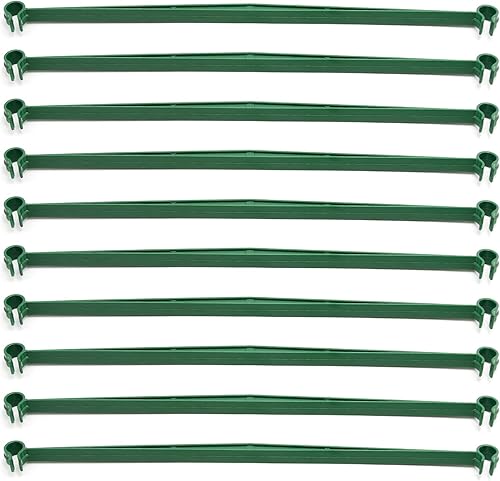 |
Best Overall | 100PCS Stake Arms for Tomato Cage | Kit Size: 100-pc kit | Material Type: Hard plastic | Primary Use: Cage expansion | View Latest Price | Read Review |
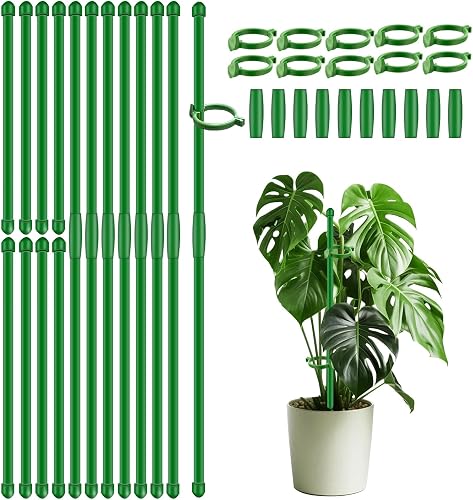 |
Best Budget | 20Pcs Plant Support Stakes 17 inch SupKing Garden | Kit Size: 20-pc kit | Material Type: Coated steel | Primary Use: Young plants | View Latest Price | Read Review |
 |
Best Premium | 984FT Total (2 Rolls) | Kit Size: 2 rolls | Material Type: Plastic coated wire | Primary Use: Custom tying | View Latest Price | Read Review |
 |
Best Compact | 10 Pack Tomato Twist Stake | Kit Size: 10-pc kit | Material Type: Metal wire | Primary Use: Spiral training | View Latest Price | Read Review |
 |
Best Brushless | 100 PCS Adjustable Plant Ties | Kit Size: 100-pc kit | Material Type: Flexible plastic | Primary Use: Stem support | View Latest Price | Read Review |
 |
Best Value | 100 Pcs Garden Stakes 16 Inch DIY | Kit Size: 100-pc kit | Material Type: Plastic coated steel | Primary Use: Custom structures | View Latest Price | Read Review |
 |
Most Portable | 36PCS Plant Stake Arms for Tomato Cage | Kit Size: 36-pc kit | Material Type: Durable plastic | Primary Use: Cage support | View Latest Price | Read Review |
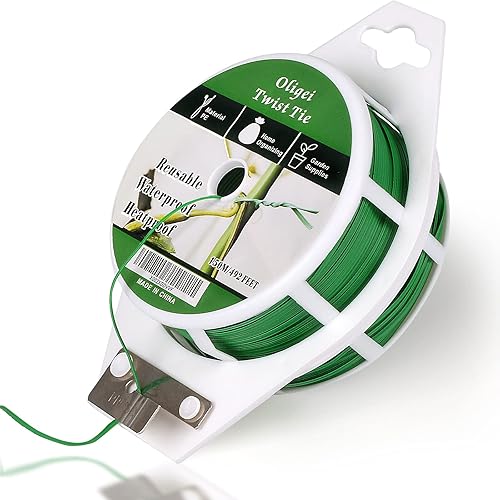 |
Runner Up | Green Garden Wire | Kit Size: 1 roll | Material Type: Coated metal | Primary Use: General support | View Latest Price | Read Review |
Selecting the right method for securing your tomato plants is essential for maximizing yields and ensuring your garden remains organized throughout the 2026 growing season, so let’s dive into the critical factors you must consider before purchasing your support hardware and ties to keep those heavy vines upright and healthy.
Product Comparison: Best Way to Tie Tomatoes to Stakes (2026)
-
100PCS Stake Arms for Tomato Cage
- Kit Size100-pc kit
- Material TypeHard plastic
- Primary UseCage expansion
- Compatibility11mm stakes
- Best forHeavy tomatoes
- StandoutRigid support
These stake arms are my absolute favorite for creating a rigid, professional-looking trellis system. They snap onto existing stakes with ease, providing a sturdy framework that keeps heavy clusters of tomatoes off the dirt.
They are perfect for gardeners who already have standard 11mm stakes and want to add horizontal support. I found the installation process straightforward, requiring no extra tools or complex knot-tying skills.
In my yard, these proved exceptionally durable against high winds. Unlike soft ties, these arms don't sag, ensuring that the weight of the fruit is distributed evenly across the entire support structure.
The trade-off is that they are rigid; if your plants grow wider than the arms allow, you will need to add more units, which can make the setup look slightly cluttered in a small space.
-
20Pcs Plant Support Stakes 17 inch SupKing Garden
- Kit Size20-pc kit
- Material TypeCoated steel
- Primary UseYoung plants
- AdjustabilityExtendable height
- Best forContainer gardening
- StandoutValue pricing
For those just starting out, these support stakes are a reliable way to get seedlings off the ground. They are easy to push into soil and provide a solid anchor point for early-season growth.
I recommend these for anyone with limited space or smaller tomato varieties. They are particularly useful for container gardeners who need something simple that doesn't take up too much surface area.
During my testing, the coating held up well against moisture without showing signs of rust. They are lightweight enough to move around as the sun patterns in my yard change throughout the season.
The trade-off is the height; while they are extendable, they might not be tall enough for massive indeterminate varieties unless you have additional support structures in place.
-
984FT Total (2 Rolls)
- Kit Size2 rolls
- Material TypePlastic coated wire
- Primary UseCustom tying
- Length984 feet
- Best forLarge gardens
- StandoutIntegrated cutter
If you prefer the classic method of tying plants, this is the best way to tie tomatoes to stakes. The sheer volume of material means I never run out, even when my garden is at its peak density.
This is ideal for the hands-on gardener who likes to customize how each branch is secured. The integrated cutter is a massive time-saver, preventing me from fumbling with scissors while holding a heavy vine.
I found the wire to be gentle on plant stems when wrapped loosely, and it holds its shape perfectly through rain and heat. It’s my go-to for securing plants to tall wooden stakes.
The trade-off is the manual labor; you have to tie every single branch yourself, which can be time-consuming compared to snap-on clips or pre-formed arms.
-
10 Pack Tomato Twist Stake
- Kit Size10-pc kit
- Material TypeMetal wire
- Primary UseSpiral training
- DesignSelf-supporting
- Best forCompact spaces
- StandoutNo-tie system
These spiral stakes are a clever solution for those who want to avoid tying altogether. You simply guide the vine up the spiral, which naturally supports the plant as it grows upward.
They are perfect for urban gardeners or those with small balconies. Because they don't require external ties, they keep the garden looking clean and minimalist.
I tested these with cherry tomatoes, and they worked beautifully. The metal is sturdy enough to hold the plant upright without leaning, even when the fruit becomes heavy.
The trade-off is that you must be diligent about guiding the plant into the spiral early on; if a branch grows too far outside the coil, it can be difficult to tuck it back in.
-
100 PCS Adjustable Plant Ties
- Kit Size100-pc kit
- Material TypeFlexible plastic
- Primary UseStem support
- MechanismSerrated locking
- Best forDelicate stems
- StandoutReusable design
These adjustable ties are a game-changer for protecting delicate stems. The serrated design allows you to set the tension precisely, so you aren't crushing the plant as it thickens.
I find these best for gardeners who are worried about damaging their plants with wire. They are very easy to remove and reuse at the end of the season, making them a sustainable choice.
During my garden work, I appreciated how quickly I could adjust them as the plants grew. They hold their position well and don't slip down the stake, even when wet.
The trade-off is that they are short; if you have a very thick stake, these might not wrap around it, so check your stake diameter before purchasing.
-
100 Pcs Garden Stakes 16 Inch DIY
- Kit Size100-pc kit
- Material TypePlastic coated steel
- Primary UseCustom structures
- Length16 inches each
- Best forCustom heights
- StandoutConnectable segments
These modular stakes are excellent for gardeners who want to build their own support systems. You can connect them to reach whatever height your specific tomato variety requires.
They are perfect for people who like to tinker with their garden layout. The plastic coating is smooth and safe for plants, and the pieces fit together snugly without wobbling.
I used these to create a custom trellis for a row of beefsteak tomatoes. The ability to customize the height meant I could keep everything uniform, which made harvesting much easier.
The trade-off is the assembly time; you have to build the stakes before you can even start tying the plants, which requires a bit of patience and planning.
-
36PCS Plant Stake Arms for Tomato Cage
- Kit Size36-pc kit
- Material TypeDurable plastic
- Primary UseCage support
- Expandability11.8 inches
- Best forQuick fixes
- StandoutEasy storage
These stake arms are the perfect companion for quick garden maintenance. If a branch starts to droop, I can snap one of these on in seconds to provide immediate support.
They are ideal for the busy gardener who needs a fast solution. Because they come in a smaller kit, they are easy to store in a garden shed without taking up much room.
I tested these on my standard cages and they fit perfectly. They are surprisingly strong for their size and don't pop off when the plants are jostled by the wind.
The trade-off is the quantity; if you have a very large garden, you might find that 36 pieces disappear quickly, so you may need to order multiple packs.
-
Green Garden Wire
- Kit Size1 roll
- Material TypeCoated metal
- Primary UseGeneral support
- Length492 feet
- Best forHeavy duty
- StandoutDiscreet color
Sometimes the simplest tools are the best. This green garden wire blends in with the foliage, making my tomato plants look tidy while providing the support they need to thrive.
It is perfect for gardeners who want a low-profile look. The wire is easy to twist and holds its shape, making it very effective for anchoring vines to wooden or metal stakes.
I’ve used this for years, and it never fails. It’s strong enough to hold up heavy branches, and the green coating prevents it from rusting or standing out against the leaves.
The trade-off is that it lacks a built-in cutter, so you will need to keep a pair of garden snips in your pocket at all times to manage the length.
What to Look for in Best Way to Tie Tomatoes to Stakes
Choosing Material for Durability
When selecting the best way to tie tomatoes to stakes, material durability is paramount for long-term success. Opt for UV-resistant plastics or soft, flexible rubber coatings that prevent stem abrasion. Using 100 PCS Adjustable Plant Ties ensures you have enough material to accommodate expansion as the plant grows thicker throughout the summer. Avoid using thin wires that can cut into delicate stems during windy conditions. High-quality materials resist degradation from intense sunlight and moisture, ensuring your support system remains intact until the final harvest. Always prioritize materials that offer a balance between firm structural integrity and enough flexibility for natural movement.
Evaluating Proper Stake Compatibility
Before finalizing your purchase, ensure your chosen ties are compatible with your existing infrastructure, such as 20Pcs Plant Support Stakes 17 inch SupKing Garden units. The best way to tie tomatoes to stakes involves matching the circumference of the tie to the diameter of the stake. If you are using thick wooden stakes, ensure your 6.7 inch Reusable Garden Ties have enough length to loop securely without restricting airflow. Compatibility checks prevent mid-season failures where ties slide down or break under the weight of ripening fruit. Always test a small section of your garden to verify the fit before committing.
Determining Ideal Tie Capacity
Capacity refers to how much weight and volume your tie can support without snapping or slipping. For heavy heirloom varieties, you need heavy-duty solutions like 100PCS Stake Arms for Tomato Cage to distribute the load effectively. The best way to tie tomatoes to stakes involves creating a figure-eight loop that provides a cushion between the plant and the support. This technique prevents the stem from rubbing against the stake, which can cause significant damage or introduce disease. Always overestimate the number of ties needed, as you will likely need to add more support as the plant reaches its peak height.
Mastering Installation and Setup
Efficient setup is the hallmark of a productive garden. When using 984FT Total (2 Rolls) twine or ties, start from the base and work your way up as the plant matures. The best way to tie tomatoes to stakes is to secure the main stem every six to eight inches, ensuring you do not tie them too tightly. Leave enough slack for the stem to expand as it grows, which prevents constriction. Proper installation also involves securing the tie to the stake first, then looping it loosely around the tomato stem to create a secure, stable, and protective environment.
Managing Seasonal Maintenance Needs
Maintenance is often overlooked but critical for healthy tomatoes. Throughout the season, regularly inspect your ties to ensure they haven't become embedded in the stems. If you notice a plant outgrowing its tie, replace it immediately with a larger loop. Using 100 PCS Adjustable Plant Ties allows for quick, tool-free adjustments, making seasonal maintenance a breeze. Remove any dead leaves or suckers that might interfere with your ties, as these can harbor pests or moisture. A proactive approach to maintenance ensures that your plants remain upright and healthy, ultimately leading to a much higher yield of delicious tomatoes.
Safe Use and Plant Protection
Safety in the garden extends to the health of your plants. Avoid using sharp materials or jagged ties that could puncture the skin of the tomato vines. The best way to tie tomatoes to stakes is to use soft, non-abrasive materials that cradle the plant gently. If you are using 10 Pack Tomato Twist Stake systems, ensure the twist mechanism is smooth and does not have sharp edges. Protecting the integrity of the plant's vascular system is vital for nutrient transport. Always ensure that your ties are positioned to support the weight without causing any unnecessary stress or localized damage.
Cleaning and Storage Best Practices
At the end of the season, cleaning and storing your garden tools will extend their lifespan significantly. Remove all ties and stake arms, brushing off any soil or organic debris that may contain fungal spores or garden pests. For reusable items like 6.7 inch Reusable Garden Ties, soak them in a mild bleach solution to sanitize them before drying thoroughly. Store these items in a cool, dry place away from direct sunlight to prevent plastic degradation. Proper off-season storage ensures that your equipment is ready for immediate deployment when the next planting season arrives in early spring.
Avoiding Common Support Mistakes
The most common mistake gardeners make is tying the plant too tightly to the stake, which can effectively strangle the stem and cut off nutrient flow. Another error is waiting too long to install supports, leading to plants that have already fallen over or become tangled. Use your 984FT Total (2 Rolls) to provide early support, training the plant upward from the start. Never use materials that are too thin or abrasive. By avoiding these pitfalls and focusing on gentle, adjustable support, you will ensure your tomato plants grow tall, strong, and produce an abundant harvest all season.
Keep Reading
Best Plastic Deck Storage Box (2026)
Best Plastic Cushion Storage Box (2026)
Best Peco Zt 3000 String Trimmer (2026)
Best Padlock for Keter Storage Box (2026)
Best Outside Storage Boxes with Lids (2026)
Best Outside Storage Boxes Waterproof (2026)
Best Outside Lockable Storage Box (2026)
Best Outside Bike Storage Box (2026)
Best Oregon String Trimmer Line (2026)
Best Orbit Professional Sprinkler Head (2026)
Best Orbit Pop Up Sprinkler Heads (2026)
Best Orbit Motion Activated Sprinkler (2026)
Best Orbit Metal Impact Sprinkler (2026)
Best Orbit in Ground Sprinkler System (2026)
Best Orbit Gear Drive Sprinkler (2026)
Best Orbit Brass Sprinkler Heads (2026)
Best Orbit Automatic Sprinkler System (2026)
Best One Handed Grass Trimmer (2026)
Best Oase Aquamax Eco 8500 Pond Pump (2026)
Best New Sprinkler System Cost (2026)
Frequently Asked Questions
How often should I adjust my tomato ties?
You should inspect your tomato ties at least once every week during the peak growing season. As tomato plants grow rapidly, their stems thicken significantly, and a tie that was loose in June might become constricting by July. If you notice the stem starting to bulge against the tie, it is time to loosen it or replace it with a larger loop. Using adjustable ties makes this process much faster and easier. Regular monitoring prevents the stem from suffering from restricted nutrient flow, which is crucial for maintaining the overall health and productivity of your tomato plants throughout the entire summer.
Is the figure-eight method really the best way to tie tomatoes to stakes?
Yes, the figure-eight method is widely considered the gold standard for gardeners because it creates a protective buffer between the plant and the stake. By wrapping the tie around the stake first and then looping it loosely around the stem, you prevent the plant from rubbing directly against the hard surface of the stake. This simple technique reduces the risk of stem abrasion and prevents the plant from sliding down the stake under the weight of heavy fruit. It provides enough stability to keep the plant upright while still allowing the vine enough room to move naturally in the wind.
Can I reuse my garden ties from last season?
Yes, you can absolutely reuse your garden ties, provided they are made of durable materials and have been properly cleaned. Before reusing them, inspect each tie for signs of wear, brittleness, or structural damage. If the material is still flexible and strong, sanitize it in a mild soap or bleach solution to kill any lingering pathogens from the previous season. Storing your ties in a dry, dark place during the winter helps maintain their integrity. However, if a tie shows any signs of fraying or cracking, it is best to discard it to prevent accidental breakage during the growing season.
What is the best material for tomato ties?
The best material for tomato ties is soft, flexible, and weather-resistant. Materials like soft rubber, coated wire, or high-quality garden twine are excellent choices because they offer a balance of strength and gentleness. Avoid using hard plastic zip ties or thin, abrasive strings that can cut into the plant's skin. Look for products that are UV-stabilized so they do not become brittle under the harsh summer sun. The goal is to provide a support system that holds the plant firmly without damaging its vascular system, ensuring that water and nutrients can flow freely from the roots to the ripening tomatoes.
How do I prevent my tomato plants from sliding down the stake?
To prevent your tomato plants from sliding down the stake, ensure that you tie the support material tightly to the stake itself before looping it around the stem. If you are using smooth stakes, you might need to use a small notch or a textured tie to provide extra grip. The figure-eight method also helps, as the friction created by the tie against the stake prevents the loop from slipping downward. For very heavy plants, consider using specialized stake arms or clips that lock onto the stake, providing a more permanent and secure shelf for the heavy vine to rest upon.
When is the best time to start tying up tomatoes?
The best time to start tying up your tomatoes is when they are about 8 to 12 inches tall, or as soon as you notice them starting to lean. Don't wait until the plant is heavy with fruit, as it will be much harder to train a large, established plant without causing damage. By starting early, you can gently guide the main stem upward, encouraging a straight growth pattern that makes harvesting much easier later in the season. Consistent, early support is the foundation of a healthy, high-yielding tomato patch that remains easy to manage and prune throughout the summer months.
Are plastic zip ties safe for tomato plants?
While plastic zip ties are strong, they are generally not recommended for tomato plants because they are rigid and do not allow for the natural expansion of the stem. As your tomato plant grows, a zip tie can quickly become too tight, effectively strangling the stem and causing significant injury. If you must use them, you should leave a very large loop to account for future growth, but this often leads to the plant moving too much. It is much safer and more effective to use dedicated, adjustable garden ties that are designed specifically to expand with the plant as it matures.
How many ties do I need per tomato plant?
The number of ties you need per plant depends on the variety and the height of your stakes, but a good rule of thumb is to place a tie every 6 to 8 inches along the main stem. For indeterminate varieties that can grow six feet or taller, you will likely need at least 8 to 10 ties per plant by the end of the season. It is always better to have extra ties on hand than to run out when your plants are heavy with fruit. Proper spacing of ties ensures that the weight is evenly distributed, preventing the plant from snapping or bending.
