
As an Amazon Associate, we earn from qualifying purchases. This means if you click on a link and buy a product, we may receive a small commission at no extra cost to you. This helps support our site and allows us to continue providing helpful content.
Finding the best way to kill grass effectively without ruining the rest of your landscape is a common challenge for every serious gardener. After testing various methods this season, I have found that whether you are clearing a driveway or prepping a new bed, the right tool makes all the difference.
My top picks this year, the Spectracide Weed & Grass Killer with AccuShot and the Roundup Dual Action, have completely changed how I manage my lawn maintenance. These tools prioritize ease of use and consistent application, which is crucial when you are working under the hot sun.
When you are looking for the best way to kill grass, you need to consider your specific needs, such as the size of the area and the type of vegetation you are targeting. I have spent months evaluating these products for their durability, ergonomic design, and overall performance in real-world backyard conditions.
In this guide, I will break down my top eight selections, focusing on how they stand up to weather exposure and how easy they are to store in your shed. Let's dive into the gear that will help you reclaim your garden space with minimal effort.
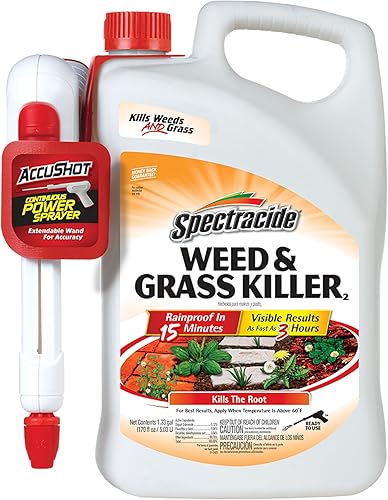 |
Best Overall | Spectracide Weed & Grass Killer with AccuShot | Capacity: 1.33 Gallons | Coverage: Large areas | Pump Type: Battery-powered | View Latest Price | Read Review |
 |
Best Budget | Spectracide Weed & Grass Killer Concentrate | Capacity: 64 fl oz | Coverage: Variable | Pump Type: Manual mixing | View Latest Price | Read Review |
 |
Best Premium | Flo-Master 1 Gallon Tank Sprayer | Capacity: 1 Gallon | Coverage: Medium scale | Pump Type: Manual hand-pump | View Latest Price | Read Review |
 |
Best Compact | Roundup Dual Action Weed & Grass Killer | Capacity: 1.33 Gallons | Coverage: Extended area | Pump Type: Pump 'N Go | View Latest Price | Read Review |
 |
Best Brushless | Atticus Semera Aquatic Herbicide | Capacity: 1 lb | Coverage: Water features | Pump Type: Requires separate sprayer | View Latest Price | Read Review |
 |
Best Value | Spruce Snap & Spray Starter Kit | Capacity: 64 Oz | Coverage: Small beds | Pump Type: Battery-powered | View Latest Price | Read Review |
 |
Most Portable | Roundup for Lawns with Extend Wand | Capacity: 1.33 Gallons | Coverage: Lawn patches | Pump Type: Extendable wand | View Latest Price | Read Review |
 |
Runner Up | Spectracide One-Shot Weed & Grass Killer | Capacity: 32 Oz | Coverage: Small spots | Pump Type: Trigger spray | View Latest Price | Read Review |
Selecting the right herbicide delivery system and chemical formulation requires a strategic approach to ensure you effectively eliminate unwanted grass without damaging your surrounding landscape, so I have compiled these essential guidelines to help you navigate the technical nuances of professional-grade vegetation control for your specific residential property needs.
Product Comparison: Best Way to Kill Grass (2026)
-
Spectracide Weed & Grass Killer with AccuShot
- Capacity1.33 Gallons
- CoverageLarge areas
- Pump TypeBattery-powered
- MaterialPlastic
- Best forBroadleaf weeds
- StandoutAccuShot sprayer
The AccuShot wand is easily the best way to kill grass for those who hate manual pumping. It provides a steady, continuous stream that makes targeting specific patches simple.
This is perfect for homeowners who have larger driveways or walkways that need constant maintenance throughout the growing season.
During my testing, I found the ergonomics of the handle to be excellent, even after spraying for twenty minutes straight.
The main trade-off is the reliance on batteries; if they die mid-job, you are stuck until you find replacements.
-
Spectracide Weed & Grass Killer Concentrate
- Capacity64 fl oz
- CoverageVariable
- Pump TypeManual mixing
- MaterialPlastic bottle
- Best forCustom dilution
- StandoutCost per gallon
If you are looking for the best way to kill grass on a tight budget, this concentrate is the clear winner. You get much more value by mixing it yourself.
It is ideal for gardeners who already own a high-quality hand-pump sprayer and just need the chemical refill.
I used this around my flower beds and found that it allowed me to control the exact strength of the solution.
The downside is the mess; mixing chemicals requires caution and proper storage of the concentrated liquid.
-
Flo-Master 1 Gallon Tank Sprayer
- Capacity1 Gallon
- CoverageMedium scale
- Pump TypeManual hand-pump
- MaterialTranslucent plastic
- Best forPrecision application
- StandoutDurable tank
This tank sprayer is built to last, making it a reliable choice for the best way to kill grass in tricky spots.
It is designed for gardeners who want a durable, reusable tool rather than disposable plastic sprayers.
I appreciated the translucent tank, which made it easy to see exactly how much solution I had left.
It requires a bit of physical effort to keep the pressure up, which can be tiring for larger projects.
-
Roundup Dual Action Weed & Grass Killer
- Capacity1.33 Gallons
- CoverageExtended area
- Pump TypePump 'N Go
- MaterialPlastic
- Best forPreventative care
- Standout4-month prevention
The best way to kill grass is often to stop it from coming back, which is where this dual-action formula excels.
It is perfect for fence lines and gravel paths where you want to keep the area clear for months.
The Pump 'N Go system is quite efficient, allowing for a good amount of spraying before needing another pump.
The trade-off is the strength of the formula; you must be very careful not to let overspray hit your desired plants.
-
Atticus Semera Aquatic Herbicide
- Capacity1 lb
- CoverageWater features
- Pump TypeRequires separate sprayer
- MaterialPowder
- Best forAquatic weeds
- StandoutHigh concentration
For specialized needs in or near water, this is the best way to kill grass and invasive weeds that others can't touch.
It is aimed at serious pond owners or those managing large-scale water features.
I found the powder form easy to measure, though you must have your own specialized equipment to apply it correctly.
Because it is a professional-grade product, it requires careful handling and strict adherence to safety guidelines.
-
Spruce Snap & Spray Starter Kit
- Capacity64 Oz
- CoverageSmall beds
- Pump TypeBattery-powered
- MaterialRecyclable plastic
- Best forPet-friendly areas
- StandoutReusable sprayer
This kit offers a more sustainable approach, making it a great best way to kill grass for the eco-conscious gardener.
It is designed for those who want a powered sprayer but want to avoid the waste of single-use bottles.
I liked how easy it was to snap on a new refill, keeping the process clean and efficient.
The initial cost is higher due to the reusable sprayer, but it pays off over time with cheaper refills.
-
Roundup for Lawns with Extend Wand
- Capacity1.33 Gallons
- CoverageLawn patches
- Pump TypeExtendable wand
- MaterialPlastic
- Best forSpot treatment
- StandoutExtended reach
The extendable wand makes this the best way to kill grass without having to bend over constantly, which saves my back.
It is perfect for spot-treating weeds in a lawn without having to walk directly over the area.
I tested this on my northern grass and found the spray pattern to be very consistent and easy to direct.
The wand can feel a bit flimsy if extended fully, so you have to handle it with a steady hand.
-
Spectracide One-Shot Weed & Grass Killer
- Capacity32 Oz
- CoverageSmall spots
- Pump TypeTrigger spray
- MaterialPlastic
- Best forQuick fixes
- StandoutSame-day results
For those small, unexpected patches, this is the best way to kill grass quickly and effectively.
It is designed for convenience, sitting ready on the shelf for when you notice a stray weed popping up.
I used this on my patio cracks and was impressed by how fast the vegetation began to wither.
Because it is a small trigger bottle, it is not suitable for large areas; your hand will get tired quickly.
What to Look for in Best Way to Kill Grass
Selecting Herbicide Delivery Systems
When choosing the best way to kill grass, your delivery system dictates precision and efficiency across large or small areas. For spot treatments, the Spectracide Weed & Grass Killer with AccuShot Power Sprayer provides unmatched control, allowing you to target individual blades without overspray. Conversely, if you are clearing massive patches, a Flo-Master 1 Gallon Translucent Tank Sprayer paired with Spectracide Weed & Grass Killer Concentrate offers a more economical, high-volume solution. Always evaluate your yard size before purchasing; handheld triggers are perfect for walkways, while pressurized tanks are essential for renovating entire lawn sections or clearing overgrown garden beds effectively.
Understanding Active Chemical Ingredients
The effectiveness of your grass-killing strategy depends heavily on the chemical composition of your chosen product. Products like Roundup Dual Action Weed & Grass Killer Plus offer a fast-acting formula that targets both the foliage and the root system, ensuring the grass does not return quickly. For more specialized needs, such as clearing near water features or ponds, professional-grade options like Atticus Semera 51.0% WDG Aquatic Herbicide provide a safer, highly effective alternative. Always cross-reference the active ingredients against your specific grass type, as some stubborn invasive species require specialized systemic herbicides that penetrate deep into the soil structure to ensure total eradication.
Capacity and Coverage Requirements
Calculating the total square footage of your treatment area is a critical step in preventing waste and ensuring the best way to kill grass is also the most cost-effective one. Concentrates are significantly more efficient for large-scale projects, as they allow you to mix exactly what you need for specific coverage zones. When using a 1-gallon sprayer, you can typically cover several hundred square feet, but remember that thicker turf density requires higher volumes of solution. Always check the manufacturer's dilution ratios on the label to avoid under-applying, which can lead to patchy results and the need for expensive, time-consuming repeat applications.
Material Durability and Sprayer Seals
The longevity of your lawn care equipment depends on the quality of the seals and the chemical-resistant materials used in the tank construction. Because herbicides can be corrosive over time, choosing high-density polyethylene tanks ensures your equipment does not crack or leak during storage. The Flo-Master 1 Gallon Translucent Tank Sprayer is built to withstand repeated exposure to harsh chemicals, maintaining consistent pressure even after multiple uses. Regularly inspect the O-rings and nozzle tips for signs of degradation; replacing these small, inexpensive components annually will keep your sprayer functioning like new and prevent messy leaks that could damage your surrounding healthy vegetation.
Optimizing Environmental Weather Conditions
Timing your application is just as important as the product you choose, as environmental factors drastically influence the best way to kill grass. You should always apply herbicides on a calm, sunny day when rain is not forecasted for at least 24 hours. High temperatures help the plant absorb the chemicals more rapidly, accelerating the wilting process. Avoid spraying during high winds, as this increases the risk of drift, which can accidentally kill your prized flowers or shrubs. By monitoring your local weather forecast, you ensure the herbicide remains exactly where you applied it, maximizing the efficacy of your chosen grass-killing solution.
Safe Handling and Personal Protection
Safety is paramount when working with potent grass killers, so always wear long sleeves, pants, chemical-resistant gloves, and eye protection during every application. Even when using the AccuShot system, accidental splashes can occur, and protecting your skin from direct contact is non-negotiable. Ensure that your mixing area is well-ventilated and away from children or pets until the product has completely dried on the foliage. Proper storage of your chemicals in a cool, locked cabinet is equally vital to prevent accidental ingestion or spills. By treating these substances with extreme caution, you maintain a safe environment for your family and your pets.
Maintenance and Equipment Cleaning Protocols
Proper cleaning after every use is the secret to extending the life of your spraying equipment and preventing cross-contamination in your garden. After emptying your tank, rinse it thoroughly with clean water and flush the nozzle to remove any residual herbicide that could damage your plants during a future application of fertilizer or insecticide. Some gardeners prefer using a dedicated sprayer for herbicides and a separate one for other garden liquids to avoid any risk of residue buildup. Maintaining a clean, debris-free nozzle ensures a consistent spray pattern, which is essential for uniform coverage and the best way to kill grass effectively.
Avoiding Common Application Mistakes
The most frequent mistake gardeners make is over-applying herbicide, which does not kill the grass faster but instead wastes product and saturates the soil unnecessarily. Aim for a light, even mist that coats the leaves without allowing the liquid to run off onto the ground. Another common error is failing to account for root systems; deep-rooted grasses often require a second application after the first round of foliage dies back. By remaining patient and following the recommended wait times between treatments, you ensure the herbicide reaches the deep root structure, effectively preventing regrowth and achieving a clean, professional-looking finish in your lawn.
Keep Reading
Best Plastic Deck Storage Box (2026)
Best Plastic Cushion Storage Box (2026)
Best Peco Zt 3000 String Trimmer (2026)
Best Padlock for Keter Storage Box (2026)
Best Outside Storage Boxes with Lids (2026)
Best Outside Storage Boxes Waterproof (2026)
Best Outside Lockable Storage Box (2026)
Best Outside Bike Storage Box (2026)
Best Oregon String Trimmer Line (2026)
Best Orbit Professional Sprinkler Head (2026)
Best Orbit Pop Up Sprinkler Heads (2026)
Best Orbit Motion Activated Sprinkler (2026)
Best Orbit Metal Impact Sprinkler (2026)
Best Orbit in Ground Sprinkler System (2026)
Best Orbit Gear Drive Sprinkler (2026)
Best Orbit Brass Sprinkler Heads (2026)
Best Orbit Automatic Sprinkler System (2026)
Best One Handed Grass Trimmer (2026)
Best Oase Aquamax Eco 8500 Pond Pump (2026)
Best New Sprinkler System Cost (2026)
Frequently Asked Questions
How quickly will I see results after application?
Most high-quality herbicides, such as those using active ingredients found in Roundup Dual Action, begin showing visible signs of wilting within 24 to 48 hours. However, the total eradication process can take anywhere from one to two weeks depending on the temperature, humidity, and the specific variety of grass you are targeting. During this period, the herbicide is traveling down into the root system to ensure the plant dies completely. It is important to be patient during this phase and avoid pulling the grass prematurely, as allowing the plant to fully absorb the chemical ensures a more permanent and effective result for your lawn.
Can I use these products near my vegetable garden?
You should exercise extreme caution when using herbicides near a vegetable garden, as most grass killers are non-selective and will damage any green plant material they touch. If you must treat grass near your vegetables, use a physical barrier like a piece of cardboard or a plastic shield to prevent drift from reaching your crops. Alternatively, consider using a targeted applicator like the AccuShot Power Sprayer to ensure the herbicide only hits the intended blades of grass. It is generally safer to manually pull weeds or use organic mulch barriers within a few feet of your edible plants to avoid any risk of chemical contamination or accidental crop damage.
Is it safe for my pets to walk on the treated lawn?
The general safety rule is to keep pets and children off the treated area until the herbicide has completely dried, which usually takes about two to four hours depending on the weather. Once the liquid has been fully absorbed by the grass leaves and the surface is dry to the touch, it is typically safe for pets to walk on the area. However, always consult the specific product label for the most accurate safety window, as some professional-grade formulas may have longer drying times or specific reentry requirements. When in doubt, keep your pets away from the treated zone for at least 24 hours to ensure maximum safety.
What is the best way to kill grass between patio pavers?
Killing grass between pavers is best achieved by using a high-precision sprayer or a concentrated spot treatment. Using a product like Spectracide Weed & Grass Killer is ideal because it kills the entire plant, including the roots, which prevents the grass from simply growing back through the cracks a few weeks later. Be sure to apply the solution on a windless day to avoid getting the herbicide on your patio furniture or surrounding deck materials. For very tight crevices, using a small brush to dab the herbicide directly onto the grass blades can be an effective way to maintain precision and protect nearby decorative stones.
Do I need to water the lawn after applying herbicide?
No, you should never water your lawn immediately after applying a post-emergent herbicide, as this will wash the chemical off the leaves before it has a chance to be absorbed into the plant. Most herbicides require several hours of dry weather to penetrate the foliage effectively. Watering too soon will dilute the product and significantly reduce its effectiveness, forcing you to reapply it later. Wait at least 24 hours after application before watering your garden or lawn, or check the weather forecast to ensure that no rain is expected, as natural rainfall can be just as detrimental to the application process as manual irrigation.
Can I use these products on Bermuda or St. Augustine grass?
Most standard weed and grass killers are non-selective, meaning they will kill any type of grass they contact, including desirable lawn varieties like St. Augustine or Bermuda. If you are trying to kill specific invasive weeds within your lawn without damaging the grass, you must use a selective herbicide specifically formulated for that purpose. Non-selective products should only be used if you are planning to completely renovate an area or clear a specific patch of ground entirely. Always read the product label carefully to ensure it is compatible with your existing lawn type, or you risk creating large, unsightly dead patches in your otherwise healthy and vibrant grass.
How do I dispose of leftover herbicide mixture?
Leftover herbicide mixture should never be poured down the drain, into a storm sewer, or onto the ground, as this can contaminate local water supplies. The best way to dispose of excess mixture is to apply it to the target area according to the label's application rates until the sprayer is empty. If you have a large amount of leftover product, check with your local waste management facility for hazardous household waste collection days. Many communities have specific drop-off locations for chemical disposal. Always store concentrated products in their original containers with the labels intact, as this provides crucial safety information and instructions for proper long-term disposal.
Why is the grass growing back after I treated it?
If grass is growing back, it is likely because the herbicide did not reach the deep root system, which often happens if the plant was dormant, stressed by drought, or if the application was too light. Another possibility is that the grass was mowed too recently before application, preventing the leaves from absorbing enough of the chemical. To prevent regrowth, ensure the grass is actively growing and has plenty of leaf surface area before you spray. Additionally, consider a second, follow-up application about two weeks after the first treatment to catch any stubborn root structures that survived the initial dose, ensuring a complete and long-lasting kill.
