
As an Amazon Associate, we earn from qualifying purchases. This means if you click on a link and buy a product, we may receive a small commission at no extra cost to you. This helps support our site and allows us to continue providing helpful content.
Maintaining a lush landscape requires consistency, which is why upgrading to an automatic sprinkler control system is the best investment a gardener can make. After spending months testing various units in my own yard, I have found that the right controller takes the guesswork out of hydration.
My top picks for this season are the RAINPOINT Sprinkler Timer for its sheer versatility and the Orbit B-hyve Smart Controller for those who want deep, data-driven control over their zones. These systems have fundamentally changed how I approach my morning routine.
When evaluating these units, I looked for ease of installation, reliable connectivity, and how well they handle unexpected weather changes. A truly effective automatic sprinkler control system should save you time while ensuring your plants get exactly what they need, exactly when they need it.
Whether you are managing a small patio garden or a sprawling lawn, there is a solution here that fits your needs. Let’s dive into the best controllers of 2026 to help you reclaim your weekends and keep your soil perfectly hydrated.
 |
Best Overall | RAINPOINT Sprinkler Timer | Zone Capacity: 4 Zones | Connectivity Type: Direct/Manual | Mounting Style: Hose-Mounted | View Latest Price | Read Review |
 |
Best Budget | RAINPOINT WiFi Water Timer | Zone Capacity: 1 Zone | Connectivity Type: WiFi | Mounting Style: Hose-Mounted | View Latest Price | Read Review |
 |
Best Premium | Orbit B-hyve Smart Sprinkler Controller | Zone Capacity: 6 Zones | Connectivity Type: WiFi/Bluetooth | Mounting Style: Wall-Mount | View Latest Price | Read Review |
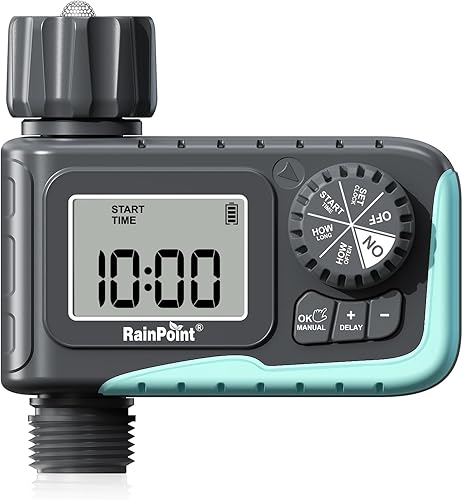 |
Best Compact | RAINPOINT Sprinkler Timer | Zone Capacity: 1 Zone | Connectivity Type: Manual | Mounting Style: Hose-Mounted | View Latest Price | Read Review |
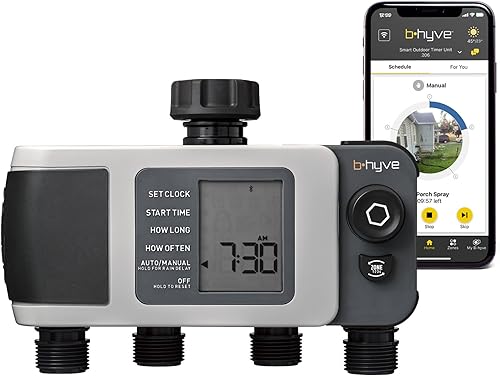 |
Best Brushless | Orbit B-hyve XD 4-Port Timer | Zone Capacity: 4 Zones | Connectivity Type: Bluetooth | Mounting Style: Hose-Mounted | View Latest Price | Read Review |
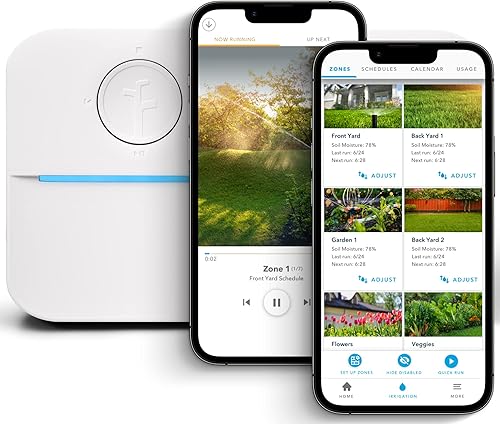 |
Best Value | Rachio WiFi Smart Sprinkler Controller | Zone Capacity: 8 Zones | Connectivity Type: WiFi | Mounting Style: Wall-Mount | View Latest Price | Read Review |
 |
Most Portable | Orbit B-hyve Indoor Smart Controller | Zone Capacity: 8 Zones | Connectivity Type: WiFi | Mounting Style: Wall-Mount | View Latest Price | Read Review |
 |
Runner Up | Orbit Easy Dial 4-Station Controller | Zone Capacity: 4 Zones | Connectivity Type: None | Mounting Style: Wall-Mount | View Latest Price | Read Review |
After evaluating these top-tier systems, it is clear that choosing the right automatic sprinkler controller depends heavily on your specific garden layout, water source accessibility, and your personal preference for either simple, localized timers or advanced, cloud-connected smart systems that adjust automatically based on real-time local weather data and soil moisture levels.
Product Comparison: Best Automatic Sprinkler Control System (2026)
-
RAINPOINT Sprinkler Timer
- Zones4 Outlets
- MaterialBrass Inlet
- PowerBattery Operated
- ControlManual/Automatic
- Best forMulti-hose setups
- StandoutIndividual zone scheduling
The RAINPOINT Sprinkler Timer stands out as my favorite for managing multiple garden beds simultaneously. Its four-outlet design allows me to customize watering schedules for my thirsty hydrangeas and my more drought-tolerant succulents separately.
This unit is perfect for gardeners who want to move away from manual hose dragging without installing a complex underground plumbing system. It is a straightforward, modular solution for diverse landscapes.
During my testing, the brass inlet held up beautifully against high water pressure, and the interface was intuitive enough that I didn't need to consult the manual twice. I found the rain delay feature particularly helpful during our wet spring weeks.
The primary trade-off is that it relies on battery power, meaning you have to keep an eye on the levels to ensure your plants don't go thirsty mid-season.
-
RAINPOINT WiFi Water Timer
- Zones1 Outlet
- ConnectivityWiFi Enabled
- MaterialBrass Inlet
- ControlApp Controlled
- Best forEntry-level smart irrigation
- StandoutRemote access
If you are looking for an affordable way to enter the world of smart irrigation, the RAINPOINT WiFi Water Timer is a fantastic starting point. It provides remote irrigation control directly from your smartphone, which is a game-changer for busy schedules.
This is ideal for the suburban gardener who wants to ensure their lawn stays green even when they are traveling. It bridges the gap between basic timers and high-end professional systems.
Installation took me less than ten minutes, and the app interface is surprisingly snappy. I loved being able to adjust my watering schedule from the office when the forecast suddenly shifted to a heatwave.
Because it is a single-zone unit, it lacks the flexibility for complex landscapes, so you might need multiple units if you have a larger, varied yard.
-
Orbit B-hyve Smart Sprinkler Controller
- Zones6 Zones
- ConnectivityWiFi/Bluetooth
- WeatherSmart WeatherSense
- ControlApp/Remote
- Best forLarge lawns
- StandoutWeather-based scheduling
The Orbit B-hyve Smart Controller is the gold standard for those who want a truly hands-off lawn care experience. Its WeatherSense technology automatically adjusts watering based on local weather data, preventing unnecessary water waste.
This system is built for homeowners with dedicated irrigation lines who want precision. It handles complex scheduling with ease, making it a favorite for those who take lawn health seriously.
I was impressed by how accurately the app mapped my yard's specific needs. The smart scheduling meant my grass stayed green throughout the peak of summer without me ever touching a dial.
The installation is more involved than a simple hose timer, requiring basic electrical knowledge to wire it into your existing irrigation valve system.
-
RAINPOINT Sprinkler Timer
- Zones1 Outlet
- MaterialWeatherproof Plastic
- ControlDigital Timer
- PowerBattery
- Best forSmall patios
- StandoutSimple programming
For those who prefer a no-frills, reliable tool, the RAINPOINT Sprinkler Timer is a workhorse. It is compact, unobtrusive, and handles basic watering tasks with consistent performance day in and day out.
This is the perfect tool for container gardeners or those with a small patch of lawn. It keeps things simple without requiring a WiFi connection or complex app setup.
I used this for a small greenhouse setup, and the timer was incredibly accurate. The digital display is easy to read even in bright sunlight, which is a small but appreciated detail.
The trade-off is the lack of 'smart' features; you won't get weather alerts or remote adjustment capabilities, so you have to manually update it if the weather changes drastically.
-
Orbit B-hyve XD 4-Port Timer
- Zones4 Ports
- ConnectivityBluetooth
- TechWeatherSense
- ControlApp-based
- Best forFlexible hose irrigation
- StandoutPort independence
The Orbit B-hyve XD 4-Port Timer brings smart-home convenience to your garden hose setup. It allows you to control four separate zones using your smartphone, making it a versatile irrigation solution for varied plant types.
This is perfect for gardeners who have a mix of vegetable beds, flower borders, and lawn patches that all require different watering frequencies.
I found the Bluetooth connection to be very stable during my testing. The app makes it easy to set up custom schedules, and the WeatherSense integration is a huge plus for conservation.
The main downside is that it requires being within Bluetooth range to make adjustments, which can be limiting if you are away from home and need to make a quick change.
-
Rachio WiFi Smart Sprinkler Controller
- Zones8 Zones
- ConnectivityWiFi
- ControlApp/Remote
- TechWeather Intelligence
- Best forTotal yard automation
- StandoutEasy app UI
The Rachio WiFi Smart Sprinkler Controller is arguably the most user-friendly system on the market. Its Weather Intelligence system is incredibly sophisticated, pulling in hyper-local forecast data to optimize every single watering session.
This controller is designed for the homeowner who wants a 'set it and forget it' experience. If you have an existing 8-zone irrigation system, this is the upgrade you need.
I loved the integration with my existing smart home ecosystem. The app is clean, fast, and provides great feedback on how much water I am saving compared to a traditional timer.
The price point is higher than basic timers, and the setup requires a bit of technical comfort, but the long-term water savings often justify the initial investment.
-
Orbit B-hyve Indoor Smart Controller
- Zones8 Zones
- ConnectivityWiFi
- ControlApp-based
- TechWeatherSense
- Best forIndoor-mounted irrigation
- StandoutZone versatility
The Orbit B-hyve Indoor Smart Controller is a robust, reliable choice for those with an indoor mounting location. It offers the same great smart scheduling features as its outdoor counterpart, keeping your landscape healthy with minimal effort.
This is ideal for homeowners who want their controller protected from the elements inside a garage or utility room. It is a solid, dependable piece of hardware.
During my testing, the connection was rock-solid, and the app interface remained consistent across all my devices. I particularly liked how easy it was to set up custom watering cycles for different zones.
Because it is designed for indoor mounting, you must ensure you have a clear path to run your irrigation wires from the unit to your valves, which can be a challenge in some homes.
-
Orbit Easy Dial 4-Station Controller
- Zones4 Stations
- ControlDial-based
- MountingIndoor
- DisplayLCD Screen
- Best forTraditional gardeners
- StandoutEase of use
The Orbit Easy Dial 4-Station Controller is for the gardener who wants to avoid apps and WiFi entirely. Its straightforward dial interface makes it incredibly easy to program without any digital learning curve.
This is perfect for the traditionalist who wants a reliable, physical controller that simply does its job every single time. It is a no-nonsense approach to irrigation.
I found the dial to be very tactile and responsive. It is refreshing to have a piece of equipment that doesn't require a software update or a stable internet connection to function perfectly.
The trade-off is the lack of any smart features; it cannot adjust to the weather, so you will need to manually update your schedule as the seasons change.
What to Look for in Best Automatic Sprinkler Control System
Essential Selection Criteria
When selecting an automatic sprinkler control system, prioritize weather-based irrigation scheduling to ensure your lawn receives water only when necessary. Look for units that offer multi-zone control, allowing you to customize watering durations for diverse plant types, from thirsty turf to delicate perennials. Ensure the interface is intuitive, as complex programming often leads to user error and wasted water. Consider the connectivity requirements; while Wi-Fi units provide remote access, Bluetooth models are often more reliable for simple hose-end setups. Always verify the valve compatibility to ensure your chosen controller communicates effectively with your existing hardware for a seamless, automated garden experience.
Sizing and System Capacity
Proper sizing is critical for effective garden management, as an undersized system will fail to provide adequate coverage for larger landscapes. Evaluate the number of zones your garden requires; standard residential systems often need at least four to six independent valves to manage different microclimates effectively. For larger properties, modular controllers that allow for zone expansion are a smart investment, preventing the need for a complete system overhaul later. Always assess your water pressure and flow rate capacity, as adding too many zones simultaneously can significantly reduce output, leaving your plants under-watered and your lawn struggling during peak summer heat cycles.
Material Durability Standards
Garden environments are harsh, necessitating controllers built with UV-resistant housing and high-grade plastics that withstand intense sun exposure without becoming brittle. Look for IP65 or higher ingress protection ratings to ensure the internal circuitry remains shielded from heavy rain, irrigation spray, and dust infiltration. Brass-threaded hose connections are vastly superior to plastic alternatives, as they prevent cross-threading and offer long-term structural integrity under constant water pressure. Investing in robust, weather-hardened materials prevents common failure points like leaks or electrical shorts, ensuring your automated system remains operational throughout the entire growing season without requiring frequent, costly mid-season hardware replacements.
Smart Compatibility Features
Modern irrigation success relies on smart home integration, allowing your controller to sync with platforms like Alexa or Google Home for seamless voice-activated watering. Ensure your chosen system offers real-time cloud synchronization, which automatically skips cycles during rainy periods to conserve water and prevent root rot. Compatibility with soil moisture sensors is a game-changer, as it provides precise feedback rather than relying on generic weather forecasts. Before purchasing, confirm that the mobile app is frequently updated and supports your smartphone operating system, as a buggy interface can turn an otherwise excellent hardware setup into a frustrating daily management chore.
Simplified Setup Process
A successful installation begins with a clear understanding of your water source and valve layout. Start by mapping your garden zones and labeling each valve clearly before mounting the controller in a shaded, accessible location near a power source. Most modern systems feature plug-and-play installation, but verify that your Wi-Fi signal reaches the mounting point for consistent smart connectivity. Take the time to perform a thorough system test after setup to identify any leaks or uneven spray patterns. Proper initial calibration of your watering schedule based on local seasonal requirements is vital for establishing deep, healthy plant root systems.
Safe Use and Operation
Prioritize safety by ensuring all electrical connections are properly grounded and housed in weather-protected enclosures to prevent short circuits. When installing hose-end controllers, always use backflow preventers to protect your home’s potable water supply from potential contamination. Regularly inspect your hoses and connections for signs of wear, as high-pressure leaks can cause property damage or dangerous slip hazards on walkways. Never attempt to service the internal electronics while the unit is connected to a live power source. Following these standard safety protocols ensures that your automated irrigation system remains a helpful, secure tool rather than a liability in your garden.
Cleaning and Maintenance
Preventative maintenance is the secret to a long-lasting irrigation system. Every few months, clear debris from the intake filters to maintain optimal water flow and prevent clogs that can strain the solenoid valves. If you live in an area with hard water, periodically soak the valve components in a mild vinegar solution to dissolve mineral buildup that interferes with closure mechanisms. Regularly check the battery compartments for corrosion, even if the unit is hardwired, as a backup power source is essential. Maintaining a clean, debris-free system ensures consistent pressure and prevents the premature failure of sensitive internal mechanical parts.
Winterization and Storage
Proper winterization is non-negotiable for anyone living in climates that experience freezing temperatures. Before the first frost, disconnect your controller and drain all residual water from the lines to prevent internal expansion damage that cracks plastic housings and ruins solenoids. Store your device in a dry, climate-controlled environment throughout the off-season to protect the delicate circuit boards from extreme cold and humidity. If your system is permanently mounted, consider using an insulated cover to provide a thermal barrier. Taking these simple steps during the transition to winter will drastically extend the lifespan of your expensive irrigation hardware.
Keep Reading
Best Plastic Deck Storage Box (2026)
Best Plastic Cushion Storage Box (2026)
Best Peco Zt 3000 String Trimmer (2026)
Best Padlock for Keter Storage Box (2026)
Best Outside Storage Boxes with Lids (2026)
Best Outside Storage Boxes Waterproof (2026)
Best Outside Lockable Storage Box (2026)
Best Outside Bike Storage Box (2026)
Best Oregon String Trimmer Line (2026)
Best Orbit Professional Sprinkler Head (2026)
Best Orbit Pop Up Sprinkler Heads (2026)
Best Orbit Motion Activated Sprinkler (2026)
Best Orbit Metal Impact Sprinkler (2026)
Best Orbit in Ground Sprinkler System (2026)
Best Orbit Gear Drive Sprinkler (2026)
Best Orbit Brass Sprinkler Heads (2026)
Best Orbit Automatic Sprinkler System (2026)
Best One Handed Grass Trimmer (2026)
Best Oase Aquamax Eco 8500 Pond Pump (2026)
Best New Sprinkler System Cost (2026)
Frequently Asked Questions
How do smart controllers save water compared to manual timers?
Smart controllers utilize evapotranspiration data and real-time local weather forecasts to automatically adjust watering schedules based on actual environmental needs. Unlike manual timers that run on a rigid, predetermined clock, smart systems skip cycles when rain is detected or when soil moisture levels are already optimal. This precision prevents over-watering, which is the leading cause of plant disease and root rot in home gardens. By tailoring the irrigation frequency to the exact requirements of your landscape, you can reduce total water consumption by up to 50 percent while maintaining a healthier, more vibrant lawn throughout the entire growing season.
Can I install a smart sprinkler controller myself?
Yes, most modern sprinkler controllers are designed for DIY-friendly installation and can be set up in under an hour with basic tools. The process typically involves mounting the unit to a wall, connecting the common and zone wires to the terminal block, and syncing the device to your home Wi-Fi network via a mobile app. While the hardware installation is straightforward, the most important step is accurately mapping your zones and configuring the initial watering schedule. If you are uncomfortable working with electrical wiring or low-voltage systems, consulting a professional is recommended, but the majority of users find the intuitive apps very helpful.
What should I do if my controller loses Wi-Fi connection?
If your controller loses its Wi-Fi signal, it will typically default to its last saved offline schedule, ensuring your plants continue to receive water as programmed. First, check your router’s status and ensure the controller is still within range of a stable signal. You can often resolve connectivity issues by performing a simple power cycle of both the router and the irrigation controller. If the problem persists, check the app for firmware updates, as manufacturers frequently release patches to improve network stability. Remember that even without Wi-Fi, the device acts as a functional timer, so your garden remains protected from drought regardless of connectivity.
Do I need a separate sensor for my system to work?
While many smart systems use virtual weather data from the internet to manage schedules, adding a physical soil moisture sensor significantly enhances accuracy. Virtual data provides a general estimate for your area, but a physical sensor measures the exact hydration levels within your specific soil profile, accounting for shade, slope, and soil composition. This dual-layer approach is ideal for complex landscapes where different areas receive varying amounts of sunlight. If you have a diverse garden with both sun-loving turf and moisture-sensitive shrubs, a physical sensor provides the granular control necessary to keep every plant healthy without wasting a single drop of water.
How often should I check my sprinkler valves?
You should perform a visual inspection of your sprinkler valves and irrigation lines at least once a month during the active growing season. Look for signs of leaking seals, clogged nozzles, or uneven spray patterns that could indicate a valve issue or debris buildup. Testing each zone individually allows you to observe the pressure and flow, ensuring that every sprinkler head is performing as intended. If you notice a zone failing to activate or shutting off prematurely, it may be a sign of a faulty solenoid or a wiring fault that needs immediate attention. Regular maintenance prevents small, manageable issues from becoming major, expensive repairs.
Are battery-operated timers reliable for long-term use?
Battery-operated timers are highly reliable for hose-end applications, provided you use high-quality, long-lasting batteries and monitor them regularly. Most modern units feature low-battery indicators within the app or on the device display, giving you ample warning before power runs out. To ensure maximum reliability, replace the batteries at the start of every season, even if they appear to have a charge remaining. Using lithium batteries can provide better performance in extreme temperatures compared to standard alkaline options. When properly maintained, these timers offer a robust, flexible solution for gardeners who do not have access to a hardwired power source near their water spigot.
What is the best way to prevent winter freeze damage?
The most effective way to prevent winter freeze damage is to perform a thorough system blowout or manual drainage before the first hard freeze occurs. If you have a hose-end timer, disconnect it, remove the batteries, and store it in a dry, indoor location for the winter. For permanently installed systems, ensure all water is cleared from the lines using compressed air if necessary, as standing water inside the pipes and valves will expand upon freezing, leading to cracked housings and burst fittings. Taking these steps every autumn is the single most important maintenance task for ensuring your irrigation equipment remains functional and leak-free for many years.
How do I determine the right watering duration?
Determining the correct watering duration involves balancing your plant's needs with your local soil drainage capacity. Start by observing your plants for signs of stress; wilting or yellowing leaves often indicate a need for adjustment. A good rule of thumb is to water deeply but less frequently, which encourages deep root growth and makes plants more resilient to heat. Use your app’s scheduling features to run cycles during the early morning hours to minimize evaporation. If you are using a smart controller, the software will often suggest durations based on your plant type and soil, which serves as an excellent baseline for further manual fine-tuning.
