
You should sharpen your lawn mower blades at least once or twice per season to ensure a healthy, clean-cut lawn. Professional sharpening typically costs between $10 and $25 per blade, depending on your location and the shop’s service fees. This essential maintenance task prevents grass damage and keeps your outdoor power equipment running efficiently.
While DIY sharpening is possible with the right tools, professional services offer precision and often include blade balancing to prevent engine vibration. Pricing can fluctuate based on whether you bring in just the blade or the entire mower unit. Understanding these variables helps you weigh the convenience of professional care against your budget.
Our guide breaks down the typical costs for professional sharpening and the factors that influence local pricing. We also examine the specific tools required for home maintenance so you can decide if DIY sharpening is the right choice for your equipment. Read on to master your garden maintenance and keep your lawn looking pristine.

Average Professional Sharpening Costs
If you prefer to outsource the maintenance of your lawn care equipment, professional sharpening is a reliable option. On average, you can expect to pay between $10 and $25 per blade for a professional edge. While this may seem like a minor expense, the final invoice often depends on how you handle the equipment logistics.
The primary factor influencing the total price is whether you provide the shop with a detached blade or bring in the entire mower. Shops charge strictly for the sharpening service when you bring in the blade alone, but they must add labor costs for removal and reinstallation if you bring the whole machine.
To get the most value from professional services, consider the following breakdown of how costs are typically structured:
- Detached Blade Service: This is the most cost-effective method. If you have the hand tools and mechanical knowledge to safely remove the blade yourself, you will pay only for the grinding and balancing labor.
- Full-Unit Service: If you lack the space or the proper tools to safely lift your mower, a shop can handle the process from start to finish. Expect to pay a premium for the mechanic’s time spent accessing the blade, cleaning the deck, and ensuring proper torque during reinstallation.
- Volume and Condition: Some shops offer discounts if you bring in multiple blades at once. Conversely, if your blade is severely damaged, chipped, or bent from hitting rocks, the shop may charge an additional fee to restore the metal, or they may recommend a replacement if the integrity of the steel is compromised.
Before heading to a local dealer or small engine repair shop, call ahead to confirm their current pricing and turnaround time. Many outdoor power equipment specialists prioritize seasonal maintenance, so dropping off your blades during the off-season can often save you time and sometimes secure a lower rate. Always ensure your mower is completely out of fuel or the spark plug wire is disconnected before transporting it to a shop to ensure safe handling for both you and the technician.
Investing in professional sharpening ensures your blade is not only sharp but also correctly balanced. An unbalanced blade causes excessive vibration, which can damage your mower’s engine bearings and spindle over time. Professional shops use specialized equipment to guarantee that the blade remains perfectly weighted, protecting your investment in your lawn care equipment.
Factors That Influence the Price
The total cost to sharpen your mower blades varies based on several mechanical and service-related factors. Professional shops generally base their pricing on the time, equipment, and labor required to return your blades to a factory-sharp edge.
The type of mower you own is the primary driver of service fees. The complexity of removing the blades dictates the price:
- Walk-behind mowers: These are typically the most affordable to service. Because the units are lightweight, technicians can easily tilt them or remove the deck to access the blade.
- Riding mowers and zero-turns: These machines often require more labor. Technicians may need to use a lift or perform more complex maneuvers to safely remove the heavy-duty blades. If the shop offers a mobile service to come to your home, expect a premium charge for the convenience and travel time.
Beyond the basic sharpening fee, your final invoice may increase if your blades require extra attention. A simple sharpening process only addresses the cutting edge, but many shops include additional steps to ensure optimal performance:
Blade Balancing: This is a critical service. After metal is removed during sharpening, the blade must be balanced to ensure it spins evenly. An unbalanced blade causes excessive vibration, which can damage your mower’s spindle bearings and engine over time. Professional shops almost always include or require balancing, which adds to the labor cost.
Cleaning and Debris Removal: If your mower deck is packed with dried grass, mud, or debris, the technician will likely charge a cleaning fee. Removing this buildup is necessary to access the mounting bolts and prevents the debris from becoming a fire hazard during the grinding process.
Repairing Nicks and Damage: If you have been mowing over rocks, tree roots, or hidden landscape edging, your blades may have significant gouges or bent tips. While minor nicks can be smoothed out during a standard sharpening, deep damage requires extra grinding time to reshape the metal. If the blade is structurally compromised or bent beyond repair, the technician will recommend a full replacement rather than sharpening. Always ask for a quote before authorizing repairs for severely damaged blades, as the cost of extensive grinding may approach the price of a brand-new set.
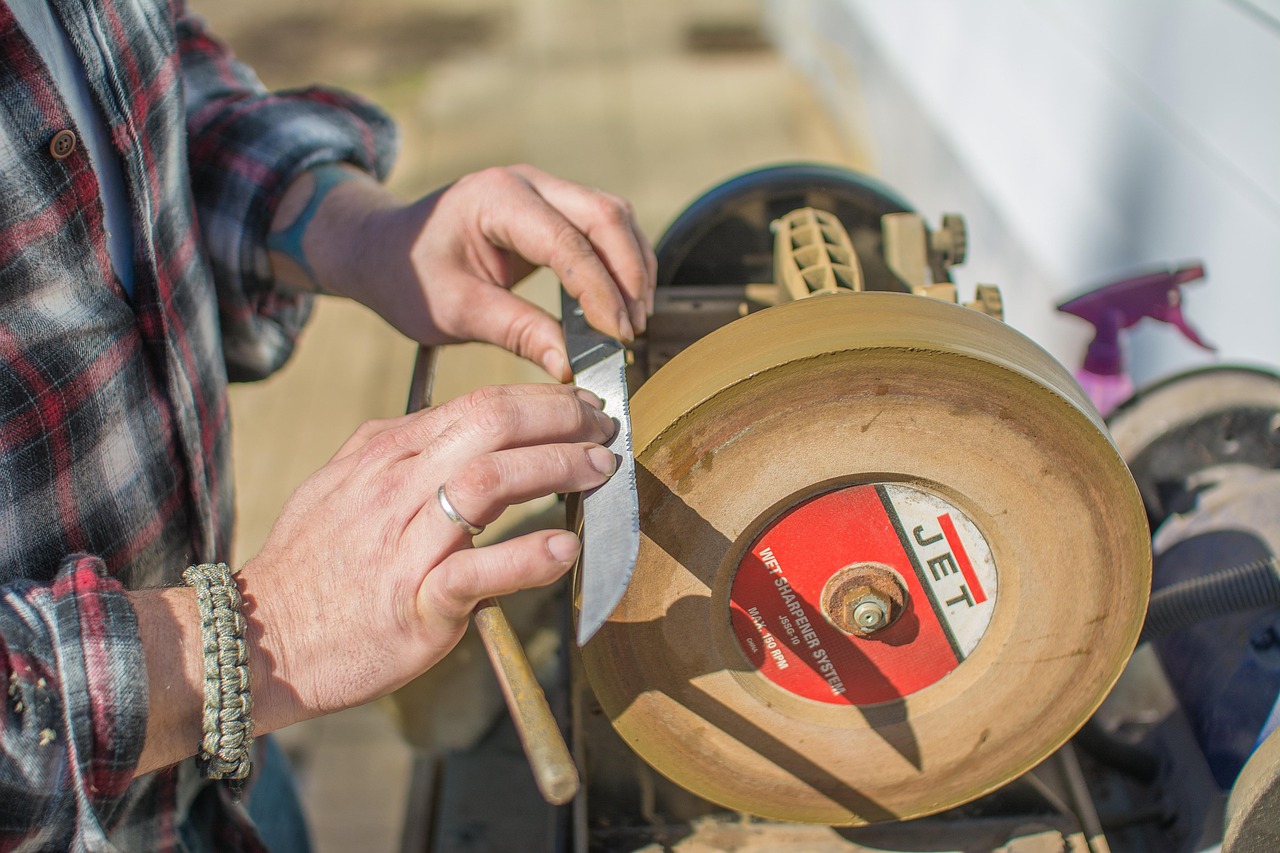
Essential Safety Protocols for Blade Handling
Sharpening mower blades is a routine maintenance task, but it involves handling razor-sharp steel and heavy machinery. Before you begin, prioritize your safety by following these essential protocols to prevent accidental injury.
The most critical step is preventing the engine from starting unexpectedly. Even if the mower is turned off, the engine can “kick over” if the blade is moved, potentially causing the engine to fire. Always disconnect the spark plug wire and tuck it away from the plug terminal before touching the blade. If you have an electric mower, remove the battery pack entirely to ensure the system is completely de-energized.
Proper preparation of your workspace is equally vital. Never attempt to sharpen a blade while it is attached to the mower. Once the blade is removed, ensure the mower deck itself is stabilized. If you must tilt the mower to access the underside, always tilt it with the air filter and carburetor facing upward. This prevents oil from flooding the air filter and fouling the engine.
For maximum protection, follow these safety guidelines during the entire process:
- Wear heavy-duty, cut-resistant gloves: Standard gardening gloves are often too thin to protect against sharp edges. Use leather or Kevlar-reinforced gloves to handle the blade securely.
- Use eye protection: Metal filings and sparks can fly during the sharpening process. Always wear ANSI-rated safety glasses to shield your eyes from debris.
- Secure the blade: Use a bench vise to hold the blade firmly in place while sharpening. Never try to sharpen a blade while holding it in your hand.
- Stabilize your equipment: If using a lift or jack, ensure the mower is locked in a secure, elevated position on level ground. Never work under a mower supported only by a hydraulic jack; use sturdy jack stands for backup support.
Finally, inspect the blade for structural integrity before sharpening. If you notice deep cracks, significant pitting, or metal fatigue, do not attempt to sharpen it. A compromised blade can shatter at high speeds, causing catastrophic damage to the mower and severe injury to the operator. In these cases, the safest and most practical choice is to replace the blade with a new, manufacturer-approved unit.
DIY Versus Professional Service
Deciding between DIY sharpening and professional service depends on your budget, mechanical comfort, and how often you mow. If you have a standard lawn, you likely only need to sharpen your blades once or twice per season.
The DIY Approach
For DIY enthusiasts, the initial investment is relatively low. You can choose from several tools depending on your existing workshop setup:
- Metal File: The most affordable option. It requires manual effort but reduces the risk of overheating the metal and ruining the temper.
- Drill Attachment: A cost-effective, time-saving choice that connects to a standard cordless drill.
- Bench Grinder: The fastest method, though it requires a steady hand to avoid removing too much material or creating an uneven edge.
While these tools cost between $10 and $100, the true challenge is not just sharpening, but balancing. A blade that is heavier on one side will cause significant engine vibration. Over time, this imbalance can damage your mower’s crankshaft, bearings, and deck spindle, leading to costly mechanical repairs that far exceed the price of a professional service.
Professional Service
Professional shops typically charge between $15 and $30 per blade. While this is an ongoing cost, it offers distinct advantages:
- Precision Balancing: Professionals use specialized magnetic or cone balancers to ensure the blade is perfectly centered. This prevents harmful vibrations and extends the life of your engine.
- Safety and Inspection: Technicians can identify structural cracks or excessive wear that might make a blade unsafe to use, which a casual DIY inspection might miss.
- Efficiency: They often use industrial-grade grinders that achieve a factory-sharp edge in seconds without overheating the steel.
The Verdict
If you enjoy home maintenance and own a simple balancing cone, DIY sharpening is a practical way to save money. However, if you notice your mower vibrating excessively or if you have a high-end mower with expensive components, the peace of mind provided by professional balancing is well worth the investment. Always prioritize safety: regardless of the method, disconnect the spark plug wire before touching the blades to prevent accidental engine startup.
Frequency and Maintenance Tips
To keep your lawn healthy and your mower running efficiently, you should sharpen your mower blades every 20 to 25 hours of use. If you have a smaller yard, this typically translates to sharpening them once or twice per mowing season. However, if you notice the tips of your grass blades turning brown or looking ragged shortly after cutting, it is a clear sign that your blade has become dull and is tearing the grass rather than slicing it cleanly.
While regular sharpening extends the life of your equipment, there comes a point where a blade is no longer safe or effective to use. You should replace the blade entirely if you notice any of the following conditions:
- Excessive Wear: If the metal has thinned significantly from previous sharpenings, the blade may lack the structural integrity to withstand high-speed rotation.
- Structural Damage: A blade that is bent, cracked, or warped must be replaced immediately, as it can cause dangerous vibrations and damage your mower’s spindle or engine.
- Heavy Pitting or Rust: Deep corrosion or heavy pitting that compromises the thickness of the metal cannot be safely repaired by grinding.
- Deep Nicks: If the blade has struck rocks or heavy debris, large chunks of missing metal create an imbalance that is difficult to correct.
Performing your own maintenance is a great way to save on garden upkeep costs, but safety must always be your priority. Before attempting to remove or sharpen a blade, always disconnect the spark plug wire to prevent the engine from accidentally starting. If you are uncomfortable handling heavy hand tools, using a bench grinder, or balancing the blade after sharpening, do not hesitate to seek professional help. Most local small-engine repair shops or hardware stores offer affordable blade sharpening services.
Proper maintenance of your outdoor power equipment is essential for both the longevity of your machine and the aesthetic quality of your landscape. A sharp, balanced blade ensures a precise cut, which helps your grass recover faster and reduces its susceptibility to disease. By staying consistent with your maintenance schedule and knowing when it is time to retire an old blade, you will achieve professional-looking results while protecting your investment in your lawn care tools.

Dedicated team of gardening enthusiasts with years of hands-on experience testing lawn mowers, gardening tools, and outdoor equipment. We help home gardeners and professionals alike make informed buying decisions with honest, thorough reviews. From push mowers to pruning shears, we test it all so you don’t have to. Got a gardening tool you’d like us to review? Get in touch!