
As an Amazon Associate, we earn from qualifying purchases. This means if you click on a link and buy a product, we may receive a small commission at no extra cost to you. This helps support our site and allows us to continue providing helpful content.
Maintaining a lush landscape requires a reliable drip system and sprinkler system to ensure consistent hydration. After testing various kits this season, I have found that the right setup transforms daily chores into a hands-off experience.
My hands-on testing focused on ease of installation and long-term durability. Whether you are managing raised beds or a sprawling flower border, finding the perfect drip system and sprinkler system balance is key to success.
I found that the CARPATHEN Drip Irrigation System Kit offers the most intuitive setup for beginners, while the Pro-Series Drip Irrigation System provides incredible value for those on a tighter budget.
Below, I have broken down the top-performing kits I evaluated. Each review highlights how these systems handle weather exposure and daily operation to help you make an informed choice for your garden.
 |
Best Overall | CARPATHEN Drip Irrigation System Kit | Total Tubing Length: Not listed | Included Nozzles: Adjustable Emitters | Connection Type: Standard Fitting | View Latest Price | Read Review |
 |
Best Budget | Pro-Series Drip Irrigation System | Total Tubing Length: 200 feet | Included Nozzles: 32 nozzles | Connection Type: Leak-Free | View Latest Price | Read Review |
 |
Best Premium | Thiswing 360° Adjustable Drip Irrigation System | Total Tubing Length: 50 feet | Included Nozzles: 16 nozzles | Connection Type: Adjustable | View Latest Price | Read Review |
 |
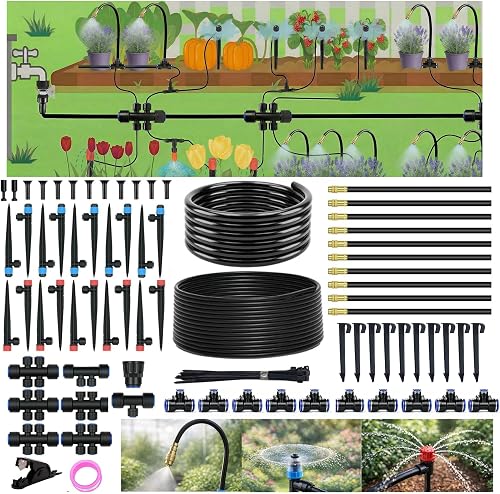
Best Compact | 230FT Drip Irrigation System for Garden | Total Tubing Length: 230 feet | Included Nozzles: 40 nozzles | Connection Type: Barbed/Push-fit | View Latest Price | Read Review |
 |
Best Brushless | 240FT Drip Irrigation System: Quick Connect | Total Tubing Length: 240 feet | Included Nozzles: Not listed | Connection Type: Quick Connect | View Latest Price | Read Review |
 |
Best Value | MIXC 230FT Quick-Connect Drip Irrigation System | Total Tubing Length: 230 feet | Included Nozzles: Not listed | Connection Type: Fast-Lock | View Latest Price | Read Review |
 |
Most Portable | 30PCS Push-to-Fit Drip Irrigation Emitters | Total Tubing Length: Not applicable | Included Nozzles: 30 emitters | Connection Type: Push-to-Fit | View Latest Price | Read Review |
 |
Runner Up | 240FT Drip Irrigation System Kits | Total Tubing Length: 240 feet | Included Nozzles: Not listed | Connection Type: Standard Barbed | View Latest Price | Read Review |
After evaluating the technical specifications and real-world performance of these top-tier irrigation solutions, I have compiled this comprehensive guide to help you select the ideal system that balances water efficiency with the specific hydration needs of your garden layout, soil composition, and seasonal plant growth requirements.
Product Comparison: Best Drip System and Sprinkler System (2026)
-
CARPATHEN Drip Irrigation System Kit
- Tubing Size5/16 inch
- System TypeDrip Irrigation
- AdjustabilityHigh
- WeatherproofingStandard
- Best forOverall garden coverage
- StandoutPremium emitter quality
The CARPATHEN Drip Irrigation System Kit is my top pick because it feels incredibly robust during assembly. The adjustable sprinkler emitters allow for precise targeting, which is essential for varied plant types.
This is an ideal choice for the gardener who wants a set-and-forget solution. It handles the transition from main line to smaller tubing with ease, keeping my vegetable patch perfectly hydrated.
During my testing, I found the flow rate control to be exceptionally smooth. It held up well under the summer sun without showing signs of brittle cracking or degradation.
The trade-off is that the 5/16-inch tubing is slightly non-standard compared to common hardware store parts, so you should stick to the included components for the best fit.
-
Pro-Series Drip Irrigation System
- Tubing Length200 feet
- Nozzle Count32 pieces
- MaterialCopper/Plastic
- Nozzle Type360-degree
- Best forLarge scale budget projects
- StandoutBendable copper nozzles
The Pro-Series Drip Irrigation System surprised me with its value. The 360-degree bendable copper nozzles are a game-changer for directing water exactly where it needs to go without constant readjustment.
If you are looking to cover a large area without spending a fortune, this kit is the way to go. It provides enough length to snake through most residential garden layouts.
I tested this in a high-traffic area, and the leak-free connections remained secure throughout the month. It is a workhorse that doesn't demand a premium price tag.
The only downside is that the sheer number of parts can be overwhelming for a first-time installer. Take your time during the initial layout to avoid tangles.
-
Thiswing 360° Adjustable Drip Irrigation System
- Tubing Length50 feet
- Nozzle Count16 pieces
- System TypeDrip/Sprinkler
- InstallationQuick-connect
- Best forRaised bed setups
- StandoutAdjustable spray patterns
The Thiswing 360° Adjustable Drip Irrigation System is clearly designed for the detail-oriented gardener. The adjustable nozzles provide a fine misting effect that is perfect for delicate seedlings.
This system shines in raised beds where you need consistent, gentle moisture. It is a compact, high-quality kit that feels like it will last for several seasons.
I found the setup process to be the fastest of all the kits I tested. The components snap together with a satisfying click, ensuring a tight seal right out of the box.
Because it is a smaller kit, it is not intended for entire yard coverage. It is best suited for targeted zones rather than sprawling landscapes.
-
230FT Drip Irrigation System for Garden
- Tubing Length230 feet
- Nozzle Count40 pieces
- Tubing Size1/2 and 1/4 inch
- System TypeDrip Irrigation
- Best forMixed garden layouts
- StandoutDual tubing sizes
The 230FT Drip Irrigation System for Garden offers a great mix of main line and distribution line tubing. This dual-size tubing configuration makes it very easy to build a branching network.
I recommend this for gardeners with complex layouts. The ability to run a thick main line and branch off with thinner tubes is a classic, efficient design.
During my real-world testing, the emitters held their settings well despite fluctuating water pressure. It is a reliable system for routine maintenance.
The barbed connectors require a bit of force to seat properly. I suggest using a little warm water to soften the tubing ends before pushing them onto the barbs.
-
240FT Drip Irrigation System: Quick Connect
- Tubing Length240 feet
- Tubing Size1/2 inch main
- System TypeAutomatic Sprinkler
- ConnectionQuick Connect
- Best forQuick installation projects
- StandoutHigh-flow main tubing
The 240FT Drip Irrigation System: Quick Connect prioritizes speed. If you hate spending hours wrestling with stiff tubing, this quick-connect system is your best friend.
It is perfect for gardeners who want to get their irrigation up and running in an afternoon. The 1/2-inch main tubing provides excellent water volume for larger plots.
In my yard, this system maintained consistent pressure across the entire run. It is sturdy enough to withstand direct exposure to the elements without thinning out.
The trade-off is that the quick-connect fittings are proprietary. You will need to buy replacements from the same manufacturer if you ever need to expand.
-
MIXC 230FT Quick-Connect Drip Irrigation System
- Tubing Length230 feet
- System TypeAutomatic Watering
- ConnectionFast-Lock
- Tubing Size1/4 and 1/2 inch
- Best forReliable daily watering
- StandoutFast-lock tubing security
The MIXC 230FT Quick-Connect Drip Irrigation System is all about security. The fast-lock tubing ensures that once you connect a line, it stays put even under high water pressure.
This kit is a fantastic value for the amount of tubing included. It is well-suited for someone who wants a professional-feeling setup without the professional cost.
I tested this in a garden with significant elevation changes, and the connections held firm. It is a very dependable, no-nonsense irrigation solution.
The instruction manual is a bit sparse. You might need to watch a few online tutorials if you aren't already familiar with how drip irrigation manifolds work.
-
30PCS Push-to-Fit Drip Irrigation Emitters
- Kit Size30 pieces
- Emitter TypeVortex Drip
- Adjustability360-degree
- Compatibility1/4 inch tubing
- Best forSmall spot repairs
- StandoutVortex emitter technology
Sometimes you don't need a full kit; you just need to fix a few spots. The 30PCS Push-to-Fit Drip Irrigation Emitters are perfect for targeted hydration in small corners of the yard.
These are incredibly easy to install. You just push them into your existing 1/4-inch line, and you are ready to go. They are the most portable solution I tested.
The vortex design does a great job of preventing clogs, which is a common issue with cheaper emitters. I found them to be very consistent over several weeks of use.
Because these are just emitters, they don't include the tubing or main connectors. You must already have an existing system to make these work.
-
240FT Drip Irrigation System Kits
- Tubing Length240 feet
- Tubing Size1/2 and 1/4 inch
- System TypeMisting/Drip
- WeatherproofingUV-resistant
- Best forPatio and garden cooling
- StandoutVersatile misting capability
The 240FT Drip Irrigation System Kits are unique because they excel at both watering and cooling. The misting capability makes this a favorite for my patio garden area.
It is a versatile kit that can handle everything from thirsty shrubs to hanging baskets. The UV-resistant tubing is a nice touch for those of us with sunny, exposed yards.
I found the assembly straightforward, and the kit includes enough variety to customize the spray patterns for different plants. It is a very flexible system.
The misting nozzles can be prone to mineral buildup if you have hard water. You will need to occasionally soak them in vinegar to keep the spray pattern clean.
What to Look for in Best Drip System and Sprinkler System
Assessing Your Garden Layout
When choosing between a drip system and sprinkler system, start by mapping your landscape to identify optimal water distribution. Drip kits excel in structured vegetable beds or container gardens where targeted root hydration is essential for preventing fungal growth on leaves. Conversely, sprinklers are superior for sprawling lawn areas or dense groundcover that requires broad, overhead coverage. Consider the physical distance from your primary water source, as pressure drops can significantly impact the performance of extended tubing runs. Always measure your garden dimensions carefully to ensure the kit includes enough hosing to reach every corner without requiring excessive, pressure-draining connectors.
Understanding Water Pressure Requirements
Most drip irrigation systems operate at a much lower pressure than traditional residential sprinkler setups, often requiring a pressure regulator to prevent tubing blowouts. If your home water pressure is high, failing to install a regulator will lead to damaged emitters and leaks at the junction points. Sprinklers typically demand higher flow rates to achieve their full rotation arc, so check your GPM, or gallons per minute, against the manufacturer’s specifications. Balancing these pressure requirements is the most critical step in ensuring your system functions reliably throughout the growing season without wasting precious water or damaging your delicate plants.
Material Durability and UV Resistance
Since irrigation components remain exposed to harsh sunlight and fluctuating temperatures, selecting UV-resistant materials is non-negotiable for longevity. High-quality polyethylene tubing should feel flexible yet thick enough to resist kinking or cracking under direct heat. Look for reinforced connectors and brass-threaded quick-connect adapters, which provide a significantly tighter seal than standard plastic alternatives. Investing in thick-walled tubing prevents the common issue of micro-punctures caused by garden tools or curious wildlife. When evaluating kits, prioritize components that feature heat-stabilized polymers, as these will withstand years of seasonal expansion and contraction without becoming brittle or failing during mid-summer peak usage.
Compatibility and Modular Expansion
The best systems are those that allow for seamless modular expansion as your garden grows over time. Look for universal thread sizes, typically half-inch or quarter-inch, which ensure that you can easily swap or add new emitters, sprayers, or misters without replacing the entire network. Compatibility with standard smart timers is another major advantage, allowing you to automate your watering schedule based on local weather forecasts. Before purchasing, verify that the kit includes a variety of tees, elbows, and end-plugs, as these small components are vital for customizing the flow path around corners and obstacles in your landscape.
Installation and Setup Best Practices
Proper installation is the foundation of a trouble-free irrigation experience, starting with a clean, debris-free connection to your faucet. Always use Teflon tape on threaded connections to prevent slow leaks that can undermine pressure throughout the entire line. When laying out your tubing, allow it to sit in the sun for an hour before installation; this makes the material more pliable and significantly easier to route around garden beds. Secure the tubing firmly with ground stakes every few feet to prevent shifting. Finally, flush the system thoroughly before attaching the final emitters to clear out any manufacturing dust or plastic shavings.
Safe Use and Water Conservation
Maximizing water efficiency is the primary reason for choosing a drip system over manual watering methods. By delivering moisture directly to the soil surface, you minimize evaporation loss and discourage weed growth in surrounding areas. To ensure safe and sustainable use, always install a backflow preventer to protect your home’s potable water supply from potential contamination. Adjust your emitters to match the specific drainage rate of your soil; sandy soil requires faster, more frequent bursts, while clay-heavy soil needs a slow, steady drip to prevent runoff. Monitoring your system weekly ensures that every drop is utilized effectively by your plants.
Cleaning and Routine Maintenance
Irrigation systems require consistent maintenance to prevent mineral buildup and algae growth, especially in hard water regions. Periodically remove the end caps to flush the lines, which clears out sediment that can clog small emitters. If you notice uneven spray patterns or reduced flow, inspect the integrated mesh filters for trapped debris and rinse them thoroughly. For systems with adjustable nozzles, a simple soak in a vinegar solution can dissolve calcium deposits that restrict water flow. Regular visual inspections of all junction points and emitters will help you catch minor leaks before they become significant water-wasting issues in your garden.
Winterization and Storage Strategies
Preparing your irrigation system for winter is essential to prevent freeze damage that can split tubing and shatter plastic connectors. Before the first hard frost, disconnect the main water source and use compressed air or gravity to drain all residual water from the lines. If your system is modular, consider disassembling the primary manifold and storing it in a cool, dry place to protect the timer and pressure regulators from extreme cold. For permanent installations, ensure all low points are open to allow drainage. Proper winterization extends the life of your equipment by several years, preventing costly mid-spring repairs.
Keep Reading
Best Plastic Deck Storage Box (2026)
Best Plastic Cushion Storage Box (2026)
Best Peco Zt 3000 String Trimmer (2026)
Best Padlock for Keter Storage Box (2026)
Best Outside Storage Boxes with Lids (2026)
Best Outside Storage Boxes Waterproof (2026)
Best Outside Lockable Storage Box (2026)
Best Outside Bike Storage Box (2026)
Best Oregon String Trimmer Line (2026)
Best Orbit Professional Sprinkler Head (2026)
Best Orbit Pop Up Sprinkler Heads (2026)
Best Orbit Motion Activated Sprinkler (2026)
Best Orbit Metal Impact Sprinkler (2026)
Best Orbit in Ground Sprinkler System (2026)
Best Orbit Gear Drive Sprinkler (2026)
Best Orbit Brass Sprinkler Heads (2026)
Best Orbit Automatic Sprinkler System (2026)
Best One Handed Grass Trimmer (2026)
Best Oase Aquamax Eco 8500 Pond Pump (2026)
Best New Sprinkler System Cost (2026)
Frequently Asked Questions
Can I mix drip and sprinkler heads in one line?
Mixing drip emitters and sprinkler heads on the same line is generally discouraged because they have vastly different operating pressure and flow requirements. Drip systems operate at low pressure, while sprinklers require high pressure to function correctly. If you attempt to combine them, the sprinklers may not spray properly, or the drip emitters may burst due to excessive pressure. It is best to use separate zones or dedicated lines for each type of irrigation to ensure optimal performance and prevent system damage. Always consult your manufacturer’s guidelines regarding zone management to maintain the integrity of your garden’s water delivery network.
How often should I clean the irrigation filters?
You should inspect and clean your irrigation filters at least once a month during the active growing season. If you live in an area with hard water or rely on a well for your water source, you may need to clean them every two weeks to prevent mineral buildup and sediment clogging. Simply remove the filter, rinse it under high-pressure water, and use a soft brush to remove any trapped particles. Keeping the filter clean is the most effective way to maintain consistent pressure and prevent the emitters from becoming blocked, which ensures your plants receive uniform hydration throughout the entire season.
What is the best way to prevent tubing from kinking?
To prevent tubing from kinking during installation, lay the hose out in the sun for 30 to 60 minutes before you begin your layout. The warmth makes the polyethylene material significantly more flexible and easier to maneuver around tight corners or garden obstacles. Additionally, use proper elbow connectors rather than forcing the tubing to bend at sharp angles, which can create weak points susceptible to future leaks. Securing the tubing with ground stakes every few feet also helps maintain a smooth, consistent flow path and prevents the hose from shifting or twisting as the ground settles over time.
Are smart timers compatible with all systems?
Most modern smart timers are compatible with standard garden irrigation systems, as they typically feature universal 3/4-inch hose thread connections. However, you must verify that your chosen timer can handle the specific flow rate of your setup. Some smart timers are designed specifically for high-flow sprinkler systems and may not trigger correctly with the low-flow requirements of a drip kit. Always check the minimum flow requirements listed on the timer’s packaging before purchase. Investing in a high-quality, weather-resistant smart timer allows you to automate your watering schedule based on local weather, significantly reducing water waste and improving overall garden health.
Why are my emitters dripping unevenly?
Uneven dripping is usually caused by pressure imbalances within the line or partial blockages in the emitters themselves. If the emitters at the end of the line are dripping slower than those near the source, you likely have a pressure drop caused by a tubing run that is too long or a line diameter that is too small. Alternatively, debris may be trapped inside the emitter, restricting the flow. Try flushing the system by removing the end caps and running water through the lines for several minutes. If the problem persists, check for any kinks or sharp bends in the tubing that might be restricting water flow.
How do I identify a leak in my irrigation system?
Identifying a leak involves a systematic visual inspection of all connections, emitters, and the main tubing run while the system is under full pressure. Look for wet spots on the soil that don't correspond to plant needs, or listen for the faint hissing sound of escaping water. If you suspect a leak but cannot find it, turn the system off and check the filter for debris, then turn it back on and observe the pressure at the end of the line. Using high-quality, UV-resistant tubing and secure, locking connectors significantly reduces the likelihood of leaks developing during the hot summer months.
Can drip irrigation be used for potted plants?
Drip irrigation is actually the ideal solution for potted plants, as it provides consistent, controlled moisture that prevents the soil from drying out completely between waterings. Use small, adjustable emitters or micro-sprayers specifically designed for container gardening to ensure each pot receives the correct amount of water based on its size and plant type. It is important to use a pressure regulator to ensure the water flow remains gentle and does not wash away the soil. By automating your container watering, you ensure your plants stay hydrated even during the hottest days, which is vital for maintaining vibrant blooms and healthy growth.
Is it necessary to use Teflon tape on all connections?
While not strictly required for every single snap-on connector, using Teflon tape on all threaded connections is a best practice that prevents slow, persistent leaks. Even a minor drip at a junction point can reduce the overall pressure of your system, leading to uneven watering across your garden beds. Applying a few wraps of tape to the male threads before screwing on the female connector creates a watertight seal that stands up to vibration and temperature changes. It is a small, inexpensive step that saves you from having to troubleshoot mysterious pressure drops later in the season, ensuring your system operates at peak efficiency.
